Ceporex
Italy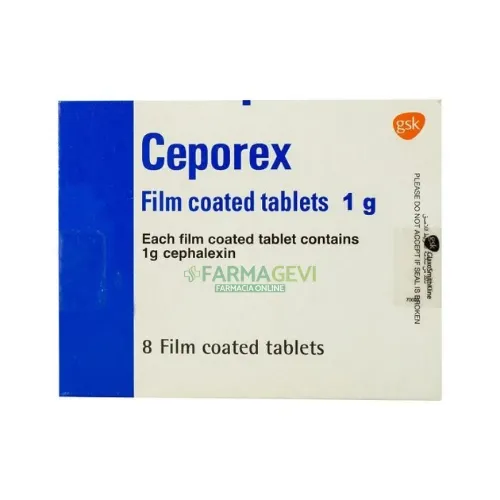
Table of Contents
- Patient information leaflet: information for the patient
- CEPOREX 1 g coated tablets
- 1. What Ceporex is and what it is used for
- 2. What you should know before taking/giving Ceporex to the child
- 3. How to take/give Ceporex to the child
- 4. Possible side effects
- 6. Package contents and other information
Patient information leaflet: information for the patient
CEPOREX 1 g coated tablets
Cefalexin
Please read this leaflet carefully before taking/giving the child this medicine because it contains important information for you.
- Keep this leaflet. You may need to read it again.
- If you have any questions, consult your doctor or pharmacist.
- This medicine has been prescribed for you and/or the child only. Do not give it to other people, even if their symptoms are the same as yours, because it could be harmful.
- If you and/or the child experience any side effects, including those not listed in this leaflet, contact your doctor or pharmacist. See section 4.
Contents of this leaflet:
- What Ceporex is and what it is used for
- What you need to know before taking/giving the child Ceporex
- How to take/give the child Ceporex
- Possible side effects
- How to store Ceporex
- Contents of the pack and other information
1. What Ceporex is and what it is used for
Ceporex contains Cefalexin and belongs to the group of antibiotics known as beta-lactams (specifically cephalosporins), which are drugs capable of killing bacteria or inhibiting their growth. It is effective against a broad range of bacteria (germs) defined as Gram-positive and Gram-negative.
Ceporex is indicated in adults and children for the treatment of the following infections, when caused by susceptible microorganisms:
- respiratory tract infections (lungs, bronchi, nose and throat)
- bacterial infections of the bronchi, acute and chronic
- dilation of one or more airways with excessive mucus production (infected bronchiectasis)
- bacterial infection of the lungs (pneumonia)
- skin, bone and soft tissue infections
- genital tract infections
- urinary tract infections
- bacterial infection of the kidney and urinary collecting ducts, renal pelvis (acute and chronic pyelonephritis)
- bacterial infection of the bladder (cystitis)
- bacterial infection of the prostate (prostatitis)
- ear, nose and throat (ENT) infections
- bacterial infection of the ear (otitis media, mastoiditis)
- bacterial infection of the mucous membranes of the paranasal sinuses, cavities within the bones of the skull and face (sinusitis)
- bacterial infection of the tonsils (follicular tonsillitis)
- bacterial infection of the pharynx (pharyngitis)
- sexually transmitted infections such as gonorrhoea and syphilis (when the patient is allergic to penicillin)
Consult your doctor if you do not feel better or if you feel worse.
2. What you should know before taking/giving Ceporex to the child
Do not take/give Ceporex to the child
- if you and/or the child are allergic to cephalexin or to any of the other ingredients of this medicine (listed in section 6).
- if you and/or the child are allergic to cephalosporins
Warnings and precautions
Talk to your doctor or pharmacist before taking/giving Ceporex to the child.
Inform the doctor if you and/or the child:
- have previously experienced an allergic reaction to other beta-lactam antibiotics (medicines similar to Ceporex such as penicillins, cephalosporins)
- have experienced allergic reactions to any other medicines
- have previously had allergies, asthma, hay fever, or hives (urticaria)
- suffer from severe kidney disease (renal insufficiency); in this case, the doctor will reduce the dose of Ceporex
- have scheduled blood or urine tests, as some tests may be altered following the use of this medicine (see section “Possible side effects”)
Possible consequences of prolonged use of Ceporex
Like other antibiotics, Ceporex may cause:
- uncontrolled growth of bacteria resistant to this antibiotic or uncontrolled growth of fungi. If you and/or the child develop a new infection in addition to the existing one, the doctor may decide to discontinue treatment.
- severe inflammation of the intestine (pseudomembranous colitis); it is important that the doctor considers this diagnosis if you/the child experience severe diarrhea during or after antibiotic use.
Children and adolescents
In children and adolescents, the doctor must carefully evaluate the dose to administer based on age, weight, severity and type of infection, and kidney function of the patient.
Other medicines and Ceporex
Inform your doctor or pharmacist if you and/or the child are taking, have recently taken, or might take any other medicines.
Consult your doctor if you and/or the child are taking:
- diuretic medicines (medicines that increase urine production)
- aminoglycoside antibiotics (a class of antibiotics effective against a wide range of bacteria)
- oral contraceptives (medicines used to prevent pregnancy), as their effectiveness may be reduced.
Pregnancy and breastfeeding
If you are pregnant, suspect you may be pregnant, planning a pregnancy, or are breastfeeding, consult your doctor or pharmacist before taking this medicine.
Driving and using machines
No effects on the ability to drive vehicles or operate machinery have been reported with this medicine.
3. How to take/give Ceporex to the child
The recommended dose in adults is:
- 2 to 3 tablets per day (2-3 grams), divided into 2-4 doses (every 6-12 hours). However, the doctor may adjust this dose from 1 tablet up to a maximum of 4 tablets (1-4 grams) per day, depending on the severity and type of infection.
Use in children and adolescents
The doctor will determine the dose based on the child's age, weight, severity and type of infection, and kidney function.
Generally, the dosage may be adjusted within the limits indicated for adults, taking into account a dose of 80-100 mg/kg of body weight.
Patients with kidney problems
If you/your child have severe kidney disease, the doctor may reduce the standard recommended doses. The doctor may also reduce the maximum recommended doses depending on the severity of kidney impairment.
If you are undergoing intermittent dialysis (a blood filtration process), the doctor will prescribe an additional dose of Ceporex after each dialysis session, up to 1 g within 24 hours.
If the child is undergoing intermittent dialysis, the additional dose will be calculated by the doctor based on a rate of 8 mg of medication per kg of body weight.
Elderly patients
If you are elderly, the doctor will carefully evaluate your kidney function and may adjust the dosage accordingly.
Duration of treatment
The doctor will determine the duration of treatment based on age, weight, severity and type of infection, and kidney function (yours/your child's).
If you take/give the child more Ceporex than you should
If you and/or your child accidentally take an excessive dose of Ceporex, contact your doctor immediately or go to the nearest hospital.
If you forget to take/give your child Ceporex
Do not take a double dose to make up for the forgotten tablet.
If you stop treatment with Ceporex
If you have any doubts about using this medicine, consult your doctor or pharmacist.
4. Possible side effects
Like all medicines, this medicine can cause side effects, although not everyone gets them.
If you experience any of the following side effects during treatment with Ceporex, consult your doctor immediately, who will DISCONTINUE treatment:
The possible side effects are listed below by frequency:
Common (may affect up to 1 in 10 people)
- Fungal infection caused by Candida, which may lead to inflammation of the female genital tract (this effect develops following prolonged use of the medicine)
- Positive Coombs test (a test that evaluates the presence of antibodies able to attack and destroy your own red blood cells)
- Stomach and intestinal disturbances (such as nausea and diarrhoea)
- Raised skin rashes accompanied by itching or red spots (urticaria-like)
Uncommon (may affect up to 1 in 100 people)
- Vomiting
Rare (may affect up to 1 in 1,000 people)
- Reversible reduction in the number of white blood cells in the blood
- Acute, even severe, allergic reactions (anaphylactic reactions)
Very rare (may affect up to 1 in 10,000 people)
- Disease due to destruction of certain blood cells, the red blood cells (haemolytic anaemia)
- Swelling of hands, feet, ankles, face, lips, tongue and/or throat (angioedema)
- Severe inflammation of the intestine (pseudomembranous colitis)
- Severe skin reactions (toxic epidermal necrolysis, (exanthematous necrolysis), Stevens-Johnson syndrome)
- Inflammation of the kidneys (reversible interstitial nephritis)
Frequency not known
A widespread, red, scaly skin rash, with pustules and blisters accompanied by fever at the beginning of treatment (generalised acute exanthematous pustulosis). Stop using cephalexin if you develop any of these symptoms and contact your doctor immediately. See also section 2.
Additionally, the following side effects have been observed, for which the frequency cannot be estimated from the available data:
Effects on the nervous system
- Dizziness
- Headache
Effects involving the whole body
- Weakness
Effects on the mouth
- Inflammation of the tongue
Effects on muscles and bones
- Chest tightness
- Joint pain
Effects on the genitals
- Candida (vaginal moniliasis)
- Anal and genital itching
Effects on laboratory tests
- Transient changes in certain blood test values (eosinophilia, leucopenia, increased serum transaminases, total bilirubin and blood urea nitrogen)
- Alterations in urine sugar tests (Benedict's or Fehling's solutions, or Clinitest tablets)
- Positive Coombs test
- Interference with tests to measure creatinine in urine (alkaline picrate assay)
Reporting of side effects
www.agenziafarmaco.gov.it/content/come-segnalare-una-sospetta-reazione-avversa
By reporting side effects, you can help provide more information on the safety of this medicine.
5. How to store Ceporex
Keep this medicine out of the sight and reach of children.
Store below 30°C.
Do not use this medicine after the expiry date which is stated on the carton after "Exp".
The expiry date refers to the last day of that month.
Do not dispose of any medicine via wastewater or household waste. Ask your pharmacist how to dispose of medicines no longer required. This will help protect the environment.
6. Package contents and other information
What Ceporex contains
Film-coated tablets:
- The active substance is cefalexin 1 g.
- The other components are: microcrystalline cellulose, magnesium stearate, hypromellose, titanium dioxide (E 171).
Description of the appearance of Ceporex and package contents
One pack contains 8 film-coated white tablets, packaged in blisters.
Marketing Authorization Holder
Teofarma S.r.l.
Via F.lli Cervi, 8
27010 Valle Salimbene (PV)
Manufacturer
Facta Farmaceutici SpA
Via Laurentina Km 24,730 - 00040 Pomezia (Rm) - Italy