Ceplene
ItalyTable of Contents
Package leaflet: Information for the patient and user
Ceplene 0.5 mg/0.5 mL solution for injection
Histamine dihydrochloride
This medicinal product is subject to additional monitoring. This will allow for rapid identification of new safety information. You can help by reporting any adverse reactions you experience while taking this medicine. See the end of section 4 for information on how to report adverse reactions.
Please read all of this leaflet carefully before you start using this medicine, because it contains important information for you.
- Keep this leaflet. You may need to read it again.
- If you have any questions, ask your doctor, pharmacist, or nurse.
- This medicine has been prescribed for you only. Do not give it to other people, even if their symptoms are the same as yours, as it could be harmful.
- If you experience any adverse reaction, including those not listed in this leaflet, contact your doctor or pharmacist. See section 4. Contents of this leaflet
- What Ceplene is and what it is used for
- What you need to know before using Ceplene
- How to use Ceplene
- Possible side effects
- How to store Ceplene
- Contents of the pack and other information
1. What Ceplene is and what it is used for
Ceplene belongs to a class of medicines called immunomodulators, which help the body's immune system fight diseases such as cancer by enhancing its natural disease-fighting functions. The active substance in Ceplene is histamine dihydrochloride, which is identical to a substance naturally present in the body. Ceplene is used in combination with low doses of interleukin-2 (IL-2), another medicine that helps the immune system fight diseases such as cancer.
Ceplene, in combination with IL-2, is used to treat a specific type of leukemia, acute myeloid leukemia (AML), and serves to maintain remission (i.e. the period during which the disease is less severe or undetectable). The combination of Ceplene and IL-2 helps your immune system attack any remaining cancer cells after previous anti-cancer treatment.
During treatment, you must always use BOTH IL-2 AND Ceplene. For any clarification regarding Ceplene or IL-2, please consult your doctor.
2. What you should know before using Ceplene
Do not use Ceplene
- If you are allergic (hypersensitive) to histamine or to any of the excipients in this medicine (listed in section 6).
- If you have severe heart problems.
- If you are taking any of the following medicines:
- Steroids such as prednisone and dexamethasone, used to suppress the immune system (immunosuppressants) and reduce inflammation.
- Clonidine, a medicine used to lower blood pressure.
- H*-blockers such as cimetidine, ranitidine, famotidine or nizatidine, used to treat gastric ulcers, indigestion (dyspepsia) or heartburn.
- If you have received a stem cell transplant (a type of bone marrow transplant) from a donor.
- If you are pregnant.
- If you are breastfeeding.
Warnings and precautions
Talk to your doctor or pharmacist before taking Ceplene.
Ceplene and IL-2 must not be injected simultaneously. IL-2 should be injected first, followed by Ceplene 1–3 minutes later.
Ceplene must be injected slowly into the layer of tissue just beneath the skin (subcutaneously) over approximately 5–15 minutes. Rapid injection may cause a drop in blood pressure, leading to weakness or even fainting.
Treatment with Ceplene starts in a hospital setting under medical supervision, as it is necessary to monitor your response to treatment. Your doctor will monitor your blood pressure, pulse, and lung function. During treatment, your doctor will also perform blood tests.
If you have previously experienced any of the following conditions, you will be closely monitored in hospital during subsequent days of treatment or in later treatment cycles:
- Hemorrhagic ulcers,
- Stroke,
- Arterial narrowing (peripheral arterial systemic disease),
- Heart disease (in case of severe heart problems, see section “Do not use Ceplene” above),
- History of autoimmune disease (a condition, such as systemic lupus, rheumatoid arthritis, chronic inflammatory bowel disease or psoriasis, in which the immune system attacks the body's own cells or tissues).
If you are taking any of the medicines listed in the section “Other medicines and Ceplene” or if you are scheduled for surgery or a special X-ray procedure requiring an injection, discuss this with your doctor.
If you currently have an infection, your doctor will monitor you closely. If you had an infection within the 14 days before starting treatment that required medication (antibiotics, antifungals or antivirals), your doctor will monitor you closely.
If you have kidney problems, talk to your doctor before using this medicine, as your blood pressure may drop.
If you have liver problems, talk to your doctor before using this medicine. Your doctor may decide to adjust the dose.
Children and adolescents
The use of Ceplene is not recommended in children and adolescents, as there are no data available on the use of this medicine in this age group.
Other medicines and Ceplene
Inform your doctor or pharmacist if you are taking or have recently taken any other medicines, including those not requiring a prescription.
If you are taking any of the following medicines, talk to your doctor or pharmacist before using Ceplene. Some of these medicines should not be taken during treatment with Ceplene or may require special precautions:
- Steroids such as prednisone and dexamethasone, used to suppress the immune system (immunosuppressants) and reduce inflammation (see previous section “Do not use Ceplene”).
- H*-blockers such as cimetidine, ranitidine, famotidine or nizatidine, used to treat gastric ulcers, indigestion (dyspepsia) or heartburn (see previous section “Do not use Ceplene”).
- Antihistamines used to treat allergies.
- Certain antipsychotics such as chlorpromazine, flupenthixol, thioridazine, clozapine and risperidone, used to treat mental disorders.
- Tricyclic antidepressants such as amitriptyline, imipramine or monoamine oxidase inhibitors (MAOIs) such as phenelzine, isocarboxazid, tranylcypromine or moclobemide, used to treat depression.
- Antimalarial medicines or medicines used to treat infections causing sleeping sickness.
- Beta-blockers such as propranolol, metoprolol, atenolol, used for angina and heart rhythm disorders.
- Any treatment for hypertension (e.g. thiazide diuretics (bendroflumethiazide), ACE inhibitors (captopril), calcium channel blockers (nifedipine), and alpha-blockers (prazosin)).
Additionally, if you are scheduled for surgery or a special radiographic examination requiring an injection, make sure your doctor knows that you are taking Ceplene. Some medicines used during surgery (e.g. neuromuscular blocking agents and narcotic analgesics) or contrast agents used in certain radiographic examinations may interact with this medicine.
Ceplene with food, drinks and alcohol
There is no information available regarding interactions between Ceplene and food, drinks or alcohol.
Ceplene is administered subcutaneously, and its absorption is not affected by food or beverages through the gastrointestinal tract.
Pregnancy and breastfeeding
There are no data on the use of Ceplene in pregnant women. Therefore, treatment with Ceplene and IL-2 must not be used during pregnancy.
Both men and women undergoing this treatment must use an effective method of contraception, as it is important to avoid conception during treatment with Ceplene and IL-2.
It is not known whether Ceplene passes into breast milk. Therefore, Ceplene and IL-2 must not be used in women who are breastfeeding.
Patients, both male and female, receiving this treatment must use contraceptive methods to avoid conception during therapy with Ceplene and IL-2.
Ask your doctor or pharmacist for advice before taking any medicine.
Driving and using machines
Do not drive or operate machinery within one hour after receiving a Ceplene injection, as it may lower your blood pressure, causing dizziness, lightheadedness, or blurred vision, which could impair your ability to drive or operate machinery.
3. How to use Ceplene
Always use Ceplene exactly as instructed by your doctor. If you have any doubts, consult your doctor, pharmacist, or nurse.
Treatment must be prescribed and monitored by a physician experienced in acute myeloid leukemia.
Dosage
Since you will be receiving both IL-2 and Ceplene in combination, information on both dosages is provided below.
Interleukin-2 (IL-2)
IL-2 must be administered twice daily by subcutaneous injection (into the layer of tissue directly beneath the skin), 1 to 3 minutes before the Ceplene injection. Each dose is calculated based on your body weight. Your doctor will inform you of the exact dose and how to inject it.
Ceplene
The usual dose of Ceplene is 0.5 mL of solution twice daily administered by slow subcutaneous injection (i.e. into the layer of tissue directly beneath the skin).
Ceplene must be injected 1 to 3 minutes after IL-2.
Both medicines, IL-2 and Ceplene, are to be injected twice daily, at least 6 hours apart.
Treatment periods and treatment breaks
Treatment with IL-2 and Ceplene lasts 81 weeks and is administered in cycles.
- First 18 weeks: IL-2 and Ceplene are administered every day for 3 weeks, followed by a 3-week treatment break during which no treatment is given.
- Next 63 weeks: IL-2 and Ceplene are administered every day for 3 weeks, followed by a 6-week treatment break during which no treatment is given.
Self-administration of Ceplene injections
Your doctor may decide that in your case it is preferable for you to self-inject IL-2 and Ceplene.
Your doctor or a nurse will show you how to perform the injection. Do not attempt to self-inject unless you have first received proper training from a qualified healthcare professional.
It is recommended that another person—such as a family member, friend, or other adult assistant—be present whenever you perform a self-injection, so they can assist you if you experience a "dizzy" sensation or faint.
For further instructions on how to perform self-injection, please read the section “INSTRUCTIONS FOR SELF-INJECTION OF CEPLENE” at the end of this leaflet.
Your doctor may recommend using a syringe pump to control the Ceplene injection. If you use this type of syringe, read the instructions provided by the manufacturer and follow the advice of your doctor, nurse, and/or pharmacist.
If you use more Ceplene than you should
Always use Ceplene exactly as instructed by your doctor. If you have injected more than the prescribed dose, contact your doctor or pharmacist immediately.
If you forget to take a dose of Ceplene
Do not inject a double dose to make up for a forgotten dose; continue treatment as prescribed. If you miss one of your daily doses, contact your doctor or pharmacist.
If you stop treatment with Ceplene
If you wish to discontinue treatment with Ceplene, you should first try to consult your doctor. Inform your doctor immediately if you have decided on your own to stop treatment with Ceplene.
If you have any doubts about using this medicine, consult your doctor or pharmacist.
4. Possible side effects
Like all medicines, this medicine can cause side effects, although not everybody gets them.
Side effects observed when Ceplene is used as described in this leaflet
Hypotension (low blood pressure) may occur very commonly and may lead to dizziness and fainting. Please contact your doctor immediately if you notice a severe drop in blood pressure after using Ceplene, or at least before receiving further Ceplene injections.
Very common side effects (may affect more than 1 in 10 people)
- Increase in certain types of white blood cells in the blood (eosinophilia) and decrease in the number of platelets (thrombocytopenia)
- Headache and dizziness
- Taste disturbances (dysgeusia)
- Increased heart rate (tachycardia)
- Hot flushes
- Cough, difficulty breathing (dyspnoea)
- Airway infections (upper respiratory tract infections)
- Nausea, indigestion (dyspepsia) and diarrhoea
- Skin rash
- Joint and muscle pain (arthralgia and myalgia)
- Skin inflammation with granuloma formation at the injection site, fatigue, fever (pyrexia), redness at the injection site, feeling of warmth, injection site reactions, itching at the injection site, influenza-like symptoms, chills (shivering), inflammation and pain at the injection site.
Common side effects (may affect up to 1 in 10 people)
- Decrease in white blood cells (leucopenia)
- Decrease in a certain type of white blood cells (neutropenia)
- Inflammation of the lungs (pneumonia)
- Loss of appetite (anorexia)
- Insomnia
- Palpitations
- Nasal congestion
- Vomiting, pain in the upper abdomen (abdominal pain) and dry mouth
- Inflammation of the stomach (gastritis)
- Swelling of the abdomen (abdominal distension)
- Abnormal redness of the skin (erythema), increased sweating (hyperhidrosis), night sweats and itching
- Limb pain and back pain
- Hives, bruising, skin rash and swelling at the injection site, weakness (asthenia) and chest pain
Additional side effects observed when Ceplene has been used for other treatments
Very common side effects (may affect more than 1 in 10 people)
- Dry skin
- Anxiety
- Malaise or general discomfort
- Fluid accumulation in the body, particularly in the legs (oedema)
- Weight loss
Common side effects (may affect up to 1 in 10 people)
- Dizziness
- Inability of the body to produce sufficient thyroxine (hypothyroidism), a hormone (a chemical produced by the body)
- Decrease in red blood cells (anaemia)
- Loss of body fluids (dehydration)
- Depression
- Tingling, prickling or numbness of the skin (paraesthesia)
- Hot flushes
- Wheezing
- Constipation, stomach swelling, inflamed mouth
- Pain and tissue formation on the skin around the injection site
Reporting of side effects
If you get any side effects, including any not listed in this leaflet, talk to your doctor or pharmacist. You can also report side effects directly via the national reporting system listed in Annex V.
By reporting side effects, you can help provide more information on the safety of this medicine.
5. How to store Ceplene
Keep out of the sight and reach of children.
Ceplene
Do not use Ceplene after the expiry date stated on the packaging and on the vial label.
The expiry date refers to the last day of the month indicated.
Do not freeze.
The solution should be inspected visually for the presence of particles and discoloration before administration. The solution must be clear and colourless.
Interleukin-2 (IL-2, aldesleukin)
Store the pre-filled syringes with cap closed, containing diluted IL-2 prepared by the pharmacist, in the refrigerator (at 2°C – 8°C) until use.
Medicines must not be disposed of via wastewater or household waste. Ask your pharmacist how to dispose of medicines you no longer use. This will help protect the environment.
6. Package Contents and Other Information
What Ceplene Contains
- The active substance is histamine dihydrochloride. One vial contains 0.5 mg of histamine dihydrochloride in 0.5 mL of solution.
- The other ingredients are water for injections and sodium chloride; it may also contain sodium hydroxide and/or hydrochloric acid for pH adjustment.
Description of the Appearance of Ceplene and Contents of the Package
Ceplene is a clear, colourless liquid. It is supplied in a glass vial with a grey rubber stopper and a blue tamper-evident aluminium seal.
Ceplene is available in packs of 14 vials.
Marketing Authorisation Holder
Laboratoires Delbert
49 Rue Rouelle
75015 Paris
France
Manufacturer
Labiana Pharmaceuticals, S.L.U.
C/ Casanova, 27-31
08757 Corbera de Llobregat (Barcelona)
Spain
This medicinal product has been authorised under "exceptional circumstances". This means that, due to the rarity of the disease, it has not been possible to obtain complete information about this medicinal product. The European Medicines Agency will review annually any new information on the medicinal product, and this package leaflet will be updated if necessary.
More detailed information on this medicinal product is available on the website of the European Medicines Agency: http://www.ema.europa.eu.
In addition, links to other websites on rare diseases and their therapeutic treatments are provided.
INSTRUCTIONS FOR SELF-INJECTION OF CEPLENE
This section contains information explaining how to administer Ceplene by injection yourself.
For general information on dosage and how to use Ceplene and IL-2, please refer to section 3, “How to use Ceplene”.
Read these instructions carefully. It is important that you do not attempt to perform the injection without first receiving specific instructions from your doctor or a nurse. If you have any doubts about how to perform the injection or any questions, please ask your doctor or nurse for help.
If you feel faint or dizzy during or after the injection, inform your doctor before administering the next dose. Your doctor may consider it appropriate to increase the injection duration or adjust the dose.
Ceplene and IL-2 must be injected twice daily by subcutaneous route (i.e. into the layer of tissue directly beneath the skin), following the instructions provided by your doctor.
IL-2 must always be injected first; Ceplene must be injected 1 to 3 minutes afterwards.
Ceplene must not be mixed with other products or diluted.
Your doctor will explain how to prepare and inject IL-2.
It is recommended that, when performing self-injection of Ceplene, another person should always be present—such as a family member, acquaintance, or another adult assistant—who can help you if you experience a sensation of "light-headedness" or fainting.
PREPARATION FOR CEPLENE INJECTION
To prepare a dose of Ceplene, you will need:
- 1 vial of Ceplene solution (0.5 mL)
- 1 sterile graduated syringe with needle
- 1 alcohol-impregnated swab
Procedure
-
Remove one vial from the box. Check the expiry date (EXP) on the vial label.
-
Do not use if the date has passed the last day of the month indicated.
-
Wash your hands thoroughly with soap and water.
-
Double-check the vial label to ensure you are using the correct medicine. The solution should be clear and colourless. If not, use another vial and inform your doctor or pharmacist.
-
Remove the plastic cap from the vial to expose the rubber stopper with the inner rubber disc.
-
Use an alcohol-impregnated swab to clean the rubber part of the stopper. Do not touch the stopper with your hands.
-
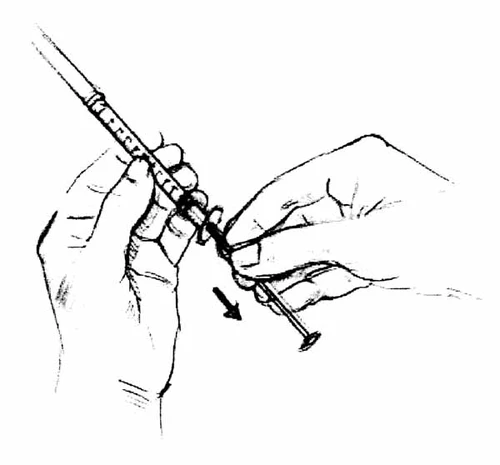
Take the sterile syringe. Observe the numbered markings. Each mark (0.1; 0.2; 0.3; etc.) represents one-tenth of a millilitre (0.1 mL). Without removing the cap from the needle, pull back the plunger to draw air into the syringe up to the level (in millilitres) indicated by your doctor (see Figure 1).
Figure 1
-
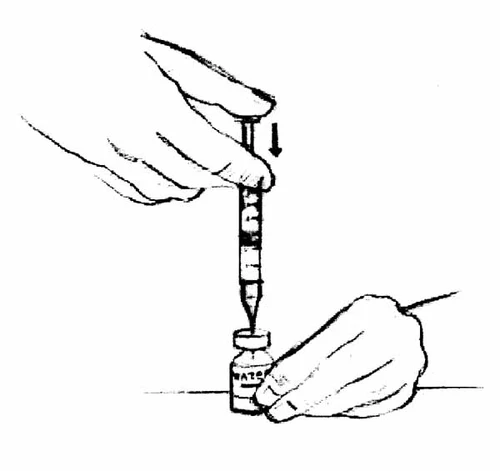
Remove the cap from the needle. With the vial standing upright on a flat surface, insert the needle straight through the rubber stopper into the vial.
-
Push the syringe plunger to inject air into the vial (see Figure 2).
Figure 2
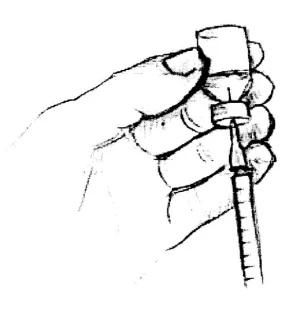
- Holding both the vial and the syringe, turn the vial upside down. Adjust the syringe so that the needle tip is slightly below the surface of the solution but still within the liquid (see Figure 3).
Figure 3
-
Slowly pull back the plunger to draw the solution into the syringe, filling it to the level (in millilitres) indicated by your doctor. If air bubbles appear in the syringe, re-inject the solution into the vial and re-aspirate.
-
Remove the needle from the vial. Do not place the syringe down and ensure the needle does not touch anything.
-
Replace the cap over the needle. Place the syringe on a clean, flat surface.
-
A small amount of solution may remain in the vial. The vial should be returned to the pharmacist for proper disposal.
NOTE: The Ceplene vial contains an overfill to facilitate the withdrawal of a single dose of 0.5 mL.
-
Double-check the syringe to ensure the correct amount has been drawn up.
-
Pick up the syringe and follow the instructions in the next section, “INJECTION INSTRUCTIONS”.
INJECTION INSTRUCTIONS
Normally, two doses of 0.5 mL each per day should be injected, unless your doctor has prescribed a lower dose.
For the injection, you will need:
- 1 syringe prepared with IL-2 (see the IL-2 package leaflet and your doctor’s dosage instructions)
- 1 syringe prepared with Ceplene
- Alcohol-impregnated swabs
- A timer, clock, or alarm with a minute hand
- A sharps-resistant container for safe disposal of used syringes
Procedure
-
Choose a comfortable, well-lit place where you can sit or lie down. Place the pre-prepared syringes containing IL-2 and Ceplene, along with an alcohol swab, within easy reach. It is important for your safety that you sit in a place where you can also lie down if needed.
-
Inject IL-2 as instructed.
-
Wait 1 to 3 minutes.
-
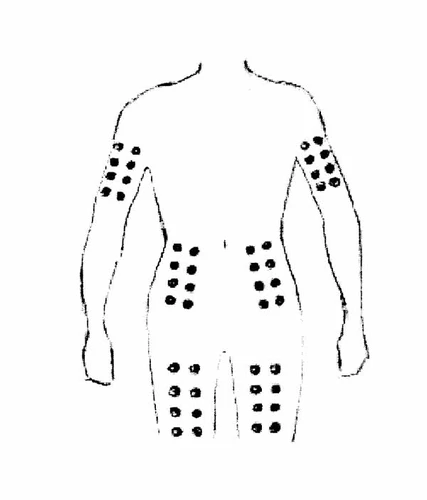
Choose the injection site for Ceplene. Possible sites include the inner or outer thigh, arms, or abdomen. Ceplene and IL-2 must not be injected in the same area. For example, if IL-2 is injected into the left arm, Ceplene can be injected into the left or right thigh, abdomen, or right arm. Always rotate injection sites. For possible injection sites, see Figure 4.
Figure 4
-
Expose the selected skin area, clean it with an alcohol-impregnated swab, and let it dry for 10 seconds.
-
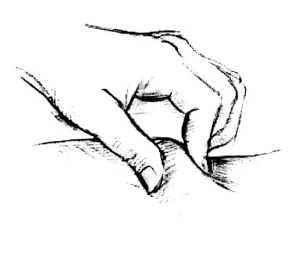
Lift a section of clean skin by gently pinching it between your thumb and index finger (do not pinch tightly). (See Figure 5.)
Figure 5
- Hold the needle vertically (90°) or at a 45° angle to the skin and insert it quickly and steadily through the skin to its full depth. The needle should go under the skin but not into a blood vessel (see Figure 6).
Figure 6
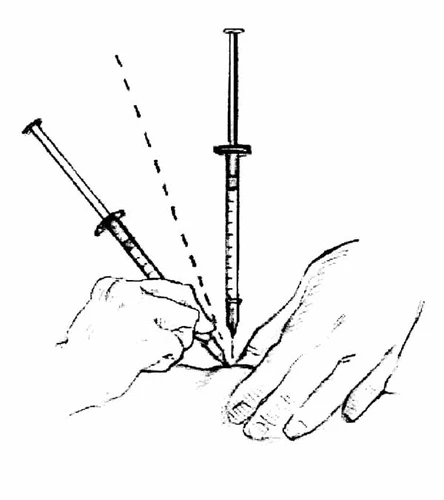
-
Gently pull back the plunger. If blood appears, do not inject Ceplene, as this means the needle has entered a blood vessel. Remove the syringe and dispose of it according to instructions. Gather new supplies and restart the procedure from the beginning, even if 3 minutes have passed since the IL-2 injection.
-
Observe the numbered markings on the syringe. Each mark (0.1; 0.2; 0.3; etc.) represents one-tenth of a millilitre (0.1 mL).
-
Push the syringe plunger fully and inject one-tenth of a millilitre (0.1 mL) per minute, or more slowly if instructed by your doctor (see Figure 7).
Figure 7
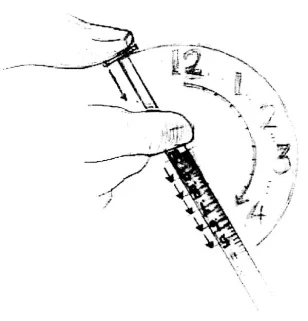
-
Do not inject Ceplene faster or all at once.
-
When the syringe is empty, remove the needle from the skin.
-
Gently press the alcohol swab over the injection site without rubbing.
-
Remain seated or lying down for 20 minutes after injecting Ceplene.
-
Dispose of the syringe in the sharps-resistant container as instructed.