Cefixime Sandoz
Italy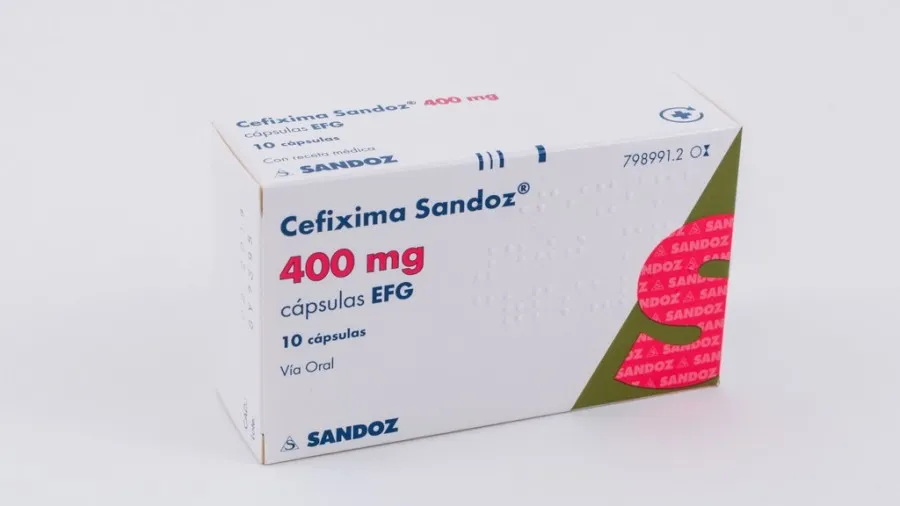
Table of Contents
- Patient Information Leaflet
- Cefixima Sandoz 400 mg film-coated tablets
- 1. What Cefixima Sandoz is and what it is used for
- 2. What you need to know before taking Cefixima Sandoz
- 3. How to take Cefixima Sandoz
- 4. Possible side effects
- 5. How to store Cefixima Sandoz
- 6. Package contents and other information
Patient Information Leaflet
Cefixima Sandoz 400 mg film-coated tablets
Generic medicine
Please read this leaflet carefully before taking this medicine because it contains
important information for you.
- Keep this leaflet. You may need to read it again.
- If you have any questions, ask your doctor or pharmacist.
- This medicine has been prescribed for you only. Do not give it to other people, even if their symptoms are the same as yours, as it may be harmful.
- If you experience any adverse reaction, including those not listed in this leaflet, contact your doctor or pharmacist. See section 4.
Contents of this leaflet:
- What Cefixima Sandoz is and what it is used for
- What you need to know before taking Cefixima Sandoz
- How to take Cefixima Sandoz
- Possible side effects
- How to store Cefixima Sandoz
- Contents of the pack and other information
1. What Cefixima Sandoz is and what it is used for
Cefixima Sandoz contains the active substance cefixima. This medicine belongs to a group of antibiotics called "cephalosporins", used to treat bacterial infections in adults and adolescents aged 12 years and older, such as:
- Acute ear infection
- Acute infection of the nasal cavities and paranasal sinuses
- Acute exacerbation of chronic bronchitis
- Community-acquired pneumonia
- Uncomplicated urinary tract infections
- Uncomplicated acute gonorrhoea
You should contact a doctor if you do not feel better or if you feel worse.
2. What you need to know before taking Cefixima Sandoz
Do not take Cefixima Sandoz if:
- you are allergic to cefixime or to any of the other ingredients of this medicine (listed in section 6).
- you are allergic to any other cephalosporin antibiotic.
Warnings and precautions
Talk to your doctor or pharmacist before taking Cefixima Sandoz:
- if you have ever had an allergic reaction to antibiotic treatment. You may also be allergic to this medicine.
- if you have kidney problems. Your doctor may need to adjust your daily dose.
- if you have ever had haemolytic anaemia after taking a cephalosporin antibiotic, including Cefixima Sandoz (a reduction in red blood cells which may cause paleness, weakness or shortness of breath).
During or after treatment, you must inform your doctor immediately:
- if you develop diarrhoea. Do not take any anti-diarrhoeal treatment without consulting your doctor.
- if you develop pimples or itching.
- as with all medicines in this class of antibiotics (beta-lactam antibiotics), administration of this medicine may carry a risk of encephalopathy, which may lead to seizures, confusion, altered consciousness or abnormal movements, particularly in cases of overdose or impaired renal function. If such symptoms occur, consult your doctor or pharmacist immediately (see sections 3 and 4).
- if you experience severe skin reactions such as toxic epidermal necrolysis (TEN, also known as Lyell’s syndrome), Stevens-Johnson syndrome (SJS), drug reaction with eosinophilia and systemic symptoms (DRESS), or acute generalised exanthematous pustulosis (AGEP), which have been reported with Cefixima Sandoz (see section 4).
Your doctor may decide to stop treatment with this medicine and/or prescribe appropriate treatment (see section 4: "Possible side effects").
If you develop severe skin reactions or any of the reactions listed in section 4, stop treatment immediately and contact your doctor or a healthcare professional.
Children
Cefixima Sandoz must not be used in children under 12 years of age.
Other medicines and Cefixima Sandoz
Tell your doctor if you are taking, have recently taken or might take any other medicines. Inform your doctor if you are taking the following medicines, as they may interact with Cefixima Sandoz:
- anticoagulant therapy (blood thinners)
- caution required when taking a calcium antagonist.
Effect on laboratory tests
If you are due to have blood or urine tests, tell your doctor that you are taking Cefixima Sandoz, as cefixime may alter the results of some of these tests.
Pregnancy, breastfeeding and fertility
If you are pregnant, think you may be pregnant or are planning to become pregnant, or if you are breastfeeding, ask your doctor or pharmacist for advice before taking this medicine.
Pregnancy
Other substances in the group of medicines to which cefixime belongs are well tolerated during pregnancy. Your doctor will assess whether the benefits of treatment outweigh the potential risks to the newborn.
Breastfeeding
Since cefixime is excreted in small amounts in breast milk, you should ask your doctor whether you can take this medicine while breastfeeding. Your doctor will decide whether to discontinue breastfeeding or to discontinue/abstain from treatment with Cefixima Sandoz, taking into account the benefit of breastfeeding for the child and the benefit of treatment for you.
Driving and using machines
Cefixime may cause dizziness. If this occurs, you are advised not to drive or operate machinery.
Cefixima Sandoz contains sodium
This medicine contains less than 1 mmol of sodium (23 mg) per tablet, i.e. essentially ‘sodium-free’.
3. How to take Cefixima Sandoz
Take this medicine exactly as prescribed by your doctor or pharmacist. If you have any doubts, consult your doctor or pharmacist.
Dosage
Your doctor will determine the correct dose of Cefixima Sandoz and how long you should take the medicine. The number of Cefixima Sandoz tablets you need to take depends on your condition. Follow your doctor's instructions carefully and never change the dose on your own. Ask your doctor or pharmacist if you have any doubts about the amount or timing of the dose.
Adults and adolescents (≥ 12 years)
The recommended dose is 400 mg of Cefixima Sandoz taken orally as one 400 mg tablet once daily, as a single dose within 24 hours.
This medicine should be taken at the same time every day.
Duration of treatment
Most infections can be treated within 7 days of therapy. However, in severe cases, Cefixima Sandoz may be used for up to 14 days.
Children under 12 years of age
Please note that Cefixima Sandoz tablets are not suitable for children. Instead, an oral suspension may be used, or consult your doctor for further information.
Elderly
For elderly patients, the dosage is the same as for adults, provided renal function is normal.
Renal impairment
If you have severe kidney problems or are undergoing dialysis, your doctor will reduce the dose.
There are insufficient data on the use of Cefixima Sandoz in children with renal impairment. Therefore, the use of Cefixima Sandoz is not recommended in these patients.
In patients with creatinine clearance values < 20 ml/min, continuous ambulatory peritoneal dialysis, or hemodialysis, the recommended dosage is 200 mg once daily.
Impaired liver function
No dose adjustment is required for patients with impaired liver function.
Method of administration
For oral use.
The tablet should be taken with a sufficient amount of water and must be swallowed whole. The break line is only intended to help you split the tablet if you have difficulty swallowing it whole. Both halves should be taken immediately one after the other.
Cefixima Sandoz can be taken with or without food.
If you take more Cefixima Sandoz than you should
If you accidentally take too many tablets, or if a child ingests any of the Cefixima Sandoz tablets, contact the nearest hospital emergency department or your doctor immediately.
If you forget to take Cefixima Sandoz
If you forget to take a tablet, take it as soon as you remember. However, if the next dose is due in less than 6 hours, skip the missed dose and continue with your regular dosing schedule. Do not take a double dose to make up for the forgotten tablet.
If you stop taking Cefixima Sandoz
Do not stop treatment prematurely, as it is important to complete the ENTIRE course of this medicine to reduce the risk of infection recurrence.
If you have any questions about the use of this medicine, consult your doctor or pharmacist.
4. Possible side effects
Like all medicines, this medicine can cause side effects, although not everybody gets them. You must contact your doctor immediately if you experience any of the following serious side effects:
Allergic reactions
All medicines can cause allergic reactions, although serious allergic reactions are rare (may affect up to 1 in 1,000 people), very rare (may affect up to 1 in 10,000 people), or frequency not known (frequency cannot be estimated from the available data). These may include the following allergic reactions, for which frequency is not known:
- Serum sickness-like reaction (an allergic reaction that may include symptoms such as rash, joint pain, muscle pain, fever)
- Sudden wheezing and tightness in the chest
- Swelling of the eyelids, face or lips
Diarrhoea (may affect up to 1 in 10 people):
- If you have diarrhoea during or after taking this medicine, do not try to treat it yourself. You must contact your doctor immediately. Your doctor may decide to stop treatment and prescribe appropriate therapy.
- There is a frequent risk of diarrhoea. Blood may be present in the diarrhoea. In very rare cases, this may be a severe form of colitis (pseudomembranous colitis or enterocolitis), which requires treatment to be stopped.
Severe skin reactions
- Flu-like symptoms with rash, fever, swollen glands and abnormal blood test results (including increased white blood cells (eosinophilia) and liver enzymes) (Drug Reaction with Eosinophilia and Systemic Symptoms (DRESS)). (frequency not known)
- Blisters or bleeding of the skin around the lips, eyes, mouth, nose and genitals. Flu-like symptoms and fever are also present (Stevens-Johnson syndrome) (may affect up to 1 in 10,000 people).
- Severe rash with blisters, in which layers of skin may peel off, leaving large areas of raw, exposed skin over the body. General feeling of being unwell, fever, chills and muscle pain are also present (toxic epidermal necrolysis) (may affect up to 1 in 10,000 people).
- Symptoms of AGEP may include a widespread, red, scaly rash with bumps under the skin (including skin folds, chest, abdomen (including stomach), back and arms) and blisters accompanied by fever (may affect up to 1 in 10,000 people).
All these allergic reactions require urgent medical attention. If you think you are experiencing any of these types of reaction, stop taking this medicine and contact your doctor or the nearest hospital emergency department immediately.
The following other side effects have been reported:
Uncommon (may affect up to 1 in 100):
- Headache
- Nausea
- Vomiting
- Stomach pain
- Rash
- Changes in blood tests that monitor liver function
Rare (may affect up to 1 in 1,000):
- Severe allergic reaction causing swelling of the face or throat (angioedema)
- Hypersensitivity reactions (these are rashes that are less severe allergic reactions than those mentioned above, nodular rash [urticaria], itching)
- Dizziness/vertigo
- Loss of appetite (anorexia)
- Flatulence (gas)
- Dyspepsia
- Itching
- Fever
- Abnormal increase in the number of cells (eosinophils) in the blood, characteristic of allergic conditions
- Increased blood urea (an indicator of kidney function)
- Inflammation of mucous membranes
- Recurrent infections caused by bacteria
- Recurrent infections caused by fungi
Very rare (may affect up to 1 in 10,000):
- Severe allergic reaction causing breathing difficulties or shock (anaphylactic shock)
- Inflammation of the intestine, sometimes occurring after antibiotic treatment (antibiotic-associated colitis)
- Severe reduction in the number of white blood cells, increasing the likelihood of infections (agranulocytosis)
- Severe reduction in blood cells that may cause weakness, bruising or increase the likelihood of infections (pancytopenia)
- Decrease in the number of small cells needed for blood clotting, increasing the risk of bleeding or bruising (thrombocytopenia) (if you need to have a blood test for any reason, inform the person taking your blood sample that you are taking this medicine, as it may affect the result)
- Reduction in red blood cells that may make the skin pale yellow and cause weakness or shortness of breath (haemolytic anaemia)
- Low white blood cell count (leucopenia)
- Feeling of restlessness associated with increased activity (psychomotor hyperactivity)
- Reversible inflammation of the kidney affecting its structure and function
- Inflammation of the liver (hepatitis)
- Bile disorder (cholestatic jaundice)
- Changes in specific blood tests showing kidney function (increased blood creatinine)
Not known (frequency cannot be estimated from the available data):
- Acute kidney failure, including inflammation of the kidney affecting its structure and function (acute kidney failure, including tubulo-interstitial nephritis)
- A brain disorder with symptoms including seizures, confusion, feeling less alert or aware than usual, unusual muscle movements or stiffness.
This could be a condition called encephalopathy. This side effect is more likely if you have taken too many tablets or already have kidney problems.
- Itching in the genital or vaginal area
- Thrombocytosis
- Decrease in the number of neutrophils in the blood (neutropenia)
Reporting of side effects
If you experience any side effect, including those not listed in this leaflet, talk to your doctor or pharmacist. You can also report side effects directly via the national reporting system at https://www.aifa.gov.it/content/segnalazioni-reazioni-avverse.
By reporting side effects, you can help provide more information on the safety of this medicine.
5. How to store Cefixima Sandoz
Keep this medicine out of the sight and reach of children.
Do not use this medicine after the expiry date stated on the blister and carton after "Exp.". The expiry date refers to the last day of that month.
Store below 30 °C.
Do not dispose of medicines via wastewater or household waste. Ask your pharmacist how to dispose of medicines you no longer use. This will help protect the environment.
6. Package contents and other information
What Cefixima Sandoz contains
The active substance is cefixime.
Each film-coated tablet contains 400 mg of cefixime (as cefixime trihydrate).
The other components are:
- tablet core: dibasic calcium phosphate, microcrystalline cellulose, croscarmellose sodium, sodium lauryl sulfate, magnesium stearate.
- tablet coating: poly(vinyl alcohol) graft copolymer with macrogol, talc, mono/diglycerides, titanium dioxide (E171), poly(vinyl alcohol)
Description of the appearance of Cefixima Sandoz and package contents
Film-coated tablet.
White to pale white, oblong, biconvex, with a score line on both sides and measuring approximately 8.4 x 19.8 mm.
This medicine is available in Alu/Alu blisters.
Pack sizes: 5, 7, 10 and 14 film-coated tablets.
Not all pack sizes may be marketed.
Marketing Authorization Holder and Manufacturer
Sandoz S.p.A.
Viale Luigi Sturzo 43
20154 Milan
Italy
Manufacturer
Sandoz GmbH
Biochemiestraße 10,
6250 Kundl
Austria
This medicine is authorized in the European Economic Area Member States under the following names:
Bulgaria Цифемекс 400 mg филмирани таблетки
Germany Cefixim HEXAL 400 mg Filmtabletten
Italy Cefixima Sandoz
Romania Axtrifia 400 mg, comprimate filmate
Slovenia Cefixim Sandoz 400 mg
Spain Cefixima Sandoz 400 mg comprimidos recubiertos con película EFG
Medical advice/education
Antibiotics are used to treat infections caused by bacteria. They have no effect against infections caused by viruses.
Sometimes a bacterial infection does not respond to a course of antibiotic treatment. One of the most common reasons is that the bacteria causing the infection are resistant to the antibiotic taken. This means they can survive and even multiply despite the antibiotic.
Bacteria can become resistant to antibiotics for various reasons. Using antibiotics carefully can help reduce the risk of bacteria becoming resistant.
When your doctor prescribes a course of antibiotic treatment, it is intended solely to treat your current illness. Following the advice below will help prevent the emergence of resistant bacteria, which could compromise the effectiveness of antibiotics.
- It is very important to take the antibiotic at the correct dose, at the right times, and for the correct number of days. Read the instructions on the packaging and patient information leaflet, and if in doubt, ask your doctor or pharmacist for clarification.
- Do not take an antibiotic unless it has been specifically prescribed for you, and use it only to treat the infection for which it was prescribed.
- Do not take antibiotics prescribed for other people, even if they had an infection similar to yours.
- Do not give your prescribed antibiotics to other people.
- If you have any antibiotic left over after completing the treatment course as directed by your doctor, return it to the pharmacy for proper disposal.