Cefazolin K24 Pharmaceuticals
Italy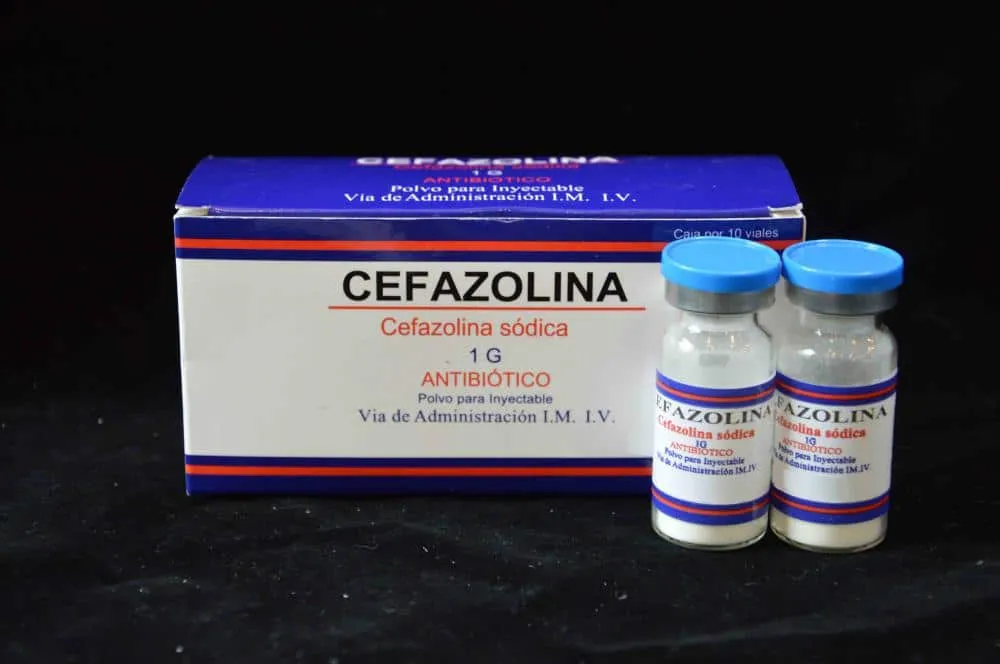
Table of Contents
- INSTRUCTIONS FOR USE
- Package leaflet: Information for the user
- CEFAZOLINA K24 PHARMACEUTICALS
- 1. C
- 2. What you should know before using CEFAZOLINA K24 PHARMACEUTICALS
- 3. How to use CEFAZOLINA K24 PHARMACEUTICALS
- 4. Possible side effects
- 5. How to store CEFAZOLIN K24 PHARMACEUTICALS
- 6. Package contents and other information
INSTRUCTIONS FOR USE
| Infection type | Dose | Frequency |
| Pneumococcal pneumonia | 500 mg | every 12 hours |
| Mild infections caused by sensitive strains of gram-positive cocci | 500 mg | every 8 hours |
| Acute, uncomplicated urinary tract infections | 1 g | every 12 hours |
| Moderate to severe infections | 0.5–1 g | every 6–8 hours |
| Severe, life-threatening infections (e.g. endocarditis and septicemia)* | 1–1.5 g | every 6 hours |
| Renal Insufficiency | Creatinine Clearance (ml/min) | Serum Creatinine (mg%) | Dosage | Dosing Interval | |
| ADULTS | Mild | 55 | 1.5 | Full dose | 6 - 8 h |
| Moderate | 35 - 54 | 1.6 - 3.0 | Full dose | 8 h | |
| Severe | 11 - 34 | 3.1 – 4.5 | 50% dose | 12 h | |
| Profound | 10 | 4.6 | 50% dose | 18 – 24 h | |
| CHILDREN | mild – moderate | 40 - 70 | 60% dose | 12 h | |
| Moderate | 20 - 39 | 25% dose | 12 h | ||
| Severe | 5 - 19 | 10% dose | 24 h |
| Vial | Volume of solvent to be added | Approximate volume of solution | Mean concentration |
| 500 mg | 2 ml | 2.2 ml | 225 mg/ml |
| 1g | 2.5 ml | 3 ml | 350 mg/ml |
Package leaflet: Information for the user
CEFAZOLINA K24 PHARMACEUTICALS
1 g powder for injectable solution / for infusion
cefazolin
equivalent medicine
Please read this leaflet carefully before using this medicine as it contains important information for you.
- Keep this leaflet. You may need to read it again.
- If you have any questions, consult your doctor, pharmacist or nurse.
- This medicine has been prescribed for you only. Do not give it to other people, even if their symptoms are the same as yours, as it could be harmful.
- If you experience any side effects, including those not listed in this leaflet, contact your doctor, pharmacist or nurse. See section 4.
Contents of this leaflet
- What CEFAZOLINA K24 PHARMACEUTICALS is and what it is used for
- What you need to know before using CEFAZOLINA K24 PHARMACEUTICALS
- How to use CEFAZOLINA K24 PHARMACEUTICALS
- Possible side effects
- How to store CEFAZOLINA K24 PHARMACEUTICALS
- Contents of the pack and other information
1. C
What CEFAZOLINA K24 PHARMACEUTICALS is and what it is used for
CEFAZOLINA K24 PHARMACEUTICALS contains the active substance cefazolin. Cefazolin is an
antibiotic belonging to a group of medicines called cephalosporins, and it acts against infections
affecting various parts of the body. Cefazolin kills susceptible bacteria responsible for infections.
CEFAZOLINA K24 PHARMACEUTICALS is used in adults and children to treat:
- respiratory tract infections
- infections of the kidney, bladder, urethra, and genital organs
- infections in women during pregnancy, childbirth, and after childbirth (obstetric infections) and infections of the female genital organs (gynecological infections)
- skin and soft tissue infections (e.g., muscles, tendons)
- ear, nose, and throat infections
- eye infections
- stomach and intestinal infections, liver and biliary tract infections
- bone and joint infections
- infection of the inner lining of the abdomen and abdominal organs (peritonitis)
- blood infection (septicemia)
- infection of the inner surface of the heart (endocarditis).
CEFAZOLINA K24 PHARMACEUTICALS is used in adults and children to prevent and treat infections
that may develop before, during, or after surgery.
2. What you should know before using CEFAZOLINA K24 PHARMACEUTICALS
Do not use CEFAZOLINA K24 PHARMACEUTICALS:
- if you are allergic to cefazolin, to other antibiotics belonging to the cephalosporin class, to penicillin or other beta-lactam antibiotics, or to any of the other ingredients of this medicine (listed in section 6);
- in premature infants and newborns under 1 month of age.
Warnings and precautions
Talk to your doctor, pharmacist, or nurse before using CEFAZOLINA K24 PHARMACEUTICALS if:
- you have previously experienced an allergic reaction to penicillin, cephalosporins, or other similar antibiotics; in such cases, you may be more likely to have a new allergic reaction, even a severe one, following administration of CEFAZOLINA K24 PHARMACEUTICALS. In this case, stop treatment immediately (see also section 4);
- if you suffer from allergies not previously mentioned in this leaflet;
- you have had intestinal disorders, especially colitis (inflammation of the intestine);
- you develop diarrhoea during treatment, which may be mild but in some cases can be fatal (fatal colitis). Diarrhoea may occur with the use of almost all antibiotics, including CEFAZOLINA K24 PHARMACEUTICALS, and is due to disruption of the normal intestinal bacterial flora, allowing excessive growth of a bacterium called Clostridium difficile;
- risk factors for vitamin K deficiency or affecting other coagulation mechanisms have been reported;
- you have kidney problems (renal impairment) or require dialysis. Your doctor will regularly monitor your kidney function and adjust the dose of CEFAZOLINA K24 PHARMACEUTICALS according to your condition;
- infections caused by resistant microorganisms occur during treatment. Prolonged use of cefazolin may lead to superinfections. Your doctor will closely monitor you for their development and treat them if necessary;
- serious skin reactions have been reported during treatment with cefazolin, including Stevens-Johnson syndrome, toxic epidermal necrolysis, and drug reaction with eosinophilia and systemic symptoms (DRESS). Seek immediate medical advice if you notice any symptoms related to these serious skin reactions (see section 4);
- you are on a low-sodium diet;
- you are scheduled to undergo laboratory diagnostic tests (see also section 4), as this medicine may affect the results of such tests.
This medicine must not be injected into the area surrounding the spinal cord (intrathecal administration), as cases of central nervous system toxicity, including seizures, have been reported.
Other medicines and CEFAZOLINA K24 PHARMACEUTICALS
Inform your doctor or pharmacist if you are taking, have recently taken, or might take any other medicines.
In particular, inform your doctor or pharmacist if you are taking any of the following medicines:
- antibiotics such as aminoglycosides, penicillins, or chloramphenicol, which may have an additive or synergistic effect on the antibacterial activity of cephalosporins against certain microorganisms;
- probenecid (a medicine used for gout and uric acid accumulation). Concomitant administration of this medicine may increase the effectiveness of CEFAZOLINA K24 PHARMACEUTICALS;
- other medicines with potential kidney toxicity, such as aminoglycosides, colistin, polymyxin B, vancomycin, or furosemide (diuretics), because the risk of nephrotoxicity with some cephalosporins may increase and should be avoided if possible;
- anticoagulants (medicines that slow down or interrupt the blood clotting process); CEFAZOLINA K24 PHARMACEUTICALS may enhance the effect of anticoagulants and increase the risk of bleeding. Your doctor will monitor your blood values if anticoagulants are administered concomitantly;
- vitamin K;
- laboratory tests. Administration of CEFAZOLINA K24 PHARMACEUTICALS may alter the results of certain laboratory tests (e.g., blood or urine tests). Inform your doctor that you are being treated with CEFAZOLINA K24 PHARMACEUTICALS.
Pregnancy and breastfeeding
If you are pregnant, think you may be pregnant, planning a pregnancy, or breastfeeding, consult your doctor or pharmacist before using this medicine.
If you are pregnant or breastfeeding, your doctor will evaluate the risk-benefit ratio of treatment with this medicine.
Driving and using machines
CEFAZOLINA K24 PHARMACEUTICALS does not impair the ability to drive or operate machinery. However, dizziness may occur after taking CEFAZOLINA K24 PHARMACEUTICALS. If this occurs, avoid driving or operating machinery.
CEFAZOLINA K24 PHARMACEUTICALS contains sodium
This medicine contains 50.6 mg of sodium (the main component of table salt) per vial. This corresponds to 2.5% of the maximum daily dietary intake recommended for an adult.
3. How to use CEFAZOLINA K24 PHARMACEUTICALS
CEFAZOLINA K24 PHARMACEUTICALS will be administered to you by a doctor or nurse.
Adults
The recommended daily dose ranges from 1 to 3 grams, divided into 2–3 doses.
Children
The recommended daily dose ranges from 25 to 50 mg per kg of body weight, divided into 3–4 doses. In severe infections, the total daily dose may be increased up to 100 mg per kg of body weight.
Adults and children with kidney problems
If you have kidney problems (renal insufficiency), your doctor will prescribe lower doses of CEFAZOLINA K24 PHARMACEUTICALS and less frequent administration than normal.
Method of administration
CEFAZOLINA K24 PHARMACEUTICALS will be administered to you in one of the following ways:
- by injection into muscle tissue (e.g., into the buttock or the front of the thigh);
- by slow injection into a vein (over a period of 3–5 minutes);
- through a cannula inserted into a vein (this method is called “intravenous infusion”).
If you use more CEFAZOLINA K24 PHARMACEUTICALS than you should
If you accidentally take an excessive dose of CEFAZOLINA K24 PHARMACEUTICALS, inform your doctor immediately or go to the nearest hospital.
Your doctor will determine appropriate treatment and take necessary supportive measures.
If you forget to use CEFAZOLINA K24 PHARMACEUTICALS
Do not use a double dose to make up for the forgotten dose.
If you stop treatment with CEFAZOLINA K24 PHARMACEUTICALS
If you have any doubts about using this medicine, consult your doctor, pharmacist, or nurse.
4. Possible side effects
Like all medicines, this medicine can cause side effects, although not everybody will get them.
Severe allergic reactions
If you experience a severe allergic reaction, seek medical attention immediately. Possible signs include:
- severe allergic reaction (anaphylactic shock) (see section 2);
- swelling of the face, tongue and throat causing difficulty in swallowing and breathing (angioedema);
- severe inflammation of the final part of the intestine called colon (colitis) caused by excessive growth of a bacterium called Clostridium difficile (pseudomembranous colitis) (see section 2);
- widespread skin rash, high body temperature, swollen lymph nodes (DRESS syndrome or drug hypersensitivity syndrome) (see section 2);
- chest pain occurring in the context of allergic reactions, which may be a symptom of heart attack triggered by an allergy (Kounis syndrome);
- anaemia due to excessive destruction of red blood cells (haemolytic anaemia) and bleeding.
Other possible side effects:
Common (may affect up to 1 in 10 people):
- skin rashes
- erythema (redness of the skin)
- itching
- urticaria
- rapidly progressing skin rash with blister formation and peeling of the skin
- nausea and vomiting
- diarrhoea
- pain, tissue hardening after intramuscular administration
- loss of appetite
- flatulence
Uncommon (may affect up to 1 in 100 people):
- fungal infection of the mouth
- fever
- seizures (epileptic fits)
- inflammation of veins ( phlebitis and thrombophlebitis )
- increase or decrease in the number of blood cells
- increased levels in the blood of certain substances normally produced by the liver (detectable by blood test)
- swelling of the face, tongue and throat causing difficulty in swallowing and breathing (angioedema)
Rare (may affect up to 1 in 1,000 people):
- vaginal infections caused by Candida (a fungus), vaginal inflammation
- infections caused by bacteria that are not sensitive
- nasal discharge
- dizziness
- headache
- vertigo
- fatigue and weakness
- tingling, involuntary muscle contractions, cramps
- chest pain
- respiratory disorders (breathing difficulties), cough
- kidney and urinary disorders, increased levels of nitrogen and creatinine in the blood
- blood coagulation disorders
- hyperglycaemia (high blood sugar levels), hypoglycaemia (low blood sugar levels)
Very rare (may affect up to 1 in 10,000 people):
- genital itching
- liver failure (detectable by blood test)
- yellowing of the skin or whites of the eyes (jaundice)
- severe hypersensitivity reactions potentially followed by breathing difficulties, collapse and shock
- inflammation of the colon: symptoms include diarrhoea (often with blood and mucus), abdominal pain and fever
Not known (frequency cannot be estimated from the available data):
- chills, serum sickness-like reactions (fever, urticaria, joint pain, swelling and enlarged lymph nodes)
- burning sensation in the stomach (pyrosis)
- abdominal pain
- defecation disorders
- difficulty in digestion
- anal itching
- inflammation of the tongue (glossitis)
- positive direct and indirect Coombs test (a test to detect blood-related problems)
- false positive results in non-enzymatic tests to detect glucose in urine
- chest pain which may be a symptom of heart attack induced by an allergic reaction (Kounis syndrome).
Reporting of side effects
If you get any side effects, including those not listed in this leaflet, talk to your doctor, pharmacist or nurse.
You can also report side effects directly via the national reporting system at https://www.aifa.gov.it/content/segnalazioni-reazioni-avverse
By reporting side effects, you can help provide more information on the safety of this medicine.
5. How to store CEFAZOLIN K24 PHARMACEUTICALS
Store below 25 °C. Protect the medicine from light.
Keep this medicine out of the sight and reach of children.
Do not use this medicine after the expiry date stated on the carton after "Exp.". The expiry date refers to the last day of that month.
The expiry date applies to the product in its original, unopened packaging, correctly stored.
After reconstitution, chemical and physical in-use stability has been demonstrated as follows:
- for 24 hours at room temperature and for 96 hours if stored refrigerated (2 °C–8 °C) and protected from light, when reconstituted for intramuscular or intravenous use;
- for no more than 48 hours under refrigerated conditions (2 °C–8 °C), protected from light, when reconstituted and further diluted for intermittent or continuous infusion. A crystalline deposit may form in the prepared solutions. To obtain a clear solution again, warm the vial in the hands or in lukewarm water. It is good practice to use the solution immediately after reconstitution. Do not dispose of any medicine via wastewater or household waste. Ask your pharmacist how to dispose of medicines no longer in use. This will help protect the environment.
6. Package contents and other information
What CEFAZOLINA K24 PHARMACEUTICALS contains
The active substance is cefazolin (as sodium cefazolin).
CEFAZOLINA K24 PHARMACEUTICALS 1 g powder for injectable/infusion solution
Each vial of powder contains 1.05 g of sodium cefazolin (equivalent to 1 g of cefazolin).
Description of the appearance of CEFAZOLINA K24 PHARMACEUTICALS and contents of the
package
CEFAZOLINA K24 PHARMACEUTICALS 1 g powder for injectable/infusion solution
10 vials
Each package contains 10 glass vials closed with a chlorobutyl rubber stopper and aluminum seal, containing the powder.
Marketing Authorization Holder and Manufacturer
Marketing Authorization Holder
K24 PHARMACEUTICALS S.r.l. – Via Generale Orsini 46 – 80132 - Napoli
Manufacturer
Biopharma S.r.l. – Via delle Gerbere 22/30 – 00134 – Santa Palomba (Roma)
The following information is intended exclusively for physicians or healthcare professionals:
Dosing recommendations
Adults
The usual dosage of cefazolin is 1–3 g/day, divided into 2–3 equal doses depending on the type and severity of the infection, as reported in the following table:
DOSING IN ADULTS
| Type of infection | Dose | Frequency |
| Pneumococcal pneumonia | 500 mg | every 12 hours |
| Mild infections caused by sensitive strains of Gram-positive cocci | 500 mg | every 8 hours |
| Acute and uncomplicated urinary tract infections | 1 g | every 12 hours |
| Moderate to severe infections | 0.5–1 g | every 6–8 hours |
| Very severe, life-threatening infections (e.g. endocarditis and septicemia) * | 1–1.5 g | every 6 hours |
Children
Mild to moderately severe infections
The recommended total daily dose is 25–50 mg/kg body weight, divided into 3–4 equal doses.
Severe infections
The total daily dose may be increased up to 100 mg/kg body weight.
Premature infants and infants under 1 month of age
Since the safety of cefazolin use has not been established in premature infants and neonates under 1 month of age, administration of cefazolin is not recommended in these patients.
Patients with renal impairment
In patients with renal impairment, doses should be adjusted according to the degree of renal dysfunction, following the dosage recommendations reported in the table below:
| Renal Insufficiency | Creatinine Clearance (ml/min) | Serum Creatinine (mg %) | Dosage | Dosing Interval | |
| Adults | Mild | 55 | 1.5 | Full dose | 6 - 8 h |
| Moderate | 35 - 54 | 1.6 - 3.0 | Full dose | 8 h | |
| Severe | 11 - 34 | 3.1 – 4.5 | 50% dose | 12 h | |
| Profound | 10 | 4.6 | 50% dose | 18 – 24 h | |
| Children | Mild to Moderate | 40 - 70 | 60% dose | 12 h | |
| Moderate | 20 - 39 | 25% dose | 12 h | ||
| Severe | 5 - 19 | 10% dose | 24 h |
In case of concomitant treatment with another intravenous antibiotic, it is recommended not to
administer CEFAZOLINA K24 PHARMACEUTICALS in the same infusion container.
Perioperative Prophylaxis
To prevent post-surgical infections in procedures at risk of potential bacterial contamination, the
recommended dosage is:
a) 1 g administered intravenously (i.v.) or intramuscularly (i.m.) 30 to 60 minutes before surgery;
b) for prolonged procedures (e.g., 2 hours or longer), 0.5–1 g i.v. or i.m. during surgery (to be adjusted according to the duration of the procedure);
c) 0.5–1 g i.v. or i.m. every 6–8 hours for 24 hours after surgery.
It is important that:
- The initial dose is administered from 30 minutes to one hour before the start of surgery to ensure adequate blood and tissue levels of the antibiotic at the time of incision;
- If high exposure to pathogens is likely, cefazolin should be administered at regular intervals during surgery to maintain consistent blood levels;
- The use of cefazolin for prophylactic purposes should end within 24 hours after completion of surgery;
- In surgical procedures where infection could be particularly devastating (e.g., open-heart surgery, joint prosthesis implantation), prophylaxis with cefazolin may continue for 3–5 days after surgery.
Administration
CEFAZOLINA K24 PHARMACEUTICALS is a sterile powder to be reconstituted before use in the
patient. The volume of solvent used to dissolve the powder depends on the route of administration.
Add the recommended volume of reconstitution solution and shake well until the powder is completely dissolved. The solution should be used only if it appears clear and practically free of particles.
After reconstitution, cefazolin may be administered either intramuscularly or intravenously. The total daily doses are the same for both routes of administration.
Do not administer more than 500 mg of cefazolin per single intramuscular injection.
The solution of CEFAZOLINA K24 PHARMACEUTICALS 1 g must be prepared immediately before injection.
Intramuscular Administration (i.m.)
CEFAZOLINA K24 PHARMACEUTICALS should be reconstituted by dissolving the contents of the vial in 4 ml of a solution containing 0.5% lidocaine.
Draw the required amount of solvent into a syringe and inject it into the vial containing the powder. Shake the vial well until the powder is completely dissolved.
Inject CEFAZOLINA K24 PHARMACEUTICALS deeply into the gluteal muscle or the anterior thigh.
If administering concomitantly with another intramuscular antibiotic, do not administer CEFAZOLINA K24 PHARMACEUTICALS in the same syringe.
Solutions reconstituted with lidocaine must not be administered intravenously.
Intravenous Administration (i.v.)
CEFAZOLINA K24 PHARMACEUTICALS may be administered either by slow injection into a vein over 3–5 minutes ( never less than 3 minutes ) or via an intravenous cannula (continuous or intermittent intravenous infusion).
- Intravenous injection: Reconstitute CEFAZOLINA K24 PHARMACEUTICALS by dissolving the contents in 10 ml of water for injections. Shake the vial well until the powder is completely dissolved.
- Continuous intravenous infusion: Reconstituted solutions must be further diluted in at least 10 ml of water for injections.
- Intermittent intravenous infusion: Cefazolin may be administered together with other fluids used in hemodynamic support regimens, or using a separate container.
Reconstituted 1 g cefazolin solutions must be further diluted in 50–100 ml of one of the following solutions:
- 0.9% Sodium chloride for injections;
- 5% or 10% Dextrose for injections;
- 5% Dextrose in Ringer's lactate for injections;
- 5% Dextrose and 0.9% Sodium chloride for injections (5% Dextrose and 0.45% or 0.2% Sodium chloride for injections may also be used);
- Ringer's lactate for injections;
- Ringer's solution for injections.
Reconstitution and dilution must be performed under aseptic conditions.
Do not use for intrathecal administration.
Incompatibilities
Chemical-physical incompatibility has been observed with non-steroidal anti-inflammatory drugs (NSAIDs) belonging to the phenylpropionic acid derivatives group.
Stability after Reconstitution/Dilution
Chemical and physical stability of the solution has been demonstrated:
- For 24 hours at room temperature and for 96 hours if stored refrigerated (2 °C – 8 °C) and protected from light, when reconstituted for intramuscular or intravenous use;
- For no more than 48 hours under refrigerated conditions (2 °C – 8 °C) and protected from light, when reconstituted and further diluted for intermittent or continuous infusion.
From a microbiological standpoint, unless the method of opening/reconstitution/dilution precludes the risk of microbial contamination, the product should be used immediately. If not used immediately, storage conditions and duration of use fall under the responsibility of the user and must not exceed the previously indicated time limits for chemical and physical stability during use.