Cardirene
Italy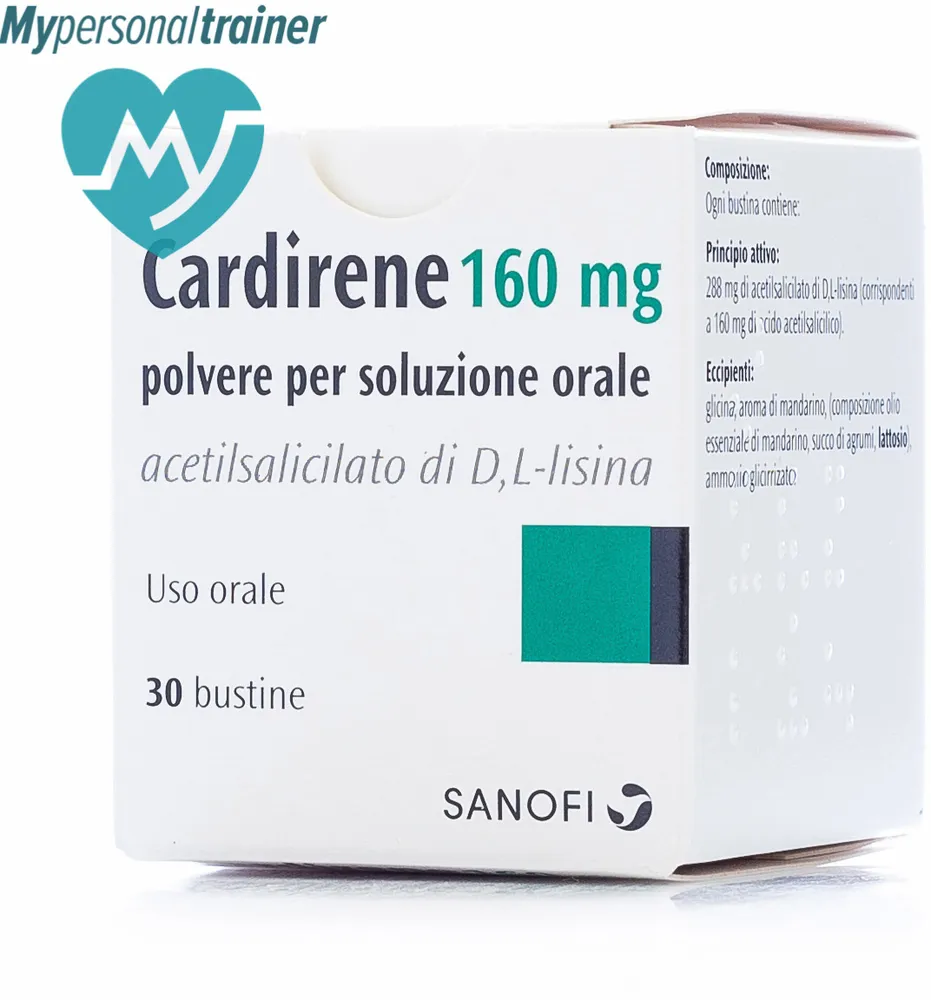
Table of Contents
- Package leaflet: Information for the patient
- Cardirene 75 mg powder for oral solution, 100 mg powder for oral solution, 160 mg powder for oral solution, 300 mg powder for oral solution
- 1. What Cardirene is and what it is used for
- 2. What you should know before taking Cardirene
- 3. How to take Cardirene
- 4. Possible adverse effects
- 5. How to store Cardirene
- 6. Pack contents and other information
Package leaflet: Information for the patient
Cardirene 75 mg powder for oral solution, 100 mg powder for oral solution, 160 mg powder for oral solution, 300 mg powder for oral solution
lysine acetylsalicylate D,L
Please read this leaflet carefully before taking this medicine because it contains
important information for you.
- Keep this leaflet. You may need to read it again.
- If you have any questions, ask your doctor or pharmacist.
- This medicine has been prescribed for you only. Do not give it to other people, even if their symptoms are the same as yours, as it may be harmful.
- If you experience any side effect, including those not listed in this leaflet, tell your doctor or pharmacist. See section 4.
Contents of this leaflet:
- What Cardirene is and what it is used for
- What you need to know before taking Cardirene
- How to take Cardirene
- Possible side effects
- How to store Cardirene
- Contents of the pack and other information
1. What Cardirene is and what it is used for
Cardirene contains the active substance D,L-lysine acetylsalicylate (analogous to acetylsalicylic acid or acetylsalicylates) and belongs to a group of medicines called "Antithrombotics, Antiplatelet agents".
Cardirene works by preventing the formation of blood clots (thrombi), inhibiting the aggregation of certain blood cells known as "platelets".
Cardirene is indicated for:
- prevention of complications caused by blood clot formation and hardening of the arteries (major atherothrombotic events):
- after heart attack (myocardial),
- after damage to blood vessels in the brain (cerebral stroke) or temporary disturbances in blood circulation (transient ischaemic attacks - TIA),
- in patients suffering from chest pain at rest (unstable angina pectoris),
- in patients suffering from chest pain during exertion (chronic stable angina pectoris);
- prevention of re-occlusion of bypass grafts (aorto-coronary bypass) and of restenosis following a specific procedure used to dilate arteries supplying blood to the heart (percutaneous transluminal coronary angioplasty - PTCA);
- prevention of heart and circulatory problems (cardiovascular events) in patients with hardening and damage to the arteries (established atheromatous disease), in a particular inflammatory condition of blood vessels (Kawasaki syndrome), in patients undergoing haemodialysis, and in the prevention of blood clot formation (thrombosis) during surgical techniques involving extracorporeal circulation (extracorporeal circulation).
The 100 mg dosage alone is indicated for:
- prevention of heart and circulatory problems (cardiovascular events) in patients at high risk of such conditions.
2. What you should know before taking Cardirene
Do not take Cardirene
- if you are allergic to D,L-lysine acetylsalicylate or to any of the other ingredients of this medicine (listed in section 6);
- if you are allergic to other non-steroidal anti-inflammatory drugs (NSAIDs);
- if you have suffered from asthma or nasal polyps associated with asthma shortly after taking a medicine containing substances similar to the active ingredient in Cardirene (acetylsalicylates) or substances with similar activity, especially non-steroidal anti-inflammatory drugs, or if you have had allergic reactions (bronchospasm, anaphylactic reactions) to substances similar to the active ingredient in Cardirene (salicylates);
- if you are in the third trimester of pregnancy (beyond 24 weeks of gestation) (see section "Pregnancy, breastfeeding and fertility");
- if you have had or currently suffer from a lesion in the wall of the stomach or the first part of the intestine (active, chronic or recurrent gastrointestinal ulcer), or have previously experienced gastric bleeding or perforation after treatment with acetylsalicylic acid or other medicines known as non-steroidal anti-inflammatory drugs (NSAIDs), medicines used to treat inflammation, fever and pain;
- if you suffer from any condition causing blood loss (haemorrhagic disease);
- if you are a person at risk of bleeding (haemorrhagic risk);
- if you suffer from severe liver problems (severe hepatic insufficiency);
- if you suffer from severe kidney problems (severe renal insufficiency);
- if you suffer from severe heart problems (severe uncontrolled heart failure);
- if you are taking a medicine called “methotrexate”, used to treat tumours, at doses exceeding 15 mg/week (see “Other medicines and Cardirene”);
- if you are taking oral medicines that affect blood coagulation (oral anticoagulants);
- if you suffer from a disease called “mastocytosis”, where the use of medicines based on “acetylsalicylic acid” may cause severe allergic reactions, including shock with sudden sensation of warmth (flushing), drop in blood pressure (hypotension), increased heart rate (tachycardia) and vomiting;
- if you are a child or adolescent under 16 years of age.
Warnings and precautions
Talk to your doctor or pharmacist before taking Cardirene:
- Cardirene contains acetylsalicylic acid; if you are taking other medicines, check that they do not contain acetylsalicylic acid. If they do, to avoid any risk of overdose, the combination should be avoided;
- if you experience headaches while taking painkillers (analgesics) for a prolonged period and at high doses; do not increase the dose and contact your doctor;
- if you regularly use painkillers (analgesics), particularly a combination of multiple analgesic medicines, as this may cause kidney problems, even severe ones (persistent kidney damage, with risk of renal failure);
- if you have a deficiency of a substance in the blood called G6PD (glucose-6-phosphate dehydrogenase), which may cause a particular inherited disease affecting red blood cells, since there is a risk of red blood cell breakdown (haemolysis) (see “Possible side effects”);
- if you have suffered from stomach or intestinal lesions (gastric or duodenal ulcer), or from bleeding in the stomach or intestine, or inflammation of the stomach (gastritis);
- if you have kidney problems (mild or moderate renal insufficiency);
- if you have liver problems (mild or moderate hepatic insufficiency);
- if you suffer from asthma: in some people, asthma attacks may be related to an allergic reaction to non-steroidal anti-inflammatory drugs or to acetylsalicylic acid; in this case, Cardirene is contraindicated (see “Do not take Cardirene”);
- if you have heavy menstrual periods or bleeding between periods (metrorrhagia or menorrhagia), as there is a risk of increasing the volume and duration of menstrual periods;
- if bleeding or lesions (ulcers)/perforations of the stomach or intestine occur. These effects, which increase with dose, may occur at any time during treatment, even if you have never had similar problems, especially if you are elderly, have low body weight, and are being treated with medicines that make the blood thinner (anticoagulants or platelet aggregation inhibitors) (see “Other medicines and Cardirene”) or if you have previously suffered from gastrointestinal ulcers, particularly if complicated by bleeding or perforation. In case of bleeding from the stomach or intestine (gastrointestinal bleeding), stop treatment immediately;
- if you are due to undergo surgery, even minor surgery (e.g. tooth extraction), as the use of Cardirene increases the risk of bleeding. Your doctor will decide on a case-by-case basis whether to interrupt treatment before surgery. If you take high doses of Cardirene for rheumatic diseases (anti-inflammatory doses), your doctor will monitor you, particularly important in children, especially at the beginning of treatment. If you experience ringing in the ears, hearing difficulties or dizziness, inform your doctor. Acetylsalicylic acid may interfere with uric acid elimination: high doses may increase uric acid excretion (uricosuric effect), while very low doses may reduce its excretion; therefore, the medicine is not recommended for people suffering from severe joint inflammation (gout). The use of Cardirene is not recommended during breastfeeding (see “Pregnancy, breastfeeding and fertility”). If you are over 70 years old, especially if you are taking other medicines, you should use this medicine only after consulting your doctor. Your doctor will prescribe Cardirene cautiously if you have mild or moderate liver problems (mild and moderate hepatic insufficiency), and if you are using certain medicines, for example to treat diabetes, stomach acidity, high blood pressure and inflammation (antidiabetics, antacids, diuretics, glucocorticoids (see “Other medicines and Cardirene”).
- Your doctor will prescribe Cardirene cautiously if you are a woman using an intrauterine device to prevent pregnancy (intrauterine device, such as a coil).
- If you take Cardirene with Nicorandil (a medicine used to prevent or relieve chest pain due to heart problems), the risk of gastrointestinal ulcer, perforation and bleeding may increase (see “Other medicines and Cardirene”).
- Avoid using Cardirene in combination with levothyroxine (a medicine used to treat thyroid disorders); see “Other medicines and Cardirene”. Cardirene may lead to an increase in thyroid hormone levels in the blood; therefore, your doctor will monitor your thyroid hormone levels.
- In patients receiving the varicella vaccine, the use of acetylsalicylic acid should be avoided for 6 weeks after vaccination.
Doses of acetylsalicylic acid equal to or greater than 500 mg per day
The medicine, by blocking the production of an enzyme (cyclooxygenase), thereby reducing the production of prostaglandins (hormones), may cause a reduction in fertility in women through an effect on ovulation. This effect is reversible once the medicine is discontinued. Take this into account especially if you have fertility problems or are undergoing fertility investigations.
Children and adolescents
The use of this medicine is contraindicated in children and adolescents under 16 years of age.
In children and adolescents affected by viral diseases (particularly chickenpox and influenza) who had taken acetylsalicylic acid, a very rare and life-threatening disease, mainly associated with damage to the nervous system and liver (Reye's syndrome), may occur. Therefore, acetylsalicylic acid should be administered to children and adolescents in this situation only on medical advice and only when other treatments have failed.
If, during treatment with acetylsalicylic acid, the child or adolescent develops persistent vomiting, disturbances in consciousness and abnormal behaviour, treatment must be stopped.
In children under 1 month of age, acetylsalicylic acid may be administered only in specific situations and on medical prescription.
Other medicines and Cardirene
Inform your doctor or pharmacist if you are taking, have recently taken or might take any other medicine.
The effects of Cardirene may be influenced by or may influence the following medicines.
- Abciximab, acetylsalicylic acid, clopidogrel, epoprostenol, eptifibatide, iloprost and iloprost trometamol, ticlopidine and tirofiban, as these medicines prevent blood platelet aggregation. The simultaneous use of different medicines acting on blood platelets increases the risk of bleeding, as does their combination with heparin or similar substances, or medicines called oral anticoagulants, or with other medicines called thrombolytics (used to prevent blood clots). If you use these medicines together with Cardirene, your doctor will monitor you. Contraindicated combinations (see “Do not take Cardirene”):
- Methotrexate (used to affect the body's immune system and in some cancers), at doses greater than 15 mg per week with medicines containing acetylsalicylic acid at active doses for controlling inflammation, pain and fever, as this increases methotrexate toxicity, particularly haematological toxicity (toxicity to blood cells).
- Oral medicines used to make blood thinner (oral anticoagulants), with medicines containing acetylsalicylic acid at active doses for controlling inflammation, pain and fever, and in patients who have suffered from severe stomach and intestinal lesions called “gastro-duodenal ulcer”, as this increases the risk of bleeding (haemorrhage). Combinations not recommended:
- Oral medicines that make blood thinner (oral anticoagulants) with medicines containing acetylsalicylic acid at active doses for controlling pain or fever, even if you have never had stomach or intestinal lesions, as this increases the risk of bleeding (haemorrhage).
- Oral medicines that make blood thinner (oral anticoagulants) with acetylsalicylic acid, used at active doses to prevent blood platelet aggregation, and if you have suffered from stomach and intestinal lesions, as this increases the risk of bleeding.
- Other non-steroidal anti-inflammatory drugs (NSAIDs), with acetylsalicylic acid, used at active doses for treating inflammation, pain or fever, as this increases the risk of stomach and intestinal lesions and bleeding (gastrointestinal ulcers and haemorrhages).
- Heparins (and similar substances), used to keep blood fluid, with therapeutic doses of acetylsalicylic acid if you are elderly (age ≥ 65 years), regardless of the dose of heparin, and at active doses of acetylsalicylic acid for treating inflammation, pain or fever, as this increases the risk of bleeding. In these cases, your doctor will prescribe another anti-inflammatory medicine or another analgesic or antipyretic.
- Clopidogrel (used to treat heart and circulation diseases), as this increases the risk of bleeding. If simultaneous administration cannot be avoided, your doctor will monitor you.
- Medicines that reduce the amount of a substance called “uric acid” in the blood (uricosurics: “benzbromarone” and “probenecid”): because when administered with Cardirene they reduce their effectiveness and cause a decrease in acetylsalicylic acid excretion and an increase in plasma levels.
- Ticlopidine, used to prevent blood platelet aggregation, as this increases the risk of bleeding. If simultaneous administration cannot be avoided, your doctor will monitor you.
- Pemetrexed (used against certain types of cancer), Cardirene may increase the risk of pemetrexed toxicity. Your doctor will monitor your clinical condition.
- Levothyroxine (used to treat thyroid disorders): Cardirene may alter the amount of thyroid hormones in the blood; therefore, your doctor will monitor your thyroid hormone levels.
- Varicella vaccine: it is recommended not to administer salicylates to patients who have received the varicella vaccine for a period of six weeks after vaccination. Cases of Reye's syndrome (serious disturbances in the brain and liver, especially in children) have occurred following the use of salicylates during varicella infection.
- Medicines called "Selective Serotonin Reuptake Inhibitors" (citalopram, escitalopram, fluoxetine, fluvoxamine, paroxetine, sertraline), used to treat depression, as they increase the risk of bleeding, particularly in the upper digestive tract. Therefore, if possible, concomitant use should be avoided.
- Pentoxifylline, used to prevent blood clot formation (thrombi), as it increases the risk of bleeding. Combinations requiring precautions for use:
- Medicines to increase urine production (diuretics), medicines to treat high blood pressure (angiotensin-converting enzyme inhibitors (ACE inhibitors) and angiotensin II receptor antagonists) with acetylsalicylic acid at active doses for treating inflammation, pain or fever, as kidney problems (acute renal failure) may occur, especially in dehydrated patients. In addition, a reduction in the blood pressure-lowering effect (antihypertensive effect) may occur.
- Methotrexate, used to affect the body's immune system and in some cancers, at doses equal to or less than 15 mg/week with acetylsalicylic acid at active doses for treating inflammation, pain or fever, as this increases methotrexate toxicity, particularly toxicity to blood cells. Your doctor will monitor you, especially during the first weeks of treatment and particularly if you have kidney problems (even mild) or are elderly.
- Methotrexate, used to affect the body's immune system and in some cancers, at doses exceeding 15 mg with acetylsalicylic acid at active doses to prevent blood platelet aggregation, as this increases methotrexate toxicity, particularly toxicity to blood cells. Your doctor will monitor you, especially during the first weeks of treatment and particularly if you have kidney problems (even mild) or are elderly.
- Clopidogrel (used for reduced heart circulation problems called “acute coronary syndrome”), used to treat heart and circulation diseases, as this increases the risk of bleeding. Your doctor will monitor you.
- Medicines for the stomach and intestine (gastrointestinal topicals, antacids and adsorbents including charcoal) as they decrease the gastrointestinal absorption of Cardirene. Take, if possible, gastrointestinal topicals and antacids at least 2 hours apart from Cardirene.
- Heparins (and similar medicines), at active doses to keep blood fluid for preventive purposes if you are under 65 years of age, as co-administration of medicines acting on blood coagulation increases the risk of bleeding. If you need to take heparins simultaneously with Cardirene, your doctor will monitor you.
- Heparins (and similar substances) at therapeutic doses or if you are elderly (≥ 65 years), regardless of the heparin dose, and for doses of acetylsalicylic acid used to prevent blood platelet aggregation, as this increases the risk of bleeding.
- Medicines used to prevent blood clot formation (thrombolytics), as this increases the risk of bleeding.
- Oral medicines that make blood thinner (oral anticoagulants) with acetylsalicylic acid at doses used to prevent blood platelet aggregation, as this increases the risk of bleeding, especially if you have suffered from gastrointestinal ulcer.
- Other non-steroidal anti-inflammatory drugs (NSAIDs) with acetylsalicylic acid at doses used to prevent blood platelet aggregation, as this increases the risk of stomach and intestinal lesions and bleeding.
- Glucocorticoids (except hydrocortisone), medicines used to treat inflammation, with acetylsalicylic acid at doses for treating pain and fever, as this increases the risk of bleeding.
- Acetazolamide (a medicine used to treat high blood pressure): if taken concomitantly with Cardirene, there is a risk of vomiting, tachycardia (fast heartbeat), hyperpnea (rapid and deep breathing), mental confusion, fatigue, lethargy (extreme drowsiness), drowsiness, confusion, hyperchloremic metabolic acidosis (a condition characterised by increased acid levels in the blood).
- Ibuprofen (used for inflammation): because ibuprofen may interfere with the clot-preventing effects of low-dose acetylsalicylic acid (platelet aggregation).
- Metamizole, a medicine used for pain, as when taken concomitantly with acetylsalicylic acid it may reduce its effect on platelet aggregation. Therefore, your doctor will prescribe metamizole cautiously if you are taking low doses of acetylsalicylic acid for heart protection (cardioprotection).
- Medicines associated with a risk of bleeding: because the combination with Cardirene may have an additive effect on platelet aggregation (resulting in increased risk of bleeding). In such cases, your doctor will perform regular clinical monitoring.
- Insulin and sulfonylureas (medicines that reduce blood sugar): the combination with Cardirene increases the risk of hypoglycaemia (low blood sugar levels).
- Nicorandil (a medicine used to prevent or relieve chest pain due to heart problems): because if taken concomitantly with Cardirene it may increase the risk of gastrointestinal ulcer, perforation and bleeding (see “Warnings and precautions”).
- Valproic acid (used to treat epilepsy): Cardirene, when used with valproic acid-based medicines, may lead to an increase in valproic acid levels in the blood. Therefore, your doctor will monitor valproate levels in your blood.
- Tenofovir (used in the treatment of certain viral infections): the use of Cardirene with Tenofovir may increase the likelihood of kidney problems (renal failure). Therefore, your doctor will monitor your kidney function.
Cardirene and alcohol
Alcohol may increase the risk of stomach and intestinal damage and alter blood coagulation tests (prolonged bleeding time) when taken together with acetylsalicylic acid. Therefore, alcoholic beverages should be consumed with caution by patients during and within 36 hours after taking acetylsalicylic acid.
Pregnancy, breastfeeding and fertility
If you are pregnant, suspect you may be pregnant, planning a pregnancy, or breastfeeding, consult your doctor or pharmacist before taking this medicine.
Pregnancy
Administration during the last three months of pregnancy (after 24 weeks of gestation) is contraindicated.
During other stages of pregnancy, take Cardirene for long-term treatment only if your doctor tells you to, as acetylsalicylic acid may cause:
bleeding in both you and the foetus,
delayed delivery,
heart problems (early closure of the ductus arteriosus) in the newborn.
Cardirene may negatively affect pregnancy and/or neonatal development.
The use of Cardirene in early pregnancy may increase the risk of miscarriage, abnormal formation of the abdominal wall (gastroschisis) and heart malformations. Therefore, do not use Cardirene during the first 24 weeks of pregnancy unless your doctor considers its use strictly necessary.
If you are trying to conceive or during the first 24 weeks of pregnancy, your doctor will keep the dose and duration of treatment as low as possible.
Beyond 24 weeks of pregnancy, all medicines acting like Cardirene (prostaglandin synthesis inhibitors) may expose the foetus to:
- heart and lung problems (with premature closure of the arterial duct and pulmonary hypertension);
- kidney problems, even severe ones (renal dysfunction, which may progress to renal failure with oligo-anhydramnios). At the end of pregnancy, you and your newborn may experience:
- prolonged bleeding time, which may occur even after administration of very low doses of acetylsalicylic acid,
- inhibition of uterine contractions resulting in delayed or prolonged labour.
Breastfeeding
Acetylsalicylic acid passes into breast milk. Do not use Cardirene during breastfeeding due to the possible risk of increased blood acidity (acidosis) and bleeding (haemorrhagic syndrome) in the infant.
Fertility
At dosages equal to or greater than 500 mg/day, Cardirene may cause reduced fertility in women through an effect on ovulation. This effect is reversible once the medicine is discontinued.
Take this into account especially if you have fertility problems or are undergoing fertility investigations.
Driving and using machines
No effects of Cardirene on the ability to drive vehicles or use machinery are known.
Cardirene powder for oral solution contains lactose
If your doctor has diagnosed you with an intolerance to certain sugars, contact him before taking this medicine.
Cardirene powder for oral solution contains sodium
This medicine contains less than 1 mmol (23 mg) of sodium per sachet, i.e. essentially “sodium-free”.
3. How to take Cardirene
Take this medicine exactly as directed by your doctor or pharmacist.
If you have any doubts, consult your doctor or pharmacist.
Adults
The recommended dose is: 1 sachet daily, dissolved in a glass of water.
Begin treatment with Cardirene 160 mg or Cardirene 300 mg, as prescribed by your doctor,
immediately after the onset of the first symptoms, and continue for at least 5 weeks.
It may be possible to continue therapy with Cardirene 75 mg or Cardirene 100 mg.
If you have had a heart attack or experience chest pain at rest (unstable angina), your doctor will
start treatment as soon as possible.
If you are at high risk of heart and blood circulation problems (cardiovascular events), your doctor
will prescribe a dosage of 100 mg.
Use Cardirene only if it has been prescribed by your doctor.
If you take more Cardirene than you should
In case of accidental ingestion or overdose of Cardirene, inform your doctor immediately or go to the nearest hospital.
For acetylsalicylic acid, toxic doses range between 200 mg/kg and 300 mg/kg when taken orally.
In children, an overdose can be fatal starting from a dose of 100 mg/kg in a single intake.
Pay particular attention to overdose if you are elderly or if an excessive dose is taken by a young child (either during treatment or, more frequently, due to accidental poisoning).
Overdose with this type of medicine, particularly in young children, may lead to severe lowering of blood sugar levels (hypoglycaemia) and potentially fatal poisoning. Overdose of acetylsalicylic acid may cause, both in the short and long term, accumulation of fluid in the lungs (non-cardiogenic pulmonary oedema), which can be life-threatening.
Symptoms of overdose
- Moderate intoxication: tinnitus (ringing in the ears), hearing impairment, headache, dizziness, vertigo, confusion and nausea are signs of overdose and may be managed by reducing the dosage.
- Severe intoxication: fever, rapid breathing (hyperventilation), changes in blood acidity (respiratory alkalosis, ketosis, metabolic acidosis), coma, cardiovascular collapse, breathing difficulties (respiratory failure), severe lowering of blood sugar levels (hypoglycaemia).
If you forget to take Cardirene
Do not take a double dose to make up for the missed dose.
If you have any doubts about how to use this medicine, consult your doctor or pharmacist.
4. Possible adverse effects
Like all medicines, this medicine can cause adverse effects, although not everybody experiences them.
The frequency of adverse events cannot be determined from the available data, therefore the frequency is defined as "not known".
-
Bleeding (haemorrhagic syndromes, including potentially fatal bleeding: nosebleeds (epistaxis); bleeding from the gums; blood in the urine and genital bleeding; bleeding within the head (intracranial haemorrhage), which may be fatal, especially in elderly patients; bleeding of the stomach and intestines, with blood in vomit or stools (occult or overt gastrointestinal haemorrhage, haematemesis, melena, etc.), leading to iron deficiency anaemia; bruising; red spots on the skin (purpura); prolonged bleeding time. The risk of bleeding may persist for 4–8 days after stopping acetylsalicylic acid administration. This may increase the risk of bleeding (haemorrhage) if you are undergoing surgery.
-
Decrease in the number of blood platelets (thrombocytopenia).
-
Breakdown of red blood cells (haemolytic anaemia) in individuals with G6PD deficiency (glucose-6-phosphate dehydrogenase deficiency), a hereditary condition affecting red blood cells.
-
Decrease, sometimes severe, in the number of blood cells (pancytopenia, bicytopenia, aplastic anaemia, bone marrow failure, agranulocytosis, neutropenia, leucopenia).
-
Allergic reactions (hypersensitivity, anaphylactic reactions, asthma, angioedema, oedema).
-
Bronchospasm (contraction of the muscles of the bronchi) and asthma (inflammation and narrowing of the airways).
-
Headache, dizziness and vertigo, which may occur with high doses and prolonged treatment. If you experience these symptoms, contact your doctor immediately; they will assess whether treatment should be discontinued.
-
Ringing in the ears (tinnitus) and hearing loss, which may occur with high doses and prolonged treatment. If you experience these symptoms, contact your doctor immediately; they will assess whether treatment should be discontinued.
-
Abdominal pain.
-
Difficulty digesting (dyspepsia).
-
Bleeding of the stomach and intestines (gastrointestinal haemorrhage); nausea; inflammation and lesions of the oesophageal mucosa (oesophagitis and oesophageal ulcers); inflammation of the stomach and duodenum, with abdominal pain and intestinal bleeding (erosive gastritis and duodenitis); lesions (ulcers) in the stomach and/or intestines; inflammation (colitis) and perforation of the gastrointestinal tract. These reactions may occur at any dose of acetylsalicylic acid and in patients with or without pre-existing gastrointestinal disorders predictive of such events, whether or not they have previously experienced serious gastrointestinal events.
-
May cause abnormal narrowing of the intestine (diaphragm-like intestinal stricture), which may lead to symptoms such as abdominal bloating, abdominal discomfort, and blood in the stool. If these symptoms occur, consult a doctor immediately.
-
Inflammation of the pancreas (acute pancreatitis) as a hypersensitivity reaction to acetylsalicylic acid.
-
Liver disorders and inflammation (chronic hepatitis), with abnormal liver blood tests (elevated liver enzymes).
-
Urticaria and other skin irritations that always appear in the same location (fixed eruptions).
-
Kidney disorders (renal failure).
-
R eye syndrome, a serious illness affecting mainly children, characterised by fever, influenza-like symptoms, varicella (chickenpox), and damage to the nervous system and liver (see "Warnings and precautions").
-
Acetylsalicylic acid may prolong labour and delay childbirth.
-
Accumulation of fluid in the lungs (non-cardiogenic pulmonary oedema) with prolonged use of the medicine, which may also occur in the context of an allergic reaction to acetylsalicylic acid.
-
Potentially fatal haemorrhage (severe blood loss, potentially life-threatening) and inflammation of blood vessels (vasculitis, including Schönlein-Henoch purpura).
-
Allergic-type disorders of the heart arteries (Kounis syndrome) in the case of an allergic reaction to acetylsalicylic acid.
-
Presence of blood in semen (haemospermia).
Reporting of adverse effects
If you experience any adverse effect, including those not listed in this leaflet, talk to your doctor or pharmacist. You can also report adverse effects directly via the national reporting system at www.aifa.gov.it/content/segnalazioni-reazioni-avverse.
By reporting adverse effects, you can help provide more information on the safety of this medicine.
5. How to store Cardirene
Keep this medicine out of the sight and reach of children.
Store below 25°C.
Keep in the original container.
Do not use this medicine after the expiry date which is stated on the carton after “Expiry”.
The expiry date refers to the last day of that month.
Do not dispose of any medicine via wastewater or household waste. Ask your pharmacist how to
dispose of medicines you no longer use. This will help protect the environment.
6. Pack contents and other information
What Cardirene contains
Cardirene 75 mg
The active substance is D,L-lysine acetylsalicylate. One sachet contains 135 mg of
D,L-lysine acetylsalicylate (equivalent to 75 mg of acetylsalicylic acid).
The other components are: glycine, tangerine flavour (tangerine essential oil, citrus juice and lactose), ammonium glycyrrhizinate.
Cardirene 100 mg
The active substance is D,L-lysine acetylsalicylate. One sachet contains 180 mg of
D,L-lysine acetylsalicylate (equivalent to 100 mg of acetylsalicylic acid).
The other components are: glycine, tangerine flavour (tangerine essential oil, citrus juice and lactose), ammonium glycyrrhizinate.
Cardirene 160 mg
The active substance is D,L-lysine acetylsalicylate. One sachet contains 288 mg of
D,L-lysine acetylsalicylate (equivalent to 160 mg of acetylsalicylic acid).
The other components are: glycine, tangerine flavour (tangerine essential oil, citrus juice and lactose), ammonium glycyrrhizinate.
Cardirene 300 mg
The active substance is D,L-lysine acetylsalicylate. One sachet contains 540 mg of
D,L-lysine acetylsalicylate (equivalent to 300 mg of acetylsalicylic acid).
The other components are: glycine, tangerine flavour (tangerine essential oil, citrus juice and lactose), ammonium glycyrrhizinate.
Description of the appearance of Cardirene and pack contents
Cardirene is a powder for oral solution supplied in a box containing 30 sachets.
Marketing Authorization Holder
Sanofi S.r.l., Viale L. Bodio, 37/B - Milan, Italy
Manufacturer
Sanofi Winthrop Industrie - 196, rue du Marechal Juin - Amilly (France)