Cardiazol Paracodina
Italy
Instructions for Use
Package leaflet: Information for the patient
Cardiazol-Paracodina 20 mg/ml + 100 mg/ml oral drops, solution
dihydrocodeine thiocyanate / pentetrazol
Please read all of this leaflet carefully before taking this medicine because it contains important information for you.
- Keep this leaflet. You may need to read it again.
- If you have any questions, ask your doctor or pharmacist.
- This medicine has been prescribed for you only. Do not give it to other people, even if their symptoms are the same as yours, because it could be harmful.
- If you experience any side effects, including those not listed in this leaflet, tell your doctor or pharmacist. See section 4.
Contents of this leaflet:
- What Cardiazol-Paracodina is and what it is used for
- What you need to know before taking Cardiazol-Paracodina
- How to take Cardiazol-Paracodina
- Possible side effects
- How to store Cardiazol-Paracodina
- Contents of the pack and other information
1. What Cardiazol-Paracodina is and what it is used for
Cardiazol-Paracodina contains the active substances dihydrocodeine thiocyanate and pentetrazol.
Cardiazol-Paracodina is used to treat dry cough.
2. What you should know before taking Cardiazol-Paracodina
Do NOT take Cardiazol-Paracodina:
- if you are allergic to dihydrocodeine thiocyanate, pentetrazol, or to any of the other ingredients of this medicine (listed in section 6);
- if you have severe liver problems (hepatic insufficiency);
- if you suffer from respiratory disorders (respiratory insufficiency);
- if you suffer from constipation lasting for several days;
- if you are taking or have taken within the last two weeks antidepressant medicines (of the class known as monoamine oxidase inhibitors);
- if you are taking other pain-relieving medicines (narcotic analgesics);
- if you suffer from epilepsy, even in the past;
- if you suffer from seizures;
- if you are breastfeeding (see section "Pregnancy and breastfeeding");
- if the patient to be treated is a child under 6 years of age.
Warnings and precautions
Talk to your doctor or pharmacist before taking Cardiazol-Paracodina.
Cardiazol-Paracodina may cause symptoms of dependence after prolonged use. In case of dependence, when treatment is stopped, withdrawal symptoms such as irritability, agitation, insomnia, anxiety, and palpitations (awareness of heartbeat) may occur.
Talk to your doctor if you are elderly and are taking Cardiazol-Paracodina at high doses and/or for a long period of time, as the medicine may worsen symptoms of other diseases (e.g. cerebral disorders, difficulty in urinating).
Children
Cardiazol-Paracodina must not be used in children under 6 years of age.
Other medicines and Cardiazol-Paracodina
Inform your doctor or pharmacist if you are using, have recently used, or might use any other medicine.
The effects of Cardiazol-Paracodina on the central nervous system are increased by other medicines such as:
- sedatives,
- tranquillizers,
- antihistamines. Your doctor will advise you to avoid unexpected and undesirable interaction effects. The concomitant use of Cardiazol-Paracodina and sedative medicines such as benzodiazepines or related derivatives increases the risk of drowsiness, breathing difficulties (respiratory depression), coma, and may be life-threatening. For this reason, concomitant use should only be considered when no other treatment options are possible. However, if your doctor prescribes Cardiazol-Paracodina together with another sedative medicine, the dose and duration of concomitant treatment must be limited by your doctor. Inform your doctor about all sedative medicines you are taking and strictly follow the dosage instructions provided by your doctor. It may be helpful to inform family members and friends to watch for the signs and symptoms listed above. Contact your doctor if these symptoms occur.
Cardiazol-Paracodina and alcohol
Do not consume alcohol during treatment.
Pregnancy and breastfeeding
If you are pregnant, think you may be pregnant, planning to become pregnant, or are breastfeeding, ask your doctor or pharmacist for advice before taking this medicine.
Pregnancy
This medicine passes through the placenta, so it is possible that the newborn baby may experience breathing problems at birth. Your doctor will prescribe Cardiazol-Paracodina only if clearly necessary.
Breastfeeding
Cardiazol-Paracodina must not be used during breastfeeding (see "Do NOT take Cardiazol-Paracodina").
Driving and using machines
Cardiazol-Paracodina may cause drowsiness and thus may impair your ability to drive vehicles or operate machinery or perform tasks requiring full alertness.
For those engaged in sports
Using this medicine without therapeutic need constitutes doping and may lead to a positive anti-doping test.
3. How to take Cardiazol-Paracodina
Take this medicine exactly as directed by your doctor or pharmacist. If you have
any doubts, consult your doctor or pharmacist.
Dosage
Adults and adolescents (over 12 years of age):
The recommended dose is 12-20 drops 2-3 times daily (every 8-12 hours), if necessary.
Do not exceed the maximum daily dose corresponding to approximately 50 mg of dihydrocodeine and 300 mg of
pentetrazol.
Children and adolescents (from 6 to 12 years of age):
6-10 drops 2-3 times daily (every 8-12 hours), if necessary.
Do not exceed the maximum daily dose corresponding to approximately 25 mg of dihydrocodeine and 150 mg of
pentetrazol.
CARDIAZOL-PARACODINA is contraindicated in children under 6 years of age.
1 drop of solution (0.05 ml) contains 1 mg of dihydrocodeine thiocyanate and 5 mg of pentetrazol.
Elderly:
The dose will be carefully determined by the doctor, who may consider reducing the dosage.
Method of administration
Cardiazol-Paracodina should preferably be taken after meals and may be diluted in sugared water or fruit juice.
Duration of treatment
Do not exceed 7 days of treatment.
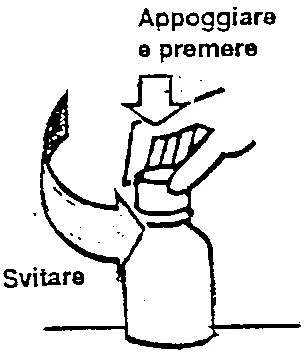
HOW TO OPEN THE BOTTLE
To open:
- Place the bottle on a flat surface.
- Press down on the cap while simultaneously unscrewing it.
To close:
- Screw the cap back on tightly until fully secured.
If you take more Cardiazol-Paracodina than you should
If an excessive dose of Cardiazol-Paracodina is accidentally ingested, contact your doctor immediately or go to the nearest hospital.
Symptoms of opioid poisoning, such as from dihydrocodeine thiocyanate, include:
- deep coma (state of unconsciousness),
- reduced respiratory rate,
- sudden drop in arterial blood pressure,
- decreased heart activity leading to inadequate blood supply to organs (cardiocirculatory depression),
- pupil constriction (miosis),
- reduced urine production (oliguria),
- sudden drop in body temperature,
- fluid accumulation in the lungs (pulmonary edema). Symptoms due to an excessive intake of pentetrazol include:
- respiratory depression (reduced lung activity),
- epileptic-type seizures (uncontrolled movements). If you have any doubts about the use of Cardiazol-Paracodina, consult your doctor or pharmacist.
If you forget to take Cardiazol-Paracodina
Do not take a double dose to make up for the missed dose.
If you stop treatment with Cardiazol-Paracodina
If you have any doubts about the use of this medicine, consult your doctor or pharmacist.
4. Possible side effects
Like all medicines, this medicine can cause side effects, although not everyone gets them.
The following side effects have been reported with unknown frequency (frequency cannot be
determined from the available data):
- sedation
- somnolence
- nausea
- vomiting
- constipation
- headache
- dizziness
- asthenia (weakness)
- agitation, especially in elderly people
Reporting of side effects
If you experience any side effect, including those not listed in this leaflet, talk to your doctor or pharmacist.
You can also report side effects directly via the national reporting system at https://www.aifa.gov.it/content/segnalazioni-reazioni-avverse.
By reporting side effects, you can help provide more information on the safety of this medicine.
5. How to store Cardiazol-Paracodina
Keep this medicine out of the sight and reach of children.
Do not store above 25°C.
Do not use this medicine after the expiry date stated on the packaging after "Exp.". The expiry date refers to the last day of that month.
Do not dispose of any medicine via wastewater or household waste. Ask your pharmacist how to dispose of medicines no longer used. This will help protect the environment.
6. Package contents and other information
What Cardiazol-Paracodina contains
- The active substances are pentetrazol and dihydrocodeine thiocyanate. 1 ml of solution contains 100 mg of pentetrazol and 20 mg of dihydrocodeine thiocyanate.
- The other components are purified water, peppermint essence, polysorbate 80.
Description of the appearance of Cardiazol-Paracodina and contents of the pack
Cardiazol-Paracodina is a solution contained in a 10 ml bottle with dropper.
Marketing Authorization Holder
TEOFARMA S.r.l.
Via F.lli Cervi, 8
27010 Valle Salimbene (PV)
Manufacturer
TEOFARMA S.r.l.
Viale Certosa, 8/A
27100 Pavia
This page has been machine-translated and may contain inaccuracies. The original data is available in the manufacturing country's language.
Last data check: May 11, 2026 · Data source: Agenzia Italiana del Farmaco (AIFA)