Carboplatin Medac
Italy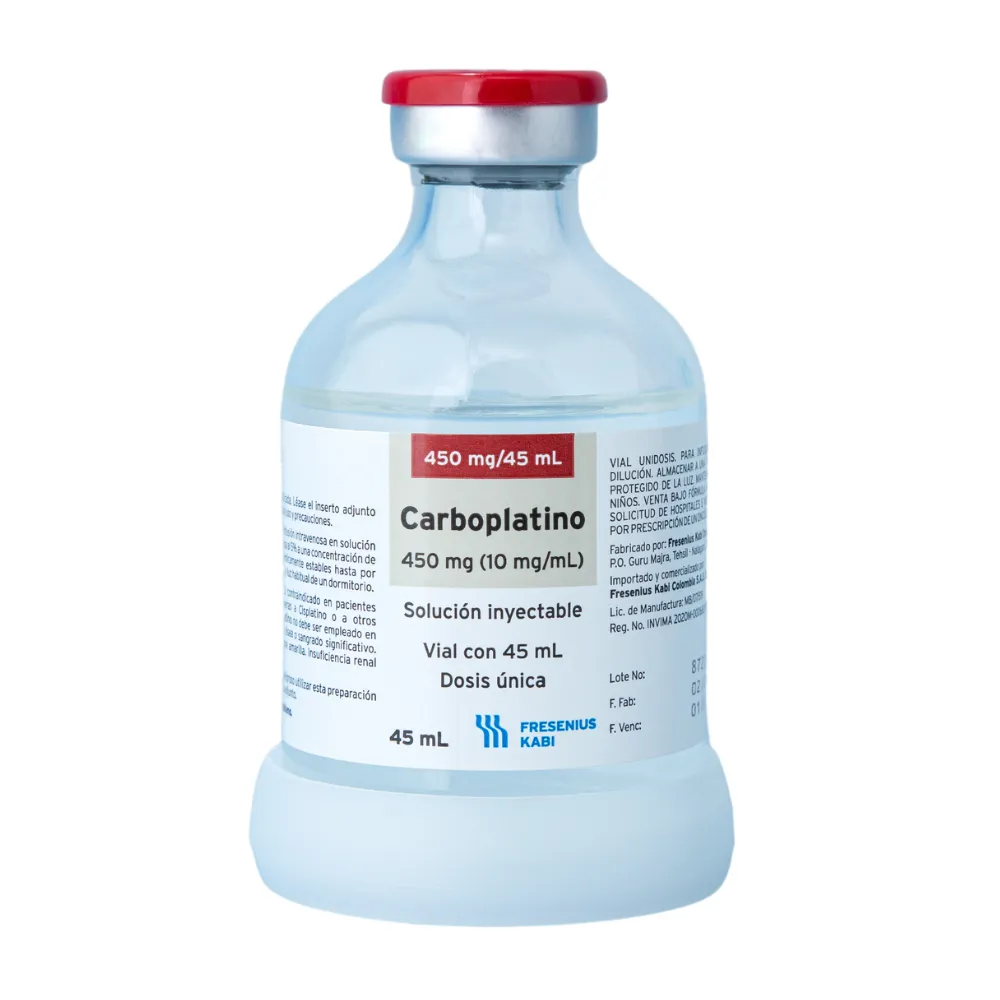
Table of Contents
- Package leaflet: Information for the user
- Carboplatino medac 10 mg/ml concentrate for solution for infusion
- 1. What Carboplatino medac is and what it is used for
- 2. What you need to know before using Carboplatino medac
- 3. How to use Carboplatino medac
- 4. Possible side effects
- 5. How to store Carboplatino medac
- 6. Package contents and other information
- The following information is intended exclusively for healthcare professionals:
Package leaflet: Information for the user
Carboplatino medac 10 mg/ml concentrate for solution for infusion
carboplatin
Equivalent medicinal product
Please read this leaflet carefully before using this medicine because it contains important information for you.
- Keep this leaflet. You may need to read it again.
- If you have any questions, consult your doctor, pharmacist or nurse.
- If you experience any side effects, including those not listed in this leaflet, tell your doctor, pharmacist or nurse. See section 4.
Contents of this leaflet
- What Carboplatino medac is and what it is used for
- What you need to know before using Carboplatino medac
- How to use Carboplatino medac
- Possible side effects
- How to store Carboplatino medac
- Contents of the pack and other information
1. What Carboplatino medac is and what it is used for
The name of the medicinal product is “Carboplatino medac 10 mg/ml concentrate for solution for infusion”, but
in the remainder of this leaflet it will be referred to as “Carboplatino medac”.
What Carboplatino medac is
Carboplatino medac contains carboplatin, which belongs to a group of medicines known as
“platinum coordination compounds”, which are used to treat cancer. The medicine is usually administered by injection in a hospital.
What Carboplatino medac is used for
Carboplatino medac is used to treat certain types of ovarian and lung cancer (ovarian epithelial cancer, small cell lung cancer).
2. What you need to know before using Carboplatino medac
Do not use Carboplatino medac
- if you are allergic to carboplatin or to any of the other ingredients of this medicine (listed in section 6).
- if you are allergic to another medicine belonging to the group of platinum-containing compounds.
- if you are breastfeeding.
- if you have severe kidney problems.
- if you have a blood cell disorder (severe myelosuppression).
- if you have a tumour that is bleeding.
- if you are scheduled to receive a yellow fever vaccine at the same time.
If any of these conditions apply to you and you have not already discussed them with your doctor or pharmacist,
you must do so as soon as possible and in any case before receiving the injection.
Carboplatino medac is usually administered in a hospital. You will generally not be required to handle
this medicine yourself. The medicine will be administered by your doctor, who will monitor you closely and
frequently during and after treatment. Blood tests are typically performed before each dose.
Warnings and precautions
Talk to your doctor, pharmacist, or nurse before receiving Carboplatino medac
- if you have ever had an allergic reaction to platinum-containing agents, such as oxaliplatin.
- if your kidneys are not functioning properly. In this case, your doctor will carry out more frequent tests.
- if you are pregnant or think you might be. See section “Pregnancy, breastfeeding and fertility” below.
- if you experience headache, confusion, seizures, or visual disturbances ranging from blurred vision to loss of vision.
- if you develop extreme tiredness and shortness of breath due to a decrease in red blood cells, alone or combined with a low platelet count, unusual bruising, and kidney problems that may cause reduced or no urine output (symptoms of haemolytic-uraemic syndrome).
- if you have a fever (temperature equal to or greater than 38 °C) or chills, which could be signs of infection. In this case, inform your doctor immediately. You may be at risk of developing a blood infection.
- if you experience visual disturbances.
- if you develop abnormal skin sensations, such as numbness, tingling, or pins and needles.
- if you experience vomiting. In this case, your doctor may prescribe medicines to prevent it.
- if you experience hearing problems.
- if you have recently received or are scheduled to receive any vaccine. During treatment with carboplatin, you must not receive "live" or "attenuated" vaccines, such as the yellow fever vaccine.
During treatment with carboplatin, you will be given medicines to help reduce a potentially fatal complication known as tumour lysis syndrome, which is caused by chemical changes in the blood due to the breakdown of dying cancer cells releasing their contents into the bloodstream.
If any of these conditions apply to you and you have not already discussed them with your doctor or pharmacist,
you must do so as soon as possible and in any case before receiving the injection.
Other medicines and Carboplatino medac
Tell your doctor or pharmacist if you are taking, have recently taken, or might take any other medicines.
Inform your doctor if you are taking any of the following medicines, as they may interact with Carboplatino medac:
- if you are taking medicines that may affect blood cell counts.
- if you are taking medicines known to cause kidney toxicity.
- during treatment with carboplatin you must not receive yellow fever vaccines (see also “Do not use Carboplatino medac”), as this increases the risk of developing yellow fever, which can be fatal.
- during treatment with carboplatin you must not receive any vaccine containing live viruses, as there is a risk of developing the disease the vaccine is intended to prevent, which can be fatal.
- carboplatin may reduce the effects of medicines used to treat epilepsy (e.g. phenytoin and fosphenytoin).
- carboplatin may reduce the effectiveness of medicines taken to prevent blood clotting (anticoagulants). For this reason, blood clotting must be monitored more frequently when these medicines are used together.
- concomitant use of carboplatin with chelating agents (agents that can chemically bind to carboplatin) may reduce the anticancer effect of carboplatin.
- the toxicity of carboplatin may severely impair kidney function and hearing if administered concomitantly with medicines known to damage the kidneys and ears, such as aminoglycoside antibiotics (medicines used to prevent/treat certain infections) or so-called loop diuretics.
- concomitant use of carboplatin with cyclosporine, tacrolimus, and sirolimus (used to suppress the immune system in autoimmune diseases or organ transplantation) may weaken the immune system, increasing the risk of infections. A weakened immune system may also increase the production of white blood cells.
Pregnancy, breastfeeding and fertility
If you are pregnant, think you may be pregnant, planning to become pregnant, or breastfeeding, consult your doctor or pharmacist before receiving this medicine.
Pregnancy
Carboplatino medac must not be administered during pregnancy unless clearly recommended by your doctor. If you are treated with Carboplatino medac during pregnancy, discuss the potential effects on the unborn child with your doctor.
Women of childbearing potential must use effective contraception during treatment and for at least 6 months after treatment ends. If you become pregnant during treatment with Carboplatino medac, you should consult a doctor for genetic counselling, as Carboplatino medac may cause harm to the unborn child.
Breastfeeding
It is not known whether carboplatin passes into breast milk; therefore, breastfeeding must be avoided during treatment with Carboplatino medac. If your doctor considers treatment with Carboplatino medac absolutely necessary, breastfeeding must be discontinued.
Fertility
Carboplatino medac may cause genetic damage, such as mutations in sperm cells. Men treated with Carboplatino medac must not father a child during treatment and for at least 3 months after treatment ends, and should seek advice on sperm preservation before treatment due to the possibility of irreversible infertility.
Driving and using machines
Carboplatino medac may cause nausea, vomiting, visual disturbances, and hearing problems, which may impair your ability to drive or operate machinery. Do not drive or operate machinery if you experience any of these symptoms.
3. How to use Carboplatino medac
The injection will always be administered by a doctor. It is usually given as an intravenous infusion (slow injection) into a vein and takes generally between 15 and 60 minutes. If you need further information, please consult your doctor.
Your dose will depend on your body weight and height, as well as on the results of blood tests and kidney function tests. Your doctor will choose the most appropriate dose for you. Normally, this product is diluted before use.
Use in adults
The recommended dose is 400 mg/m² of body surface area (calculated according to weight and height).
Renal problems
If you have kidney problems, your doctor may reduce the dose and carry out frequent blood tests, as well as monitor kidney function.
During treatment with Carboplatino medac you may experience nausea or vomiting. Your doctor may give you another medicine to help reduce these effects before administering Carboplatino medac.
Usually, there is an interval of four weeks between one dose of Carboplatino medac and the next. Your doctor will perform blood tests weekly after each administration of Carboplatino medac in order to determine the correct subsequent dosage for you.
If you receive more Carboplatino medac than you should
It is unlikely that you will be given too much Carboplatino medac. However, if this were to happen, myelosuppression could occur (the bone marrow may not be able to produce new blood cells), which, for example, could lead to easy bruising. You may also experience problems with the kidneys and liver, as well as hearing problems. If you are concerned that you have received too high a dose, or if you have any questions about the dose you have been given, speak to the doctor administering the medicine.
If you miss a dose of Carboplatino medac
It is unlikely that a dose of the medicine will be missed, as your doctor will have clear instructions on when to administer it. If you think you have missed a dose, consult your doctor.
If you stop treatment with Carboplatino medac
Normally, it is your doctor who decides when to stop treatment with Carboplatino medac.
If you have any doubts about using this medicine, consult your doctor, pharmacist, or nurse.
4. Possible side effects
Like all medicines, this medicine can cause side effects, although not everybody gets them.
Important side effects or symptoms to watch for and what to do if they occur
If you think you are experiencing any of the following side effects or symptoms, contact your doctor
immediately.
Very common (may affect more than 1 in 10 people)
- reduction in the number of white blood cells (resulting in a higher risk of infections)
- reduction in red blood cells, which may cause paleness, weakness, or shortness of breath (anaemia)
- reduction in the number of platelets (resulting in an increased risk of bleeding or bruising)
Common (may affect up to 1 in 10 people)
- infections (possible signs of infection include, for example, sore throat, fever, chills)
- unusual bruising or bleeding (for example, bleeding gums, blood in urine or vomit, or unexpected bruising or blood vessel rupture [vein rupture])
- allergic reactions including skin rash, redness, urticaria, itching, elevated temperature
- severe allergic reaction (anaphylaxis). This type of reaction is most likely in the minutes following administration of Carboplatino medac. Symptoms of a severe allergic reaction include sudden wheezing or chest tightness, swelling of the eyelids, face or lips, skin rash, itching, and elevated temperature
- decreased deep tendon reflexes (reflex muscle contraction response when a muscle tendon is struck)
- abnormal skin sensations such as numbness, pins and needles, tingling
- vision problems
- ear damage (ototoxicity), for example tinnitus, hearing loss
- cardiovascular disorders (side effects affecting the circulatory system)
- lung disease
- severe lung disease associated with breathlessness, difficulty breathing and/or lung scarring (interstitial lung disease)
- difficulty breathing or wheezing
Uncommon (may affect up to 1 in 100 people)
- symptoms affecting the central nervous system, often associated with medicines taken to prevent nausea or vomiting
- fever and chills without evidence of infection
Rare (may affect up to 1 in 1,000 people)
- loss of vision
- feeling unwell with elevated temperature due to low levels of white blood cells (febrile neutropenia)
- severe and potentially fatal infection of the body and blood with organ dysfunction, commonly known as sepsis (sepsis/septic shock)
- skin inflammation with skin peeling
Not known (frequency cannot be estimated from the available data)
- stroke
- optic neuritis (inflammation of the optic nerve)
- heart failure
- chest pain which may indicate a potentially severe allergic reaction called Kounis syndrome
- blockage of an artery (embolism)
- redness, swelling, pain or dead skin around the injection site (injection site reactions)
- leakage of fluid into the surrounding tissue at the injection site (injection site extravasation)
- a group of symptoms such as headache, altered mental function, seizures, and visual disturbances ranging from blurred vision to loss of vision (symptoms of reversible posterior leukoencephalopathy syndrome, a rare neurological disorder)
- brain disorder caused by a toxic substance or infection (encephalopathy)
- pancreatitis
- muscle cramps, muscle weakness, confusion, loss of vision or visual disturbances, irregular heartbeat, kidney failure or abnormalities in blood test results (symptoms of tumour lysis syndrome, which may be caused by the rapid breakdown of tumour cells, see section 2)
- coronary artery disease
Other possible side effects
If you think you are experiencing any of the following side effects or symptoms, contact your doctor as
soon as possible.
Very common (may affect more than 1 in 10 people)
- nausea or vomiting
- abdominal pain
Common (may affect up to 1 in 10 people)
- changes in taste
- diarrhoea, constipation, inflammation of mucous membranes
- hair loss
- skin disease
- musculoskeletal disorder (condition affecting muscles, joints, tendons and nerves)
- unusual tiredness or weakness (asthenia)
Uncommon (may affect up to 1 in 100 people)
- muscle pain, joint pain
Not known (frequency cannot be estimated from the available data)
- excessive loss of body water (dehydration)
- loss of appetite
- low blood pressure
- high blood pressure
- inflammation of the lining (mucosa) of the mouth
- urticaria (skin allergy with itching and hives)
- skin rash
- skin redness
- itching
- general feeling of being unwell
Some other side effects may only be detected by your doctor, for example:
Very common (may affect more than 1 in 10 people)
- reduced kidney function
- decreased creatinine clearance (creatinine clearance is an indicator of kidney function)
- increased levels of urea in the blood
- abnormal liver enzyme levels
- decreased levels of salts in the blood, usually without obvious signs or symptoms
Common (may affect up to 1 in 10 people)
- urinary and genital tract disorders
- increased levels of bilirubin in the blood
- increased levels of creatinine in the blood
- increased levels of uric acid in the blood, which may lead to gout
Very rare (may affect up to 1 in 10,000 people)
- promyelocytic leukaemia (a blood and bone marrow tumour) has been reported, occurring for the first time 6 years after monotherapy and radiotherapy
Not known (frequency cannot be estimated from the available data)
- reduced liver function, damage or death of liver cells
- cancer caused by chemotherapy
- reduced production of blood cells in the bone marrow (bone marrow failure)
- acute kidney failure, reduced number of red blood cells (microangiopathic haemolytic anaemia), and low platelet count (haemolytic-uraemic syndrome)
- low levels of sodium in the blood, which may cause confusion, muscle spasms or cardiac arrhythmias (hyponatraemia)
- lung infection
Reporting of side effects
If you experience any side effects, including those not listed in this leaflet, talk to your doctor, pharmacist or nurse. You can also report side effects directly via the national reporting system at https://www.aifa.gov.it/content/segnalazioni-reazioni-avverse. By reporting side effects, you can help provide more information on the safety of this medicine.
5. How to store Carboplatino medac
Keep this medicine out of the sight and reach of children.
You will not be required to store the medicine yourself, as it will be provided ready for immediate administration.
This medicine does not require any special storage conditions during administration.
Your doctor or pharmacist will ensure that Carboplatino medac is not administered to you after the expiry date stated on the label as “after Exp.”. The expiry date refers to the last day of that month. The doctor or pharmacist must ensure that the vial is kept in its outer packaging to protect the medicine from light, at a temperature below 25 °C. The medicine must not be frozen.
After mixing with other solutions, the solution must be used immediately or may be stored for a maximum of 24 hours at 2 °C–8 °C. Your doctor or pharmacist will verify compliance with these storage conditions.
Do not dispose of any medicine via wastewater or household waste. Your doctor or pharmacist will dispose of medicines that are no longer needed. This will help protect the environment.
6. Package contents and other information
What Carboplatino medac contains
- The active substance is carboplatino.
- The other component is water for injections.
Description of the appearance of Carboplatino medac and contents of the pack
Carboplatino medac is a clear concentrate for infusion solution, colourless to pale yellow.
Each ml of concentrate contains 10 mg of carboplatino.
Each 5 ml vial contains 50 mg of carboplatino.
Each 15 ml vial contains 150 mg of carboplatino.
Each 45 ml vial contains 450 mg of carboplatino.
Each 60 ml vial contains 600 mg of carboplatino.
Each 100 ml vial contains 1000 mg of carboplatino.
Packs containing 1 or 10 vials.
Not all pack sizes may be marketed.
Marketing Authorisation Holder and Manufacturer
medac
Gesellschaft für klinische
Spezialpräparate mbH
Theaterstr. 6
22880 Wedel
Germany
Tel.: + 49 4103 8006-0
Fax: + 49 4103 8006-100
This medicinal product is authorised in the European Economic Area countries under the following names:
Denmark Carbomedac
France Carboplatine medac 10 mg/mL solution à diluer pour perfusion
Germany Carbomedac 10 mg/ml Konzentrat zur Herstellung einer Infusionslösung
Italy Carboplatino medac
Norway Carbomedac 10 mg/ml konsentrat til infusjonsvæske, oppløsning
Poland Carbomedac
Slovakia Carbomedac 10 mg/ml infúzny koncentrát
Slovenia Karboplatin medac 10 mg/ml koncentrat za raztopino za infundiranje
Sweden Carbomedac 10 mg/ml koncentrat till infusionsvätska, lösning
The following information is intended exclusively for healthcare professionals:
Handling/Use
Carboplatin is a mutagenic and potentially carcinogenic substance. Preparation and administration must be carried out with appropriate precautions for the safe handling of hazardous drugs. Preparation should be performed by trained personnel wearing suitable protective gloves, gowns, and disposable masks.
Carboplatin must not be administered using devices containing aluminum (e.g., infusion sets, syringes, and needles). Carboplatin reacts with aluminum, which may lead to precipitate formation and thus reduce its antineoplastic activity.
Shelf-life after first opening of the container and preparation of ready-to-use infusion solution
Chemical and physical stability during use has been demonstrated for 72 hours at room temperature when diluted in glucose 50 mg/ml (5%) infusion solution, and for 24 hours at 2 °C–8 °C in sodium chloride 9 mg/ml (0.9%) infusion solution, provided the solution is protected from light. However, it is recommended to use the solution reconstituted with sodium chloride 9 mg/ml (0.9%) infusion solution immediately after reconstitution.
From a microbiological standpoint, the product should be used immediately. Otherwise, the duration and conditions of storage during use are the responsibility of the user and normally should not exceed 24 hours at a temperature of 2 °C–8 °C, unless reconstitution/dilution has been performed under controlled and validated aseptic conditions.
Dilution
The product may be diluted with glucose 50 mg/ml (5%) infusion solution to concentrations of 0.4–2 mg/ml or with sodium chloride 9 mg/ml (0.9%) infusion solution to a concentration of 2 mg/ml.
Disposal
Unused medicine and waste materials derived from this medicine must be disposed of in accordance with local regulations.