Carboplatin AHCL
Italy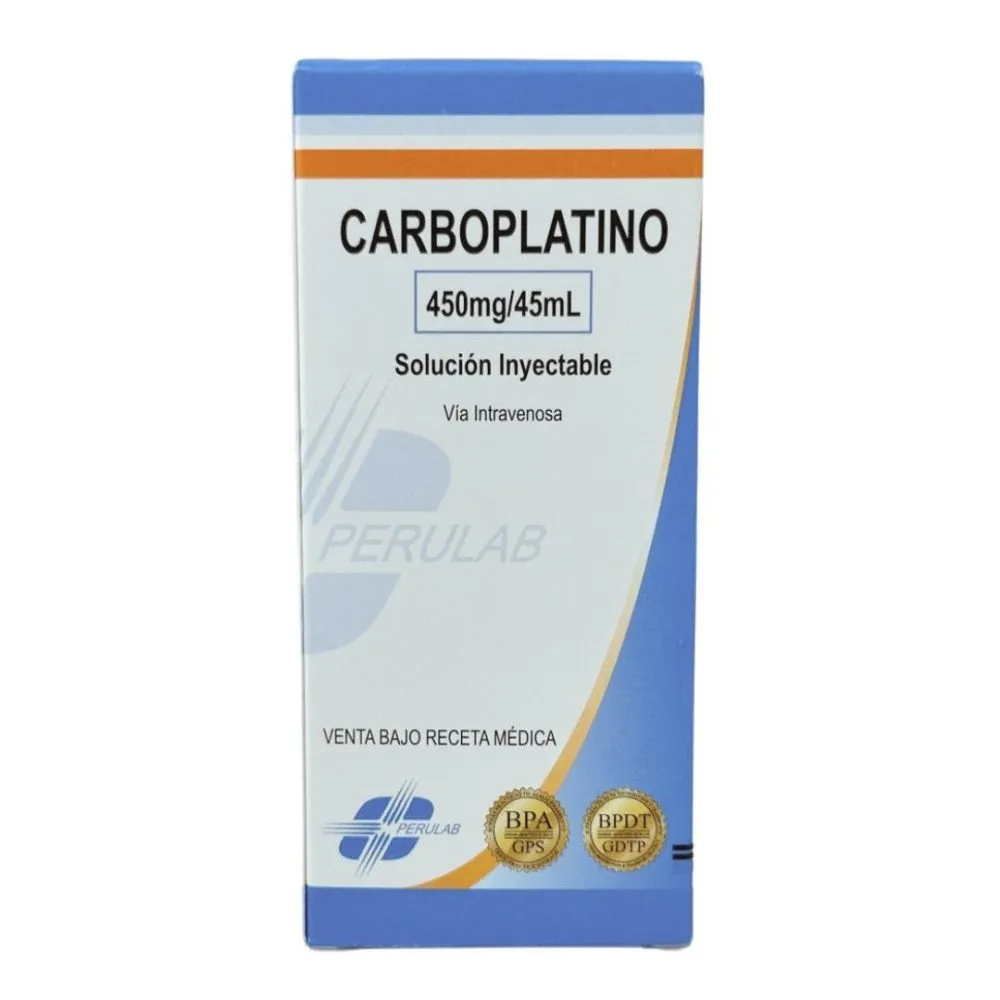
Table of Contents
- Package leaflet: Information for the user
- Carboplatino AHCL 10 mg/ml Concentrate for solution for infusion
- 1. What Carboplatino AHCL is and what it is used for
- 2. What you should know before using Carboplatino AHCL
- 3. How to use Carboplatino AHCL
- 4. Possible side effects
- 5. How to store Carboplatino AHCL
- 6. Package contents and other information
- Instructions for use – Cytotoxic
Package leaflet: Information for the user
Carboplatino AHCL 10 mg/ml Concentrate for solution for infusion
Equivalent medicine
Please read all of this leaflet carefully before you are given this medicine because it contains important information for you.
Keep this leaflet. You may need to read it again.
If you have any questions, ask your doctor, pharmacist or nurse.
If you experience any side effects, including those not listed in this leaflet, inform your doctor or nurse. See section 4.
Contents of this leaflet:
- What Carboplatino AHCL is and what it is used for
- What you need to know before being given Carboplatino AHCL
- How Carboplatino AHCL is given
- Possible side effects
- How to store Carboplatino AHCL
- Contents of the pack and other information
1. What Carboplatino AHCL is and what it is used for
Carboplatino AHCL is an antineoplastic medicinal product. Treatment with an antineoplastic agent is sometimes referred to as antineoplastic chemotherapy.
Carboplatino AHCL is used in adults for the treatment of certain types of lung cancer and ovarian cancer.
2. What you should know before using Carboplatino AHCL
Do not use Carboplatino AHCL
- if you are allergic to carboplatin or to any of the other ingredients of this medicine (listed in section 6).
- if you have previously had hypersensitivity to platinum-containing medicines.
- if you have severe kidney disease.
- if you have lower than normal red blood cell counts (your doctor will check this with a blood test).
- if you have a bleeding tumour.
- if you are planning to receive, or have recently received, a yellow fever vaccine. Inform your doctor if any of the conditions above apply to you before using this medicine.
Warnings and precautions
Inform your doctor, pharmacist or nurse before using Carboplatino AHCL
- if you are pregnant or think you might be pregnant.
- if you are breastfeeding.
- if you have moderate kidney disease. Your doctor will want to monitor you more frequently.
- if you are elderly (over 65 years of age).
- if you have hearing problems.
- if you have previously been treated with cisplatin or similar anticancer medicines, carboplatin may cause nervous system abnormalities such as pins and needles, or hearing and vision problems. Your doctor may monitor you regularly.
- if you experience headache, altered mental function, seizures, or abnormal vision ranging from blurred vision to loss of vision.
- if you develop extreme tiredness and shortness of breath due to reduced red blood cell count (haemolytic anaemia), alone or combined with low platelet count, unusual bruising (thrombocytopenia), and kidney disease with little or no urine output (symptoms of haemolytic uraemic syndrome).
- if you have fever (temperature greater than or equal to 38°C) or chills, which may be signs of infection. You may be at risk of developing blood infection. During treatment with carboplatin, you will be given medicines to help reduce a potentially life-threatening complication known as tumour lysis syndrome, which is caused by chemical disturbances in the blood due to the breakdown of dying tumour cells releasing their contents into the bloodstream.
Children and adolescents
The safety and efficacy of carboplatin in children and adolescents have not yet been established.
Other medicines and Carboplatino AHCL
Inform your doctor, pharmacist or nurse if you have recently taken or might take any other medicines, for example:
- medicines that can reduce the number of red blood cells; when used at the same time as carboplatin, they may require adjustments in the dose and frequency of carboplatin treatment.
- certain antibiotics called aminoglycosides, vancomycin or capreomycin; when used at the same time as carboplatin, they may increase the risk of kidney damage or hearing problems.
- certain diuretics; when used at the same time as carboplatin, they may increase the risk of kidney damage or hearing problems.
- live or live-attenuated vaccines (yellow fever vaccine – see section 2, Do not use Carboplatino AHCL).
- blood-thinning medicines such as warfarin; when used at the same time as carboplatin, they may require more frequent monitoring of blood clotting.
- phenytoin and fosphenytoin (used to treat various types of seizures and epileptic fits); when used at the same time as carboplatin, they may increase the risk of epileptic seizures.
- other medicines that reduce the activity of the immune system (e.g. cyclosporine, tacrolimus, sirolimus). Inform your doctor if you are taking, have recently taken, or might take any other medicines, including over-the-counter medicines.
Carboplatino AHCL and alcohol
No interactions between carboplatin and alcohol are known. However, consult your doctor about this, because carboplatin may affect the liver’s ability to tolerate alcohol.
Pregnancy, breastfeeding and fertility
If you are pregnant, think you may be pregnant, plan to become pregnant, or are breastfeeding, ask your doctor for advice before taking this medicine.
Contraception in men and women
Women of childbearing potential must avoid becoming pregnant and must use an effective contraceptive method during treatment and for at least 6 months after the last dose. Inform your doctor immediately if you become pregnant during this period.
Men must use an effective contraceptive method and must not father a child during treatment and for up to 3 months after the last dose.
Pregnancy
This medicine must not be administered during pregnancy unless considered necessary by your doctor. The medicine may cause severe birth defects.
Breastfeeding
Do not breastfeed during treatment and for at least one month after the last dose.
Fertility in men and women
Treatment with this medicine may temporarily or permanently reduce fertility in men and women. Consult your doctor about fertility preservation before starting treatment.
Driving and using machines
Do not drive or operate machinery if you experience any side effects that may reduce your ability to do so, such as nausea, vomiting, worsening or changes in vision or hearing.
3. How to use Carboplatino AHCL
This medicine will be administered by intravenous infusion (drip) into a vein over 15 - 60 minutes.
Dosage
Your doctor will determine the correct dose of carboplatin and how often it should be administered.
The dose will depend on your medical condition, your body size, and how well your kidneys are functioning. Your doctor will assess kidney function by analyzing blood or urine samples.
Regular blood tests will be performed after each carboplatin dose. You may also be monitored for nerve damage and hearing loss.
There will likely be about 4 weeks between each carboplatin dose.
If you receive more Carboplatino AHCL than you should
This medicine will be administered in a hospital under the supervision of a doctor. It is unlikely that you will receive too much or too little. However, if you have any concerns, consult your doctor or nurse.
If you interrupt treatment with Carboplatino AHCL
If you have any doubts about using this medicine, consult your doctor, pharmacist, or nurse.
4. Possible side effects
Like all medicines, this medicine can cause side effects, although not everyone gets them.
Contact your doctor immediately if you notice any of the following symptoms:
- Unusual bruising, bleeding, or signs of infection such as sore throat and high fever (very common, may affect more than 1 in 10 people).
- Severe allergic reaction (anaphylaxis/anaphylactic reactions) – you may experience sudden itchy rash (urticaria), swelling of hands, feet, ankles, face, lips, mouth or throat (which may cause difficulty swallowing or breathing), and feel like you are about to faint (common, may affect up to 1 in 10 people).
- Haemolytic uraemic syndrome (a disease characterised by acute kidney failure), reduced urination or blood in the urine (not known, frequency cannot be estimated from available data).
- Muscle cramps, muscle weakness, confusion, loss or changes in vision, irregular heartbeat, kidney failure or abnormal blood test results (symptoms of tumour lysis syndrome, which may be caused by rapid breakdown of tumour cells) (see section 2) (not known, frequency cannot be estimated from available data).
- Stroke (sudden numbness or weakness of the face, arm or leg, especially on one side of the body) (not known, frequency cannot be estimated from available data).
- Blockage of blood vessels (embolism and veno-occlusive disease), swelling or tenderness in the leg/arm (not known, frequency cannot be estimated from available data).
- Chest pain which may indicate a potentially serious allergic reaction called Kounis syndrome (not known, frequency cannot be estimated from available data).
- Skin swelling, usually of the face and lips (angioedema) (rare, may affect up to 1 in 1,000 people). These are serious side effects. You may need urgent medical treatment. Other side effects that may occur:
Very common (may affect more than 1 in 10 people):
- Tiredness, shortness of breath and paleness due to anaemia (a condition in which there is a reduced number of red blood cells).
- Feeling unwell (nausea) or being sick (vomiting).
- Abdominal pain and cramps. Tests may also show:
- Changes in red and white blood cells and platelets (myelosuppression).
- Increased blood urea levels.
- Decreased levels of sodium, potassium, calcium and magnesium in the blood.
- Decreased creatinine renal clearance.
- Abnormal liver enzyme levels.
Common (may affect up to 1 in 10 people):
- Diarrhoea or constipation.
- Skin rash and/or itching.
- Ringing in the ears or changes in hearing.
- Hair loss.
- Flu-like symptoms.
- Infections.
- Tingling or numbness in hands, feet, arms or legs.
- Burning or itchy sensation.
- Decreased tendon reflex.
- Altered or loss of taste.
- Temporary worsening of vision or vision changes.
- Heart problems.
- Chest tightness or wheezing.
- Interstitial lung disease (a group of lung disorders in which the deep lung tissues become inflamed).
- Painful lips or mouth ulcers (mucosal disorders).
- Pain or discomfort in bones, joints, muscles or surrounding structures (musculoskeletal disorder).
- Kidney or urinary problems.
- Extreme tiredness/weakness (asthenia). Tests may also show:
- Increased levels of bilirubin and creatinine in the blood.
- Increased levels of uric acid in the blood, which may lead to gout.
Rare (may affect up to 1 in 1,000 people):
- Temporary loss of vision.
- Skin peeling (exfoliative dermatitis).
Very rare (may affect up to 1 in 10,000 people):
- Lung scarring causing shortness of breath and/or cough (pulmonary fibrosis).
Not known (frequency cannot be estimated from available data):
- Tumours caused by treatment with carboplatin (secondary malignant tumours).
- Feeling unwell with high fever due to low white blood cell count (febrile neutropenia).
- Bone marrow failure (the bone marrow does not produce enough blood cells).
- Dry mouth, tiredness, headache due to excessive loss of body water (dehydration).
- Loss of appetite, anorexia.
- Severely impaired liver function, liver cell damage or death.
- Heart failure.
- Changes in blood pressure (hypertension or hypotension).
- Skin disorders such as hives, rash, skin redness (erythema) and itching.
- Swelling or pain at the injection site.
- A group of symptoms such as headache, changes in mental function, seizures and abnormal vision (from blurring to loss of vision). These are symptoms of reversible posterior leucoencephalopathy syndrome, a rare neurological condition.
- Pancreatitis.
- Pain or inflammation inside the mouth (stomatitis).
- Lung infection.
- Brain disorder (encephalopathy).
- Anaemia due to abnormal breakdown of red blood cells (haemolytic anaemia).
Carboplatin may cause problems with blood, liver and kidneys. Your doctor will take blood samples to check whether you have these problems.
Reporting of side effects
If you experience any side effects, including those not listed in this leaflet, talk to your doctor or nurse. You can also report side effects directly via the website: https://www.aifa.gov.it/content/segnalazioni-reazioni-avverse.
By reporting side effects, you can help provide more information on the safety of this medicine.
5. How to store Carboplatino AHCL
Keep this medicine out of the sight and reach of children.
Do not use this medicine after the expiry date which is stated on the carton and label after
"Exp.".
The expiry date refers to the last day of that month.
Store below 25°C. Do not refrigerate or freeze.
Keep the vial in the outer packaging to protect the medicine from light.
During use: Chemical and physical in-use stability has been demonstrated for 24 hours at room temperature and 30
hours at 2-8°C.
From a microbiological standpoint, the product should be used immediately. If not used immediately, the storage times during use and the conditions prior to use are the responsibility of the user and should generally not exceed 24 hours at 2-8°C, unless the dilution was carried out under controlled and validated aseptic conditions.
Do not dispose of any medicine via wastewater or household waste. Ask your pharmacist how to dispose of medicines no longer in use. This will help protect the environment.
6. Package contents and other information
What Carboplatino AHCL contains
The active substance is carboplatin.
1 ml of concentrate for solution for infusion contains 10 mg of carboplatin.
Each 5 ml vial contains 50 mg of carboplatin.
Each 15 ml vial contains 150 mg of carboplatin.
Each 45 ml vial contains 450 mg of carboplatin.
Each 60 ml vial contains 600 mg of carboplatin.
The excipient is: water for injections.
Description of the appearance of Carboplatino AHCL and contents of the pack
Concentrate for solution for infusion
Carboplatino AHCL is a clear, particle-free solution, colourless to slightly pale yellow.
5 ml, 15 ml, 45 ml or 60 ml concentrate for solution is supplied in amber type I glass vials of 5 ml/15 ml/50 ml/100 ml capacity. The vials are closed with a grey chlorobutyl or silicone rubber stopper and an aluminium flip-off cap.
Not all pack sizes may be marketed.
Marketing Authorisation Holder and Manufacturer:
Marketing Authorisation Holder
Accord Healthcare B.V., registered office at Winthontlaan 200, 3526 KV Utrecht, Netherlands (NL)
Manufacturer
Accord Healthcare Polska Sp.z o.o.,
ul. Lutomierska 50, 95-200 Pabianice,
Poland
Accord Healthcare Single Member S.A.
64th Km National Road Athens, Lamia, 32009,
Greece
This medicinal product is authorised in the European Union Member States, the European Economic Area and the United Kingdom (Northern Ireland) under the following names:
| Member State | Medicinal Product Name |
| Sweden | Carboplatin Accord 10 mg/ml concentrate for infusion solution, solution |
| Austria | Carboplatin Accord 10 mg/ml concentrate for the preparation of an infusion solution |
| Belgium | Carboplatin Accord Healthcare 10 mg/ml, solution for dilution for perfusion |
| Czech Republic | Carboplatin Accord 10 mg/ml concentrate for the preparation of an infusion solution |
| Germany | Carboplatin 10 mg/ml concentrate for the preparation of an infusion solution |
| Denmark | Carboplatin Accord 10 mg/ml concentrate for infusion solution, solution |
| Estonia | Carboplatin Accord 10 mg/ml concentrate for infusion solution |
| Spain | Carboplatin Accord 10 mg/ml concentrate for perfusion solution |
| Finland | Carboplatin Accord 10 mg/ml infusion concentrate, solution for/ concentrate for infusion solution, solution |
| Hungary | Carboplatin Accord 10 mg/ml concentrate for infusion solution |
| Ireland | Carboplatin 10 mg/ml Concentrate for Solution for Infusion |
| Italy | Carboplatin AHCL 10 mg/ml Concentrate for infusion solution |
| Lithuania | Carboplatin Accord 10 mg/ml concentrate for infusion solution |
| Latvia | Carboplatin Accord 10 mg/ml concentrate for the preparation of infusion solution |
| Netherlands | Carboplatin Accord 10 mg/ml concentrate for solution for infusion |
| Norway | Carboplatin Accord 10 mg/ml concentrate for infusion solution |
| Poland | Carboplatin Accord |
| Portugal | Carboplatin Accord 10 mg/ml concentrate for perfusion solution |
| Slovakia | Carboplatin Accord 10 mg/ml infusion concentrate |
| United Kingdom (NI) | Carboplatin 10 mg/ml concentrate for solution for infusion |
| Cyprus | Carboplatin Accord 10 mg/ml concentrate for solution for infusion |
| Croatia | Carboplatin Accord 10 mg/ml concentrate for infusion solution |
| Romania | Carboplatin Accord 10 mg/ml concentrate for perfusable solution |
| Slovenia | Carboplatin Accord 10 mg/ml concentrate for infusion solution |
The following information is intended exclusively for healthcare professionals:
Instructions for use – Cytotoxic
The recommended dose of carboplatin in adult patients previously untreated with normal renal function, i.e. creatinine clearance > 60 ml/min, is 400 mg/m² as a single intravenous dose administered by short-term infusion over 15–60 minutes.
Alternatively, the Calvert formula indicated below may be used to determine the dosage:
Dose (mg) = Target AUC (mg/ml × min) × [GFR ml/min + 25]
| Dose (mg) = AUC target (mg/ml x min) x [GFR ml/min + 25] | ||
| AUC target | Chemotherapy regimen | Patient treatment status |
| 5-7 mg/ml .min | Carboplatin monotherapy | No prior therapy |
| 4-6 mg/ml .min | Carboplatin monotherapy | Prior therapy |
| 4-6 mg/ml .min | Carboplatin plus cyclophosphamide | No prior therapy |
Note: With the Calvert formula, the total dose of carboplatin is calculated in mg, not mg/m².
Treatment must not be repeated until at least four weeks have elapsed since the previous cycle of Carboplatin AHCL and until neutrophil count is at least 2,000 cells/mm³ and platelet count is at least 100,000 cells/mm³.
A 20–25% reduction from the initial dose is recommended in patients with risk factors such as prior myelosuppressive therapy and poor performance status (ECOG-Zubrod 2–4 or Karnofsky <80).
It is advisable to determine the hematological nadir by weekly blood count monitoring during the initial cycles of Carboplatin AHCL therapy for subsequent dose adjustments.
Impaired renal function:
In patients with impaired renal function, the carboplatin dose must be reduced (refer to the Calvert formula), and hematological nadirs and renal function should be monitored.
Patients with creatinine clearance values below 60 ml/min are at increased risk of developing myelosuppression. The incidence of severe leukopenia, neutropenia, or thrombocytopenia has been maintained at approximately 25% using the following dosing regimen:
Combination therapy:
Optimal use of Carboplatin AHCL in combination with other myelosuppressive drugs requires dose adjustments depending on the regimen and administration schedule used.
Paediatric population:
The safety and efficacy of carboplatin in children and adolescents have not yet been established. No data are available. Since sufficient experience with carboplatin use in children and adolescents is lacking, specific dosing recommendations cannot be provided.
Elderly patients:
In patients aged over 65 years, the carboplatin dose should be adjusted according to general health status, both during the first and subsequent treatment cycles.
Dilution and reconstitution:
The product must be diluted prior to infusion with either 5% dextrose solution (50 mg/ml) or 0.9% sodium chloride solution (9 mg/ml), starting from concentrations of 0.5 mg/ml.
Method of administration:
Carboplatin AHCL must be used exclusively by intravenous route.
Incompatibilities
Carboplatin may react with aluminium to form a black precipitate. Needles, syringes, catheters, or intravenous administration sets containing aluminium parts that may come into contact with carboplatin must not be used for the preparation or administration of the medicinal product. Precipitation may lead to a reduction in antineoplastic activity.
Shelf life and storage
Carboplatin AHCL is for single use only.
Before opening
Store below 25°C. Do not refrigerate or freeze.
Keep the vial in the outer packaging to protect from light.
After dilution
In-use stability: Chemical and physical stability during use has been demonstrated for 24 hours at room temperature and 30 hours at 2–8°C.
From a microbiological standpoint, the product should be used immediately. If not used immediately, in-use storage times and conditions prior to use are the responsibility of the user and should generally not exceed 24 hours at 2–8°C, unless dilution has been carried out under controlled and validated aseptic conditions.
INSTRUCTIONS FOR USE/HANDLING, PREPARATION, AND DISPOSAL GUIDELINES
FOR USE WITH CARBOPLATIN
Handling of carboplatin
As with other cytotoxic agents, carboplatin must be prepared and handled with caution.
The following protective measures must be taken when handling carboplatin.
Personnel must be trained in appropriate techniques for reconstitution and handling.
- Carboplatin must be prepared for administration only by personnel trained in the safe use of chemotherapeutic agents. Staff handling Carboplatin AHCL must wear protective clothing: safety goggles, gowns, gloves, and disposable masks.
- A designated area must be established for syringe preparation (preferably under a laminar flow hood), with work surfaces protected by disposable absorbent paper with a plastic backing.
- All items used for reconstitution, administration, or cleaning (including gloves) must be placed in high-risk waste bags for high-temperature incineration.
- Spills or leaks must be treated with diluted sodium hypochlorite solution (1% available chlorine), preferably by immersion, followed by rinsing with water. All contaminated materials and cleaning supplies must be placed in high-risk waste disposal bags. In case of accidental skin or eye contact, immediately wash thoroughly with large amounts of water, or water and soap, or sodium bicarbonate solution. Do not scrub the skin with a brush. Seek medical advice. Always wash hands after removing gloves.
Preparation of infusion solution
The product must be diluted before use. It may be diluted with dextrose or sodium chloride solution, starting from concentrations of 0.5 mg/ml (500 micrograms/ml).
Disposal
Medicines must not be disposed of via wastewater or household waste. All materials used in preparation, administration, or otherwise coming into contact with carboplatin must be disposed of in accordance with local guidelines for handling cytotoxic compounds.