Carbolithium
Italy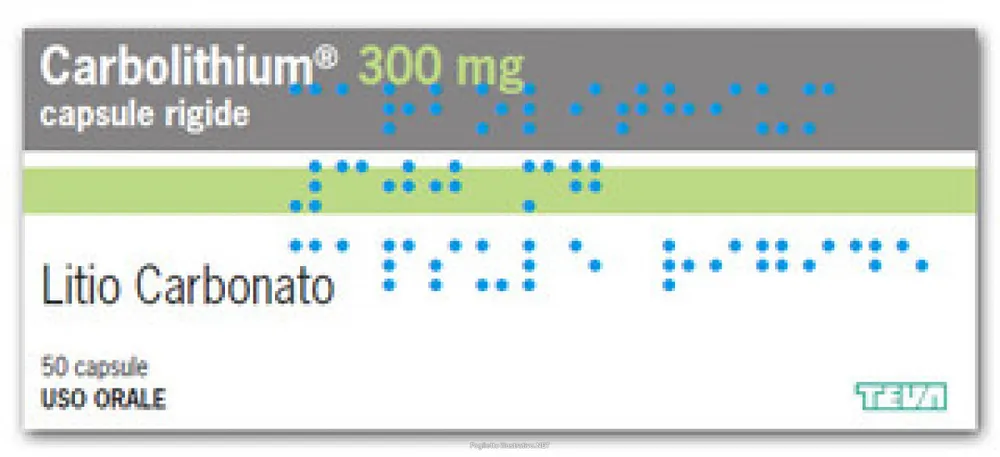
Table of Contents
- Package leaflet: Information for the patient
- Carbolithium 150 mg hard capsules, 300 mg hard capsules
- 1. What Carbolithium is and what it is used for
- 2. What you should know before taking Carbolithium
- 3. How to take Carbolithium
- 4. Possible side effects
- 5. How to store Carbolithium
- 6. Package contents and other information
Package leaflet: Information for the patient
Carbolithium 150 mg hard capsules, 300 mg hard capsules
lithium carbonate
Read this entire leaflet carefully before taking this medicine because it contains
important information for you.
- Keep this leaflet. You may need to read it again.
- If you have any questions, ask your doctor, pharmacist or nurse.
- This medicine has been prescribed for you only. Do not give it to other people, even if they have the same symptoms as you, because it could be harmful.
- If you experience any side effect, including those not listed in this leaflet, tell your doctor, pharmacist or nurse. See section 4.
Contents of this leaflet
- What Carbolithium is and what it is used for
- What you need to know before taking Carbolithium
- How to take Carbolithium
- Possible side effects
- How to store Carbolithium
- Contents of the pack and other information
1. What Carbolithium is and what it is used for
Carbolithium contains lithium carbonate, a substance belonging to a group of medicines called
antipsychotics, used in the prevention and treatment of certain mental disorders (manic and
hypomanic episodes) characterized by alternating states of excitement and depression or chronic
depressive psychoses, typical of manic-depressive psychosis.
Carbolithium is also used in the treatment of an extremely painful form of headache,
called cluster headache, in patients who do not respond to other therapies.
Consult your doctor if you do not feel better or if you feel worse.
2. What you should know before taking Carbolithium
Do not take Carbolithium
- if you are allergic to the active substance or to any of the other ingredients of this medicine (listed in section 6);
- if you have heart diseases;
- if your kidney function is impaired (renal impairment);
- if you are severely debilitated;
- if your blood sodium levels are low;
- if you are taking medicines called diuretics, which help the body eliminate excess water as urine;
- during pregnancy;
- if you are breastfeeding.
Warnings and precautions
Talk to your doctor, pharmacist, or nurse before taking Carbolithium.
Treatment with Carbolithium should always be started at the lowest possible dose, which may then be adjusted based on the level of lithium in your blood (lithium serum concentration).
Your doctor will regularly monitor your lithium serum concentration and your health status after each dose increase, and you will undergo continuous monitoring throughout the duration of treatment.
This is particularly important:
- in case of relapses;
- if you experience severe adverse effects;
- if you have other medical conditions (including urinary tract infections);
- if you alternate between phases of excitement (manic) and phases of low mood (depressive);
- if you have started taking new medications;
- if your daily diet has changed;
- in conditions or treatments that may alter fluid balance or electrolyte levels, such as diuretic therapy.
Before starting treatment with Carbolithium, your doctor will check:
- your heart function; Carbolithium should be administered with caution if you have cardiovascular diseases or a family history of a rare heart condition (QT interval prolongation);
- your kidney function; during treatment with Carbolithium, gradual or sudden changes in kidney function may occur, which could require dose adjustment. Moreover, lithium therapy must not be initiated in patients with renal impairment (see also section “Do not take Carbolithium”). Patients with severe renal impairment treated with lithium for more than 10 years may be at risk of developing benign or malignant kidney tumors (microcysts, oncocytoma, or collecting duct renal carcinoma; see also section “Possible side effects”);
- your thyroid function; if you have thyroid disorders, your doctor will evaluate whether to prescribe Carbolithium based on your condition. In particular, if you have hypothyroidism (underactive thyroid), your doctor will monitor you both during the initial phase and during maintenance therapy.
If you are a woman of childbearing age, you must perform a pregnancy test before starting treatment with this medicine to rule out pregnancy, as lithium carbonate may harm the fetus (see section “Pregnancy”).
During treatment with Carbolithium, your doctor will perform regular checks to monitor:
- kidney and thyroid function (every 6–12 months);
- blood count (hematological parameters).
Moreover, pay special attention and inform your doctor:
- if you have Addison’s disease (a disorder of the adrenal glands) or other conditions characterized by low blood sodium levels;
- if you are severely debilitated (see also section “Do not take Carbolithium”);
- if you are dehydrated due to excessive sweating, diarrhea, or vomiting, as your tolerance to lithium may decrease; in such cases, patients should be advised to increase their intake of fluids and electrolytes. If an infection with fever occurs, your doctor may advise temporarily reducing the dose or stopping treatment;
- if you have Brugada syndrome (a hereditary heart condition) or if any of your family members have had Brugada syndrome, cardiac arrest, or sudden cardiac death;
- if you have cystic fibrosis, as this may reduce lithium elimination from your body;
- if you have a condition characterized by muscle weakness (myasthenia gravis);
- if you are scheduled to undergo electroconvulsive therapy; in this case, stop taking Carbolithium at least one week before and restart a few days after completion of electroconvulsive therapy;
- if you are scheduled for surgery; in this case, stop taking Carbolithium at least 24 hours before surgery, as anesthesia combined with reduced lithium elimination may lead to lithium accumulation, and restart as soon as possible after surgery;
- if you have undergone or are planning bariatric surgery, as a lower lithium dose may be required. Your doctor will monitor your blood lithium levels and adjust the dose accordingly.
Stop treatment and contact your doctor immediately if you experience:
diarrhea, nausea, vomiting, abdominal pain, drowsiness, loss of muscle coordination, sedation, tremors, muscle weakness, feeling cold, dry mouth, slowed speech, or rhythmic, involuntary eye movements; these may be symptoms of lithium toxicity (see also section “Possible side effects”). Inform a friend or relative that you are starting treatment with Carbolithium, so they can help you recognize these symptoms, which require immediate discontinuation of treatment and medical consultation.
Never stop treatment abruptly; instead, gradually reduce the dose over several weeks, always under strict medical supervision. Your doctor will inform you about the risk of relapse if treatment with Carbolithium is stopped suddenly.
Children and adolescents
The use of Carbolithium in children and adolescents under 12 years of age is not recommended.
Other medicines and Carbolithium
Inform your doctor or pharmacist if you are taking, have recently taken, or might take any other medicines.
The concomitant use of Carbolithium with the following medicines should be avoided:
- clozapine, haloperidol, phenothiazines, and sulpiride (other antipsychotics) – used to treat mental disorders – as they may cause brain damage (neurotoxicity) and adverse effects such as muscle rigidity, reduced facial expression, motor restlessness, slowness or blockage of movements, and slowed reflexes (extrapyramidal side effects);
- diclofenac, ibuprofen, indomethacin, mefenamic acid, naproxen, ketorolac, piroxicam ( non-steroidal anti-inflammatory drugs - NSAIDs) and selective COX-2 inhibitors – used for pain, fever, and inflammation – as they may reduce lithium elimination, increasing the risk of toxicity;
- amiodarone – a medicine used to treat arrhythmias – as it may cause disturbances in heart rhythm (ventricular arrhythmias);
- indapamide – a medicine used to treat high blood pressure – as it may increase lithium toxicity due to reduced renal elimination.
Moreover, pay special attention and inform your doctor if you are taking any of the following medicines:
- sertindole and thioridazine (other antipsychotics) – used to treat schizophrenia and other mental disorders – as they may cause disturbances in heart rhythm (ventricular arrhythmias);
- haloperidol (another antipsychotic) – used to treat psychosis; this combination may be particularly dangerous and may cause symptoms such as weakness, lethargy, fever, tremors, seizures, confusion, extrapyramidal symptoms, and increased white blood cell count in the blood (encephalopathic syndrome);
- venlafaxine – used to treat depression – as it may increase the effects of lithium;
- tricyclic antidepressants – used to treat depression – as they may increase lithium’s toxic effects;
- selective serotonin reuptake inhibitors (SSRIs) – used to treat depression – as they may increase lithium toxicity and cause symptoms such as diarrhea, confusion, tremors, agitation, and serotonin syndrome (a potentially life-threatening condition whose symptoms may include changes in mental status, increased body temperature, and overactivity of the nervous and neuromuscular systems);
- methyldopa – used to treat high blood pressure (hypertension) – as it may increase lithium’s toxic effects;
- phenytoin, phenobarbital, and carbamazepine – used to treat epilepsy – as they may cause brain damage (neurotoxicity);
- ACE inhibitors and angiotensin receptor antagonists – used to treat high blood pressure – as they may reduce lithium elimination, increasing the risk of toxicity;
- osmotic, loop, and thiazide diuretics such as acetazolamide, amiloride, triamterene, furosemide, bumetanide, and ethacrynic acid – as they may increase lithium elimination;
- verapamil and diltiazem and other calcium channel blockers – used to treat high blood pressure – as they may cause brain damage (neurotoxicity) with symptoms such as lack of coordination, tremors, nausea, vomiting, diarrhea, and hearing disturbances (tinnitus);
- corticosteroids – used to treat inflammation, fever, and other disorders – as they may cause fluid retention, leading to increased lithium levels in the blood;
- metoclopramide – used to treat nausea and vomiting – as it may cause extrapyramidal symptoms;
- metronidazole – an antibiotic – as it may increase lithium levels in the blood;
- aminophylline and mannitol – used to treat asthma and renal failure or other conditions – as they may decrease lithium levels in the blood;
- neuromuscular blocking agents – used to induce neuromuscular relaxation – as lithium may prolong their action;
- empagliflozin – used to treat diabetes or heart failure – and dapagliflozin – used to treat diabetes, heart failure, or chronic kidney disease – as they may reduce the amount of lithium in the body, decreasing its effectiveness;
- topiramate (used to treat epilepsy or migraine).
Combined therapy with chlorpromazine – used to treat psychosis, acetazolamide – used to treat high blood pressure, and other substances such as xanthines, urea, and sodium bicarbonate may reduce lithium levels in the blood by increasing its urinary excretion.
Carbolithium with beverages and alcohol
Avoid consuming alcohol or other medicines containing alcohol during treatment with this medicine, as this may increase lithium levels in the blood, increasing the risk of toxicity.
Excessive coffee consumption may reduce lithium concentration in the blood, reducing its effectiveness.
Pregnancy, breastfeeding, and fertility
If you are pregnant, think you may be pregnant, plan to become pregnant, or are breastfeeding, consult your doctor or pharmacist before taking this medicine.
Pregnancy
Do not take Carbolithium if you are pregnant, suspect pregnancy, or are planning a pregnancy, as lithium may harm the fetus (see section 2 “Do not take Carbolithium”).
A few days after delivery, it is advisable, under strict medical supervision, to restart treatment at low doses due to the increased risk of manic episodes and relapses in the postpartum period, while carefully avoiding breastfeeding.
Breastfeeding
Do not take Carbolithium if you are breastfeeding (see section 2 “Do not take Carbolithium”).
Fertility
Women of childbearing age should take a pregnancy test before starting treatment with Carbolithium to rule out pregnancy. Women of childbearing age already on lithium therapy who are planning a pregnancy should discontinue treatment by gradually tapering the dose under strict medical supervision to prevent relapse (see section “Warnings and precautions”).
Driving and using machines
Carbolithium may impair your ability to drive or operate machinery.
Carbolithium 150 mg contains lactose: if your doctor has diagnosed you with an intolerance to certain sugars, consult them before taking this medicine.
3. How to take Carbolithium
Take this medicine exactly as prescribed by your doctor or pharmacist. If you have any doubts, consult your doctor or pharmacist.
The recommended dose is 300 mg taken 2 to 6 times daily, administered at regular intervals. Your doctor will start you on a low dose and then adjust it based on your blood lithium levels (lithaemia).
Use in children and adolescents
In children and adolescents aged 12 to 18 years, the doctor will prescribe short-term treatment, which may be continued only after confirmation of a clear response to therapy.
The use of Carbolithium in children and adolescents under 12 years of age is not recommended.
If you take more Carbolithium than you should
In case of accidental ingestion or overdose of this medicine, contact your doctor immediately or go to the nearest hospital without delay.
If you take more Carbolithium than you should, symptoms such as apathy and restlessness may occur, which could be mistaken for the mental state already caused by depression.
Overdose may also lead to a condition known as extrapyramidal syndrome, a group of symptoms including tremors, muscular rigidity due to increased muscle tone, slowness and difficulty in movement.
In cases of severe intoxication, the main signs involve the heart, with changes in certain tests (ECG), and the nervous system, with dizziness, impaired alertness, exaggerated reflexes (hyperreflexia), and wakeful coma.
If you forget to take Carbolithium
Do not take a double dose to make up for the missed dose.
If you stop taking Carbolithium
Do not stop treatment with Carbolithium suddenly or without first discussing it with your doctor, as this may lead to a possible relapse (see section “Warnings and precautions”).
4. Possible side effects
Like all medicines, this medicine can cause side effects, although not everybody gets them.
Stop taking the medicine and contact your doctor immediately if you experience:
diarrhoea, nausea, vomiting, abdominal pain, drowsiness, muscle weakness, lack of coordination in movements, sedation, dry mouth, feeling cold, slowed speech and rhythmic, involuntary oscillating eye movements (nystagmus).
If the level of intoxication increases, symptoms may also include increased reflexes (hyperreflexia), dizziness, sensation of ringing in the ears (tinnitus), blurred vision and excessive urine production (polyuria). In very severe cases, toxicity could affect multiple organs, leading to generalized seizures, acute circulatory failure, stupor, coma and death.
Within 24 hours after the first dose of lithium, the following may occur:
increased excretion of certain substances normally present in the blood (sodium, potassium and mineralocorticoids) through the urine. Subsequently, excessive fluid accumulation in the lower legs (pretibial oedema) may develop. These symptoms tend to disappear within a few days.
In the first days of treatment, the following symptoms may occur, which usually resolve with continued therapy: hand tremors, increased urine production, moderate thirst and general malaise. If these symptoms persist, it is advisable to consult your doctor to consider discontinuing the treatment.
Possible side effects include:
- changes in heart rhythm such as cardiac arrhythmias, ventricular arrhythmia (e.g. torsades de pointes, ventricular tachycardia, ventricular fibrillation and cardiac arrest);
- unmasking and/or worsening of Brugada syndrome (a hereditary condition affecting the heart) (frequency not known);
- low blood pressure (hypotension);
- circulatory collapse (peripheral circulatory failure);
- circulatory decompensation;
- overactivity of the thyroid gland (hyperthyroidism);
- development of diabetes insipidus (due to the kidney’s inability to concentrate urine);
- loss of consciousness (absence epilepsy);
- seizure;
- speech disorder (dysarthria);
- extrapyramidal disorder (see section 3 “If you take more Carbolithium than you should”);
- dizziness;
- vertigo;
- urinary incontinence and anal incontinence;
- drowsiness;
- fatigue;
- lethargy;
- psychomotor retardation;
- confusion;
- restlessness;
- stupor;
- coma;
- tremor;
- involuntary muscle contractions and repetitive movements of leg muscles (tonic-clonic movements);
- difficulty or lack of coordination in muscular movements (ataxia);
- very rapid or very slow movements (choreoathetosis);
- increased excitability of deep tendon reflexes (hyperreflexia);
- dry mouth;
- heart disorders (prolonged QT interval on electrocardiogram);
- cases of sudden death (due to lithium toxicity);
- elevated levels of albumin or glucose in the urine (albuminuria, glycosuria);
- decreased or increased urine production (oliguria, polyuria);
- changes in the kidney’s functional units (nephrons);
- benign/malignant kidney tumours (microcysts, oncocytoma or renal collecting duct carcinoma) (in long-term therapy);
- thyroid abnormalities: enlargement of the thyroid gland (goitre) and/or reduced thyroid function (hypothyroidism, including myxoedema);
- hyperparathyroidism (a condition in which the parathyroid glands produce excessive parathyroid hormone, increasing blood calcium levels – frequency not known), benign (non-cancerous) tumour of the parathyroid gland (parathyroid adenoma – frequency not known); enlargement of one or more parathyroid glands (parathyroid hyperplasia – frequency not known);
- eating behaviour disorder leading to food refusal (reduced appetite);
- nausea;
- vomiting;
- diarrhoea;
- abdominal pain;
- severe decrease in white blood cells in the blood associated with an acute increase in lithium concentration in the blood (lithaemia);
- blood abnormalities, in case of long-term lithium therapy;
- transient visual impairment (visual field defect);
- vision disturbances;
- dryness and thinning of hair;
- hair loss (alopecia);
- loss of skin sensitivity (cutaneous anaesthesia);
- inflammation of hair bulbs (chronic folliculitis);
- worsening of psoriasis;
- skin or mucous membrane rash (drug-induced lichenoid reaction);
- widespread skin rash, high body temperature, increased liver enzymes, blood abnormalities (eosinophilia), swollen lymph nodes and involvement of other organs (drug reaction with eosinophilia and systemic symptoms, also known as DRESS or drug hypersensitivity syndrome) – (frequency not known). Stop using Carbolithium if you develop these symptoms and contact your doctor or seek immediate medical assistance;
- dehydration;
- weight loss;
- increased calcium levels in the blood (hypercalcaemia);
- muscle weakness;
- changes in certain heart and brain tests (ECG and EEG);
- sexual dysfunction;
- excessive levels of calcium in the blood (very common frequency).
Reporting of side effects
If you experience any side effect, including those not listed in this leaflet, talk to your doctor or pharmacist. You can also report side effects directly via the national reporting system at https://www.aifa.gov.it/content/segnalazioni-reazioni-avverse .
By reporting side effects, you can help provide more information on the safety of this medicine.
5. How to store Carbolithium
Keep this medicine out of the sight and reach of children.
This medicine does not require any special storage conditions.
Do not use this medicine after the expiry date stated on the packaging after “Exp.”. The expiry date refers to the last day of that month.
Do not dispose of medicines via wastewater or household waste. Ask your pharmacist how to dispose of medicines you no longer use. This will help protect the environment.
6. Package contents and other information
What Carbolithium 150 mg hard capsules contain:
- The active substance is lithium carbonate. Each capsule contains 150 mg of lithium carbonate.
- The other components are magnesium stearate, gelatin, titanium dioxide, indigo carmine (E 132), lactose monohydrate, maize starch, methylcellulose.
What Carbolithium 300 mg hard capsules contain:
- The active substance is lithium carbonate. Each capsule contains 300 mg of lithium carbonate.
- The other components are magnesium stearate, gelatin, titanium dioxide, indigo carmine (E 132), methylcellulose.
Description of the appearance of Carbolithium and contents of the pack
Carbolithium is presented in a carton containing 50 capsules in blisters.
Marketing Authorisation Holder and Manufacturer
Marketing Authorisation Holder
Laboratorio Farmaceutico SIT S.r.l., Via Cavour, 70 - 27035 Mede (PV)
Manufacturer
ITC Production S.r.l. - Via Pontina KM 29 - 00071 Pomezia (RM)