Captopril Mylan Generics
Italy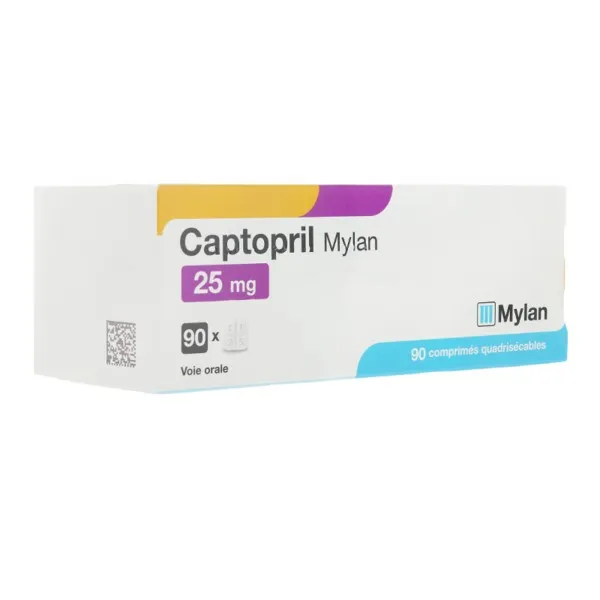
Table of Contents
Patient Information Leaflet
Captopril Mylan Generics 25 mg Tablets, 50 mg Tablets
Captopril
Generic medicine
Please read this leaflet carefully before you start taking this medicine as it contains important information for you.
- Keep this leaflet. You may need to read it again.
- If you have any questions, ask your doctor or pharmacist.
- This medicine has been prescribed for you only. Do not give it to others, even if their symptoms are the same as yours, as it could be harmful.
- If you experience any side effects, including those not listed in this leaflet, tell your doctor or pharmacist. See section 4.
Contents of this leaflet:
- What Captopril Mylan Generics is and what it is used for
- What you need to know before taking Captopril Mylan Generics
- How to take Captopril Mylan Generics
- Possible side effects
- How to store Captopril Mylan Generics
- Contents of the pack and other information
1. What is Captopril Mylan Generics and what is it used for?
Captopril Mylan Generics belongs to a group of medicines called ACE inhibitors (angiotensin-converting enzyme inhibitors). Captopril Mylan Generics helps reduce levels of angiotensin, a naturally occurring substance in the human body. Angiotensin may cause narrowing of blood vessels, thereby increasing blood pressure and causing excessive fluid retention. Captopril Mylan Generics can prevent the formation of angiotensin, allowing blood vessels to widen and thus reducing blood pressure. It may also help treat fluid retention occurring in congestive heart failure.
Your doctor may prescribe Captopril Mylan Generics if:
- you have high blood pressure (hypertension)
- you have congestive heart failure (when the heart does not pump blood effectively throughout the body)
- you have recently had a heart attack
- you have kidney problems and suffer from type I diabetes (diabetic nephropathy).
If you are unsure why you are taking Captopril Mylan Generics, please consult your doctor.
- What you need to know before taking Captopril Mylan Generics Do not take Captopril Mylan Generics:
- if you are allergic to captopril, to any other ACE inhibitor, or to any of the components listed in section 6
- if you have experienced symptoms such as shortness of breath, swelling of the face, tongue or throat, severe itching or serious skin rashes during previous treatment with medicines used to lower blood pressure (ACE inhibitors), or if you or a family member has ever had these symptoms under any circumstances (a condition called angioedema), whether the cause was unknown or inherited
- if you are more than three months pregnant. It is better to avoid captopril even in the early stages of pregnancy (see section “Pregnancy”)
- if you have diabetes or impaired kidney function and are being treated with a blood pressure-lowering medicine containing aliskiren
- if you are being treated with sacubitril/valsartan, a medicine used to treat heart failure.
Warnings and precautions
Talk to your doctor or pharmacist before taking Captopril Mylan Generics:
- if you notice any signs of infection (such as sore throat or fever) that do not respond quickly to usual treatment due to low white blood cell count (neutropenia/agranulocytosis)
- if you have low blood pressure (causing dizziness or fainting, especially when standing up)
- if you have persistent or severe vomiting or diarrhoea
- if you have ever had any problems with your heart, kidneys, liver or diabetes
- if you require haemodialysis with certain dialysis membranes (high-flux membranes) or apheresis, as reactions to the type of membrane used may occur
- if you have undergone or are about to undergo desensitisation therapy for allergy to bee or wasp stings
- if a doctor has told you that you have narrowing of the heart's aortic valve (aortic stenosis)
- if you suffer from a vascular collagen disorder
- if you are taking a medicine for depression or mental disorders
- if you are about to undergo general anaesthesia for surgery
- if you have a cough
- if you are on a low-sodium diet or taking potassium supplements or potassium-containing salt substitutes
- if you are taking any of the following medicines used to treat high blood pressure:
- an angiotensin II receptor antagonist (AIIRA) (also known as sartans – for example valsartan, telmisartan, irbesartan), especially if you have kidney problems related to diabetes.
- aliskiren.
- if you are taking any of the following medicines, the risk of angioedema (rapid swelling under the skin, for example in the throat) is greater:
- sirolimus, everolimus and other medicines belonging to the class of mTOR inhibitors (used to prevent rejection of transplanted organs).
- neprilysin inhibitors (NEP) such as sacubitril (available as a fixed-dose combination with valsartan), used in patients with heart failure, and racecadotril, used in patients with acute diarrhoea.
Your doctor may check your kidney function, blood pressure and levels of electrolytes (e.g. potassium) in your blood at regular intervals.
See also the section "Do not take Captopril".
You should avoid excessive sweating and dehydration, which can cause a sudden drop in blood pressure, and ensure you drink plenty of fluids to prevent dehydration.
As with other medicines used to lower blood pressure, this medicine may be less effective in black patients.
This medicine (like other medicines in the same class) may reduce potassium levels in the blood.
Other medicines and Captopril Mylan Generics
Tell your doctor or pharmacist if you are taking, have recently taken or might take any other medicine.
Some medicines may interact with Captopril Mylan Generics. Your doctor may consider it necessary to adjust the dose and/or take other precautions: it may be necessary to stop treatment with some of them. It is important to inform your doctor if you are taking any of the following medicines:
- neprilysin inhibitors (NEP) such as sacubitril (available as a fixed-dose combination with valsartan) and racecadotril: the risk of angioedema may be increased (rapid swelling under the skin, for example in the throat)
- diuretics (e.g. furosemide, amiloride, triamterene or spironolactone)
- potassium supplements or potassium-containing salt substitutes, diuretics (tablets that increase urination, particularly so-called potassium-sparing diuretics), other medicines that may increase potassium levels in the body (including heparin and cotrimoxazole also known as trimethoprim/sulfamethoxazole )
- vasodilators, e.g. nitrates, minoxidil
- immunosuppressive medicines, such as azathioprine or cyclophosphamide (to prevent rejection of transplanted organs) or cytostatic medicines, e.g. abacavir or leflunomide
- other medicines that lower blood pressure, e.g. guanethidine, hexamethonium
- anti-diabetic medicines
- lithium (a medicine for mental health problems)
- allopurinol (a medicine for the treatment of gout)
- medicines for the treatment of acute myocardial infarction
- non-steroidal anti-inflammatory drugs, e.g. indomethacin (may be used to treat arthritis or inflammation)
- medicines for the treatment of mental disorders such as depression, anxiety or schizophrenia (e.g. tricyclic antidepressants, antipsychotics)
- procainamide (used to treat irregular heartbeats)
- medicines used to treat low blood pressure, shock or asthma (e.g. ephedrine, noradrenaline or adrenaline)
- if you are taking an angiotensin II receptor antagonist (ARB) or aliskiren (see also information in sections “Do not take Captopril” and “Warnings and precautions”)
- medicines usually used to prevent rejection of transplanted organs (sirolimus, everolimus and other medicines belonging to the class of mTOR inhibitors). See section “Warnings and precautions”.
Urine tests
If you need to undergo urine tests for diabetes, inform your doctor or nurse that you are taking this medicine, as it may alter test results.
Pregnancy and breastfeeding
If you are pregnant or breastfeeding, think you may be pregnant or are planning to have a baby, ask your doctor or pharmacist for advice before taking this medicine.
Pregnancy
Your doctor will usually advise you to stop taking Captopril Mylan Generics before becoming pregnant or as soon as you know you are pregnant, and will recommend another medicine instead of Captopril Mylan Generics. Captopril Mylan Generics is not recommended during early pregnancy, and must not be taken if you are more than three months pregnant, as it may cause serious harm to the unborn child if taken after the third month of pregnancy.
Breastfeeding
Inform your doctor if you are breastfeeding or about to start breastfeeding. Breastfeeding of newborns (first weeks after birth), and especially premature infants, is not recommended while you are taking Captopril Mylan Generics.
For older infants, your doctor will advise you on the benefits and risks of taking Captopril Mylan Generics during breastfeeding compared to other treatments.
Driving and using machines
Do not drive or operate machinery if you experience dizziness or fatigue during treatment with this medicine. Your ability to drive and use machines may be impaired, especially at the beginning of treatment, when the dose is changed, or when consuming alcohol.
Captopril Mylan Generics contains lactose
If your doctor has diagnosed you with an intolerance to certain sugars, contact him before taking this medicine.
This medicine contains less than 1 mmol of sodium (23 mg) per tablet, i.e. essentially “sodium-free”.
3. How to take Captopril Mylan Generics
Take this medicine exactly as directed by your doctor. If you have any doubts, ask your doctor or pharmacist for advice.
The tablets should be swallowed with a little water.
Captopril may be taken before, during, or after meals, but it should be taken in the same way every day.
You will likely need to take Captopril Mylan Generics for a long period of time. You must continue taking the tablets even if you feel well, for as long as your doctor continues to prescribe them. Before starting and during treatment with Captopril Mylan Generics, your doctor may perform regular blood tests and monitor your kidney function. If you have any kidney disease, you will probably be monitored once a month initially.
If you undergo blood or urine tests, inform your doctor that you are taking Captopril Mylan Generics.
Your doctor may advise you to adjust your diet or take other medicines in addition to Captopril Mylan Generics. Do not change your diet or medications without informing your doctor.
Adults
The dose of Captopril Mylan Generics prescribed by your doctor will be adjusted to suit your individual needs.
Your dose may be different if you are also taking other medicines, such as diuretics.
Hypertension
The recommended starting dose is 25–50 mg daily in two divided doses. Your doctor may gradually increase the dose, allowing two weeks between each increase, until the optimal dose for you is reached. The maximum total daily dose is 150 mg of captopril in two divided doses.
Congestive heart failure
You may be prescribed a lower initial dose of captopril, either 6.25 mg or 12.5 mg, taken two or three times daily. Your doctor may increase your dose after 2–4 weeks, depending on your response, until the optimal dose for you is reached. The maximum total daily dose usually does not exceed 150 mg of captopril in divided doses.
Heart attack
If Captopril Mylan Generics is prescribed following a heart attack, the usual initial dose is 6.25 mg of captopril. This dose will be increased and adjusted over several weeks up to a maximum of 150 mg of captopril daily in divided doses.
Renal disorders and type 1 diabetes
The recommended initial dose in patients with kidney problems and type 1 diabetes is 75–100 mg daily, given in divided doses.
Elderly patients or those with kidney disease may require a lower dose or less frequent dosing.
Use in children
If Captopril Mylan Generics is used in children or newborns, the usual initial daily dose is 0.3 mg/kg body weight, divided into two or three doses. In children requiring special precautions, the initial dose should be 0.15 mg/kg body weight. The dose will be determined according to the child's weight and adjusted based on the child's response. The use of this medicine in children and adolescents must always be initiated under close medical supervision.
Use in the elderly: In elderly patients with kidney problems and other conditions, your doctor will prescribe lower doses than those recommended above.
Use in case of kidney problems: If you have kidney problems, your doctor will prescribe lower doses than those recommended above.
If you take more Captopril Mylan Generics than you should
Inform your doctor immediately. Symptoms of overdose include severe drop in blood pressure, shock, reduced level of consciousness, slowed heart rate, electrolyte imbalances, and kidney failure.
If you forget to take Captopril Mylan Generics
Take the medicine as soon as possible. However, if it is almost time for your next dose, do not take a double dose to make up for the missed dose; instead, continue with your regular dosing schedule.
If you stop taking Captopril Mylan Generics
Do not stop taking this medicine without first consulting your doctor. If you decide to stop taking the medicine, your symptoms may return.
If you have any doubts about how to use this medicine, consult your doctor or pharmacist.
4. Possible side effects
Like all medicines, this medicine can cause side effects, although not everybody gets them.
If you experience any of the following side effects, stop taking Captopril Mylan Generics and contact your doctor immediately or go to the nearest emergency room:
Uncommon side effects (may affect up to 1 in 100 people):
- allergic reactions causing swelling of the face, lips, tongue and/or throat, which may cause breathing difficulties or difficulty swallowing. Swelling is more likely to occur in black patients (angioedema)
- chest pain (angina pectoris)
Rare side effects (may affect up to 1 in 1,000 people):
- abdominal swelling with signs of abdominal pain, cramps (worsening after meals), nausea and vomiting (intestinal angioedema)
Very rare side effects (may affect up to 1 in 10,000 people):
- skin condition with severe blisters and bleeding of the lips, eyes, mouth, nose and genitals (Stevens-Johnson syndrome)
- serious skin condition that may affect the mouth and other parts of the body (erythema multiforme)
- severe headache, dizziness, confusion, vision changes, numbness or weakness in arms and legs, difficulty swallowing and speaking (such as difficulty speaking and loss of speech), and collapse, which are signs of stroke (cerebrovascular event)
- heart attack (cardiac arrest)
- heart condition caused by very low blood pressure with signs of rapid shallow breathing, cold, clammy skin, rapid weak pulse, dizziness, weakness and fainting (cardiogenic shock)
- severe abdominal and back pain accompanied by feeling unwell (pancreatitis)
- feeling unusually tired, looking pale, noticing unusual bleeding, bruising more easily than normal, or suffering from frequent nosebleeds or infections such as sore throat or mouth ulcers, chills, fever; these may occur due to a decrease in white blood cells and platelets (pancytopenia), lack of white blood cells (neutropenia), which can be severe (agranulocytosis)
- illness resulting from destruction of red blood cells, with signs of fatigue, headache, shortness of breath during exercise, dizziness, paleness (hemolytic anemia), including yellowing of the skin and/or eyes
- nausea, vomiting, loss of appetite, general feeling of being unwell, fever, itching, yellowing of the skin and eyes, pale-coloured stools, dark urine, which are signs of liver disease (necrotizing hepatitis)
- problems with bile flow, including yellowing of the skin or whites of the eyes (cholestasis, including jaundice)
- cough, phlegm and occasionally blood (eosinophilic pneumonia)
Other side effects include:
Common side effects (may affect up to 1 in 10 people):
- dizziness
- dry mouth
- taste disturbances
- nausea, stomach pain or vomiting
- skin reactions such as rash or itching
- dry, irritating cough
- sleep disturbances
- shortness of breath
- nausea
- vomiting
- diarrhoea
- abdominal pain
- constipation
- hair loss
- loss of appetite
- headache
- numbness, tingling or weakness in hands or feet
Uncommon side effects (may affect up to 1 in 100 people):
- circulation problems causing painful, cold fingers (Raynaud's phenomenon)
- low blood pressure
- hot flushes
- irregular or faster heartbeat, palpitations, particularly at the start of treatment or when the dose has been increased
- fatigue, general feeling of being unwell
- pale skin
Rare side effects (may affect up to 1 in 1,000 people):
- kidney problems may worsen, including little or no urine output with drowsiness, nausea, vomiting, shortness of breath, which are signs of kidney disease called renal failure; passing more urine than normal (polyuria), passing less urine than normal (oliguria), more frequent urination
- drowsiness
- mouth pain with ulcers or cold sores
Very rare side effects (may affect up to 1 in 10,000 people):
- difficulty breathing and wheezing (bronchospasm)
- lung infection with increase in certain white blood cells, fever, chills, shortness of breath
- itchy, runny nose (rhinitis)
- skin sensitivity to light (photosensitivity)
- fever
- swelling of glands in the neck, armpits or groin (lymphadenopathy)
- high levels of potassium in the blood which may cause an abnormal heart rhythm (hyperkalaemia)
- low levels of blood glucose, a type of sugar (hypoglycaemia)
- confusion
- depression
- blurred vision
- swollen, red and sore tongue
- stomach and intestinal ulcers (peptic ulcer)
- muscle pain (myalgia)
- swollen, painful joints (arthralgia)
- kidney disease, with large amounts of protein in the urine (nephrotic syndrome)
- inability to achieve or maintain an erection (impotence)
- breast enlargement in men
- low number of platelets in the blood (thrombocytopenia), easier bruising, prolonged bleeding more than normal
- increase in certain white blood cells (eosinophilia)
- may affect certain blood tests, such as positive ANA used to detect immune system problems, which protects the body against diseases
- may affect certain urine tests (protein in urine)
- liver problems, increased liver enzymes
- hives
- redness and peeling of the skin (erythroderma/exfoliative dermatitis)
- skin diseases with blisters and sores (pemphigoid reaction)
Not known (frequency cannot be estimated from the available data):
- unusual weakness (asthenia)
Captopril may also cause symptoms including fever, inflammation of blood vessels, often with skin rashes, muscle or joint pains, kidney problems and skin sensitivity to light.
Reporting of side effects
If you experience any side effects, including those not listed in this leaflet, talk to your doctor or pharmacist. You can also report side effects directly via the national reporting system at www.aifa.gov.it/content/segnalazioni-reazioni-avverse. By reporting side effects, you can help provide more information on the safety of this medicine.
5. How to store Captopril Mylan Generics
Keep this medicine out of the sight and reach of children.
Do not use this medicine after the expiry date stated on the label. The expiry date refers to the last day of that month.
Store below 25°C. Keep in the original packaging to protect the medicine from light.
Do not dispose of any medicine via wastewater or household waste.
Ask your pharmacist how to dispose of medicines you no longer use. This will help protect the environment.
6. Package contents and other information
What Captopril Mylan Generics contains
The active substance is captopril.
Each tablet contains 25 mg or 50 mg of captopril.
The other components are anhydrous lactose (see section 2, “Captopril contains lactose”), microcrystalline cellulose, maize starch, stearic acid and sodium starch glycolate.
Description of the appearance of Captopril Mylan Generics and contents of the pack
Captopril Mylan Generics is available as tablets.
Captopril 25 mg tablets
White octagonal tablets, with a score line on one side and the characters “C”, “T”, “2”, “5” in each quadrant, and “G” on the other side.
Captopril 50 mg tablets
White oval tablets marked with “CT/50” on one side and “G” on the other side.
For each strength, the tablet also bears the corresponding figure '25' or '50'.
Captopril Mylan Generics is available in blister packs or bottles containing:
25 mg tablets: 20, 28, 30, 45, 50, 56, 60, 84, 90 and 100
50 mg tablets: 20, 24, 28, 30, 45, 56, 60, 84, 90 and 100.
Not all pack sizes may be marketed.
Marketing Authorisation Holder
Mylan S.p.A., Via Vittor Pisani 20, 20124 Milano, Italy
Manufacturer
Gerard Laboratories
35/36 Baldoyle Industrial Estate, Grange Road
Dublin 13
Ireland