Candesartan and hydrochlorothiazide Sandoz
Italy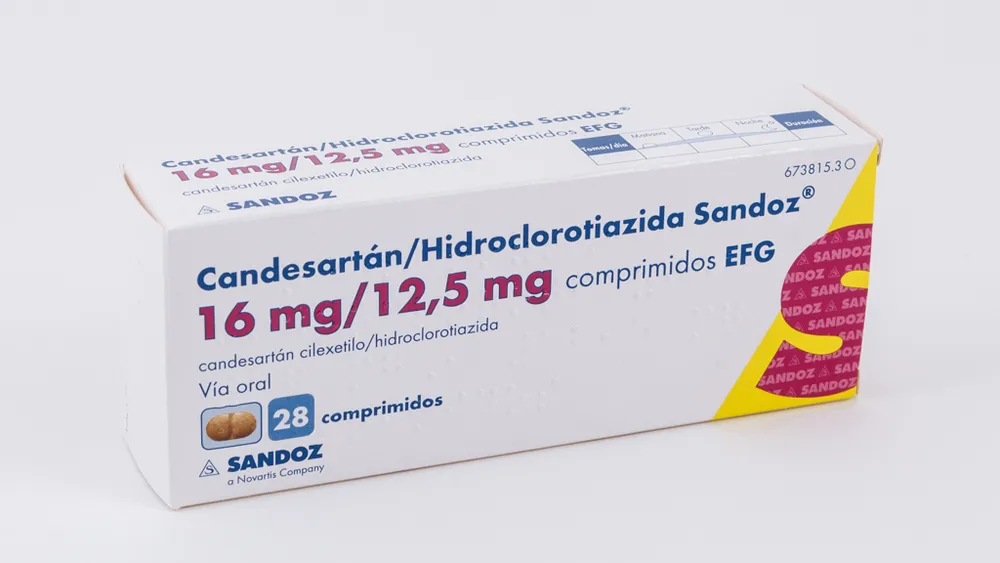
Table of Contents
- Package leaflet: Information for the patient
- Candesartan and Hydrochlorothiazide Sandoz 8 mg/12.5 mg tablets
- 1. What Candesartan and Hydrochlorothiazide Sandoz is and what it is used for
- 2. What you need to know before taking Candesartan and Hydrochlorothiazide Sandoz
- 3. How to take Candesartan and Hydrochlorothiazide Sandoz
- 4. Possible side effects
- 5. How to store Candesartan and Hydrochlorothiazide Sandoz
- 6. Package contents and other information
- Patient Information Leaflet
- Candesartan and Hydrochlorothiazide Sandoz 16 mg/12.5 mg tablets
- 1. What Candesartan and Hydrochlorothiazide Sandoz is and what it is used for
- 2. What you should know before taking Candesartan and Hydrochlorothiazide Sandoz
- 3. How to take Candesartan and Hydrochlorothiazide Sandoz
- 4. Possible side effects
- 5. How to store Candesartan and Hydrochlorothiazide Sandoz
- 6. Package contents and other information
- Candesartan and Hydrochlorothiazide Sandoz 32 mg/12.5 mg tablets, mg/25 mg tablets
- 1. What Candesartan and Hydrochlorothiazide Sandoz is and what it is used for
- 2. What you need to know before taking Candesartan and Hydrochlorothiazide Sandoz
- 3. How to take Candesartan and Hydrochlorothiazide Sandoz
- 4. Possible side effects
- 5. How to store Candesartan and Hydrochlorothiazide Sandoz
- 6. Package contents and other information
Package leaflet: Information for the patient
Candesartan and Hydrochlorothiazide Sandoz 8 mg/12.5 mg tablets
Generic medicine
Please read all of this leaflet carefully before you start taking this medicine, as it contains important information for you.
- Keep this leaflet. You may need to read it again.
- If you have any questions, ask your doctor or pharmacist.
- This medicine has been prescribed for you only. Do not pass it on to other people, even if their symptoms are the same as yours, as it may be harmful to them.
- If you experience any side effect, including those not listed in this leaflet, inform your doctor or pharmacist. See section 4.
Contents of this leaflet:
- What Candesartan and Hydrochlorothiazide Sandoz is and what it is used for
- What you need to know before taking Candesartan and Hydrochlorothiazide Sandoz
- How to take Candesartan and Hydrochlorothiazide Sandoz
- Possible side effects
- How to store Candesartan and Hydrochlorothiazide Sandoz
- Contents of the pack and other information
1. What Candesartan and Hydrochlorothiazide Sandoz is and what it is used for
The name of the medicine is Candesartan and Hydrochlorothiazide Sandoz. It is used to treat high blood pressure (hypertension) in adult patients. It contains two active substances: candesartan cilexetil and hydrochlorothiazide.
These work together to lower blood pressure.
- Candesartan cilexetil belongs to a group of medicines called angiotensin II receptor antagonists. It causes the blood vessels to relax and widen. This helps to reduce blood pressure.
- Hydrochlorothiazide belongs to a group of medicines called diuretics (which help increase urination). It helps the body eliminate water and salts such as sodium in the urine. This contributes to lowering blood pressure.
Your doctor may prescribe Candesartan and Hydrochlorothiazide Sandoz if your blood pressure has not been adequately controlled by candesartan cilexetil or hydrochlorothiazide alone.
2. What you need to know before taking Candesartan and Hydrochlorothiazide Sandoz
DO NOT take Candesartan and Hydrochlorothiazide Sandoz if:
- you are allergic to candesartan cilexetil, hydrochlorothiazide or any of the other ingredients of this medicine (listed in section 6)
- you are allergic to sulfonamide medicines. If you are unsure whether this applies to you, consult your doctor
- you have severe liver disease or biliary obstruction (a bile drainage problem from the gallbladder)
- you have severe kidney problems
- you are more than 3 months pregnant (Candesartan and Hydrochlorothiazide Sandoz should also be avoided early in pregnancy – see section “Pregnancy”)
- you have ever had gout
- you have persistently low levels of potassium in your blood
- you have persistently high levels of calcium in your blood
- you have diabetes or impaired kidney function and are being treated with a blood pressure-lowering medicine containing aliskiren
If you are unsure whether any of these conditions apply to you, consult your doctor or pharmacist before taking
Candesartan and Hydrochlorothiazide Sandoz.
Warnings and precautions
Talk to your doctor or pharmacist before taking Candesartan and Hydrochlorothiazide Sandoz if:
- you have heart, liver or kidney problems
- you have recently undergone a kidney transplant
- you are vomiting, have recently had severe vomiting or diarrhoea
- you have an adrenal gland disorder, known as Conn’s syndrome (also called primary hyperaldosteronism)
- you have diabetes
- you have had a disease called systemic lupus erythematosus (SLE)
- you have low blood pressure
- you have ever had a stroke
- you have had allergies or asthma
- you are taking any of the following medicines used to treat high blood pressure:
- an ACE inhibitor (e.g. enalapril, lisinopril, ramipril), particularly if you have kidney problems related to diabetes
- aliskiren
- you have previously had skin cancer or are developing an unexpected skin lesion during treatment. Treatment with hydrochlorothiazide, particularly long-term use at high doses, may increase the risk of certain types of non-melanoma skin cancer and lip cancer. Protect your skin from exposure to sunlight and UV rays during treatment with Candesartan and Hydrochlorothiazide Sandoz.
- you have a decrease in vision or eye pain. These could be symptoms of fluid accumulation in the vascular layer of the eye (choroidal effusion) or increased pressure in the eye, which may occur from a few hours to weeks after taking Candesartan and Hydrochlorothiazide Sandoz. This may lead to permanent loss of vision if not treated. If you previously had an allergy to penicillin or sulfonamides, you may be at higher risk of developing this condition.
- inform your doctor if you think you are pregnant (or if there is a possibility of becoming pregnant). Candesartan and Hydrochlorothiazide Sandoz is not recommended during early pregnancy and must not be taken if you are more than 3 months pregnant, as it may cause serious harm to the unborn child if taken during this period (see section “Pregnancy”).
Your doctor may monitor your kidney function, blood pressure and blood electrolyte levels (e.g. potassium) at regular intervals.
See also the section “Do not take Candesartan and Hydrochlorothiazide Sandoz”.
Your doctor may need to see you more frequently and perform tests if you have any of these conditions.
If you are about to undergo surgery, inform your doctor or dentist that you are taking Candesartan and
Hydrochlorothiazide Sandoz. This is because Candesartan and Hydrochlorothiazide Sandoz, when combined with certain
anaesthetics, may cause excessive lowering of blood pressure.
Candesartan and Hydrochlorothiazide Sandoz may increase skin sensitivity to sunlight.
Children and adolescents
There is no experience with the use of Candesartan and Hydrochlorothiazide Sandoz in children and adolescents (under
18 years of age). Therefore, Candesartan and Hydrochlorothiazide Sandoz must not be administered to children and adolescents.
Consult your doctor if you are an athlete about to undergo doping testing, as Candesartan and
Hydrochlorothiazide Sandoz contains an active substance that may lead to positive doping test results.
For those engaged in sports: using the medicine without therapeutic need constitutes doping and may
lead to positive doping test results regardless.
Other medicines and Candesartan and Hydrochlorothiazide Sandoz
Inform your doctor or pharmacist if you are taking, have recently taken or might take any other
medicines. Candesartan and Hydrochlorothiazide Sandoz may affect how other medicines work, and some medicines may affect Candesartan and Hydrochlorothiazide Sandoz. If you are taking certain medicines, your doctor may need to perform blood tests from time to time.
In particular, tell your doctor if you are taking any of the following medicines, as your doctor may need to adjust the dose and/or take other precautions:
- an ACE inhibitor or aliskiren (see also section “Do not take Candesartan and Hydrochlorothiazide Sandoz” and “Warnings and precautions”).
- Other medicines that lower blood pressure, including beta-blockers, medicines containing aliskiren, diazoxide, and ACE inhibitors such as enalapril, captopril, lisinopril or ramipril.
- Medicines to control heart rhythm (antiarrhythmics) such as digoxin and beta-blockers.
- Non-steroidal anti-inflammatory drugs (NSAIDs) such as ibuprofen, naproxen, diclofenac, celecoxib or etoricoxib (medicines used to relieve pain and inflammation).
- Acetylsalicylic acid (if you are taking more than 3 g per day) (a medicine used to relieve pain and inflammation).
- Potassium supplements or potassium-containing salt substitutes (medicines that increase potassium levels in the blood).
- Heparin (a medicine used to thin the blood).
- Medicines that help you urinate (diuretics).
- Lithium (a medicine used for mental health conditions).
- Medicines whose action may be affected by blood potassium levels, such as certain antipsychotics.
- Medicines to lower cholesterol, such as colestipol or cholestyramine (resin-type medicines to reduce lipids).
- Calcium or vitamin D supplements.
- Anticholinergic agents such as atropine and biperiden.
- Amantadine (used to treat Parkinson’s disease or severe viral infections).
- Barbiturates (a type of sedative also used to treat epilepsy).
- Medicines used to treat cancer.
- Steroids, such as prednisolone.
- Pituitary hormone (ACTH).
- Medicines for diabetes (oral tablets or insulin).
- Laxatives.
- Amphotericin (used to treat fungal infections).
- Carbenoxolone (used to treat oesophageal disease or oral ulcers).
- Penicillin or co-trimoxazole (also known as trimethoprim/sulfamethoxazole) (antibiotics).
- Cyclosporine, a medicine used in organ transplants to prevent rejection.
- Other medicines that may enhance the antihypertensive effect, such as baclofen (a medicine used to relieve spasticity), amifostine (used in cancer treatment), and certain antipsychotics.
Candesartan and Hydrochlorothiazide Sandoz with food, drinks and alcohol
- you may take Candesartan and Hydrochlorothiazide Sandoz with or without food
- when Candesartan and Hydrochlorothiazide Sandoz is prescribed for you, talk to your doctor before drinking alcohol. Alcohol may make you feel weak or dizzy.
Pregnancy and breastfeeding
Pregnancy
You must inform your doctor if you think you are pregnant (or if there is a possibility of becoming pregnant). Your doctor will usually advise you to stop taking Candesartan and
Hydrochlorothiazide Sandoz before becoming pregnant or as soon as you know you are pregnant, and will recommend another medicine instead of Candesartan and Hydrochlorothiazide Sandoz. Candesartan and Hydrochlorothiazide Sandoz is not recommended during early pregnancy and must not be taken if you are more than 3 months pregnant, as it may cause serious harm to the unborn child if taken after the third month of pregnancy.
Breastfeeding
Inform your doctor if you are breastfeeding or planning to start breastfeeding. Candesartan and Hydrochlorothiazide Sandoz
is not recommended for women who are breastfeeding, and your doctor may choose another treatment for you if you wish to breastfeed, especially if the baby is a newborn or was born prematurely.
Driving and using machines
Some people may feel tired or dizzy when taking Candesartan and Hydrochlorothiazide Sandoz.
If this happens to you, do not drive or operate tools or machinery.
Candesartan and Hydrochlorothiazide Sandoz contains lactose
If your doctor has diagnosed you with an intolerance to certain sugars, contact him before taking this
medicine.
Candesartan and Hydrochlorothiazide Sandoz contains sodium
This medicine contains less than 1 mmol of sodium (23 mg) per tablet, i.e. essentially ‘sodium-free’.
3. How to take Candesartan and Hydrochlorothiazide Sandoz
Take this medicine exactly as your doctor has told you. If you are unsure, consult your doctor or pharmacist. It is important to continue taking Candesartan and Hydrochlorothiazide Sandoz every day.
The recommended dose of Candesartan and Hydrochlorothiazide Sandoz is one tablet once daily.
Swallow the tablet with a glass of water.
Try to take the tablet at the same time each day. This will help you remember to take it.
If you take more Candesartan and Hydrochlorothiazide Sandoz than you should
If you take more Candesartan and Hydrochlorothiazide Sandoz than prescribed by your doctor, contact a doctor or pharmacist immediately for advice.
If you forget to take Candesartan and Hydrochlorothiazide Sandoz
Do not take a double dose to make up for the forgotten tablet. Take only the next dose as usual.
If you stop taking Candesartan and Hydrochlorothiazide Sandoz
If you stop treatment with Candesartan and Hydrochlorothiazide Sandoz, your blood pressure may rise again. Therefore, do not stop treatment with Candesartan and Hydrochlorothiazide Sandoz without first talking to your doctor.
If you have any doubts about how to use this medicine, ask your doctor or pharmacist.
4. Possible side effects
Like all medicines, this medicine can cause side effects, although not everybody gets them. It is important that you are aware of what these side effects might be. Some of the side effects of Candesartan and Hydrochlorothiazide Sandoz are caused by candesartan cilexetil and some are caused by hydrochlorothiazide.
Stop taking Candesartan and Hydrochlorothiazide Sandoz and seek immediate medical help if you experience any of the following allergic reactions:
- Difficulty breathing, with or without swelling of the face, lips, tongue and/or throat.
- Swelling of the face, lips, tongue and/or throat, which may cause difficulty swallowing.
- Severe itching of the skin (with raised, blister-like bumps).
Candesartan and Hydrochlorothiazide Sandoz may cause a reduction in the number of white blood cells in the blood. Your resistance to infections may decrease, and you may notice fatigue, infection or fever. If this occurs, contact your doctor. Your doctor may occasionally perform blood tests to check whether Candesartan and Hydrochlorothiazide Sandoz has affected your blood (agranulocytosis).
Other possible side effects include:
Common (may affect up to 1 in 10 people)
- Changes in blood test results:
- Low sodium levels in the blood. If this decrease is severe, you may notice weakness, lack of energy or muscle cramps.
- Increased or decreased potassium levels in the blood, especially if you already have kidney problems or heart failure. If this increase or decrease is severe, you may notice fatigue, weakness, irregular heartbeat or tingling sensations.
- Increased levels of cholesterol, glucose or uric acid in the blood.
- Glucose in the urine.
- Dizziness, lightheadedness or weakness.
- Headache.
- Respiratory tract infection.
Uncommon (may affect up to 1 in 100 people)
- Low blood pressure. This may make you feel weak or dizzy.
- Loss of appetite, diarrhoea, constipation, stomach irritation.
Rare (may affect up to 1 in 1,000 people)
- Jaundice (yellowing of the skin or the whites of the eyes). If this occurs, contact your doctor immediately.
- Effects on kidney function, especially if you already have kidney problems or heart failure.
- Difficulty sleeping, depression, feeling restless.
- Tingling or prickling sensations in the arms or legs.
- Blurred vision for a short period.
- Abnormal heartbeat.
- Breathing difficulties (including lung inflammation and fluid in the lungs).
- High temperature (fever).
- Inflammation of the pancreas. This causes moderate to severe stomach pain.
- Muscle cramps.
- Damage to blood vessels causing the appearance of small red or purple spots on the skin.
- Decrease in red blood cells, white blood cells or platelets. You may notice fatigue, infection, fever, or easy bruising.
- Severe skin rash developing rapidly, with blistering and peeling of the skin, and sometimes affecting the mouth.
Very rare (may affect up to 1 in 10,000 people)
- Swelling of the face, lips, tongue and/or throat.
- Itching.
- Back pain, joint and muscle pain.
- Changes in liver function, including inflammation of the liver (hepatitis). You may notice fatigue, yellowing of the skin and whites of the eyes, and flu-like symptoms.
- Cough.
- Nausea.
Not known (frequency cannot be estimated from the available data)
- Sudden onset of myopia.
- Decreased vision or eye pain due to increased pressure (possible signs of fluid accumulation in the vascular layer of the eye (choroidal effusion) or acute angle-closure glaucoma).
- Systemic and cutaneous lupus erythematosus (an allergic condition causing fever, joint pain, skin rash which may include redness, blistering, peeling and swelling).
- Skin and lip cancer (non-melanoma skin cancer).
Reporting of side effects
If you experience any side effect, including those not listed in this leaflet, talk to your doctor or pharmacist. You can also report side effects directly via the national reporting system at https://www.aifa.gov.it/content/segnalazioni-reazioni-avverse.
By reporting side effects, you can help provide more information on the safety of this medicine.
5. How to store Candesartan and Hydrochlorothiazide Sandoz
Keep this medicine out of the sight and reach of children.
Do not use this medicine after the expiry date which is stated on the carton and on the bottle/blister after "Exp.". The expiry date refers to the last day of the month.
Do not store above 25°C. Keep the medicine in the original packaging to protect it from moisture.
Validity after first opening of the bottle: use within 3 months.
Do not dispose of medicines via wastewater or household waste. Ask your pharmacist how to dispose of medicines you no longer use. This will help protect the environment.
6. Package contents and other information
What Candesartan and Hydrochlorothiazide Sandoz contains
The active substances are candesartan cilexetil and hydrochlorothiazide.
Each tablet contains 8 mg of candesartan cilexetil and 12.5 mg of hydrochlorothiazide.
Other components: monohydrate lactose, starch (maize), povidone K-30, carrageenan (E407),
sodium croscarmellose and magnesium stearate.
Description of the appearance of Candesartan and Hydrochlorothiazide Sandoz and pack sizes
8 mg/12.5 mg tablets:
White, oval, biconvex tablets with a break line on both sides.
The score line is intended to facilitate tablet breaking to make swallowing easier and is not intended to divide the tablet into equal doses.
The break line is provided only to assist in splitting the tablet for easier swallowing and does not ensure equal division of the tablet into two parts.
Al/Al blisters with desiccant: 7, 10, 14, 20, 21, 28, 30, 50, 56, 60, 84, 90, 98 or 100 tablets
Perforated single-dose Al/Al blisters with desiccant: 50 x 1 tablet
HDPE bottles with PP cap and desiccant: 7, 14, 21, 28, 56, 84, 98, 100 or 250 tablets
Not all pack sizes may be marketed.
Marketing Authorization Holder
Sandoz S.p.A., L.go U. Boccioni 1, 21040 Origgio (VA)
Responsible manufacturers for batch release
Lek Pharmaceuticals d.d., Verovškova 57, 1526 Ljubljana, Slovenia
Lek Pharmaceuticals d.d., Trimlini 2D, 9220 Lendava, Slovenia
LEK S.A., ul. Domaniewska 50 C, 02-672 Warszawa, Poland
LEK S.A., ul. Podlipie 16, 95-010 Stryków, Poland
Salutas Pharma GmbH, Otto-von-Guericke-Allee 1, 39179 Barleben, Germany
Patient Information Leaflet
Candesartan and Hydrochlorothiazide Sandoz 16 mg/12.5 mg tablets
Generic medicine
Please read this entire leaflet carefully before taking this medicine, as it contains important information for you.
- Keep this leaflet. You may need to read it again.
- If you have any questions, ask your doctor or pharmacist.
- This medicine has been prescribed for you only. Do not give it to others, even if their symptoms are the same as yours, as it may be harmful.
- If you experience any adverse reactions, including those not listed in this leaflet, consult your doctor or pharmacist. See section 4.
Contents of this leaflet:
- What Candesartan and Hydrochlorothiazide Sandoz is and what it is used for
- What you need to know before taking Candesartan and Hydrochlorothiazide Sandoz
- How to take Candesartan and Hydrochlorothiazide Sandoz
- Possible side effects
- How to store Candesartan and Hydrochlorothiazide Sandoz
- Contents of the pack and other information
1. What Candesartan and Hydrochlorothiazide Sandoz is and what it is used for
The name of the medicine is Candesartan and Hydrochlorothiazide Sandoz. It is used to treat high
blood pressure (hypertension) in adult patients. It contains two active substances: candesartan cilexetil
and hydrochlorothiazide. These work together to lower blood pressure.
- Candesartan cilexetil belongs to a group of medicines called angiotensin II receptor antagonists. It causes the blood vessels to relax and widen. This helps reduce blood pressure.
- Hydrochlorothiazide belongs to a group of medicines called diuretics (medicines that help you pass urine). It helps the body eliminate water and salts such as sodium through the urine. This contributes to lowering blood pressure.
Your doctor may prescribe Candesartan and Hydrochlorothiazide Sandoz if your blood pressure has not been adequately controlled by candesartan cilexetil or hydrochlorothiazide alone.
2. What you should know before taking Candesartan and Hydrochlorothiazide Sandoz
DO NOT take Candesartan and Hydrochlorothiazide Sandoz if:
- you are allergic to candesartan cilexetil, hydrochlorothiazide, or any of the other ingredients of this medicine (listed in section 6)
- you are allergic to sulfonamide medicines. If you are unsure whether this applies to you, consult your doctor
- you have severe liver disease or biliary obstruction (a bile drainage problem from the gallbladder).
- you have severe kidney problems
- you are more than 3 months pregnant (it is also better to avoid Candesartan and Hydrochlorothiazide Sandoz in early pregnancy – see section “Pregnancy”)
- you have ever had gout
- you have persistently low levels of potassium in your blood
- you have persistently high levels of calcium in your blood
- you have diabetes or impaired kidney function and are being treated with a blood pressure-lowering medicine containing aliskiren
If you are unsure whether any of these conditions apply to you, consult your doctor or pharmacist before taking Candesartan and Hydrochlorothiazide Sandoz.
Warnings and precautions
Talk to your doctor or pharmacist before taking Candesartan and Hydrochlorothiazide Sandoz if:
- you have heart, liver, or kidney problems
- you have recently undergone a kidney transplant
- you are vomiting, have recently experienced severe vomiting, or diarrhea
- you have an adrenal gland disorder, known as Conn's syndrome (also called primary hyperaldosteronism)
- you have diabetes
- you have had a disease called systemic lupus erythematosus (SLE)
- you have low blood pressure
- you have ever had a stroke
- you have had allergies or asthma
- you are taking any of the following medicines used to treat high blood pressure:
- an ACE inhibitor (e.g., enalapril, lisinopril, ramipril), particularly if you have kidney problems related to diabetes
- aliskiren
- you have previously had skin cancer or are developing an unexpected skin lesion during treatment. Treatment with hydrochlorothiazide, especially long-term use at high doses, may increase the risk of certain types of non-melanoma skin cancer and lip cancer. Protect your skin from exposure to sunlight and UV rays while taking Candesartan and Hydrochlorothiazide Sandoz.
- you experience vision loss or eye pain. These could be symptoms of fluid buildup in the vascular layer of the eye (choroidal effusion) or increased pressure inside the eye, which may occur from a few hours to weeks after taking Candesartan and Hydrochlorothiazide Sandoz. This may lead to permanent vision loss if not treated. Your risk may be higher if you previously had an allergy to penicillin or sulfonamides.
- you think you might be pregnant (or if there is a possibility of becoming pregnant). Candesartan and Hydrochlorothiazide Sandoz is not recommended during early pregnancy and must not be taken after the third month of pregnancy, as it may cause severe harm to the unborn child if taken during this period (see section “Pregnancy”).
Your doctor may check your kidney function, blood pressure, and levels of electrolytes (e.g., potassium) in your blood at regular intervals.
See also the section “Do not take Candesartan and Hydrochlorothiazide Sandoz”.
Your doctor may need to see you more frequently and carry out tests if you have any of these conditions.
If you are about to undergo surgery, inform your doctor or dentist that you are taking Candesartan and Hydrochlorothiazide Sandoz. This medicine, when combined with certain anesthetics, may cause excessive lowering of blood pressure.
Candesartan and Hydrochlorothiazide Sandoz may increase your skin's sensitivity to sunlight.
Children and adolescents
There is no experience with the use of Candesartan and Hydrochlorothiazide Sandoz in children and adolescents (under 18 years of age). Therefore, Candesartan and Hydrochlorothiazide Sandoz should not be given to children or adolescents.
Consult your doctor if you are an athlete about to undergo doping control, as Candesartan and Hydrochlorothiazide Sandoz contains an active substance that may lead to positive doping test results.
For those engaged in sports: using this medicine without medical need constitutes doping and may result in a positive doping test.
Other medicines and Candesartan and Hydrochlorothiazide Sandoz
Tell your doctor or pharmacist if you are taking, have recently taken, or might take any other medicines. Candesartan and Hydrochlorothiazide Sandoz may affect the action of other medicines, and some medicines may affect Candesartan and Hydrochlorothiazide Sandoz. If you are taking certain medicines, your doctor may need to perform occasional blood tests.
In particular, tell your doctor if you are taking any of the following medicines, as your doctor may need to adjust your dose and/or take other precautions:
- an ACE inhibitor or aliskiren (see also sections “Do not take Candesartan and Hydrochlorothiazide Sandoz” and “Warnings and precautions”)
- other medicines that lower blood pressure, including beta-blockers, medicines containing aliskiren, diazoxide, and ACE inhibitors such as enalapril, captopril, lisinopril, or ramipril
- medicines to control heart rhythm (antiarrhythmics) such as digoxin and beta-blockers
- non-steroidal anti-inflammatory drugs (NSAIDs) such as ibuprofen, naproxen, diclofenac, celecoxib, or etoricoxib (medicines used to relieve pain and inflammation)
- acetylsalicylic acid (if taking more than 3 g per day) (a medicine used to relieve pain and inflammation)
- potassium supplements or potassium-containing salt substitutes (medicines that increase potassium levels in the blood)
- heparin (a medicine used to thin the blood)
- medicines that help you urinate (diuretics)
- lithium (a medicine used for mental health conditions)
- medicines whose effects may be influenced by blood potassium levels, such as certain antipsychotics
- cholesterol-lowering medicines such as colestipol or cholestyramine
- calcium or vitamin D supplements
- anticholinergic agents such as atropine and biperiden
- amantadine (used to treat Parkinson’s disease or severe viral infections)
- barbiturates (a type of sedative also used to treat epilepsy)
- cancer-treating medicines
- steroids, such as prednisolone
- pituitary hormone (ACTH)
- medicines for diabetes (oral tablets or insulin)
- laxatives
- amphotericin (used to treat fungal infections)
- carbenoxolone (used to treat esophageal disease or oral ulcers)
- penicillin or co-trimoxazole (also known as trimethoprim/sulfamethoxazole) (antibiotics)
- cyclosporine, a medicine used in organ transplantation to prevent rejection
- other medicines that may enhance the antihypertensive effect, such as baclofen (a medicine used to relieve spasticity), amifostine (used in cancer treatment), and certain antipsychotics
Candesartan and Hydrochlorothiazide Sandoz with food, drinks, and alcohol
- you may take Candesartan and Hydrochlorothiazide Sandoz with or without food
- when Candesartan and Hydrochlorothiazide Sandoz is prescribed for you, talk to your doctor before drinking alcohol. Alcohol may make you feel weak or dizzy.
Pregnancy and breastfeeding
Pregnancy
You must inform your doctor if you think you may be pregnant (or if there is a possibility of becoming pregnant). Your doctor will usually advise you to stop taking Candesartan and Hydrochlorothiazide Sandoz before becoming pregnant or as soon as you know you are pregnant, and will recommend an alternative medicine. Candesartan and Hydrochlorothiazide Sandoz is not recommended during early pregnancy and must not be taken after the third month of pregnancy, as it may cause serious harm to the unborn child if taken beyond the third month of pregnancy.
Breastfeeding
Inform your doctor if you are breastfeeding or planning to breastfeed. Candesartan and Hydrochlorothiazide Sandoz is not recommended for women who are breastfeeding, and your doctor may choose an alternative treatment if you wish to breastfeed, especially if the baby is a newborn or was born prematurely.
Driving and using machines
Some people may feel tired or dizzy while taking Candesartan and Hydrochlorothiazide Sandoz. If this happens to you, do not drive or operate tools or machinery.
Candesartan and Hydrochlorothiazide Sandoz contains lactose
If your doctor has diagnosed you with an intolerance to certain sugars, contact him before taking this medicine.
Candesartan and Hydrochlorothiazide Sandoz contains sodium
This medicine contains less than 1 mmol of sodium (23 mg) per tablet, i.e., essentially “sodium-free”.
3. How to take Candesartan and Hydrochlorothiazide Sandoz
Take this medicine exactly as your doctor has told you. If you are unsure, consult your doctor or pharmacist. It is important to continue taking Candesartan and Hydrochlorothiazide Sandoz every day.
The recommended dose of Candesartan and Hydrochlorothiazide Sandoz is one tablet once daily.
Swallow the tablet with a glass of water.
Try to take the tablet at the same time each day. This will help you remember to take it.
If you take more Candesartan and Hydrochlorothiazide Sandoz than you should
If you take more Candesartan and Hydrochlorothiazide Sandoz than prescribed by your doctor, contact a doctor or pharmacist immediately for advice.
If you forget to take Candesartan and Hydrochlorothiazide Sandoz
Do not take a double dose to make up for the forgotten tablet. Take only the next dose as usual.
If you stop taking Candesartan and Hydrochlorothiazide Sandoz
If you stop treatment with Candesartan and Hydrochlorothiazide Sandoz, your blood pressure may rise again. Therefore, do not stop treatment with Candesartan and Hydrochlorothiazide Sandoz without first talking to your doctor.
If you have any doubts about how to use this medicine, consult your doctor or pharmacist.
4. Possible side effects
Like all medicines, this medicine can cause side effects, although not everybody gets them. It is important that you are aware of what these side effects might be. Some of the side effects of Candesartan and Hydrochlorothiazide Sandoz are caused by candesartan cilexetil and some are caused by hydrochlorothiazide.
Stop taking Candesartan and Hydrochlorothiazide Sandoz and seek immediate medical help if you experience any of the following allergic reactions:
- Difficulty in breathing, with or without swelling of the face, lips, tongue and/or throat.
- Swelling of the face, lips, tongue and/or throat, which may cause difficulty in swallowing.
- Severe itching of the skin (with raised, itchy bumps).
Candesartan and Hydrochlorothiazide Sandoz may cause a reduction in the number of white blood cells in the blood. Your resistance to infections may decrease, and you may notice fatigue, infection or fever. If this occurs, contact your doctor. Your doctor may occasionally carry out blood tests to check whether Candesartan and Hydrochlorothiazide Sandoz has affected your blood (agranulocytosis).
Other possible side effects include:
Common (may affect up to 1 in 10 people)
- Changes in blood test results:
- Reduced sodium levels in the blood. If this reduction is severe, you may experience weakness, lack of energy or muscle cramps.
- Increased or decreased potassium levels in the blood, especially if you already have kidney problems or heart failure. If this increase or decrease is severe, you may experience fatigue, weakness, irregular heartbeat or tingling sensations.
- Increased levels of cholesterol, glucose or uric acid in the blood.
- Glucose in the urine.
- Dizziness, lightheadedness or weakness.
- Headache.
- Respiratory infection.
Uncommon (may affect up to 1 in 100 people)
- Low blood pressure. This may make you feel weak or dizzy.
- Loss of appetite, diarrhoea, constipation, stomach irritation.
- Skin rash, rash with swelling (urticaria), rash caused by sensitivity to sunlight.
Rare (may affect up to 1 in 1,000 people)
- Jaundice (yellowing of the skin or whites of the eyes). If this occurs, contact your doctor immediately.
- Effects on kidney function, especially if you already have kidney problems or heart failure.
- Difficulty sleeping, depression, feeling restless.
- Tingling or prickling sensations in the arms or legs.
- Blurred vision for a short period.
- Irregular heartbeat.
- Breathing difficulties (including lung inflammation and fluid in the lungs).
- High temperature (fever).
- Inflammation of the pancreas. This causes moderate to severe stomach pain.
- Muscle cramps.
- Damage to blood vessels causing the appearance of small red or purple spots on the skin.
- Reduction in red blood cells, white blood cells or platelets. You may notice fatigue, infection, fever, or easy bruising.
- Severe skin rash that develops rapidly, with blistering and peeling of the skin, and sometimes in the mouth.
Very rare (may affect up to 1 in 10,000 people)
- Swelling of the face, lips, tongue and/or throat.
- Itching.
- Back pain, joint and muscle pain.
- Changes in liver function, including liver inflammation (hepatitis). You may notice fatigue, yellowing of the skin and whites of the eyes, and flu-like symptoms.
- Cough.
- Nausea.
Not known (frequency cannot be estimated from the available data)
- Sudden onset of myopia.
- Decreased vision or eye pain due to increased pressure (possible signs of fluid accumulation in the vascular layer of the eye (choroidal effusion) or acute angle-closure glaucoma).
- Systemic and cutaneous lupus erythematosus (an allergic condition causing fever, joint pain, skin rash which may include redness, blistering, peeling and swelling).
- Skin and lip cancer (non-melanoma skin cancer).
Reporting of side effects
If you experience any side effect, including those not listed in this leaflet, talk to your doctor or pharmacist. You can also report side effects directly via the national reporting system at https://www.aifa.gov.it/content/segnalazioni-reazioni-avverse. By reporting side effects, you can help provide more information on the safety of this medicine.
5. How to store Candesartan and Hydrochlorothiazide Sandoz
Keep this medicine out of the sight and reach of children.
Do not use this medicine after the expiry date which is stated on the carton and
bottle/blister after "Exp.". The expiry date refers to the last day of the month.
Do not store above 25°C. Store the medicine in the original packaging to protect it from moisture.
Validity after first opening of the bottle: use within 3 months.
Do not dispose of any medicine via wastewater or household waste. Ask your pharmacist how to dispose of medicines no longer required. This will help protect the environment.
6. Package contents and other information
What Candesartan and Hydrochlorothiazide Sandoz contains
The active substances are candesartan cilexetil and hydrochlorothiazide.
Each tablet contains 16 mg of candesartan cilexetil and 12.5 mg of hydrochlorothiazide.
The other components are: monohydrate lactose, maize starch, povidone K30, carrageenan (E407),
sodium croscarmellose, magnesium stearate, red iron oxide (E172) and yellow iron oxide (E172).
Description of the appearance of Candesartan and Hydrochlorothiazide Sandoz and package contents
16 mg/12.5 mg tablets:
Apricot-coloured, mottled, oval, biconvex tablets with a breakline on both sides.
The breakline is intended to facilitate tablet breaking for easier swallowing and is not intended to divide the tablet into equal doses.
Al/Al blister packs with desiccant: 7, 10, 14, 20, 28, 30, 56 or 98 tablets
Perforated single-dose Al/Al blister packs with desiccant: 50 x 1 tablet
HDPE bottle with PP cap and desiccant: 7, 14, 21, 28, 56, 84, 98, 100 or 250 tablets
Not all pack sizes may be marketed.
Marketing Authorization Holder
Sandoz S.p.A., L.go U. Boccioni 1, 21040 Origgio (VA)
Manufacturers responsible for batch release
Lek Pharmaceuticals d.d., Verovškova 57, 1526 Ljubljana, Slovenia
Lek Pharmaceuticals d.d., Trimlini 2D, 9220 Lendava, Slovenia
LEK S.A., ul. Domaniewska 50 C, 02-672 Warszawa, Poland
LEK S.A., ul. Podlipie 16, 95-010 Stryków, Poland
Salutas Pharma GmbH, Otto-von-Guericke-Allee 1, 39179 Barleben, Germany
Patient Information Leaflet
Candesartan and Hydrochlorothiazide Sandoz 32 mg/12.5 mg tablets, mg/25 mg tablets
Generic medicine
Please read this leaflet carefully before taking this medicine because it contains important information for you.
- Keep this leaflet. You may need to read it again.
- If you have any questions, ask your doctor or pharmacist.
- This medicine has been prescribed for you only. Do not give it to other people, even if their symptoms are the same as yours, as it may be harmful.
- If you experience any side effects, including those not listed in this leaflet, consult your doctor or pharmacist. See section 4.
Contents of this leaflet:
- What Candesartan and Hydrochlorothiazide Sandoz is and what it is used for
- What you need to know before taking Candesartan and Hydrochlorothiazide Sandoz
- How to take Candesartan and Hydrochlorothiazide Sandoz
- Possible side effects
- How to store Candesartan and Hydrochlorothiazide Sandoz
- Contents of the pack and other information
1. What Candesartan and Hydrochlorothiazide Sandoz is and what it is used for
The name of this medicine is Candesartan and Hydrochlorothiazide Sandoz, and it is used to treat high blood pressure (hypertension) in adult patients. It contains two active substances: candesartan cilexetil and hydrochlorothiazide. These work together to lower blood pressure.
- Candesartan cilexetil belongs to a group of medicines called angiotensin II receptor antagonists. It causes the blood vessels to relax and widen. This helps reduce blood pressure.
- Hydrochlorothiazide belongs to a group of medicines called diuretics (tablets that help you pass urine). It helps the body eliminate water and salts such as sodium through the urine. This contributes to lowering blood pressure.
Your doctor may prescribe Candesartan and Hydrochlorothiazide Sandoz if your blood pressure has not been adequately controlled by candesartan cilexetil or hydrochlorothiazide alone.
2. What you need to know before taking Candesartan and Hydrochlorothiazide Sandoz
Do not take Candesartan and Hydrochlorothiazide Sandoz if:
- you are allergic to candesartan cilexetil or hydrochlorothiazide or to any of the other ingredients of this medicine (listed in section 6).
- you are allergic to sulfonamide medicines. If you are unsure whether this applies to you, consult your doctor.
- you have severe liver disease or biliary obstruction (a problem with bile drainage from the gallbladder).
- you suffer from severe kidney problems.
- you are more than 3 months pregnant (Candesartan and Hydrochlorothiazide Sandoz is also best avoided in early pregnancy – see section “Pregnancy”).
- you have ever had gout.
- you have persistently low levels of potassium in your blood.
- you have persistently high levels of calcium in your blood.
- you suffer from diabetes or have impaired kidney function and are being treated with a blood pressure-lowering medicine containing aliskiren.
If you are unsure whether any of these conditions apply to you, consult your doctor or pharmacist before taking Candesartan and Hydrochlorothiazide Sandoz.
Warnings and precautions
Talk to your doctor or pharmacist before taking Candesartan and Hydrochlorothiazide Sandoz if:
- you have heart, liver or kidney problems.
- you have recently undergone a kidney transplant.
- you are vomiting, have recently had severe vomiting, or have diarrhoea.
- you have a disease of the adrenal gland, known as Conn’s syndrome (also called primary hyperaldosteronism).
- you have diabetes.
- you have ever had a condition called systemic lupus erythematosus (SLE).
- you have low blood pressure.
- you have ever had a heart attack.
- you have ever had allergies or asthma.
- you are taking any of the following medicines used to treat high blood pressure:
- an ACE inhibitor (e.g. enalapril, lisinopril, ramipril), particularly if you have kidney problems related to diabetes
- aliskiren
- you have previously had skin cancer or are developing an unexpected skin lesion during treatment. Treatment with hydrochlorothiazide, especially long-term use at high doses, may increase the risk of certain types of non-melanoma skin cancer and lip cancer. Protect your skin from exposure to sunlight and UV rays while taking Candesartan and Hydrochlorothiazide Sandoz.
- you have a decrease in vision or eye pain. These may be symptoms of fluid accumulation in the vascular layer of the eye (choroidal effusion) or increased pressure in the eye, which may occur from a few hours to weeks after taking Candesartan and Hydrochlorothiazide Sandoz. This may lead to permanent vision loss if not treated. You may be at higher risk if you previously had an allergy to penicillin or sulfonamides.
- you think you may be pregnant (or if there is a possibility of becoming pregnant). Candesartan and Hydrochlorothiazide Sandoz is not recommended during early pregnancy and must not be taken if you are more than 3 months pregnant, as it may cause severe harm to the unborn baby if taken during this period (see section “Pregnancy”).
Your doctor may check your kidney function, blood pressure, and levels of electrolytes (e.g. potassium) in your blood at regular intervals.
See also the section “Do not take Candesartan and Hydrochlorothiazide Sandoz”.
Your doctor may need to see you more frequently and perform tests if you have any of these conditions.
If you are about to undergo surgery, inform your doctor or dentist that you are taking Candesartan and Hydrochlorothiazide Sandoz. This is because Candesartan and Hydrochlorothiazide Sandoz, when combined with certain anaesthetics, may cause an excessive drop in blood pressure.
Candesartan and Hydrochlorothiazide Sandoz may increase your skin's sensitivity to sunlight.
Children and adolescents
There is no experience with the use of Candesartan and Hydrochlorothiazide Sandoz in children (under 18 years of age). Therefore, Candesartan and Hydrochlorothiazide Sandoz must not be given to children and adolescents.
Consult your doctor if you are an athlete about to undergo doping control, as Candesartan and Hydrochlorothiazide Sandoz contains an active substance that may lead to positive doping test results.
For those engaged in sports: using the medicine without therapeutic need constitutes doping and may result in a positive doping test regardless.
Other medicines and Candesartan and Hydrochlorothiazide Sandoz
Tell your doctor or pharmacist if you are taking, have recently taken, or might take any other medicines.
Candesartan and Hydrochlorothiazide Sandoz may affect how other medicines work, and some medicines may affect Candesartan and Hydrochlorothiazide Sandoz. If you are taking certain medicines, your doctor may need to perform blood tests from time to time.
In particular, tell your doctor if you are taking any of the following medicines, as your doctor may need to adjust your dose and/or take other precautions:
- an ACE inhibitor or aliskiren (see also sections “Do not take Candesartan and Hydrochlorothiazide Sandoz” and “Warnings and precautions”).
- Other medicines that help lower blood pressure, including beta-blockers, medicines containing aliskiren, diazoxide, and ACE inhibitors such as enalapril, captopril, lisinopril or ramipril.
- Medicines to control heart rhythm (antiarrhythmic agents) such as digoxin and beta-blockers.
- Non-steroidal anti-inflammatory drugs (NSAIDs) such as ibuprofen, naproxen, diclofenac, celecoxib or etoricoxib (medicines to relieve pain and inflammation).
- Acetylsalicylic acid (if taking more than 3 g per day) (a medicine to relieve pain and inflammation).
- Potassium supplements or potassium-containing salt substitutes (medicines that increase potassium levels in the blood).
- Heparin (a medicine to thin the blood).
- Medicines that help you urinate (diuretics).
- Lithium (a medicine for mental health conditions).
- Medicines whose action may be affected by blood potassium levels, such as some antipsychotic drugs.
- Medicines to lower cholesterol, such as colestipol or cholestyramine (resin-based lipid-lowering agents).
- Calcium supplements or vitamin D.
- Anticholinergic agents such as atropine and biperiden.
- Amantadine (for the treatment of Parkinson’s disease or severe viral infections).
- Barbiturates (a type of sedative also used to treat epilepsy).
- Medicines for treating cancer.
- Steroids, such as prednisolone.
- Pituitary hormone (ACTH).
- Medicines for diabetes (tablets or insulin).
- Laxatives.
- Amphotericin (for the treatment of fungal infections).
- Carbenoxolone (for the treatment of oesophageal disease or oral ulcers).
- Penicillin or co-trimoxazole (also known as trimethoprim/sulfamethoxazole) (antibiotics).
- Cyclosporine, a medicine used in organ transplants to prevent rejection.
- Other medicines that may enhance the antihypertensive effect, such as baclofen (a medicine to relieve spasticity), amifostine (used in cancer treatment), and certain antipsychotic medicines.
Candesartan and Hydrochlorothiazide Sandoz with food, drinks and alcohol
- You may take Candesartan and Hydrochlorothiazide Sandoz with or without food.
- When Candesartan and Hydrochlorothiazide Sandoz is prescribed for you, talk to your doctor before drinking alcohol. Alcohol may make you feel weak or dizzy.
Pregnancy and breastfeeding
Pregnancy
You must inform your doctor if you think you may be pregnant (or if there is a possibility of becoming pregnant). Your doctor will usually advise you to stop taking Candesartan and Hydrochlorothiazide Sandoz before becoming pregnant or as soon as you know you are pregnant, and will recommend an alternative medicine. Candesartan and Hydrochlorothiazide Sandoz is not recommended during early pregnancy and must not be taken if you are more than 3 months pregnant, as it may cause serious harm to the unborn baby if taken after the third month of pregnancy.
Breastfeeding
Inform your doctor if you are breastfeeding or planning to breastfeed. Candesartan and Hydrochlorothiazide Sandoz is not recommended for women who are breastfeeding, and your doctor may choose a different treatment if you wish to breastfeed, especially if the baby is a newborn or was born prematurely.
Driving and using machines
Some people may feel tired or dizzy when taking Candesartan and Hydrochlorothiazide Sandoz. If this happens to you, do not drive or operate tools or machinery.
Candesartan and Hydrochlorothiazide Sandoz contains lactose.
If your doctor has diagnosed you with an intolerance to certain sugars, contact him before taking this medicine.
Candesartan and Hydrochlorothiazide Sandoz contains sodium
This medicine contains less than 1 mmol of sodium (23 mg) per tablet, i.e. essentially ‘sodium-free’.
3. How to take Candesartan and Hydrochlorothiazide Sandoz
Take this medicine exactly as your doctor has instructed. If you have any doubts, consult your doctor or pharmacist.
It is important to continue taking Candesartan and Hydrochlorothiazide Sandoz every day.
The recommended dose of Candesartan and Hydrochlorothiazide Sandoz is one tablet once daily.
Swallow the tablet with a glass of water.
Try to take the tablet at the same time each day. This will help you remember to take it.
If you take more Candesartan and Hydrochlorothiazide Sandoz than you should
If you take more Candesartan and Hydrochlorothiazide Sandoz than prescribed by your doctor, contact a doctor or pharmacist immediately for advice.
If you forget to take Candesartan and Hydrochlorothiazide Sandoz
Do not take a double dose to make up for the forgotten tablet. Take only the next dose as usual.
If you stop taking Candesartan and Hydrochlorothiazide Sandoz
If you stop treatment with Candesartan and Hydrochlorothiazide Sandoz, your blood pressure may rise again. Therefore, do not stop treatment with Candesartan and Hydrochlorothiazide Sandoz without first talking to your doctor.
If you have any doubts about how to use this medicine, ask your doctor or pharmacist.
4. Possible side effects
Like all medicines, this medicine can cause side effects, although not everybody gets them.
It is important that you are aware of what these side effects might be. Some of the side effects of Candesartan and Hydrochlorothiazide Sandoz are caused by candesartan cilexetil and some are caused by hydrochlorothiazide.
Stop taking Candesartan and Hydrochlorothiazide Sandoz and seek immediate medical help if you experience any of the following allergic reactions:
- Difficulty breathing, with or without swelling of the face, lips, tongue and/or throat.
- Swelling of the face, lips, tongue and/or throat, which may cause difficulty swallowing.
- Severe itching of the skin (with raised, blistering rash).
Candesartan and Hydrochlorothiazide Sandoz may cause a reduction in the number of white blood cells in the blood. Your resistance to infections may decrease, and you may notice fatigue, infection or fever. If this occurs, contact your doctor. Your doctor may occasionally carry out blood tests to check whether Candesartan and Hydrochlorothiazide Sandoz has had any effect on your blood (agranulocytosis).
Other possible side effects include:
Common (may affect up to 1 in 10 people)
- Changes in blood test results:
- Low sodium levels in the blood. If this decrease is severe, you may feel weak, lack energy or experience muscle cramps.
- Increased or decreased potassium levels in the blood, especially if you already have kidney problems or heart failure. If this is severe, you may feel tired, weak, have an irregular heartbeat or experience tingling sensations.
- Increased levels of cholesterol, glucose or uric acid in the blood.
- Glucose in the urine.
- Dizziness, lightheadedness or weakness.
- Headache.
- Respiratory infection.
Uncommon (may affect up to 1 in 100 people)
- Low blood pressure. This may make you feel weak or dizzy.
- Loss of appetite, diarrhoea, constipation, stomach irritation.
- Skin rash, rash with swelling (urticaria), rash caused by sensitivity to sunlight.
Rare (may affect up to 1 in 1,000 people)
- Jaundice (yellowing of the skin or the whites of the eyes). If this occurs, contact your doctor immediately.
- Effects on kidney function, especially if you already have kidney problems or heart failure.
- Difficulty sleeping, depression, feeling restless.
- Tingling or prickling sensations in the arms or legs.
- Brief episodes of blurred vision.
- Abnormal heartbeat.
- Breathing difficulties (including lung inflammation and fluid in the lungs).
- High temperature (fever).
- Inflammation of the pancreas. This causes moderate to severe stomach pain.
- Muscle cramps.
- Damage to blood vessels causing the appearance of small red or purple spots on the skin.
- Reduction in red blood cells, white blood cells or platelets. You may notice fatigue, infection, fever or easy bruising.
- Severe skin rash that develops rapidly, with blistering or peeling of the skin and possible blistering in the mouth.
Very rare (may affect up to 1 in 10,000 people)
- Swelling of the face, lips, tongue and/or throat.
- Itching.
- Back pain, joint and muscle pain.
- Changes in liver function, including inflammation of the liver (hepatitis). You may notice fatigue, yellowing of the skin and whites of the eyes, and flu-like symptoms.
- Cough.
- Nausea.
Not known (frequency cannot be estimated from the available data):
- Sudden onset of myopia.
- Decreased vision or eye pain due to elevated pressure (possible signs of fluid accumulation in the vascular layer of the eye (choroidal effusion) or acute angle-closure glaucoma).
- Systemic and cutaneous lupus erythematosus (an allergic condition causing fever, joint pain, skin rash which may include redness, blistering, peeling and swelling).
- Skin and lip cancer (non-melanoma skin cancer).
Reporting of side effects
If you experience any side effects, including those not listed in this leaflet, talk to your doctor or pharmacist. You can also report side effects directly via the national reporting system at https://www.aifa.gov.it/content/segnalazioni-reazioni-avverse. By reporting side effects, you can help provide more information on the safety of this medicine.
5. How to store Candesartan and Hydrochlorothiazide Sandoz
Keep this medicine out of the sight and reach of children.
Do not use this medicine after the expiry date stated on the carton and bottle/blister pack after "Exp.". The expiry date refers to the last day of that month.
Store in the original packaging to protect the medicine from moisture.
Shelf life after first opening of the bottle: 3 months.
Do not dispose of any medicine via wastewater or household waste. Ask your pharmacist how to dispose of medicines you no longer use. This will help protect the environment.
6. Package contents and other information
What Candesartan and Hydrochlorothiazide Sandoz contains
The active substances are candesartan cilexetil and hydrochlorothiazide.
Each tablet contains 32 mg of candesartan cilexetil and 12.5 mg of hydrochlorothiazide.
Each tablet contains 32 mg of candesartan cilexetil and 25 mg of hydrochlorothiazide.
The other components are: monohydrate lactose, yellow iron oxide (E172), red iron oxide (E172), black iron oxide (E172), maize starch, povidone K30, carrageenan (E407), sodium croscarmellose and magnesium stearate.
The other components are: monohydrate lactose, red iron oxide (E172), black iron oxide (E172), maize starch, titanium dioxide (E171), povidone K30, carrageenan (E407), sodium croscarmellose and magnesium stearate.
Description of the appearance of Candesartan and Hydrochlorothiazide Sandoz and contents of the pack
32 mg/12.5 mg tablets:
Light brown, mottled, elongated, biconvex tablets, marked “32” on one side and with a break line on both sides.
32 mg/25 mg tablets:
Reddish-brown, mottled, elongated, biconvex tablets, marked “H32” on one side and with a break line on both sides.
The score line is intended to facilitate breaking the tablet for easier swallowing and is not intended to divide the tablet into equal doses.
Candesartan and Hydrochlorothiazide Sandoz 32 mg/12.5 mg tablets:
Al/Al blister packs with desiccant: 7, 10, 14, 28, 30, 56, 60, 90, 98, 100 or 300 tablets.
HDPE bottle with PP cap and desiccant: 56 or 100 tablets.
Candesartan and Hydrochlorothiazide Sandoz 32 mg/25 mg tablets:
Al/Al blister packs with desiccant: 7, 10, 14, 28, 30, 56, 60, 90, 98, 100 or 300 tablets.
HDPE bottle with PP cap and desiccant: 56 tablets.
Marketing Authorization Holder
Sandoz S.p.A.
L.go U. Boccioni 1
21040 Origgio (VA)
Manufacturers
Lek Pharmaceuticals d.d., Verovškova 57, 1526 Ljubljana, Slovenia
Lek Pharmaceuticals d.d., Trimlini 2D, 9220 Lendava, Slovenia
Lek S.A., ul. Podlipie 16, 95-010 Stryków, Poland
Lek S.A., ul. Domaniewska 50 C, 02-672 Warszawa, Poland
Salutas Pharma GmbH, Otto-von-Guericke-Allee 1, 39179 Barleben, Germany