Campral
Italy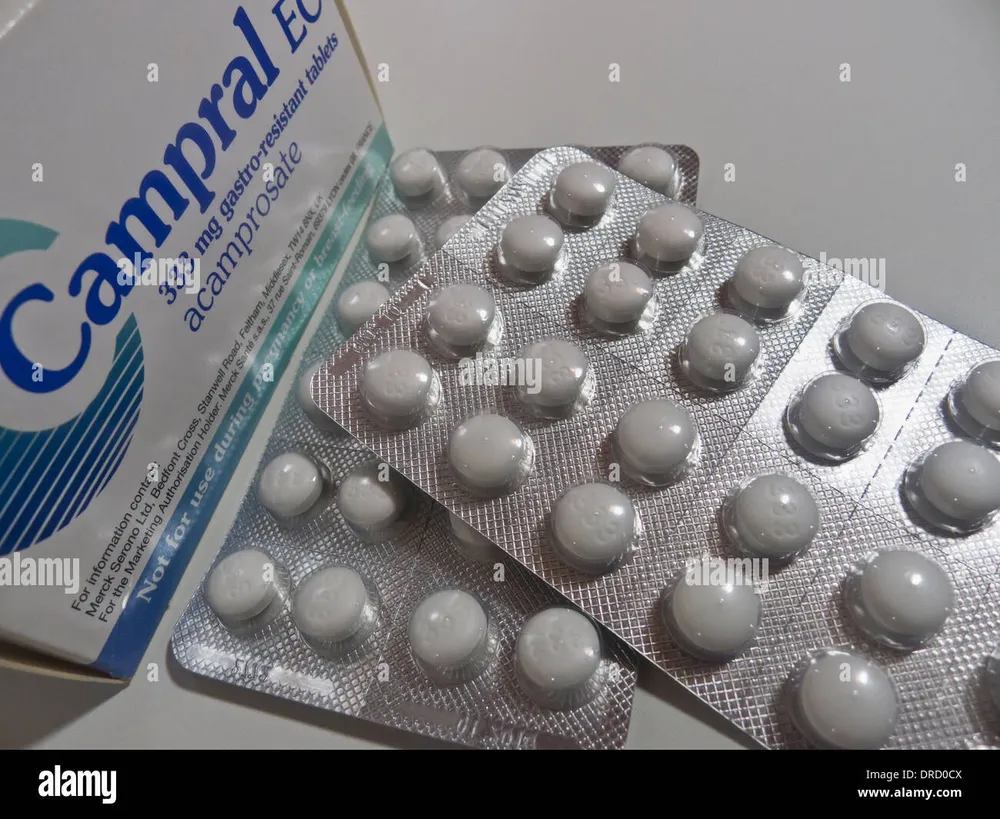
Table of Contents
Package leaflet: Information for the patient
CAMPRAL 333 mg gastro-resistant coated tablets
Calcium acamprosate
Please read all of this leaflet carefully before taking this medicine because it contains important information for you.
- Keep this leaflet. You may need to read it again.
- If you have any questions, ask your doctor or pharmacist.
- This medicine has been prescribed for you only. Do not give it to other people, even if their symptoms are the same as yours, as it may be harmful.
- If you experience any side effects, including those not listed in this leaflet, tell your doctor or pharmacist. See section 4.
Contents of this leaflet:
- What CAMPRAL is and what it is used for
- What you need to know before taking CAMPRAL
- How to take CAMPRAL
- Possible side effects
- How to store CAMPRAL
- Contents of the pack and other information
1. What CAMPRAL is and what it is used for
This medicinal product contains an active substance called calcium acamprosate, which works
by reducing the effect of certain neurotransmitters involved in alcohol dependence.
CAMPRAL is indicated to help alcohol-dependent patients maintain abstinence from alcohol,
in combination with psychological support (individual and/or group).
2. What you need to know before taking CAMPRAL
Do not take CAMPRAL if:
- you are allergic to the active substance or to any of the other ingredients of this medicine (listed in section 6);
- you have kidney problems;
- you are breastfeeding.
Warnings and precautions
Talk to your doctor or pharmacist before taking CAMPRAL
Before starting treatment with CAMPRAL, your liver function should be adequately assessed.
Patients suffering from alcohol dependence often also suffer from depression or have suicidal thoughts. For this reason, your doctor may ask you to attend periodic check-ups, even during treatment with CAMPRAL.
Children, adolescents and elderly
CAMPRAL is not suitable for patients under 18 years of age or over 65 years of age.
Other medicines and CAMPRAL
Tell your doctor or pharmacist if you are taking, have recently taken or might take any other medicines.
CAMPRAL with food, drinks and alcohol
Do not take CAMPRAL with food (after a meal), as this may reduce the effect of this medicine.
Drinking alcohol during treatment with CAMPRAL does not affect your therapy. However, you should still avoid drinking alcohol while taking CAMPRAL.
Pregnancy, breastfeeding and fertility
If you are pregnant, think you may be pregnant or are planning to become pregnant, consult your doctor or pharmacist before taking this medicine.
During pregnancy, your doctor will prescribe CAMPRAL only after carefully evaluating the risks for you and the fetus, in case you are unable to abstain from drinking alcohol, as this behaviour may be harmful to your baby's health.
If you are breastfeeding, do not take CAMPRAL. If you are unable to abstain from drinking alcohol, your doctor will decide whether to stop breastfeeding and start treatment with CAMPRAL, based on the benefits the medicine may provide for you.
Driving and using machines
CAMPRAL does not affect the ability to drive or use machinery.
CAMPRAL contains sodium
This medicine contains less than 1 mmol (23 mg) of sodium per tablet, i.e. essentially “sodium-free”.
3. How to take CAMPRAL
Take this medicine exactly as directed by your doctor. If you have any doubts,
consult your doctor or pharmacist.
If you weigh less than 60 kg, the recommended dose is 4 tablets per day (2 in the morning, 1 at
midday, and 1 in the evening).
If you weigh more than 60 kg, the recommended dose is 6 tablets per day (2 in the morning, 2 at
midday, and 2 in the evening).
Take the tablets preferably on an empty stomach.
The duration of treatment with CAMPRAL is one year.
Elderly patients
It is advisable not to use CAMPRAL if you are over 65 years of age, unless otherwise directed by
your doctor.
Children and adolescents
It is advisable not to use CAMPRAL if you are under 18 years of age, unless otherwise directed by
your doctor.
If you take more CAMPRAL than you should
You may experience diarrhoea, usually mild in intensity; inform your doctor, who will assess whether appropriate treatment is needed.
If you forget to take CAMPRAL
Do not take a double dose to make up for the missed dose.
If you stop taking CAMPRAL
Do not stop treatment without consulting your doctor.
If you have any doubts about how to use this medicine, consult your doctor or pharmacist.
4. Possible side effects
Like all medicines, this medicine can cause side effects, although not everybody gets them.
Stop taking CAMPRAL immediately and contact your doctor if you notice an allergic reaction presenting as: hives, swelling of the face, eyes, lips, swelling of the throat with difficulty breathing (angioedema), sudden drop in blood pressure (anaphylactic reaction). This condition is very rare.
Tell your doctor if you notice:
Very common side effects (may affect more than 1 in 10 people):
diarrhoea;
Common side effects (may affect up to 1 in 10 people):
- itching, skin rashes characterised by redness and blisters (maculopapular erythema);
- difficulty or complete inability for a woman to achieve orgasm (frigidity), inability in a man to perform sexual intercourse or to conceive (impotence);
- decreased sexual desire (libido);
- abdominal pain, nausea, vomiting, intestinal gas (flatulence);
Uncommon side effects (may affect up to 1 in 100 people):
increased sexual desire (libido);
Side effects with unknown frequency (frequency cannot be estimated from the available data):
skin rashes characterised by blisters and vesicles.
Reporting of side effects
If you experience any side effect, including those not listed in this leaflet, talk to your doctor or pharmacist. You can also report side effects directly via the national reporting system at the website "www.agenziafarmaco.gov.it/it/responsabili". By reporting side effects, you can help provide more information on the safety of this medicine.
5. How to store CAMPRAL
Keep this medicine out of the sight and reach of children.
No special storage precautions are required. Do not use this medicine after the expiry date stated on the packaging. The expiry date refers to the last day of that month.
Do not dispose of any medicine via wastewater or household waste. Ask your pharmacist how to dispose of medicines you no longer use. This will help protect the environment.
6. Package contents and other information
What CAMPRAL contains
The active substance is: calcium acamprosate.
Each gastro-resistant coated tablet contains 333 mg of calcium acamprosate, equivalent to 299.7 mg of acamprosate and 33.3 mg of calcium.
The other components are: crospovidone, microcrystalline cellulose, magnesium silicate, sodium carboxymethylstarch, anhydrous colloidal silicon dioxide, magnesium stearate, anionic copolymer based on methacrylic acid and acrylic acid ethyl ester, talc and propylene glycol.
Description of the appearance of CAMPRAL and package contents
CAMPRAL is available in a carton containing 84 tablets of 333 mg.
Marketing Authorization Holder
Bruno Farmaceutici S.p.A., Via delle Ande, 15 - 00144 Rome, Italy
Manufacturer
Merck Santé SAS - 2, Rue du Pressoir Vert - Semoy – France.
Merck, S.L. – Polígono Merck – Mollet del Vallés – Barcelona – Spain