Calciparina
Italy
Table of Contents
- Package leaflet: Information for the patient
- Calciparina 5,000 IU/0.2 ml solution for injection for subcutaneous use
- 1. What Calciparina is and what it is used for
- 2. What you should know before using Calciparina
- 3. How to use Calciparina pre-filled syringe for subcutaneous use
- 4. Possible adverse effects
- 5. How to store Calciparina
- 6. Package Contents and Other Information
Package leaflet: Information for the patient
Calciparina 5,000 IU/0.2 ml solution for injection for subcutaneous use
in pre-filled syringe
Calciparina 12,500 IU/0.5 ml solution for injection for subcutaneous use in pre-filled
syringe
Calcium Heparin
Please read all of this leaflet carefully before you start using this medicine because it contains
important information for you.
- Keep this leaflet. You may need to read it again.
- If you have any questions, ask your doctor, pharmacist, or nurse.
- This medicine has been prescribed for you only. Do not give it to other people, even if they have the same symptoms as yours, because it could be harmful.
- If you experience any side effects, including those not listed in this leaflet, tell your doctor, pharmacist, or nurse. See section 4.
Contents of this leaflet:
- What Calciparina is and what it is used for
- What you need to know before using Calciparina
- How to use Calciparina
- Possible side effects
- How to store Calciparina
- Contents of the pack and other information
1. What Calciparina is and what it is used for
Calciparina is a solution for subcutaneous injection and contains calcium heparin.
This substance belongs to a group of medicines called "antithrombotics", which prevent the formation of blood clots (thrombi) in blood vessels.
Calciparina is used:
- to prevent diseases in which blood clot formation occurs in veins or arteries (venous or arterial thromboembolic disease);
- to prevent the formation of clots (mural thrombosis) following myocardial infarction;
- for the treatment of deep venous or arterial thrombosis.
Consult your doctor if you do not feel better or if you feel worse.
2. What you should know before using Calciparina
Do not use Calciparina
- if you are allergic to heparin or to other substances closely related from a chemical point of view, or to any of the other ingredients of this medicine (listed in section 6);
- if you have a history of thrombocytopenia (low platelet count, the blood cells responsible for blood clotting) (see also "Warnings and precautions") or disorders associated with a tendency to bleeding (hemorrhagic diathesis);
- if you suffer from severe liver, kidney, or pancreatic diseases;
- if you cannot undergo specific blood coagulation tests at appropriate intervals (in the case of therapeutic dose administration);
-
- if you have uncontrolled coagulation disorders: disseminated intravascular coagulation (DIC) (a serious syndrome causing blood clotting in many blood vessels) throughout the body, attributable to heparin-induced thrombocytopenia; - if you have (or have had) bleeding in the brain (cerebral hemorrhage);
- if you have lesions at risk of bleeding (such as stomach or intestinal ulcer, aneurysm, or cerebral neoplasm);
- if you have sustained trauma or undergone surgical procedures involving the central nervous system, eyes, or ears;
- if you suffer (or have suffered) from retinopathies (diseases of the retina, the membrane lining the inner surface of the eye) or vitreous hemorrhages;
- if you suffer (or have suffered) from an infection affecting the inner lining of the heart (infective endocarditis);
- during regional anesthesia for surgical procedures. Additionally, if you have organic lesions with a high risk of bleeding, your doctor will need to evaluate the use of heparin by considering the risk-benefit ratio in your specific case.
Do not use this medicine if any of the conditions listed above apply to you. If you are unsure, speak with your doctor or pharmacist before using Calciparina.
Warnings and precautions
Talk to your doctor, pharmacist, or nurse before using Calciparina.
Before starting treatment and during therapy with Calciparina, your doctor will perform monitoring tests to check blood coagulation (e.g., platelet count) and/or the presence of possible bleeding. This is particularly important if you are predisposed to bleeding.
Inform your doctor:
-
if you suspect a neoplasm (tumor);
-
if you suffer from chronic alcoholism;
-
if you are elderly; in particular, elderly women have a higher risk of bleeding;
-
if you have previously experienced allergic reactions to low molecular weight heparin;
-
if you suffer from specific diseases or conditions that predispose you to bleeding risk, such as:
- coagulation disorders (hemophilic syndromes or deficiency of coagulation factors),
- decreased or altered platelets (thrombocytopenia, thrombocytopathies),
- hemorrhagic vascular purpuras such as Rendu-Osler disease,
- uncontrolled high blood pressure due to medication,
- inflammation of the heart lining and heart valves (endocarditis),
- liver diseases with coagulation parameter abnormalities and/or esophageal varices or portal hypertension gastropathy with high hemorrhagic risk,
-
gastrointestinal disorders (gastric or duodenal peptic ulcer, esophagitis or erosive gastritis, active inflammatory bowel disease, continuous drainage of the stomach or small intestine),
-
conditions related to surgery (during and immediately after: lumbar puncture or spinal anesthesia, major surgery on the brain, spine, or eye),
-
conditions predisposing you to bleeding risk, such as threatened abortion, menstrual period, postpartum period, or concomitant treatment with drugs interfering with blood coagulation (fibrinolytic drugs or oral anticoagulants, platelet aggregation inhibitors, non-steroidal anti-inflammatory drugs (NSAIDs), and/or glycoprotein IIb/IIIa receptor antagonists). In all cases of bleeding, even minor, stop treatment with Calciparina and contact your doctor. Pay special attention to avoiding injury during treatment with Calciparina. Calciparina must not be administered intramuscularly due to the risk of hematomas.
- Heparin may cause high potassium levels in the blood (hyperkalemia), especially if you have diabetes mellitus, chronic renal failure, pre-existing metabolic acidosis, high potassium levels before treatment, if you are taking concomitant therapy with drugs that increase plasma potassium levels, or if you are using heparin long-term. Your doctor will perform blood tests to measure potassium levels before starting therapy and at regular intervals during treatment, especially if treatment lasts longer than 7 days. During treatment with Calciparina, between 4 and 10 days after starting therapy, a decrease in platelets (heparin-induced thrombocytopenia) may occur, possibly leading to complications affecting the heart, lungs, brain, and limbs (thrombotic and/or embolic events). Inform your doctor if you suffer or have ever suffered from heparin-induced thrombocytopenia; in such cases, your doctor will closely monitor your platelet count throughout heparin treatment. Immediately inform your doctor if you notice:
- worsening of your condition,
- onset of pain, swelling, redness, loss of sensation, and increased temperature in a limb (thrombosis),
- sensation of pressure, tightness, pain, or heaviness in the center of the chest radiating to shoulders, neck, arms, or back, cold sweating, dizziness, shortness of breath, and nausea (symptoms of heart attack),
- difficulty breathing, chest pain, and cough (pulmonary embolism),
- severe headache or vomiting, dizziness, syncope, visual or speech disturbances, weakness or numbness in one arm or leg (stroke). In all these cases, your doctor will assess whether to discontinue treatment and consider alternative therapy.
-
In case of fever, thrombosis, thrombophlebitis, infections with thrombotic tendency, inflammatory states, sometimes occurring during myocardial infarction, cancer, congenital or acquired antithrombin III deficiency, recent surgery, you may have reduced sensitivity to heparin; your doctor will evaluate these conditions.
-
During treatment with Calciparina, avoid intramuscular administration of other drugs due to the risk of hematomas.
-
If you are to undergo spinal or epidural anesthesia, epidural analgesia, or lumbar puncture, the use of low molecular weight heparin may rarely be associated with spinal or epidural hematomas, which could lead to prolonged or permanent paralysis of the lower limbs. You should therefore be frequently monitored for signs and symptoms of neurological alterations, such as back pain, sensory and motor deficits (numbness and weakness in the lower limbs), intestinal and/or bladder dysfunction (difficulty defecating or urinating). Immediately inform a doctor or healthcare provider if you experience any of these symptoms. The risk of spinal/epidural hematomas is increased by the following conditions:
-
placement of catheters in the spinal canal (indwelling peridural catheter for continuous infusion),
-
concomitant use of other drugs that may affect coagulation, such as non-steroidal anti-inflammatory drugs (NSAIDs), platelet aggregation inhibitors, or other anticoagulants,
-
trauma or repeated lumbar punctures,
-
coagulation disorders,
-
advanced age.
Heparin use may alter your thyroid function tests. Since heparin is derived from animal sources, if you have had previous allergic reactions, your doctor may administer a reduced dose of heparin to test for possible reactions.
Children and adolescents
Calcium heparin is not recommended in children and adolescents under 18 years of age.
Other medicines and Calciparina
Tell your doctor or pharmacist if you are taking, have recently taken, or might take any other medicines.
Calciparina may affect how other medicines work. Conversely, some medicines may affect how Calciparina works.
In particular, talk to your doctor or pharmacist if you are taking one or more of the following medicines:
- oral anticoagulants, used to improve blood circulation;
- medicines that prevent platelet aggregation (antiplatelet agents), such as:
- acetylsalicylic acid and dipyridamole;
- NSAIDs (non-steroidal anti-inflammatory drugs (e.g., ibuprofen, phenylbutazone, indomethacin, ketorolac, diclofenac));
- platelet aggregation inhibitors (ticlopidine, clopidogrel, sulfinpyrazone);
- cephalosporins (cefaclor, cefixime, ceftriaxone, cefamandole, cefoperazone), a class of antibiotics;
- dextran, a drug used to increase blood volume;
- hydroxychloroquine, a drug used in rheumatic diseases;
- fibrinolytic drugs, used to dissolve blood clots: streptokinase, urokinase, alteplase;
- other medicines that increase bleeding risk:
- coumarin derivatives;
- glycoprotein IIb/IIIa receptor antagonists (eptifibatide, abciximab);
- epoprostenol or other drugs interfering with platelet aggregation, as they may induce bleeding: these should be used with great caution if you are being treated with heparin;
- intravenous nitroglycerin, used to manage cardiovascular conditions;
- drugs that increase potassium levels in the blood (ACE inhibitors, sartans, potassium-sparing diuretics, potassium salts, beta-blockers);
- digitalis, a drug used in heart diseases;
- penicillins or tetracyclines, antibiotic drugs;
- nicotine-containing drugs;
- phenothiazines, drugs used, for example, for anxiety;
- corticosteroids, antihistamines, drugs used for allergies.
Pregnancy, breastfeeding, and fertility
If you are pregnant, think you may be pregnant, planning to become pregnant, or breastfeeding, consult your doctor or pharmacist before using this medicine.
Driving and using machines
Calciparina subcutaneous injection syringe does not affect the ability to drive or operate machinery.
3. How to use Calciparina pre-filled syringe for subcutaneous use
Use this medicine exactly as directed by your doctor or pharmacist.
If you have any doubts, consult your doctor or pharmacist.
The recommended dose is the one prescribed by your doctor.
How to use pre-filled syringes
- Remove the needle protective cap (see figure below).
- Proceed with the injection.
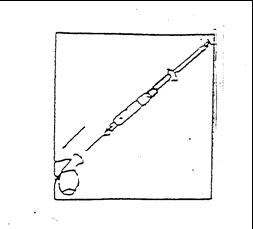
Since Calciparina must be administered by subcutaneous route, if the injection is performed correctly as described below (see “Injection technique”), the possible presence of a small amount of air in the syringe does not interfere with the administration of Calciparina.
Injection technique
Perform the injection into the subcutaneous cellular tissue, preferably in the gluteal region or over the iliac crest (hip bone), either on the right or left side.
Insert the needle entirely, perpendicularly and not tangentially, into the thickness of a skin fold (a fold or elevation of a small piece of skin) created between the operator’s thumb and index finger.
Maintain the skin fold throughout the entire injection. After completing the injection, do not rub the site; instead, apply gentle pressure. Do not proceed with the injection if inserting the needle causes severe pain, which may indicate vessel injury. In such a case, withdraw the needle and administer the injection on the opposite side.
If you use more Calciparina than you should
If you use more Calciparina than prescribed, or in case of accidental ingestion, call a doctor or go to the nearest hospital, taking the medicine package with you. This way, the doctor will immediately know what you have taken. In case of overdose, bleeding may occur, particularly from the skin or mucous membranes, wounds, gastrointestinal or genitourinary tract (nosebleeds, blood in urine, in stools), formation of hematomas and petechiae, hemorrhage. Signs of bleeding may include a drop in blood pressure or a decrease in hematocrit, detectable by blood count.
If you notice any of these symptoms, stop treatment with Calciparina immediately and contact your doctor right away or go to the nearest hospital.
In case of severe bleeding, protamine administration is required to neutralize the effect of heparin.
If you forget to use Calciparina
If you have forgotten to use CALCIPARINA, simply take the next dose at your usual time.
Never use a double dose to make up for a forgotten dose.
If you have any doubts, ask your doctor, pharmacist, or nurse.
If you stop using Calciparina
Always consult your doctor if you are considering stopping the treatment.
If you have any questions about the use of this medicine, contact your doctor, pharmacist, or nurse.
4. Possible adverse effects
Like all medicines, this medicine can cause adverse effects, although not everyone experiences them.
Stop using Calciparina immediately and contact your doctor if you experience any of the following:
- allergic reactions (hypersensitivity), even severe, presenting with chills, fever, urticaria, breathing difficulties (asthma), nasal inflammation (rhinitis), increased lacrimation, nausea, vomiting, itching and burning in the feet, drop in blood pressure, vasospasm, changes in heart rate, swelling of the face, eyes, lips, tongue and throat (anaphylactic shock);
- severe skin lesions with inflammation (skin necrosis), bruises, more or less extensive purplish or reddish spots (purpura or petechiae);
- serious bleeding (haemorrhage), even difficult to detect in any part of the body (see section “The following information is intended exclusively for healthcare professionals” at the end of this leaflet) (cerebral haemorrhage, extradural intracranial haematoma, non-traumatic spinal subdural haematoma, ventricular haemorrhage);
- decrease in platelets (thrombocytopenia) (see section 2 - “Adverse effects on blood and risk of thrombosis”);
- increased platelet aggregation, or worsening of initial conditions, blood clots in limbs, heart, lungs, brain (see section 2 - “Adverse effects on blood and risk of thrombosis”);
- disseminated intravascular coagulation (DIC);
- haematomas or ulcers at the injection site;
- breathing difficulties or chest pain (may be symptoms of pulmonary edema or haemopneumothorax);
- liver toxicity (hepatotoxicity);
- melena (presence of blood in stools).
Other adverse effects
Inform your doctor if, during treatment with Calciparina, you notice or are diagnosed with:
- cerebral haemorrhage, extradural intracranial haematoma, non-traumatic spinal subdural haematoma, ventricular haemorrhage;
- decreased bone mass leading to weakening and increased risk of fractures (osteoporosis);
- suppression of production of a hormone called aldosterone;
- temporary hair loss (alopecia);
- increased potassium levels in the blood (hyperkalaemia);
- metabolic acidosis (particularly in patients with renal impairment and diabetes mellitus);
- persistent erection not due to stimulation, often painful (priapism);
- increase in lipid levels after discontinuation of heparin therapy (rebound hyperlipidemia), or increased FT3 and FT4 levels, or increased transaminases (liver enzymes) in the blood;
- amnesia;
- bronchospasm (abnormal contraction of the bronchi);
- increased transaminases (enzymes produced by the liver);
- irritation, redness, bruising, pain at the injection site.
Reporting of adverse effects
If you experience any adverse effect, including those not listed in this leaflet, please contact your doctor or pharmacist. You may also report adverse effects directly via the national reporting system at the following website:
https://www.aifa.gov.it/content/segnalazioni-reazioni-avverse.
By reporting adverse effects, you can help provide more information on the safety of this medicine.
5. How to store Calciparina
Keep this medicine out of the sight and reach of children.
Do not use this medicine after the expiry date stated on the packaging after the word “EXP”. The expiry date refers to the last day of that month.
Do not dispose of any medicine via wastewater or household waste. Ask your pharmacist how to dispose of medicines no longer in use. This will help protect the environment.
6. Package Contents and Other Information
What Calciparina in pre-filled syringe for subcutaneous use contains
- The active substance is calcium heparin. Each 0.2 ml pre-filled syringe contains 5,000 IU of calcium heparin (purified from EDTA); each 0.5 ml pre-filled syringe contains 12,500 IU of calcium heparin (purified from EDTA).
- The other component is water for injections.
Description of the appearance of Calciparina in pre-filled syringe for subcutaneous use and pack contents
Calciparina in pre-filled syringe for subcutaneous use is a solution for injection.
The pack contains 10 pre-filled syringes of 0.2 ml or 10 pre-filled syringes of 0.5 ml.
Marketing Authorization Holder and Manufacturer
Italfarmaco S.p.A. - Viale Fulvio Testi, 330 - 20126 Milan
Information intended for physicians or healthcare professionals
The following information is intended exclusively for physicians or healthcare professionals:
Dosage and method of administration
Prophylaxis of arterial and venous thromboembolism
- Perioperative prophylaxis: Initial dose of 5,000 IU administered subcutaneously 2 hours before surgery, followed by 5,000 IU every 8–12 hours for at least 7 days or until the patient resumes ambulation.
- Prophylaxis in non-surgical patients: The same dose is used for prophylaxis in non-surgical patients at high risk. The choice between administration every 8 or 12 hours should take into account the individual patient's thromboembolic risk and bleeding risk.
- Prophylaxis of mural thrombosis after myocardial infarction: 12,500 IU subcutaneously every 12 hours for at least 10 days. Monitoring: Routine monitoring is not required.
Treatment of arterial and venous thromboembolism
Intermittent subcutaneous injection: initial dose of 333 IU/kg, followed by 250 IU/kg every 12 hours (range 10,000–20,000 IU) or 8,000–10,000 IU every 8 hours.
Monitoring:
When calcium heparin is administered at anticoagulant doses, the dosage should be determined based on coagulation tests. The most commonly used test is activated partial thromboplastin time (aPTT). The aPTT of treated patients should be maintained at 1.5 to 2.5 times the normal value. Regular monitoring of aPTT values is recommended, preferably on a daily basis.
If coagulation tests exceed the therapeutic range or if bleeding occurs, the dose should be reduced or, if necessary, heparin should be discontinued.
Special populations
Paediatric population
Prophylaxis of arterial and venous thromboembolism
No dosage recommendations are available.
Treatment of arterial and venous thromboembolism
Maintenance dose:
250 IU/kg every 12 hours by subcutaneous injection
Monitoring:
When calcium heparin is administered at anticoagulant doses, the dosage should be adjusted based on aPTT values.
Smaller children may require higher dosages and infusion rates to achieve anticoagulation levels and aPTT prolongation comparable to older children.
Elderly
Lower dosages may be required due to an increased risk of bleeding.
Monitoring:
When calcium heparin is administered at anticoagulant doses, dosages should be adjusted according to aPTT values.
Method of administration
By subcutaneous injection.
Bleeding:
Bleeding is the main complication that may occur during treatment with calcium heparin, particularly at anticoagulant doses.
Coagulation times above the therapeutic range or minor bleeding during therapy can generally be managed by reducing the dose or, if necessary, temporarily discontinuing the drug. Gastrointestinal or urinary bleeding during anticoagulant therapy may indicate the presence of an underlying occult lesion. Bleeding can occur in any body site, but certain specific hemorrhagic complications may be difficult to detect:
(a) Adrenal hemorrhage, leading to acute adrenal insufficiency, has been reported during anticoagulant therapy. Therefore, treatment should be discontinued if the patient develops signs and symptoms of acute adrenal insufficiency.
(b) Ovarian hemorrhage (corpus luteum) has occurred in women of reproductive age receiving short- or long-term anticoagulant therapy.
(c) Retroperitoneal hemorrhages.
Overdose
Symptoms of overdose
Bleeding, mainly from the skin and mucous membranes, wounds, gastrointestinal or genitourinary tract (epistaxis, hematuria, melena, hematomas, petechiae). A drop in blood pressure or a reduction in hematocrit may indicate occult bleeding.
Treatment of overdose
Minor bleeding
Discontinue heparin therapy.
Severe bleeding
Protamine is used for the rapid neutralization of heparin activity in cases of significant bleeding.
The amount required depends on the blood level of administered heparin and the time elapsed since injection. Protamine should be administered by slow intravenous infusion; 50 mg of protamine neutralizes 5,000 IU of heparin. The dose of protamine required to neutralize a heparin bolus decreases proportionally with the time elapsed since bolus administration (100% of the dose immediately after bolus, 50% after 1 hour, 25% after 2 hours).
The dose of protamine to be administered in case of continuous heparin infusion corresponds to the amount needed to neutralize the IU of heparin infused in the last 4 hours.