Caférgot
Italy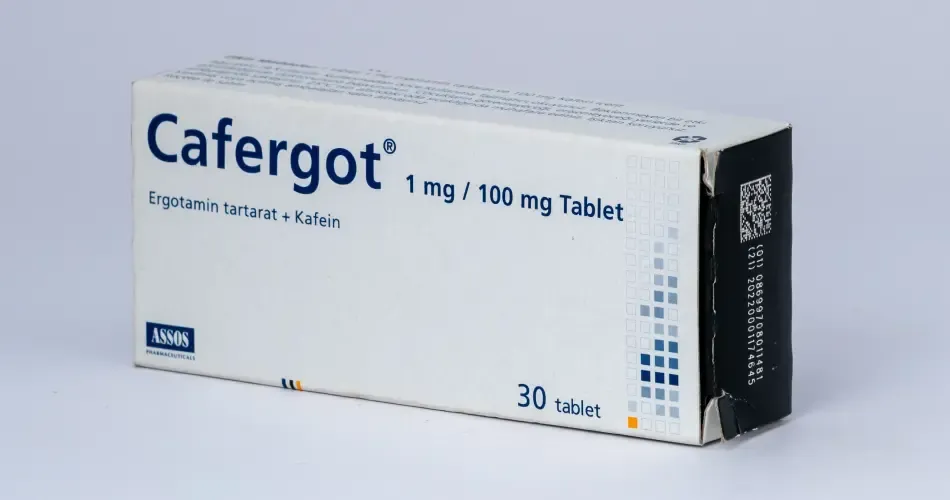
Table of Contents
Patient information leaflet
CAFERGOT 1 mg + 100 mg tablets, 2 mg + 100 mg suppositories
ergotamine tartrate - caffeine
Please read all of this leaflet carefully before taking this medicine because it contains
important information for you.
- Keep this leaflet. You may need to read it again.
- If you have any questions, ask your doctor or pharmacist.
- This medicine has been prescribed for you only. Do not give it to others, even if their symptoms are the same as yours, because it could be harmful.
- If you experience any adverse reaction, including those not listed in this leaflet, contact your doctor or pharmacist. See section 4.
Contents of this leaflet:
- What CAFERGOT is and what it is used for
- What you need to know before taking CAFERGOT
- How to take CAFERGOT
- Possible side effects
- How to store CAFERGOT
- Contents of the pack and other information
1. What CAFERGOT is and what it is used for
CAFERGOT contains the active substances ergotamine tartrate and caffeine and belongs to the group of anti-migraine medicinal products. It works by reducing the diameter of extracranial blood vessels. Caffeine, in addition to its analgesic effects, enhances the intestinal absorption of ergotamine.
CAFERGOT is indicated for the following conditions: treatment of acute attacks of pulsating headache, with or without characteristic preceding symptoms such as visual disturbances, neurological symptoms, or speech disturbances (known as migraine with or without aura). Migraine-type headache (e.g. histaminic headache). Headache caused by disturbances of cerebral blood vessels (vasomotor headache). Nervous tension headache: in cases of emotional stress.
2. What you need to know before taking CAFERGOT
Do not take CAFERGOT
- if you are allergic to ergotamine tartrate, caffeine, or any of the other ingredients of this medicine (listed in section 6);
- if you are pregnant or breastfeeding (see "Pregnancy and breastfeeding");
- if you suffer from vascular disorders, occlusive vascular diseases (obliterative angiopathies), or have coronary circulation disorders;
- if you have uncontrolled high blood pressure;
- if you have a severe systemic infection (septic state);
- if you are in a state of cardiocirculatory failure (shock);
- if you have severe kidney or liver problems;
- if you suffer from a disease causing inflammation of blood vessels, mainly in the neck and head, called temporal arteritis;
- if you suffer from a specific type of migraine called basilar migraine or hemiplegic migraine;
- if you are taking certain types of antibiotics called macrolides;
- if you are taking medicines to treat HIV infection (called HIV protease inhibitors, reverse transcriptase inhibitors, cobicistat);
- if you are taking medicines to treat hepatitis C virus infection (called HCV protease inhibitors);
- if you are taking certain antifungal medicines (called azole antifungals);
- if you are taking other medicines that cause blood vessel constriction (including ergot alkaloids or medicines from the triptan family, or 5-hydroxytryptamine receptor inhibitors) (see "Other medicines and CAFERGOT").
Warnings and precautions
Talk to your doctor or pharmacist before taking CAFERGOT.
CAFERGOT is indicated only for the treatment of acute migraine attacks and not for prevention.
Strictly follow the dose prescribed by your doctor. You must avoid continuous and daily use of CAFERGOT or using it beyond the recommended daily and weekly doses, as this may lead to contraction or narrowing of the blood vessel lumen, known as vasospasm (see "Possible side effects" and "If you take more CAFERGOT than you should").
If, during treatment, you experience chest pain, numbness or tingling in fingers of hands or feet, vomiting and nausea not related to headache, stop treatment immediately and contact your doctor.
In particular, inform your doctor:
- If you suffer from a condition called anaemia (reduction in the number of red blood cells or haemoglobin in the blood).
- If you have mild to moderate liver disorders or conditions that may cause problems with bile secretion and drainage.
- If you have mild to moderate kidney disorders.
- If you are taking other medicines. See section "Other medicines and CAFERGOT".
CAFERGOT may cause a significant reduction in blood flow to the heart, leading to myocardial ischemia or infarction.
Long-term use of ergotamine may result in serious adverse effects such as fibrosis in certain parts of the body (abdominal space called retroperitoneum, heart, lungs, pleura—the membrane covering the lungs externally—and heart valves) and intense vasoconstriction of arteries, causing symptoms of vascular ischemia in limbs and other tissues (ergotism), which may be fatal (see "Possible side effects").
Frequent use of medicines containing ergotamine may lead to physical and psychological dependence, increasing their use. Prolonged and uninterrupted treatment with CAFERGOT may cause medication-overuse headache (see "Possible side effects").
Rare cases of rectal and anal ulcers have been reported following abuse of suppositories containing ergotamine, such as CAFERGOT, usually with doses higher than recommended or with recommended doses administered continuously for many years (see "Possible side effects").
Consult your doctor if any of the above warnings apply to your current or past medical condition.
Children and adolescents
The safety and efficacy of CAFERGOT have not been established in paediatric patients.
CAFERGOT is not recommended in children and adolescents under 18 years of age.
Elderly
No studies have been conducted in elderly patients (aged 65 years or older).
CAFERGOT is not recommended in patients over 65 years of age.
Other medicines and CAFERGOT
Inform your doctor or pharmacist if you are taking, have recently taken, or might take any other medicines.
In particular:
- medicines used to treat HIV infection, such as amprenavir, saquinavir, indinavir, atazanavir, fosamprenavir, nelfinavir, ritonavir, tipranavir, lopinavir, darunavir, cobicistat, delavirdine, efavirenz (see also "Do not take CAFERGOT"), nevirapine;
- medicines used to treat hepatitis C virus infection (boceprevir, telaprevir) (see also "Do not take CAFERGOT");
- antifungal medicines such as ketoconazole, miconazole, itraconazole, posaconazole, voriconazole (see "Do not take CAFERGOT"), clotrimazole, fluconazole;
- antibiotic medicines of the tetracycline or macrolide class such as erythromycin, troleandomycin, clarithromycin, josamycin (see "Do not take CAFERGOT");
- medicines used to treat bacterial infections, e.g. fluoroquinolones (enoxacin, ciprofloxacin, norfloxacin), rifampicin, quinupristin/dalfopristin;
- medicines with vasoconstrictive action used for migraine, such as ergot alkaloids or serotonin receptor agonists (e.g. sumatriptan, almotriptan, frovatriptan, naratriptan, rizatriptan, zolmitriptan, eletriptan);
- sympathomimetics (nasal and/or oral) (ephedrine, midodrine, naphazoline, oxymetazoline, synephrine, tetryzoline, tuaminoheptane, timolol, phenylephrine, pseudoephedrine), many of which are used as decongestants;
- nicotine or nicotine-containing products;
- blood pressure-lowering medicines: beta-blockers such as propranolol, oxprenolol, and diltiazem;
- medicines used to treat abnormal heart rhythm, e.g. mexiletine;
- medicines used to treat excessive prolactin production in the body, e.g. cabergoline and bromocriptine;
- oral contraceptives;
- cimetidine, a medicine used to treat stomach burning and ulcers;
- grapefruit juice;
- medicines used for maintenance treatment of asthma, e.g. zileuton;
- medicines used to treat depression (e.g. amitriptyline, sertraline, fluvoxamine);
- medicines used to treat Parkinson's disease, e.g. bromocriptine, cabergoline, pergolide, lisuride.
Pregnancy and breastfeeding
If you are pregnant, suspect you may be pregnant, plan to become pregnant, or are breastfeeding, consult your doctor or pharmacist before taking this medicine.
CAFERGOT is contraindicated during pregnancy and breastfeeding (see section "Do not take CAFERGOT").
CAFERGOT may pass into breast milk and may cause symptoms in the newborn, such as vomiting, diarrhoea, weak pulse, and unstable blood pressure.
If you become pregnant while being treated with CAFERGOT, inform your doctor immediately.
Driving and use of machines
CAFERGOT may cause dizziness, other nervous system disorders, or visual disturbances. If you experience these symptoms, do not drive or operate machinery until these effects have subsided.
3. How to take CAFERGOT
Take this medicine exactly as directed by your doctor or pharmacist.
If you have any doubts, consult your doctor or pharmacist.
CAFERGOT should be taken at the first sign of a migraine attack. Do not use CAFERGOT
tablets/suppositories for the prevention of migraine attacks.
CAFERGOT tablets are to be taken by mouth.
CAFERGOT suppositories are to be taken rectally.
Recommended dose
Adults
The recommended dose for the first migraine attack is 2 tablets or 1 suppository. If there is no
improvement after half an hour, take 1 tablet or half a suppository.
This dosing regimen may be repeated every half hour, without exceeding the maximum daily dose
of a total of 6 tablets or 3 suppositories within 24 hours.
If subsequent attacks occur, the initial dose may be increased to 3 tablets or 1 and a half
suppositories per single dose, depending on the total dose required during previous attacks.
If pain persists, take 1 tablet or half a suppository every half hour until the maximum weekly dose
of 10 tablets or 5 suppositories is reached.
Keep a record of how many tablets/suppositories you use.
It is important that you:
- Do not use more than 3 suppositories or 6 tablets of CAFERGOT within 24 hours.
- Do not use CAFERGOT tablets/suppositories every day.
- Do not use CAFERGOT tablets/suppositories if you have already used a treatment cycle within the last 4 days.
- Do not use more than 5 suppositories or 10 tablets of CAFERGOT in a week.
Consult your doctor if you do not feel better or if you feel worse.
Use in children and adolescents
Do not administer CAFERGOT tablets/suppositories to children and adolescents under 18 years of age.
Elderly
CAFERGOT is not recommended for patients over 65 years of age.
If you take more CAFERGOT than you should
If you accidentally take too many CAFERGOT tablets/suppositories, inform your doctor or go to the nearest emergency room. Show your doctor any remaining medicines or the empty packaging.
Symptoms of overdose include nausea, vomiting, drowsiness, confusion, seizures, dizziness, rapid heartbeat (tachycardia), low blood pressure (hypotension), circulatory failure (shock), breathing difficulties, coma. Symptoms and complications due to intense constriction of peripheral blood vessels with ischemia may occur: numbness, tingling and pain in the fingers of the hands or feet, bluish discoloration of the skin and mucous membranes (cyanosis), gangrene.
Appropriate treatment will be administered.
If you forget to take CAFERGOT
If you forget to take a dose, take it as soon as possible, unless it is almost time for the next dose. Do not take a double dose to make up for a forgotten dose.
If you have any questions about the use of this medicine, consult your doctor or pharmacist.
4. Possible side effects
Like all medicines, this medicine can cause side effects, although not everybody gets them.
If you experience any of the following side effects, inform your doctor immediately:
- allergic reactions which may include skin rash, facial swelling, appearance of a skin eruption characterized by wheals with or without itching (urticaria), and breathing difficulties (dyspnoea).
The following other side effects have been observed with the use of CAFERGOT:
Common: may affect up to 1 in 10 people
- nausea, vomiting (not related to migraine);
- abdominal pain;
- dizziness.
Uncommon: may affect up to 1 in 100 people
- bluish discoloration of the skin and mucous membranes (cyanosis);
- constriction of peripheral blood vessels (see "Warnings and precautions");
- pain or weakness in the arms, hands, legs, and feet;
- tingling or numbness in the hands or feet;
- diarrhoea.
Rare: may affect up to 1 in 1,000 people
- sensation of spinning and loss of balance (vertigo);
- slow (bradycardia) or fast (tachycardia) heartbeat;
- high blood pressure;
- breathing difficulties;
- muscle pain (myalgia);
- involuntary muscle contractions (muscle spasms);
- absence of pulse detected at the wrist;
- excessive vasoconstriction of the arteries (ergotism) with signs and symptoms of vascular ischemia in the extremities, or spasm of the renal or cerebral arteries.
Very rare: may affect up to 1 in 10,000 people
- angina or heart attack causing chest pain;
- necrosis of the limbs (gangrene).
Not known: frequency cannot be estimated from the available data
- headache caused by the medicine (see "Warnings and precautions");
- fibrosis in certain areas of the body (heart, lungs, pleura, retroperitoneum) (see "Warnings and precautions");
- rectal and anal ulceration (see "Warnings and precautions");
- withdrawal headache (within 24–48 hours after stopping ergotamine, a headache develops which intensifies and is associated with autonomic disturbances; it may continue for 72 hours or longer).
Reporting of side effects
If you experience any side effect, including those not listed in this leaflet, talk to your doctor, pharmacist, or nurse.
You can also report side effects directly via the national reporting system at
https://www.aifa.gov.it/content/segnalazioni-reazioni-avverse .
By reporting side effects, you can help provide more information on the safety of this medicine.
5. How to store CAFERGOT
Keep this medicine out of the sight and reach of children.
Do not use this medicine after the expiry date stated on the packaging. The expiry date refers to the last day of that month.
CAFERGOT tablets: Store below 25°C. Keep in the original packaging to protect the medicine from light.
CAFERGOT suppositories: Do not store above 25°C.
Do not use this medicine if you notice that the packaging is damaged or tampered with.
Do not dispose of any medicine via wastewater or household waste. Ask your pharmacist how to dispose of medicines you no longer use. This will help protect the environment.
6. Package contents and other information
What CAFERGOT contains
CAFERGOT 1 mg + 100 mg tablets
- The active substances are ergotamine tartrate and caffeine. One tablet contains 1 mg of ergotamine tartrate and 100 mg of caffeine.
- The other components are: tartaric acid, magnesium stearate, iron oxide yellow pigment, talc, maize starch, microcrystalline cellulose.
CAFERGOT 2 mg + 100 mg suppositories
- The active substances are ergotamine tartrate and caffeine. One suppository contains 2 mg of ergotamine tartrate and 100 mg of caffeine.
- The other components are: tartaric acid, lactose, semisynthetic glycerides.
Description of the appearance of CAFERGOT and package contents
CAFERGOT 1 mg + 100 mg tablets - 20 tablets
CAFERGOT 2 mg + 100 mg suppositories - 5 suppositories
Marketing Authorization Holder
Amdipharm Limited
Unit 17
Northwood House
Northwood Crescent
Northwood
Dublin 9
D09 V504
Ireland
Manufacturers
CAFERGOT 1 mg + 100 mg tablets
Cenexi SAS, 52 - rue Marcel et Jacques Gaucher - 94120 Fontenay-sous-Bois, France
CAFERGOT 2 mg + 100 mg suppositories
Cenexi SAS, 52 - rue Marcel et Jacques Gaucher - 94120 Fontenay-sous-Bois, France