Cabaser
Italy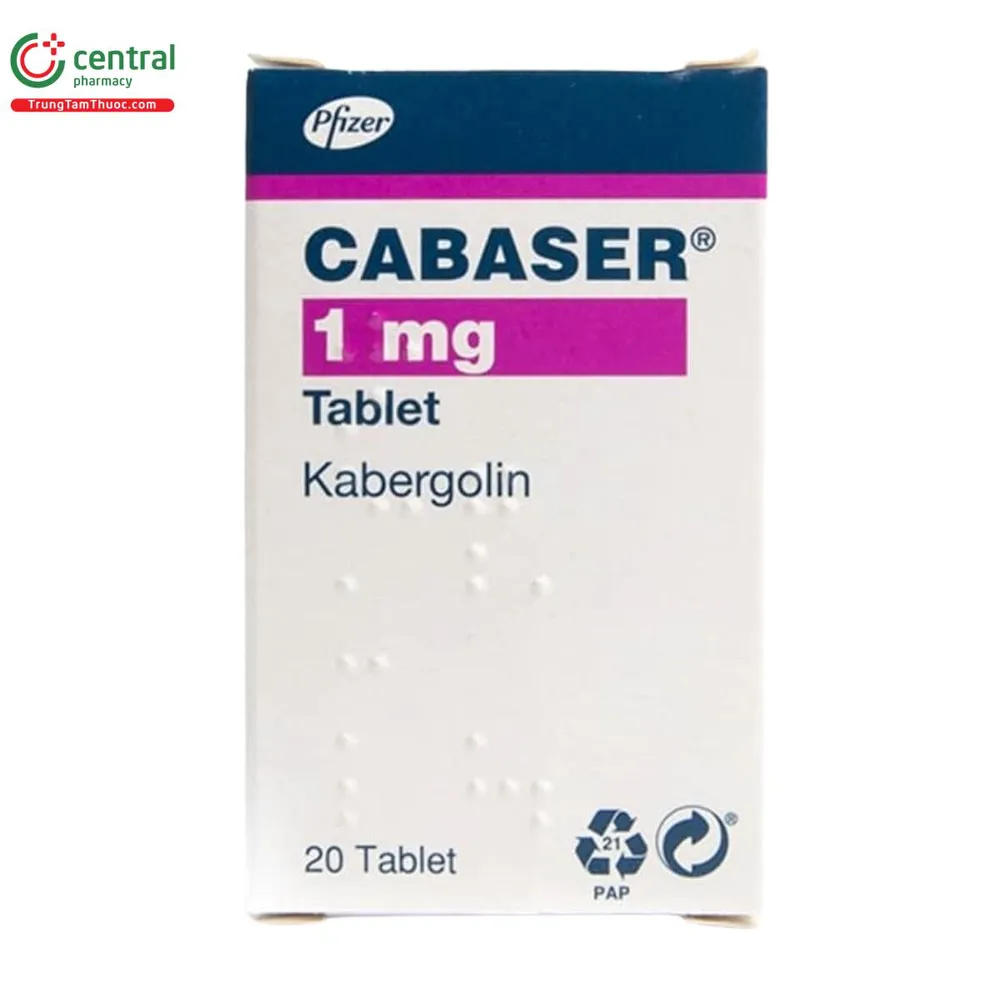
Table of Contents
PACKAGE LEAFLET
CABASER 1 mg TABLETS, 2 mg TABLETS
cabergoline
THERAPEUTIC PHARMACOLOGICAL CATEGORY
Dopamine agonist.
THERAPEUTIC INDICATIONS
When it is considered appropriate to treat the signs and symptoms of Parkinson's disease with a dopamine agonist, cabergoline is indicated as a second-line therapy in patients who are intolerant to non-ergot-derived drugs or who have not responded to such therapy, either as monotherapy or in combination with levodopa together with a peripheral decarboxylase inhibitor.
Treatment must be initiated under the supervision of a specialist physician in Neurology, Neuropsychiatry, Geriatrics, or Psychiatry. The benefit of continued treatment should be periodically reviewed, taking into account the risk of fibrotic reactions and valvular heart disease (see "Contraindications", "Special Warnings", "Precautions for Use", and "Undesirable Effects").
CONTRAINDICATIONS
The patient must not take this medicine if:
- he/she is hypersensitive to cabergoline, any of the excipients, or any of the ergot alkaloids;
- he/she is undergoing long-term treatment with cabergoline and has or has had fibrotic reactions (scar tissue) affecting the heart (see Special Warnings - Fibrosis and cardiac valvulopathy);
- he/she has or has had a history of pulmonary, pericardial, or retroperitoneal fibrosis.
PRECAUTIONS FOR USE
See section "Special Warnings".
INTERACTIONS
Inform your doctor or pharmacist if you have recently taken any other medicines, including those not requiring a prescription.
Some medicines may reduce the therapeutic effect of CABASER or alter its bioavailability.
Concomitant use of other non-dopamine agonist antiparkinson drugs (selegiline, amantadine, biperiden, trihexyphenidyl) has been permitted in clinical studies on patients receiving cabergoline. In studies assessing pharmacokinetic interactions between cabergoline and L-dopa or selegiline, no interactions were observed.
Although there is no information on potential interactions between cabergoline and other ergot alkaloids, concomitant use of cabergoline with these drugs is not recommended during long-term treatment.
Since cabergoline exerts its therapeutic effect through direct stimulation of dopaminergic receptors, it must not be administered concomitantly with drugs having dopamine-antagonist activity (such as phenothiazines, butyrophenones, thioxanthenes, metoclopramide), as this could reduce the therapeutic effect of cabergoline.
Cabergoline, like other ergot derivatives, must not be used concomitantly with macrolide antibiotics (e.g., erythromycin), as this may increase systemic bioavailability.
SPECIAL WARNINGS
General
Like other ergot derivatives, cabergoline should be administered with caution in patients with severe cardiovascular disorders, Raynaud's syndrome, peptic ulcer, gastrointestinal bleeding, or a history of severe psychiatric disorders, especially psychosis.
Important information on certain excipients
If your doctor has diagnosed you with an intolerance to certain sugars, contact him/her before taking this medicine.
Hepatic impairment:
In patients with severe hepatic impairment, a lower dosage should be considered. In patients with severe hepatic impairment (Child-Pugh Class C) who received a single 1 mg dose, an increase in AUC was observed compared to healthy volunteers and patients with milder forms of hepatic impairment.
Postural hypotension:
Postural hypotension may occur after administration of cabergoline, especially during the first days of treatment initiation. Caution is required when cabergoline is administered together with other drugs known to lower blood pressure.
Fibrosis and cardiac valvulopathy and possibly related clinical conditions
Patients should pay particular attention if they have or have had fibrotic reactions (scar tissue) involving the heart, lungs, or abdomen.
If fibrotic reactions develop, treatment must be discontinued.
After prolonged use of ergot derivatives, including cabergoline, fibrotic and inflammatory disorders of serous membranes have been reported, such as pleuritis, pleural effusion, pleural fibrosis, pulmonary fibrosis, pericarditis, pericardial effusion, cardiac valvulopathy affecting one or more valves (aortic, mitral, tricuspid), or retroperitoneal fibrosis. In some cases, symptoms or manifestations of cardiac valvulopathy improved after discontinuation of cabergoline treatment. Erythrocyte sedimentation rate (ESR) has been abnormally elevated in association with pleural effusion/fibrosis. A chest X-ray is recommended in case of unexplained and abnormal elevation of ESR.
Serum creatinine levels may be useful in diagnosing fibrosis. After diagnosis of pleural effusion/pulmonary fibrosis or cardiac valvulopathy, symptoms and manifestations have improved upon discontinuation of cabergoline treatment (see Contraindications).
Valvulopathy has been associated with cumulative dosing; therefore, patients should be treated with the lowest effective dose. At each visit, the risk-benefit ratio of treatment for the individual patient should be reassessed to determine whether continued treatment with cabergoline remains appropriate.
Before initiating long-term treatment:
In case of long-term treatment with cabergoline, the physician should check, prior to starting therapy, whether the heart, lungs, and kidneys are in good condition. The physician should also perform an echocardiogram (an ultrasound examination of the heart) before starting treatment and at regular intervals during treatment to detect any potential asymptomatic valvular pathology.
Prior to initiating therapy, it is also advisable to perform an erythrocyte sedimentation rate (ESR) test or other inflammatory markers, pulmonary function tests/chest X-ray, and renal function tests.
It is not known whether treatment with cabergoline in patients with valvular regurgitation may worsen the underlying condition. If valvular fibrosis is diagnosed, the patient must not be treated with cabergoline.
During long-term treatment:
Fibrotic disorders may have an insidious onset, and patients must be continuously monitored to avoid the risk of progressive fibrosis manifestations.
During treatment, attention should be paid to signs and symptoms of:
- Pleuropulmonary disorders, such as dyspnea, shortness of breath, persistent cough, or chest pain.
- Renal failure or vascular obstruction of the ureter or abdomen causing flank pain/lumbago and lower limb edema, as well as possible presence of abdominal mass or tenderness suggesting retroperitoneal fibrosis.
- Heart failure, as cases of pericardial fibrosis have often presented with heart failure; constrictive pericarditis should be ruled out if such symptoms occur.
- Heart failure: because cases of valvular fibrosis have often presented with heart failure; valvular fibrosis should be ruled out if such symptoms occur.
Appropriate clinical and diagnostic monitoring for fibrotic disorders is recommended. An initial follow-up echocardiogram should be performed within 3–6 months of starting therapy, after which the frequency of echocardiographic monitoring should be determined based on individual clinical assessment, with particular attention to the above-mentioned signs and symptoms, but always at a minimum frequency of every 6–12 months.
Treatment with cabergoline must be discontinued if an echocardiogram reveals new valvular regurgitation, worsening of existing regurgitation, valvular stenosis, or thickening of the valvular leaflets (see Contraindications).
The need for additional clinical checks (e.g., physical examination, careful cardiac auscultation, X-ray, echocardiogram, CT scan) should be determined on an individual basis.
Additional tests such as erythrocyte sedimentation rate (ESR) and serum creatinine measurements should be performed, if necessary, to support diagnosis of fibrotic disease.
Somnolence / Sudden sleep attacks
Cabergoline has been associated with somnolence and episodes of sudden sleep attacks, particularly in patients with Parkinson's disease.
Sudden sleep attacks have been reported during daily activities, sometimes without awareness and without warning signs. A reduction in dosage or discontinuation of therapy should be considered (see section "Effects on ability to drive and use machines").
Psychiatric disorders
Inform your doctor if you or someone in your family or caregiver notices the development of impulses or urges to behave in ways that are unusual for you and that you cannot resist. These are called impulse control disorders and may include behaviors such as gambling addiction, excessive eating, compulsive spending, abnormally increased sexual desire, or increased sexual thoughts or feelings. Your doctor may consider modifying or discontinuing the dose.
Pregnancy and breastfeeding
Ask your doctor or pharmacist for advice before taking any medicine.
Pregnancy
There are no adequate and well-controlled studies on the use of cabergoline in pregnant women. Animal studies have not shown teratogenic effects, but reduced fertility and embryotoxicity have been observed alongside pharmacodynamic activity.
A twelve-year observational study on the effects of cabergoline therapy during pregnancy has provided data on 256 pregnancies. Of these, seventeen (6.6%) resulted in major congenital malformations or miscarriages. Information is available on 23 out of 258 children who had a total of 27 neonatal abnormalities, mild or severe. The most common neonatal abnormalities were musculoskeletal malformations (10), followed by cardio-pulmonary abnormalities (5). There is no information on perinatal diseases or long-term effects in children exposed to cabergoline in utero. Based on recent published literature, the prevalence of major congenital malformations in the general population is reported to be 6.9% or higher. The rate of congenital abnormalities varies across different populations. It is not possible to accurately determine whether there is an increased risk due to the lack of a control group.
It is recommended to use a contraceptive method during treatment with cabergoline.
Cabergoline should be used during pregnancy only if clearly indicated and after careful risk/benefit assessment.
Due to the long half-life of the drug and limited data on intrauterine exposure, women planning pregnancy should discontinue cabergoline one month before the expected conception. If conception occurs during treatment, therapy should be discontinued as soon as pregnancy is confirmed to minimize fetal exposure to the drug.
Breastfeeding
In rats, cabergoline and/or its metabolites are excreted in milk. There is no available information on excretion of the drug in human breast milk; however, due to its dopamine-agonist action, CABASER is expected to inhibit/suppress lactation. Mothers receiving CABASER treatment should be advised not to breastfeed.
Remember that this medicine is prescribed for you and can only be prescribed by a doctor.
Never give CABASER to other people, as it could harm them even if their symptoms are similar to yours.
Effects on ability to drive and use machines
During the initial phase of treatment, patients should be cautious when performing tasks requiring rapid and accurate reactions.
CABASER may cause somnolence (excessive drowsiness) and episodes of sudden sleep attacks. Therefore, patients should refrain from driving or engaging in any activity where reduced attention could expose themselves or others to the risk of serious injury or death (e.g., operating machinery) until such recurrent episodes and somnolence have resolved (see also section "Special Warnings").
DOSAGE, METHOD AND TIME OF ADMINISTRATION
CABASER must be administered orally, once daily, preferably during meals.
Your doctor will determine the effective daily dosage, starting from doses of 0.5 mg–1 mg.
If you forget to take a dose, take the next dose as scheduled according to the prescribed regimen.
The maximum daily dose is 3 mg/day.
OVERDOSE
Symptoms of overdose are likely to result from overstimulation of dopaminergic receptors, such as nausea, vomiting, gastric disturbances, postural hypotension, and confusion/psychosis or hallucinations.
If necessary, supportive measures should be taken to eliminate any unabsorbed drug and maintain blood pressure.
Administration of dopamine antagonist drugs may also be advisable.
In case of accidental ingestion/overdose of CABASER, contact your doctor immediately or go to the nearest hospital.
UNDESIRABLE EFFECTS
Like all medicines, CABASER can cause undesirable effects, although not everyone experiences them.
The following undesirable effects have been observed and reported during treatment with CABASER, classified according to the following frequencies: very common (≥1/10), common (≥1/100, <1/10), uncommon (≥1/1,000, <1/100), rare (≥1/10,000, <1/1,000), very rare (<1/10,000), not known (frequency cannot be estimated from available data).
MedDRA System Organ Class | Frequency | Undesirable Effects
---|---|---
Cardiac disorders | Very common | Valvulopathy (including regurgitation) and related disorders (pericarditis and pericardial effusion)
| Common | Angina pectoris
| Common | Dyspnea
| Uncommon | Pleural effusion, pulmonary fibrosis
| Very rare | Fibrosis (including pleural fibrosis)
Respiratory, thoracic and mediastinal disorders | Not known | Respiratory disorders, respiratory failure, pleuritis, chest pain
Immune system disorders | Uncommon | Hypersensitivity reactions
Nervous system disorders | Common | Headache, somnolence, dizziness/vertigo, dyskinesia
| Uncommon | Hyperkinesia
| Not known | Sudden onset of sleep, syncope, tremor
Eye disorders | Not known | Visual impairment
Psychiatric disorders | Common | Hallucinations, sleep disorders, increased libido, confusion
| Uncommon | Delusions, psychotic disorders
| Not known | Aggression, hypersexuality, pathological gambling
Vascular disorders | Common | Cabaser generally exerts a hypotensive effect in patients on long-term treatment, orthostatic hypotension
| Uncommon | Erythromelalgia
| Not known | Digital vasospasm
Gastrointestinal disorders | Very common | Nausea
| Common | Constipation, dyspepsia, gastritis, vomiting
General disorders and administration site conditions | Very common | Peripheral edema
| Common | Asthenia
| Uncommon | Edema, fatigue
Hepatobiliary disorders | Uncommon | Abnormal liver function
Skin and subcutaneous tissue disorders | Uncommon | Rash
| Not known | Alopecia
Musculoskeletal and connective tissue disorders | Not known | Leg cramps
Investigations | Common | Abnormal liver function tests, reduction in hemoglobin, hematocrit and/or erythrocytes (>15% from baseline values)
| Not known | Increased plasma levels of creatine phosphokinase
*In case of concomitant levodopa administration
The following undesirable effects may also occur:
- Inability to resist the impulse to carry out actions that could be harmful, which may include:
- Strong impulse to gamble excessively, despite serious personal or family consequences
- Altered or increased sexual interest and behavior causing significant concern to you or others, e.g., increased sexual desire
- Uncontrollable shopping or excessive spending
- Compulsive eating (consuming large amounts of food in a short time) or bulimia (eating more food than normal and more than needed to satisfy hunger).
Inform your doctor if any of these behaviors occur, so that he/she can decide how to manage or reduce the symptoms.
Following the instructions in this leaflet reduces the risk of undesirable effects.
Reporting suspected adverse reactions
If you experience any undesirable effect, including those not listed in this leaflet, contact your doctor or pharmacist. Adverse reactions can also be reported directly via the national reporting system at www.agenziafarmaco.gov.it/it/responsabili. Reporting adverse reactions helps provide more information on the safety of this medicine.
EXPIRY DATE AND STORAGE
Expiry date: see the date on the packaging.
WARNING: do not use the medicine after the expiry date stated on the packaging.
This date refers to the product in its original, unopened packaging stored correctly.
DO NOT USE IF THERE ARE VISIBLE SIGNS OF DETERIORATION.
Keep the medicine out of the reach and sight of children.
Medicines must not be disposed of via wastewater or household waste. Ask your pharmacist how to dispose of medicines no longer in use. This will help protect the environment.
COMPOSITION
CABASER 1 mg TABLETS
Each tablet contains: active substance: cabergoline 1 mg.
Excipients: anhydrous lactose, leucine.
CABASER 2 mg TABLETS
Each tablet contains: active substance: cabergoline 2 mg.
Excipients: anhydrous lactose, leucine.
PHARMACEUTICAL FORM AND CONTENT
1 mg tablets: white, oval-shaped, concave on both sides, with a notch on one side and engraved “7” on the left and “01” on the right of the notch;
2 mg tablets: white, oval-shaped, concave on both sides, with a notch on one side and engraved “7” on the left and “02” on the right of the notch;
20 tablets 1 mg
20 tablets 2 mg
ORAL USE
Not all pack sizes may be marketed.
MARKETING AUTHORISATION HOLDER
Pfizer Italia S.r.l.
Via Isonzo, 71 – 04100 Latina
MANUFACTURER
Pfizer Italia S.r.l., Località Marino del Tronto - 63100 Ascoli Piceno (AP)
REVISION OF THE PACKAGE LEAFLET BY THE ITALIAN MEDICINES AGENCY: