Buprenorphine Neuraxpharm
Italy
Table of Contents
- Package leaflet: Information for the patient
- Buprenorphine Neuraxpharm 0.4 mg sublingual film, 4 mg sublingual film, 6 mg sublingual film, 8 mg sublingual film
- 1. What Buprenorfina Neuraxpharm is and what it is used for
- 2. What you should know before taking Buprenorphine Neuraxpharm
- 3. How to take Buprenorphine Neuraxpharm
- 4. Possible side effects
- 5. How to store Buprenorphine Neuraxpharm
- 6. Package contents and other information
Package leaflet: Information for the patient
Buprenorphine Neuraxpharm 0.4 mg sublingual film, 4 mg sublingual film, 6 mg sublingual film, 8 mg sublingual film
buprenorphine
Read this entire leaflet carefully before taking this medicine because it contains
important information for you.
- Keep this leaflet. You may need to read it again.
- If you have any questions, consult your doctor or pharmacist.
- This medicine has been prescribed for you only. Do not give it to others, even if their symptoms are the same as yours, because it could be harmful.
- If you experience any side effects, including those not listed in this leaflet, consult your doctor or pharmacist. See section 4.
Contents of this leaflet
- What Buprenorphine Neuraxpharm is and what it is used for
- What you need to know before taking Buprenorphine Neuraxpharm
- How to take Buprenorphine Neuraxpharm
- Possible side effects
- How to store Buprenorphine Neuraxpharm
- Contents of the pack and other information
1. What Buprenorfina Neuraxpharm is and what it is used for
Buprenorfina Neuraxpharm contains the active substance buprenorphine, a medicine known as an opioid. Buprenorphine is used for the treatment of opioid dependence (narcotics) in adults and adolescents over the age of 15 who are also receiving medical, social, and psychological support. Buprenorfina Neuraxpharm is intended for patients who have agreed to be treated for their opioid dependence. Buprenorphine helps people dependent on opioids by preventing opioid withdrawal symptoms and reducing drug craving.
2. What you should know before taking Buprenorphine Neuraxpharm
Do not take Buprenorphine Neuraxpharm
- if you are allergic to buprenorphine or to any of the other ingredients of this medicine (listed in section 6).
- if you have severe respiratory problems
- if you have severe liver problems
- if you have alcohol intoxication, or delirium tremens (tremors, sweating, anxiety, confusion, or hallucinations caused by alcohol)
Warnings and precautions
Talk to your doctor before taking Buprenorphine Neuraxpharm
- Misuse and abuse This medicine may be a target for people who abuse prescription medicines and should be stored in a safe place to protect it from theft. Do not give this medicine to anyone else. It could kill them or otherwise harm them.
- Sleep-related breathing disorders Buprenorphine Neuraxpharm may cause sleep-related breathing disorders such as sleep apnoea (frequent breathing pauses during sleep) and sleep-related hypoxaemia (low oxygen levels in the blood). Symptoms may include breathing pauses during sleep, waking up at night due to shortness of breath, difficulty staying asleep, or excessive daytime sleepiness. If you or someone else notices these symptoms, contact your doctor. Your doctor may consider reducing the dose.
- Respiratory problems and drowsiness Some people have died from respiratory failure (inability to breathe) or experienced increased drowsiness due to misuse of buprenorphine or taking it together with other substances that depress the central nervous system, such as alcohol, benzodiazepines (tranquillisers), gabapentinoids, or other opioids, or with inhibitors of buprenorphine metabolism such as antiretrovirals (used to treat AIDS) or other antibiotics (used to treat bacterial infections). (See section 2 “Other medicines and Buprenorphine Neuraxpharm”) Inform your doctor if you suffer from asthma or other respiratory problems before starting treatment with Buprenorphine Neuraxpharm.
- Serotonin syndrome Concomitant use with certain antidepressants may cause serotonin syndrome (see section 2 “Other medicines and Buprenorphine Neuraxpharm”).
Tolerance, dependence, and addiction
This medicine contains buprenorphine, an opioid medicine. Repeated use of opioids may cause the
medicine to become less effective (you get used to it, a phenomenon known as tolerance). Repeated
use of buprenorphine may also lead to dependence, abuse, and addiction, which may result in a
life-threatening overdose.
Dependence or addiction may make you feel as though you no longer have control over how much
medicine you take or how often you take it.
The risk of becoming addicted or dependent varies from person to person. You may have a higher
risk of becoming addicted or dependent on buprenorphine if:
- You or someone in your family has ever abused or been dependent on alcohol, prescription medicines, or illegal drugs (“addiction”).
- You are a smoker.
- You have ever had mood problems (depression, anxiety, or personality disorders) or have been treated by a psychiatrist for other mental illnesses.
If you notice any of the following signs while taking buprenorphine, it could be a sign that you have
become addicted or dependent:
- You need to take the medicine for longer than recommended by your doctor
- You need to take more than the recommended dose
- You are using the medicine for reasons other than those prescribed, e.g., “to stay calm” or “to help you sleep”
- You have made repeated unsuccessful attempts to stop or control use of the medicine
- When you stop taking the medicine, you do not feel well and feel better again once you take the medicine again (“withdrawal effects”) If you notice any of these signs, talk to your doctor to discuss the best treatment path for you, including when it is appropriate to stop and how to stop safely (see section 3, If you stop taking Buprenorphine Neuraxpharm).
- Liver damage Liver damage has been reported after taking buprenorphine, particularly with misuse of the medicine. This could also be due to viral infections (chronic hepatitis C), alcohol abuse, anorexia, or use of other medicines that can damage the liver (see section 4). Your doctor may perform regular blood tests to monitor your liver function. Inform your doctor if you have liver problems before starting treatment with Buprenorphine Neuraxpharm.
- Withdrawal symptoms This medicine may cause opioid withdrawal symptoms if taken too soon after taking opioids. At least 6 hours must pass after using a short-acting opioid (e.g., morphine, heroin) or at least 24 hours after using a long-acting opioid such as methadone.
This medicine may also cause withdrawal symptoms if treatment is stopped abruptly.
- Allergic reactions Contact your doctor immediately or seek immediate medical attention if you experience side effects such as sudden wheezing, breathing difficulties, swelling of the eyelids, face, tongue, lips, throat, or hands; rash or itching, especially if widespread. These may be signs of a life-threatening allergic reaction.
- General warnings for the opioid class
- This medicine may cause a sudden drop in blood pressure, causing dizziness when rising too quickly from a sitting or lying position. Prescribing and dispensing for a short period of time is recommended, especially at the beginning of treatment.
- Inform your doctor if you have recently had a head injury or brain disease or if you suffer from seizures. Opioids may increase cerebrospinal fluid pressure (fluid surrounding the brain and spinal cord).
- Opioids may cause pupil constriction and mask pain symptoms that could aid in diagnosing certain conditions.
- Opioids should be used with caution in patients with thyroid problems or adrenal cortical disorders (e.g., Addison’s disease).
- Opioids should be used with caution in patients with low blood pressure or urinary disorders (particularly related to prostate enlargement in men).
- Biliary tract dysfunction (network of organs and ducts that produce, store, and transport bile in the body).
- Opioids should be administered with caution in elderly or debilitated patients.
- The following combinations with Buprenorphine Neuraxpharm are not recommended: tramadol, codeine, dihydrocodeine, ethylmorphine, alcohol, or medicines containing alcohol (see also section 2 “.
Children and adolescents
This medicine must not be used in children under 15 years of age. For adolescents between 15 and 17
years of age, the doctor may decide to perform regular blood tests.
Other medicines and Buprenorphine Neuraxpharm
Inform your doctor if you are taking, have recently taken, or might take any other medicine.
Some medicines may increase the side effects of buprenorphine or cause very serious reactions. Do
not take other medicines during treatment with Buprenorphine Neuraxpharm without first talking to
your doctor, especially:
Benzodiazepines (used to treat anxiety or sleep disorders) such as diazepam, temazepam, or
alprazolam and gabapentinoids (used to treat neuropathic pain, epilepsy, or anxiety) such as
pregabalin or gabapentin. Concomitant use of Buprenorphine Neuraxpharm and sedative medicines
such as benzodiazepines or related medicines increases the risk of drowsiness, breathing difficulties
(respiratory depression), coma, and may be life-threatening. For this reason, concomitant use should
only be considered when no other treatment options are possible.
However, if your doctor prescribes Buprenorphine Neuraxpharm together with sedative medicines,
the dose and duration of concomitant treatment must be limited by your doctor.
Inform your doctor about all sedative medicines you are taking and follow your doctor’s
recommendations carefully. It may be helpful to inform friends or family members to be aware of the
signs and symptoms listed above. Contact your doctor if such symptoms occur.
Other medicines that may cause drowsiness and are used to treat conditions such as anxiety,
insomnia, seizures/convulsions, or pain and reduce alertness, making driving and operating machinery
difficult. They may also cause central nervous system depression, which is very serious, and use of
these medicines must be closely monitored. Below is a list of examples of these types of medicines:
- other opioids such as morphine, certain painkillers and cough suppressants
- anticonvulsants (used to treat seizures) such as valproate - sedative H1 receptor antagonists (used to treat allergic reactions) such as diphenhydramine and chlorphenamine
- barbiturates (used to induce sleep or sedation) such as phenobarbital or chloral hydrate.
Antidepressants (medicines for treating depression) such as isocarboxazide, moclobemide,
tranylcypromine, citalopram, escitalopram, fluoxetine, fluvoxamine, paroxetine, sertraline, duloxetine,
venlafaxine, amitriptyline, doxepin, or trimipramine. These medicines may interact with
Buprenorphine Neuraxpharm and symptoms such as involuntary rhythmic muscle contractions,
including muscles controlling eye movement, agitation, hallucinations, coma, excessive sweating,
tremor, exaggerated reflexes, increased muscle tension, and body temperature above 38°C
(serotonin syndrome) may occur. Contact your doctor if such symptoms occur.
Clonidine (used to treat hypertension)
Antiretrovirals (used to treat AIDS) such as ritonavir, nelfinavir, or indinavir. Some antifungal agents
(used to treat fungal infections) such as ketoconazole, itraconazole, voriconazole, or posaconazole.
Some antibiotics (used to treat bacterial infections) such as clarithromycin or erythromycin.
Medicines used to treat allergies, motion sickness, or nausea (antihistamines or antiemetics).
Medicines for treating psychiatric disorders (antipsychotics or neuroleptics).
Muscle relaxants.
Medicines for treating Parkinson’s disease.
Opioid antagonists such as naltrexone and nalmefene may prevent Buprenorphine Neuraxpharm from
working. If you take naltrexone or nalmefene while taking Buprenorphine Neuraxpharm, sudden,
prolonged, and intense withdrawal symptoms may occur.
Some medicines may reduce the effects of Buprenorphine Neuraxpharm and must be used with
caution when administered together with Buprenorphine Neuraxpharm. These include:
- Medicines used to treat epilepsy (such as carbamazepine, phenobarbital, and phenytoin),
- Medicines used to treat tuberculosis (rifampicin). Concomitant use of the above medicines with Buprenorphine Neuraxpharm must be closely monitored and may require dose adjustment by the doctor in some cases.
You must inform your doctor or pharmacist of all medicines you are taking or have recently taken,
including medicines obtained without a prescription.
Buprenorphine Neuraxpharm with food, drinks, and alcohol
Alcohol may increase drowsiness and the risk of respiratory failure when taken with buprenorphine.
Do not ingest or consume food or drinks containing alcohol or take medicines containing alcohol
while being treated with Buprenorphine Neuraxpharm.
Pregnancy and breastfeeding
If you are pregnant, suspect you may be pregnant, are planning a pregnancy, or are breastfeeding,
consult your doctor before taking this medicine.
There are no data or limited data on the use of buprenorphine in pregnant women.
The use of Buprenorphine Neuraxpharm may be considered during pregnancy if clinically necessary.
If taken during pregnancy, particularly towards the end of pregnancy, medicines such as buprenorphine
may cause drug withdrawal symptoms in the newborn, including breathing problems. These symptoms
may occur several days after birth.
Before breastfeeding your baby, discuss it with your doctor: they will assess your individual risk
factors and advise whether you can breastfeed while taking this medicine.
Driving and using machines
Do not drive, operate tools or machinery, or perform hazardous activities until you know how this
medicine affects you. This medicine may cause drowsiness, dizziness, and disturbances in thinking.
This may occur more frequently during the first weeks of treatment or when the dose is changed, but
may also occur if you drink alcohol or take sedative medicines while taking this medicine. Ask your
doctor or pharmacist for advice.
Buprenorphine Neuraxpharm contains butylated hydroxytoluene and butylated hydroxyanisole
Butylated hydroxytoluene and butylated hydroxyanisole may cause local reactions (e.g., mucosal
irritation)
Buprenorphine Neuraxpharm contains sodium
This medicine contains less than 1 mmol of sodium (23 mg) per film,
i.e., essentially ‘sodium-free’.
3. How to take Buprenorphine Neuraxpharm
Take this medicine exactly as directed by your doctor or pharmacist. If you have any doubts, consult your doctor or pharmacist.
Starting treatment
The recommended starting dose for adults and adolescents over 15 years of age is generally 2 to 4 mg of Buprenorphine Neuraxpharm per day. An additional dose of 2 to 4 mg of Buprenorphine Neuraxpharm may be given on day 1, depending on your needs.
You must be aware of clear signs of withdrawal before taking the first dose of Buprenorphine Neuraxpharm. Your doctor will tell you when to take the first dose.
If you are dependent on heroin or another short-acting opioid, the first dose should be taken when withdrawal symptoms appear, at least 6 hours after the last use of opioids.
If you are taking methadone or another long-acting opioid, consult your doctor before starting treatment with Buprenorphine Neuraxpharm. The first dose of Buprenorphine Neuraxpharm should be taken when withdrawal symptoms appear and at least 24 hours after the last dose of methadone.
Dosage adjustment and maintenance therapy:
In the days following the start of treatment, your doctor may increase your dose of Buprenorphine Neuraxpharm according to your needs. If you feel that the effect of Buprenorphine Neuraxpharm is too strong or too weak, consult your doctor or pharmacist. The maximum daily dose is 24 mg of buprenorphine.
After a period of successful treatment, you may agree with your doctor to gradually reduce the dose down to a lower maintenance dose. Depending on your condition, the dose of Buprenorphine Neuraxpharm may be gradually reduced under close medical supervision until treatment is completely discontinued.
The duration of treatment will be determined individually by your doctor.
Liver dysfunction
If you have mild to moderate liver problems, your doctor may decide to reduce the dose and/or perform regular blood tests to monitor liver function. Do not take this medicine if you have severe liver problems (see section 2 "Do not take Buprenorphine Neuraxpharm").
Renal impairment
If you have severe kidney problems, your doctor may reduce the dose of buprenorphine.
Instructions for taking this medicine
This medicine is taken orally, as a film placed under the tongue.
Take the dose once daily, approximately at the same time each day.
It is recommended to moisten your mouth before taking the film.
How to remove the film from the pouch:
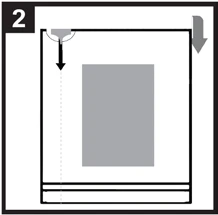
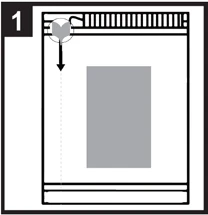


Step 1: Position of the pouch
Step 2: To open the pouch, begin by folding the pouch backward along the dotted line.
Step 3: Hold the circle and pull downward to open the pouch.
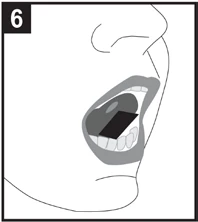

Step 4: Remove the film from the open end of the pouch.
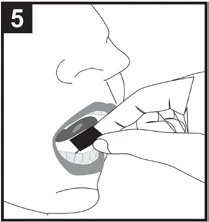
Step 5: Hold the film by the outer edges between two fingers and place it under the tongue.
Step 6: Place the film to the left, center, or right under the tongue.
Place the sublingual film under the tongue (sublingual use) as advised by your doctor.
Keep the films in place under the tongue until they have completely dissolved. This will take between 10 and 15 minutes.
Do not chew or swallow the film, as the medicine will not work and withdrawal symptoms may occur.
Do not eat or drink anything until the film has completely dissolved.
If an additional film is needed to achieve the prescribed dose, place the additional film under the tongue only after the first film has completely dissolved.
Do not split the film or divide it into smaller doses.
If you take more Buprenorphine Neuraxpharm than you should
In case of buprenorphine overdose, you must go immediately to the emergency room or hospital for treatment. An overdose can cause serious and potentially fatal breathing problems. Symptoms of overdose may include slower and weaker breathing, excessive drowsiness, feeling unwell, vomiting, and/or difficulty speaking.
Inform your doctor immediately that you are taking buprenorphine, or bring the package with you.
If you forget to take Buprenorphine Neuraxpharm
Inform your doctor as soon as possible if you forget to take a dose. Do not take a double dose to make up for the missed dose.
If you stop treatment with Buprenorphine Neuraxpharm
Do not change or stop your treatment in any way without the consent of your treating doctor. Abruptly stopping treatment may cause withdrawal symptoms.
If you have any doubts about how to use this medicine, consult your doctor or pharmacist.
4. Possible side effects
Like all medicines, this medicine can cause side effects, although not everybody gets them.
Serious side effects
Tell your doctor immediately or seek medical help straight away if you experience:
- Swelling of the face, lips, tongue or throat which may cause difficulty swallowing or breathing, severe skin rash or hives. These may be signs of a life-threatening allergic reaction.
Tell your doctor immediately if you experience:
- Severe tiredness, itching with yellowing of the skin or eyes. These may be symptoms of liver damage.
The frequency of these serious side effects is not known (cannot be estimated from the available data).
The following side effects have also been reported with Buprenorphine Neuraxpharm:
Very common (may affect more than 1 in 10 people)
- Infection (establishment of harmful microorganisms such as bacteria or viruses in the body)
- Insomnia (inability to sleep)
- Headache
- Nausea (feeling unwell)
- Abdominal pain (stomach pain)
- Hyperhidrosis (excessive sweating)
- Drug withdrawal syndrome (physical and psychological effects occurring when a person stops using a drug their body has become dependent on, such as discomfort or mood swings)
Common (may affect up to 1 in 10 people)
- Pharyngitis (throat infection)
- Agitation (feeling disturbed and upset, restlessness)
- Anxiety (feeling worried, with mental discomfort)
- Nervousness
- Migraine (moderate to severe headache with pulsating pain, often accompanied by nausea, vomiting, and sensitivity to light or sound)
- Paresthesia (sensations such as numbness, tingling)
- Somnolence (feeling sleepy)
- Fainting (loss of consciousness)
- Dizziness (a sensation of spinning)
- Hyperkinesia (hyperactivity)
- Orthostatic hypotension (a drop in blood pressure when changing from a sitting or lying position to standing)
- Dyspnea (difficulty breathing)
- Constipation
- Vomiting
- Muscle spasms (involuntary, persistent muscle stiffness or contractions, often accompanied by pain)
- Dysmenorrhea (painful menstruation)
- Leucorrhea (vaginal discharge)
- Fatigue
Rare (may affect up to 1 in 1,000 people)
- Hallucination (seeing or hearing things that are not real)
- Respiratory depression (severe breathing difficulty)
Not known (frequency cannot be estimated from the available data)
- Neonatal drug withdrawal syndrome
- Hypersensitivity reactions (allergic reactions)
- Jaundice (yellowing of the skin and eyes)
- Increased liver enzymes (transaminases) in the blood, which may indicate liver damage
- Dental caries
- Drug dependence
All opioids can cause the following side effects: seizures, miosis (pupil constriction), changes in level of consciousness.
If any of the side effects worsens, or if you notice any side effect not listed in this leaflet, please inform your doctor or pharmacist.
Reporting of side effects
If you get any side effects, including those not listed in this leaflet, talk to your doctor or pharmacist. You can also report side effects directly via the national reporting system listed in Annex V.
By reporting side effects, you can help provide more information on the safety of this medicine.
5. How to store Buprenorphine Neuraxpharm
Keep this medicine out of the sight and reach of children.
Buprenorphine Neuraxpharm 0.4 mg
Store below 30 °C in the original packaging to protect the medicine from light.
Buprenorphine Neuraxpharm 4 mg, 6 mg, 8 mg sublingual films
Store in the original packaging to protect the medicine from light.
This medicine does not require any special storage temperature.
Keep this medicine in a safe and secure place where others cannot access it.
It may cause serious harm or even be fatal to individuals who take this medicine accidentally or intentionally when it has not been prescribed for them. However, this medicine may be a target for people who abuse prescription drugs. Always store this medicine in a secure place to protect it from theft.
Do not use this medicine after the expiry date stated on the carton and on the sachet. The expiry date refers to the last day of that month. Do not open the sachet in advance.
Do not dispose of any medicine via wastewater or household waste. Ask your pharmacist how to properly dispose of medicines you no longer use. This will help protect the environment.
6. Package contents and other information
What Buprenorfina Neuraxpharm contains
- The active substance is buprenorphine (as hydrochloride).
Each sublingual film contains 0.4 mg of buprenorphine (as hydrochloride).
Each sublingual film contains 4 mg of buprenorphine (as hydrochloride).
Each sublingual film contains 6 mg of buprenorphine (as hydrochloride).
Each sublingual film contains 8 mg of buprenorphine (as hydrochloride).
The other components are hypromellose, maltodextrin, polysorbate 20, carbomer, glycerol, titanium dioxide (E 171), sodium citrate, citric acid monohydrate, partially demethylated peppermint oil, sucralose, butylated hydroxytoluene (E 321), butylated hydroxyanisole (E 320), printing ink (hypromellose, propylene glycol (E 1520), black iron oxide (E 172)).
Buprenorfina Neuraxpharm 0.4 mg sublingual films: yellow iron oxide (E 172).
Description of the appearance of Buprenorfina Neuraxpharm and contents of the pack
Buprenorfina Neuraxpharm 0.4 mg sublingual film
Light yellow, square, opaque sublingual films, imprinted with "0.4" on one side, nominal size 15 mm × 15 mm.
Buprenorfina Neuraxpharm 4 mg sublingual film
White, rectangular, opaque sublingual films, imprinted with "4" on one side, nominal size 15 mm × 15 mm.
Buprenorfina Neuraxpharm 6 mg sublingual film
White, rectangular, opaque sublingual films, imprinted with "6" on one side, nominal size 20 mm × 17 mm.
Buprenorfina Neuraxpharm 8 mg sublingual film
White, rectangular, opaque sublingual films, imprinted with "8" on one side, nominal size 20 mm × 22 mm.
The films are packaged in individual sachets.
Pack sizes: 7 × 1, 28 × 1, 56 × 1 sublingual films.
Pack sizes apply to all strengths.
Not all pack sizes may be marketed.
Marketing Authorization Holder
Neuraxpharm Pharmaceuticals, S.L.
Avda. Barcelona 69
08970 Sant Joan Despí - Barcelona
Spain
Tel: +34 93 602 24 21
E-mail: [email protected]
Manufacturer
Neuraxpharm Arzneimittel GmbH
Elisabeth-Selbert-Straße 23
40764 Langenfeld – Germany
For further information about this medicinal product, please contact the local representative of the Marketing Authorization Holder:
België/Belgique/Belgien Lietuva
Neuraxpharm Belgium Neuraxpharm Pharmaceuticals S.L.
Tél/Tel: +32 (0)2 732 56 95 Tel:+34 93 475 96 00
България Luxembourg/Luxemburg
Neuraxpharm Pharmaceuticals, S.L. Neuraxpharm France
Teл.: +34 93 475 96 00 Tél/Tel: +32 474 62 24 24
Česká republika Magyarország
Neuraxpharm Bohemia s.r.o. Neuraxpharm Bohemia s.r.o.
Tel:+420 739 232 258 Tel.: +36 (30) 542 2071
Danmark Malta
Neuraxpharm Sweden AB Neuraxpharm Pharmaceuticals, S.L.
Tlf: +46 (0)8 30 91 41 Tel.:+34 93 475 96 00
(Sverige)
Deutschland Nederland
Neuraxpharm Arzneimittel GmbH Neuraxpharm Netherlands B.V
Tel: +49 2173 1060 0 Tel.: +31 70 208 5211
Eesti Norge
Neuraxpharm Pharmaceuticals, S.L. Neuraxpharm Sweden AB
Tel: +34 93 475 96 00 Tel:+46 (0)8 30 91 41
(Sverige)
Ελλάδα Österreich
Neuraxpharm Pharmaceuticals, S.L. Neuraxpharm Austria GmbH
Τηλ: +34 93 602 24 21 Tel.:+43 2236 320038
España Polska
Neuraxpharm Spain, S.L.U. Neuraxpharm Polska Sp. z.o.o.
Tel: +34 93 475 96 00 Tel.: +48 783 423 453
France Portugal
Neuraxpharm France Neuraxpharm Portugal, Unipessoal Lda
Tél: +33 1.53.62.42.90 Tel: +351 910 259 536
Hrvatska România
Neuraxpharm Pharmaceuticals, S.L. Neuraxpharm Pharmaceuticals, S.L.
Tel: +34 93 602 24 21 Tel: +34 93 602 24 21
Ireland Slovenija
Neuraxpharm Ireland Ltd. Neuraxpharm Pharmaceuticals, S.L.
Tel: +353 1 428 7777 Tel: +34 93 602 24 21
Ísland Slovenská republika
Neuraxpharm Sweden AB Neuraxpharm Bohemia s.r.o.
Sími: +46 (0)8 30 91 41 Tel: +421 255 425 562
(Svíþjóð)
Italia Suomi/Finland
Neuraxpharm Italy S.p.A. Neuraxpharm Sweden AB
Tel: +39 0736 980619 Puh/Tel: +46 (0)8 30 91 41
(Ruotsi/Sverige)
Κύπρος Sverige
Neuraxpharm Pharmaceuticals, S.L. Neuraxpharm Sweden AB
Τηλ: +34 93 602 24 21 Tel: +46 (0)8 30 91 41
Latvija United Kingdom (Northern Ireland)
Neuraxpharm Pharmaceuticals, S.L. Neuraxpharm Ireland Ltd.
Tel: +34 93 475 96 00 Tel: +353 1 428 7777
More detailed information on this medicinal product is available on the website of the European Medicines Agency: http://www.ema.europa.eu/