Bupivacaine hydrochloride S.A.L.F.
Italy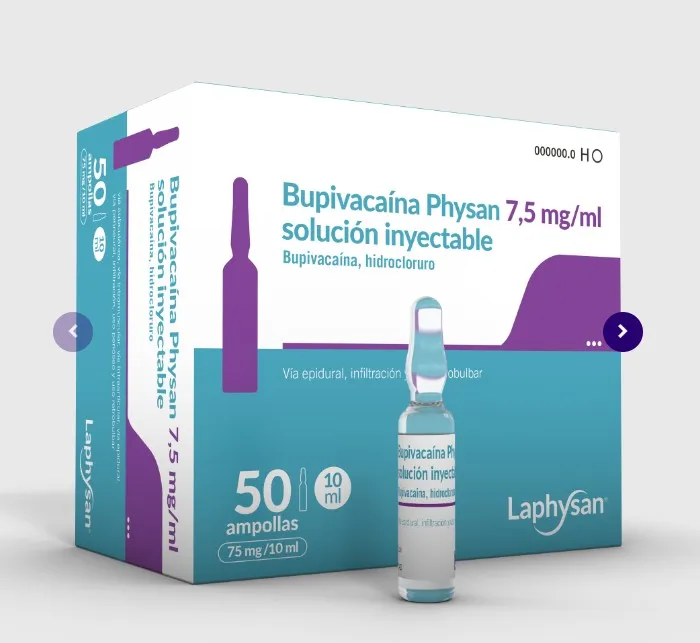
Instructions for Use
Table of Contents
- BUPIVACAINE HYDROCHLORIDE S.A.L.F. 2.5 mg/ml injection solution, 5 mg/ml injection solution, 10 mg/ml hyperbaric injection solution
- 1. What Bupivacaine Hydrochloride S.A.L.F. is and what it is used for
- 2. What you need to know before you are given Bupivacaine Hydrochloride S.A.L.F.
- 3. How Bupivacaine Hydrochloride S.A.L.F. will be administered to you
- 4. Possible side effects
- 5. How to store BUPIVACAINA CLORIDRATO S.A.L.F.
- 6. Package contents and other information
Package leaflet: Information for the patient
BUPIVACAINE HYDROCHLORIDE S.A.L.F. 2.5 mg/ml injection solution, 5 mg/ml injection solution, 10 mg/ml hyperbaric injection solution
EQUIVALENT MEDICINE
Please read this leaflet carefully before this medicine is administered to you, as it contains
important information for you.
- Keep this leaflet. You may need to read it again.
- If you have any questions, ask your doctor or nurse.
- This medicine has been prescribed for you only. Do not give it to other people, even if their symptoms are the same as yours, as it may be harmful.
- If you experience any side effect, including those not listed in this leaflet, talk to your doctor or pharmacist. See section 4.
Contents of this leaflet:
- What Bupivacaine Hydrochloride S.A.L.F. is and what it is used for
- What you need to know before you are given Bupivacaine Hydrochloride S.A.L.F.
- How Bupivacaine Hydrochloride S.A.L.F. will be administered to you
- Possible side effects
- How to store Bupivacaine Hydrochloride S.A.L.F.
- Contents of the pack and other information
1. What Bupivacaine Hydrochloride S.A.L.F. is and what it is used for
BUPIVACAINA CLORIDRATO S.A.L.F. contains bupivacaine hydrochloride, a medicine belonging to the group of local anesthetics.
BUPIVACAINA CLORIDRATO S.A.L.F. can be used for all types of peripheral anesthesia:
- local, trunci, loco-regional infiltration;
- sympathetic block;
- epidural, sacral;
- subarachnoid spinal.
Therefore, BUPIVACAINA CLORIDRATO S.A.L.F. is indicated for all procedures in general surgery, orthopedics, ophthalmology, otolaryngology, stomatology, obstetrics and gynecology, dermatology, whether used alone or in combination with general anesthesia.
BUPIVACAINA CLORIDRATO S.A.L.F. 2.5 mg/ml injectable solution
BUPIVACAINA CLORIDRATO S.A.L.F. 5 mg/ml injectable solution
- Surgical anesthesia in adults and children above 12 years of age.
- Management of acute pain in adults, infants, and children above 1 year of age.
BUPIVACAINA CLORIDRATO S.A.L.F. 10 mg/ml hyperbaric injectable solution
- Spinal anesthesia in adults
Consult your doctor if you do not feel better or if you feel worse.
2. What you need to know before you are given Bupivacaine Hydrochloride S.A.L.F.
You will not be administered Bupivacaine Hydrochloride S.A.L.F.
- if you are allergic to bupivacaine hydrochloride, to similar substances (such as amide-type local anesthetics), or to any of the other ingredients of this medicine (listed in section 6);
- if you are due to undergo a type of regional intravenous anesthesia known as a Bier Block, because accidental leakage of Bupivacaine Hydrochloride into the circulation could cause acute systemic toxic reactions.
In the case you are due to undergo a type of anesthesia called intrathecal (BUPIVACAIN HYDROCHLORIDE S.A.L.F. 10 mg/ml hyperbaric injectable solution), this medicine must not be administered to you:
- if you suffer from active acute diseases of the central nervous system, such as meningitis, tumors, poliomyelitis, and intracranial hemorrhages;
- if you suffer from narrowing of the spinal canal (spinal stenosis) and/or active disease of the spine (e.g. spondylitis, tuberculosis, tumor) or recent trauma (e.g. fractures);
- if you suffer from infections characterized by the presence of bacteria in the blood (septicemia);
- if you have a deficiency of vitamin B12 (pernicious anemia), associated with spinal cord problems (subacute degeneration of the spinal cord);
- if you have a bacterial skin infection (pyogenic) at the injection site or in the surrounding area;
- if you have experienced heart function blockage (cardiogenic shock) or have reduced blood volume due to hemorrhage or fluid loss (hypovolemic shock);
- if you suffer from coagulation disorders or are taking medicines used to prevent blood clotting (anticoagulants).
The use of bupivacaine should be avoided in patients for whom pregnancy has been confirmed or is suspected
(see section 4.6).
The use of bupivacaine 7.5 mg/ml is contraindicated in epidural anesthesia (administration of drugs into the back to eliminate pain sensation) in obstetrics (e.g. during labor and/or delivery). This concentration should be reserved for surgical procedures requiring a high degree of muscle relaxation and prolonged effect.
Warnings and precautions
Speak to your doctor or nurse before you are administered Bupivacaine Hydrochloride S.A.L.F.
In case of epidural anesthesia or peripheral nerve block, serious adverse effects may occur, such as cardiac function block (cardiac arrest) or death.
Additionally, during treatment with Bupivacaine Hydrochloride S.A.L.F., problems of the central nervous system, heart, and blood vessels (cardiovascular problems, ventricular arrhythmias, ventricular fibrillation, sudden cardiovascular collapse) and death may occur when this medicine is present in high quantities in the blood, especially if accidentally administered into the bloodstream (intravascular injection) or into highly vascularized areas.
This medicine must be administered to you with great caution and under strict medical supervision if:
- you are elderly or debilitated;
- you suffer from heart problems (partial or complete heart block), as this medicine may reduce heart contraction (cardiac conduction);
- you have advanced liver disease or severe impairment of kidney function, which may lead to alterations in liver enzymes (increased blood levels), particularly with repeated injections and long-term treatment with this medicine;
- you are in an advanced stage of pregnancy;
- if you have reduced blood volume (hypovolemia), as this medicine during intrathecal anesthesia (BUPIVACAIN HYDROCHLORIDE S.A.L.F. 10 mg/ml hyperbaric injectable solution) may cause a severe and sudden drop in blood pressure (hypotension);
- if you are taking medicines used for heart rhythm disorders (class III antiarrhythmics), such as amiodarone; in this case, your doctor may decide to monitor heart function (via electrocardiogram) (see “Other medicines and Bupivacaine Hydrochloride S.A.L.F.”);
- if you suffer from nervous system disorders (multiple sclerosis, hemiplegia, paraplegia) or neuromuscular disorders and are due to undergo intrathecal anesthesia (BUPIVACAIN HYDROCHLORIDE S.A.L.F. 10 mg/ml hyperbaric injectable solution);
- if you have sustained major intra-articular trauma or undergone joint surgery and Bupivacaine Hydrochloride S.A.L.F. is to be administered intra-articularly;
- if you have reduced heart and blood vessel function (reduced cardiovascular function) and Bupivacaine Hydrochloride S.A.L.F. is to be administered epidurally;
- if you are taking medicines used to treat mood disorders (MAOIs, tricyclic antidepressants) (see “Other medicines and Bupivacaine Hydrochloride S.A.L.F.”).
Your doctor will monitor you closely during treatment with this medicine, as certain local anesthesia techniques may cause even serious adverse effects:
- central nervous block: may manifest as reduced heart and blood vessel function (cardiovascular depression), especially if you already have reduced blood volume (hypovolemia); therefore, caution is required if you have reduced cardiovascular function and are undergoing epidural anesthesia;
- retrobulbar injections (behind the eyes): very rarely, temporary loss of vision (temporary blindness), cardiac and circulatory function block (cardiovascular collapse), breathing difficulties (apnea), and seizures may occur, which must be treated immediately;
- retrobulbar or peribulbar injections (around the eyes): rare, long-lasting eye muscle disorders may occur; therefore, the lowest doses and concentrations of anesthetic should be used;
- paracervical block: reduced or increased fetal heart rate (bradycardia/tachycardia) may occur; therefore, fetal heart rate must be monitored during use of this medicine (see “Pregnancy and breastfeeding”);
- spinal anesthesia (BUPIVACAIN HYDROCHLORIDE S.A.L.F. 10 mg/ml hyperbaric injectable solution): total or high spinal block may occur, with reduced heart and circulatory function (cardiovascular depression) and reduced breathing (respiratory depression); these effects are more likely if you are elderly or in an advanced stage of pregnancy; in these two cases, the dose must be reduced; additionally, rare cases of brain and nerve damage (paresthesia, anesthesia, motor weakness, and paralysis) may occur with intrathecal anesthesia, which in some cases may be permanent.
- epidural anesthesia: reduced blood pressure (hypotension) and reduced heart rate (bradycardia) may occur; low blood pressure requires immediate intravenous administration of medicines used to stimulate the heart (sympathomimetics).
When local anesthesia is administered to areas such as fingers or the base of the penis, bupivacaine without adrenaline will be administered to prevent tissue damage (ischemic necrosis).
Before using this medicine, your doctor must assess your blood circulation status.
Your doctor may decide to use a test dose of this medicine combined with adrenaline to avoid accidental intravenous or intrathecal injection.
During administration, your doctor will closely monitor you and immediately discontinue treatment at the first sign of alarm, for example, if you experience altered sensation or drowsiness (changes in consciousness).
Rare cases of severe reactions, even in non-allergic individuals, have been reported; therefore, immediate availability of emergency equipment, medicines, and specialized personnel is required during use of this medicine.
If you are elderly or in an advanced stage of pregnancy, your doctor may reduce your dose.
The total dosage must be adjusted according to the patient's general condition, age, and relevant medical history.
Children and adolescents (Bupivacaine Hydrochloride S.A.L.F. 2.5 mg/ml injectable solution and Bupivacaine Hydrochloride S.A.L.F. 5 mg/ml injectable solution)
The safety and efficacy of Bupivacaine Hydrochloride S.A.L.F. in children under 1 year of age have not been established.
The use of bupivacaine hydrochloride for intra-articular block or major nerve blocks in children aged 1 to 12 years has not been documented.
In epidural anesthesia, the dose must be adjusted according to weight and age (see section “Use in children aged 1 to 12 years”).
Other medicines and Bupivacaine Hydrochloride S.A.L.F.
Inform your doctor or nurse if you are taking, have recently taken, or might take any other medicines.
This medicine must be administered with caution if you are taking:
- other medicines used to reduce pain during surgical procedures (local anesthetics);
- medicines similar to Bupivacaine Hydrochloride S.A.L.F., such as certain medicines used to treat heart rhythm disorders (antiarrhythmics), like lidocaine, mexiletine, and tocainide;
- class III antiarrhythmic medicines, such as amiodarone (see “Warnings and precautions”);
- MAOI or tricyclic antidepressants used to treat depression (see “Warnings and precautions”).
Pregnancy and breastfeeding
If you are pregnant, suspect you may be pregnant, planning a pregnancy, or breastfeeding, consult your doctor or nurse before receiving this medicine.
Pregnancy
A large number of pregnant women and women of childbearing age have been treated with bupivacaine, and no increased frequency of neonatal malformations has been reported to date.
Adverse effects on the fetus due to local anesthetics, such as fetal bradycardia, appear more evident in paracervical block (see “Warnings and precautions”). These effects may be due to high concentrations of anesthetic reaching the fetus.
Cases of cardiac arrest following the use of bupivacaine for epidural anesthesia in laboring women have been reported; in most cases, this occurred after using the 0.75% solution.
In patients in an advanced stage of pregnancy, the dose for spinal anesthesia (BUPIVACAIN HYDROCHLORIDE S.A.L.F. 10 mg/ml hyperbaric injectable solution) must be reduced.
Do not use the medicine if pregnancy is confirmed or suspected.
Breastfeeding
Like other local anesthetics, bupivacaine may pass into breast milk, but in such small quantities that there is generally no risk to the newborn.
Driving and using machines
Bupivacaine Hydrochloride S.A.L.F. impairs the ability to drive or operate machinery.
Bupivacaine Hydrochloride S.A.L.F. may cause mild disturbances in mental function and motor control (coordination) and may temporarily negatively affect mobility and level of alertness. If you experience these symptoms, avoid driving and operating machinery.
Bupivacaine Hydrochloride S.A.L.F. contains sodium
Bupivacaine Hydrochloride S.A.L.F. 2.5 mg/ml injectable solution contains 3.36 mg of sodium per ml.
Bupivacaine Hydrochloride S.A.L.F. 5 mg/ml injectable solution contains 3.18 mg of sodium per ml.
This should be taken into consideration for individuals with impaired kidney function or those on a low-sodium diet.
BUPIVACAIN HYDROCHLORIDE S.A.L.F. 10 mg/ml hyperbaric injectable solution contains glucose.
This medicine contains 105 mg/ml of monohydrate glucose. This should be taken into consideration for individuals with diabetes mellitus.
3. How Bupivacaine Hydrochloride S.A.L.F. will be administered to you
This medicine will be administered to you by a doctor or trained medical personnel during surgical procedures. If you have any doubts, consult your doctor, pharmacist, or nurse.
The dose and method of administration will be determined by the doctor according to your needs and age.
Use in adults and children over 12 years of age
The dose should be the lowest possible that ensures adequate anaesthesia. The recommended dose ranges from 2–3 mg to 100–150 mg, depending on the type of anaesthesia.
The maximum dose for a single administration should not exceed 150 mg, corresponding to 30 ml of the 5 mg/ml solution and 60 ml of the 2.5 mg/ml solution.
In general, the recommended maximum dose is 2 mg per kg of body weight for a single administration.
If epidural anaesthesia is required, the doctor will administer an initial test dose of 3–5 ml of Bupivacaine Hydrochloride with another medicine containing adrenaline, followed by the full dose.
Use in children from 1 to 12 years of age (Bupivacaine Hydrochloride S.A.L.F. 2.5 mg/ml injectable solution and Bupivacaine Hydrochloride S.A.L.F. 5 mg/ml injectable solution)
The dose should be the lowest possible that ensures adequate anaesthesia.
The doctor will adjust the dose according to body weight.
The maximum dose is 2 mg per kg of body weight.
Children under 1 year of age: The safety and efficacy of Bupivacaine Hydrochloride S.A.L.F. have not been established (see "Children and adolescents").
If you are given more Bupivacaine Hydrochloride S.A.L.F. than you should
In case of accidental administration of an excessive dose of Bupivacaine Hydrochloride S.A.L.F., inform your doctor immediately or go to the nearest hospital.
Accidental intravascular injection may cause toxic effects within a few seconds or minutes.
Following administration of an excessive dose of this medicine, systemic toxic effects (systemic toxic reactions) may occur 15–60 minutes after injection.
Bupivacaine Hydrochloride S.A.L.F. 10 mg/ml hyperbaric injectable solution, when administered under recommended conditions, is unlikely to cause general toxicity. However, if other local anaesthetics are administered concomitantly, toxic effects may be additive and lead to systemic toxicity.
If you have any doubts about the use of this medicine, consult your doctor or nurse.
4. Possible side effects
Like all medicines, this medicine can cause side effects, although not everybody gets them.
The following side effects may occur:
Very common (may affect more than 1 in 10 people)
- lowering of blood pressure (hypotension);
- nausea.
Common (may affect up to 1 in 10 people)
- disturbances in sensation of legs, arms, or other body parts (paraesthesia), dizziness;
- decrease in heart rate (bradycardia);
- increase in blood pressure (hypertension);
- vomiting;
- inability to urinate (urinary retention).
Uncommon (may affect up to 1 in 100 people)
- uncontrolled body movements (convulsions);
- numbness around the mouth area (circumoral paraesthesia);
- loss of sensation of the tongue;
- increased sensitivity to sounds (hyperacusis);
- visual disturbances;
- loss of consciousness;
- tremor;
- sensation of emptiness in the head;
- ringing in the ears (tinnitus);
- speech disturbances (dysarthria).
Rare (may affect up to 1 in 1,000 people)
- allergic reactions, severe allergic reaction (anaphylactic shock);
- condition characterized by impaired nerve function (neuropathy);
- nerve damage (peripheral nerve injury);
- inflammation of the membrane covering the brain and spinal cord (arachnoiditis);
- loss of muscle contraction ability in one or more muscles (paresis);
- movement and sensory disturbances in the lower limbs (paraplegia);
- total spinal block (unintentional);
- double vision (diplopia);
- heart block (cardiac arrest);
- changes in heart rhythm (cardiac arrhythmias);
- breathing problems (respiratory depression).
Other reported side effects include:
-
effects related to the central nervous system
- excitation, disorientation;
- dilation of the pupil of the eye (mydriasis);
- increased metabolism and body temperature;
- jaw muscle spasm making it impossible to open the mouth (trismus);
- sweating;
- increased respiratory rate (tachypnea);
- increased diameter of the bronchi facilitating airflow into the lungs (bronchodilation);
- increased diameter of blood vessels (vasodilation);
-
allergic reactions with local manifestations
- urticaria;
- itching;
- temporary narrowing of the bronchi preventing airflow into the lungs (bronchospasm).
Following administration of Bupivacaine hydrochloride S.A.L.F. 10 mg/ml hyperbaric injectable solution,
the following additional side effects may occur:
Common (may affect up to 1 in 10 people):
- headache after puncture of the dura mater (post-dural puncture headache);
- involuntary loss of urine (urinary incontinence).
Uncommon (may affect up to 1 in 100 people):
- reduced ability to contract one or more muscles (paresis);
- sensory disturbance (dysaesthesia);
- muscle weakness;
- back pain.
Rare (may affect up to 1 in 1,000 people):
- loss of contraction in one or more muscles (paralysis).
Additional side effects in children and adolescents (Bupivacaine hydrochloride S.A.L.F. 2.5 mg/ml
injectable solution and Bupivacaine hydrochloride S.A.L.F. 5 mg/ml injectable solution)
The side effects that may occur in children are similar to those reported in adults. It may be difficult to detect the onset of the first signs of toxicity of this medicine when used during general anaesthesia in children.
Reporting of side effects
If you experience any side effect, including those not listed in this leaflet, talk to your doctor. You can also report side effects directly via the national reporting system at the website https://www.aifa.gov.it/content/segnalazioni-reazioni-avverse.
By reporting side effects, you can help provide more information on the safety of this medicine.
5. How to store BUPIVACAINA CLORIDRATO S.A.L.F.
Store in the original packaging to protect the medicinal product from light. No special storage
conditions are required. Do not freeze.
The solutions do not contain preservatives, are for single use only, and must be used immediately after
opening. Any unused medicinal product must be discarded.
Bupivacaine cloridrato S.A.L.F. vials must not be resterilized.
Keep this medicinal product out of the sight and reach of children.
Do not use this medicinal product after the expiry date stated on the carton after Exp.
The expiry date refers to the last day of that month.
Do not use this medicinal product if you notice any visible signs of deterioration.
Do not dispose of any medicinal product via wastewater or household waste. Ask your pharmacist how to dispose of
medicines no longer used. This will help protect the environment.
6. Package contents and other information
What Bupivacaine Hydrochloride S.A.L.F. 2.5 mg/ml injectable solution contains:
- The active substance is bupivacaine hydrochloride monohydrate: 1 ml contains 2.64 mg (equivalent to 2.5 mg of bupivacaine hydrochloride);
- The other components are sodium chloride, sodium hydroxide (pH regulator), hydrochloric acid (pH regulator), water for injections (excipients with known effect: 1 ml of solution contains 3.36 mg of sodium).
What Bupivacaine Hydrochloride S.A.L.F. 5 mg/ml injectable solution contains:
- The active substance is bupivacaine hydrochloride monohydrate: 1 ml contains 5.28 mg (equivalent to 5 mg of bupivacaine hydrochloride);
- The other components are sodium chloride, sodium hydroxide (pH regulator), hydrochloric acid (pH regulator), water for injections (excipients with known effect: 1 ml of solution contains 3.18 mg of sodium).
What Bupivacaine Hydrochloride S.A.L.F. 10 mg/ml injectable solution, hyperbaric, contains:
- The active substance is bupivacaine hydrochloride monohydrate: 1 ml contains 10.56 mg (equivalent to 10 mg of bupivacaine hydrochloride);
- The other components are glucose monohydrate, sodium hydroxide (pH regulator), hydrochloric acid (pH regulator), water for injections (excipients with known effect: 1 ml of solution contains 105 mg of glucose monohydrate).
Description of the appearance of BUPIVACAINE HYDROCHLORIDE S.A.L.F. and contents of the pack
Bupivacaine Hydrochloride S.A.L.F. 2.5 mg/ml injectable solution
- Pack of 5 vials of 5 ml
- Pack of 5 vials of 10 ml
Bupivacaine Hydrochloride S.A.L.F. 5 mg/ml injectable solution:
- Pack of 5 vials of 5 ml;
- Pack of 5 vials of 10 ml.
BUPIVACAINE HYDROCHLORIDE S.A.L.F. 10 mg/ml hyperbaric injectable solution
- Pack of 5 vials of 2 ml. Not all pack sizes may be marketed.
Marketing Authorization Holder and Manufacturer
S.A.L.F. S.p.A. Laboratorio Farmacologico – Via Marconi, 2 - Cenate Sotto (BG) - Tel. 035 - 940097
The following information is intended exclusively for physicians or healthcare professionals:
Regional anaesthesia procedures must always be performed in properly equipped areas and by qualified personnel. Immediate availability of equipment and medications required for monitoring and emergency resuscitation must be ensured.
The physician must have received complete and adequate training in the procedure to be used and must be experienced in the diagnosis and management of adverse reactions, systemic toxicity, or other complications (see "Undesirable effects" and "Management in case of overdose").
Peripheral major nerve blocks may involve the administration of a large volume of local anaesthetic in highly vascularized areas, often near large blood vessels, where there is an increased risk of intravascular injection and/or rapid systemic absorption, potentially leading to high plasma concentrations.
Bupivacaine Hydrochloride S.A.L.F. is usually administered in minimal doses, varying according to the indication, from 2–3 mg to 100–150 mg, as indicated in the following illustrative table:
| Anesthesia type | Conc. % | Dosage | Observations | |
| ml | mg | |||
| Trigeminal block | 0.25 0.50 | 1-5 0.5-4 | 2.5-12.5 2.5-20 | |
| Brachial plexus block | 0.25 0.50 | 20-40 10-30 | 50-100 50-150 | |
| Stellate ganglion block | 0.25 | 10-20 | 25-50 | |
| Intercostal block | 0.25 0.50 | 4-8 3-5 | 10-20 15-25 | Dose is per intercostal space |
| Epidural | 0.25 0.50 | 30-40 10-20 | 75-100 50-100 | |
| Continuous epidural | 0.25 0.50 | Start with 10 ml, then 3-5-8 ml every 4-6 hours, depending on the segments to be anesthetized and patient's age | ||
| Sacral block | 0.25 0.50 | 15-40 15-20 | 37.5-100 75-100 | |
| Splanchnic block | 0.25 | 10-40 | 25-100 | |
| Lumbar sympathetic block | 0.25 | 10-40 | 25-100 | |
| Pelvic block | 0.50 | 20-30 | 100-150 | |
| Spinal subarachnoid | 0.50 1 | 4 2 | 20 20 | |
The maximum dosage for an adult and for a single administration should not exceed 150 mg,
corresponding to 30 ml of the 5 mg/ml solution and to 60 ml of the 2.5 mg/ml solution; more generally, the
recommended safe dose, not to be exceeded for both adults and children, is 2 mg/kg for a single
administration.
In prolonged analgesic therapy, usual doses range from 0.25 to 1 mg/kg body weight; administration may be
repeated 2–3 times within 24 hours.
N.B. When performing prolonged blocks by repeated bolus injections, the risk of achieving toxic plasma
concentrations or inducing local neurotoxicity must be considered.
The dose to be administered must be calculated based on the physician’s experience and knowledge of the
patient’s clinical condition. The lowest effective dose required to achieve adequate anesthesia should be used.
Individual variations in onset time and duration of effect may occur. The extent of anesthetic spread may be
difficult to predict but is influenced by the volume of administered drug, especially with isobaric solutions.
It is advisable to use an adequate test dose, preferably containing adrenaline, to promptly avoid accidental
intravenous or intrathecal injection.
The anesthetic solution should be injected cautiously in small increments after approximately 10 seconds of
aspiration. Especially when infiltrating highly vascularized areas, it is advisable to wait approximately 2 minutes
before proceeding with the actual loco-regional block.
The patient must be kept under close monitoring, and administration should be immediately discontinued at the
first sign of alarm (e.g., changes in consciousness).
Pediatric patients aged 1 to 12 years (Bupivacaine hydrochloride S.A.L.F. 2.5 mg/ml injectable solution
and Bupivacaine hydrochloride S.A.L.F. 5 mg/ml inject combustible solution)
Pediatric regional anesthesia procedures must be performed by qualified physicians familiar with this patient
population and the technique. The doses listed in the table should be considered as guidelines for pediatric use.
Individual variations may occur. In children with high body weight, a gradual dose reduction is often necessary,
based on ideal body weight. Reference texts should be consulted regarding factors influencing specific block
techniques and individual patient requirements. The lowest dose necessary to achieve adequate anesthesia must
be used.
Recommended dose for children aged 1 to 12 years
| Conc. mg/ml | Volume ml/kg | Dose mg/kg | Start min |
Duration
of effect
hours
ACUTE PAIN (peri- and post-operative)
| Caudal Epidural Administration | 2.5 | 0.6-0.8 | 1.5-2 | 20-30 | 2-6 |
| Lumbar Epidural Administration | 2.5 | 0.6-0.8 | 1.5-2 | 20-30 | 2-6 |
| Thoracic Epidural Administrationb) | 2.5 | 0.6-0.8 | 1.5-2 | 20-30 | 2-6 |
| Surgical Field Block (e.g., minor nerve blocks and infiltration) | 2.5 5.0 | 0.5-2.0 0.5-2.0 | |||
| Peripheral Nerve Block (e.g., ilioinguinal-iliohypogastric) | 2.5 5.0 | 0.5-2.0 0.5-2.0 | a) a) |
In children, the dosage should be calculated on the basis of body weight up to a maximum of 2 mg/kg.
The adverse reaction profile of Bupivacaine Hydrochloride S.A.L.F. is similar to that of other long-acting local anesthetics. Adverse drug reactions are difficult to distinguish from the physiological effects resulting from nerve conduction block (such as decreased arterial pressure, bradycardia) and from events directly caused by the injection (e.g. nerve fiber trauma, spinal hematoma) or indirectly (e.g. epidural abscess and meningitis) or from events associated with cerebrospinal fluid leakage (e.g. post-dural puncture headache). The occurrence of neurological damage is a rare but well-known consequence of regional anesthesia, particularly of epidural and spinal anesthesia.
Some local anesthetic techniques may be associated with severe adverse reactions, regardless of the local anesthetic used:
- Central nerve block: may cause cardiovascular depression, especially in the presence of hypovolemia. Epidural anesthesia should therefore be used with caution in patients with impaired cardiovascular function;
- Retrobulbar injections: may, in very rare cases, reach the cerebral subarachnoid space, causing temporary blindness, cardiovascular collapse, apnea, convulsions, etc. Such reactions must be diagnosed and treated immediately;
- Retro- and peribulbar injections of local anesthetics: carry a low risk of persistent ocular muscle dysfunction. Primary causes include trauma and/or local toxic effects on muscles and/or nerves. The severity of such tissue reactions is related to the extent of trauma, the concentration of local anesthetic, and the duration of tissue exposure to the local anesthetic. As with all local anesthetics, it is therefore necessary to use the lowest doses and concentrations capable of achieving the desired effect. Vasoconstrictors may worsen tissue reactions and should only be used if indicated;
- Local anesthetics, even at low doses, injected into the head and neck, such as during stellate ganglion blocks, may produce systemic toxicity due to unintentional intra-arterial injection or intravascular absorption or leakage into the subarachnoid space;
- Paracervical block may occasionally cause fetal bradycardia/tachycardia. Careful monitoring of fetal heart rate is therefore required;
- Continuous intra-articular infusion is not an approved indication for Bupivacaine Hydrochloride S.A.L.F. However, post-marketing cases of chondrolysis have been reported, exclusively in North America, in patients who received postoperative continuous intra-articular infusion of local anesthetics. The majority of reported chondrolysis cases involved the shoulder joint. A causal relationship has not been established.
A rare but serious adverse reaction following spinal anesthesia is total or high spinal block and consequent cardiovascular and respiratory depression. Cardiovascular depression is caused by extensive sympathetic block, leading to profound hypotension and bradycardia or even cardiac arrest. Respiratory depression may result from blockade of innervation to respiratory muscles, including the diaphragm. The risk of total or high spinal block is higher in elderly patients or those in advanced pregnancy. In these patients, the dose should therefore be reduced.
The occurrence of neurological damage is a rare consequence of intrathecal anesthesia and may result in paresthesia, anesthesia, motor weakness, and paralysis. Occasionally, such damage may be permanent.
Caution is recommended in patients with neurological disorders such as multiple sclerosis, hemiplegia, paraplegia, and neuromuscular disorders, even though intrathecal anesthesia is not believed to negatively affect these conditions. Before initiating treatment, it must be considered whether the benefits outweigh the potential risks for the patient.
Acute systemic toxicity
Systemic toxic reactions primarily affect the central nervous system and the cardiovascular system. These reactions are caused by high blood concentrations of the local anesthetic following accidental intravascular injection, overdose, or unusually rapid absorption from highly vascularized areas (see "Precautions for use"). Reactions affecting the central nervous system are similar to those of other amide-type local anesthetics, while cardiac reactions depend more significantly on the specific drug, both quantitatively and qualitatively.
BUPIVACAINE HYDROCHLORIDE S.A.L.F. hyperbaric is unlikely, under recommended conditions of use, to produce blood levels high enough to cause systemic toxicity. However, if other local anesthetics are administered concomitantly, toxic effects are additive and may lead to systemic toxicity.
Pediatric population (Bupivacaine Hydrochloride S.A.L.F. 2.5 mg/ml injectable solution and Bupivacaine Hydrochloride S.A.L.F. 5 mg/ml injectable solution)
Adverse drug reactions in children are similar to those in adults, but in children, it may be difficult to detect early signs of systemic local anesthetic toxicity when the block is administered during general anesthesia.
Treatment of acute systemic toxicity
Administration of the local anesthetic must be immediately discontinued if signs of acute systemic toxicity or total spinal block occur. Symptoms of central nervous system toxicity must be immediately treated with adequate airway maintenance and respiratory support, along with administration of anticonvulsants such as diazepam 10–20 mg intravenously. Barbiturates are not recommended, as they may exacerbate medullary depression. Circulation can be supported by intravenous administration of appropriate doses of corticosteroids; diluted solutions of alpha-beta-stimulants with vasoconstrictor action (mephentermine, metharaminol, and others) or atropine sulfate may be added.
If cardiovascular depression occurs, appropriate treatment with intravenous fluids, vasopressors, inotropic agents, and/or lipid emulsion should be considered.
In children, the dosage must be adjusted according to age and body weight.
If circulatory arrest occurs, immediate cardiopulmonary resuscitation must be initiated. Ensuring optimal oxygenation, supporting ventilation and circulation, and treating acidosis are of vital importance.
If cardiac arrest occurs, resuscitation maneuvers may need to be prolonged to achieve a favorable outcome.
Incompatibilities The solubility of bupivacaine at pH above 6.5 is limited. This should be taken into account when alkaline solutions such as carbonates are added, as they may cause precipitation of the solution.
Expiry and storage
The solutions contain no preservatives, are for single use only, and must be used immediately after opening. Any unused medicinal product must be discarded.
Vials of Bupivacaine Hydrochloride S.A.L.F. must not be resterilized.
For further information, consult the Summary of Product Characteristics.
Similar Medications
-
Bupisen
Form: solution for injection
Active substance Dosage BUPIVACAINE HYDROCHLORIDE — Manufacturer: INDUSTRIA FARMACEUTICA GALENICA SENESE S.R.L.
-
Bupivacaine
Form: solution for injection
Active substance Dosage BUPIVACAINE HYDROCHLORIDE — Manufacturer: MONICO S.P.A.
-
Bupivacaine Aguettant
Form: solution for injection
Active substance Dosage BUPIVACAINE HYDROCHLORIDE — Manufacturer: LABORATOIRE AGUETTANT
-
Bupivacaine FisioPharma
Form: solution for injection
Active substance Dosage BUPIVACAINE HYDROCHLORIDE — Manufacturer: FISIOPHARMA S.R.L.
-
Bupivacaine Grindex
Form: solution for injection
Active substance Dosage BUPIVACAINE HYDROCHLORIDE — Manufacturer: AS GRINDEKS
-
Bupivacaine Recordati
Form: solution for injection
Active substance Dosage BUPIVACAINE HYDROCHLORIDE — Manufacturer: RECORDATI INDUSTRIA CHIMICA E FARMACEUTICA S.P.A.
-
Marcaina
Form: solution for injection
Active substance Dosage ADRENALINUM — Manufacturer: ASPEN PHARMA TRADING LIMITED
-
Salvudex
Form: solution for injection
Active substance Dosage BUPIVACAINE — Manufacturer: AS GRINDEKS
-
Sanergy
Form: solution for injection
Active substance Dosage BUPIVACAINE HYDROCHLORIDE — Manufacturer: AS GRINDEKS
This page has been machine-translated and may contain inaccuracies. The original data is available in the manufacturing country's language.
Last data check: May 11, 2026 · Data source: Agenzia Italiana del Farmaco (AIFA)