Budiair
Italy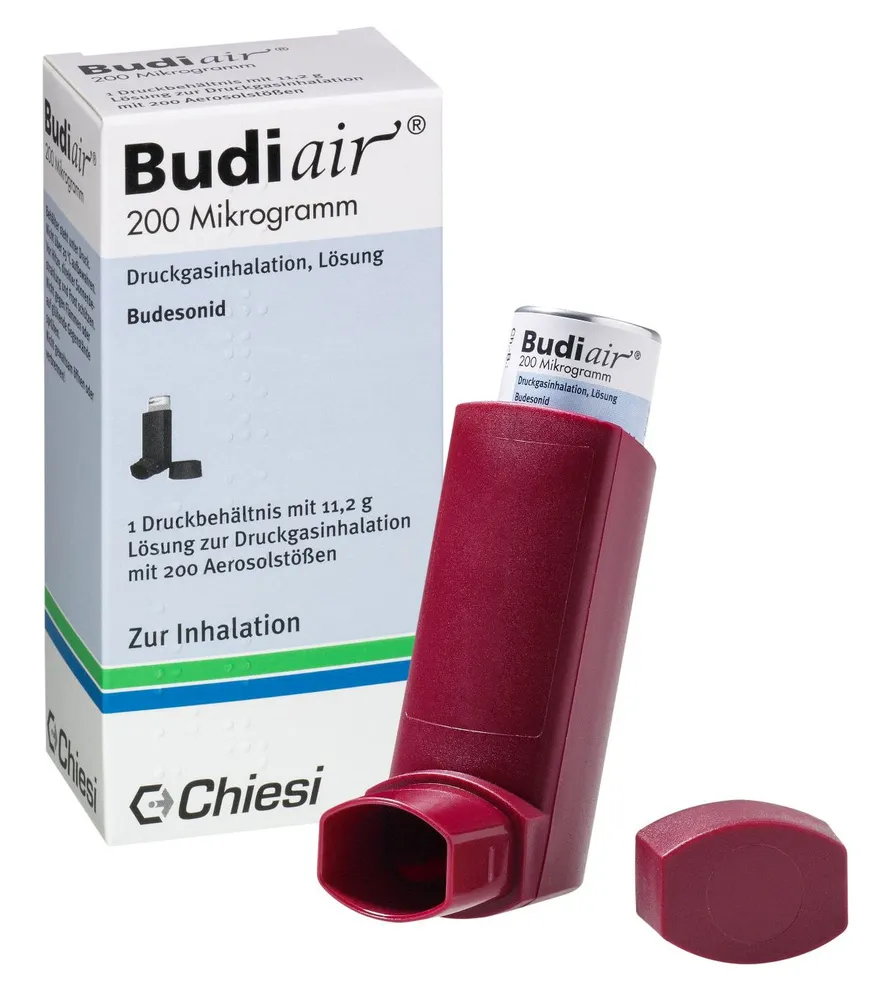
Table of Contents
- Package leaflet: Information for the patient
- BUDIAIR 200 micrograms per spray solution for inhalation
- 2. What you should know before taking BUDIAIR
- 3. How to take BUDIAIR
- 4. Possible side effects
- 5. How to store BUDIAIR
- 6. Package contents and other information
- Instructions for using the inhaler
- Package leaflet: information for the patient
- BUDIAIR 200 micrograms pressurized solution for inhalation
- 2. What you should know before taking BUDIAIR
- 3. How to take BUDIAIR
- 4. Possible side effects
- 5. How to store BUDIAIR
- 6. Package contents and other information
Package leaflet: Information for the patient
BUDIAIR 200 micrograms per spray solution for inhalation
with standard dispenser
budesonide
Please read all of this leaflet carefully before you start taking this medicine, because it contains
important information for you.
- Keep this leaflet. You may need to read it again.
- If you have any questions, ask your doctor or pharmacist.
- This medicine has been prescribed for you only. Never give it to others. It may be harmful to other people, even if their symptoms are the same as yours.
- If you experience any side effects, including those not listed in this leaflet, talk to your doctor or pharmacist. See section 4.
Contents of this leaflet:
- What BUDIAIR is and what it is used for
- What you need to know before using BUDIAIR
- How to use BUDIAIR
- Possible side effects
- How to store BUDIAIR
- Contents of the pack and other information
1. What BUDIAIR is and what it is used for
BUDIAIR is a pressurized spray solution for inhalation containing an active substance that is inhaled through the mouth and delivered directly into the lungs. The active substance, budesonide, belongs to a group of medicines called corticosteroids, often referred to simply as steroids. These have an anti-inflammatory action, reducing swelling and irritation of the walls of the small airways in the lungs.
BUDIAIR is a preventive medicine: it treats inflammation and is used to prevent asthma symptoms. It is not able to stop an asthma attack that has already started. To relieve your symptoms, you must use your fast-acting reliever inhaler, which you should always carry with you.
BUDIAIR is used for:
Treatment of mild, moderate, and severe persistent bronchial asthma.
2. What you should know before taking BUDIAIR
Do not take BUDIAIR
- If you are allergic to budesonide or to any of the other ingredients of this medicine (listed in section 6).
Contact your doctor for advice.
Warnings and precautions
Talk to your doctor or pharmacist before taking BUDIAIR
- if you have severe liver problems
- if you have gastrointestinal ulceration
- if you are taking or have taken medicines to treat tuberculosis (TB) or other respiratory tract infections
- if you are pregnant, planning to become pregnant, or breastfeeding
During treatment, if oral candidiasis develops, inform your doctor, as antifungal therapy or discontinuation of treatment may be necessary.
To reduce the risk of oral candidiasis and hoarseness, see section 3: How to take BUDIAIR.
In case of paradoxical bronchospasm, with immediate increase in wheezing after inhalation, treatment must be stopped immediately.
Contact your doctor if you experience blurred vision or other visual disturbances.
Children and adolescents
It is important to monitor the growth of children receiving long-term treatment and to discuss this with the treating physician.
Other medicines and BUDIAIR
Inform your doctor if you are taking, have recently taken, or might take any other medicines, including those obtained without a prescription.
It is particularly important to tell your doctor if you are taking:
- medicines containing corticosteroids
- antifungal agents, such as ketoconazole or itraconazole
- medicines containing disulfiram or metronidazole (see “BUDIAIR contains glycerol and ethanol”)
- HIV protease inhibitors or other potent CYP3A4 inhibitors
- estrogens and steroid contraceptives
Some medicines may increase the effects of BUDIAIR, and your doctor may wish to monitor you closely if you are taking these medicines (including certain medicines for the treatment of HIV: ritonavir, cobicistat).
If you are taking any of the above-mentioned medicines, your doctor may prescribe an alternative medicine or adjust the dose of BUDIAIR or the other medicine.
If you undergo an ACTH stimulation test for the diagnosis of pituitary insufficiency, the test results may be falsely low.
Your doctor may have prescribed other medicines for your respiratory condition. It is very important to continue using these products regularly. DO NOT STOP TAKING THEM or change the dose when starting BUDIAIR.
Pregnancy and breastfeeding
If you are pregnant, suspect you may be pregnant, planning to become pregnant, or breastfeeding, consult your doctor or pharmacist before taking this medicine.
If you become pregnant while taking BUDIAIR, contact your doctor immediately.
Worldwide experience with inhaled budesonide has not shown an increased risk of adverse effects on the fetus or newborn during pregnancy.
Budesonide may be used during breastfeeding.
Driving and using machines
BUDIAIR does not affect your ability to drive or operate machinery.
BUDIAIR contains glycerol and ethanol.
This medicine contains 8.4 mg of alcohol (ethanol) per dose, equivalent to 0.12 mg/kg per dose in adults and 0.42 mg/kg in children. The amount of ethanol in one dose of this medicine is less than that in 1 ml of wine or beer. The small amount of alcohol in this medicine will not have noticeable effects.
Ethanol may cause problems in particularly sensitive patients treated with medicines containing disulfiram or metronidazolo.
This medicine contains glycerol: it may cause headache, gastrointestinal disturbances, and diarrhea.
Caution for athletes: the product contains substances prohibited for doping. Any use differing from the therapeutic indications, dosage regimen, or route of administration specified is prohibited.
3. How to take BUDIAIR
BUDIAIR is for inhalation use only.
Always take this medicine exactly as your doctor has told you. If you are unsure, consult your doctor or pharmacist.
Your doctor will monitor you regularly to ensure you are taking the optimal dose of BUDIAIR.
Your doctor will adjust your treatment to the lowest dose (maintenance dose) that adequately controls your symptoms. Under no circumstances should you change the dose without first discussing it with your doctor.
It is important that you continue taking BUDIAIR for the entire duration prescribed by your doctor.
This medicine may take several days to become effective. It is very important that you use it regularly.
Adults and adolescents
The recommended dose is 200 micrograms (one puff) 2–4 times daily. The usual maintenance dose is 200 micrograms (one puff) per day.
The maximum daily dose is 1600 micrograms.
Use in children
Children aged 6 to 12 years
The recommended dose is 200 micrograms (one puff) per day. The maximum daily dose is 400 micrograms.
If BUDIAIR is to be used by your child, ensure that he/she is able to use it correctly.
Inhalation in children must be supervised by an adult. It may be helpful to close the child’s nostrils during inhalation.
Taking corticosteroids
If you have recently switched from oral corticosteroid tablets to BUDIAIR, or if you have been taking higher doses of inhaled corticosteroids for a prolonged period, you may require additional steroids during periods of stress. Stressful situations may include hospitalization following an accident, serious injuries, or the period before surgery. In such cases, your treating doctor will decide whether you need an increase in corticosteroid dose and may prescribe steroid tablets or an injection.
How to take BUDIAIR
See “Instructions for use of the inhaler” at the end of this leaflet.
It is recommended that you rinse your mouth thoroughly with water and spit it out after each use of the aerosol dose to reduce the risk of developing a possible candida infection.
If you take more BUDIAIR than you should
It is important to take the dose as indicated in this leaflet or as prescribed by your doctor. Do not increase or decrease the dose without first consulting your doctor.
If you accidentally take too many doses, contact your doctor as soon as possible.
If you forget to take BUDIAIR
If you accidentally forget to take a dose, take the next dose at the usual time. Do not take a double dose to make up for the missed dose.
If you stop taking BUDIAIR
Do not stop treatment even if you feel better, without first talking to your doctor. Stopping this medicine suddenly may cause your asthma condition to worsen.
If asthma worsens
If your symptoms worsen or become difficult to control (e.g. if you are using your reliever inhaler more frequently), or if your fast-acting reliever inhaler does not improve your symptoms, see your doctor immediately. Your asthma may be getting worse, and your doctor may need to change your BUDIAIR dose or prescribe an alternative treatment.
If you are switching from steroid tablets to inhaled therapy, you may not feel well even though your chest symptoms are improving. Discuss this with your doctor, but DO NOT STOP treatment unless instructed to do so.
If you have any further questions about the use of this medicine, ask your doctor or pharmacist.
4. Possible side effects
Like all medicines, this medicine can cause side effects, although not everyone will experience them.
If side effects do occur, they are likely to be mild and temporary. However, some may be serious and require medical attention.
Possible side effects are listed below:
Common (may affect up to 1 in 10 people)
Voice changes (hoarseness), cough, sore throat, fungal infections of the mouth (oral candidiasis), difficulty swallowing.
Uncommon (may affect up to 1 in 100 people)
Anxiety, depression, tremor, cataract, blurred vision, muscle spasms.
Rare (may affect up to 1 in 1,000 people)
Easy bruising, skin thinning, skin rash or hives, skin inflammation (dermatitis), itching, abnormal skin redness (erythema), anaphylactic reactions, angioedema, cortisol levels too high or too low in the blood (hypercorticism or hypocorticism), narrowing of the airways (bronchospasm).
Restlessness, nervousness, irritability, mental disorders (psychosis), and behavioural changes. These effects occur more frequently in children.
Very rare (may affect up to 1 in 10,000 people)
Taste disturbances and alterations (dysgeusia), nausea, burning sensation of the tongue (glossodynia), inflammation of the mouth (stomatitis), dry mouth, back pain.
Not known (frequency cannot be estimated from available data)
Sleep problems, aggressive reactions, and increased psychomotor activity (predominantly in children).
Increased pressure in the eyeball (glaucoma).
Severe rare allergic reactions
If, shortly after taking a dose, you experience itching, allergic reaction with skin redness, facial swelling, very low blood pressure and irregular heartbeat (anaphylactic reaction), swelling of the face, eyes, lips, tongue, throat, or difficulty breathing (angioedema), or immediate or delayed allergic reactions:
- stop taking BUDIAIR
- contact your doctor immediately
Breathlessness immediately after taking a dose
Rarely, inhaled medicines may cause an increase in wheezing and breathlessness (bronchospasm) immediately after administration. If this occurs:
- stop using BUDIAIR immediately
- use your fast-acting reliever inhaler immediately to treat symptoms of breathlessness and wheezing.
- contact your doctor immediately
Long-term use of high-dose inhaled corticosteroids may cause systemic effects
Rarely, growth retardation in children and adolescents and adrenal gland dysfunction (adrenal suppression), very rarely reduced bone mineral density (bone thinning). Sleep disturbances may occur with unknown frequency (more likely in children).
Reporting of side effects
If you experience any side effect, including those not listed in this leaflet, talk to your doctor or pharmacist. You can also report side effects directly via the national reporting system at www.aifa.gov.it/content/segnalazioni-reazioni-avverse. By reporting side effects, you can help provide more information on the safety of this medicine.
5. How to store BUDIAIR
- Keep this medicine out of sight and reach of children
- Do not use this medicine after the expiry date stated on the label and carton. The expiry date refers to the last day of that month
- Store the inhaler below 25°C
- The container holds a pressurized liquid. Do not pierce, expose to heat (even when empty), freeze, or expose to direct sunlight
- Do not dispose of medicines via wastewater or household waste. Ask your pharmacist how to dispose of medicines no longer required. These measures will help protect the environment
6. Package contents and other information
What BUDIAIR contains
The active substance is budesonide. Each actuation contains 200 micrograms of budesonide.
The other components are: norflurane (HFC 134a), anhydrous ethanol and glycerol.
This medicinal product contains fluorinated greenhouse gases.
Each inhaler contains 11.200 g of norflurane (HFC-134a), equivalent to 0.016 tonnes of
CO2 equivalent (global warming potential GWP = 1430).
What BUDIAIR looks like and contents of the pack
Budiair is a pressurized inhalation solution contained in an aluminum canister with a plastic actuator.
Each pack contains 1 inhaler delivering 200 doses.
Marketing Authorization Holder and Manufacturer
Marketing Authorization Holder
Chiesi Farmaceutici S.p.A., via Palermo 26/A, 43122 Parma, Italy
Manufacturer
Chiesi Farmaceutici S.p.A., Via San Leonardo 96, 43122 Parma, Italy
Alternative batch release:
All-Gen Pharmaceuticals &Generics BV, Rouboslaan 32 – 2252 TR Voorschoten – The Netherlands
Chiesi Pharmaceuticals GmbH – Gonzagagasse 16/16 – 1010 Wien – Austria
This medicinal product is authorized in the European Economic Area countries under the following
names:
Italy BUDIAIR
Greece BUDIAIR
The Netherlands Budesonide All-Gen
Poland BUDIAIR
Czech Republic BUDIAIR
Slovenia BUDIAIR
Instructions for using the inhaler
BUDIAIR is easy to use. Read all of these instructions carefully before using it: they explain what you need to do and what to pay attention to.
The effectiveness of treatment depends on correct use of the inhaler.
Inhaler function test: Before using the inhaler for the first time, or if it has not been used for three days or more, remove the mouthpiece cap by gently pressing the sides and release one puff into the air to make sure your inhaler is working properly.
Opening the package
When you open the case, the inhaler is closed with the mouthpiece cap.
Taking a dose from BUDIAIR
Figures 1–2: Hold the inhaler between your thumb and index finger, with the mouthpiece pointing downward. Remove the mouthpiece cap.
Figures 3a–b: Breathe out slowly (3a), then place the mouthpiece firmly between your lips (3b).
Figures 4a–b–c: Begin to inhale slowly and deeply through your mouth, and at the same time press down once on the top of the inhaler (4a). After inhaling, hold your breath as long as possible (4b). After completing the prescribed number of inhalations, replace the cap on the mouthpiece (4c).
If the medicine needs to be used by your child, it may be helpful to close their nostrils during inhalation.
1-2 3a 3b 4a 4b
4c
Cleaning
The mouthpiece should always be kept clean. To clean it, remove the pressurized canister and rinse the mouthpiece with lukewarm water. Allow it to dry completely in a warm place.
Package leaflet: information for the patient
BUDIAIR 200 micrograms pressurized solution for inhalation
with Jet spacer device
budesonide
Please read this entire leaflet carefully before you start using this medicine, as it contains
important information for you.
- Keep this leaflet. You may need to read it again.
- If you have any questions, ask your doctor or pharmacist.
- This medicine has been prescribed for you only. Never give it to others. This medicine may be harmful to other people, even if their symptoms are the same as yours.
- If you experience any side effect, including those not listed in this leaflet, contact your doctor or pharmacist. See section 4.
Contents of this leaflet:
- What BUDIAIR is and what it is used for
- What you need to know before taking BUDIAIR
- How to take BUDIAIR
- Possible side effects
- How to store BUDIAIR
- Contents of the pack and other information
1 What BUDIAIR is and what it is used for
BUDIAIR is a pressurized solution for inhalation containing an active substance which is inhaled through the mouth and released directly into the lungs. The active substance, budesonide, belongs to a group of medicines called corticosteroids, often simply referred to as steroids. It has an anti-inflammatory action that reduces swelling and irritation of the walls of the small airways in the lungs.
BUDIAIR is a preventive medicine: it treats inflammation and is used to prevent asthma symptoms. It cannot stop an asthma attack that has already started. To relieve your symptoms during an attack, you must use your fast-acting reliever inhaler, which you should always carry with you.
BUDIAIR is used for:
Treatment of mild, moderate, and severe persistent bronchial asthma.
2. What you should know before taking BUDIAIR
Do not take BUDIAIR:
- If you are allergic to budesonide or to any of the other ingredients of this medicine (listed in section 6).
Contact your doctor for advice.
Warnings and precautions:
Talk to your doctor or pharmacist before taking BUDIAIR
- if you have severe liver problems
- if you have gastrointestinal ulcer
- if you are taking or have taken medicines to treat tuberculosis (TB) or other respiratory tract infections
- if you are pregnant, planning a pregnancy, or breastfeeding
During treatment, if oral candidiasis develops, inform your doctor, as antifungal therapy or discontinuation of treatment may be necessary. To reduce the risk of oral candidiasis and hoarseness, see section 3: How to take BUDIAIR.
In case of paradoxical bronchospasm, with immediate increase in wheezing after inhalation, treatment must be stopped immediately.
Contact your doctor if you experience blurred vision or other visual disturbances.
Children and adolescents
It is important to monitor the growth of children receiving long-term treatment and to discuss this with the treating physician.
Other medicines and BUDIAIR
Inform your doctor if you are taking, have recently taken, or might take any other medicines, including those obtained without a prescription.
It is particularly important to tell your doctor if you are taking:
- medicines containing corticosteroids
- antifungal agents such as ketoconazole or itraconazole
- medicines containing disulfiram or metronidazole (see "BUDIAIR contains glycerol and ethanol")
- HIV protease inhibitors or other potent CYP3A4 inhibitors
- estrogens and contraceptive steroids
Some medicines may increase the effects of BUDIAIR, and your doctor may wish to monitor you closely if you are taking these medicines (including certain HIV treatments: ritonavir, cobicistat).
If you are taking any of the medicines listed above, your doctor may prescribe an alternative medicine or adjust the dose of BUDIAIR or the other medicine.
If you undergo an ACTH stimulation test for the diagnosis of pituitary insufficiency, test results may be altered (low values).
Your doctor may have prescribed other medicines for your respiratory condition. It is very important to continue using these products regularly. DO NOT STOP TAKING THEM and do not change the dose when starting BUDIAIR.
Pregnancy and breastfeeding
If you are pregnant, suspect you may be pregnant, planning a pregnancy, or breastfeeding, consult your doctor or pharmacist before taking this medicine.
If you become pregnant while taking BUDIAIR, contact your doctor immediately.
Worldwide experience with inhaled budesonide has not shown an increased risk of adverse effects on the fetus or newborn during pregnancy.
Budesonide may be used during breastfeeding.
Driving and operating machinery
BUDIAIR does not impair your ability to drive or operate machinery.
BUDIAIR contains glycerol and ethanol.
This medicine contains 8.4 mg of alcohol (ethanol) per dose, equivalent to 0.12 mg/kg per administration in adults and 0.42 mg/kg in children. The amount in one dose of this medicine is equivalent to less than 1 ml of wine or beer. The small amount of alcohol in this medicine will not have noticeable effects.
Ethanol may cause problems in particularly sensitive patients treated with medicines containing disulfiram or metronidazole.
This medicine contains glycerol: it may cause headache, gastrointestinal disturbances, and diarrhea.
Caution for athletes: this product contains substances prohibited for doping. Any use differing from the therapeutic indications, dosage regimen, or route of administration specified is forbidden.
3. How to take BUDIAIR
BUDIAIR is for inhalation use only.
Always take this medicine exactly as your doctor has told you. If you are unsure, consult your doctor or pharmacist.
Your doctor will monitor you regularly to ensure you are receiving the optimal dose of BUDIAIR.
Your doctor will adjust your treatment to the lowest dose (maintenance dose) that adequately controls your symptoms. Under no circumstances should you change the dose without first discussing it with your doctor.
It is important that you continue taking BUDIAIR for the entire duration prescribed by your doctor.
This medicine may take several days to become effective. It is very important that you use it regularly.
Adults and adolescents
The recommended dose is 200 micrograms (one actuation) 2–4 times daily. The usual maintenance dose is 200 micrograms (one actuation) per day.
The maximum daily dose is 1600 micrograms.
Use in children
Children aged 6 to 12 years
The recommended dose is 200 micrograms (one actuation) per day. The maximum daily dose is 400 micrograms.
If BUDIAIR is to be used by your child, make sure that he/she is able to use it correctly.
Inhalation in children should be supervised by an adult. It may be helpful to close the child’s nostrils during inhalation.
Taking corticosteroids
If you have recently switched to using BUDIAIR from taking oral corticosteroid tablets, or if you have been using higher doses of inhaled corticosteroids for a prolonged period, you may require additional steroids during times of stress. Stressful situations may include hospitalization following an accident, serious injuries, or periods preceding surgery. In such cases, the doctor managing your care will decide whether you need an increased dose of corticosteroids and may prescribe steroid tablets or a steroid injection.
How to take BUDIAIR
See “Instructions for using the inhaler” at the end of this leaflet.
It is recommended that you rinse your mouth thoroughly with water and spit it out after each use of the aerosol dose to reduce the risk of developing oral candidiasis.
If you take more BUDIAIR than you should
It is important to take the dose as indicated in this leaflet or as prescribed by your doctor. Do not increase or decrease the dose without first consulting your doctor.
If you accidentally take too many doses, contact your doctor as soon as possible.
If you forget to take BUDIAIR
If you accidentally miss a dose, take the next dose at your usual time. Do not take a double dose to make up for the missed dose.
If you stop treatment with BUDIAIR
Do not stop taking this medicine even if you feel better, without first talking to your doctor. If you stop taking this medicine suddenly, your asthma condition may worsen.
If your asthma worsens
If your symptoms worsen or become difficult to control (e.g. if you are using your rapid-acting reliever inhaler more frequently), or if your rapid-acting reliever inhaler does not improve your symptoms, see your doctor immediately. Your asthma may be getting worse, and your doctor may need to change your dose of BUDIAIR or prescribe an alternative treatment.
If you are switching from oral steroid tablets to inhaled therapy, you may not feel well, even though your chest symptoms are improving. Discuss this with your doctor, but DO NOT STOP treatment until you are instructed to do so.
If you have further questions about the use of this medicine, ask your doctor or pharmacist.
4. Possible side effects
Like all medicines, this medicine can cause side effects, although not everyone experiences them.
If side effects occur, they are likely to be mild and temporary. However, some side effects may be serious and require medical attention.
Possible side effects are listed below:
Common (may affect up to 1 in 10 people)
Voice changes (hoarseness), cough, sore throat, fungal infections of the mouth (oral candidiasis), difficulty swallowing.
Uncommon (may affect up to 1 in 100 people)
Anxiety, depression, tremor, cataract, blurred vision, muscle spasms.
Rare (may affect up to 1 in 1,000 people)
Easy bruising, skin thinning, skin rash or hives, skin inflammation (dermatitis), itching, abnormal skin redness (erythema), anaphylactic reactions, angioedema, blood levels of cortisol too high or too low (hypercorticism or hypocorticism), narrowing of the airways (bronchospasm).
Restlessness, nervousness, irritability, mental disorders (psychosis), and behavioural changes. These effects occur more frequently in children.
Very rare (may affect up to 1 in 10,000 people)
Taste disturbances and alterations (dysgeusia), nausea, burning sensation of the tongue (glossodynia), inflammation of the mouth (stomatitis), dry mouth, back pain.
Not known (frequency cannot be estimated from available data)
Sleep problems, aggressive reactions and increased psychomotor activity (mainly in children).
Increased pressure in the eye (glaucoma).
Severe allergic reactions
If, shortly after taking a dose, you experience itching, allergic reaction with skin redness, facial swelling, very low blood pressure and irregular heartbeat (anaphylactic reaction), swelling of the face, eyes, lips, tongue, throat or difficulty breathing (angioedema), or immediate or delayed allergic reactions:
- stop taking BUDIAIR
- contact your doctor immediately
Breathlessness immediately after taking a dose
Rarely, inhaled medicines may cause an increase in wheezing and breathlessness (bronchospasm) immediately after administration. If this occurs:
- stop using BUDIAIR immediately
- use your fast-acting reliever asthma medicine as needed to treat breathlessness and wheezing symptoms.
- contact your doctor immediately
Long-term, high-dose use of inhaled corticosteroids may cause systemic effects
Rarely, growth retardation in children and adolescents and adrenal gland dysfunction (adrenal suppression); very rarely, reduced bone mineral density (thinning of the bones).
Sleep disturbances may occur with unknown frequency (more likely in children).
Reporting of side effects
If you experience any side effect, including those not listed in this leaflet, talk to your doctor or pharmacist. You can also report side effects directly via the national reporting system at www.aifa.gov.it/content/segnalazioni-reazioni-avverse. By reporting side effects, you can help provide more information on the safety of this medicine.
5. How to store BUDIAIR
- Keep this medicine out of the sight and reach of children.
- Do not use this medicine after the expiry date stated on the label and carton. The expiry date refers to the last day of that month.
- Store the inhaler below 25°C.
- The container holds a pressurized liquid. Do not pierce, expose to heat, even when empty, and do not freeze or expose to direct sunlight.
- Do not dispose of medicines via wastewater or household waste. Ask your pharmacist how to dispose of medicines no longer required. These measures will help protect the environment.
6. Package contents and other information
What BUDIAIR contains
The active substance is budesonide. Each actuation contains 200 micrograms of budesonide.
The other components are: norflurane (HFC 134a), anhydrous ethanol and glycerol.
This medicinal product contains fluorinated greenhouse gases.
Each inhaler contains 11.200 g of norflurane (HFC-134a), equivalent to 0.016 tonnes of
CO2 (global warming potential GWP = 1430).
What BUDIAIR looks like and contents of the pack
BUDIAIR is a pressurized inhalation solution contained in an aluminum canister with a JET spacer actuator made of plastic.
Each pack contains 1 inhaler delivering 200 doses.
Marketing Authorization Holder and Manufacturer
Marketing Authorization Holder
Chiesi Farmaceutici S.p.A., via Palermo 26/A, 43122 Parma, Italy
Manufacturer
Chiesi Farmaceutici S.p.A, Via San Leonardo 96, 43122 Parma, Italy
Alternative batch release sites:
All-Gen Pharmaceuticals & Generics BV, Rouboslaan 32 – 2252 TR Voorschoten – The Netherlands
Chiesi Pharmaceuticals GmbH – Gonzagagasse 16/16 – 1010 Wien – Austria
This medicinal product is authorized in the European Economic Area countries under the following names:
Italy BUDIAIR
Greece BUDIAIR
The Netherlands Budesonide All-Gen
Poland BUDIAIR
Czech Republic BUDIAIR
Slovenia BUDIAIR
Instructions for use of your inhaler
BUDIAIR is easy to use. Please read all these instructions carefully before using it: they will inform you about what you should do and what to pay attention to.
Opening the package
Figure 1 When opening the box, the JET spacer actuator is closed with the mouthpiece cap.
Taking a dose from BUDIAIR
Figure 2 Remove the mouthpiece cap from the JET spacer and hold it as shown in the illustration.
Figures 3 a-b Breathe out deeply (3a), then place the mouthpiece firmly between your lips (3b).
Figure 4 Press the canister with your index finger and inhale deeply, continuing for several seconds (you may perform more than one inhalation through the JET spacer).
Figures 5 a-b After inhalation, hold your breath as long as possible (5a), then close the JET spacer with the mouthpiece cap (5b).
Cleaning
Figure 6 The JET spacer must always be kept clean. To clean it, remove the pressurized canister and rinse the JET spacer actuator with lukewarm water. Allow it to dry completely in a warm place. Avoid excessive heat.
1 2 3a 3b
4 5a 5b 6