Budesonide Sandoz
Italy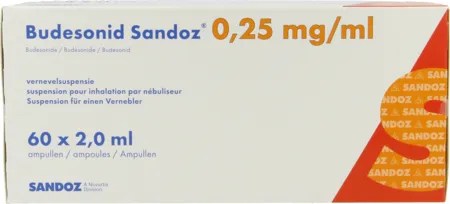
Table of Contents
- Package leaflet: Information for the user
- BUDESONIDE SANDOZ
- 1. What Budesonide Sandoz is and what it is used for
- 2. What you need to know before using Budesonide Sandoz
- 3. How to use Budesonide Sandoz
- 4. Possible side effects
- 5. How to store Budesonide Sandoz
- 6. Contents of the pack and other information
Package leaflet: Information for the user
BUDESONIDE SANDOZ
0.25 mg/ml Nebuliser solution
0.5 mg/ml Nebuliser solution
Equivalent medicine
Please read all of this leaflet carefully before you start using this medicine, as it contains important information for you.
- Keep this leaflet. You may need to read it again.
- If you have any questions, ask your doctor or pharmacist.
- This medicine has been prescribed for you only. Do not pass it on to other people, even if they have the same symptoms as yours, as it may be harmful.
- If you experience any side effects, including those not listed in this leaflet, tell your doctor or pharmacist. See section 4.
Contents of this leaflet:
- What Budesonide Sandoz is and what it is used for
- What you need to know before using Budesonide Sandoz
- How to use Budesonide Sandoz
- Possible side effects
- How to store Budesonide Sandoz
- Contents of the pack and other information
1. What Budesonide Sandoz is and what it is used for
Budesonide belongs to a group of steroids called glucocorticoids which can be used to
reduce or prevent inflammatory reactions (inflammation) in the lungs.
Your medicine is used for the treatment of asthma. It is used in patients in whom other types of inhalers,
such as a pressurized inhaler or an inhaler containing dry powder, are unsatisfactory or inappropriate.
This medicine may also be used for hospital treatment of very severe cases of
laryngotracheobronchitis (a throat disease that can cause breathing difficulties).
2. What you need to know before using Budesonide Sandoz
Do not use Budesonide Sandoz:
- if you are allergic to budesonide or to any of the other ingredients of this medicine (listed in section 6).
Warnings and precautions
Talk to your doctor or pharmacist before using Budesonide Sandoz if any of the following apply to you:
- If you have or have had tuberculosis
- If you have or have had liver disease or liver problems
- If you have a fungal, viral, or other respiratory tract infection, for example a cold or lung infections.
Contact your doctor if you experience blurred vision or other visual disturbances.
If you are switching from oral corticosteroids (such as prednisolone) to Budesonide Sandoz, you may feel a general sense of unwellness during the transition. You may also experience symptoms that were previously suppressed by oral corticosteroids, such as allergic rhinitis (itching, blocked or runny nose), eczema (dry skin and itching), or muscle and joint pain. If this occurs, consult your doctor.
Budesonide Sandoz is not indicated for use during an attack of breathlessness. Sudden episodes of breathlessness must be treated with a short-acting bronchodilator.
If you experience increased shortness of breath and/or difficulty breathing immediately after using Budesonide Sandoz, stop using budesonide nebuliser suspension immediately and consult your doctor.
To reduce the risk of developing oral thrush (white patches on the tongue or in the mouth), rinse your mouth with water (spit the water out – do not swallow it) and brush your teeth after using Budesonide Sandoz.
Contact your doctor if you develop oral thrush.
Children and adolescents
In rare cases, long-term treatment with budesonide may slow down the normal growth of children and adolescents. If your child uses this medicine long-term, it is normal for the doctor to regularly monitor their height.
Budesonide is a steroid. You should be aware that its use may result in a positive doping test. Discuss this with your doctor if you have any concerns.
For individuals engaged in sports, using this medicine without a therapeutic need constitutes doping and may lead to a positive doping test.
Other medicines and Budesonide Sandoz
Inform your doctor if you are currently taking, have recently taken, or might take any other medicines, including those obtained without a prescription. Some medicines may increase the effects of Budesonide Sandoz, and your doctor may decide to monitor you closely if you are taking any of the following:
- Medicines for the treatment of fungal infections such as ketoconazole or itraconazole;
- Some medicines for the treatment of HIV: ritonavir, saquinavir, cobicistat;
- Antibiotic medicines, erythromycin and clarithromycin;
- Other medicines that help you breathe;
- Estrogens and steroid contraceptives.
Pregnancy and breastfeeding
If you are pregnant, think you might be pregnant, planning to become pregnant, or breastfeeding, ask your doctor or pharmacist for advice before taking this medicine. If you become pregnant while taking this medicine, inform your doctor as soon as possible.
Driving and using machines
Budesonide for inhalation does not affect or affects negligibly the ability to drive and use machines.
3. How to use Budesonide Sandoz
Use this medicine exactly as directed by your doctor. If you have any doubts, consult your doctor or pharmacist.
Your doctor will inform you of the correct dose, which will depend on the severity of your asthma.
Asthma
You may notice an improvement in your asthma within 3 days, but it may take 2–4 weeks to achieve the full effect. It is important that you continue taking the medicine as directed by your doctor, even if you feel better.
Adults (including the elderly) and adolescents from 12 years of age:
The usual dose is 0.5–2.0 mg of budesonide per day. This dose is usually taken in two separate administrations during the day. However, if your asthma is stable and not severe, your doctor may advise you to take the medicine once daily. Your doctor will tell you how and when it is best to take the medicine, and you must always follow their instructions.
Infants and children (from 6 months to 11 years of age):
The usual dose is 0.25–1.0 mg of budesonide per day. Your doctor will advise you on how your child should take the medicine, but it is usually administered in two separate doses during the day. However, if their asthma is stable and not severe, your doctor may recommend once-daily administration.
Croup (laryngotracheobronchitis):
The usual dose for infants and children with croup is 2 mg. This dose is administered as a single dose or as two 1 mg doses given 30 minutes apart. Treatment may be repeated every 12 hours if necessary, until improvement is observed, for a maximum of 36 hours.
Instructions for use:
The medicine must be used with a pneumatic nebulizer. The generated mist is then inhaled through a mouthpiece or a face mask. Ultrasonic nebulizers must not be used with this medicine.
Take the medicine following these steps:
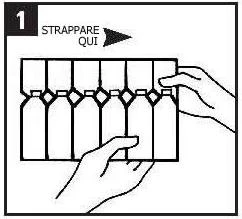
- Separate one vial from the strip, leaving the rest in the aluminum foil pouch (see figure 1).
- Gently shake the vial.
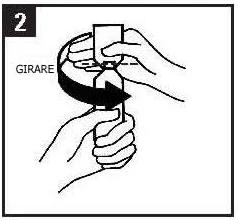
- Open the vial by twisting off the top (see figure 2).
- Pour the liquid from the vial into the nebulizer chamber. Replace the top of the nebulizer chamber and dispose of the empty vial carefully.
- Connect one end of the nebulizer chamber to the mouthpiece or face mask, and the other end to the pneumatic pump.
- Gently shake the nebulizer chamber once more, then turn on the nebulizer. Breathe in the mist calmly and deeply using the mouthpiece or face mask.
- When no more mist comes out from the mouthpiece or face mask, the treatment is complete.
- Rinse your mouth with water (spit out the water—do not swallow it) and brush your teeth. If you used a face mask, you must also wash your face thoroughly. It is important to perform these steps as they may reduce the risk of certain side effects associated with this medicine.
- You must clean the nebulizer after each use. Wash the chamber, mouthpiece, or face mask with warm water using a mild detergent, according to the manufacturer's instructions. The nebulizer should be thoroughly rinsed and dried by reconnecting the chamber to the pneumatic pump.
It is important that you follow the instructions provided by the manufacturer of the nebulizer. If you have any doubts about how to use the nebulizer, consult your doctor or pharmacist.
Your doctor may also prescribe:
- Your doctor may consider adding oral steroid tablets to your treatment during periods of stress (e.g., if you have an infection), or if you have been taking a high dose of inhaled steroid for a long time, or before surgery.
- If you have previously taken oral steroids for asthma, your doctor may gradually reduce the number of tablets you take after you have started treatment with Budesonide Sandoz. You may experience some symptoms as a result, including nasal congestion or runny nose, fatigue, depression, eczema (a type of skin rash), and joint and/or muscle pain. If any of these symptoms concern you or persist, inform your doctor.
- Your doctor may ask you to mix this medicine with solutions containing other active substances acting on the respiratory system, such as salbutamol, terbutaline, sodium cromoglicate, or ipratropium bromide. If so, follow the instructions carefully. Do not mix this medicine with other solutions unless specifically instructed by your doctor.
If you use more Budesonide Sandoz than you should
Contact your doctor or pharmacist as soon as possible. Remember to bring the package and any remaining vials with you. It is important that you take your dose exactly as specified on the pharmacist’s label or as advised by your doctor. Do not increase or decrease your dose without consulting your doctor.
If you forget to use Budesonide Sandoz
Do not take a double dose to make up for the missed dose. Take the next dose as usual.
If you have any doubts about how to use this medicine, consult your doctor or pharmacist.
4. Possible side effects
Like all medicines, this medicine can cause side effects, although not everyone gets them.
All medicines can cause allergic reactions, although serious allergic reactions are very rare. Contact your doctor immediately if you experience sudden breathlessness, difficulty breathing, swelling of the eyelids, face or lips, skin rash or itching (especially if affecting the whole body).
Inhaled medicines such as budesonide may rarely cause sudden breathlessness and/or shortness of breath. If this occurs, stop using the medicine immediately and seek medical help.
The following side effects have been reported.
Common: may affect up to 1 in 10 people
Tenderness and/or irritation of the mouth (including oral thrush), hoarseness, throat irritation, difficulty swallowing, and cough.
Uncommon: may affect up to 1 in 100 people
Cataract (clouding of the eye's lens), depression or feeling anxious, muscle spasms, tremor, blurred vision.
Rare: may affect up to 1 in 1,000 people
Skin reactions including itching, rash, bruising, inflammation, redness of the skin and/or skin eruptions, swelling, growth retardation in children and adolescents, hypersensitivity (allergy to the medicine), and bronchospasm (tightening of airway muscles leading to asthma).
Voice problems.
Suppression of the adrenal gland (a small gland near the kidney) may also occur. The main symptoms of adrenal suppression include headache, tiredness, feeling unwell, weight loss, stomach pain, and loss of appetite.
Feeling restless, nervous, overexcited, irritable, or depressed (these effects are more likely to occur in children).
Very rare side effects: may affect up to 1 in 10,000 people
Decrease in bone mineral density (thinning of the bones).
Not known: frequency cannot be estimated from the available data
Glaucoma (increased pressure in the eye), aggression, increased motor activity (difficulty staying still), sleep disorders.
Reporting of side effects
If you experience any side effects, including those not listed in this leaflet, talk to your doctor or pharmacist. You can also report side effects directly via the national reporting system at www.agenziafarmaco.gov.it/content/come-segnalare-una-sospetta-reazione-avversa. By reporting side effects, you can help provide more information on the safety of this medicine.
5. How to store Budesonide Sandoz
Keep this medicine out of the sight and reach of children.
Do not use this medicine after the expiry date stated on the packaging and on the aluminium foil pouch after "Exp.". The expiry date refers to the last day of that month.
Store the vials in their original aluminium foil pouch and carton to protect the medicine from light and moisture.
Once opened, the single vial must be used within 12 hours. After this time, the vial and any remaining contents must be discarded.
Once the aluminium foil pouch has been opened, the vials inside must be used within three months (it is advisable to mark the date of opening on the aluminium foil pouch to help remember).
Do not dispose of any medicine via wastewater or household waste. Ask your pharmacist how to dispose of medicines you no longer use. This will help protect the environment.
6. Contents of the pack and other information
What Budesonide Sandoz contains:
- The active substance is budesonide.
- The other components are disodium edetate, sodium chloride, polysorbate 80, citric acid, sodium citrate and water for injections.
Budesonide Sandoz 0.25 mg Nebuliser Suspension contains 0.5 mg of budesonide (0.25 mg/ml) as the active substance in each 2 ml vial.
Budesonide Sandoz 0.5 mg Nebuliser Suspension contains 1 mg of budesonide (0.5 mg/ml) as the active substance in each 2 ml vial.
Description of the appearance of Budesonide Sandoz and contents of the pack
The medicine is supplied as plastic vials containing 2 ml of a white to off-white suspension for nebulisation (converted into a fine mist for inhalation).
The vials are packed in strips of 4, 5, 8, 10 or 12 in an aluminium foil pouch, which are then packed into a carton. Cartons are available in pack sizes containing 5, 20, 24, 40 or 60 vials.
Not all pack sizes may be marketed.
Marketing Authorisation Holder
Sandoz S.p.A.,
L.go U. Boccioni 1,
21040 Origgio (VA)
Italy
Manufacturer
LABORATOIRE UNITHER
151 rue André Durouchez, CS 28028, 80084 Amiens Cedex 2
(France)
This medicinal product is authorised in the European Economic Area member states under the following names:
Denmark: Budesonid Arrow
Belgium: Budesonid Sandoz 0.25 mg/ml and 0.5 mg/ml vernevelsuspensie
Germany: BUDENOBRONCH 0.5 mg/2 ml and 1.0 mg/2 ml Suspension für einen Vernebler
Spain: Budesonida Aldo-Unión 0.25 mg/ml and 0.5 mg/ml suspensión para inhalación por nebulizador
Ireland: Budesitan 0.5 mg/2 ml and 1.0 mg/2 ml Nebuliser Suspension
Italy: Budesonide Sandoz 0.25 mg/ml and 0.5 mg/ml sospensione per nebulizzatore
Luxembourg: Budesonid „Arrow“ 0.5 mg/ml Suspension für einen Vernebler
Netherlands: Budesonide Arrow 0.125 mg/ml, 0.25 mg/ml and 0.5 mg/ml vernevelsuspensie in ampul, 2 ml
Norway: Budesonid Arrow inhalasjonsvæske til nebulisator, suspensjon 0.125 mg/ml, 0.25 mg/ml and 0.5 mg/ml
Portugal: Budesonido Arrow 0.25 mg/ml and 0.5 mg/ml, Suspensão para Inalação por Nebulização
Sweden: Budesonid Arrow 0.125 mg/ml, 0.25 mg/ml and 0.5 mg/ml suspension för nebulisator
United Kingdom: Budesonide 0.25 mg, 0.5 mg Nebuliser Suspension