Brunizina
ItalyTable of Contents
- Package leaflet: Information for the user
- BRUNIZINA 1 mg/ml eye drops, solution
- 1. What BRUNIZINA eye drops is and what it is used for
- 2. What you need to know before using BRUNIZINA eye drops
- 3. How to use BRUNIZINA eye drops
- 4. Possible side effects
- 5. How to store BRUNIZINA eye drops
- 6. Package contents and other information
- Package leaflet: information for the user
- BRUNIZINA 2 mg/ml nasal drops, solution, 2 mg/ml nasal spray, solution
- 1. What BRUNIZINA is and what it is used for
- 2. What you need to know before using BRUNIZINA
- 3. How to use BRUNIZINA
- 4. Possible side effects
- 5. How to store BRUNIZINA
- 6. Package contents and other information
Package leaflet: Information for the user
BRUNIZINA 1 mg/ml eye drops, solution
Naphazoline hydrochloride
Please read all of this leaflet carefully before using this medicine because it contains important information for you.
Always use this medicine exactly as described in this leaflet or as your doctor or pharmacist has told you to.
- Keep this leaflet. You may need to read it again.
- If you want more information or advice, consult your pharmacist.
- If you experience any side effects, including those not listed in this leaflet, talk to your doctor or pharmacist. See section 4.
- Consult your doctor if you do not notice any improvement or if your symptoms worsen after 4 days.
Contents of this leaflet:
- What BRUNIZINA eye drops is and what it is used for
- What you need to know before using BRUNIZINA eye drops
- How to use BRUNIZINA eye drops
- Possible side effects of eye drops
- How to store BRUNIZINA eye drops
- Contents of the pack and other information
1. What BRUNIZINA eye drops is and what it is used for
BRUNIZINA eye drops contains the active substance naphazoline hydrochloride, which belongs to a group of medicines called decongestants that reduce blood circulation in the mucous membranes of the nose and eyes, thereby reducing congestion.
BRUNIZINA eye drops is indicated to reduce redness and swelling of the conjunctiva (the membrane covering the surface of the eye) and for the treatment of burning, itching or eye irritation.
If you do not feel better or feel worse after 4 days, consult your doctor.
2. What you need to know before using BRUNIZINA eye drops
Do not use BRUNIZINA eye drops
- if you are allergic to naphazoline hydrochloride or to any of the ingredients of this medicine (listed in section 6);
- if you have a disease caused by high pressure inside the eye (narrow-angle glaucoma) or if you have other serious eye diseases;
- in children under 10 years of age (See section “Children”).
Warnings and precautions
Talk to your doctor or pharmacist before using BRUNIZINA eye drops.
Do not exceed the recommended doses and do not use the medicine for more than 4 consecutive days, as
undesirable effects may occur.
Stop treatment and consult your doctor if, after using BRUNIZINA eye drops for a short period of time, eye
irritation persists or worsens.
Before using this medicine, consult your doctor in the following cases:
- if you have infections, pus, or foreign bodies in the eye;
- if you have suffered an eye injury (mechanical damage);
- if your eyes have been exposed to chemicals or heat (chemical or thermal damage).
Use BRUNIZINA eye drops with caution and inform your doctor if any of the following conditions apply to you:
- you have high blood pressure (hypertension);
- you suffer from thyroid problems (hyperthyroidism);
- you have heart disorders (cardiac disorders);
- you have diabetes.
Children
The use of BRUNIZINA eye drops is contraindicated in children under 10 years of age (See section “Do not use BRUNIZINA eye drops”).
Other medicines and BRUNIZINA eye drops
Inform your doctor or pharmacist if you are taking, have recently taken, or might take any other
medicines.
Do not use BRUNIZINA eye drops if you are taking medicines used to treat depression (antidepressants).
Pregnancy and breastfeeding
If you are pregnant, think you may be pregnant, are planning to become pregnant, or are breastfeeding,
ask your doctor or pharmacist for advice before using this medicine.
If you are pregnant or breastfeeding, you may use BRUNIZINA eye drops only after consulting your doctor and carefully evaluating with him the risks and benefits of the treatment.
Driving and using machines
The effects of this medicine on the ability to drive or operate machinery are unknown.
BRUNIZINA eye drops contains benzalkonium chloride
This medicine contains approximately 0.003 mg of benzalkonium chloride per drop, equivalent to 0.1 mg/ml.
Benzalkonium chloride can be absorbed by soft contact lenses and may cause a change in their colour. Remove your contact lenses before using this medicine and wait 15 minutes before reinserting them.
Benzalkonium chloride may also cause eye irritation, especially if you have dry eye or corneal disorders (the transparent outermost layer of the eye). If you experience an unusual sensation in the eye, burning, or pain after using this medicine, speak with your doctor.
BRUNIZINA eye drops contains methyl-parahydroxybenzoate and propyl-parahydroxybenzoate
This medicine contains methyl-parahydroxybenzoate and propyl-parahydroxybenzoate, which may cause allergic reactions (including delayed reactions).
3. How to use BRUNIZINA eye drops
Use this medicine exactly as stated in this leaflet or as instructed by your doctor or pharmacist. If you have any doubts, consult your doctor or pharmacist.
The recommended dose is 1-2 drops of eye drops, 2-3 times a day.
Apply the eye drops into the lower part of the eye, between the lower eyelid and the eye (lower conjunctival fornix).
Do not exceed the recommended doses.
Even though BRUNIZINA eye drops is a medicine applied locally to the eyes (topical route) and used for a short period, it may be absorbed into the body and cause serious unwanted effects (serious systemic effects) (See section “Possible side effects”).
If you use more BRUNIZINA eye drops than you should
A significantly higher dose than recommended of BRUNIZINA, for example in case of accidental ingestion, may cause serious adverse effects on the heart and the circulatory system. Symptoms may include: reduced heart rate (bradycardia), severe headache, nausea, vomiting, breathing difficulties, increased heart rate (tachycardia), and chest pain.
If any adverse effects occur or in case of accidental ingestion/overdose of BRUNIZINA eye drops, seek immediate medical advice.
If you forget to use BRUNIZINA eye drops
Do not use a double dose to make up for the missed dose.
If you have any questions about the use of this medicine, consult your doctor or pharmacist.
4. Possible side effects
Like all medicines, this medicine can cause side effects, although not everybody will experience them.
The following side effects may occur:
- allergic reactions (hypersensitivity reactions). In such cases, treatment must be discontinued and medical advice sought; the physician will determine appropriate therapy.
- increased pupil size (pupil dilation);
- increased blood pressure (hypertension), heart disorders (cardiac disturbances), increased blood sugar levels (hyperglycemia) due to systemic absorption of the medicine;
- increased pressure inside the eye (intraocular pressure) in predisposed individuals;
- nausea;
- headache (cephalalgia).
Reporting of side effects
If you experience any side effect, including those not listed in this leaflet, talk to your doctor or pharmacist. You can also report side effects directly via the national reporting system at https://www.aifa.gov.it/content/segnalazioni-reazioni-avverse. By reporting side effects, you can help provide more information on the safety of this medicine.
5. How to store BRUNIZINA eye drops
Keep this medicine out of the sight and reach of children.
Do not use this medicine after the expiry date stated on the packaging after "Exp.".
The expiry date refers to the last day of that month and to the product in its original, unopened packaging,
stored correctly.
Store below 25 °C.
Do not use BRUNIZINA eye drops more than 30 days after first opening the container.
Do not dispose of any medicine via wastewater or household waste. Ask your pharmacist how to dispose of
medicines you no longer use. This will help protect the environment.
6. Package contents and other information
What BRUNIZINA eye drops contains
- The active substance is naphazoline hydrochloride. 100 ml of solution contain 100 mg of naphazoline hydrochloride.
- The other components are: sodium chloride, p-hydroxybenzoic acid esters, benzalkonium chloride, purified water.
Description of the appearance of BRUNIZINA eye drops and contents of the pack
10 ml bottle with dropper.
Marketing Authorization Holder and Manufacturer
BRUSCHETTINI S.r.l. – Via Isonzo 6 – 16147 Genoa – Italy
Package leaflet: information for the user
BRUNIZINA 2 mg/ml nasal drops, solution, 2 mg/ml nasal spray, solution
Naphazoline hydrochloride
Please read this entire leaflet carefully before using this medicine, as it contains important
information for you.
Always use this medicine exactly as described in this leaflet or as your doctor or pharmacist has instructed you.
- Keep this leaflet. You may need to read it again.
- If you need more information or advice, consult your pharmacist.
- If you experience any side effects, including those not listed in this leaflet, contact your doctor or pharmacist. See section 4.
- Contact your doctor if you do not notice any improvement or if your symptoms worsen after 4 days.
Contents of this leaflet:
- What BRUNIZINA is and what it is used for
- What you need to know before using BRUNIZINA
- How to use BRUNIZINA
- Possible side effects
- How to store BRUNIZINA
- Package contents and other information
1. What BRUNIZINA is and what it is used for
BRUNIZINA contains the active substance naphazoline hydrochloride, which belongs to a group of medicines called decongestants that reduce blood flow in the mucous membranes of the nose and eyes, thereby relieving congestion.
This topical medicine is used to relieve nasal congestion due to colds or other conditions causing blocked nose, such as sinusitis and allergic rhinitis (inflammatory processes affecting the nasal, paranasal, and nasopharyngeal areas).
Consult your doctor if you do not feel better or if you feel worse after 4 days.
2. What you need to know before using BRUNIZINA
Do not use BRUNIZINA
- if you are allergic to naphazoline hydrochloride, to similar substances (imidazole-type sympathomimetics), or to any of the components of this medicinal product (listed in section 6);
- if you have long-lasting nasal inflammations (chronic rhinitis);
- if you suffer from severe heart disease or markedly increased blood pressure (severe arterial hypertension);
- if your thyroid gland is overactive (hyperthyroidism);
- if you have a condition caused by high pressure inside the eye (narrow-angle glaucoma) or other serious eye diseases;
- if you have an enlarged prostate (prostatic hypertrophy);
- in children under 12 years of age (See section “Children”);
- if you are taking monoamine oxidase inhibitors (MAOIs), medicines used to treat depression, or if you have taken them within the last 2 weeks (See section “Other medicines and BRUNIZINA”).
Do not take BRUNIZINA by mouth (orally).
Do not use this medicine for more than 4 consecutive days.
Warnings and precautions
Talk to your doctor or pharmacist before using BRUNIZINA.
Before using this medicine, consult your doctor if you have or have previously had heart or circulatory problems (heart failure, cardiovascular diseases), especially if you have high blood pressure (hypertension). Your doctor will evaluate the potential risks and benefits of treatment with BRUNIZINA.
If you use BRUNIZINA for a prolonged period, the normal function of the nasal mucosa and the mucous membranes around the nose (paranasal sinuses) may become impaired, and your body may become accustomed to this medicine (tolerance), making the dose less effective.
Prolonged repeated use may cause damage to the mucous membranes. Therefore, stop treatment and consult your doctor if you do not experience improvement after a few days of using BRUNIZINA.
The use of BRUNIZINA or similar decongestant products may cause rebound congestion (rebound congestion) leading to a vicious cycle that may result in excessive use of the medicine. Therefore, never exceed the recommended doses.
Use BRUNIZINA with caution and inform your doctor if any of the following apply to you:
- if you are elderly;
- if you are in the early months of pregnancy (See section “Pregnancy and breastfeeding”);
- if you are hypersensitive. In this case, use a lower concentration of naphazoline (0.50‰), obtained by diluting 1 part of BRUNIZINA with 3 parts of water.
Children
The use of BRUNIZINA is contraindicated in children under 12 years of age (See section “Do not use BRUNIZINA”).
Use this medicine with particular caution in children and at a lower concentration of naphazoline, as overdose is more common and may cause more severe symptoms (See sections “Use in children” and “If you use more BRUNIZINA than you should”).
Other medicines and BRUNIZINA
Inform your doctor or pharmacist if you are taking, have recently taken, or might take any other medicines.
Do not use BRUNIZINA if you are taking monoamine oxidase inhibitors (MAOIs) (See section “Do not use BRUNIZINA”).
Pregnancy and breastfeeding
If you are pregnant, suspect you may be pregnant, planning to become pregnant, or are breastfeeding, consult your doctor or pharmacist before using this medicine. Your doctor will assess the potential risks and benefits of treatment with BRUNIZINA and determine whether this medicine is suitable for you. Particular caution should be exercised when using this product during the first months of pregnancy and during breastfeeding.
Driving and using machines
The effects of this medicine on the ability to drive vehicles or operate machinery are unknown.
BRUNIZINA contains methyl parahydroxybenzoate and propyl parahydroxybenzoate
which may cause allergic reactions (including delayed reactions).
3. How to use BRUNIZINA
Use this medicine exactly as stated in this leaflet or as instructed by your doctor or pharmacist. If you have any doubts, consult your doctor or pharmacist.
Do not exceed the recommended doses.
If you exceed the recommended doses, even though BRUNIZINA is a medicine applied locally in the nose (topical route) and used for a short period, it may be absorbed into the body and cause serious adverse effects (serious systemic effects) (See sections "If you use more BRUNIZINA than you should" and "Possible side effects").
BRUNIZINA 2 mg/ml nasal drops, solution
The recommended dose is 3–4 drops of solution, 2–3 times daily, administered into the nose (intranasal instillations).
Tilt the bottle and gently squeeze to release the drops into the nose (See Figure 1).
This medicine can also be used for aerosol therapy (nasal and pharyngeal aerosol). In this case, dilute 1 part of solution with 2 parts of water.
BRUNIZINA 2 mg/ml nasal spray, solution
The recommended dose is 3 sprays, 2–3 times daily, administered into the nose (intranasal sprays).
Press the sides of the bottle, holding the spray nozzle as close as possible to the nose (See Figure 2).
Instructions for use:
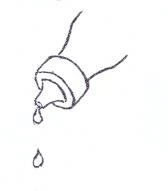
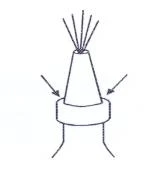
Figure 1 Figure 2
Use in children over 12 years of age
Use a lower concentration of naphazoline, equal to 0.50 per mille, obtained by diluting 1 part of BRUNIZINA with 3 parts of water.
If you use more BRUNIZINA than you should
Using significantly more than the recommended dose of BRUNIZINA, for example in case of accidental ingestion, may cause serious adverse effects on the heart and circulatory system. Symptoms may include: reduced heart rate (bradycardia), severe headache, nausea, vomiting, breathing difficulties, increased heart rate (tachycardia), and chest pain.
Following the use of high doses of this medicine, the following effects may also occur:
- drowsiness;
- damage to the nasal mucosa.
If you exceed the recommended doses, or use the medicine for longer than 4 days, it may be absorbed and cause serious adverse effects (serious systemic effects) (See section "Possible side effects").
If you experience any adverse effects or if an overdose of BRUNIZINA is accidentally ingested, seek immediate medical advice.
Your doctor will determine the most appropriate treatment depending on the severity of the symptoms.
If you forget to use BRUNIZINA
Do not use a double dose to make up for a missed dose.
If you have any doubts about how to use this medicine, consult your doctor or pharmacist.
4. Possible side effects
Like all medicines, this medicine can cause side effects, although not everybody gets them.
The following side effects may occur:
local intolerance reactions to the medicine;
congestion of the mucous membranes (rebound congestion);
increased blood pressure (arterial hypertension), slowing of the heartbeat (reflex bradycardia), headache (cephalalgia), difficulty in urination (urinary disturbances), especially if you use this medicine at high doses or for more than 4 days, since naphazoline may pass throughout the body through inflamed mucous membranes (systemic effects).
If you accidentally swallow this medicine or take it in excessive doses, you may experience increased blood pressure (arterial hypertension), increased heart rate (tachycardia), chest tightness, severe headache (intense cephalalgia). Furthermore, in children, a decrease in body temperature (hypothermia) and depression of brain activity (central nervous system depression) with marked sedation may occur; these effects require immediate emergency measures.
Reporting of side effects
If you experience any side effect, including those not listed in this leaflet, talk to your doctor or pharmacist. You can also report side effects directly via the national reporting system at https://www.aifa.gov.it/content/segnalazioni-reazioni-avverse. By reporting side effects, you can help provide more information on the safety of this medicine.
5. How to store BRUNIZINA
Keep this medicine out of the sight and reach of children.
Do not use this medicine after the expiry date stated on the packaging after "Exp.".
The expiry date refers to the last day of that month and to the product in its original, unopened packaging,
properly stored.
Store below 30 °C.
The medicine must not be used more than 30 days after first opening the container.
Do not dispose of any medicine via wastewater or household waste. Ask your pharmacist how to dispose of
medicines you no longer use. This will help protect the environment.
6. Package contents and other information
What BRUNIZINA contains
BRUNIZINA 2 mg/ml nasal drops, solution
- The active substance is naphazoline hydrochloride. 100 ml of drops contain 0.200 g of naphazoline hydrochloride.
- The other components are: p-hydroxybenzoic acid esters, purified water.
BRUNIZINA 2 mg/ml nasal spray, solution
- The active substance is naphazoline hydrochloride. 100 ml of nebulized solution contain 0.200 g of naphazoline hydrochloride.
- The other components are: p-hydroxybenzoic acid esters, purified water.
Description of the appearance of BRUNIZINA and contents of the pack
BRUNIZINA 2 mg/ml nasal drops, solution
10 ml bottle with dropper.
BRUNIZINA 2 mg/ml nasal spray, solution
10 ml bottle with nebulizer.
Marketing Authorization Holder and Manufacturer
BRUSCHETTINI S.r.l. – Via Isonzo 6 – 16147 Genoa – Italy