Brunistill
Italy
Table of Contents
BRUNISTILL 250 micrograms/ml eye drops, solution
Generic medicine
Please read this leaflet carefully before using this medicine because it contains important information for you.
Always take this medicine exactly as described in this leaflet or as your doctor or pharmacist has instructed you.
- Keep this leaflet. You may need to read it again.
- If you have any doubts, consult your doctor or pharmacist.
- This medicine has been prescribed for you only. Do not give it to others, even if their symptoms are the same as yours, as it could be harmful.
- If you need further information or advice, consult your pharmacist.
- If you experience any side effect, including those not listed in this leaflet, consult your doctor or pharmacist. See section 4.
- Consult your doctor if you do not notice any improvement or if your symptoms worsen.
Contents of this leaflet:
- What Brunistill is and what it is used for
- What you need to know before using Brunistill
- How to use Brunistill
- Possible side effects
- How to store Brunistill
- Contents of the pack and other information
1. WHAT BRUNISTILL IS AND WHAT IT IS USED FOR
Brunistill contains ketotifene as the active substance, which is an antiallergic agent. Brunistill is used to treat ocular symptoms of seasonal allergic conjunctivitis.
2. WHAT YOU SHOULD KNOW BEFORE USING BRUNISTILL
Do not use Brunistill
Do not use Brunistill if you are allergic (hypersensitive) to the active substance (ketotifene) or to any of the excipients of Brunistill.
Other medicines and Brunistill
If you need to instill other medicinal products into your eyes along with Brunistill, you must wait at least 5 minutes between each application.
Inform your doctor or pharmacist if you are taking or have recently taken any other medicines, including those not requiring a prescription. This is particularly important for medicines used to treat:
- depression
- allergies (e.g. antihistamines)
Brunistill with food and drinks
Brunistill may enhance the effects of alcohol.
Pregnancy and breastfeeding
There are no clinical data regarding the use of Brunistill in pregnant women. If you are pregnant or think you may be pregnant, consult your doctor or pharmacist before using Brunistill.
Brunistill can be used during breastfeeding.
Driving and using machines
Brunistill may cause blurred vision or drowsiness. If this occurs, wait until your vision clears before driving or operating tools or machinery.
3. HOW TO USE BRUNISTILL
Use Brunistill exactly as described in this leaflet or as prescribed by your doctor or pharmacist. If you have any doubts, consult your doctor or pharmacist.
The usual dose for adults and children (from 3 years of age) is one drop into the affected eye(s) twice daily (morning and evening).
A single-dose container contains sufficient solution for instillation in both eyes.
The contents and container remain sterile until the original closure is opened. To avoid the risk of contamination, do not touch any surface with the tip of the container.
Duration of treatment
According to therapeutic needs, as determined by the physician.
Instructions for use
To use the single-dose container, follow these steps:
- Wash your hands
- Open the blister pack and take out the block of single-dose containers
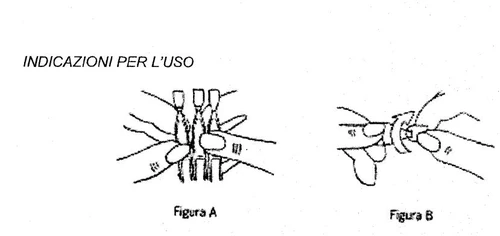
- Detach one single-dose container from the block (Fig. A)
- Shake the nozzle gently to release the liquid
- Return the remaining single-dose containers to the block, close the blister by folding it at one corner, and place the blister back into the carton
- Open the single-dose container by rotating and pulling the tab simultaneously (Fig. B). Do not touch the tip after opening the container
- Invert the container and gently shake to allow the liquid to flow down
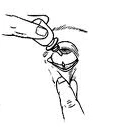
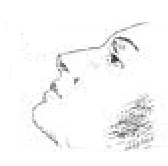
- Tilt your head backward (Fig. C), pull down the lower eyelid with your finger, and hold the container in the other hand (Fig. D). Apply moderate pressure on the walls of the single-dose container and slowly release the prescribed number of drops of eye drops into the eye.
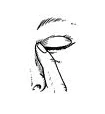
- Close your eyes and press with one finger at the inner corner of the eye for about 1–2 minutes (Fig. E). This prevents the drop from flowing through the tear duct into the throat, ensuring that most of the drop remains in the eye. If necessary, repeat steps 6 to 8 for the other eye.
- Discard the container after use.
If you have any questions about the use of this product, consult your doctor or pharmacist.
If you use more Brunistill than you should
Cases of overdose have not been reported.
Consult your doctor or pharmacist for further information regarding the use of this medicine.
Oral ingestion of the content of one single-dose pipette would correspond to 0.1 mg of ketotifene, equivalent to 5% of the recommended daily oral dose for a 3-year-old child. Clinical data have not shown serious signs or symptoms following ingestion of up to 20 mg of ketotifene.
In case of accidental ingestion or overdose of Brunistill, contact your doctor immediately or go to the nearest hospital.
For any questions about the use of Brunistill, consult your doctor or pharmacist.
If you forget to use Brunistill
If you forget to use Brunistill, instill the drops into your eyes as soon as you remember. Then continue with your regular treatment schedule.
Do not use a double dose to make up for the missed dose.
4. POSSIBLE ADVERSE REACTIONS
Like all medicines, Brunistill may cause adverse reactions, although not everyone experiences them.
The following adverse reactions have been reported:
Common (affects less than 1 in 10 people)
- Eye irritation or eye pain
- Inflammation of the eye
- Punctate epithelial erosion
Uncommon (affects less than 1 in 100 people)
- Blurred vision
- Dry eye
- Eyelid disorders
- Conjunctivitis
- Increased sensitivity of the eyes to light
- Obvious bleeding in the white part of the eye
- Headache
- Drowsiness
- Rash (which may also cause itching)
- Eczema (itching, redness, inflammatory rash)
- Urticaria
- Dry mouth
- Allergic reaction
Frequency not known (frequency cannot be estimated from the available data)
Hypersensitivity, including local allergic reactions (mainly contact dermatitis, swollen eyes, eyelid itching, and edema), systemic allergic reactions, including facial swelling/edema (in some cases associated with contact dermatitis), and worsening of pre-existing allergic conditions such as asthma and eczema.
Following the instructions provided in this leaflet reduces the risk of adverse reactions.
If any of the adverse reactions worsen, or if you notice any adverse reaction not listed in this leaflet, inform your doctor or pharmacist.
Reporting of adverse reactions
If you experience any adverse reaction, including those not listed in this leaflet, consult your doctor or pharmacist. You may also report adverse reactions directly through the national reporting system at the website:
www.agenziafarmaco.gov.it/it/responsabili. By reporting adverse reactions, you can help provide more information on the safety of this medicine.
5. HOW TO STORE BRUNISTILL
Keep this medicine out of the sight and reach of children.
Do not store above 25°C.
The single-dose container itself is not sterile, but its contents remain sterile until the container is opened.
After opening the container, the contents must be used immediately and must not be stored.
Do not use Brunistill after the expiry date stated on the packaging after EXP. The expiry date refers to the last day of the month indicated. This date applies to the product kept in its original, undamaged packaging and stored correctly.
Do not dispose of any medicine via wastewater or household waste. Ask your pharmacist how to dispose of medicines you no longer use. This will help protect the environment.
6. PACK CONTENTS AND OTHER INFORMATION
What Brunistill contains
The active substance is ketotifen (as fumarate).
One single-dose container of 0.5 ml contains: 0.173 mg of ketotifen hydrogen fumarate,
corresponding to 0.25 mg/ml of ketotifen.
The excipients are: glycerol, sodium hydroxide, purified water.
Description of the appearance of Brunistill and pack contents
Brunistill is a clear, colourless solution.
Each single-dose container holds 0.5 ml.
The pack contains 20 single-dose containers.
Marketing Authorization Holder
Bruschettini s.r.l.
Via Isonzo, 6 – 16147 Genoa (GE) – ITALY
Manufacturer
Pharma Stulln GmbH
Werksstrasse 3 - D-92551 Stulln (Germany)
This leaflet was last approved on: