Brimoftal
Italy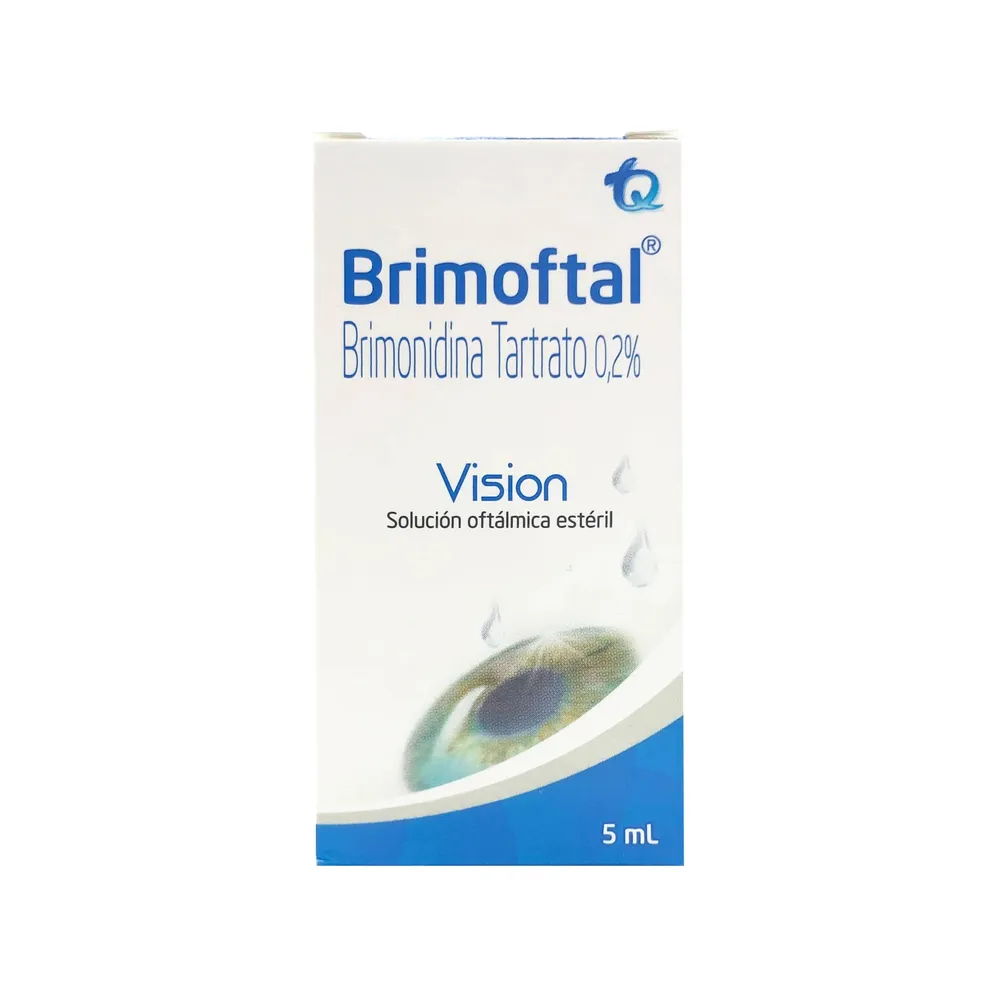
Table of Contents
- PATIENT INFORMATION LEAFLET
- BRIMOFTAL 2 mg/ml Eye drops, solution
- 1. WHAT BRIMOFTAL 2 MG/ML OPHTHALMIC SOLUTION IS AND WHAT IT IS USED FOR
- 2. BEFORE USING BRIMOFTAL 2 MG/ML EYE DROPS, SOLUTION
- 3. HOW TO USE BRIMOFTAL 2 MG/ML OPHTHALMIC SOLUTION
- 5. HOW TO STORE BRIMOFTAL 2 MG/ML OPHTHALMIC SOLUTION
- 6. OTHER INFORMATION
PATIENT INFORMATION LEAFLET
BRIMOFTAL 2 mg/ml Eye drops, solution
BRIMONIDINE TARTRATE
Please read this leaflet carefully before using this medicine.
- Keep this leaflet. You may need to read it again.
- If you have any questions, ask your doctor or pharmacist.
- This medicine has been prescribed for you only. Never give it to other people, even if their symptoms are the same as yours, as it could be harmful.
- If you experience any side effects, including those not listed in this leaflet, consult your doctor or pharmacist.
Contents of this leaflet:
- What BRIMOFTAL 2 mg/ml eye drops, solution is and what it is used for
- Before you use BRIMOFTAL 2 mg/ml eye drops, solution
- How to use BRIMOFTAL 2 mg/ml eye drops, solution
- Possible side effects
- How to store BRIMOFTAL 2 mg/ml eye drops, solution
- Further information
1. WHAT BRIMOFTAL 2 MG/ML OPHTHALMIC SOLUTION IS AND WHAT IT IS USED FOR
- BRIMOFTAL 2 mg/ml eye drops, solution is a medicine used to reduce intraocular pressure (IOP) in patients with open-angle glaucoma or ocular hypertension (high eye pressure).
- BRIMOFTAL 2 mg/ml eye drops, solution can be used alone or in combination with other medicines to reduce intraocular pressure.
2. BEFORE USING BRIMOFTAL 2 MG/ML EYE DROPS, SOLUTION
Do not use BRIMOFTAL 2 mg/ml eye drops, solution:
- If you are allergic (or hypersensitive) to brimonidine tartrate or any of the ingredients of BRIMOFTAL 2 mg/ml eye drops, solution
- If you are or have been treated with medicines classified as monoamine oxidase inhibitors (MAO inhibitors)
- If you are being treated with certain antidepressants (tricyclic antidepressants or mianserin). Inform your doctor if you are taking any antidepressant
- In newborns and very young children (from birth up to 2 years of age)
Take special care with BRIMOFTAL 2 mg/ml eye drops, solution:
- In case of severe or unstable and uncontrolled cardiovascular diseases
- In case of depression
- In case of reduced blood supply to the brain (cerebral insufficiency) or to the heart (coronary insufficiency)
- If you suffer from low blood pressure causing dizziness and fainting when standing up after lying down or sitting (orthostatic hypotension)
- In case of blood vessel constriction, especially in hands and arms (Raynaud's phenomenon), or chronic vascular inflammation with blood vessel obstruction due to clotting (thromboangiitis obliterans)
- In case of liver or kidney problems
Consult your doctor if any of these conditions apply to you. Brimonidine is not recommended in children (from 2 to 12 years of age).
Using BRIMOFTAL 2 mg/ml eye drops, solution with other medicines
Inform your doctor or pharmacist if you are taking or have recently taken any other medicines, including those not requiring a prescription.
Medicines acting on the central nervous system (CNS):
The effect of substances acting on the central nervous system (CNS) (alcohol, barbiturates, opioids, sedatives, or anesthetics) may be enhanced by BRIMOFTAL 2 mg/ml eye drops, solution.
Medicines treating disorders of the central nervous system (chlorpromazine,
methylphenidate), antihypertensive medicines (reserpine):
Caution is recommended in patients treated with medicines that may alter the uptake and metabolism of adrenaline, noradrenaline, and other so-called biogenic amines in the blood.
Antihypertensive agents, cardioactive drugs:
A slight decrease in blood pressure has been observed in some patients after administration of BRIMOFTAL 2 mg/ml eye drops, solution. Therefore, caution is recommended if BRIMOFTAL 2 mg/ml eye drops, solution is used concomitantly with antihypertensive agents and/or cardioactive drugs of the digitalis glycoside group.
Adrenergic agonists or antagonists:
Caution is recommended when starting concomitant treatment with systemically acting medicines, or if there is a change in dosage (regardless of the route of administration) that may interact with α-adrenergic agonists or interfere with their activity, such as agonists or antagonists (isoprenaline or prazosin) of adrenergic receptors.
Pregnancy and breastfeeding
No studies have been conducted to determine whether it is safe to use BRIMOFTAL 2 mg/ml eye drops, solution during pregnancy. BRIMOFTAL 2 mg/ml eye drops, solution should therefore be used with caution during pregnancy and only if the potential benefit to the mother justifies the potential risk to the fetus.
It is not known whether brimonidine passes into breast milk. BRIMOFTAL 2 mg/ml eye drops, solution should therefore not be used during breastfeeding.
Ask your doctor or pharmacist for advice before taking any medicine.
Driving and using machines
BRIMOFTAL 2 mg/ml eye drops, solution may cause tiredness and/or drowsiness. This may affect your ability to drive or use machines safely.
BRIMOFTAL 2 mg/ml eye drops, solution may cause blurred and/or disturbed vision. This may affect your ability to drive or use machines safely, especially in the dark or under low-light conditions.
If you experience any of these symptoms, you are advised not to drive or operate machinery until the symptoms have completely disappeared.
Important information about some of the excipients in BRIMOFTAL 2 mg/ml eye drops, solution
Brimoftal contains benzalkonium chloride
Brimoftal contains 0.05 mg of benzalkonium chloride per ml, equivalent to approximately 0.00165 mg of benzalkonium chloride per drop.
Benzalkonium chloride may be absorbed by soft contact lenses and may cause a change in their color. Remove your contact lenses before using this medicine and wait 15 minutes before reinserting them.
Benzalkonium chloride may also cause eye irritation, especially if you have dry eye or corneal disorders (the transparent outermost layer of the eye). If you experience an unusual sensation in the eye, such as burning or pain after using this medicine, speak with your doctor.
3. HOW TO USE BRIMOFTAL 2 MG/ML OPHTHALMIC SOLUTION
Use BRIMOFTAL 2 mg/ml ophthalmic solution exactly as directed by your
physician. If you are unsure, consult your doctor or pharmacist.
It is very important to use BRIMOFTAL 2 mg/ml ophthalmic solution for the duration
prescribed by your doctor.
If you feel that the effect of BRIMOFTAL 2 mg/ml ophthalmic solution is too
strong or too weak, discuss this with your doctor.
Unless otherwise directed by your physician, the usual dose is
one drop in the affected eye(s) twice daily, approximately 12 hours apart.
Instructions for use
Brimonidine is for ophthalmic use only. Do not ingest.
Always wash your hands before applying the eye drops.
Instill the eye drops as follows:
- Tilt your head backward and look upward.
- Gently pull down the lower eyelid until a small pocket forms.
- Squeeze the inverted bottle to release one drop into the eye. Immediately after instillation of each drop, close the eye and press the tip of a finger against the inner corner of the closed eye (near the nose) for one minute. This helps reduce systemic absorption of brimonidine. If you are using more than one ophthalmic medication, administer the products at intervals of 5–15 minutes.
Neonates and children: BRIMOFTAL 2 mg/ml must not be used in neonates and children (from birth to 2 years of age).
If you use more BRIMOFTAL 2 mg/ml ophthalmic solution than you should
Adults:
In adults who have used more BRIMOFTAL 2 mg/ml ophthalmic solution than prescribed,
the adverse effects observed are consistent with those already known (see section 4).
Adults who have accidentally ingested brimonidine tartrate 2 mg/ml ophthalmic solution
have experienced lowering of blood pressure, in some cases followed by an increase in
arterial pressure.
Contact your doctor immediately if you have accidentally ingested
BRIMOFTAL 2 mg/ml ophthalmic solution, as it may cause low blood pressure,
feeling of weakness, general malaise, lack of energy, numbness, slowed heart rate,
irregular heartbeat, constricted pupils, breathing difficulties including cessation of breathing,
flaccid muscles, lowered body temperature, and seizures.
Children
Serious adverse effects have been reported in children who accidentally ingested
brimonidine tartrate 2 mg/ml ophthalmic solution. Signs observed include:
temporary coma, decreased level of consciousness, lack of energy, drowsiness,
flaccid muscles, slowed heart rate, lowered body temperature, pallor, and breathing
difficulties including cessation of breathing. If this occurs, contact your doctor immediately.
Adults and children
If you suspect an overdose, contact your doctor or ophthalmologist immediately.
Bring the medicine packaging with you so the doctor is aware of the active substance taken.
If you forget to use BRIMOFTAL 2 mg/ml ophthalmic solution
If you forget to apply BRIMOFTAL 2 mg/ml ophthalmic solution, apply the missed dose
as soon as possible. However, if it is almost time for the next dose, skip the missed dose
and continue with your regular dosing schedule.
Do not use extra drops to make up for a missed dose. If in doubt, consult your doctor or pharmacist.
Do not change the prescribed dose on your own.
If you stop using BRIMOFTAL 2 mg/ml ophthalmic solution
Do not stop treatment with BRIMOFTAL 2 mg/ml ophthalmic solution without first
consulting your doctor.
UNDESIRABLE EFFECTS
Like all medicines, BRIMOFTAL 2 mg/ml ophthalmic solution may cause adverse
effects, although not everyone experiences them. If any of the adverse effects worsen,
or if you notice any adverse effects not listed in this leaflet, inform your doctor or pharmacist.
The most common adverse effects (in 22–25% of patients) are dry mouth, eye redness,
burning sensation, and eye itching. These side effects are usually temporary and rarely
so severe as to require discontinuation of treatment with BRIMOFTAL 2 mg/ml ophthalmic solution.
Allergic eye reactions occurred in 12.7% of patients during clinical studies. These reactions
most commonly occurred after 3–9 months of treatment. In case of allergic reactions,
treatment with BRIMOFTAL 2 mg/ml ophthalmic solution should be discontinued.
An analysis of adverse effects is based on the following incidence rates:
VERY COMMON: affects more than 1 in 10 patients
COMMON: affects 1 to 10 in 100 patients
UNCOMMON: affects 1 to 10 in 1,000 patients
RARE: affects 1 to 10 in 10,000 patients
VERY RARE: affects fewer than 1 in 10,000 patients
UNKNOWN: frequency cannot be estimated from the available data
The following adverse effects have been reported during treatment with
BRIMOFTAL 2 mg/ml ophthalmic solution:
Local (topical) adverse effects
VERY COMMON:
- Eye irritation, including allergic reactions (redness, pain and burning, itching, foreign body sensation in the eye, follicles or white spots on the layer covering the eye surface – conjunctival follicles), blurred vision
COMMON:
- Local irritation (redness and swelling of the eyelids, inflamed eyelids, conjunctival edema and discharge, eye pain and tearing), photophobia, superficial corneal damage or staining, dry eyes, conjunctival blanching, altered vision, conjunctivitis
VERY RARE:
- Iritis, miosis
UNKNOWN:
- Itching of the eyebrows
- Intraocular inflammation
Systemic adverse effects
VERY COMMON:
- Headache, dry mouth, fatigue/drowsiness
COMMON:
- Upper respiratory tract symptoms, dizziness, gastrointestinal pain, weakness, taste disturbance
UNCOMMON:
- Palpitations/arrhythmia (including bradycardia and tachycardia), general allergic reactions, depression, dry nose
RARE:
- Dyspnea
VERY RARE:
- Syncope, hypertension, hypotension, insomnia
UNKNOWN:
- Skin reactions, including: redness, facial swelling, itching, rash, and blood vessel dilation
5. HOW TO STORE BRIMOFTAL 2 MG/ML OPHTHALMIC SOLUTION
KEEP OUT OF SIGHT AND REACH OF CHILDREN.
Do not use BRIMOFTAL 2 mg/ml eye drops, solution after the expiry date stated on the
carton and on the bottle. The expiry date refers to the last day of the month.
After first opening, BRIMOFTAL 2 mg/ml eye drops, solution can be stored for a maximum
of 28 days.
Medicines should not be disposed of via wastewater or household waste.
Ask your pharmacist how to dispose of medicines you no longer use. This will help
protect the environment.
6. OTHER INFORMATION
What BRIMOFTAL 2 mg/ml eye drops, solution contains:
- The active substance is brimonidine tartrate. 1 ml of solution contains 2 mg of brimonidine tartrate, equivalent to 1.3 mg of brimonidine.
- The excipients are: benzalkonium chloride, polyvinyl alcohol, sodium chloride, sodium citrate, citric acid monohydrate, purified water, sodium hydroxide and hydrochloric acid (used to adjust pH).
What BRIMOFTAL 2 mg/ml eye drops, solution looks like and contents of the pack
BRIMOFTAL 2 mg/ml eye drops, solution is a clear solution with a yellow-greenish tint. It is available in 5 ml bottles with dropper in packs of 1, 3 or 6 bottles, and in 10 ml bottles with dropper in packs of 1 or 3 bottles.
Not all pack sizes may be marketed.
Marketing Authorization Holder
BRUSCHETTINI s.r.l.
Via Isonzo, 6
16147 Genova
Italy
Manufacturers
Pharma Stulln GmbH
Werksstraße 3
92551 Stulln
Germany
or
UAB Santonika
Veiveriu Street 134B
46353 Kaunas
Lithuania
THIS MEDICINE IS AUTHORIZED IN THE EEA MEMBER STATES UNDER THE FOLLOWING NAMES:
ITALY: BRIMOFTAL