Brexin
Italy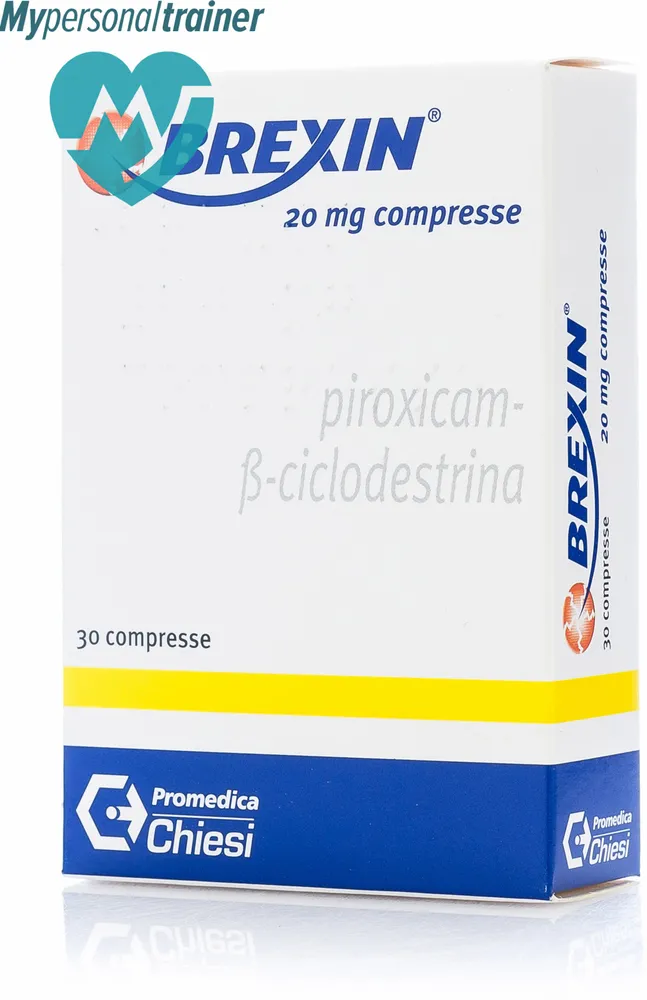
Table of Contents
- Patient Information Leaflet: Information for the Patient
- BREXIN 20 mg tablets, 20 mg effervescent tablets
- 1. What BREXIN is and what it is used for
- 2. What you should know before taking BREXIN
- 3. How to take BREXIN
- 4. Possible side effects
- 5. How to store BREXIN
- 6. Package contents and other information
Patient Information Leaflet: Information for the Patient
BREXIN 20 mg tablets, 20 mg effervescent tablets
Piroxicam-β-cyclodextrin
Please read this leaflet carefully before taking this medicine because it contains important information for you.
- Keep this leaflet. You may need to read it again.
- If you have any questions, consult your doctor or pharmacist.
- This medicine has been prescribed for you only. Do not give it to other people, even if their symptoms are the same as yours, as it may be harmful.
- If you experience any adverse reaction, including those not listed in this leaflet, contact your doctor or pharmacist. See section 4.
Contents of this leaflet:
- What BREXIN is and what it is used for
- What you need to know before taking BREXIN
- How to take BREXIN
- Possible side effects
- How to store BREXIN
- Contents of the pack and other information
1. What BREXIN is and what it is used for
This medicine contains the active substance piroxicam-β-cyclodextrine and belongs to a class of medicines
called NSAIDs (non-steroidal anti-inflammatory drugs) which act against pain, fever, and
inflammation.
BREXIN is used to reduce pain, swelling, or stiffness of the joints due to rheumatoid arthritis (a disease that more frequently affects the hands and wrists), ankylosing spondylitis (a disease affecting the back), or osteoarthritis (a degenerative joint disease).
Your doctor will prescribe BREXIN to you only when other NSAIDs are no longer effective in relieving your
symptoms.
2. What you should know before taking BREXIN
Do not take BREXIN if:
- you are allergic to piroxicam or to any of the other ingredients of this medicine (listed in section 6);
- you have previously experienced allergy and/or skin reactions, regardless of severity, such as erythema multiforme, Stevens-Johnson syndrome, or toxic epidermal necrolysis, after taking other medicines, including other NSAIDs or those containing the same active ingredient;
- you have experienced symptoms of angioedema, asthma, urticaria, nasal polyps, or rhinitis caused by the use of NSAIDs or acetylsalicylic acid (aspirin);
- you are currently taking other NSAIDs or acetylsalicylic acid (aspirin) to relieve pain;
- you have a stomach and/or duodenal (peptic) ulcer, digestive problems (dyspepsia), or inflammation of the stomach (gastritis);
- you have had episodes of stomach or intestinal ulcers, perforation, or bleeding (including blood in vomit or stool, or black, tarry stools);
V.17.0_2025_02
- you have inflammation or bleeding in the stomach or intestines (gastrointestinal), even if caused by conditions such as stomach or intestinal tumors, diverticulitis, ulcerative colitis, or Crohn's disease;
- you have severe liver or kidney problems;
- you suffer from high blood pressure (severe hypertension) or have serious heart problems (moderate or severe heart failure);
- you are prone to bleeding (hemorrhagic diathesis), for example, you have serious coagulation disorders or are taking medications that thin the blood (anticoagulants);
- you are pregnant, think you might be pregnant, or are breastfeeding (see Pregnancy, breastfeeding, and fertility).
BREXIN must not be used in children and adolescents under 18 years of age.
Warnings and precautions
Talk to your doctor before taking BREXIN if:
- you are elderly (especially if over 70 years old), as you may be at higher risk of adverse effects from this medicine;
- you have asthma or are prone to asthma attacks;
- you have eye problems;
- you have diabetes;
- you have kidney problems;
- you have liver problems;
- you have difficulty eliminating BREXIN, meaning your body has low levels of enzymes that break down the medicine;
- you have heart or blood vessel problems, such as stroke, heart attack, or congestive heart failure, or think you may be at risk for these conditions (for example, if you have high blood pressure, diabetes, high cholesterol, or smoke), since medicines like BREXIN may be associated with a small increased risk of heart attack (myocardial infarction) or stroke.
IN ALL THESE CASES, YOUR DOCTOR WILL EVALUATE WHETHER REGULAR MONITORING TESTS ARE NEEDED.
Administration is not recommended in patients over 80 years of age.
BE CAREFUL, because during treatment with all NSAIDs:
- at any time, with or without warning symptoms, even in patients without previous serious gastrointestinal problems, gastrointestinal bleeding, ulceration, or perforation of the stomach or intestine have been reported, which may be fatal;
- very rarely, severe skin reactions, some of which have been fatal, have been reported, presenting as redness, blistering, and skin peeling (Stevens-Johnson syndrome and toxic epidermal necrolysis); fever and swollen lymph nodes (DRESS syndrome) may sometimes occur. The risk appears to be higher in the early stages of treatment;
- if you develop a skin rash or skin symptoms, you must stop taking piroxicam immediately, contact a doctor immediately, and inform them that you are taking this medicine.
The risk of experiencing side effects increases with higher doses and prolonged treatment. Always follow your doctor’s instructions carefully.
STOP treatment and contact your doctor if:
- you notice any symptoms affecting the stomach, liver, or intestines (gastrointestinal), especially bleeding;
- skin changes occur (such as a rash), mucosal lesions, or any other signs of allergic reaction (e.g., redness, itching, swelling of the face and throat with breathing difficulties, sudden drop in blood pressure);
- blood tests assessing liver function show abnormalities.
V.17.0_2025_02
BREXIN may alter certain blood tests, such as coagulation time and eosinophil count. Consult your doctor, but do not forget to inform them that you are using BREXIN.
Children and adolescents
BREXIN must not be used in children and adolescents under 18 years of age.
Other medicines and BREXIN
Inform your doctor or pharmacist if you are taking, have recently taken, or might take any other medicine. Some medicines may interact with BREXIN or increase the risk of adverse events, even serious ones.
In particular, contact your doctor if you are using:
- medicines containing cortisone (corticosteroids);
- medicines that thin the blood (anticoagulants and antiplatelets), e.g., warfarin or acetylsalicylic acid (aspirin);
- medicines for high blood pressure (hypertension), such as: diuretics, ACE inhibitors, angiotensin II antagonists, beta-blockers;
- medicines containing potassium;
- medicines called 'selective serotonin reuptake inhibitors' (SSRIs), used as antidepressants;
- other NSAIDs and salicylates or acetylsalicylic acid (aspirin) for pain relief;
- lithium, used in depression;
- cimetidine, a medicine used to treat stomach ulcers;
- quinolone antibiotics, used to treat bacterial infections;
- intrauterine devices (IUDs);
- cyclosporine and tacrolimus, medicines that suppress the immune system;
- methotrexate, a medicine used in rheumatoid arthritis, psoriasis, Crohn's disease, and certain cancers;
- beta-blockers, medicines used for high blood pressure (hypertension), heart failure, post-heart attack, angina pectoris, and migraine prophylaxis.
BREXIN and alcohol
Alcohol consumption is not recommended during treatment with this medicine.
Pregnancy, breastfeeding, and fertility
If you are pregnant, suspect you may be pregnant, planning a pregnancy, or breastfeeding, this medicine should be used only when strictly necessary and under direct medical supervision. Ask your doctor for advice before taking this medicine.
Do not take BREXIN if you are pregnant, as it may harm the fetus or cause complications during childbirth.
NSAIDs may cause kidney and heart problems in the fetus. They may affect the bleeding tendency in both mother and baby and delay or prolong labor more than expected. From the 20th week of pregnancy, NSAIDs may cause fetal kidney problems, reducing amniotic fluid levels surrounding the baby (oligohydramnios), or cause narrowing of a blood vessel (ductus arteriosus) in the baby’s heart.
Do not use BREXIN if you are breastfeeding.
This medicine may impair fertility. If you have difficulty conceiving and are taking BREXIN, stop the treatment.
Driving and using machines
This medicine may cause dizziness or unusual tiredness. Be cautious before driving or operating machinery.
V.17.0_2025_02
BREXIN tablets contain:
- lactose. If your doctor has diagnosed you with an intolerance to certain sugars, contact them before taking this medicine;
- sodium. This medicine contains less than 1 mmol (23 mg) of sodium per tablet, i.e., essentially "sodium-free".
BREXIN effervescent tablets contain:
- lactose. If your doctor has diagnosed you with an intolerance to certain sugars, contact them before taking this medicine;
- aspartame. This medicine contains 15 mg of aspartame per tablet. Aspartame is a source of phenylalanine. It may be harmful if you have phenylketonuria, a rare genetic disorder causing phenylalanine to accumulate because the body cannot properly eliminate it;
- sodium. This medicine contains 50 mg of sodium (main component of table salt) per tablet. This corresponds to 2.5% of the maximum recommended daily dietary intake for an adult.
3. How to take BREXIN
Take this medicine exactly as instructed by your doctor. If you have any doubts, consult your doctor or pharmacist.
Tablets/effervescent tablets
The maximum dose is 1 tablet or 1 effervescent tablet per day. Your doctor may advise you to use medicines that protect the stomach (gastroprotective agents) or may prescribe a lower dose, especially if you are elderly (over 70 years of age).
Method of administration
Take the tablet with a glass of water. The score line on the tablet is intended to facilitate breaking the tablet for easier swallowing and is not intended for dividing the tablet into equal parts. To break the tablet, place it on a flat surface with the central score line facing upwards and snap it apart with slight thumb pressure.

Take the effervescent tablet by dissolving it completely in a glass of water.
Do not exceed the recommended daily dose of BREXIN and take it for the shortest possible duration. Contact your doctor if you do not notice any improvement or if your symptoms worsen.
If you take more BREXIN than you should, you may experience vomiting, dizziness, fainting, drowsiness, or headache. In case of overdose, contact your doctor immediately or go to the nearest hospital, as appropriate measures may be required.
If you forget to take BREXIN
Do not take a double dose to make up for the missed dose.
If you have any doubts about how to use this medicine, consult your doctor or pharmacist.
4. Possible side effects
Like all medicines, this medicine can cause side effects, although not everyone will experience them.
V.17.0_2025_02
Stop taking BREXIN immediately and contact your doctor if you experience any of the following:
- severe stomach problems, bleeding, burning or abdominal pain due to stomach or duodenal (peptic) ulcer;
- sudden, severe pain in the upper abdomen (perforation of the ulcer);
- vomiting blood (haematemesis) or black stools (melena), associated with bleeding in the stomach or intestines (gastrointestinal), or unusual tiredness with reduced urine output (due to non-visible bleeding);
- allergic reactions, even severe ones (anaphylaxis), presenting as swelling (angioedema) of the face, tongue and throat with breathing difficulties, or of the hands, including serum sickness;
- sudden drop in blood pressure (shock), which may cause confusion, increased heart rate, paleness, weakness, low blood pressure, difficulty breathing (warning signs);
- severe skin rashes with redness, blistering and peeling (DRESS syndrome, Stevens-Johnson syndrome, toxic epidermal necrolysis, exfoliative dermatitis, erythema multiforme) (see section “Warnings and precautions”).
Listed below are other possible side effects of BREXIN, in order of frequency:
Common (may affect up to 1 in 10 people):
- decrease in red blood cell count (anaemia);
- headache (cephalalgia);
- dizziness, tinnitus (ringing in the ears);
- abdominal discomfort and pain, constipation (stipsis), diarrhoea, intestinal gas (flatulence), stomach discomfort or pain (epigastric), nausea, vomiting, indigestion (dyspepsia);
- skin rashes, itching.
Uncommon (may affect up to 1 in 100 people):
- dizziness;
- drowsiness;
- blurred vision;
- inflammation of the mouth with ulcers (ulcerative stomatitis).
Rare (may affect up to 1 in 1,000 people):
- reduced haemoglobin levels due to insufficient red blood cell production in the bone marrow (aplastic anaemia);
- reduced haemoglobin levels due to antibody formation destroying red blood cells (haemolytic anaemia);
- decreased platelet count (thrombocytopenia), decreased white blood cell count (leucopenia), increased number of a type of white blood cells called eosinophils (eosinophilia), decreased red blood cells, white blood cells and platelets (pancytopenia);
- swelling (oedema) due to allergic reaction, affecting face and hands;
- visual disturbances;
- yellowing of the skin and eyes (jaundice);
- liver inflammation resulting in patient death (fatal hepatitis);
- skin sensitivity to light (cutaneous photosensitivity), urticaria;
- reddish skin discoloration due to small haemorrhages (non-thrombocytopenic purpura);
- Schönlein-Henoch purpura (inflammation affecting blood vessels of the skin, intestine and kidneys);
- kidney inflammation (interstitial nephritis), severe kidney damage (renal papillary necrosis, nephrotic syndrome), changes in kidney function (renal failure);
- swelling (oedema);
- increased liver function test results;
V.17.0_2025_02
Very rare (may affect up to 1 in 10,000 people):
- bladder disorders (vesical dysfunction).
Not known (frequency cannot be estimated from available data):
- fluid retention;
- increased or decreased blood sugar levels (hyperglycaemia, hypoglycaemia);
- abnormal weight gain;
- depression, abnormal dreams, hallucinations, sleep disturbances (insomnia), confusion, mood changes, nervousness, increased excitability (irritability);
- inflammation of the membranes surrounding the brain and spinal cord, non-infectious (aseptic meningitis);
- hearing impairment;
- inflammation of blood vessels (vasculitis);
- narrowing of the bronchi (bronchospasm);
- nosebleeds (epistaxis);
- inflammation of the stomach (gastritis);
- inflammation of the pancreas (pancreatitis);
- dry mouth;
- inflammation of the liver (hepatitis);
- hair loss (alopecia);
- skin peeling;
- bruising (ecchymoses);
- fixed drug eruption (may appear as round or oval patches of redness and swelling on the skin), blisters (urticaria), itching;
- sweating;
- changes in nail growth;
- presence of blood in urine (haematuria), difficulty urinating (dysuria);
- malaise, weakness (asthenia);
- loss or reduced appetite (anorexia);
- weight gain;
- abnormal blood tests (decreased haemoglobin or haematocrit, increased transaminases, positive antinuclear antibody);
- worsening of colon inflammation (colitis) and Crohn's disease;
- impaired kidney function (acute renal failure); fluid retention (fluid retention);
- increased blood pressure (hypertension), impaired heart function (heart failure, cardiac decompensation), heart attack (myocardial infarction);
- stroke;
- female infertility.
Reporting of side effects
If you experience any side effect, including those not listed in this leaflet, please contact your doctor or pharmacist.
You can also report side effects directly via the national reporting system at https://www.aifa.gov.it/content/segnalazioni-reazioni-avverse. . Reporting side effects helps provide more information on the safety of this medicine.
5. How to store BREXIN
Keep this medicine out of the sight and reach of children.
Effervescent tablets: do not store above 25°C.
V.17.0_2025_02
Do not use this medicine after the expiry date stated on the packaging after "Exp.". The expiry date refers to the last day of that month. This date applies to the product in its original, unopened packaging, correctly stored.
Do not dispose of any medicine via wastewater or household waste. Ask your pharmacist how to dispose of medicines you no longer use. This will help protect the environment.
6. Package contents and other information
What BREXIN contains
The active substance is piroxicam-β-cyclodextrine.
BREXIN tablets
One tablet contains: 191.2 mg of piroxicam-β-cyclodextrine equivalent to 20 mg of piroxicam.
Other components: lactose, crospovidone, sodium carboxymethylamido, hydrated colloidal silica, modified starch, magnesium stearate.
BREXIN effervescent tablets
One effervescent tablet contains: 191.2 mg of piroxicam-β-cyclodextrine equivalent to 20 mg of piroxicam.
Other components: monohydrate lactose, sodium glycine carbonate, fumaric acid, aspartame, macrogol 6000, lemon flavor.
Description of the appearance of BREXIN and package contents
BREXIN tablets are available in packs of 6, 10 and 30 yellowish, divisible tablets.
BREXIN effervescent tablets are available in packs of 6, 10, 20 and 30 yellowish effervescent tablets.
Marketing Authorization Holder and Manufacturer
Marketing Authorization Holder
PROMEDICA S.r.l., Via Palermo, 26/A – 43122 Parma
Manufacturers
BREXIN effervescent tablets,
CHIESI FARMACEUTICI S.p.A., Parma Plant, Via San Leonardo 96
BREXIN tablets,
Fine Foods & Pharmaceuticals N.T.M. S.p.A., Via Grignano 43, 24041 Brembate (BG), Italy
CHIESI FARMACEUTICI S.p.A., Parma Plant, Via San Leonardo 96
V.17.0_2025_02