Bomyntra
Italy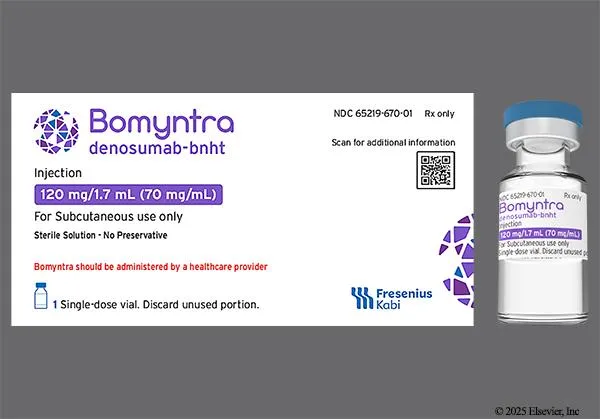
Table of Contents
- Package leaflet: information for the patient
- Bomyntra 120 mg solution for injection in vial
- 1. What Bomyntra is and what it is used for
- 2. What you need to know before using Bomyntra
- 3. How to use Bomyntra
- 4. Possible side effects
- 5. How to store Bomyntra
- 6. Package contents and other information
- The following information is intended for healthcare professionals only:
- Patient information leaflet
- Bomyntra 120 mg solution for injection in pre-filled syringe
- 1. What Bomyntra is and what it is used for
- 2. What you should know before using Bomyntra
- 3. How to use Bomyntra
- 4. Possible side effects
- 5. How to store Bomyntra
- 6. Package contents and other information
- 7. Instructions for Use
Package leaflet: information for the patient
Bomyntra 120 mg solution for injection in vial
denosumab
This medicinal product is subject to additional monitoring. This will allow rapid identification of new safety information. You can help by reporting any side effects. See the end of section 4 for how to report side effects.
Please read this leaflet carefully before using this medicine because it contains important information for you.
- Keep this leaflet. You may need to read it again.
- If you have any questions, ask your doctor, pharmacist, or nurse.
- This medicine has been prescribed for you only. Do not give it to other people, even if their symptoms are the same as yours, as it may be harmful.
- If you experience any side effect, including those not listed in this leaflet, contact your doctor, pharmacist, or nurse. See section 4.
- Your doctor will provide you with a patient reminder card containing important safety information that you must know before and during treatment with Bomyntra.
Contents of this leaflet
- What Bomyntra is and what it is used for
- What you need to know before using Bomyntra
- How to use Bomyntra
- Possible side effects
- How to store Bomyntra
- Contents of the pack and other information
1. What Bomyntra is and what it is used for
Bomyntra contains denosumab, a protein (monoclonal antibody) that works by reducing bone destruction caused by the spread of cancer to the bone (bone metastases) or by giant cell tumour of the bone.
Bomyntra is used in adults with advanced cancer to prevent serious complications caused by bone metastases (such as fractures, pressure on the spinal cord, or the need for radiotherapy or surgery).
Bomyntra is also used to treat giant cell tumour of the bone that cannot be treated surgically or where surgery is not the best option, in adults and adolescents whose bones have stopped growing.
2. What you need to know before using Bomyntra
Do not use Bomyntra
- if you are allergic to denosumab or to any of the other ingredients of this medicine (listed in section 6).
- if you have untreated low levels of calcium in your blood.
- if you have unhealed wounds from dental or oral surgery.
Warnings and precautions
Talk to your doctor before using Bomyntra.
Calcium and vitamin D supplementation
You must take calcium and vitamin D supplements while being treated with Bomyntra, except in cases where your blood calcium levels are high. Your doctor will discuss this with you. If your blood calcium level is low, your doctor may decide to give you calcium supplements before starting treatment with Bomyntra.
Low levels of calcium in the blood
Tell your doctor immediately if, during treatment with Bomyntra, you experience muscle spasms, twitches or cramps, and/or numbness or tingling in your fingers, toes or around your mouth, and/or seizures, confusion or loss of consciousness. You may have low levels of calcium in your blood.
Renal impairment
Tell your doctor if you currently have or have ever had severe kidney problems, kidney failure, or if you have undergone dialysis, as these conditions may increase the risk of low blood calcium levels, especially if you are not taking calcium supplements.
Problems with mouth, teeth or jaw
An adverse effect called osteonecrosis of the jaw has been commonly reported in patients who have received injections of Bomyntra for tumour-related conditions. Osteonecrosis of the jaw may also occur after stopping treatment.
It is important to try to prevent the development of osteonecrosis of the jaw, as it is a painful condition that may be difficult to treat. To reduce the risk of developing osteonecrosis of the jaw, you should take the following precautions:
- Before starting treatment, inform your doctor/nurse (healthcare professional) if you have any mouth or dental problems. Your doctor should delay starting treatment if you have unhealed wounds in your mouth following dental procedures or oral surgery. Your doctor may ask you to have a dental examination before starting treatment with Bomyntra.
- During treatment, you must maintain good oral hygiene and have regular dental check-ups. If you wear dentures, ensure they are properly fitted.
- If you are currently undergoing dental treatment or are scheduled to have dental surgery (such as tooth extractions), inform your doctor about your dental treatment and inform your dentist that you are being treated with Bomyntra.
- Contact your doctor and dentist immediately if you notice any mouth or dental problems, such as loose teeth, pain or swelling, or failure of mouth sores to heal or presence of discharge, as these may be signs of osteonecrosis of the jaw.
Patients who are receiving chemotherapy and/or radiotherapy, who are taking steroids or anti-angiogenic medicines (used to treat cancer), who undergo dental surgery, who do not receive routine dental care, who have gum disease, or who smoke may have a higher risk of developing osteonecrosis of the jaw.
Unusual fractures of the thigh bone (femur)
Some people have developed unusual femur fractures during treatment with Bomyntra. Contact your doctor if you experience new or unusual pain in your hip, groin, or thigh.
High levels of calcium in the blood after stopping treatment with Bomyntra
Some patients with giant cell tumour of bone have developed high levels of calcium in the blood weeks to months after stopping treatment. Your doctor will monitor you for signs and symptoms of high calcium levels after you stop taking Bomyntra.
Children and adolescents
Bomyntra is not recommended for children and adolescents under 18 years of age, except for adolescents with giant cell tumour of bone whose bones have stopped growing. The use of Bomyntra in children and adolescents with other tumours that have invaded the bones has not been studied.
Other medicines and Bomyntra
Tell your doctor or pharmacist if you are taking, have recently taken, or might take any other medicines. This includes medicines obtained without a prescription. In particular, it is important that you inform your doctor if you are taking
- another medicine containing denosumab
- a bisphosphonate
You must not take Bomyntra together with other medicines containing denosumab or bisphosphonates.
Pregnancy and breastfeeding
Bomyntra has not been studied in pregnant women. It is important that you inform your doctor if you are pregnant, suspect you may be pregnant, or are planning a pregnancy. The use of Bomyntra is not recommended during pregnancy. Women of childbearing potential must use effective contraception while taking Bomyntra and for at least 5 months after stopping treatment with Bomyntra.
If you become pregnant during treatment with Bomyntra or within 5 months after stopping treatment with Bomyntra, please inform your doctor.
It is not known whether Bomyntra is excreted in human milk. It is important that you inform your doctor if you are breastfeeding or planning to breastfeed. Your doctor will help you decide whether to discontinue breastfeeding or discontinue Bomyntra, taking into account the benefits of breastfeeding for the child and the benefits of Bomyntra for the mother.
If you are breastfeeding during treatment with Bomyntra, please inform your doctor.
Ask your doctor or pharmacist for advice before taking this medicine.
Driving and using machines
Bomyntra has no or negligible influence on the ability to drive and use machines.
Bomyntra contains sorbitol
This medicine contains 78 mg of sorbitol per vial.
Bomyntra contains sodium
This medicine contains less than 1 mmol (23 mg) of sodium per 120 mg dose, i.e. essentially ‘sodium-free’.
Bomyntra contains polysorbate 20
This medicine contains 0.17 mg of polysorbate 20 per vial, equivalent to 0.10 mg/ml. Polysorbates may cause allergic reactions. Inform your doctor if you have known allergies.
3. How to use Bomyntra
Bomyntra must be administered under the supervision of a healthcare professional.
The recommended dose of Bomyntra is 120 mg given once every 4 weeks as a single
subcutaneous injection (under the skin). Bomyntra will be injected into the thigh, abdomen, or upper arm.
If you are being treated for giant cell bone tumor, you will receive an additional dose 1 week and 2 weeks after the first dose.
Do not shake.
During treatment with Bomyntra, you must also take calcium and vitamin D supplements unless you have excess calcium in your blood. Your doctor will discuss this with you.
If you have any doubts about how to use this medicine, consult your doctor, pharmacist, or nurse.
4. Possible side effects
Like all medicines, this medicine can cause side effects, although not everybody gets them.
Contact your doctor immediately if, during treatment with Bomyntra, you notice any of the
following symptoms:
- muscle spasms, twitching, cramps, numbness or tingling in the fingers, toes or around the mouth, and/or seizures, confusion or loss of consciousness. These signs could indicate low calcium levels in the blood. Low calcium levels may also lead to a change in heart rhythm called QT prolongation, which is detected by electrocardiogram (ECG).
Contact your doctor and dentist immediately if, during treatment with Bomyntra or after
stopping treatment, you notice any of the following symptoms:
- persistent pain in the mouth and/or jaw/mandible, and/or swelling or failure of mouth sores to heal, discharge from the jaw/mandible, numbness or a feeling of heaviness in the jaw/mandible, or loosening of a tooth, as these signs could indicate a serious deterioration of the jaw/mandible bone tissue (osteonecrosis).
Very common side effects (may occur in more than 1 in 10 people):
- bone, joint and/or muscle pain, sometimes severe,
- shortness of breath (dyspnea),
- diarrhoea.
Common side effects (may occur in up to 1 in 10 people):
- low levels of phosphate in the blood (hypophosphataemia),
- tooth extraction,
- excessive sweating,
- in patients with advanced tumour: development of another type of tumour.
Uncommon side effects (may occur in up to 1 in 100 people):
- high levels of calcium in the blood (hypercalcaemia) after stopping treatment in patients with giant cell bone tumour,
- new or unusual pain in the hip, groin or thigh (this could be an early sign of a possible femur bone fracture),
- skin rash or mouth sores (drug-induced lichenoid eruptions).
Rare side effects (may occur in up to 1 in 1,000 people):
- allergic reactions (such as wheezing or difficulty breathing; swelling of the face, lips, tongue, throat or other body parts; skin rash, itching or hives). In rare cases, allergic reactions may be severe.
Not known (frequency cannot be estimated from the available data):
inform your doctor if you experience ear pain, discharge from the ear, and/or an ear infection. These could be signs of damage to the ear bone.
Reporting of side effects
If you get any side effects, including those not listed in this leaflet, talk to your doctor, pharmacist or nurse. You can also report side effects directly via the national reporting system referred to in Annex V. By reporting side effects, you can help provide more information on the safety of this medicine.
5. How to store Bomyntra
Keep this medicine out of the sight and reach of children.
Do not use this medicine after the expiry date which is stated on the label and carton after "Exp".
The expiry date refers to the last day of that month.
Store in a refrigerator (2°C – 8°C).
Do not freeze.
Keep the vial in the outer packaging to protect the medicine from light.
The vial may be removed from the refrigerator and allowed to reach room temperature (up to 25°C) prior to injection. This will make the injection more comfortable. Once the vial has reached room temperature (up to 25°C), it must not be returned to the refrigerator and must be used within 30 days.
Do not dispose of any medicine via wastewater or household waste. Ask your pharmacist how to dispose of medicines you no longer use. This will help protect the environment.
6. Package contents and other information
What Bomyntra contains
- The active substance is denosumab. Each vial contains 120 mg in 1.7 ml of solution (equivalent to 70 mg/ml).
- The other ingredients are acetic acid, sodium acetate trihydrate, sorbitol (E420), polysorbate 20 (E432), and water for injections.
Description of the appearance of Bomyntra and contents of the pack
Bomyntra is an injectable solution.
Bomyntra is a clear, colourless to slightly yellow solution, free from visible particles.
Each pack contains one, three, or four single-use vials.
Not all pack sizes may be marketed.
Marketing Authorisation Holder
Fresenius Kabi Deutschland GmbH
Else-Kroener-Strasse 1
61352 Bad Homburg von der Hoehe
Germany
Manufacturer
Fresenius Kabi Austria GmbH
Hafnerstrasse 36
8055 Graz
Austria
More detailed information on this medicinal product is available on the European Medicines Agency website: http://www.ema.europa.eu/ .
The following information is intended for healthcare professionals only:
- Prior to administration, the Bomyntra solution must be inspected visually. The solution must be free from visible particles. Do not inject the solution if it is cloudy or shows any discoloration.
- Do not shake.
- To minimize discomfort at the injection site, allow the vial to reach room temperature (up to 25°C) before injection and inject slowly.
- The entire contents of the vial must be administered.
- For denosumab administration, a 27-gauge steel needle is recommended.
- The vial must not be reused.
Any unused medicine and waste material derived from this medicine must be disposed of in accordance with
local regulations.
Patient information leaflet
Bomyntra 120 mg solution for injection in pre-filled syringe
denosumab
This medicinal product is subject to additional monitoring. This will allow for rapid
identification of new safety information. You can help by reporting any side effects.
See the end of section 4 for information on how to report side effects.
Please read this leaflet carefully before using this medicine because it contains important
information for you.
- Keep this leaflet. You may need to read it again.
- If you have any questions, ask your doctor, pharmacist, or nurse.
- This medicine has been prescribed for you only. Do not give it to other people, even if they have the same symptoms as you, because it could be harmful.
- If you experience any side effect, including those not listed in this leaflet, tell your doctor, pharmacist, or nurse. See section 4.
- Your doctor will provide you with a patient alert card containing important safety information that you must know before and during treatment with Bomyntra.
Contents of this leaflet
- What Bomyntra is and what it is used for
- What you need to know before using Bomyntra
- How to use Bomyntra
- Possible side effects
- How to store Bomyntra
- Contents of the pack and other information
1. What Bomyntra is and what it is used for
Bomyntra contains denosumab, a protein (monoclonal antibody) that acts to reduce bone destruction caused by the spread of tumour to the bone (bone metastases) or by giant cell tumour of the bone.
Bomyntra is used in adults with advanced cancer to prevent serious complications caused by bone metastases (such as fractures, pressure on the spinal cord, or the need for radiotherapy or surgery).
Bomyntra is also used to treat giant cell tumour of the bone that cannot be treated surgically or when surgery is not the best option, in adults and adolescents whose bones have stopped growing.
2. What you should know before using Bomyntra
Do not use Bomyntra
- if you are allergic to denosumab or to any of the other ingredients of this medicine (listed in section 6).
- if you have severely low calcium levels in your blood that have not been treated.
- if you have unhealed wounds from dental or oral surgery.
Warnings and precautions
Talk to your doctor before using Bomyntra.
Calcium and vitamin D supplementation
You must take calcium and vitamin D supplements during treatment with Bomyntra, except in cases where your blood calcium levels are high. Your doctor will discuss this with you. If your blood calcium level is low, your doctor may decide to give you calcium supplements before starting treatment with Bomyntra.
Low calcium levels in the blood
Tell your doctor immediately if, during treatment with Bomyntra, you experience muscle spasms, twitching, or cramps, and/or numbness or tingling in your fingers, toes, or around your mouth, and/or seizures, confusion, or loss of consciousness. You may have low calcium levels in your blood.
Renal impairment
Tell your doctor if you currently have or have ever had severe kidney problems, kidney failure, or if you have undergone dialysis, as these conditions may increase the risk of low calcium levels in the blood, especially if you are not taking calcium supplements.
Problems with mouth, teeth, or jaw
A side effect called osteonecrosis of the jaw (a serious deterioration of the jawbone tissue) has been commonly reported in patients receiving Bomyntra injections for tumor-related conditions. Osteonecrosis of the jaw may also occur after discontinuation of treatment.
It is important to try to prevent the development of osteonecrosis of the jaw, as it is a painful condition that can be difficult to treat. To reduce the risk of developing osteonecrosis of the jaw, you should take the following precautions:
- Before starting treatment, inform your doctor/nurse (healthcare provider) if you have any mouth or dental problems. Your doctor should delay the start of treatment if you have unhealed wounds in your mouth following dental procedures or oral surgery. Your doctor may ask you to have a dental examination before starting treatment with Bomyntra.
- During treatment, you must maintain good oral hygiene and have regular dental check-ups. If you wear dentures, ensure they are properly fitted.
- If you are currently undergoing dental treatment or plan to have dental surgery (such as tooth extractions), inform your doctor about the dental procedure and inform your dentist that you are being treated with Bomyntra.
- Contact your doctor and dentist immediately if you notice any new problems with your mouth or teeth, such as loose teeth, pain or swelling, or failure of mouth sores to heal or presence of discharge, as these could be signs of osteonecrosis of the jaw.
Patients who are receiving chemotherapy and/or radiotherapy, taking steroids or anti-angiogenic medicines (used to treat cancer), undergoing dental surgery, not receiving routine dental care, suffering from gum problems, or who smoke may have a higher risk of developing osteonecrosis of the jaw.
Unusual femur (thigh bone) fractures
Some people have developed unusual fractures of the femur during treatment with Bomyntra. Contact your doctor if you experience new or unusual pain in your hip, groin, or thigh.
High calcium levels in the blood after stopping Bomyntra treatment
Some patients with giant cell tumor of bone have developed high calcium levels in the blood weeks to months after stopping treatment. Your doctor will monitor you for signs and symptoms of high calcium levels after you stop taking Bomyntra.
Children and adolescents
Bomyntra is not recommended for children and adolescents under 18 years of age, except for adolescents with giant cell tumor of bone whose bones have stopped growing. The use of Bomyntra in children and adolescents with other tumors that have invaded the bones has not been studied.
Other medicines and Bomyntra
Tell your doctor or pharmacist if you are taking, have recently taken, or might take any other medicines. This includes medicines obtained without a prescription. In particular, it is important that you inform your doctor if you are taking
- another medicine containing denosumab
- a bisphosphonate
You must not take Bomyntra together with other medicines containing denosumab or bisphosphonates.
Pregnancy and breastfeeding
Bomyntra has not been studied in pregnant women. It is important that you inform your doctor if you are pregnant, suspect you may be pregnant, or are planning a pregnancy. The use of Bomyntra is not recommended during pregnancy. Women of childbearing potential must use effective contraception while taking Bomyntra and for at least 5 months after stopping treatment with Bomyntra.
If you become pregnant during treatment with Bomyntra or within 5 months after stopping treatment with Bomyntra, please inform your doctor.
It is not known whether Bomyntra is excreted in human breast milk. It is important that you inform your doctor if you are breastfeeding or planning to breastfeed. Your doctor will then help you decide whether to discontinue breastfeeding or Bomyntra treatment, considering the benefit of breastfeeding for the child and the benefit of Bomyntra for the mother.
If you are breastfeeding during treatment with Bomyntra, please inform your doctor.
Ask your doctor or pharmacist for advice before taking this medicine.
Driving and using machines
Bomyntra has no or negligible influence on the ability to drive and use machines.
Bomyntra contains sorbitol
This medicine contains 78 mg of sorbitol per pre-filled syringe.
Bomyntra contains sodium
This medicine contains less than 1 mmol (23 mg) of sodium per 120 mg dose, i.e., essentially ‘sodium-free’.
Bomyntra contains polysorbate 20
This medicine contains 0.17 mg of polysorbate 20 per pre-filled syringe, equivalent to 0.10 mg/ml. Polysorbates may cause allergic reactions. Inform your doctor if you have known allergies.
3. How to use Bomyntra
For instructions on how to inject Bomyntra, read the section at the end of this leaflet.
The recommended dose of Bomyntra is 120 mg administered once every 4 weeks, as a single
subcutaneous injection (under the skin). You may inject the Bomyntra pre-filled syringe into the thigh or
abdomen (avoiding the area within 5 cm (2 inches) around the navel). The first
self-administration using the Bomyntra pre-filled syringe must be supervised by a
healthcare professional. If the injection is administered by another person, Bomyntra may be injected
into the thigh, abdomen, or outer area of the upper arm. You or your caregiver must be trained in injection techniques by a healthcare professional. If you are being treated for giant cell bone tumour, you will receive additional doses 1 week and 2 weeks after the first dose.
Do not shake.
During treatment with Bomyntra, you must also take calcium and vitamin D supplements unless you have excess calcium in your blood. Your doctor will discuss this with you.
If you have any doubts about how to use this medicine, consult your doctor, pharmacist, or nurse.
4. Possible side effects
Like all medicines, this medicine can cause side effects, although not everybody gets them.
Contact your doctor immediately if, during treatment with Bomyntra, you notice any of the following symptoms:
- muscle spasms, contractions, cramps, numbness or tingling in the fingers of the hands and feet or around the mouth and/or seizures, confusion or loss of consciousness. These signs could indicate low calcium levels in the blood. Low calcium levels may also lead to a change in heart rhythm known as QT interval prolongation, which is detected by electrocardiogram (ECG).
Contact your doctor and dentist immediately if, during treatment with Bomyntra or after stopping treatment with Bomyntra, you notice any of the following symptoms:
- persistent pain in the mouth and/or jaw, and/or swelling or failure of mouth sores to heal, presence of discharge, numbness or a feeling of heaviness in the jaw, or loosening of a tooth, as these signs could indicate severe deterioration of the jawbone tissue (osteonecrosis).
Very common side effects (may occur in more than 1 in 10 people):
- bone, joint and/or muscle pain, sometimes severe,
- shortness of breath (dyspnea),
- diarrhoea.
Common side effects (may occur in up to 1 in 10 people):
- low levels of phosphate in the blood (hypophosphataemia),
- tooth extraction,
- excessive sweating,
- in patients with advanced tumour: development of another type of tumour.
Uncommon side effects (may occur in up to 1 in 100 people):
- high levels of calcium in the blood (hypercalcaemia) after stopping treatment in patients with giant cell bone tumour,
- new or unusual pain in the hip, groin or thigh (this could be an early sign of a possible femur bone fracture),
- skin rash or mouth sores (drug-induced lichenoid eruptions).
Rare side effects (may occur in up to 1 in 1,000 people):
- allergic reactions (such as wheezing or difficulty breathing; swelling of the face, lips, tongue, throat or other body parts; skin rash, itching or hives). In rare cases, allergic reactions can be severe.
Not known (frequency cannot be estimated from the available data):
- contact your doctor if you experience ear pain, discharge from the ear, and/or ear infection. These could be signs of damage to the ear bone.
Reporting of side effects
If you get any side effects, including those not listed in this leaflet, talk to your doctor, pharmacist or nurse.
You can also report side effects directly via the national reporting system listed in Annex V. By reporting side effects, you can help provide more information on the safety of this medicine.
5. How to store Bomyntra
Keep this medicine out of the sight and reach of children.
Do not use this medicine after the expiry date stated on the label and carton after "Exp".
The expiry date refers to the last day of that month.
Store in a refrigerator (2°C – 8°C).
Do not freeze.
Keep the pre-filled syringe in the outer packaging to protect the medicine from light.
The pre-filled syringe may be removed from the refrigerator and allowed to reach room temperature (up to 25°C) before injection. This will make the injection more comfortable.
Once the pre-filled syringe has reached room temperature (up to 25°C), it must be used within 30 days.
Do not dispose of any medicine via wastewater or household waste. Ask your pharmacist how to dispose of medicines you no longer use. This will help protect the environment.
6. Package contents and other information
What Bomyntra contains
- The active substance is denosumab. Each pre-filled syringe contains 120 mg of denosumab in 1.7 ml of solution (corresponding to 70 mg/ml).
- The other components are acetic acid, sodium acetate trihydrate, sorbitol (E420), polysorbate 20 (E432), and water for injections.
Description of the appearance of Bomyntra and contents of the pack
Bomyntra is an injectable solution.
Bomyntra is a clear, colourless to slightly yellow solution, free from visible particles.
Each pack contains one, three, or four pre-filled single-use syringes.
Not all pack sizes may be marketed.
Marketing Authorisation Holder
Fresenius Kabi Deutschland GmbH
Else-Kroener-Strasse 1
61352 Bad Homburg von der Hoehe
Germany
Manufacturer
Fresenius Kabi Austria GmbH
Hafnerstrasse 36
8055 Graz
Austria
More detailed information on this medicinal product is available on the website of the European Medicines Agency: http://www.ema.europa.eu/ .
7. Instructions for Use
Guide to Components:
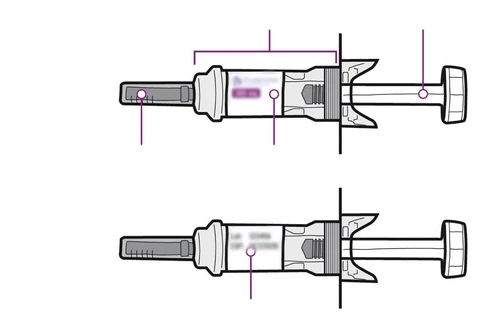
Before Use

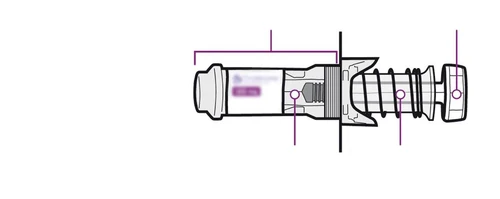
After Use
Before using a pre-filled syringe of Bomyntra with automatic needle protection,
read these important instructions:
- It is important that you do not attempt to self-administer the injection unless you have received adequate training from your doctor or healthcare provider.
- Bomyntra is administered by injection into the tissue just beneath the skin (subcutaneous injection).
- Do not remove the grey needle cap from the pre-filled syringe until you are ready to perform the injection.
- Do not use the pre-filled syringe if the packaging is damaged or the seal is broken.
- Do not use the pre-filled syringe if it has fallen on a hard surface. Use a new pre-filled syringe and contact your doctor or healthcare provider.
- Do not attempt to push the plunger of the pre-filled syringe before the injection.
- Do not shake the pre-filled syringe.
- Important: Keep the pre-filled syringe out of the sight and reach of children.
Storage of the Bomyntra Pre-filled Syringe
- Store Bomyntra in the refrigerator at 2 °C – 8 °C in its original packaging. Do not freeze.
- Before administering the injection, allow Bomyntra to reach room temperature up to 25 °C while remaining in its original packaging. This will take 15 to 30 minutes. Do not heat Bomyntra by any other method.
- Once removed from the refrigerator, Bomyntra must be used within 30 days. If not used within 30 days, Bomyntra must be discarded.
- Do not use Bomyntra after the expiry date printed on the label.
- Protect Bomyntra from direct light and heat.
For any questions, contact your doctor or healthcare provider.
Step 1: Prepare Materials
1.1 Collect Materials
On a clean, well-lit surface, gather the supplies needed for the injection (see Figure A):
- alcohol wipes
- cotton ball or gauze pad
- adhesive bandage
- sharps disposal container (see Step 4: Dispose of the Pre-filled Syringe)
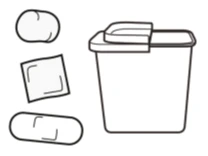
Figure A
1.2 Wait 15 to 30 minutes for the pre-filled syringe to reach room temperature
Remove the box from the refrigerator (see Figure B) and place it on a flat surface.
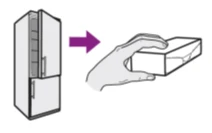
Figure B
Allow it to warm to room temperature for 15–30 minutes (see Figure C)
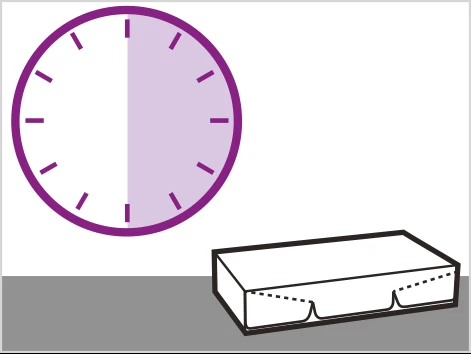
15 – 30
minutes
Figure C
Do not try to warm the pre-filled syringe using a heat source such as hot water or
microwave.
Do not leave the pre-filled syringe in direct sunlight.
Do not shake the pre-filled syringe.
Keep the pre-filled syringe out of the sight and reach of children.
1.3 Wash Hands
Wash your hands thoroughly with soap and water and dry them with a clean towel ( Figure D ).
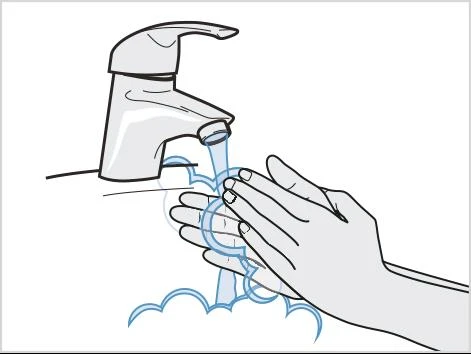
Figure D
1.4 Remove the Bomyntra pre-filled syringe from the tray
Place two fingers on both sides at the center of the transparent needle shield. Lift the pre-filled syringe upward and out of the tray ( Figure E ).
Do not touch the plunger.
Do not touch the needle cap.
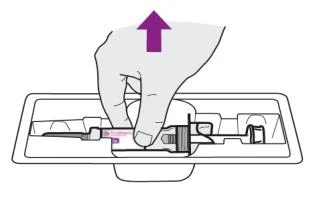
Figure E
1.5 Inspect the pre-filled syringe and medication
Check the pre-filled syringe to ensure:
- The label reads Bomyntra (see Figure F).
- The expiry date on the label has not passed.
- The pre-filled syringe is not cracked or broken.
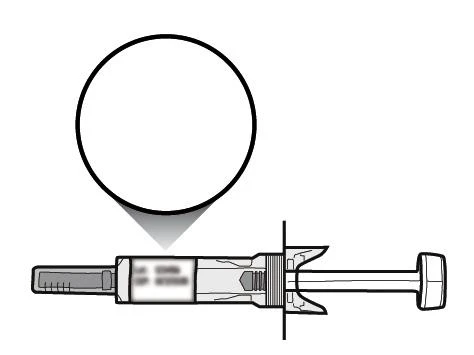
Bomyntra
Figure F
Examine the liquid for particles or discoloration (see Figure G).
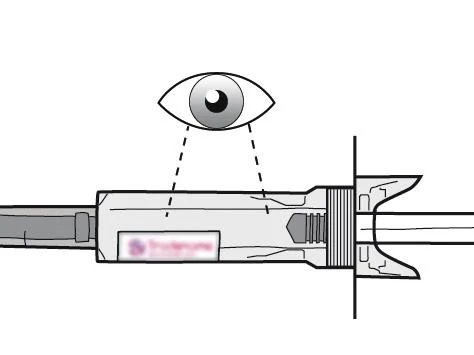
Figure G
Do not use the pre-filled syringe if:
- The label does not read Bomyntra.
- The expiry date on the label has passed.
- Any part appears cracked or broken.
- The needle cap is missing or not securely attached.
- The medicine is cloudy or contains particles. It should be a clear, colorless to slightly yellow solution. In any case, use a new pre-filled syringe and contact your doctor or healthcare provider.
Step 2: Prepare for Injection
2.1 Choose Injection Site
You may inject (see Figure H):
- the upper thigh
- the abdomen, except for an area 5 cm around the navel
- the outer area of the upper arm (if injecting another person)
Do not inject into areas where the skin is tender, bruised, red, or thick.
Avoid injecting into areas with scars or stretch marks.
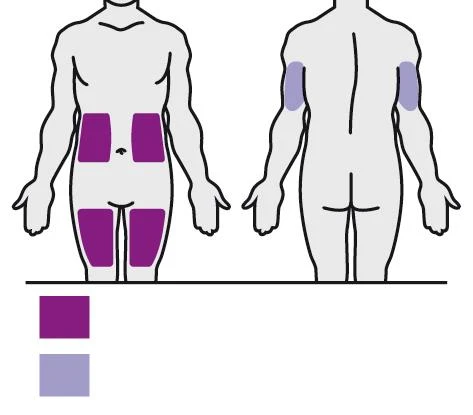
Self-injection or Assistant
Assistant Only
Figure H
2.2 Clean Injection Site
Clean the injection site with an alcohol wipe (see Figure I).
Allow the skin to air dry.
Do not blow on or touch the injection site after cleaning.
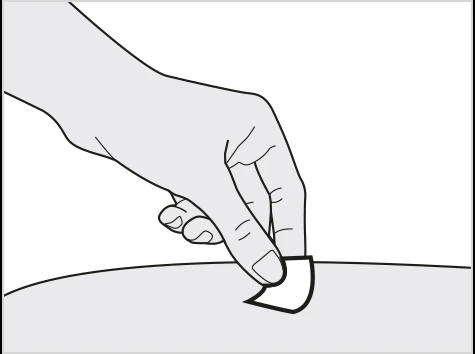
Figure I
2.3 Remove the Needle Cap
Carefully pull the needle cap straight off, away from the body (see Figure J). Some force may be required to remove the needle cap.
Do not remove the needle cap from the pre-filled syringe until you are ready for injection.
Do not hold the pre-filled syringe by the plunger.
Do not twist or bend the needle cap.
Dispose of the needle cap in the sharps disposal container (see Step 4: Dispose of the Pre-filled Syringe).
Do not recap the needle onto the pre-filled syringe.
Do not touch or let the needle contact any surface after removing the needle cap.
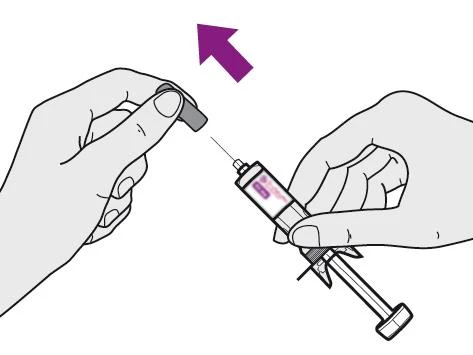

Figure J
Step 3: Inject the Medication
3.1 Pinch the Skin
Pinch the skin at the injection site to create a firm surface (see Figure K).
Note: It is important to keep the skin pinched during the injection.
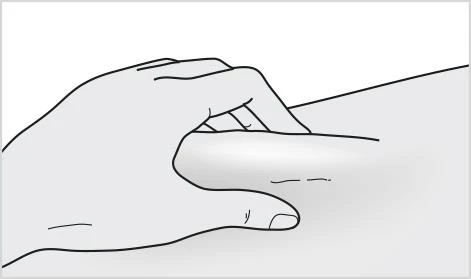
Figure K
3.2 Insert the Needle
Quickly insert the needle directly into the pinched skin at an angle between 45 and 90 degrees (see Figure L).
Do not inject into muscle or blood vessels.
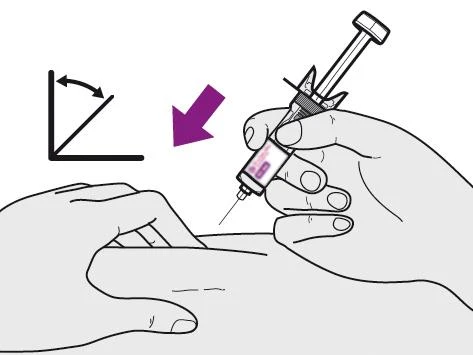
90°
45°
Figure L
3.3 Inject
Push the plunger slowly and steadily (see Figure M) until it can no longer be pressed and all the liquid has been injected under the skin (subcutaneously) (see Figure N). You may hear or feel a "click".
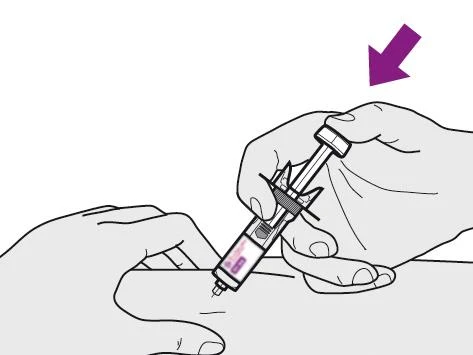
Figure M
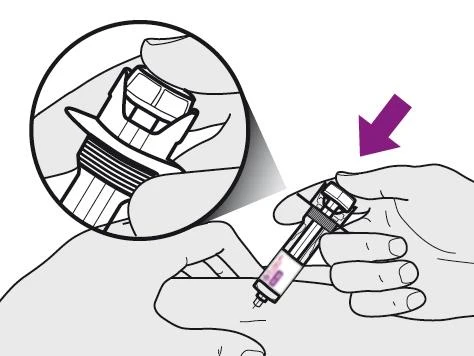
Figure N
Do not lift the pre-filled syringe from the skin.
3.4 Release the Plunger
Slowly release the plunger and allow the needle to withdraw from the skin at the same angle it was inserted. The transparent needle shield will securely cover the needle (see Figure O).
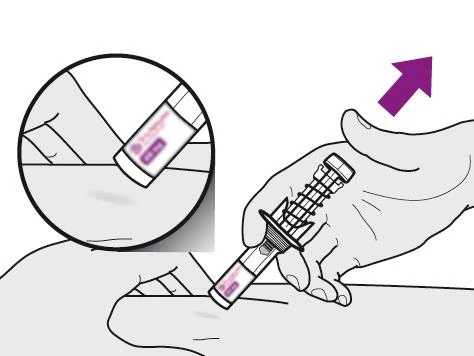
Figure O
Do not recap the needle.
3.5 Care for the Injection Site
If there is blood or liquid at the injection site, gently press a cotton ball or gauze pad against the skin (see Figure P).
An adhesive bandage may be used if needed.
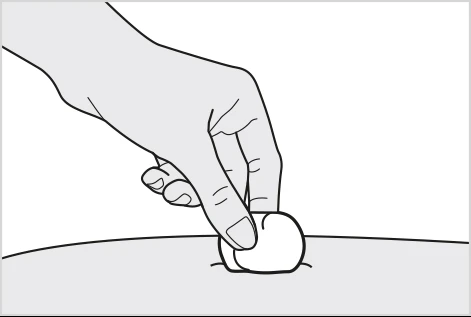
Figure P
Do not rub the injection site.
Step 4: Dispose of the Pre-filled Syringe
4.1 Dispose
Immediately after use, place the used pre-filled syringe and needle cap into a designated sharps disposal container (see Figure Q).
Medicines must be disposed of in accordance with local regulations. Ask your pharmacist how to dispose of unused medicines. These measures will help protect the environment.
Do not reuse the pre-filled syringe.
Do not throw (dispose of) used syringes into household waste.
Do not recycle a used sharps disposal container.
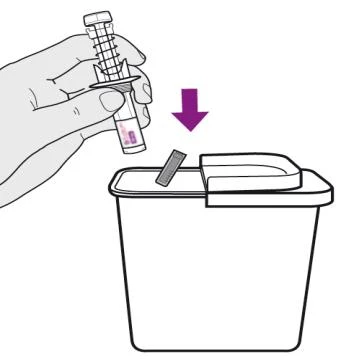
Figure Q
Keep Bomyntra pre-filled syringes, the sharps disposal container, and all medicines out of sight and reach of children.