Bocouture
Italy
Table of Contents
- Package Leaflet: Information for the User
- BOCOUTURE 50 units powder for solution for injection, 100 units powder for solution for injection
- 1. What BOCOUTURE is and what it is used for
- 2. What you need to know before BOCOUTURE is used
- 3. How to use BOCOUTURE
- 4. Possible side effects
- 5. How to store BOCOUTURE
- 6. Package contents and other information
- The following information is intended exclusively for healthcare professionals:
Package Leaflet: Information for the User
BOCOUTURE 50 units powder for solution for injection, 100 units powder for solution for injection
Botulinum toxin type A (150 kD), free from complexing proteins
Please read all of this leaflet carefully before you start using this medicine because it contains important information for you.
- Keep this leaflet. You may need to read it again.
- If you have any questions, ask your doctor, pharmacist, or nurse.
- If you experience any side effects, including those not listed in this leaflet, tell your doctor, pharmacist, or nurse. See section 4.
Contents of this leaflet:
- What BOCOUTURE is and what it is used for
- What you need to know before BOCOUTURE is used
- How to use BOCOUTURE
- Possible side effects
- How to store BOCOUTURE
- Contents of the pack and other information
1. What BOCOUTURE is and what it is used for
BOCOUTURE is a medicinal product containing as its active substance botulinum toxin type A, which functions to relax the injected muscles.
BOCOUTURE is used for the temporary improvement of facial wrinkles in adults under 65 years of age when the severity of these wrinkles has a significant psychological impact on the patient:
- moderate to severe vertical lines between the eyebrows observed at maximum frown, and/or
- moderate to severe lateral periorbital lines observed at maximum smile, and/or
- moderate to severe horizontal forehead lines observed at maximum contraction.
2. What you need to know before BOCOUTURE is used
Do not use BOCOUTURE
- If you are allergic to botulinum toxin type A or to any of the other ingredients of this medicine (listed in section 6).
- If you have a generalized disorder of muscle activity (e.g. myasthenia gravis, Lambert-Eaton syndrome).
- If you have an infection or inflammation at the proposed injection site.
Warnings and precautions
Following injections of botulinum toxin type A into inappropriate injection sites, adverse effects may occur that can temporarily paralyze nearby muscle groups. Very rare cases of adverse effects possibly related to the spread of the toxin away from the injection site have been reported, resulting in symptoms consistent with the effects of botulinum toxin type A (e.g. excessive muscle weakness, difficulty swallowing, or accidental aspiration of food or liquids into the airways). Patients treated with the recommended doses may develop excessive muscle weakness.
Contact your doctor and seek immediate medical assistance if you experience any of the following symptoms:
- Difficulty breathing, swallowing, or speaking
- Hives, swelling including facial or throat swelling, shortness of breath, feeling faint or breathlessness (possible symptoms of severe allergic reactions) (see section 4).
If the dose is too high or injections are too frequent, the risk of antibody formation may increase. The formation of antibodies may lead to treatment failure with botulinum toxin type A, regardless of the reason for its use.
Talk to your doctor before using BOCOUTURE:
- If you have any type of coagulation disorder.
- If you are taking substances that prevent blood clotting (e.g. warfarin, heparin, acetylsalicylic acid, clopidogrel).
- If you have marked muscle weakness or reduced muscle volume in the muscle where the injection will be administered.
- If you have amyotrophic lateral sclerosis (ALS), which may lead to generalized muscle reduction.
- If you have any disease impairing the interaction between nerves and skeletal muscles (peripheral neuromuscular dysfunction).
- If you have or have had difficulty swallowing.
- If you previously experienced problems with injections of botulinum toxin type A.
- If you are scheduled for surgery.
Repeated injections with BOCOUTURE
If you have received repeated injections of BOCOUTURE, the effect may increase or decrease. Possible reasons for this include:
- The doctor may use a different procedure when preparing the injectable solution.
- Different treatment intervals.
- Injections into a different muscle.
- Lack of response or treatment failure during the course of therapy.
Elderly
There is limited information on the treatment of patients over 65 years of age. Therefore, BOCOUTURE should not be used in patients over 65 years of age.
Children and adolescents
Do not give this medicine to children and adolescents under 18 years of age, as the use of BOCOUTURE is not recommended in children and adolescents.
Other medicines and BOCOUTURE
Inform your doctor or pharmacist if you are taking, have recently taken, or might take any other medicines.
The effect of BOCOUTURE may be increased by:
- Medicines used to treat certain infections (spectinomycin or aminoglycoside antibiotics [e.g. neomycin, kanamycin, tobramycin]).
- Other medicines that relax muscles (e.g. muscle relaxants of the tubocurarine type). These medicines are used, for example, during general anesthesia. Before undergoing surgery, inform the anesthetist if you have been treated with BOCOUTURE.
In these cases, BOCOUTURE should be used with caution.
The effect of BOCOUTURE may be reduced by certain antimalarial and rheumatism drugs (known as aminoquinolines).
Pregnancy, breastfeeding and fertility
If you are pregnant, suspect you may be pregnant, are planning a pregnancy, or are breastfeeding, consult your doctor or pharmacist before this medicine is administered.
BOCOUTURE should not be used during pregnancy unless your doctor decides that the need and potential benefit of treatment justify the possible risk to the fetus.
BOCOUTURE is not recommended if you are breastfeeding.
Driving and use of machinery
You should not drive or engage in potentially hazardous activities if you experience drooping eyelids (ptosis), weakness (asthenia), muscle weakness, dizziness, or visual disturbances.
If in doubt, consult your doctor.
3. How to use BOCOUTURE
BOCOUTURE must only be administered by physicians with appropriate specialist knowledge of treatment with botulinum toxin type A.
Vertical frown lines between the eyebrows observed at maximum contraction (glabellar lines)
For the treatment of vertical frown lines between the eyebrows observed at maximum contraction (glabellar lines), the usual total dose is 20 units. Your doctor will inject 4 units at each of 5 injection sites. The total dose may be increased by the physician up to 30 units if required by individual patient needs, with at least 3 months between treatments.
A reduction in vertical frown lines observed at maximum contraction generally occurs within 2–3 days, with maximum effect observed on day 30. The effect lasts up to 4 months after injection.
Lateral periorbital lines observed at maximum smile (crow’s feet lines)
For the treatment of lateral periorbital lines observed at maximum smile (crow’s feet lines), your doctor will inject a standard dose of 24 units (12 units per eye). 4 units will be administered bilaterally at each of 3 injection sites.
A reduction in lateral periorbital lines observed at maximum smile occurs mainly within 6 days, with maximum effect observed on day 30. The effect lasts up to 4 months after injection.
Horizontal forehead lines observed at maximum contraction
For the treatment of horizontal forehead lines observed at maximum contraction, your doctor will use a dose in the range of 10–20 units, depending on individual patient needs. The recommended total dose of 10 to 20 units will be injected at 5 injection sites aligned horizontally (respectively 2 units, 3 units or 4 units per injection point).
A reduction in horizontal forehead lines observed at maximum contraction generally occurs within 7 days, with maximum effect observed on day 30. The effect lasts up to 4 months after injection.
Method of administration
Reconstituted BOCOUTURE is intended for intramuscular injection (see information for healthcare professionals at the end of this leaflet).
The interval between two treatments must not be less than 3 months.
If you are given more BOCOUTURE than you should
Symptoms of overdose
Symptoms of overdose are not immediately apparent after injection and may include general weakness, drooping eyelids, double vision, difficulty breathing, difficulty speaking, paralysis of respiratory muscles, and difficulty swallowing, which may lead to pneumonia.
Measures in case of overdose:
If you experience symptoms of overdose, seek immediate medical attention at an emergency department or have your relatives do so, and be admitted to hospital. Medical supervision for several days and assisted ventilation may be required.
If you have any further questions about the use of this medicine, ask your doctor, pharmacist, or nurse.
4. Possible side effects
Like all medicines, this medicine can cause side effects, although not everyone gets them.
An allergic reaction may occur with BOCOUTURE. Rarely, severe and/or immediate allergic reactions (anaphylaxis) or serum-sickness-type allergic reactions to the product have been reported, causing, for example, difficulty breathing (dyspnea), hives (urticaria), or swelling of soft tissues (edema). Some of these reactions have been observed following the use of a traditional complex of botulinum toxin type A. They occurred when the toxin was administered alone or in combination with other products known to cause similar reactions. These effects cannot be completely ruled out when using BOCOUTURE.
An allergic reaction may cause the following symptoms:
- difficulty breathing, swallowing, or speaking due to swelling of the face, lips, mouth, or throat
- swelling of the hands, feet, or ankles.
If you notice any of these side effects, inform your doctor immediately or ask your relatives to do so, and go to the nearest hospital emergency department.
Usually, side effects occur within the first week after injection and are temporary in nature. Side effects may be related to the medicine, the injection technique, or both. At the injection sites, botulinum toxin type A causes localized muscle weakness. Drooping eyelids may result from both the injection technique and the drug's effect.
The following reactions may occur around the injection site:
- localized pain
- inflammation
- tingling
- numbness
- tenderness
- itching
- swelling (general)
- swelling of soft tissues (edema)
- redness of the skin (erythema)
- localized infection
- hematoma
- bleeding
- bruising.
Patients who are afraid of injections or injection-related pain may develop temporary generalized reactions such as:
- fainting
- circulatory problems
- nausea
- ringing in the ears.
Other possible side effects
The following side effects have been observed with BOCOUTURE
Vertical frown lines between the eyebrows observed at maximum frown (glabellar lines)
Common (may affect up to 1 in 10 people):
- headache
- Mephisto sign (elevation of the outer part of the eyebrows).
Uncommon (may affect up to 1 in 100 people):
- rhinopharyngitis
- bronchitis
- influenza-like illness
- drooping of the eyebrows (brow ptosis)
- drooping of the eyelids (eyelid ptosis)
- fluid accumulation in the eyelids (periorbital edema)
- discomfort (feeling of heaviness in the eyelids/eyebrows)
- blurred vision
- muscle spasm
- asymmetry of the eyebrows
- sensation of tightness at the injection site
- fatigue
- pain or bruising at the injection site
- itching
- bruising
- skin nodules
- insomnia.
Lateral periorbital wrinkles observed at maximum smile (crow's feet)
Common (may affect up to 1 in 10 people):
- swelling of the eyelids
- dry eye
- bruising at the injection site.
Upper facial lines
Common (may affect up to 1 in 10 people):
- headache
- hematoma at the injection site.
Uncommon (may affect up to 1 in 100 people):
- numbness
- discomfort (feeling of heaviness in the forehead area)
- swelling of the eyelids
- drooping of the eyelids (eyelid ptosis)
- dry eye
- drooping of the eyebrows (brow ptosis)
- facial asymmetry
- Mephisto sign (elevation of the outer part of the eyebrows)
- nausea.
Post-marketing experience
With the use of BOCOUTURE, the following side effects have been reported since market launch at a frequency not known, regardless of the treatment area:
influenza-like illness, contraction of the injected muscle, and hypersensitivity reactions such as swelling and swelling of soft tissues (edema), even distant from the injection site, redness, itching, skin rash (localized and generalized), and shortness of breath.
The following very rare adverse effects have been observed during treatment with botulinum toxin type A for conditions other than upper facial lines (see section 2):
- excessive muscle weakness
- difficulty swallowing
- difficulty swallowing leading to aspiration of foreign material, causing lung inflammation and, in some cases, death.
These adverse effects are caused by relaxation of muscles distant from the injection site.
Reporting of side effects
If you experience any side effect, including those not listed in this leaflet, talk to your doctor, pharmacist, or nurse. You can also report side effects directly through the national reporting system at the following website:
http://www.aifa.gov.it/content/segnalazioni-reazioni-avverse
By reporting side effects, you can help provide more information on the safety of this medicine.
5. How to store BOCOUTURE
Keep this medicine out of the sight and reach of children.
Do not use this medicine after the expiry date stated on the carton and on the label of the
vial after EXP. The expiry date refers to the last day of that month.
Vial before opening: do not store above 25°C.
Reconstituted solution: chemical and physical in-use stability has been demonstrated for 24 hours at 2-8°C.
From a microbiological point of view, the product should be used immediately. If not used immediately, in-use storage times and conditions prior to use are the responsibility of the user and normally should not exceed 24 hours at 2-8°C, unless reconstitution has taken place under controlled and validated aseptic conditions.
The physician must not use BOCOUTURE if the solution appears cloudy or contains visible particles.
Do not dispose of any medicine via wastewater.
For instructions on disposal, please read the information for healthcare professionals at the end of this leaflet.
6. Package contents and other information
What BOCOUTURE contains
- The active substance is: botulinum toxin type A (150 kD), free from complexing proteins.
BOCOUTURE 50 units One vial contains 50 units of botulinum toxin type A (150 kD), free from complexing proteins.
BOCOUTURE 100 units One vial contains 100 units of botulinum toxin type A (150 kD), free from complexing proteins. - The excipients are: human albumin, sucrose.
Description of the appearance of BOCOUTURE and contents of the pack
BOCOUTURE is a powder for injectable solution (injectable powder). The powder is white.
When dissolved, the powder produces a clear, colourless solution.
Pack sizes of 1, 2, 3 or 6 vials.
Not all pack sizes may be marketed.
Marketing Authorisation Holder and Manufacturer
Marketing Authorisation Holder
Merz Pharmaceuticals GmbH
Eckenheimer Landstraße 100
60318 Frankfurt am Main
Germany
Responsible manufacturer for batch release
Merz Pharma GmbH & Co. KGaA
Eckenheimer Landstraße 100
60318 Frankfurt am Main
Germany
The following information is intended exclusively for healthcare professionals:
Instructions for reconstitution of the injectable solution:
BOCOUTURE must be reconstituted prior to use with sodium chloride at a concentration of 9 mg/ml
(0.9%) for injection.
BOCOUTURE may be used for its intended purpose only for treatment of a single patient for one session.
It is good practice to reconstitute the vial contents and prepare the syringe on a plastic-backed absorbent paper pad to contain any spills. An appropriate amount of sodium chloride solution should be drawn into a syringe. For reconstitution, a short blunt needle of 20–27 G is recommended.
After vertically inserting the needle through the rubber stopper, the solvent should be gently injected into the vial to avoid foaming. The vial should be discarded if the vacuum does not draw the solvent into the vial. Remove the syringe from the vial and mix BOCOUTURE with the solvent by gently rotating the vial horizontally and vertically—do not shake vigorously. If necessary, the needle used for reconstitution should remain in the vial, and the required amount of solution should be withdrawn using a new sterile syringe suitable for injections.
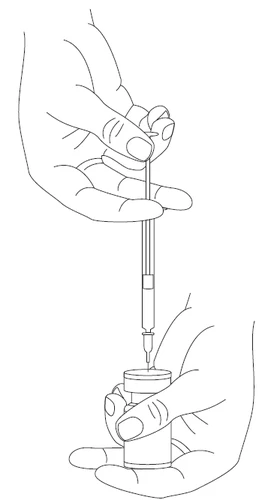
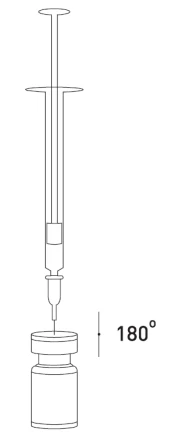
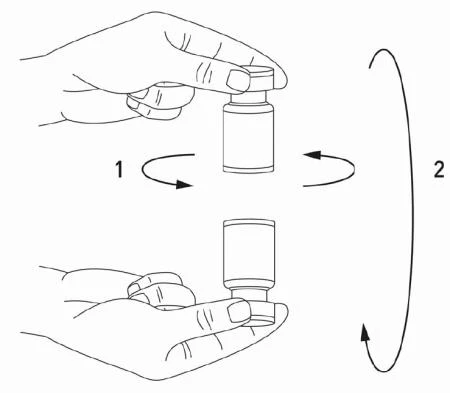
Reconstituted BOCOUTURE is a clear, colourless solution.
BOCOUTURE must not be used if the reconstituted solution (prepared as above) appears cloudy or contains flocculent or particulate matter.
The following table indicates possible dilutions for BOCOUTURE 50 and 100 units:
| Resulting dose (in units per 0.1 ml) | Solvent added (sodium chloride 9 mg/ml (0.9%) injectable solution) | |
| 50-unit vial | 100-unit vial | |
| 5 units | 1 ml | 2 ml |
| 4 units | 1.25 ml | 2.5 ml |
Disposal instructions
Any injectable solution that has been stored for more than 24 hours as well as unused injectable solution must be discarded.
Procedures for the safe disposal of vials, syringes and used materials
Unused vials, residual solution remaining in the vial and/or syringes must be autoclaved. Alternatively, the remaining BOCOUTURE can be inactivated by adding one of the following solutions: 70% ethanol, 50% isopropanol, 0.1% SDS (anionic detergent), diluted sodium hydroxide solution (0.1 N NaOH) or diluted sodium hypochlorite solution (at least 0.1% NaOCl).
After inactivation, vials, syringes and used materials must not be emptied and must be placed in designated containers and disposed of according to local regulations.
Recommendations in case of accidents during handling of botulinum toxin type A
- Any product spillage must be collected: using absorbent material impregnated with any of the solutions listed above in the case of powder, or with dry absorbent material in the case of reconstituted product. Contaminated surfaces must be cleaned using absorbent material impregnated with any of the solutions listed above and then dried.
- If a vial breaks, proceed as above, carefully collecting broken glass fragments and collecting the product, avoiding skin cuts.
- If the product comes into contact with the skin, rinse the affected area thoroughly with water.
- If the product comes into contact with the eyes, rinse carefully with abundant water or with an ophthalmic irrigation solution.
- If the product comes into contact with a wound, cut or abrasion, wash thoroughly with abundant water and take appropriate medical measures according to the amount injected.
These instructions for use, handling and disposal must be strictly followed.