BlinCyto
Italy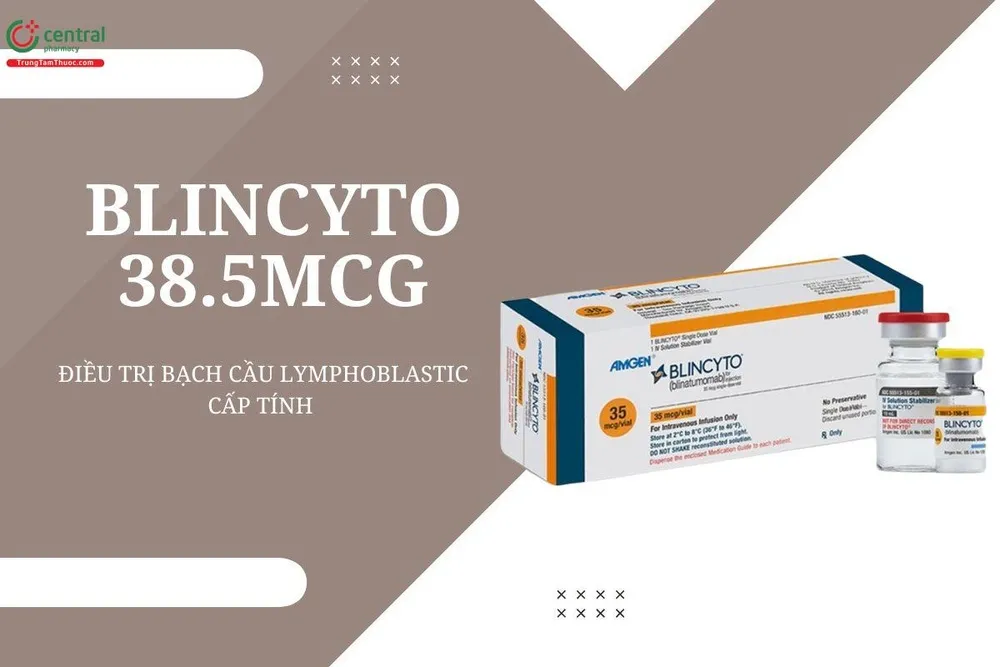
Table of Contents
- Package leaflet: Information for the patient
- BLINCYTO 38.5 micrograms powder for concentrate and solution for solution for infusion
- 1. What BLINCYTO is and what it is used for
- 2. What you should know before using BLINCYTO
- 3. How BLINCYTO is administered
- 4. Possible side effects
- 5. How to store BLINCYTO
- 6. Package contents and other information
- The following information is intended exclusively for healthcare professionals:
Package leaflet: Information for the patient
BLINCYTO 38.5 micrograms powder for concentrate and solution for solution for infusion
blinatumomab
This medicinal product is subject to additional monitoring. This will allow for rapid identification of new safety information. You can help by reporting any side effects you experience while taking this medicine. See the end of section 4 for information on how to report side effects.
Please read all of this leaflet carefully before you start using this medicine, as it contains important information for you.
- Keep this leaflet. You may need to read it again.
- Your doctor will also provide you with the following educational materials:
- Educational booklet for patients and home caregivers, containing important safety information you should know before receiving BLINCYTO and during treatment with BLINCYTO.
- Patient card with contact details of healthcare professionals and information on when to contact your doctor or nurse. Always keep this patient card with you.
- If you have any questions, consult your doctor, pharmacist, or nurse.
- If you experience any side effects, including those not listed in this leaflet, consult your doctor, pharmacist, or nurse. See section 4.
Contents of this leaflet
- What BLINCYTO is and what it is used for
- What you need to know before using BLINCYTO
- How BLINCYTO is administered
- Possible side effects
- How to store BLINCYTO
- Contents of the pack and other information
1. What BLINCYTO is and what it is used for
The active substance of BLINCYTO is blinatumomab. This belongs to a group of medicines
called antineoplastic agents, which act on tumor cells.
BLINCYTO is used to treat adults, children, and young adults with acute lymphoblastic leukemia,
a type of blood cancer characterized by the uncontrolled proliferation of a specific type of white blood cell called “B-lymphocyte.” This medicine works by enabling the immune system to attack and destroy these cancerous white blood cells.
BLINCYTO is used when acute lymphoblastic leukemia has relapsed (recurrence) or the disease has not responded to prior treatment (called relapsed or refractory acute lymphoblastic leukemia).
It is also used in adult patients with acute lymphoblastic leukemia who still have a small number of cancer cells remaining after previous treatment (called minimal residual disease).
BLINCYTO is also used during consolidation therapy. Consolidation therapy for acute lymphoblastic leukemia is a treatment phase administered after the initial phase of therapy. Its purpose is to further eliminate any residual leukemic cells that may still be present after the first phase of treatment.
2. What you should know before using BLINCYTO
Do not use BLINCYTO
- if you are allergic to blinatumomab or to any of the other ingredients of this medicine (listed in section 6).
- if you are breastfeeding.
Warnings and precautions
Talk to your doctor, pharmacist, or nurse before using BLINCYTO if any of the
following situations apply to you. BLINCYTO may not be suitable for you:
- if you have ever had neurological problems, such as shaking chills (or tremors), unusual sensations, seizures, memory loss, confusion, disorientation, loss of balance, or difficulty speaking. If you still have neurological problems or active neurological conditions, inform your doctor. If leukemia has spread to the brain and/or spinal cord, your doctor may need to treat this condition before starting BLINCYTO therapy. Your doctor will examine your nervous system and perform tests before deciding whether you are eligible for treatment with BLINCYTO. Your doctor may need to monitor you particularly closely during treatment with BLINCYTO.
- if you have an active infection.
- if you have previously experienced an infusion reaction after using BLINCYTO. Symptoms may include wheezing, flushing, facial swelling, difficulty breathing, low or high blood pressure.
- if you think you need vaccinations in the near future, including those required for travel to other countries. Some vaccines should not be administered within the two weeks before starting BLINCYTO, during treatment with BLINCYTO, or in the months following treatment with BLINCYTO. Your doctor will check whether vaccination is possible.
Tell your doctor, pharmacist, or nurse immediately if you notice any new symptoms
during treatment with BLINCYTO, including but not limited to the following, as they may require
treatment and dose adjustment:
- effects on the nervous system. Symptoms such as confusion, feeling less alert, difficulty speaking and/or writing. Some of these may be signs of a serious immune reaction called "immune effector cell-associated neurotoxicity syndrome" (ICANS).
- if you develop chills or tremors, or feel warm; in such cases, you should take your temperature, as you may have a fever—these could be symptoms of an infection.
- if at any time during the infusion you experience a reaction, such as dizziness, feeling faint, nausea, facial swelling, difficulty breathing, wheezing, or skin rash.
- if you have severe and persistent stomach pain, with or without nausea and vomiting, as these may be symptoms of a serious and potentially life-threatening condition known as pancreatitis (inflammation of the pancreas).
Your doctor or nurse will monitor you for signs or symptoms of such reactions.
People with Down syndrome may have an increased risk of seizures during
treatment with BLINCYTO and may be given medications to prevent seizures before starting BLINCYTO therapy.
Tell your doctor, pharmacist, or nurse immediately if you become pregnant while
receiving BLINCYTO. Your doctor will advise you on precautions regarding vaccinations for the baby.
Before each infusion cycle of BLINCYTO, you will be given medications to help reduce the risk of a potentially life-threatening complication known as tumor lysis syndrome, caused by a chemical change in the blood due to the breakdown of killed tumor cells. You may also be given medications to reduce fever.
During treatment, particularly in the very first days after starting therapy, you may experience a severe decrease in white blood cells (neutropenia), a severe decrease in white blood cells associated with fever (febrile neutropenia), increased liver enzymes, or elevated uric acid levels. Your doctor will periodically perform blood tests to monitor your blood cell counts during treatment with BLINCYTO.
Children and adolescents
Experience with BLINCYTO in treating children under 1 year of age is limited.
Other medicines and BLINCYTO
Tell your doctor, pharmacist, or nurse if you are taking, have recently taken, or might take any other medicines.
Pregnancy and breastfeeding
If you are pregnant, suspect you may be pregnant, plan to become pregnant, or are breastfeeding, consult your doctor or nurse before taking this medicine.
Contraception
Women who could become pregnant must use an effective method of contraception during treatment and for at least 48 hours after the end of their last treatment. Discuss suitable contraceptive methods with your doctor or nurse.
Pregnancy
The effects of BLINCYTO in pregnant women are unknown, but given its mechanism of action, BLINCYTO may harm the fetus. You must not use BLINCYTO during pregnancy unless your doctor considers it the most appropriate treatment for you.
If you become pregnant during treatment with BLINCYTO, inform your doctor or nurse. Your doctor will advise you on precautions regarding vaccinations for the baby.
Breastfeeding
You must not breastfeed during treatment and for at least 48 hours after the end of your last treatment. It is not known whether BLINCYTO is excreted in breast milk, but a risk to the infant cannot be excluded.
Driving and using machines
Do not drive, operate heavy machinery, or engage in hazardous activities during treatment with BLINCYTO. BLINCYTO can cause neurological problems such as dizziness, seizures, confusion, and disturbances in coordination and balance.
BLINCYTO contains sodium
This medicine contains less than 1 mmol (23 mg) of sodium per 24-hour infusion, i.e., essentially ‘sodium-free’.
3. How BLINCYTO is administered
Use this medicine exactly as instructed by your doctor, pharmacist, or nurse. If you have any doubts, please consult your doctor, pharmacist, or nurse.
BLINCYTO will be administered intravenously (by intravenous infusion) as a continuous infusion over 4 weeks using an infusion pump (this corresponds to 1 treatment cycle). This will be followed by a 2-week break, during which you will not receive the infusion. The infusion catheter will remain connected throughout the entire duration of each treatment cycle. Your doctor will determine the timing for replacing the BLINCYTO infusion bag, which may need to be changed anywhere from daily up to every 4 days. The infusion rate may be faster or slower depending on how frequently the bag is replaced.
How long will you receive BLINCYTO treatment?
BLINCYTO is usually given for 2 treatment cycles if you have relapsed or refractory acute lymphoblastic leukaemia, or for 1 treatment cycle if you have minimal residual disease in acute lymphoblastic leukaemia. If you show a response to this treatment, your doctor may decide to administer up to 3 additional cycles.
If you have acute lymphoblastic leukaemia and are receiving BLINCYTO as part of consolidation therapy, your doctor will determine the number of BLINCYTO cycles to be administered.
The number of treatment cycles and the dose given will depend on how your body tolerates and responds to BLINCYTO. Your doctor will provide you with information on the duration of treatment. Treatment may also be interrupted depending on how well you tolerate BLINCYTO.
How long you need to stay in hospital
If you have relapsed or refractory acute lymphoblastic leukaemia, it is recommended that you receive treatment in hospital or clinic for the first 9 days of treatment and the first 2 days of the second cycle, under the supervision of a doctor or nurse experienced in the use of anticancer drugs.
If you have minimal residual disease in acute lymphoblastic leukaemia, hospitalization or clinic stay is recommended for the first 3 days of treatment and the first 2 days of subsequent cycles, under the supervision of a doctor or nurse experienced in the use of anticancer drugs.
If you have acute lymphoblastic leukaemia and are receiving BLINCYTO as part of consolidation therapy, it is recommended that you receive treatment in hospital or clinic for the first 3 days of the first treatment cycle and the first 2 days of the second cycle, under the supervision of a doctor or nurse experienced in the use of anticancer drugs.
If you have or have previously had neurological problems, it is recommended that the first 14 days of treatment be administered in hospital or clinic. Your doctor will inform you whether, after this initial hospital treatment period, you may continue therapy at home. Treatment may include bag replacement performed by a nurse.
What dose of BLINCYTO will be administered?
If you have relapsed or refractory acute lymphoblastic leukaemia and your body weight is 45 kg or more, the recommended initial dose for the first cycle is 9 micrograms per day for 1 week. Your doctor may decide to increase the dose to 28 micrograms per day during weeks 2, 3, and 4 of treatment. If your doctor determines that you should undergo additional BLINCYTO cycles, the pump will be set to deliver a dose of 28 micrograms per day for all subsequent treatment cycles.
If your body weight is less than 45 kg, the recommended initial dose for the first cycle will be based on body weight and height. For the first week of BLINCYTO treatment, the pump will be set to deliver a dose of 5 micrograms/m²/day. The dose should be increased to 15 micrograms/m²/day for weeks 2, 3, and 4, depending on your response to BLINCYTO treatment. If your doctor determines that you should undergo additional BLINCYTO cycles, the pump will be set to deliver a dose of 15 micrograms/m²/day for all subsequent treatment cycles. You may not be able to distinguish between the dose infused during the first week of the first cycle and the higher dose infused during the remainder of the first cycle and in subsequent cycles.
If you have minimal residual disease in acute lymphoblastic leukaemia and your body weight is 45 kilograms or more, the dose of BLINCYTO will be 28 micrograms per day for all treatment cycles. If your body weight is less than 45 kilograms, the pump will be set to deliver a dose of 15 micrograms/m²/day based on your body weight and height for all treatment cycles.
If you have acute lymphoblastic leukaemia and are receiving BLINCYTO as part of consolidation therapy, and your body weight is greater than or equal to 45 kilograms, the dose of BLINCYTO will be 28 micrograms per day for all treatment cycles. If your body weight is less than 45 kilograms, the pump will be set to deliver a dose of 15 micrograms/m²/day based on your body weight and height for all treatment cycles.
Medicines administered before each BLINCYTO cycle
Before BLINCYTO treatment, you will be given other medicines (pre-medication) to help reduce infusion reactions and other possible side effects. These may include corticosteroids (e.g., dexamethasone).
Chemotherapy may also be administered before and during BLINCYTO treatment via intrathecal injection (injection into the space surrounding the spinal cord and brain) to help prevent relapse of acute lymphoblastic leukaemia in the central nervous system. If you have any questions about your treatment, please consult your doctor.
Infusion catheter
If you have been fitted with an infusion catheter, it is very important that the area around the catheter is kept clean, otherwise you may develop an infection. Your doctor or nurse will show you how to care for the catheter site.
Infusion pump and intravenous catheter
Do not change the pump settings, even if there is a problem or if the pump alarm sounds. Any changes to the pump settings may result in a dose of medicine that is too high or too low.
Contact your doctor or nurse immediately if:
- there is a problem with the pump or the pump alarm sounds
- the infusion bag empties before the scheduled bag replacement time
- the infusion pump suddenly stops working. Do not attempt to restart the pump.
Your doctor or nurse will explain how to manage daily activities related to the infusion pump. If you have any questions, please consult your doctor or nurse.
4. Possible side effects
Like all medicines, this medicine can cause side effects, although not everybody gets them. Some of these side effects can be serious.
Immediately inform your doctor if you notice the onset of one or more of the following side effects:
- chills, tremors, fever, rapid heartbeat, low blood pressure, muscle pain, feeling of fatigue, cough, difficulty breathing, confusion, redness, swelling or discharge at the affected area or along the infusion line – these may be signs of an infection.
- neurological events: chills (or tremor), confusion, disturbances in brain function (encephalopathy), difficulty in communication (aphasia), seizures (convulsions).
- fever, swelling, chills, increase or decrease in blood pressure and fluid in the lungs – these effects can become severe and may be signs of a condition known as cytokine release syndrome.
- if you have severe and persistent stomach pain, with or without nausea and vomiting, as these may be symptoms of a serious and potentially life-threatening condition known as pancreatitis (inflammation of the pancreas).
- Haemophagocytic lymphohistiocytosis (HLH)/immune effector cell-associated haemophagocytic lymphohistiocytosis-like syndrome (IEC-HS): a rare condition in which the immune system produces excessive numbers of certain infection-fighting cells called histiocytes and lymphocytes. It may cause enlargement of the liver and/or spleen. Symptoms may include fever, swollen lymph nodes, difficulty breathing, and a tendency to bruise and bleed easily.
Treatment with BLINCYTO may cause a reduction in levels of certain white blood cells with or without fever (febrile neutropenia or neutropia), or may lead to increased levels in the blood of potassium, uric acid and phosphate, and decreased levels of calcium in the blood (tumour lysis syndrome). Your doctor will periodically perform blood tests during your treatment with BLINCYTO.
Other side effects include:
Very common side effects (may affect more than 1 in 10 people):
- blood infections, including infections caused by bacteria, viruses or other types of infections
- reduction in levels of certain white blood cells with or without fever (leukopenia, neutropenia (febrile)), reduction in red blood cell levels, reduction in platelet levels
- fever, swelling, chills, low or high blood pressure and fluid in the lungs, which may become severe (cytokine release syndrome)
- difficulty sleeping, headache, chills (or tremor). These may be symptoms of neurological problems associated with a condition called immune effector cell-associated neurotoxicity syndrome (ICANS).
- rapid heartbeat (tachycardia)
- low blood pressure
- high blood pressure (hypertension)
- cough
- nausea, diarrhoea, vomiting, constipation, abdominal pain
- rash
- back pain, limb pain
- fever (pyrexia), swelling of face, lips, mouth, tongue or throat which may cause difficulty in swallowing or breathing (oedema), chills
- low levels of antibodies called “immunoglobulins” that help the immune system fight infections (reduced immunoglobulins)
- increased levels of liver enzymes (ALT, AST, GGT)
- infusion-related reactions which may include wheezing, flushing, facial swelling, difficulty breathing, low blood pressure, high blood pressure
Common side effects (may affect up to 1 in 10 people):
- severe infection that may lead to organ failure, shock or may be fatal (sepsis)
- lung infection (pneumonia)
- infections caused by fungi
- increased levels of white blood cells (leukocytosis), reduction in levels of certain white blood cells (lymphopenia)
- allergic reaction
- complications following tumour treatment leading to increased levels of potassium, uric acid and phosphate in the blood and decreased levels of calcium in the blood (tumour lysis syndrome)
- confusion, disorientation, disturbances in brain function (encephalopathy), for example, difficulty in communication (aphasia), skin tingling (paraesthesia), seizures, difficulty in thinking or processing thoughts, memory problems, difficulty in controlling movement (ataxia), feeling drowsy (somnolence), numbness, dizziness. These may be symptoms of neurological problems associated with a condition called immune effector cell-associated neurotoxicity syndrome (ICANS).
- nerve disorders affecting the head and neck, such as visual disturbances, drooping eyelid and/or facial muscle weakness on one side of the face, hearing problems or difficulty swallowing (cranial nerve disorders)
- wheezing or difficulty breathing (dyspnoea), breathlessness (respiratory failure)
- redness
- cough with phlegm
- increased bilirubin in the blood
- bone pain
- chest pain or other pain
- high levels of certain enzymes including blood enzymes
- weight gain
Uncommon side effects (may affect up to 1 in 100 people):
- fever, enlargement of the liver and/or spleen, swollen lymph nodes, breathing difficulties and tendency to bruise easily. These may be symptoms associated with overactivity of the immune system, a condition called HLH/IEC-HS, which may be potentially life-threatening.
- swollen lymph nodes (lymphadenopathy)
- fever, swelling, chills, low or high blood pressure and fluid in the lungs, which may be severe and fatal (cytokine storm)
- a condition causing leakage of fluid from small blood vessels in the body (capillary leak syndrome)
- difficulty in speaking and/or writing. These may be symptoms of neurological problems associated with a condition called immune effector cell-associated neurotoxicity syndrome (ICANS).
In addition, side effects that occurred more frequently in adolescents and children include:
- reduction in red blood cell levels (anaemia), reduction in platelet levels (thrombocytopenia), reduction in levels of certain white blood cells (leukopenia)
- fever (pyrexia)
- infusion-related reactions which may include facial swelling, low blood pressure, high blood pressure (infusion-related reactions)
- weight gain
- high blood pressure (hypertension)
Reporting of side effects
If you experience any side effect, including those not listed in this leaflet, talk to your doctor, pharmacist or nurse. You can also report side effects directly via the national reporting system listed in Annex V. By reporting side effects, you can help provide more information on the safety of this medicine.
5. How to store BLINCYTO
Keep this medicine out of the sight and reach of children.
Do not use this medicine after the expiry date which is stated on the label and on the carton after
"Exp.". The expiry date refers to the last day of that month.
Unopened vials:
- Store and transport in a refrigerator (2°C - 8°C).
- Do not freeze.
- Keep in the original packaging to protect the medicine from light.
Reconstituted solution (BLINCYTO solution):
- When refrigerated, the reconstituted solution must be used within 24 hours. Alternatively, vials may be stored at room temperature (up to 27°C) for up to 4 hours.
Diluted solution (prepared infusion bag):
In case of home replacement of the infusion bag:
- Infusion bags containing BLINCYTO infusion solution will be delivered in a special container with cooling material.
- Do not open the container.
- Store the container at room temperature (up to 27°C).
- Do not refrigerate or freeze the container.
- The container will be opened by the nurse, and the infusion bags will be stored in the refrigerator until the time of infusion.
- When refrigerated, the infusion bags must be used within 10 days of preparation.
- Once brought to room temperature (up to 27°C), the solution must be administered by infusion within 96 hours.
Do not dispose of any medicine via wastewater or household waste. Ask your pharmacist how to dispose of medicines you no longer use. This will help protect the environment.
6. Package contents and other information
What BLINCYTO contains
- The active substance is blinatumomab. Each vial of powder contains 38.5 micrograms of blinatumomab. After reconstitution with water for injections, a final concentration of blinatumomab of 12.5 micrograms/mL is obtained.
- The other components of the powder are monohydrate citric acid (E330), dithreitol, hydrochloride lysine, polysorbate 80 (E433), and sodium hydroxide.
- The solution (stabilizer) contains monohydrate citric acid (E330), hydrochloride lysine, polysorbate 80 (E433), sodium hydroxide, and water for injections.
Description of the appearance of BLINCYTO and package contents
BLINCYTO is a powder for concentrate and solution for solution for infusion.
Each pack of BLINCYTO contains:
- 1 glass vial containing a white to off-white powder.
- 1 glass vial containing a clear solution, colorless to slightly yellowish.
Marketing Authorization Holder and Manufacturer
Amgen Europe B.V.
Minervum 7061
4817 ZK Breda
The Netherlands
Marketing Authorization Holder
Amgen Europe B.V.
Minervum 7061
4817 ZK Breda
The Netherlands
Manufacturer
Amgen NV
Telecomlaan 5-7
1831 Diegem
Belgium
For further information about this medicinal product, please contact the local representative of the Marketing Authorization Holder:
België/Belgique/Belgien Lietuva
s.a. Amgen n.v. Amgen Switzerland AG Vilniaus filialas
Tél/Tel: +32 (0)2 7752711 Tel: +370 5 219 7474
България Luxembourg/Luxemburg
Амджен България ЕООД s.a. Amgen
Тел.: +359 (0)2 424 7440 Belgique/Belgien
Tél/Tel: +32 (0)2 7752711
Česká republika Magyarország
Amgen s.r.o. Amgen Kft.
Tel: +420 221 773 500 Tel.: +36 1 35 44 700
Danmark Malta
Amgen, filial af Amgen AB, Sverige Amgen S.r.l.
Tlf.: +45 39617500 Italy
Tel: +39 02 6241121
Deutschland Nederland
Amgen GmbH Amgen B.V.
Tel.: +49 89 1490960 Tel: +31 (0)76 5732500
Eesti Norge
Amgen Switzerland AG Vilniaus filialas Amgen AB
Tel: +372 586 09553 Tlf: +47 23308000
Ελλάδα Österreich
Amgen Ελλάς Φαρμακευτικά Ε.Π.Ε. Amgen GmbH
Τηλ: +30 210 3447000 Tel: +43 (0)1 50 217
España Polska
Amgen S.A. Amgen Biotechnologia Sp. z o.o.
Tel: +34 93 600 18 60 Tel.: +48 22 581 3000
France Portugal
Amgen S.A.S. Amgen Biofarmacêutica, Lda.
Tél: +33 (0)9 69 363 363 Tel: +351 21 422 0606
Hrvatska România
Amgen d.o.o. Amgen România SRL
Tel: +385 (0)1 562 57 20 Tel: +4021 527 3000
Ireland Slovenija
Amgen Ireland Limited AMGEN zdravila d.o.o.
Tel: +353 1 8527400 Tel: +386 (0)1 585 1767
Ísland Slovenská republika
Vistor Amgen Slovakia s.r.o.
Sími: +354 535 7000 Tel: +421 2 321 114 49
Italia Suomi/Finland
Amgen S.r.l. Amgen AB, sivuliike Suomessa/Amgen AB, filial i Finland
Puh/Tel: +358 (0)9 54900500
Kύπρος Sverige
C.A. Papaellinas Ltd Amgen AB
Τηλ: +357 22741 741 Tel: +46 (0)8 6951100
Latvija
Amgen Switzerland AG Rīgas filiāle
Tel: +371 257 25888
Other sources of information
More detailed information on this medicinal product is available on the website of the European Medicines Agency: https://www.ema.europa.eu .
The following information is intended exclusively for healthcare professionals:
BLINCYTO infusion solution is administered as a continuous intravenous infusion at a constant rate using an infusion pump over a period of up to 96 hours.
Relapsed or refractory B-cell precursor ALL
The recommended daily dose is based on body weight. Patients weighing 45 kg or more receive a fixed dose, while for patients weighing less than 45 kg the dose is calculated using body surface area (BSA). Refer to the table below for the recommended daily dose for relapsed or refractory B-cell precursor ALL.
| Body weight | Cycle 1 | Subsequent cycles | ||||
| Days 1-7 | Days 8-28 | Days 29-42 | Days 1-28 | Days 29-42 | ||
| ≥ 45 kg (fixed dose) | 9 mcg/day by continuous infusion | 28 mcg/day by continuous infusion | 14-day treatment-free interval | 28 mcg/day by continuous infusion | 14-day treatment-free interval | |
| < 45 kg (BSA-based dose) | 5 mcg/m²/day by continuous infusion (not to exceed 9 mcg/day) | 15 mcg/m²/day by continuous infusion (not to exceed 28 mcg/day) | 15 mcg/m²/day by continuous infusion (not to exceed 28 mcg/day) | |||
Pediatric patients with B-cell precursor ALL in first relapse at high risk may receive 1 cycle of treatment with BLINCYTO after induction therapy and 2 blocks of consolidation chemotherapy. Refer to the following table for the recommended daily dose according to body weight for pediatric patients with B-cell precursor ALL in first relapse at high risk after induction chemotherapy.
| One consolidation cycle | Body weight equal to or greater than 45 kg (fixed dose) | Body weight less than 45 kg (BSA-based dose) |
| Days 1-28 | 28 mcg/day | 15 mcg/m2/day (do not exceed 28 mcg/day) |
B-cell precursor ALL with positive MRD
The recommended daily dose depends on body weight. The recommended dose of BLINCYTO for patients weighing 45 kg or more for each 4-week treatment cycle is 28 mcg/day. For patients weighing less than 45 kg, the dose is calculated using BSA. The recommended dose of BLINCYTO for each 4-week treatment cycle is 15 mcg/m²/day.
B-cell precursor ALL in adults in the consolidation phase
The recommended daily dose depends on body weight. The recommended dose of BLINCYTO for patients weighing 45 kg or more for each 4-week treatment cycle is 28 mcg/day. For patients weighing less than 45 kg, the dose is calculated using BSA. The recommended dose of BLINCYTO for each 4-week treatment cycle is 15 mcg/m²/day.
The initial volume (270 mL) is greater than the volume to be administered to the patient (240 mL) to account for the intravenous catheter priming and to ensure that the patient receives the complete dose of BLINCYTO.
Administer the final prepared BLINCYTO infusion solution according to the instructions on the pharmacy label on the prepared bag at one of the following constant infusion rates:
- Infusion rate of 10 mL/h for a duration of 24 hours
- Infusion rate of 5 mL/h for a duration of 48 hours
- Infusion rate of 3.3 mL/h for a duration of 72 hours
- Infusion rate of 2.5 mL/h for a duration of 96 hours
The duration of infusion should be selected by the treating physician, taking into account the frequency of changing infusion bags and the patient's weight. The therapeutic target dose of BLINCYTO administered does not change.
Aseptic preparation
Aseptic technique must be used during the preparation of the infusion. The preparation of BLINCYTO must be:
- Performed under aseptic conditions by qualified personnel in accordance with good practice standards, particularly regarding aseptic preparation of parenteral products.
- Performed under a laminar flow hood or in a biological safety cabinet, adopting standard precautions for safe handling of intravenous substances.
It is very important to strictly follow the instructions regarding preparation and administration provided in this section to minimize medication errors (including underdosing and overdosing).
Additional instructions
- BLINCYTO is compatible with infusion bags/pump containers made of polyolefin, non-di(2-ethylhexyl)phthalate (non-DEHP) PVC, or ethylene-vinyl acetate (EVA).
- After completion of the infusion, unused medicinal product and waste materials derived from this medicinal product must be disposed of in accordance with local regulations.
Preparation of the infusion solution
The following materials are also required, not included in the package:
- Sterile disposable single-use syringes
- Needle(s) of gauge 21–23 G (recommended)
- Water for injections
- Infusion bag with 250 mL of sodium chloride 9 mg/mL (0.9%) solution for injection; or to minimize the number of aseptic transfers, use a pre-filled infusion bag of 250 mL. The calculation of the BLINCYTO dose is generally based on a usual overfill volume of 265–275 mL of sodium chloride 9 mg/mL (0.9%) solution for injection.
- Use only infusion bags/pump containers made of polyolefin, non-DEHP PVC, or EVA.
- Intravenous catheter made of polyolefin, non-DEHP PVC, or EVA, with an in-line 0.2 μm sterile, non-pyrogenic, low protein-binding filter.
- Ensure that the catheter is compatible with the infusion pump.
Reconstitute BLINCYTO with water for injections. Do not reconstitute BLINCYTO vials using the (stabilizing) solution.
To prime the intravenous catheter, use exclusively the solution from the bag containing the final prepared BLINCYTO infusion solution. Do not prime with sodium chloride 9 mg/mL (0.9%) solution for injection.
Reconstitution of BLINCYTO
- Determine the number of BLINCYTO vials required for one dose and the duration of infusion.
- Using a syringe, reconstitute each vial of BLINCYTO concentrate powder with 3 mL of water for injections. Direct the flow of water along the walls of the BLINCYTO vial and not directly onto the lyophilized powder.
- Do not reconstitute BLINCYTO concentrate powder using the (stabilizing) solution.
- Adding water for injections to the concentrate powder yields a total volume of 3.08 mL, resulting in a final BLINCYTO concentration of 12.5 mcg/mL.
- Gently swirl the contents to avoid excessive foaming.
- Do not shake.
- Visually inspect the reconstituted solution for the presence of particles or color change during reconstitution and before preparing the infusion bag. The resulting solution should be clear or slightly opalescent, colorless or slightly yellowish.
- Do not use if the solution is cloudy or contains a precipitate.
Preparation of the BLINCYTO infusion bag
Verify the prescribed dose and duration of infusion for each BLINCYTO infusion bag. To minimize potential errors, use the specific volumes indicated in Tables 1 and 2 to prepare the BLINCYTO infusion bag.
- Table 1 for patients weighing 45 kg or more
- Table 2 for patients weighing less than 45 kg
- Use a pre-filled infusion bag containing 250 mL of sodium chloride 9 mg/mL (0.9%) solution for injection, which normally contains a total volume of 265–275 mL.
- To coat the infusion bag, aseptically transfer 5.5 mL of (stabilizing) solution into the infusion bag using a syringe. Gently mix the bag contents to avoid foaming. Discard the remaining (stabilizing) solution.
- Using a syringe, aseptically transfer the required volume of reconstituted BLINCYTO solution into the infusion bag containing sodium chloride 9 mg/mL (0.9%) solution for injection and the (stabilizing) solution. Gently mix the bag contents to avoid foaming.
- For the specific volume of reconstituted BLINCYTO, refer to Table 1 for patients weighing 45 kg or more.
- For the specific volume of reconstituted BLINCYTO, refer to Table 2 for patients weighing less than 45 kg (dose based on BSA).
- Discard any unused reconstituted BLINCYTO solution remaining in the vial.
- Expel air from the infusion bag. This is particularly important when using a portable infusion pump.
- Under aseptic conditions, connect the intravenous catheter to the infusion bag with a sterile 0.2-micron in-line filter. Ensure that the intravenous catheter is compatible with the infusion pump.
- Prime the intravenous infusion line exclusively with the solution from the bag containing the final prepared BLINCYTO infusion solution.
- If not used immediately, store refrigerated at 2°C – 8°C.
Table 1. For patients weighing 45 kg or more: volume of sodium chloride 9 mg/mL (0.9%) solution for injection, (stabilizing) solution, and reconstituted BLINCYTO to be added to the infusion bag
250 mL
Sodium chloride 9 mg/mL (0.9%) solution for injection
(normal overfill volume from
(initial volume)
265 to 275 mL)
(Stabilizing) solution (fixed volume for infusion durations of 24, 48, 72, and 96 hours) 5.5 mL
Infusion duration Dose Infusion rate Reconstituted BLINCYTO
Volume Vials
9 mcg/day 10 mL/h 0.83 mL 1
24 hours
28 mcg/day 10 mL/h 2.6 mL 1
9 mcg/day 5 mL/h 1.7 mL 1
48 hours
28 mcg/day 5 mL/h 5.2 mL 2
9 mcg/day 3.3 mL/h 2.5 mL 1
72 hours
28 mcg/day 3.3 mL/h 8 mL 3
9 mcg/day 2.5 mL/h 3.3 mL 2
96 hours
28 mcg/day 2.5 mL/h 10.7 mL 4
Table 2. For patients weighing less than 45 kg: volumes of sodium chloride 9 mg/mL (0.9%) solution for injection, (stabilizing) solution, and reconstituted BLINCYTO to be added to the infusion bag
Sodium chloride 9 mg/mL (0.9%) solution for injection 250 mL
(initial volume) (normal overfill volume from 265 to 275 mL)
(Stabilizing) solution (fixed volume for infusion durations of 24, 48, 72, and 96 hours) 5.5 mL
Infusion duration Dose Infusion rate BSA (m²)* Reconstituted BLINCYTO
Volume Vials
1.5 – 1.59 0.7 mL 1
1.4 – 1.49 0.66 mL 1
1.3 – 1.39 0.61 mL 1
1.2 – 1.29 0.56 mL 1
1.1 – 1.19 0.52 mL 1
1 – 1.09 0.47 mL 1
24 hours 5 mcg/m²/day 10 mL/h
0.9 – 0.99 0.43 mL 1
0.8 – 0.89 0.38 mL 1
0.7 – 0.79 0.33 mL 1
0.6 – 0.69 0.29 mL 1
0.5 – 0.59 0.24 mL 1
0.4 – 0.49 0.2 mL 1
1.5 – 1.59 2.1 mL 1
1.4 – 1.49 2.0 mL 1
1.3 – 1.39 1.8 mL 1
1.2 – 1.29 1.7 mL 1
1.1 – 1.19 1.6 mL 1
1 – 1.09 1.4 mL 1
24 hours 15 mcg/m²/day 10 mL/h
0.9 – 0.99 1.3 mL 1
0.8 – 0.89 1.1 mL 1
0.7 – 0.79 1.0 mL 1
0.6 – 0.69 0.86 mL 1
0.5 – 0.59 0.72 mL 1
0.4 – 0.49 0.59 mL 1
Sodium chloride 9 mg/mL (0.9%) solution for injection 250 mL
(initial volume) (normal overfill volume from 265 to 275 mL)
(Stabilizing) solution (fixed volume for infusion durations of 24, 48, 72, and 96 hours) 5.5 mL
Infusion duration Dose Infusion rate BSA (m²)* Reconstituted BLINCYTO
Volume Vials
1.5 – 1.59 1.4 mL 1
1.4 – 1.49 1.3 mL 1
1.3 – 1.39 1.2 mL 1
1.2 – 1.29 1.1 mL 1
1.1 – 1.19 1.0 mL 1
1 – 1.09 0.94 mL 1
48 hours 5 mcg/m²/day 5 mL/h
0.9 – 0.99 0.85 mL 1
0.8 – 0.89 0.76 mL 1
0.7 – 0.79 0.67 mL 1
0.6 – 0.69 0.57 mL 1
0.5 – 0.59 0.48 mL 1
0.4 – 0.49 0.39 mL 1
1.5 – 1.59 4.2 mL 2
1.4 – 1.49 3.9 mL 2
1.3 – 1.39 3.7 mL 2
1.2 – 1.29 3.4 mL 2
1.1 – 1.19 3.1 mL 2
1 – 1.09 2.8 mL 1
48 hours 15 mcg/m²/day 5 mL/h
0.9 – 0.99 2.6 mL 1
0.8 – 0.89 2.3 mL 1
0.7 – 0.79 2.0 mL 1
0.6 – 0.69 1.7 mL 1
0.5 – 0.59 1.4 mL 1
0.4 – 0.49 1.2 mL 1
Sodium chloride 9 mg/mL (0.9%) solution for injection 250 mL
(initial volume) (normal overfill volume from 265 to 275 mL)
(Stabilizing) solution (fixed volume for infusion durations of 24, 48, 72, and 96 hours) 5.5 mL
Infusion duration Dose Infusion rate BSA (m²)* Reconstituted BLINCYTO
Volume Vials
1.5 – 1.59 2.1 mL 1
1.4 – 1.49 2.0 mL 1
1.3 – 1.39 1.8 mL 1
1.2 – 1.29 1.7 mL 1
1.1 – 1.19 1.6 mL 1
1 – 1.09 1.4 mL 1
72 hours 5 mcg/m²/day 3.3 mL/h
0.9 – 0.99 1.3 mL 1
0.8 – 0.89 1.1 mL 1
0.7 – 0.79 1.0 mL 1
0.6 – 0.69 0.86 mL 1
0.5 – 0.59 0.72 mL 1
0.4 – 0.49 0.59 mL 1
1.5 – 1.59 6.3 mL 3
1.4 – 1.49 5.9 mL 3
1.3 – 1.39 5.5 mL 2
1.2 – 1.29 5.1 mL 2
1.1 – 1.19 4.7 mL 2
1 – 1.09 4.2 mL 2
72 hours 15 mcg/m²/day 3.3 mL/h
0.9 – 0.99 3.8 mL 2
0.8 – 0.89 3.4 mL 2
0.7 – 0.79 3.0 mL 2
0.6 – 0.69 2.6 mL 1
0.5 – 0.59 2.2 mL 1
0.4 – 0.49 1.8 mL 1
Sodium chloride 9 mg/mL (0.9%) solution for injection 250 mL
(initial volume) (normal overfill volume from 265 to 275 mL)
(Stabilizing) solution (fixed volume for infusion durations of 24, 48, 72, and 96 hours) 5.5 mL
Infusion duration Dose Infusion rate BSA (m²)* Reconstituted BLINCYTO
Volume Vials
1.5 – 1.59 2.8 mL 1
1.4 – 1.49 2.6 mL 1
1.3 – 1.39 2.4 mL 1
1.2 – 1.29 2.3 mL 1
1.1 – 1.19 2.1 mL 1
1 – 1.09 1.9 mL 1
96 hours 5 mcg/m²/day 2.5 mL/h
0.9 – 0.99 1.7 mL 1
0.8 – 0.89 1.5 mL 1
0.7 – 0.79 1.3 mL 1
0.6 – 0.69 1.2 mL 1
0.5 – 0.59 0.97 mL 1
0.4 – 0.49 0.78 mL 1
1.5 – 1.59 8.4 mL 3
1.4 – 1.49 7.9 mL 3
1.3 – 1.39 7.3 mL 3
1.2 – 1.29 6.8 mL 3
1.1 – 1.19 6.2 mL 3
1 – 1.09 5.7 mL 3
96 hours 15 mcg/m²/day 2.5 mL/h
0.9 – 0.99 5.1 mL 2
0.8 – 0.89 4.6 mL 2
0.7 – 0.79 4.0 mL 2
0.6 – 0.69 3.4 mL 2
0.5 – 0.59 2.9 mL 2
0.4 – 0.49 2.3 mL 1
For administration instructions, see the Summary of Product Characteristics, section 4.2.
Route of administration
Important note: Do not flush BLINCYTO infusion lines, especially when changing infusion bags. Flushing during bag changes or at the end of the infusion may lead to overdosing and subsequent complications. When administered through a multi-lumen catheter, BLINCYTO must be infused through a dedicated lumen.
BLINCYTO infusion solution is administered as a continuous intravenous infusion at a constant rate using an infusion pump over a maximum period of 96 hours.
BLINCYTO infusion solution must be administered using an intravenous catheter with a sterile, non-pyrogenic, low protein-binding 0.2-micron in-line filter.
The infusion bag must be replaced by a healthcare professional at least every 96 hours for sterility reasons.
Storage conditions and shelf life
Unopened vials:
5 years (2°C – 8°C)
Reconstituted solution:
Chemical and physical in-use stability has been demonstrated for 24 hours at 2°C – 8°C or for 4 hours at a temperature not exceeding 27°C.
From a microbiological standpoint, unless the reconstitution method excludes the risk of microbial contamination, the reconstituted solution should be diluted immediately. If not diluted immediately, the storage times and conditions during use are the responsibility of the user.
Diluted solution (prepared infusion bag)
Chemical and physical in-use stability has been demonstrated for 10 days at 2°C – 8°C or for 96 hours at a temperature not exceeding 27°C.
From a microbiological standpoint, prepared infusion bags should be used immediately. Otherwise, the storage times during use and conditions prior to use are the responsibility of the user and normally should not exceed 24 hours at 2°C – 8°C, unless dilution was performed under controlled and validated aseptic conditions.