Bisolvon
Italy
Table of Contents
- Package leaflet: Information for the patient and user
- BISOLVON 4 mg/2 ml solution for injection
- 1. What Bisolvon is and what it is used for
- 2. What you need to know before using Bisolvon
- 3. How to use Bisolvon
- 4. Possible side effects
- 5. How to store Bisolvon
- 6. Package contents and other information
Package leaflet: Information for the patient and user
BISOLVON 4 mg/2 ml solution for injection
bromhexine hydrochloride
Please read this leaflet carefully before using this medicine because it contains important information for you.
- Keep this leaflet. You may need to read it again.
- If you have any questions, consult your doctor or pharmacist.
- This medicine has been prescribed for you only. Do not give it to others, even if their symptoms are the same as yours, as it could be harmful.
- If you experience any side effects, including those not listed in this leaflet, consult your doctor or pharmacist. See section 4.
Contents of this leaflet:
- What Bisolvon is and what it is used for
- What you need to know before using Bisolvon
- How to use Bisolvon
- Possible side effects
- How to store Bisolvon
- Contents of the pack and other information
1. What Bisolvon is and what it is used for
Bisolvon contains bromhexine hydrochloride, a mucolytic agent that liquefies mucus in the respiratory tract, facilitating its elimination.
Bisolvon is indicated for the treatment of acute (recent onset) and chronic respiratory diseases associated with productive cough in adults.
2. What you need to know before using Bisolvon
Do not use Bisolvon
- if you are allergic to bromhexine or to any of the other ingredients of this medicine (listed in section 6);
- if you are breastfeeding (see section 2. "Pregnancy, breastfeeding and fertility").
Warnings and precautions
Talk to your doctor or pharmacist before using Bisolvon:
- if you suffer from a respiratory tract disease that develops and worsens over a relatively short period (acute respiratory conditions). Consult your doctor if symptoms do not improve or worsen during treatment;
- if you are pregnant (see section 2. "Pregnancy, breastfeeding and fertility").
Children
This medicine is intended for use in adults only.
Severe skin reactions associated with administration of hydrochloride bromhexine have been reported. If you develop a skin rash (including lesions of mucous membranes such as mouth, throat, nose, eyes, genitals), stop taking Bisolvon and contact your doctor immediately. These reactions may be symptoms of serious skin diseases characterized by skin peeling and severe skin toxicity (Stevens-Johnson syndrome and Toxic Epidermal Necrolysis). Most of these cases might be due to pre-existing severe illnesses or concomitant use of other medications. Furthermore, in the initial phase of Stevens-Johnson syndrome or Toxic Epidermal Necrolysis (TEN), non-specific symptoms similar to those of influenza may occur, such as fever, chills, runny nose (rhinitis), cough and sore throat. Due to these misleading symptoms, you might start symptomatic treatment with a cough and cold remedy.
Treatment with Bisolvon increases bronchial secretion (this facilitates expectoration).
Use Bisolvon only for short periods.
Other medicines and Bisolvon
Tell your doctor or pharmacist if you are taking, have recently taken or might take any other medicines.
Pregnancy, breastfeeding and fertility
If you suspect you are pregnant or are planning a pregnancy, consult your doctor or pharmacist before using this medicine.
Pregnancy
- As a precautionary measure, it is preferable to avoid using Bisolvon if you are pregnant (see section 2. "Warnings and precautions").
Breastfeeding
- Do not use Bisolvon during breastfeeding (see section 2. "Do not use Bisolvon").
Fertility
- Based on preclinical experience, there are no indications of potential effects on fertility following the use of bromhexine.
Driving and using machines
No studies have been conducted on the effects of hydrochloride bromhexine on the ability to drive vehicles and operate machinery.
3. How to use Bisolvon
Use this medicine exactly as directed by your doctor or pharmacist. If you have any doubts, consult your doctor or pharmacist.
Dosage
Adults
The recommended dose is 4 mg (equivalent to 1 ampoule of injectable solution) administered intramuscularly or by slow intravenous route 2–3 times daily.
Children
Bisolvon must not be used in children.
Method of administration
Bisolvon can be administered intramuscularly (injected into a muscle) or intravenously (directly into a vein), either as is or diluted with Ringer's solution or physiological saline (0.9% sodium chloride).
For instructions on dilution of the medicine prior to administration, shelf life after dilution, and storage precautions, see “The following information is intended exclusively for healthcare professionals”.
If you use more Bisolvon than you should
In case of accidental overdose, contact your doctor immediately or go to the nearest hospital.
If you forget to use Bisolvon
Do not use a double dose to make up for the missed dose.
If you stop using Bisolvon
If you have any doubts about using this medicine, consult your doctor or pharmacist.
4. Possible side effects
Like all medicines, this medicine can cause side effects, although not everybody gets them.
The following side effects may occur with the use of Bisolvon:
Uncommon (may affect up to 1 in 100 people)
- nausea, vomiting, diarrhoea, and upper abdominal pain;
Rare (may affect up to 1 in 1,000 people) - hypersensitivity reactions, rash (skin eruption), urticaria (appearance of red, itchy spots on the skin);
Not known (frequency cannot be estimated from the available data) - anaphylactic reactions, including anaphylactic shock, angioedema (rapid swelling of the skin, subcutaneous tissues, mucosa and submucosal tissues), and pruritus (itching),
- serious skin adverse reactions (including erythema multiforme, Stevens-Johnson syndrome/toxic epidermal necrolysis, and acute generalized exanthematous pustulosis),
- narrowing of the bronchi making breathing difficult (bronchospasm).
Reporting of side effects
If you experience any side effect, including those not listed in this leaflet, talk to your doctor, pharmacist, or nurse.
You can also report side effects directly via the national reporting system at the following website: https://www.aifa.gov.it/content/segnalazioni-reazioni-avverse
By reporting side effects, you can help provide more information on the safety of this medicine.
5. How to store Bisolvon
This medicine does not require any special storage conditions.
Keep this medicine out of the sight and reach of children.
Do not use this medicine after the expiry date which is stated on the packaging after "Exp.".
The expiry date refers to the last day of that month.
Do not dispose of medicines via wastewater or household waste. Ask your pharmacist how to dispose of
medicines you no longer use. This will help protect the environment.
6. Package contents and other information
What Bisolvon contains
- The active substance is bromhexine hydrochloride (each vial contains 4 mg of bromhexine hydrochloride);
- The other components are: tartaric acid, glucose, water for injections.
Description of the appearance of Bisolvon and package contents
Injectable solution in a pack of 5 glass vials of 2 ml.
Marketing Authorization Holder
Opella Healthcare Italy S.r.l.
Viale L. Bodio, 37/B
20158 Milan (Italy)
Manufacturer
Sanofi S.r.l.
Via Valcanello, 4
03012 Anagni (FR, Italy)
The following information is intended exclusively for healthcare professionals:
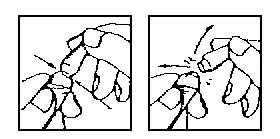
Breakable ampoules (no file required).
This medicinal product must not be mixed with other medicinal products except the following diluent solutions:
Ringer's solution and physiological saline (0.9% sodium chloride solution).
Dilution in Ringer's solution
Ringer's solution in glass containers at concentrations ranging from 0.008 mg/ml (1 vial in 500 ml) to 0.08 mg/ml (1 vial in 50 ml).
Dilution in physiological saline (0.9% sodium chloride solution)
Physiological saline in polyethylene bags: concentration 0.008 mg/ml (1 vial in 500 ml); concentration 0.08 mg/ml (1 vial in 50 ml); and concentration 0.048 mg/ml (3 vials in 250 ml).
Shelf life and storage precautions after dilution for intravenous use
Dilution in Ringer's solution contained in glass containers at concentrations between 0.008 mg/ml (1 vial in 500 ml) and 0.08 mg/ml (1 vial in 50 ml): 24 hours at 25°C.
Dilution in physiological saline contained in polyethylene bags: at concentration 0.008 mg/ml (1 vial in 500 ml): 6 hours at 25°C; at concentration 0.08 mg/ml (1 vial in 50 ml): administer immediately after preparation of the diluted solution; at concentration 0.048 mg/ml (3 vials in 250 ml): 24 hours at 25°C.