Bisolvon cough sedative
Italy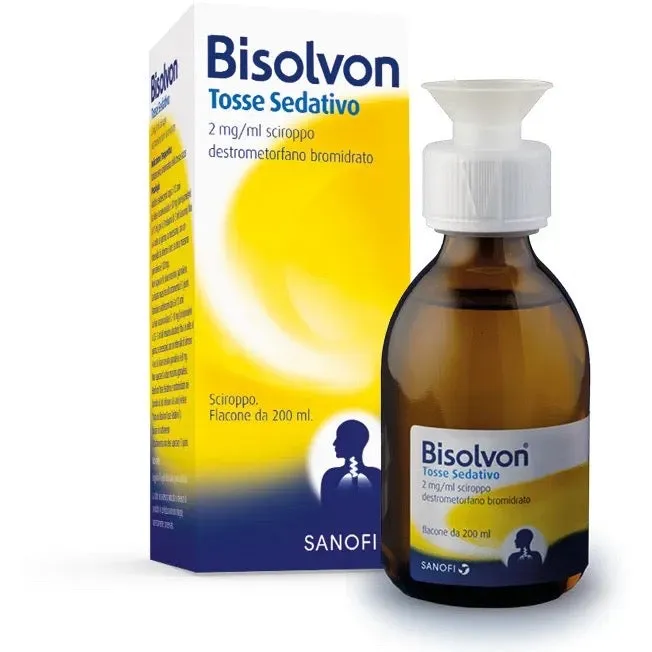
Table of Contents
- Patient Information Leaflet
- BISOLVON COUGH SUPPRESSANT 2 mg/ml syrup
- 1. What Bisolvon Cough Sedative is and what it is used for
- 2. What you should know before using Bisolvon Cough Suppressant
- 3. How to take Bisolvon Cough Sedative
- 4. Possible side effects
- 5. How to store Bisolvon Cough Sedative
- 6. Package contents and other information
- Package leaflet: Information for the user
- BISOLVON COUGH SUPPRESSANT 10.5 mg Chewable Tablets
- 1. What Bisolvon Cough Sedative is and what it is used for
- 2. What you need to know before taking Bisolvon Cough Suppressant
- 3. How to take Bisolvon Cough Suppressant
- 4. Possible side effects
- 5. How to store Bisolvon Cough Sedative
- 6. Package contents and other information
Patient Information Leaflet
BISOLVON COUGH SUPPRESSANT 2 mg/ml syrup
dextromethorphan hydrobromide
Please read all of this leaflet carefully before taking this medicine because it contains
important information for you.
- Always take this medicine exactly as described in this leaflet or as your doctor or pharmacist has instructed you.
- Keep this leaflet. You may need to read it again.
- If you need more advice or information, consult your pharmacist.
- If you experience any side effects, including those not listed in this leaflet, talk to your doctor or pharmacist. See section 4.
- Consult your doctor if you do not notice improvement or if your symptoms worsen after 5 days.
Contents of this leaflet:
- What Bisolvon Cough Suppressant is and what it is used for
- What you need to know before taking Bisolvon Cough Suppressant
- How to take Bisolvon Cough Suppressant
- Possible side effects
- How to store Bisolvon Cough Suppressant
- Contents of the pack and other information
1. What Bisolvon Cough Sedative is and what it is used for
Bisolvon Cough Sedative contains dextromethorphan and is indicated for the treatment of dry cough in adults, adolescents, and children from the age of 6 years onwards.
2. What you should know before using Bisolvon Cough Suppressant
This medicine may lead to dependence. Therefore, treatment should be short-term.
Do not use Bisolvon Cough Suppressant
- if you are allergic to dextromethorphan or to any of the other ingredients of this medicine (listed in section 6);
- if you suffer from asthma, a disease that makes breathing difficult;
- if you suffer from COPD (chronic obstructive pulmonary disease), a condition that makes it difficult to empty air from the lungs;
- if you suffer from lung inflammation (pneumonia) or have difficulty breathing (respiratory difficulties, respiratory depression);
- if you suffer from heart diseases (cardiovascular diseases) or high blood pressure (hypertension);
- if you suffer from a disease of the eye (glaucoma);
- if you suffer from a thyroid disease caused by increased activity of the gland (hyperthyroidism);
- if you suffer from an enlarged prostate (prostatic hypertrophy);
- if the person to be treated is under 6 years of age (see “How to take Bisolvon Cough Suppressant”);
- if you suffer from narrowing (stenosis) of the stomach, intestines, or urinary tract;
- if you suffer from a disorder characterized by uncontrolled body movements and loss of consciousness (epilepsy);
- if you suffer from severe liver disease;
- if you are in the first 3 months of pregnancy or are breastfeeding (see section 2 “Pregnancy, breastfeeding and fertility”);
- if you are taking or have taken within the last 2 weeks medicines for depression called monoamine oxidase inhibitors (MAO inhibitors) (see section “Other medicines and Bisolvon Cough Suppressant”).
Warnings and precautions
Talk to your doctor or pharmacist before taking Bisolvon Cough Suppressant:
- if you are taking medicines such as certain antidepressants or antipsychotics: Bisolvon Cough Suppressant may interact with these medicines and may cause changes in mental state (e.g. agitation, hallucinations, coma) and other effects such as body temperature above 38°C, increased heart rate, unstable blood pressure, exaggerated reflexes, muscle stiffness, lack of coordination and/or gastrointestinal symptoms (e.g. nausea, vomiting, diarrhoea). Consult your doctor or pharmacist before taking Bisolvon Cough Suppressant. Contact your doctor if:
- you have liver or kidney problems, especially if you have severe kidney problems;
- you have/have had cough with excessive mucus (phlegm) production, for example if you suffer from bronchiectasis (a condition in which the airways are partially dilated due to blockage by excessive mucus) or cystic fibrosis (a disease characterized by blockage of the bronchi due to secretion of very thick and sticky mucus);
- you suffer from neurological diseases associated with reduced cough reflex (such as stroke, Parkinson's disease and dementia). Dextromethorphan may cause dependence: prolonged use (e.g. beyond the recommended treatment period) may lead to tolerance to the medicine, as well as mental and physical dependence. If you have a tendency to abuse or dependence, you should take Bisolvon Cough Suppressant only for short periods and under strict medical supervision. Cases of dextromethorphan abuse have been reported.
Other medicines and Bisolvon Cough Suppressant
Inform your doctor or pharmacist if you are taking, have recently taken, or might take any other medicine.
Contact your doctor if you are being treated with:
- medicines for depression, such as fluoxetine, paroxetine, sertraline and bupropion (see section 2 “Do not take Bisolvon Cough Suppressant”);
- medicines for severe pain or to reduce withdrawal symptoms in cases of drug dependence (methadone);
- medicines that induce sleep (hypnotics);
- tranquilizers (sedatives);
- medicines that reduce anxiety (anxiolytics);
- medicines for mental disorders (haloperidol, thioridazine, perphenazine);
- medicines for heart rhythm disorders (amiodarone, quinidine, flecainide, propafenone);
- medicines for ulcers, a lesion of the stomach (cimetidine);
- medicines for HIV (ritonavir);
- medicines to lower cholesterol (berberine);
- medicines to reduce calcium levels in the blood (cinacalcet);
- medicines used to treat fungal infections (mycoses) (terbinafine);
- medicines to dissolve phlegm (mucolytics). The concomitant use of Bisolvon Cough Suppressant and sedative medicines such as benzodiazepines or similar medicines increases the risk of drowsiness, breathing difficulties (respiratory depression), coma and may be life-threatening. For this reason, concomitant use should only be considered when no other treatment options are possible. However, if your doctor prescribes Bisolvon Cough Suppressant together with sedative medicines, the dose and duration of concomitant treatment must be limited by the doctor. Inform your doctor about any sedative medicine you are taking and carefully follow their dosage recommendations. It may be helpful to inform friends and family so they are aware of the signs and symptoms described above. If you experience these symptoms, contact your doctor.
Bisolvon Cough Suppressant and alcohol
Avoid consuming alcoholic beverages at the same time.
The concomitant use of Bisolvon Cough Suppressant and alcohol may increase the sedative effects of both substances.
Pregnancy, breastfeeding and fertility
If you are pregnant, think you may be pregnant, planning a pregnancy, or are breastfeeding, consult your doctor or pharmacist before taking this medicine.
Pregnancy
Bisolvon Cough Suppressant must not be used during the first trimester of pregnancy.
Furthermore, since administration of high doses of dextromethorphan hydrobromide, even for short periods, may cause respiratory depression in newborns, in the following months the medicine should be taken only if clearly necessary and after careful assessment of benefits and risks.
Breastfeeding
Since it is not known whether the medicine is excreted in breast milk and respiratory depression in the infant cannot be excluded, Bisolvon Cough Suppressant is contraindicated during breastfeeding.
Fertility
Animal studies have not shown any effects on fertility following the use of dextromethorphan.
Driving and using machines
Bisolvon Cough Suppressant may affect your ability to drive or use machinery, as it may cause drowsiness, dizziness and altered reaction times. These effects are intensified if alcohol or other medicines are taken at the same time.
Bisolvon Cough Suppressant contains maltitol liquid, methyl parahydroxybenzoate, propylene glycol and sodium
Bisolvon Cough Suppressant contains maltitol liquid.
The recommended maximum daily dose of Bisolvon Cough Suppressant contains 52.08 g of liquid maltitol. It may have a mild laxative effect. The caloric value of maltitol is 2.3 kcal/g.
If your doctor has diagnosed you with an intolerance to certain sugars, contact him before taking this medicine.
Bisolvon Cough Suppressant contains methyl parahydroxybenzoate: it may cause allergic reactions (including delayed reactions).
This medicine contains 991.22 mg of propylene glycol per dose (15 ml) in adults and adolescents over 12 years and 330.41 mg per dose (5 ml) in children aged 6 to 12 years, equivalent to 56.64 mg/kg per day in adults, 99.12 mg/kg per day in adolescents aged 12 years and 96.68 mg/kg/day in children aged 6 years.
If you are pregnant or breastfeeding, do not take this medicine unless otherwise recommended by your doctor. Your doctor may perform additional monitoring during treatment.
If you suffer from liver or kidney disease, do not take this medicine unless otherwise recommended by your doctor. Your doctor may perform additional monitoring during treatment.
This medicine contains less than 1 mmol (23 mg) of sodium per dose, both for adults and children, i.e. it is essentially “sodium-free”.
3. How to take Bisolvon Cough Sedative
Take this medicine exactly as stated in this leaflet or as instructed by your doctor or pharmacist. If you have any doubts, consult your doctor or pharmacist.
Adults and adolescents over 12 years of age
The recommended dose is 30 mg (corresponding to 15 ml, equivalent to 3 measuring spoons of 5 ml each) up to 4 times daily, if necessary, at intervals of at least 6 hours. The maximum daily dose is 120 mg.
Do not exceed the maximum daily dose.
Bisolvon Cough Sedative is contraindicated in children under 6 years of age (see "Do not use Bisolvon Cough Sedative").
The maximum duration of treatment is 5 days.
Children from 6 to 12 years of age
The recommended dose is 5–10 mg (corresponding to 2.5–5 ml of the dosing spoon) up to 6 times daily, if necessary, at intervals of at least 4 hours. The maximum daily dose is 60 mg.
Do not exceed the maximum daily dose.
Bisolvon Cough Sedative is contraindicated in children under 6 years of age (see "Do not use Bisolvon Cough Sedative").
Duration of treatment
Treatment should not exceed 5 days.
Consult your doctor if symptoms recur repeatedly or if you have noticed any recent changes in their characteristics.
In children, overdose may result in serious adverse events, including neurological disorders. Caregivers must not exceed the recommended dose.
If you take more Bisolvon Cough Sedative than you should
If an excessive dose of Bisolvon Cough Sedative is taken, contact your doctor immediately or go to the nearest hospital.
Symptoms of overdose may include: nausea and vomiting, involuntary muscle contractions, agitation, confusion, drowsiness, cognitive disturbances, involuntary and rapid eye movements, cardiac disorders (accelerated heart rate), coordination problems, psychosis with visual hallucinations and hyperexcitability.
Additional symptoms in cases of massive overdose may include: coma, severe respiratory problems, and seizures.
Seek immediate medical attention at a doctor's office or hospital if any of the above symptoms occur.
If you forget to take Bisolvon Cough Sedative
Do not take a double dose to make up for the forgotten dose.
If you have any doubts about how to use this medicine, consult your doctor or pharmacist.
4. Possible side effects
Like all medicines, this medicine can cause side effects, although not everybody will experience them.
The following side effects may occur with the use of Bisolvon Tosse Sedativo:
Very common (may affect more than 1 in 10 people)
- drowsiness;
- dizziness.
Common (may affect up to 1 in 10 people)
- confusion;
- vertigo;
- fatigue;
- nausea;
- vomiting;
- stomach and intestinal disturbances;
- constipation;
- loss of appetite.
Very rare (may affect up to 1 in 10,000 people)
- abuse (frequent or prolonged use, or excessive doses);
- dependence (need to continue taking the medicine);
- perception of things not present in reality (hallucinations).
Not known (frequency cannot be estimated from the available data)
- severe allergic reaction (anaphylactic reaction);
- swelling of the face, lips, mouth, tongue, and throat, which may cause breathing or swallowing difficulties (angioedema);
- skin irritation (urticaria);
- bronchial constriction (bronchospasm);
- itching;
- skin rash (rash);
- redness of the skin (erythema);
- drug-induced skin rash;
- difficulty speaking (dysarthria);
- rhythmic, involuntary oscillating eye movements (nystagmus);
- alteration of muscle tone (dystonia), especially in children.
Reporting of side effects
If you experience any side effect, including those not listed in this leaflet, talk to your doctor or pharmacist.
You can also report side effects directly via the national reporting system at:
https://www.aifa.gov.it/content/segnalazioni-reazioni-avverse.
By reporting side effects, you can help provide more information on the safety of this medicine.
5. How to store Bisolvon Cough Sedative
This medicine does not require any special storage conditions.
Keep this medicine out of the sight and reach of children.
Do not use this medicine after the expiry date stated on the packaging after Exp.
The expiry date refers to the last day of that month.
Do not dispose of any medicine via wastewater or household waste. Ask your pharmacist how to
dispose of medicines no longer in use. This will help protect the environment.
6. Package contents and other information
What Bisolvon Cough Sedative contains
100 ml of syrup contain:
- active substance: dextromethorphan hydrobromide 200 mg;
- other components: sodium saccharin, liquid maltitol, methyl parahydroxybenzoate, propylene glycol (E 1520) (see section 2. “Bisolvon Cough Sedative contains liquid maltitol, methyl parahydroxybenzoate, propylene glycol and sodium”), vanilla flavour, apricot flavour, purified water.
Description of the appearance of Bisolvon Cough Sedative and contents of the pack
Bisolvon Cough Sedative is available as a syrup.
It is available in a 200 ml pack.
Marketing Authorisation Holder
Opella Healthcare Italy S.r.l.
Viale L. Bodio, 37/B
20158 Milan (Italy)
Manufacturer
Delpharm Reims S.A.S.
10 rue Colonel Charbonneaux
51100 Reims (France)
Package leaflet: Information for the user
BISOLVON COUGH SUPPRESSANT 10.5 mg Chewable Tablets
dextromethorphan hydrobromide
Please read this leaflet carefully before taking this medicine because it contains
important information for you.
- Always take this medicine exactly as described in this leaflet or as your doctor or pharmacist has instructed.
- Keep this leaflet. You may need to read it again.
- If you need more information or advice, consult your pharmacist.
- If you experience any side effect, including those not listed in this leaflet, consult your doctor or pharmacist. See section 4.
- Consult your doctor if you do not notice any improvement or if your symptoms worsen after 5 days.
Contents of this leaflet:
- What Bisolvon Cough Suppressant is and what it is used for
- What you need to know before using Bisolvon Cough Suppressant
- How to take Bisolvon Cough Suppressant
- Possible side effects
- How to store Bisolvon Cough Suppressant
- Package contents and other information
1. What Bisolvon Cough Sedative is and what it is used for
Bisolvon Cough Sedative contains dextromethorphan and is indicated for the treatment of dry cough
in adults and adolescents aged 12 years and older.
2. What you need to know before taking Bisolvon Cough Suppressant
This medicine may lead to dependence. Therefore, treatment should be short-term.
Do not use Bisolvon Cough Suppressant
- if you are allergic to dextromethorphan or to any of the other ingredients of this medicine (listed in section 6);
- if you suffer from asthma, a disease that makes breathing difficult;
- if you suffer from COPD (chronic obstructive pulmonary disease), a condition that makes it difficult to empty air from the lungs;
- if you have lung inflammation (pneumonia) or have difficulty breathing (respiratory difficulties, respiratory depression);
- if you suffer from heart diseases (cardiovascular diseases) or high blood pressure (hypertension);
- if you suffer from an eye disease (glaucoma);
- if you have a thyroid disease caused by increased thyroid activity (hyperthyroidism);
- if you have an enlarged prostate (prostatic hypertrophy);
- if the person to be treated is under 12 years of age (see section "How to take Bisolvon Cough Suppressant");
- if you have a narrowing (stenosis) of the stomach, intestines, or urinary tract;
- if you suffer from a disease characterized by uncontrolled body movements and loss of consciousness (epilepsy);
- if you have a severe liver disease;
- if you are in the first 3 months of pregnancy or are breastfeeding (see section 2. "Pregnancy, breastfeeding and fertility");
- if you are taking or have taken within the last 2 weeks medicines for depression called monoamine oxidase inhibitors (MAO inhibitors) (see section "Other medicines and Bisolvon Cough Suppressant").
Warnings and precautions
Talk to your doctor or pharmacist before taking Bisolvon Cough Suppressant:
- if you are taking medicines such as certain antidepressants or antipsychotics: Bisolvon Cough Suppressant may interact with these medicines and may cause changes in mental status (e.g. agitation, hallucinations, coma) and other effects such as body temperature above 38°C, increased heart rate, unstable blood pressure, exaggerated reflexes, muscle rigidity, lack of coordination and/or gastrointestinal symptoms (e.g. nausea, vomiting, diarrhoea). Consult your doctor or pharmacist before taking Bisolvon Cough Suppressant. Contact your doctor if:
- you have liver or kidney problems, especially if you have severe kidney problems;
- you have/have had cough with production of large amounts of phlegm (mucus), for example if you suffer from bronchiectasis (a condition in which the airways are partially dilated due to blockage by excessive mucus) or cystic fibrosis (a disease characterized by obstruction of the bronchi due to secretion of thick, sticky mucus);
- you suffer from neurological diseases associated with a reduced cough reflex (such as stroke, Parkinson's disease, and dementia). Dextromethorphan may cause dependence: prolonged use (e.g. exceeding the recommended treatment period) may lead to tolerance to the medicine, as well as psychological and physical dependence. If you have a tendency to abuse or dependence, you should take Bisolvon Cough Suppressant for short periods and under strict medical supervision. Cases of dextromethorphan abuse have been reported.
Other medicines and Bisolvon Cough Suppressant
Inform your doctor or pharmacist if you are taking, have recently taken, or might take any other medicine.
Contact your doctor if you are being treated with:
- medicines for depression such as fluoxetine, paroxetine, sertraline, and bupropion (see section 2. "Do not take Bisolvon Cough Suppressant");
- medicines for severe pain or to reduce withdrawal symptoms in cases of drug addiction (methadone);
- medicines that induce sleep (hypnotics);
- tranquilizers (sedatives);
- medicines that reduce anxiety (anxiolytics);
- medicines for mental disorders (haloperidol, thioridazine, perphenazine);
- medicines for heart rhythm disorders (amiodarone, quinidine, flecainide, propafenone);
- medicines for ulcers, a lesion of the stomach (cimetidine);
- medicines for HIV (ritonavir);
- medicines to lower cholesterol (berberine);
- medicines to reduce calcium levels in the blood (cinacalcet);
- medicines used to treat fungal infections (terbinafine);
- medicines to dissolve mucus (mucolytics). The concomitant use of Bisolvon Cough Suppressant and sedative medicines such as benzodiazepines or similar medicines increases the risk of drowsiness, breathing difficulties (respiratory depression), coma, and may be life-threatening. For this reason, concomitant use should only be considered when no other treatment options are possible. However, if your doctor prescribes Bisolvon Cough Suppressant together with sedative medicines, the dose and duration of concomitant treatment must be limited by the doctor. Inform your doctor about any sedative medicine you are taking and follow carefully his or her dosage recommendations. It may be helpful to inform friends and family so they are aware of the signs and symptoms described above. If you experience these symptoms, contact your doctor.
Bisolvon Cough Suppressant and alcohol
Avoid consuming alcoholic beverages at the same time.
The concomitant use of Bisolvon Cough Suppressant and alcohol may increase the sedative effects of both substances.
Pregnancy, breastfeeding and fertility
If you are pregnant, think you may be pregnant, planning a pregnancy, or are breastfeeding, consult your doctor or pharmacist before taking this medicine.
Pregnancy
- Bisolvon Cough Suppressant must not be used during the first trimester of pregnancy.
- Furthermore, since administration of high doses of dextromethorphan hydrobromide, even for short periods, may cause respiratory depression in newborns, during later months the medicine should only be taken when strictly necessary and after careful assessment of benefits and risks.
Breastfeeding
- Since excretion of the medicine in breast milk is unknown and a risk of respiratory depression in the infant cannot be excluded, Bisolvon Cough Suppressant is contraindicated during breastfeeding.
Fertility
Animal studies have not reported effects on fertility following the use of dextromethorphan.
Driving and using machines
Bisolvon Cough Suppressant may affect your ability to drive or use machinery, as it may cause drowsiness, dizziness, and altered reaction times. These effects are increased if alcohol or other medicines are taken at the same time.
Bisolvon Cough Suppressant contains maltitol liquid, sodium, cyclodextrins and sorbitol
This medicine contains liquid maltitol. The maximum recommended daily dose of Bisolvon Cough Suppressant contains 13.62 g of liquid maltitol. It may have a mild laxative effect.
The caloric value of maltitol is 2.3 kcal/g. If your doctor has diagnosed you with an intolerance to certain sugars, contact him or her before taking this medicine.
This medicine contains less than 1 mmol (23 mg) of sodium per tablet, i.e. it is essentially "sodium-free".
This medicine contains 337 mg of cyclodextrins (betadex E 459) per 2 tablets.
This medicine contains 181.6 mg of sorbitol per 2 tablets. Sorbitol is a source of fructose. If your doctor has told you that you (or the child) have an intolerance to certain sugars, or if you have been diagnosed with hereditary fructose intolerance, a rare genetic disease in which patients are unable to metabolize fructose, talk to your doctor before you (or the child) take this medicine.
3. How to take Bisolvon Cough Suppressant
Take this medicine exactly as stated in this leaflet or as directed by your doctor or pharmacist. If you have any doubts, consult your doctor or pharmacist.
Adults and adolescents over 12 years
The recommended dose is 1–2 chewable tablets (equivalent to 10.5–21 mg of dextromethorphan hydrobromide) to be dissolved in the mouth, up to 6 times daily if needed, with an interval of at least 4 hours between doses.
The maximum daily dose is 126 mg.
Do not exceed the maximum daily dose.
Bisolvon Cough Suppressant is contraindicated in children and adolescents under 12 years of age (see "Do not use Bisolvon Cough Suppressant").
The maximum duration of treatment is 5 days.
Consult your doctor if symptoms recur frequently or if you have noticed any recent changes in their characteristics.
If you take more Bisolvon Cough Suppressant than you should
If you ingest or take an excessive dose of Bisolvon Cough Suppressant, contact your doctor immediately or go to the nearest hospital.
Symptoms of overdose may include: nausea and vomiting, involuntary muscle contractions, agitation, confusion, drowsiness, cognitive disturbances, involuntary and rapid eye movements, cardiac disorders (accelerated heartbeat), coordination problems, psychosis with visual hallucinations and hyperexcitability.
Other symptoms in case of massive overdose may include: coma, severe breathing problems, and seizures.
Seek immediate medical attention at a doctor's office or hospital if any of the above symptoms occur.
If you forget to take Bisolvon Cough Suppressant
Do not take a double dose to make up for the missed dose.
If you have any questions about the use of this medicine, consult your doctor or pharmacist.
4. Possible side effects
Like all medicines, this medicine can cause side effects, although not everybody will experience them.
The following side effects may occur with the use of Bisolvon Tosse Sedativo:
Very common (may affect more than 1 in 10 people)
- drowsiness;
- dizziness.
Common (may affect up to 1 in 10 people)
- confusion;
- vertigo;
- fatigue;
- nausea;
- vomiting;
- stomach and intestinal disorders;
- loss of appetite.
Very rare (may affect up to 1 in 10,000 people)
- abuse (frequent or prolonged use, or excessive doses);
- dependence (need to continue taking the medicine);
- perception of non-existent things in reality (hallucinations).
Not known (frequency cannot be estimated from the available data)
- severe allergic reaction (anaphylactic reaction);
- swelling of face, lips, mouth, tongue, and throat which may cause breathing or swallowing difficulties (angioedema);
- skin irritation (urticaria);
- bronchospasm (constriction of the airways);
- itching;
- skin rash (rash);
- redness of the skin (erythema);
- drug-induced skin eruption;
- difficulty speaking (dysarthria);
- rhythmic, involuntary oscillating eye movements (nystagmus);
- alteration of muscle tone (dystonia), especially in children.
Reporting of side effects
If you experience any side effect, including those not listed in this leaflet, please inform your doctor or pharmacist. You may also report side effects directly through the national reporting system at the following website:
https://www.aifa.gov.it/content/segnalazioni-reazioni-avverse. By reporting side effects, you can help provide more information on the safety of this medicine.
5. How to store Bisolvon Cough Sedative
This medicine does not require any special storage conditions.
Keep this medicine out of the sight and reach of children.
Do not use this medicine after the expiry date stated on the packaging after Exp.
The expiry date refers to the last day of that month.
Do not dispose of any medicine via wastewater or household waste. Ask your pharmacist how to
dispose of medicines you no longer use. This will help protect the environment.
6. Package contents and other information
What Bisolvon Cough Suppressant contains
- Active ingredient: dextromethorphan hydrobromide 10.5 mg;
- Other components: acacia, betadex E459 (cyclodextrins), anhydrous citric acid, honey flavour (containing propylene glycol), lime flavour, levomenthol, liquid paraffin, quinoline yellow, sodium saccharin, maltitol liquid (containing sorbitol), sodium cyclamate, purified water (see section 2, "Bisolvon Cough Suppressant contains liquid maltitol, sodium, cyclodextrins and sorbitol").
Description of the appearance of Bisolvon Cough Suppressant and package contents
Bisolvon Cough Suppressant is presented as chewable tablets. It is available in packs of
20 chewable tablets.
Marketing Authorization Holder
Opella Healthcare Italy S.r.l.
Viale L. Bodio, 37/B
20158 Milan (Italy)
Manufacturer
Bolder Arzneimittel GmbH & Co. KG - Rheinische Allee 11 - 50858 Koeln (Germany)