Bimatoprost EG
Italy
Table of Contents
- Package leaflet: Information for the user
- BIMATOPROST EG 0.1 mg/ml eye drops, solution
- 1. What BIMATOPROST EG 0.1 mg/ml is and what it is used for
- 2. What you need to know before using BIMATOPROST EG 0.1 mg/ml
- 3. How to use BIMATOPROST EG 0.1 mg/ml
- 4. Possible side effects
- 5. How to store BIMATOPROST EG 0.1 mg/ml
- 6. Package contents and other information
- Package leaflet: information for the user
- BIMATOPROST EG 0.3 mg/ml eye drops, solution
- 1. What BIMATOPROST EG 0.3 mg/ml is and what it is used for
- 2. What you need to know before using BIMATOPROST EG 0.3 mg/ml
- 3. How to use BIMATOPROST EG 0.3 mg/ml
- 4. Possible side effects
- 5. How to store BIMATOPROST EG 0.3 mg/ml
- 6. Package contents and other information
Package leaflet: Information for the user
BIMATOPROST EG 0.1 mg/ml eye drops, solution
Bimatoprost
Generic medicine
Please read this leaflet carefully before using this medicine because it contains important information for you.
- Keep this leaflet. You may need to read it again.
- If you have any questions, ask your doctor or pharmacist.
- This medicine has been prescribed for you only. Do not give it to other people, even if they have the same symptoms as yours, because it could be harmful.
- If you experience any side effects, including those not listed in this leaflet, talk to your doctor or pharmacist. See section 4.
Contents of this leaflet
- What BIMATOPROST EG 0.1 mg/ml is and what it is used for
- What you need to know before using BIMATOPROST EG 0.1 mg/ml
- How to use BIMATOPROST EG 0.1 mg/ml
- Possible side effects
- How to store BIMATOPROST EG 0.1 mg/ml
- Contents of the pack and other information
1. What BIMATOPROST EG 0.1 mg/ml is and what it is used for
BIMATOPROST EG is an anti-glaucoma medicine. It belongs to a class of medicines called prostamides.
BIMATOPROST EG is used to reduce elevated intraocular pressure. This medicine can be used alone or in combination with other eye drops known as beta-blockers, which also help reduce pressure in the eye.
The eye contains a clear, watery fluid that nourishes its internal structures. This fluid is continuously drained from the eye, and new fluid is produced to replace it. If the fluid is not drained quickly enough, pressure inside the eye increases. This medicine works by increasing the amount of fluid drained, thereby reducing intraocular pressure. Elevated intraocular pressure, if left untreated, can lead to a condition called glaucoma and may eventually cause vision damage.
2. What you need to know before using BIMATOPROST EG 0.1 mg/ml
Do not use BIMATOPROST EG 0.1 mg/ml
- if you are allergic to bimatoprost or to any of the other ingredients of this medicine (listed in section 6);
- if in the past you had to discontinue use of eye drops due to an adverse reaction caused by the preservative benzalkonium chloride.
Warnings and precautions
Talk to your doctor or pharmacist before using BIMATOPROST EG 0.1 mg/ml.
Consult your doctor if:
- you have breathing problems;
- you have liver or kidney problems;
- you have previously undergone cataract surgery;
- you suffer from dry eye;
- you have or have had corneal problems (the transparent front part of the eye);
- you wear contact lenses (see "BIMATOPROST EG 0.1 mg/ml contains benzalkonium chloride");
- you have or have had hypotension or bradycardia;
- you have had a viral infection or inflammation of the eyes.
BIMATOPROST EG may cause darkening and lengthening of the eyelashes, and may also darken the skin around the eyelids. Over time, the colour of the iris may also darken. These changes may be permanent and are more noticeable if treatment is applied to only one eye.
Children and adolescents
BIMATOPROST EG has not been tested in patients under 18 years of age and therefore must not be used in patients under 18 years of age.
Other medicines and BIMATOPROST EG
Inform your doctor or pharmacist if you are taking, have recently taken, or might take any other medicines.
Pregnancy, breastfeeding and fertility
If you are pregnant, think you may be pregnant, are planning to become pregnant, or are breastfeeding, consult your doctor or pharmacist before using this medicine.
BIMATOPROST EG may pass into breast milk; therefore, breastfeeding is not recommended during treatment with BIMATOPROST EG.
Driving and using machines
After administration of BIMATOPROST EG, you may experience transient blurred vision. In this case, do not drive or operate machinery until your vision has cleared.
BIMATOPROST EG 0.1 mg/ml contains benzalkonium chloride
Do not use the eye drops while wearing contact lenses. After administering the eye drops, wait 15 minutes before reinserting your contact lenses. The preservative in BIMATOPROST EG, known as benzalkonium chloride, may cause eye irritation and may discolour soft contact lenses.
3. How to use BIMATOPROST EG 0.1 mg/ml
Use this medicine exactly as instructed by your doctor or pharmacist.
If you have any doubts, consult your doctor or pharmacist.
BIMATOPROST EG must be applied only in the eyes. The recommended dose is one drop of BIMATOPROST EG once daily in the evening, in each eye to be treated.
If you are using BIMATOPROST EG together with another eye medicine, apply BIMATOPROST EG first and wait 5 minutes before applying the other eye medicine.
Do not use it more than once a day, as the effectiveness of treatment may be reduced.
Instructions for use:
Do not use the bottle if the tamper-evident seal on the neck of the bottle is not intact before use.



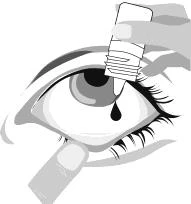
- Wash your hands. Tilt your head backward and look upward.
- Gently pull down the lower eyelid to form a small pocket.
- Invert the bottle and apply slight pressure to release one drop of the eye drops into each eye to be treated.
- Release the lower eyelid and close your eye for 30 seconds.
Wipe away any excess liquid running down the cheek.
If the drop does not enter the eye, repeat the procedure.
To avoid eye infections or injury, the tip of the bottle must not touch the eye or come into contact with any other surfaces. Immediately after using the bottle, close it tightly by screwing the cap back on securely.
If you use more BIMATOPROST EG 0.1 mg/ml than you should
If you use more BIMATOPROST EG than you should, it is unlikely to cause serious harm. Take the next dose at your usual time. If you are concerned, consult your doctor or pharmacist.
If you forget to use BIMATOPROST EG 0.1 mg/ml
If you forget to use BIMATOPROST EG, as soon as you remember, apply one drop and then continue with your regular dosing schedule. Do not use a double dose to make up for the missed dose.
If you stop using BIMATOPROST EG 0.1 mg/ml
For BIMATOPROST EG to work properly, it must be used every day. If you stop using BIMATOPROST EG, your intraocular pressure may increase. Therefore, speak with your doctor before stopping treatment.
If you have any questions about how to use this medicine, consult your doctor or pharmacist.
4. Possible side effects
Like all medicines, this medicine can cause side effects, although not everybody gets them.
Very common side effects (may affect more than 1 in 10 people)
Eye effects
- Mild redness (up to 29% of people).
Common side effects (may affect up to 1 in 10 people)
Eye effects
- Small ulcers on the surface of the eye, with or without inflammation;
- Irritation;
- Itchy eyes;
- Eyelash elongation;
- Irritation when administering the drops into the eye;
- Eye pain.
Skin effects
- Red, itchy eyelids;
- Darkening of the skin around the eye;
- Increased hair growth around the eye.
Uncommon side effects (may affect up to 1 in 100 people)
Eye effects
- Darkening of the iris colour;
- Tired eyes;
- Swelling of the surface of the eye;
- Blurred vision;
- Loss of eyelashes.
Skin effects
- Dry skin;
- Crusting at the edge of the eyelid;
- Swelling of the eyelid;
- Itching.
General effects
- Headache;
- Feeling unwell.
Not known (frequency cannot be estimated from the available data)
Eye effects
- Macular edema (swelling of the retina at the back of the eye, which may lead to worsening of vision);
- Darkening of the eyelids;
- Sunken eyes;
- Dry eye.
General effects
- Allergic reaction symptoms (swelling, eye redness, and skin rash);
- Asthma;
- Worsening of asthma;
- Worsening of chronic obstructive pulmonary disease (COPD);
- Shortness of breath.
In addition to the side effects of BIMATOPROST EG 0.1 mg/ml, the following side effects have been observed with another medicine containing a higher concentration of bimatoprost (0.3 mg/ml):
- Dizziness;
- Burning sensation in the eye;
- An allergic reaction in the eye;
- Inflamed eyelids;
- Difficulty seeing clear images;
- Worsening of vision;
- Swelling of the transparent layer covering the surface of the eye;
- Sensation of a foreign body in the eye;
- Light sensitivity;
- Tearing;
- Sticky eyes;
- Darker eyelashes;
- Bleeding of the retina;
- Inflammation inside the eye;
- Cystoid macular edema (swelling of the retina at the back of the eye, which may lead to worsening of vision);
- Eyelid spasms;
- Eyelid contraction, pulling away from the eye surface;
- Redness of the skin around the eye;
- Increased blood pressure;
- Weakness;
- Increased liver function test values in blood tests.
Other side effects reported with eye drops containing phosphates
In very rare cases, some patients with severe damage to the transparent layer at the front of the eye (the cornea) have developed opaque areas on the cornea due to calcium deposits during treatment.
Reporting of side effects
If you experience any side effect, including those not listed in this leaflet, talk to your doctor or pharmacist. You can also report side effects directly via the national reporting system at:
www.agenziafarmaco.gov.it/content/come-segnalare-una-sospetta-reazione-avversa
By reporting side effects, you can help provide more information on the safety of this medicine.
5. How to store BIMATOPROST EG 0.1 mg/ml
Keep this medicine out of the sight and reach of children.
Do not use this medicine after the expiry date which is stated on the label of the bottle and on the
carton after “EXP.” The expiry date refers to the last day of that month.
The bottle must be discarded no later than 4 weeks after first opening, even if there are still eye
drops remaining. This will help prevent infections. To help you remember, write down the date of
first opening in the space provided on the carton.
Do not dispose of any medicine via wastewater or household waste. Ask your pharmacist how to
dispose of medicines no longer required. This will help protect the environment.
6. Package contents and other information
What BIMATOPROST EG 0.1 mg/ml contains
- The active substance is bimatoprost. One ml of solution contains 0.1 mg of bimatoprost. One drop contains approximately 2.5 micrograms of bimatoprost.
- The other components are benzalkonium chloride (preservative), sodium chloride, disodium phosphate heptahydrate, citric acid monohydrate, sodium hydroxide or hydrochloric acid (for pH adjustment) and purified water.
Description of the appearance of BIMATOPROST EG 0.1 mg/ml and contents of the pack
BIMATOPROST EG is a clear, colourless solution supplied in a pack containing 1 plastic bottle or 3 plastic bottles, each closed with a screw cap. Each bottle is approximately half full and contains 2.5 or 3 millilitres of solution, sufficient for 4 weeks of use.
It is possible that not all pack sizes are marketed.
Marketing Authorisation Holder
EG S.p.A., Via Pavia 6, 20136 Milano, Italy
Manufacturers
S.C. ROMPHARM COMPANY S.R.L., Eroilor Street, no. 1A Otopeni 075100, Ilfov - Romania
STADA Arzneimittel AG, Stadastrasse 2 – 18, 61118 Bad Vilbel - Germany
Centrafarm Services B.V., Nieuwe Donk 9, 4879 AC Etten-Leur - Netherlands
STADA Arzneimittel GmbH, Muthgasse 36, 1190 Wien - Austria
This medicinal product is authorised in the European Economic Area countries under the following names:
Austria Bimatoprost STADA 100 Mikrogramm/ml Augentropfen
Belgium Bimatoprost EG 0.1 mg/ml oogdruppels, oplossing
Czech Republic Bimatoprost Stada 0.1 mg/ml oční kapky, roztok
Denmark Bimatoprost “Stada”, øjendråber, opløsning 0.1 mg/ml
France BIMATOPROST EG 0.1 mg/ml, collyre en solution
Germany Bimatoprost AL 0.1 mg/ml Augentropfen, Lösung
Italy Bimatoprost EG 0.1 mg/ml collirio, soluzione
Luxembourg Bimatoprost EG 0.1 mg/ml collyre en solution
Netherlands Bimatoprost CF 0.1 mg/ml, oogdruppels, oplossing
Slovenia Bimatoprost STADA 0.1 mg/ml kapljice za oko, raztopina
Spain Bimatoprost STADA 0.1 mg/ml colirio en solución EFG
Sweden Bimatoprost STADA 0.1 mg/ml ögondroppar, lösning
Package leaflet: information for the user
BIMATOPROST EG 0.3 mg/ml eye drops, solution
Bimatoprost
Generic medicine
Please read this leaflet carefully before using this medicine as it contains
important information for you.
- Keep this leaflet. You may need to read it again.
- If you have any questions, consult your doctor or pharmacist.
- This medicine has been prescribed for you only. Do not give it to others, even if their symptoms are the same as yours, as it may be harmful.
- If you experience any adverse reaction, including those not listed in this leaflet, contact your doctor or pharmacist. See section 4.
Contents of this leaflet
- What BIMATOPROST EG 0.3 mg/ml is and what it is used for
- What you need to know before using BIMATOPROST EG 0.3 mg/ml
- How to use BIMATOPROST EG 0.3 mg/ml
- Possible side effects
- How to store BIMATOPROST EG 0.3 mg/ml
- Contents of the pack and other information
1. What BIMATOPROST EG 0.3 mg/ml is and what it is used for
BIMATOPROST EG is an anti-glaucoma medicine. It belongs to a group of medicines
called prostamides.
BIMATOPROST EG is used to reduce elevated intraocular pressure. This medicine can
be used alone or in combination with other eye drops called beta-blockers, which also
help reduce eye pressure.
The eye contains a clear, watery fluid that nourishes its internal structures. This fluid is constantly drained from the eye, and new fluid is produced to replace the drained fluid. If the fluid is not drained quickly enough, pressure inside the eye increases. This medicine works by increasing the amount of fluid drained, thereby reducing intraocular pressure. Elevated intraocular pressure, if not reduced, can lead to a condition called glaucoma and may eventually cause vision damage.
2. What you need to know before using BIMATOPROST EG 0.3 mg/ml
Do not use BIMATOPROST EG 0.3 mg/ml
- if you are allergic to bimatoprost or to any of the other ingredients of this medicine (listed in section 6);
- if in the past you had to discontinue use of eye drops due to an adverse reaction caused by the preservative benzalkonium chloride.
Warnings and precautions
Talk to your doctor or pharmacist before using BIMATOPROST EG 0.3 mg/ml.
Consult your doctor if:
- you have breathing problems;
- you have liver or kidney problems;
- you have previously undergone cataract surgery;
- you suffer from dry eye;
- you have or have had corneal problems (the transparent front part of the eye);
- you wear contact lenses (see "BIMATOPROST EG 0.3 mg/ml contains benzalkonium chloride");
- you suffer or have suffered from hypotension or bradycardia;
- you have had a viral infection or inflammation of the eyes.
BIMATOPROST EG may cause darkening and lengthening of the eyelashes, and may also darken the skin around the eyelids. Over time, the colour of the iris may also darken. These changes may be permanent and are more noticeable if treatment is applied to only one eye.
Children and adolescents
BIMATOPROST EG has not been tested in patients under 18 years of age and therefore must not be used in patients under 18 years of age.
Other medicines and BIMATOPROST EG
Inform your doctor or pharmacist if you are taking, have recently taken, or might take any other medicines.
Pregnancy, breastfeeding and fertility
If you are pregnant, think you might be pregnant, planning a pregnancy, or are breastfeeding, consult your doctor or pharmacist before using this medicine.
BIMATOPROST EG may pass into breast milk; therefore, breastfeeding is not recommended during treatment with BIMATOPROST EG.
Driving and using machines
After administration of BIMATOPROST EG, you may experience transient blurred vision. In this case, do not drive or operate machinery until your vision has cleared.
BIMATOPROST EG 0.3 mg/ml contains benzalkonium chloride
Do not use the eye drops while wearing contact lenses. After administering the eye drops, wait 15 minutes before reinserting your contact lenses. The preservative in BIMATOPROST EG, benzalkonium chloride, may cause eye irritation and may discolour soft contact lenses.
3. How to use BIMATOPROST EG 0.3 mg/ml
Use this medicine exactly as instructed by your doctor or pharmacist.
If you have any doubts, consult your doctor or pharmacist.
BIMATOPROST EG must be applied only in the eyes. The recommended dose is one drop of BIMATOPROST EG once daily in the evening, in each eye to be treated.
If you are using BIMATOPROST EG together with another eye medicine, apply BIMATOPROST EG first and wait 5 minutes before applying the other eye medicine.
Do not use it more than once a day, as the effectiveness of treatment may be reduced.
Instructions for use:
Do not use the bottle if the tamper-evident seal on the neck of the bottle is not intact before use.


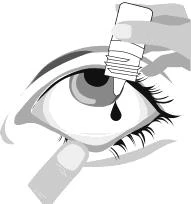

- Wash your hands. Tilt your head backward and look upward.
- Gently pull down the lower eyelid to form a small pocket.
- Invert the bottle and apply gentle pressure to release one drop of eye drops into each eye to be treated.
- Release the lower eyelid and close your eye for 30 seconds.
Wipe away any excess liquid that runs down the cheek.
If the drop did not enter the eye, repeat the procedure.
To avoid eye infections and injury, the tip of the bottle must not touch the eye or come into contact with any other surfaces. Immediately after using the bottle, close it tightly by screwing the cap back on.
If you use more BIMATOPROST EG 0.3 mg/ml than you should
If you use more BIMATOPROST EG than recommended, it is unlikely to cause serious harm. Take the next dose at the usual time. If you are concerned, consult your doctor or pharmacist.
If you forget to use BIMATOPROST EG 0.3 mg/ml
If you forget to use BIMATOPROST EG, apply one drop as soon as you remember, then continue with your regular dosing schedule. Do not use a double dose to make up for the missed dose.
If you stop using BIMATOPROST EG 0.3 mg/ml
To work properly, BIMATOPROST EG must be used every day. If you stop using BIMATOPROST EG, your intraocular pressure may increase. Therefore, speak with your doctor before stopping treatment.
If you have any questions about how to use this medicine, ask your doctor or pharmacist.
4. Possible side effects
Like all medicines, this medicine can cause side effects, although not everybody gets them.
Very common side effects (may affect more than 1 in 10 people)
Eye-related side effects
- longer eyelashes (up to 45% of people);
- mild redness (up to 44% of people);
- itching (up to 14% of people).
Common side effects (may affect up to 1 in 10 people)
Eye-related side effects
- allergic reaction in the eye;
- tired eyes;
- sensitivity to light;
- darkening of the skin around the eye;
- darker eyelashes;
- pain;
- sensation of a foreign body in the eye;
- sticky eyes;
- darkening of iris colour;
- difficulty seeing sharp images;
- irritation;
- burning;
- inflamed, red and itchy eyelids;
- watering of the eye;
- dry eye;
- worsening of vision;
- blurred vision;
- swelling of the transparent layer covering the surface of the eye;
- small ulcers on the surface of the eye, with or without inflammation.
Effects on the body as a whole
- headache;
- increased liver function test values in blood tests;
- increased blood pressure.
Uncommon side effects (may affect up to 1 in 100 people)
Eye-related side effects
- cystoid macular oedema (swelling of the retina at the back of the eye which may lead to worsening of vision);
- inflammation inside the eye;
- bleeding of the retina;
- swollen eyelids;
- eyelid spasms;
- tightening of the eyelid, causing it to pull away from the eye surface;
- redness of the skin around the eye.
Effects on the body as a whole
- nausea;
- dizziness;
- weakness;
- growth of hair around the eye.
Side effects with unknown frequency (frequency cannot be estimated from the available data)
Eye-related side effects
- sunken eyes.
Effects on the body as a whole
- asthma;
- worsening of asthma;
- worsening of the lung disease called chronic obstructive pulmonary disease (COPD);
- shortness of breath;
- symptoms of allergic reaction (swelling, redness of the eye and skin rash).
Other side effects reported with eye drops containing phosphates
In very rare cases, some patients with severe damage to the transparent layer at the front of the eye (the cornea) have developed opaque areas on the cornea due to calcium accumulation during treatment.
Reporting of side effects
If you experience any side effect, including those not listed in this leaflet, talk to your doctor or pharmacist. You can also report side effects directly via the national reporting system at: www.agenziafarmaco.gov.it/content/come-segnalare-una-sospetta-reazione-avversa.
By reporting side effects, you can help provide more information on the safety of this medicine.
5. How to store BIMATOPROST EG 0.3 mg/ml
Keep this medicine out of the sight and reach of children.
Do not use this medicine after the expiry date stated on the label of the bottle and on the carton after "EXP". The expiry date refers to the last day of that month.
The bottle must be discarded no later than 4 weeks after first opening, even if it still contains some eye drops. This will prevent infections. To help you remember, write down the date of first opening in the space provided on the carton.
Do not dispose of medicines via wastewater or household waste. Ask your pharmacist how to dispose of medicines you no longer use. This will help protect the environment.
6. Package contents and other information
What BIMATOPROST EG 0.3 mg/ml contains
- The active substance is bimatoprost. One ml of solution contains 0.3 mg of bimatoprost. One drop contains approximately 7.5 micrograms of bimatoprost.
- The other components are benzalkonium chloride (preservative), monohydrate citric acid, disodium phosphate heptahydrate, sodium chloride, sodium hydroxide or hydrochloric acid (for pH adjustment) and purified water.
Description of the appearance of BIMATOPROST EG 0.3 mg/ml and contents of the
package
BIMATOPROST EG is a clear, colourless solution supplied in a pack containing 1 plastic bottle or 3 plastic bottles, each closed with a screw cap. Each bottle is approximately half full and contains 2.5 or 3 millilitres of solution, sufficient for 4 weeks of use.
It is possible that not all pack sizes are marketed.
Marketing Authorisation Holder
EG S.p.A., Via Pavia 6, 20136 Milano
Manufacturers
S.C. ROMPHARM COMPANY S.R.L., Eroilor Street, no. 1A Otopeni 075100, Ilfov - Romania
STADA Arzneimittel AG, Stadastrasse 2 – 18, 61118 Bad Vilbel - Germany
Centrafarm Services B.V., Nieuwe Donk 9, 4879 AC Etten-Leur - Netherlands
STADA Arzneimittel GmbH, Muthgasse 36, 1190 Wien - Austria
This medicinal product is authorised in the European Economic Area countries under the
following names:
Austria Bimatoprost STADA 300 Microgram/ml Eye Drops, Solution
Belgium Bimatoprost EG 0.3 mg/ml oogdruppels, oplossing
Czech Republic Bimatoprost Stada 0.3 mg/ml oční kapky, roztok
Denmark Bimatoprost STADA
Finland Bimatoprost STADA 0.3 mg/ml silmätipat, liuos
France BIMATOPROST EG 0.3 mg/ml, eye drops, solution
Germany Bimatoprost AL 0.3 mg/ml Augentropfen, Lösung
Italy Bimatoprost EG 0.3 mg/ml eye drops, solution
Luxembourg Bimatoprost EG 0.3 mg/ml collyre en solution
Netherlands Bimatoprost CF 0.3 mg/ml, oogdruppels, oplossing
Slovenia Bimatoprost STADA 0.3 mg/ml kapljice za oko, raztopina
Spain Bimatoprost STADA 0.3 mg/ml colirio en solución EFG
Sweden Bimatoprost STADA 0.3 mg/ml ögondroppar, lösning