Biktarvy
Italy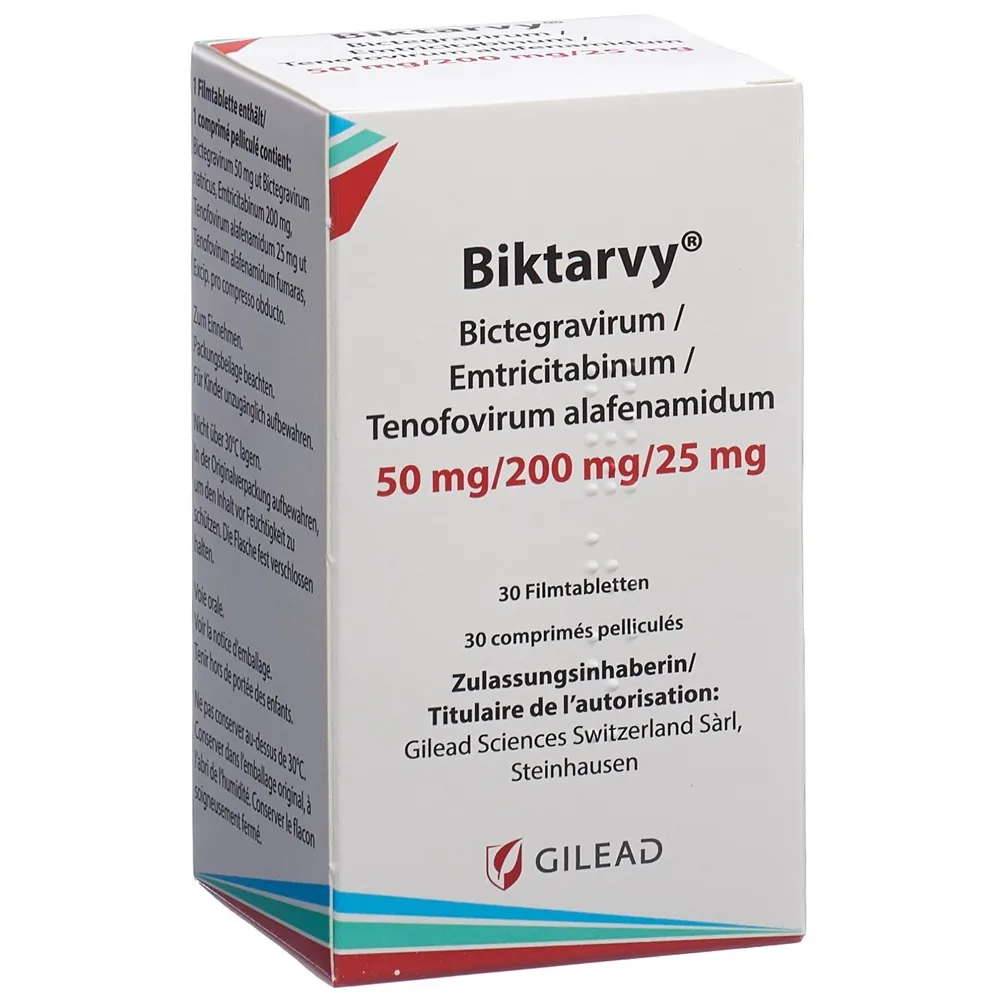
Table of Contents
- Package leaflet: Information for the user
- Biktarvy 30 mg/120 mg/15 mg film-coated tablets
- 1. What Biktarvy is and what it is used for
- 2. What you need to know before taking Biktarvy
- 3. How to take Biktarvy
- 4. Possible side effects
- 5. How to store Biktarvy
- 6. Package contents and other information
- Package leaflet: information for the user
- Biktarvy 50 mg/200 mg/25 mg film-coated tablets
- 1. What Biktarvy is and what it is used for
- 2. What you should know before taking Biktarvy
- 3. How to take Biktarvy
- 4. Possible side effects
- 5. How to store Biktarvy
- 6. Package contents and other information
Package leaflet: Information for the user
Biktarvy 30 mg/120 mg/15 mg film-coated tablets
bictegravir/emtricitabine/tenofovir alafenamide
Please read all of this leaflet carefully before taking this medicine because it contains
important information for you.
- Keep this leaflet. You may need to read it again.
- If you have any questions, ask your doctor or pharmacist.
- This medicine has been prescribed for you only. Do not give it to other people, even if they have the same symptoms as yours, because it could be harmful.
- If you experience any side effect, including those not listed in this leaflet, talk to your doctor or pharmacist. See section 4.
If Biktarvy has been prescribed for your child, please note that all the information in
this leaflet applies to your child (in this case, read “your child” instead of “you”).
Contents of this leaflet
- What Biktarvy is and what it is used for
- What you need to know before taking Biktarvy
- How to take Biktarvy
- Possible side effects
- How to store Biktarvy
- Contents of the pack and other information
1. What Biktarvy is and what it is used for
Biktarvy contains three active substances:
- bictegravir, an antiretroviral medicine, known as an integrase strand transfer inhibitor (INSTI)
- emtricitabine, an antiretroviral medicine known as a nucleoside reverse transcriptase inhibitor (NRTI)
- tenofovir alafenamide, an antiretroviral medicine known as a nucleotide reverse transcriptase inhibitor (NtRTI)
Biktarvy is a single tablet for the treatment of human immunodeficiency virus type 1 (HIV-1) infection in adults, adolescents, and children aged 2 years and older, weighing at least 14 kg.
Biktarvy reduces the amount of HIV in your body. This strengthens your immune system and reduces the risk of developing HIV-related illnesses.
2. What you need to know before taking Biktarvy
Do not take Biktarvy
- If you are allergic to bictegravir, emtricitabine, tenofovir alafenamide, or any of the other ingredients of this medicine (listed in section 6).
- If you are taking any of the following medicines:
- rifampicin, used to treat certain bacterial infections such as tuberculosis
- St. John’s wort (Hypericum perforatum), a herbal remedy used for depression and anxiety, or products containing it.
If any of these conditions apply to you, do not take Biktarvy and inform your doctor immediately.
Warnings and precautions
Talk to your doctor before taking Biktarvy:
- If you have liver problems or a history of liver disease, including hepatitis. Patients with liver disease, including chronic hepatitis B or C, treated with antiretrovirals have an increased risk of severe and potentially fatal liver complications. If you have hepatitis B, your doctor will carefully evaluate the most appropriate treatment regimen for you.
- If you have hepatitis B. Liver problems may worsen when you stop treatment with Biktarvy. Do not stop treatment with Biktarvy if you have hepatitis B. Consult your doctor first. For further details, see section 3, Do not stop taking Biktarvy.
- If you have kidney disease or if tests have shown kidney problems. Your doctor may request blood tests to monitor how well your kidneys are functioning, both at the start and during treatment with Biktarvy.
While taking Biktarvy
When you start taking Biktarvy, be alert for:
- signs of inflammation or infection
- joint pain, stiffness, or bone problems
If you notice any of these symptoms, inform your doctor immediately. For more information, see section 4, Possible side effects.
Kidney problems may occur over a long period of time during treatment with Biktarvy (see Warnings and precautions).
This medicine does not cure HIV infection. While taking Biktarvy, you may still develop infections or other illnesses associated with HIV infection.
Children and adolescents
Do not give this medicine to children under 2 years of age or weighing less than 14 kg, regardless of age. The use of Biktarvy in children under 2 years of age or weighing less than 14 kg has not yet been studied. Film-coated tablets of Biktarvy 50 mg/200 mg/25 mg are available for children and adolescents weighing 25 kg or more.
Bone mineral loss has been reported in some children aged between 3 and less than 12 years who received one of the active substances (tenofovir alafenamide) contained in Biktarvy. The long-term effects on bone health and the risk of future fractures in children are uncertain. Your doctor will monitor the child's bone health as needed.
Other medicines and Biktarvy
Tell your doctor or pharmacist if you are taking, have recently taken, or might take any other medicines. Biktarvy can interact with other medicines. As a result, the blood levels of Biktarvy or the other medicines may be altered. This could prevent the medicines from working properly or could worsen their side effects. In some cases, your doctor may need to adjust the dose or monitor blood levels.
Medicines that must never be taken with Biktarvy:
- rifampicin, used to treat certain bacterial infections such as tuberculosis
- St. John’s wort (Hypericum perforatum), a herbal remedy used for depression and anxiety, or products containing it.
If you are taking any of these medicines, do not take Biktarvy and inform your doctor immediately.
Talk to your doctor if you are taking:
- medicines used to treat HIV and/or hepatitis B, containing:
- adefovir dipivoxil, atazanavir, bictegravir, emtricitabine, lamivudine, tenofovir alafenamide or tenofovir disoproxil
- antibiotics used to treat bacterial infections, containing:
- azithromycin, clarithromycin, rifabutin or rifapentine
- anticonvulsants used to treat epilepsy, containing:
- carbamazepine, oxcarbazepine, phenobarbital or phenytoin
- immunosuppressants used to control the immune response after transplantation, containing cyclosporine
- medicines for treating ulcers containing sucralfate
Inform your doctor if you are taking any of these medicines. Do not stop treatment without contacting your doctor.
Ask your doctor or pharmacist if you are taking:
- antacids, containing aluminium and/or magnesium hydroxide, used to treat stomach ulcers, heartburn or acid reflux
- mineral or vitamin supplements, containing magnesium, zinc or iron
Ask your doctor or pharmacist for advice before taking Biktarvy if you are taking any of these medicines.
- Antacids and supplements containing aluminium and/or magnesium: you must take Biktarvy at least 2 hours before antacids or supplements containing aluminium and/or magnesium. Alternatively, you may take Biktarvy with food at least 2 hours after. However, if you are pregnant, read Pregnancy and breastfeeding.
- Iron and/or zinc supplements: you must take Biktarvy at least 2 hours before iron and/or zinc supplements, or you may take it together with them at any time with food. However, if you are pregnant, read Pregnancy and breastfeeding.
Pregnancy and breastfeeding
- If you are pregnant, think you may be pregnant, planning to become pregnant, or breastfeeding, consult your doctor or pharmacist before taking this medicine.
- If you become pregnant, inform your doctor immediately and discuss the potential benefits and risks of antiretroviral therapy for you and your baby.
- Antacids and supplements containing aluminium and/or magnesium: during pregnancy, you must take Biktarvy at least 2 hours before or 6 hours after taking antacids, medicines or supplements containing aluminium and/or magnesium.
- Supplements or medicines containing calcium, iron and/or zinc: during pregnancy, you must take Biktarvy at least 2 hours before or 6 hours after taking supplements or medicines containing calcium, iron and/or zinc. Alternatively, you may take them together at any time with food.
If you have already taken Biktarvy during pregnancy, your doctor may regularly perform blood tests and other diagnostic examinations to monitor your baby's development. In children whose mothers took nucleoside reverse transcriptase inhibitors (NRTIs) during pregnancy, the benefit of protection against HIV has outweighed the risk of side effects.
Do not breastfeed while being treated with Biktarvy. The reason is that some of the active substances in this medicine are excreted in breast milk. Breastfeeding is not recommended for HIV-positive women because HIV infection can be transmitted to the baby through breast milk. If you are breastfeeding or considering breastfeeding, you must discuss this with your doctor as soon as possible.
Driving and using machines
Biktarvy may cause dizziness. If dizziness occurs while taking Biktarvy, do not drive, ride a bicycle, or use tools or machinery.
Biktarvy contains sodium
This medicine contains less than 1 mmol (23 mg) of sodium per tablet, i.e., essentially ‘sodium-free’.
3. How to take Biktarvy
Take this medicine exactly as prescribed by your doctor. If you have any doubts, consult your doctor or pharmacist.
There are two dosage strengths of Biktarvy tablets. Your doctor will prescribe the appropriate tablet based on your age and body weight.
The recommended dose is:
Children aged 2 years and older, with body weight at least 14 kg but less than 25 kg: one tablet daily, taken with or without food (one tablet of 30 mg/120 mg/15 mg).
Due to the bitter taste, it is recommended not to chew or crush the tablet.
If you have difficulty swallowing the tablet whole, you may split it in half. Take both halves one after the other to ensure the full dose is administered. Do not store a split tablet.
The score line on the tablet is intended to facilitate breaking the tablet if the child has difficulty swallowing it whole.
The 90-day multi-pack contains three 30-day packs together.
Ask your doctor or pharmacist for advice if you are taking:
- Antacids containing aluminium and/or magnesium hydroxide, used to treat stomach ulcers, heartburn or acid reflux
- Mineral supplements or vitamins containing magnesium, zinc or iron
See section 2 for more information on taking these medicines with Biktarvy.
If you are undergoing dialysis, take your daily dose of Biktarvy after completion of the dialysis session.
If you take more Biktarvy than you should
Taking more Biktarvy than recommended may increase your risk of experiencing possible side effects of this medicine (see section 4, Possible side effects).
Contact your doctor or the nearest emergency department immediately. Take the bottle or the tablet packaging with you so that you can clearly describe what has been taken.
If you forget to take Biktarvy
It is important not to miss any dose of Biktarvy.
If you forget a dose:
- If you remember within 18 hours of your usual dosing time, take the tablet as soon as possible. Then take the next dose at your usual time.
- If you remember more than 18 hours after your usual dosing time, do not take the missed dose. Wait and take the next dose at your usual time.
In case of vomiting within 1 hour after taking Biktarvy, take another tablet. If vomiting occurs more than 1 hour after taking Biktarvy, do not take another tablet until your next scheduled dose.
Do not stop taking Biktarvy
Do not stop taking Biktarvy without talking to your doctor. Stopping treatment with Biktarvy may seriously affect your response to subsequent treatment. If treatment with Biktarvy is stopped for any reason, discuss this with your doctor before restarting the tablets.
When your supply of Biktarvy starts to run low, obtain more from your doctor or pharmacist. This is very important because the amount of virus may begin to increase if the medicine is stopped, even for a short time. The disease may become more difficult to treat.
If you have both HIV infection and hepatitis B, it is especially important not to stop treatment with Biktarvy without first contacting your doctor. Blood tests may need to be repeated for several months after stopping treatment. In some patients with advanced liver disease or cirrhosis, stopping treatment is not recommended, as it may lead to worsening of hepatitis, which could be potentially fatal.
Contact your doctor immediately if you notice any new or unusual symptoms after stopping treatment, particularly symptoms typically associated with hepatitis B infection.
If you have any questions about how to use this medicine, consult your doctor or pharmacist.
4. Possible side effects
Like all medicines, this medicine can cause side effects, although not everyone gets them.
Possible side effects: tell your doctor immediately
- Signs of inflammation or infection. In some patients with advanced HIV infection (AIDS) and a history of prior opportunistic infections (infections that occur in people with weakened immune systems), signs and symptoms of inflammation from previous infections may occur shortly after starting anti-HIV treatment. These symptoms are thought to be due to an improved immune response, which enables the body to fight infections that may have been present without obvious symptoms.
- Autoimmune diseases may also occur, in which the immune system attacks healthy body tissues, when you start taking medicines for HIV infection. Autoimmune diseases may appear many months after starting treatment. Be alert for any signs of infection or other symptoms such as:
- muscle weakness
- weakness starting in the hands and feet and progressing towards the trunk
- palpitations, tremor, or hyperactivity
If you notice any of these symptoms or any signs of inflammation or infection, tell your doctor immediately.
Common side effects
(may affect up to 1 in 10 people)
- depression
- abnormal dreams
- headache
- dizziness
- diarrhoea
- feeling unwell (nausea)
- tiredness (fatigue)
- weight gain
Uncommon side effects
(may affect up to 1 in 100 people)
- low red blood cell count (anaemia)
- vomiting
- stomach pain
- digestive problems causing discomfort after meals (dyspepsia)
- intestinal gas (flatulence)
- swelling of the face, lips, tongue or throat (angioedema)
- itching
- rash
- hives
- joint pain (arthralgia)
- suicidal thoughts and attempted suicide (especially in patients who have suffered from depression or have a history of mental health problems)
- anxiety
- sleep disorders
Blood tests may also show:
- higher levels of substances called bilirubin and/or serum creatinine in the blood
Rare side effects
(may affect up to 1 in 1,000 people)
- Stevens-Johnson syndrome (SJS) is a serious, potentially life-threatening condition that usually begins with flu-like symptoms. After a few days, other symptoms appear, including:
- painful red or purple skin that looks burned and peels off
- blisters on the skin, mouth, nose, and genitals
- watery, red, painful eyes
If you experience any of these symptoms, stop taking the medicine immediately and tell your doctor right away.
If any of the side effects worsen, tell your doctor.
Other possible side effects observed during HIV treatment
The frequency of the following side effects is unknown (frequency cannot be estimated from the available data).
- Bone problems. Some patients taking combination antiretroviral medicines such as Biktarvy may develop a bone disease called osteonecrosis (death of bone tissue due to reduced blood supply to the bone). Long-term use of this type of medicine, corticosteroid use, alcohol consumption, having a weakened immune system, and being overweight may be some of the many risk factors for developing this condition. Signs of osteonecrosis include:
- joint stiffness
- joint aches and pains (especially in the hips, knees, and shoulders)
- difficulty moving
If you notice any of these symptoms, tell your doctor.
During HIV treatment, an increase in weight and in levels of lipids and glucose in the blood may occur. This is partly related to the recovery of health status and lifestyle, and, in the case of blood lipids, may sometimes be related to the HIV medicines themselves. Your doctor will monitor these changes.
Reporting of side effects
If you get any side effects, including ones not listed in this leaflet, talk to your doctor or pharmacist. You can also report side effects directly through the national reporting system listed in Annex V. By reporting side effects, you can help provide more information on the safety of this medicine.
5. How to store Biktarvy
Keep this medicine out of the sight and reach of children.
Do not use this medicine after the expiry date stated on the outer packaging and on the
bottle or blister packs after {Exp.}. The expiry date refers to the last day of that month.
Store in the original packaging to protect the medicine from moisture. Keep the bottle tightly closed.
Do not use if the seal on the bottle opening is broken or missing.
Do not dispose of medicines via wastewater or household waste. Ask your pharmacist how to dispose of medicines you no longer use. This will help protect the environment.
6. Package contents and other information
What Biktarvy contains
The active substances are bictegravir, emtricitabine and tenofovir alafenamide.
Each Biktarvy tablet contains sodium bictegravir equivalent to 30 mg of bictegravir, 120 mg of
emtricitabine and tenofovir alafenamide fumarate equivalent to 15 mg of tenofovir alafenamide.
The other components are
Tablet core
Microcrystalline cellulose (E460), croscarmellose sodium (E468), magnesium stearate (E470b).
Film coating
Polyvinyl alcohol (E203), titanium dioxide (E171), macrogol (E1521), talc (E553b), red iron oxide
(E172), black iron oxide (E172).
Description of the appearance of Biktarvy and contents of the pack
The film-coated tablets of Biktarvy 30 mg/120 mg/15 mg are pink, capsule-shaped, film-coated and marked with “BVY” on one side and a score line on the other side of the tablet.
The tablets are supplied in a bottle. Not all pack sizes may be marketed.
Biktarvy is available in bottles containing 30 tablets and in packs of 3 bottles, each containing 30 tablets. Each bottle also contains a silica gel desiccant, which should remain in the bottle to protect the tablets. The silica gel is contained in a separate sachet or small container and must not be swallowed.
Marketing Authorisation Holder
Gilead Sciences Ireland UC
Carrigtohill
County Cork, T45 DP77
Ireland
Manufacturer
Gilead Sciences Ireland UC
IDA Business & Technology Park
Carrigtohill
County Cork
Ireland
For further information about this medicinal product, please contact the local representative of the Marketing Authorisation Holder:
België/Belgique/Belgien Lietuva
Gilead Sciences Belgium SRL-BV Gilead Sciences Ireland UC
Tél/Tel: + 32 (0) 24 01 35 50 Tel.: + 353 (0) 1 686 1888
България Luxembourg/Luxemburg
Gilead Sciences Ireland UC Gilead Sciences Belgium SRL-BV
Тел.: + 353 (0) 1 686 1888 Tél/Tel: + 32 (0) 24 01 35 50
Česká republika Magyarország
Gilead Sciences s.r.o. Gilead Sciences Ireland UC
Tel: + 420 (0) 910 871 986 Tel.: + 353 (0) 1 686 1888
Danmark Malta
Gilead Sciences Sweden AB Gilead Sciences Ireland UC
Tlf.: + 46 (0) 8 5057 1849 Tel: + 353 (0) 1 686 1888
Deutschland Nederland
Gilead Sciences GmbH Gilead Sciences Netherlands B.V.
Tel: + 49 (0) 89 899890-0 Tel: + 31 (0) 20 718 36 98
Eesti Norge
Gilead Sciences Ireland UC Gilead Sciences Sweden AB
Tel.: + 353 (0) 1 686 1888 Tlf: + 46 (0) 8 5057 1849
Ελλάδα Österreich
Gilead Sciences Ελλάς Μ.ΕΠΕ. Gilead Sciences GesmbH
Τηλ: + 30 (0) 210 8930 100 Tel: + 43 (0) 1 260 830
España Polska
Gilead Sciences, S.L. Gilead Sciences Poland Sp. z o.o.
Tel: + 34 (0) 91 378 98 30 Tel.: + 48 (0) 22 262 8702
France Portugal
Gilead Sciences Gilead Sciences, Lda.
Tél: + 33 (0) 1 46 09 41 00 Tel: + 351 (0) 21 7928790
Hrvatska România
Gilead Sciences Ireland UC Gilead Sciences (GSR) S.R.L
Tel: + 353 (0) 1 686 1888 Tel: + 40 31 631 18 00
Ireland Slovenija
Gilead Sciences Ireland UC Gilead Sciences Ireland UC
Tel: + 353 (0) 214 825 999 Tel: + 353 (0) 1 686 1888
Ísland Slovenská republika
Gilead Sciences Sweden AB Gilead Sciences Slovakia s.r.o.
Sími: + 46 (0) 8 5057 1849 Tel: + 421 (0) 232 121 210
Italia Suomi/Finland
Gilead Sciences S.r.l. Gilead Sciences Sweden AB
Tel: + 39 02 439201 Puh/Tel: + 46 (0) 8 5057 1849
Κύπρος Sverige
Gilead Sciences Ελλάς Μ.ΕΠΕ. Gilead Sciences Sweden AB
Τηλ: + 30 (0) 210 8930 100 Tel: + 46 (0) 8 5057 1849
Latvija
Gilead Sciences Ireland UC
Tel.: + 353 (0) 1 686 1888
More detailed information on this medicinal product is available on the website of the European Medicines Agency, http://www.ema.europa.eu.
Package leaflet: information for the user
Biktarvy 50 mg/200 mg/25 mg film-coated tablets
bictegravir/emtricitabine/tenofovir alafenamide
Please read all of this leaflet carefully before taking this medicine because it contains
important information for you.
- Keep this leaflet. You may need to read it again.
- If you have any questions, ask your doctor or pharmacist.
- This medicine has been prescribed for you only. Do not give it to other people, even if they have the same symptoms as you, because it may be harmful.
- If you experience any side effects, including those not listed in this leaflet, talk to your doctor or pharmacist. See section 4.
If Biktarvy has been prescribed for your child, please note that all the information in
this leaflet is intended for your child (in this case, read “your child” instead of “you”).
Contents of this leaflet
- What Biktarvy is and what it is used for
- What you need to know before taking Biktarvy
- How to take Biktarvy
- Possible side effects
- How to store Biktarvy
- Contents of the pack and other information
1. What Biktarvy is and what it is used for
Biktarvy contains three active substances:
- bictegravir, an antiretroviral medicine known as an integrase strand transfer inhibitor (INSTI)
- emtricitabine, an antiretroviral medicine known as a nucleoside reverse transcriptase inhibitor (NRTI)
- tenofovir alafenamide, an antiretroviral medicine known as a nucleotide reverse transcriptase inhibitor (NtRTI)
Biktarvy is a single tablet for the treatment of human immunodeficiency virus type 1 (HIV-1) infection in adults, adolescents, and children aged 2 years and older, weighing at least 14 kg.
Biktarvy reduces the amount of HIV in your body. This strengthens your immune system and reduces the risk of developing HIV-related illnesses.
2. What you should know before taking Biktarvy
Do not take Biktarvy
- If you are allergic to bictegravir, emtricitabine, tenofovir alafenamide, or any of the other ingredients of this medicine (listed in section 6).
- If you are taking any of the following medicines:
- rifampicin, used to treat certain bacterial infections such as tuberculosis
- St. John’s wort (Hypericum perforatum), a herbal remedy used for depression and anxiety, or preparations containing it.
If any of these conditions apply to you, do not take Biktarvy and inform your doctor immediately.
Warnings and precautions
Talk to your doctor before taking Biktarvy:
- If you have liver problems or a history of liver disease, including hepatitis. Patients with liver disease, including chronic hepatitis B or C, treated with antiretrovirals, have an increased risk of serious and potentially fatal liver complications. If you have hepatitis B, your doctor will carefully evaluate the most appropriate treatment regimen for you.
- If you have hepatitis B. Liver problems may worsen when you stop treatment with Biktarvy. Do not stop treatment with Biktarvy if you have hepatitis B. Consult your doctor first. For further details, see section 3, Do not stop taking Biktarvy.
- If you have kidney disease or if tests have shown kidney problems. Your doctor may request blood tests to monitor how well your kidneys are functioning, both at the start and during treatment with Biktarvy.
While taking Biktarvy
When you start taking Biktarvy, be alert for:
- signs of inflammation or infection
- joint pain, stiffness, or bone problems
If you notice any of these symptoms, inform your doctor immediately. For more information, see section 4, Possible side effects.
Kidney problems may occur over a long period while taking Biktarvy (see Warnings and precautions).
This medicine does not cure HIV infection. While taking Biktarvy, you may still develop infections or other HIV-related illnesses.
Children and adolescents
Do not give this medicine to children and adolescents weighing less than 25 kg, regardless of age. For children aged 2 years and older with body weight of at least 14 kg but less than 25 kg, film-coated tablets of Biktarvy 30 mg/120 mg/15 mg are available.
The use of Biktarvy in children under 2 years of age or weighing less than 14 kg has not yet been studied.
Bone mineral density loss has been reported in some children aged between 3 and less than 12 years who received one of the active substances (tenofovir alafenamide) contained in Biktarvy. The long-term effects on bone health and the risk of future fractures in children are uncertain. Your doctor will monitor the child’s bone health as needed.
Other medicines and Biktarvy
Tell your doctor or pharmacist if you are taking, have recently taken, or might take any other medicines. Biktarvy can interact with other medicines. As a result, the levels of Biktarvy or other medicines in your blood may be altered. This could prevent the medicines from working properly or may worsen their side effects. In some cases, your doctor may need to adjust the dose or monitor blood levels.
Medicines that must never be taken with Biktarvy:
- rifampicin, used to treat certain bacterial infections such as tuberculosis
- St. John’s wort (Hypericum perforatum), a herbal remedy used for depression and anxiety, or preparations containing it.
If you are taking any of these medicines, do not take Biktarvy and inform your doctor immediately.
Talk to your doctor if you are taking:
- medicines used to treat HIV and/or hepatitis B, containing:
- adefovir dipivoxil, atazanavir, bictegravir, emtricitabine, lamivudine, tenofovir alafenamide, or tenofovir disoproxil
- antibiotics used to treat bacterial infections, containing:
- azithromycin, clarithromycin, rifabutin, or rifapentine
- anticonvulsants used to treat epilepsy, containing:
- carbamazepine, oxcarbazepine, phenobarbital, or phenytoin
- immunosuppressants used to control the immune response after transplantation, containing cyclosporine
- medicines for treating ulcers containing sucralfate
Inform your doctor if you are taking any of these medicines. Do not stop treatment without contacting your doctor.
Ask your doctor or pharmacist for advice if you are taking:
- antacids containing aluminium and/or magnesium hydroxide, used to treat stomach ulcers, heartburn, or acid reflux
- mineral or vitamin supplements containing magnesium, zinc, or iron
Ask your doctor or pharmacist for advice before taking Biktarvy if you are taking any of these medicines.
- Antacids and supplements containing aluminium and/or magnesium: you must take Biktarvy at least 2 hours before antacids or supplements containing aluminium and/or magnesium. Alternatively, you may take Biktarvy with food at least 2 hours after. However, if you are pregnant, read Pregnancy and breastfeeding.
- Iron and/or zinc supplements: you must take Biktarvy at least 2 hours before iron and/or zinc supplements, or you may take it together with them at any time with food. However, if you are pregnant, read Pregnancy and breastfeeding.
Pregnancy and breastfeeding
- If you are pregnant, think you may be pregnant, are planning to become pregnant, or are breastfeeding, ask your doctor or pharmacist for advice before taking this medicine.
- If you become pregnant, inform your doctor immediately and discuss the potential benefits and risks of antiretroviral therapy for you and your baby.
- Antacids and supplements containing aluminium and/or magnesium: during pregnancy, you must take Biktarvy at least 2 hours before or 6 hours after taking antacids, medicines, or supplements containing aluminium and/or magnesium.
- Supplements or medicines containing calcium, iron, and/or zinc: during pregnancy, you must take Biktarvy at least 2 hours before or 6 hours after taking supplements or medicines containing calcium, iron, and/or zinc. Alternatively, you may take them together at any time with food.
If you have already taken Biktarvy during pregnancy, your doctor may request regular blood tests and other diagnostic examinations to monitor your baby’s development. In children whose mothers took nucleoside reverse transcriptase inhibitors (NRTIs) during pregnancy, the benefit of protection against HIV has outweighed the risk of side effects.
Do not breastfeed while taking Biktarvy. The reason is that some of the active substances in this medicine are excreted in breast milk. Breastfeeding is not recommended for HIV-positive women because HIV infection can be transmitted to the baby through breast milk. If you are breastfeeding or considering breastfeeding, you must speak to your doctor as soon as possible.
Driving and using machines
Biktarvy may cause dizziness. If you experience dizziness while taking Biktarvy, do not drive, ride a bicycle, or operate tools or machinery.
Biktarvy contains sodium
This medicine contains less than 1 mmol (23 mg) of sodium per tablet, i.e., essentially ‘sodium-free’.
3. How to take Biktarvy
Take this medicine exactly as your doctor has instructed. If you have any doubts, consult your doctor or pharmacist.
There are two dosage strengths of Biktarvy tablets. Your doctor will prescribe the tablet appropriate for your age and body weight.
The recommended dose is:
Adults, adolescents and children with body weight of at least 25 kg: one tablet daily, taken with or without food (one tablet containing 50 mg/200 mg/25 mg).
Due to its bitter taste, it is recommended not to chew or crush the tablet.
If you have difficulty swallowing the tablet whole, you may split it in half. Take both halves of the tablet one after the other to ensure the full dose is taken. Do not store the split tablet.
The 30-day Biktarvy blister pack contains four blister strips with 7 tablets each and one blister strip with 2 tablets. To help you keep track of your medication intake over 30 days, the 7-tablet blister strips are labelled with the days of the week, and you may write the relevant days of the week on the 2-tablet blister strip.
The 90-day multi-pack contains three 30-day packs together.
Ask your doctor or pharmacist for advice if you are taking:
- Antacids containing aluminium and/or magnesium hydroxide, used to treat stomach ulcers, heartburn or acid reflux
- Mineral supplements or vitamins containing magnesium, zinc or iron
See section 2 for more information on taking these medicines with Biktarvy.
If you are undergoing dialysis, take your daily dose of Biktarvy after completion of the dialysis treatment.
If you take more Biktarvy than you should
If you take more Biktarvy than recommended, you may have an increased risk of experiencing possible side effects of this medicine (see section 4, Possible side effects).
Contact your doctor or the nearest emergency department immediately. Take the bottle or the tablet pack with you so that you can easily describe what you have taken.
If you forget to take Biktarvy
It is important not to miss any dose of Biktarvy.
If you forget a dose:
- If you remember within 18 hours of your usual time for taking Biktarvy, take the tablet as soon as possible. Then take the next dose at your usual time.
- If you remember after 18 hours or more from your usual time for taking Biktarvy, do not take the missed dose. Wait and take the next dose at your usual time.
In case of vomiting within 1 hour after taking Biktarvy, take another tablet. If vomiting occurs more than 1 hour (or later) after taking Biktarvy, do not take another tablet until your next scheduled dose.
Do not stop taking Biktarvy
Do not stop taking Biktarvy without talking to your doctor. Stopping treatment with Biktarvy may seriously affect your response to subsequent treatment. If treatment with Biktarvy is stopped for any reason, talk to your doctor before restarting the tablets.
When your supply of Biktarvy starts to run low, get more from your doctor or pharmacist. This is very important because the amount of virus may start to increase if the medicine is stopped, even for a short time. The disease may become more difficult to treat.
If you have both HIV infection and hepatitis B, it is especially important not to stop treatment with Biktarvy without first contacting your doctor. Blood tests may need to be repeated for several months after stopping treatment. In some patients with advanced liver disease or cirrhosis, stopping treatment is not recommended, as it may lead to worsening of hepatitis, which could be potentially fatal.
Contact your doctor immediately if you experience any new or unusual symptoms after stopping treatment, particularly symptoms normally associated with hepatitis B infection.
If you have any questions about how to use this medicine, ask your doctor or pharmacist.
4. Possible side effects
Like all medicines, this medicine can cause side effects, although not everyone gets them.
Possible side effects: tell your doctor immediately
- Signs of inflammation or infection. In some patients with advanced HIV infection (AIDS) and a history of prior opportunistic infections (infections occurring in people with weakened immune systems), signs and symptoms of inflammation from previous infections may occur shortly after starting anti-HIV treatment. These symptoms are believed to be due to an improved immune response, which enables the body to fight infections that may have been present without obvious symptoms.
- Autoimmune disorders may also occur, in which the immune system attacks healthy tissues of the body, when you start taking medicines for HIV infection. Autoimmune disorders may occur several months after starting treatment. Be alert for any infection symptoms or other symptoms such as:
- muscle weakness
- weakness starting in the hands and feet and progressing towards the trunk
- palpitations, tremor, or hyperactivity
If you notice any of these symptoms or any signs of inflammation or infection, tell your doctor immediately.
Common side effects
(may affect up to 1 in 10 people)
- depression
- abnormal dreams
- headache
- dizziness
- diarrhoea
- feeling unwell (nausea)
- tiredness (fatigue)
- weight gain
Uncommon side effects
(may affect up to 1 in 100 people)
- low red blood cell count (anaemia)
- vomiting
- stomach pain
- digestive problems causing discomfort after meals (dyspepsia)
- intestinal gas (flatulence)
- swelling of the face, lips, tongue or throat (angioedema)
- itching
- rash
- hives
- joint pain (arthralgia)
- suicidal thoughts and attempted suicide (especially in patients who have suffered from depression or have a history of mental health problems)
- anxiety
- sleep disorders
Blood tests may also show:
- increased levels of substances called bilirubin and/or serum creatinine in the blood
Rare side effects
(may affect up to 1 in 1,000 people)
- Stevens-Johnson syndrome (SJS) is a serious, potentially life-threatening condition that usually starts with flu-like symptoms. After a few days, other symptoms appear, including:
- painful red or purple skin that looks burned and begins to peel
- blisters on the skin, mouth, nose, and genitals
- watery, red, painful eyes
If you experience any of these symptoms, stop taking the medicine immediately and tell your doctor right away.
If any of the side effects worsen, tell your doctor.
Other possible side effects observed during HIV treatment
The frequency of the following side effects is unknown (frequency cannot be estimated from the available data).
- Bone problems. Some patients taking combination antiretroviral medicines such as Biktarvy may develop a bone disease called osteonecrosis (death of bone tissue caused by reduced blood supply to the bone). Long-term use of these medicines, corticosteroid use, alcohol consumption, having a weakened immune system, and being overweight may be some of the many risk factors for developing this condition. Signs of osteonecrosis include:
- joint stiffness
- joint aches and pains (especially in the hips, knees, and shoulders)
- difficulty moving
If you notice any of these symptoms, tell your doctor.
During HIV treatment, an increase in weight and in blood levels of lipids and glucose may occur. This is partly related to improved health status and lifestyle, and, in the case of blood lipids, sometimes related to the HIV medicines themselves. Your doctor will monitor these changes.
Reporting of side effects
If you get any side effects, including those not listed in this leaflet, talk to your doctor or pharmacist. You can also report side effects directly via the national reporting system listed in Annex V. By reporting side effects, you can help provide more information on the safety of this medicine.
5. How to store Biktarvy
Keep this medicine out of the sight and reach of children.
Do not use this medicine after the expiry date stated on the outer packaging, bottle, or blister packs after {Exp.}. The expiry date refers to the last day of that month.
Bottle
Store in the original packaging to protect the medicine from moisture. Keep the bottle tightly closed. Do not use if the seal on the bottle opening is broken or missing.
Blister packs
Store in the original packaging to protect the medicine from moisture. Do not use if the blister foil is torn or punctured.
Do not dispose of medicines via wastewater or household waste. Ask your pharmacist how to dispose of medicines you no longer use. This will help protect the environment.
6. Package contents and other information
What Biktarvy contains
The active substances are bictegravir, emtricitabine and tenofovir alafenamide. Each Biktarvy tablet
50 mg/200 mg/25 mg contains bictegravir sodium equivalent to 50 mg of bictegravir, 200 mg of
emtricitabine and tenofovir alafenamide fumarate equivalent to 25 mg of tenofovir alafenamide.
The other components are
Tablet core
Microcrystalline cellulose (E460), croscarmellose sodium (E468), magnesium stearate (E470b).
Film coating
Polyvinyl alcohol (E203), titanium dioxide (E171), macrogol (E1521), talc (E553b), iron oxide red
(E172), iron oxide black (E172).
Description of the appearance of Biktarvy and contents of the pack
The film-coated tablets of Biktarvy 50 mg/200 mg/25 mg are brown-purple, capsule-shaped, film-coated
and marked with “GSI” on one side and “9883” on the other side of the tablet.
The tablets may be supplied in a bottle or in a blister pack. Not all pack sizes may be marketed.
Bottle
Biktarvy is available in bottles containing 30 tablets and in packs of 3 bottles, each containing
30 tablets. Each bottle also contains a silica gel desiccant, which must remain in the bottle to protect
the tablets. The desiccant is contained in a sachet or a separate small container and must not be swallowed.
Blister
Biktarvy 50 mg/200 mg/25 mg tablets are also supplied in blister packs containing 30 tablets and in
multiple packs containing 3 boxes, each box containing 30 tablets. Each individual pack contains 4 blisters with 7 tablets each and 1 blister with 2 tablets. Each blister cavity contains a desiccant which must not be removed or swallowed.
Marketing Authorisation Holder
Gilead Sciences Ireland UC
Carrigtohill
County Cork, T45 DP77
Ireland
Manufacturer
Gilead Sciences Ireland UC
IDA Business & Technology Park
Carrigtohill
County Cork
Ireland
For further information about this medicinal product, please contact the local representative of the Marketing Authorisation Holder:
België/Belgique/Belgien Lietuva
Gilead Sciences Belgium SRL-BV Gilead Sciences Ireland UC
Tél/Tel: + 32 (0) 24 01 35 50 Tel.: + 353 (0) 1 686 1888
България Luxembourg/Luxemburg
Gilead Sciences Ireland UC Gilead Sciences Belgium SRL-BV
Тел.: + 353 (0) 1 686 1888 Tél/Tel: + 32 (0) 24 01 35 50
Česká republika Magyarország
Gilead Sciences s.r.o. Gilead Sciences Ireland UC
Tel: + 420 (0) 910 871 986 Tel.: + 353 (0) 1 686 1888
Danmark Malta
Gilead Sciences Sweden AB Gilead Sciences Ireland UC
Tlf.: + 46 (0) 8 5057 1849 Tel: + 353 (0) 1 686 1888
Deutschland Nederland
Gilead Sciences GmbH Gilead Sciences Netherlands B.V.
Tel: + 49 (0) 89 899890-0 Tel: + 31 (0) 20 718 36 98
Eesti Norge
Gilead Sciences Ireland UC Gilead Sciences Sweden AB
Tel.: + 353 (0) 1 686 1888 Tlf: + 46 (0) 8 5057 1849
Ελλάδα Österreich
Gilead Sciences Ελλάς Μ.ΕΠΕ. Gilead Sciences GesmbH
Τηλ: + 30 (0) 210 8930 100 Tel: + 43 (0) 1 260 830
España Polska
Gilead Sciences, S.L. Gilead Sciences Poland Sp. z o.o.
Tel: + 34 (0) 91 378 98 30 Tel.: + 48 (0) 22 262 8702
France Portugal
Gilead Sciences Gilead Sciences, Lda.
Tél: + 33 (0) 1 46 09 41 00 Tel: + 351 (0) 21 7928790
Hrvatska România
Gilead Sciences Ireland UC Gilead Sciences (GSR) S.R.L
Tel: + 353 (0) 1 686 1888 Tel: + 40 31 631 18 00
Ireland Slovenija
Gilead Sciences Ireland UC Gilead Sciences Ireland UC
Tel: + 353 (0) 214 825 999 Tel: + 353 (0) 1 686 1888
Ísland Slovenská republika
Gilead Sciences Sweden AB Gilead Sciences Slovakia s.r.o.
Sími: + 46 (0) 8 5057 1849 Tel: + 421 (0) 232 121 210
Italia Suomi/Finland
Gilead Sciences S.r.l. Gilead Sciences Sweden AB
Tel: + 39 02 439201 Puh/Tel: + 46 (0) 8 5057 1849
Κύπρος Sverige
Gilead Sciences Ελλάς Μ.ΕΠΕ. Gilead Sciences Sweden AB
Τηλ: + 30 (0) 210 8930 100 Tel: + 46 (0) 8 5057 1849
Latvija
Gilead Sciences Ireland UC
Tel.: + 353 (0) 1 686 1888
More detailed information on this medicinal product is available on the website of the European Medicines Agency, http://www.ema.europa.eu.
ANNEX IV
SCIENTIFIC CONCLUSIONS AND REASONS FOR THE CHANGE IN THE TERMS OF THE
MARKETING AUTHORISATION(S)
Scientific conclusions
Taking into account the assessment by the Pharmacovigilance and Risk Assessment Committee (PRAC) of the Periodic Safety Update Report (PSUR) for bictegravir/emtricitabine/tenofovir alafenamide, the PRAC's scientific conclusions are as follows:
In light of available data from the literature on the excretion of tenofovir alafenamide in breast milk, the PRAC concluded that the product information for medicinal products containing tenofovir alafenamide should be amended accordingly.
In light of available data on bictegravir/emtricitabine/tenofovir alafenamide and weight gain from the literature and clinical trial data, the PRAC considers that a causal relationship between bictegravir/emtricitabine/tenofovir alafenamide and weight gain is at least a reasonable possibility. The PRAC concluded that the product information for medicinal products containing bictegravir/emtricitabine/tenofovir alafenamide should be amended accordingly.
In light of available data on Biktarvy and its interaction with zinc based on in vitro data and post-marketing data, the PRAC considers that zinc may be a potential chelator of bictegravir/emtricitabine/tenofovir alafenamide. The PRAC concluded that the product information for medicinal products containing bictegravir/emtricitabine/tenofovir alafenamide should be amended accordingly.
Having reviewed the PRAC's recommendation, the Committee for Human Medicinal Products (CHMP) agrees with the overall conclusions and reasoning of the recommendation.
Reasons for the change in the terms of the marketing authorisation
Based on the scientific conclusions on bictegravir/emtricitabine/tenofovir alafenamide, the CHMP considers that the benefit-risk balance of the medicinal product containing bictegravir/emtricitabine/tenofovir alafenamide remains favourable, subject to the proposed changes to the product information.
The CHMP recommends a change to the terms of the marketing authorisation.