Bidién
Italy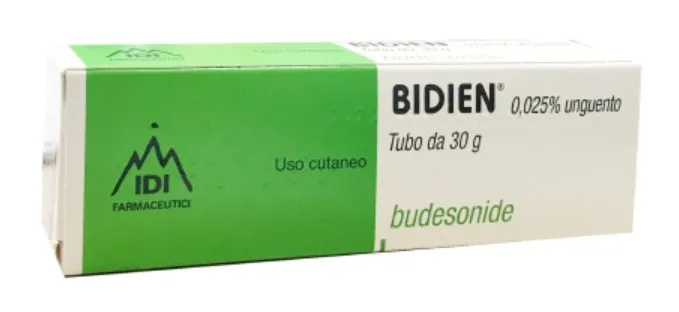
Table of Contents
- Package leaflet: Information for the user
- BIDIEN 0.025% Cream, 0.025% Ointment, 0.025% Cutaneous Solution
- 1. What BIDIEN is and what it is used for
- 2. What you need to know before using BIDIEN
- 3. How to use BIDIEN
- 4. Possible side effects
- 5. How to store BIDIEN
- 6. Package contents and other information
Package leaflet: Information for the user
BIDIEN 0.025% Cream, 0.025% Ointment, 0.025% Cutaneous Solution
Budesonide
Please read this leaflet carefully before using this medicine because it contains
important information for you.
- Keep this leaflet. You may need to read it again.
- If you have any questions, ask your doctor or pharmacist.
- This medicine has been prescribed for you only. Do not give it to other people, even if they have the same symptoms as you, because it could be harmful.
- If any adverse reaction occurs, including those not listed in this leaflet, contact your doctor or pharmacist. See section 4.
Contents of this leaflet:
- What BIDIEN is and what it is used for
- What you need to know before using BIDIEN
- How to use BIDIEN
- Possible side effects
- How to store BIDIEN
- Contents of the pack and other information
1. What BIDIEN is and what it is used for
BIDIEN contains the active substance budesonide, which belongs to the group of corticosteroids
for topical treatment and has anti-inflammatory, antipruritic, and vasoconstrictive properties.
BIDIEN is used for the treatment of corticosteroid-sensitive dermatoses (seborrheic dermatitis, atopic dermatitis, contact dermatitis, allergic or irritant, lichen, psoriasis, neurodermatitis and others) and for the symptomatic treatment of pruritus.
2. What you need to know before using BIDIEN
Do not use BIDIEN
- if you are allergic to budesonide or to any of the other ingredients of this medicine (listed in section 6).
- in case of tuberculous or viral skin infections (e.g. herpes, chickenpox, etc.).
- in case of rosacea or cutaneous ulcers.
Occlusive dressing is contraindicated in exudative lesions and skin infections.
Warnings and precautions
Talk to your doctor or pharmacist before using Bidien.
This product is not intended for ophthalmic use.
Topical application (i.e. on the skin) of corticosteroids for the treatment of extensive dermatoses and/or over long periods of time may lead to systemic absorption and secondary effects (Cushing's syndrome, hypothalamic-pituitary axis suppression). This is more likely in children (due to a higher skin surface area to body weight ratio) and when occlusive dressings are used. In pediatric use, skin folds and diapers may act as occlusive dressings. Therefore, in the treatment of chronic conditions requiring prolonged therapy, once a favorable therapeutic effect has been achieved, the frequency of application and dosage should be gradually reduced to the minimum necessary to control symptoms and prevent relapses (i.e. recurrence of the disease), and the medicine should be discontinued as soon as possible. During treatment, the patient's condition should be monitored closely to detect early signs and symptoms of corticosteroid excess (e.g. asthenia, i.e. fatigue, hypertension, i.e. high blood pressure, electrolyte imbalances, i.e. alterations in blood levels of sodium, potassium, chloride, etc.). In all other cases, the use of topical steroids should be limited to short-term treatment.
Topical corticosteroids should only be applied to infected skin if preceded or accompanied by appropriate antibacterial and antifungal therapy; if no improvement occurs, treatment should be discontinued. Prolonged or repeated use of this product may lead to sensitization reactions.
Contact your doctor if you experience blurred vision or other visual disturbances.
Other medicines and BIDIEN
Inform your doctor or pharmacist if you are taking, have recently taken, or might take any other medicines. Since adrenal gland function may be suppressed, an ACTH stimulation test to diagnose possible pituitary insufficiency could yield misleading results (low values).
Pregnancy and breastfeeding
If you are pregnant, think you may be pregnant, planning to become pregnant, or breastfeeding, consult your doctor or pharmacist before using this medicine.
Bidien Cream contains:
- Propylene glycol: may cause skin irritation.
- Methylparahydroxybenzoate and propylparahydroxybenzoate: may cause allergic reactions (including delayed reactions).
- Cetyl alcohol: may cause localized skin reactions (e.g. contact dermatitis).
- Lanolin alcohols: may cause local skin reactions (e.g. contact dermatitis).
Bidien Ointment contains:
- Lanolin alcohols: may cause local skin reactions (e.g. contact dermatitis).
- Propylparahydroxybenzoate: may cause allergic reactions (including delayed reactions).
Bidien Cutaneous Solution contains:
- Ethanol: this medicine contains 31.6 g of alcohol (ethanol) per bottle. It may cause a burning sensation on damaged skin.
- Propylene glycol: may cause skin irritation.
3. How to use BIDIEN
Use this medicine exactly as directed by your doctor or pharmacist. If you have any doubts, consult your doctor or pharmacist.
Apply a small amount of the product with gentle massage twice daily. For maintenance treatment, one daily application is usually sufficient.
The cream spreads easily and is absorbed with light massage; it is non-greasy and is particularly used in dressings without bandaging for irritative and exudative dermatoses.
The ointment, thanks to its fatty base, is recommended for scaly, crusted, and lichenified dermatological conditions (characterized by skin thickening), and is especially suitable for use in occlusive bandaged dressings, which may be left in place for 12–24 hours.
The cutaneous solution, due to its specific formulation, is indicated for dermatoses of the scalp and hairy areas: apply by massaging the affected area.
4. Possible side effects
Like all medicines, this medicine can cause side effects, although not everybody gets them.
Locally, redness, oedema (swelling), desquamation (loss of the superficial layer of the skin), and itching may occur as signs of hypersensitivity to the product. Other side effects include hypertrichosis (increased hair growth), acneiform eruptions (pustular skin lesions), cutaneous atrophy (reduction in skin thickness), telangiectasia (dilation of superficial blood vessels), vascular fragility (weakening of skin blood vessels), purpura (bluish skin spots due to rupture of superficial blood vessels), and, after prolonged treatment (especially on the face), steroid-sensitive rebound pustular dermatitis, which only becomes evident upon discontinuation of steroid use. Prolonged use and/or high doses may lead to a steroid excess syndrome (overdose effect) with arterial hypertension (increased blood pressure), asthenia (weakness), adynamia (reduced muscular strength), cardiac rhythm disturbances (arrhythmia, alteration of heart rhythm), hypokalaemia (decreased potassium levels in the blood), and metabolic alkalosis (reduction in blood acidity).
With occlusive treatment, bear in mind that the films used for bandaging may themselves cause sensitization reactions.
Blurred vision may occur with uncommon frequency.
Reporting of side effects
If you experience any side effect, including those not listed in this leaflet, talk to your doctor or pharmacist. You can also report side effects directly via the national reporting system at www.aifa.gov.it/content/segnalazioni-reazioni-avverse. By reporting side effects, you can help provide more information on the safety of this medicine.
5. How to store BIDIEN
Keep this medicine out of the sight and reach of children.
Do not use this medicine after the expiry date stated on the label. The expiry date refers to the
last day of that month.
Do not dispose of any medicine via wastewater or household waste. Ask your pharmacist how to
dispose of medicines no longer required. This will help protect the environment.
6. Package contents and other information
What Bidien contains
Bidien Cream
- The active substance is budesonide. 100 g of cream contain 0.025 g of budesonide.
- The other ingredients are: white vaseline, isopropyl myristate, cetyl alcohol, macrogol cetostearyl ether, lanolin alcohols, glyceryl monostearate, propylene glycol, propyl 4-hydroxybenzoate, methyl 4-hydroxybenzoate, citric acid monohydrate, anhydrous disodium phosphate, disodium edetate, purified water.
Bidien Ointment
- The active substance is budesonide. 100 g of ointment contain 0.025 g of budesonide.
- The other ingredients are: vaseline oil, paraffinated white vaseline, mineral oil and lanolin alcohols, distilled water, propyl 4-hydroxybenzoate, white vaseline.
Bidien Cutaneous Solution
- The active substance is budesonide. 100 g of solution contain 0.025 g of budesonide.
- The other ingredients are: ethanol, methylglucoside ether, citric acid, propylene glycol.
Description of the appearance of Bidien and contents of the pack
Bidien Cream: tube of 30 g
Bidien Ointment: tube of 30 g
Bidien Cutaneous Solution: bottle of 30 ml.
Marketing Authorization Holder and Manufacturer
IDI FARMACEUTICI SRL - Via dei Castelli Romani 83/85 - Pomezia (RM)

By scanning the QR Code or visiting the website http://www.leafletidi.it/bidien*, you can read or*
listen to this package leaflet.