Betoptic
Italy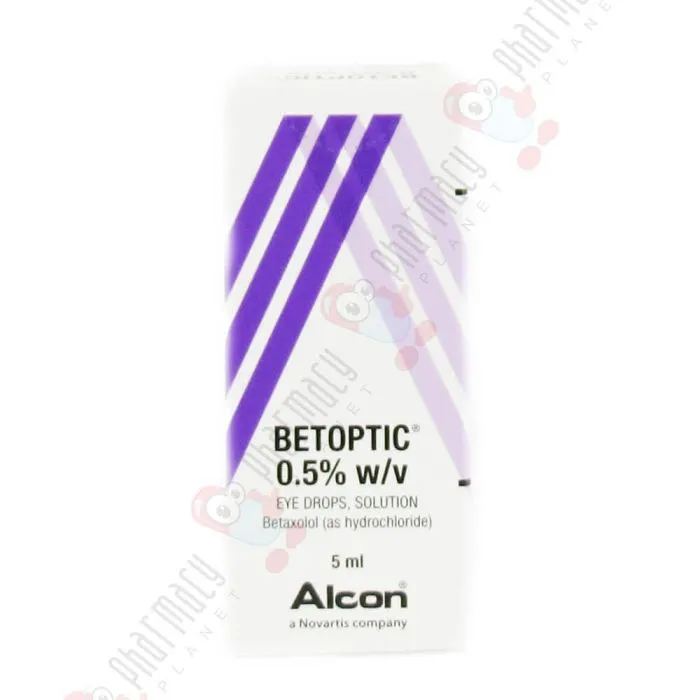
Instructions for Use
PACKAGE LEAFLET: INFORMATION FOR THE USER
BETOPTIC 5 mg/ml Eye drops, solution
betaxolol
Read this leaflet carefully before using this medicine.
- Keep this leaflet. You may need to read it again.
- If you have any questions, ask your doctor or pharmacist.
- This medicine has been prescribed for you. Do not give it to other people, even if their symptoms are the same as yours, as it may be harmful.
- If any of the side effects worsens, or if you notice any side effects not listed in this leaflet, inform your doctor or pharmacist.
Contents of this leaflet:
- What BETOPTIC is and what it is used for
- What you need to know before using BETOPTIC
- How to use BETOPTIC
- Possible side effects
- How to store BETOPTIC
- Further information
1. WHAT BETOPTIC IS AND WHAT IT IS USED FOR
BETOPTIC belongs to a group of medicines known as beta-blockers with the property of reducing pressure within the eye, with or without glaucoma.
It is used to treat elevated intraocular pressure, open-angle chronic glaucoma.
BETOPTIC is indicated in patients with glaucoma or elevated intraocular pressure who are undergoing concomitant therapy with multiple anti-glaucoma medicines.
2. WHAT YOU SHOULD KNOW BEFORE USING BETOPTIC
Do not use BETOPTIC, ophthalmic solution
- if you are allergic to betaxolol, beta-blockers, or any of the excipients.
- if you have or have previously had respiratory problems such as severe asthma, severe chronic obstructive bronchitis (a serious lung condition that may cause wheezing, difficulty breathing, and/or long-lasting cough), or other types of respiratory disorders.
- If you have a slow heartbeat, heart failure, or cardiac arrhythmias (irregular heartbeat).
Use special caution with BETOPTIC.
Use BETOPTIC only for instillation in the eye(s); do not use for injection or oral intake.
Before using this medicine, inform your doctor if you currently suffer or have previously suffered from:
- poor blood circulation to the brain
- untreated pheochromocytoma (a tumour of the endocrine system)
- diabetes, as betaxolol may mask the signs and symptoms of low blood sugar
- excessive acidity in the blood (also known as metabolic acidosis)
- severe myasthenia gravis (chronic muscle weakness)
- severe allergic reaction. If you have a history of local or severe allergic reactions, you may be more sensitive to allergens. If you experience any allergic reaction (skin rash, eye redness and itching, fever, swelling of the throat, tongue, or face) while using Betoptic, regardless of the cause, stop treatment immediately and contact your doctor. This medicine may reduce your response to usual doses of adrenaline, and treatment with adrenaline may become less effective. Therefore, when you are receiving any other treatment, inform your doctor that you are using BETOPTIC
- coronary heart disease (symptoms may include chest pain or tightness, shortness of breath, or cough), heart failure, low blood pressure
- heart rate disorders such as slow heartbeat
- respiratory problems, asthma, or chronic obstructive broncho-pulmonary disease
- circulatory problems (such as Raynaud’s disease or Raynaud’s syndrome)
- hyperthyroidism (overactive thyroid gland), as betaxolol may mask its signs and symptoms.
Before undergoing surgery, inform your doctor that you are using BETOPTIC, as betaxolol may alter the effects of certain medicines used during anaesthesia.
If you have corneal disorders, inform your doctor, as BETOPTIC may cause dry eyes.
If you have undergone glaucoma surgery, inform your doctor before using BETOPTIC.
Do not use this product while wearing contact lenses; wait 15 minutes after using the eye drops before reinserting your contact lenses. A preservative contained in BETOPTIC (benzalkonium chloride) may affect soft contact lenses.
Inform your doctor if you are taking other medicines. Also read the section “Use with other medicines”.
Use with other medicines
Betoptic may affect or be affected by other medicines, including any other eye drops used for glaucoma treatment. Inform your doctor if you are using or plan to use medicines to lower blood pressure, treat heart conditions, or manage diabetes. Inform your doctor or pharmacist if you are taking or have recently taken any other medicines, including those without a prescription.
Also inform your doctor if you are taking medicines for anxiety or depression (such as phenothiazines).
Pregnancy and breastfeeding
Do not use Betoptic during pregnancy unless your doctor considers it necessary.
Do not use Betoptic during breastfeeding. Betaxolol may be excreted in breast milk.
Consult your doctor before using any medicine during breastfeeding.
Use in children:
Clinical studies with BETOPTIC to establish safety and efficacy in children have not been conducted.
Driving and use of machinery
You may experience blurred vision for a short period immediately after using BETOPTIC. Do not drive or operate machinery until this effect has disappeared.
BETOPTIC contains benzalkonium chloride
A preservative contained in BETOPTIC (benzalkonium chloride) may cause eye irritation and is known to discolour soft contact lenses. If you wear contact lenses, remove them before using BETOPTIC and wait at least 15 minutes after using the eye drops before reinserting them.
Doping Warning
For individuals engaged in sports activities: using this medicine without therapeutic need constitutes doping and may result in a positive anti-doping test.
3. HOW TO USE BETOPTIC
Always use Betoptic eye drops solution exactly as prescribed by your doctor. If you have any doubts, consult your doctor or pharmacist.
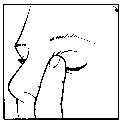
After using Betoptic, press with one finger on the inner corner of the eye near the nose for 2 minutes, as shown in the figure. This helps prevent Betoptic from spreading to the rest of the body.
The usual dose is:
one drop twice daily, as prescribed by your doctor.
When switching therapy in a patient already treated with an anti-glaucoma medicine, continue treatment with the previous medicine on the first day, adding one drop of BETOPTIC in each affected eye twice daily. On the following day, switch to therapy with BETOPTIC alone.
After removing the cap, if the loose protective ring is loose, remove it before using the product.
If a drop does not enter the eye, try again.
If you forget to use BETOPTIC, continue treatment with the next dose as scheduled. However, if it is almost time for the next dose, skip the missed dose and return to your regular dosing schedule. Do not use a double dose to make up for a forgotten dose.
If you use more medicine than you should, immediately rinse the eye with lukewarm water. Do not use any more eye drops until the time for your next scheduled dose.
If you are also using another eye drop or an ophthalmic ointment, wait at least 5 minutes between using each medicine. The ophthalmic ointment should be administered last.
Stop treatment with BETOPTIC and consult your doctor if you experience: slowed heartbeat, low blood pressure, breathing or heart problems.
If you have any doubts about how to use this medicine, ask your doctor or pharmacist.
4. POSSIBLE ADVERSE REACTIONS
Like all medicines, BETOPTIC eye drops solution may cause adverse reactions, although not all
people experience them.
You can usually continue using the eye drops unless the reactions are severe. If you are concerned,
contact your doctor or pharmacist. Do not stop using Betoptic before speaking with your
doctor.
The frequency of the possible adverse reactions listed below is defined according to the following
convention:
Very common (affects more than 1 in 10 users)
Common (affects from 1 to 10 in 100 users)
Uncommon (affects from 1 to 10 in 1,000 users)
Rare (affects from 1 to 10 in 10,000 users)
Very common adverse reactions
Ocular discomfort.
Common adverse reactions
Headache, blurred vision, increased lacrimation, sensation of foreign body in the eyes.
Uncommon adverse reactions
Bradycardia, tachycardia, punctate keratitis, keratitis, conjunctivitis, blepharitis, reduced visual acuity,
impaired vision, photophobia, eye pain, dry eye, asthenopia, blepharospasm, abnormal eye sensitivity,
ocular pruritus, eye discharge, eyelid margin crusting, ocular inflammation, ocular irritation,
conjunctival disorder, conjunctival edema, ocular hyperemia, asthma, dyspnea, nausea, rhinitis.
Rare adverse reactions
Syncope, dysgeusia, cataract, cough, rhinorrhea, dermatitis, rash, hypotension, anxiety, decreased libido.
Additional adverse reactions reported during post-marketing experience, for which frequency is unknown
Arrhythmia, dizziness, eyelid erythema, alopecia, asthenia, hypersensitivity, insomnia, depression.
Like other medicines applied to the eyes, betaxolol is absorbed into the bloodstream. This may cause
adverse reactions similar to those observed with intravenous and/or oral beta-blocking agents. The
incidence of adverse reactions following topical ophthalmic administration is lower than when
medicines are administered orally or by injection. The listed adverse reactions include those observed
within the class of beta-blockers used to treat ocular disorders.
Generalized allergic reactions including swelling under the skin which may occur in areas such as the
face and limbs and which may obstruct the airways causing difficulty in swallowing or breathing,
urticaria, localized and generalized skin rashes, pruritus, severe life-threatening allergic reactions.
Low blood sugar levels.
Difficulty falling asleep (insomnia), depression, nightmares, memory loss.
Fainting, stroke, reduced blood flow to the brain, worsening of signs and symptoms of myasthenia gravis
(a muscle disorder), unusual sensations such as tingling and headache.
Signs and symptoms of ocular irritation (e.g. burning, stinging pain, itching, tearing, redness), eyelid
inflammation, corneal inflammation, blurred vision and, after filtering surgery, detachment of the layer
beneath the retina containing blood vessels, which may cause visual disturbances, decreased corneal
sensitivity, dry eyes, corneal erosion (damage to the anterior layer of the eyeball), drooping of the upper
eyelids (the eye remains half-closed), double vision.
Slowing of heart rate, chest pain, palpitations, edema (fluid accumulation), changes in heart rhythm or
heart rate, congestive heart failure (heart disease with breathlessness and swelling of feet and legs due
to fluid accumulation), a type of heart rhythm-related disease, heart attack, heart failure.
Lowering of blood pressure, Raynaud's phenomenon, feeling of coldness in hands and feet.
Constriction of the pulmonary airways (especially in patients with pre-existing lung disease), breathing
difficulty, cough.
Taste disturbances, nausea, digestive disorders, diarrhea, dry mouth, abdominal pain, vomiting.
Hair loss, skin rash appearing as silvery-white lesions (psoriasiform rash) or worsening of psoriasis,
rash.
Muscle pain not caused by physical exercise.
Sexual dysfunction, reduced sexual desire.
Feeling of fatigue/muscle weakness.
If you have any questions about the use of this medicine, consult your doctor or pharmacist.
Reporting of adverse reactions
If you experience any adverse reaction, including those not listed in this leaflet, consult your doctor or
pharmacist. You may also report adverse reactions directly (see details below). By reporting adverse
reactions, you can help provide more information on the safety of this medicine.
Website: http://www.aifa.gov.it/content/segnalazioni-reazioni-avverse
5. HOW TO STORE BETOPTIC
Do not use after the expiry date stated on the outer packaging and on the bottle.
The expiry date refers to the last day of the month and to the original unopened packaging,
correctly stored.
Do not store above 25°C.
The product must not be used more than 28 days after first opening of the container.
Keep the bottle in the outer packaging to protect the medicine from light.
Keep this medicine out of the sight and reach of children.
Medicines should not be disposed of via wastewater or household waste. Ask your
pharmacist how to dispose of medicines no longer required. This will help protect the environment.
6. OTHER INFORMATION
What BETOPTIC contains
- The active substance is betaxolol.
- The other ingredients are benzalkonium chloride, edetate disodium, sodium chloride, sodium hydroxide and/or hydrochloric acid, purified water.
Description of the appearance of BETOPTIC and contents of the pack
BETOPTIC is a clear, colourless to pale yellow solution available in a pack containing one 5 ml bottle.
Marketing Authorization Holder
Immedica Pharma AB
SE-113 29 Stockholm
Sweden
Manufacturer
Novartis Pharma GmbH
Roonstrasse 25
90429 Nuremberg, Germany
Siegfried El Masnou, S.A.
c/ Camil Fabra, 58
08320 EL MASNOU, Barcelona
Spain
Novartis Farmacéutica S.A.
Gran Via de les Corts Catalanes, 764
08013 Barcelona, Spain
S.A. Alcon-Couvreur N.V.
Rijksweg 14 B-2870 Puurs
Belgium
This page has been machine-translated and may contain inaccuracies. The original data is available in the manufacturing country's language.
Last data check: May 11, 2026 · Data source: Agenzia Italiana del Farmaco (AIFA)