Betamethasone Doc Generici
Italy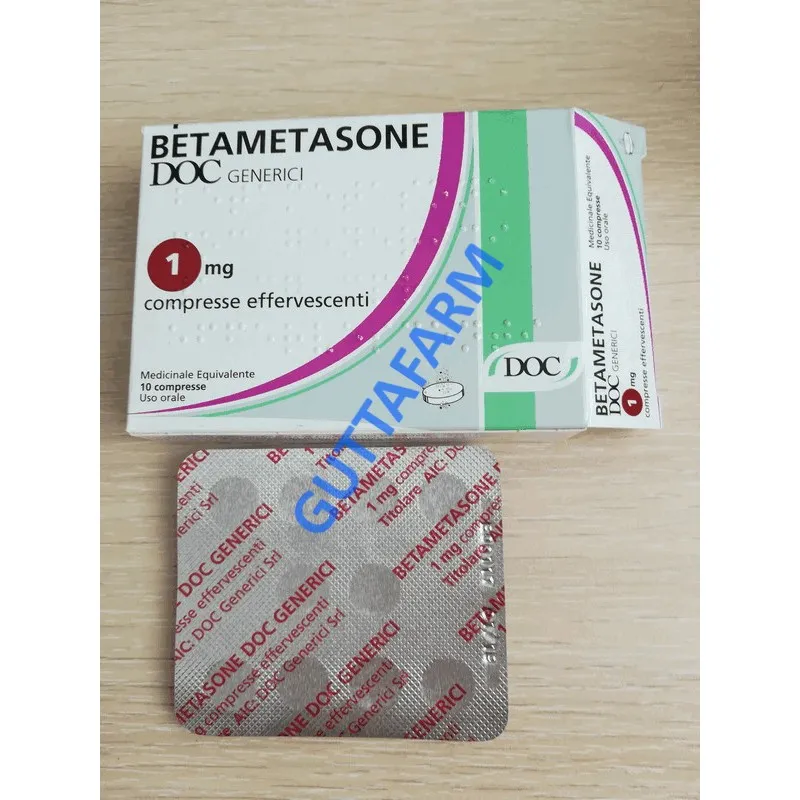
Table of Contents
- Package leaflet: Information for the patient
- BETAMETASONE DOC Generici 0.5 mg effervescent tablets, 1 mg effervescent tablets
- 1. What BETAMETASONE DOC Generici is and what it is used for
- 2. What you should know before taking BETAMETASONE DOC Generici
- 3. How to take BETAMETASONE DOC Generici
- 4. Possible side effects
- 5. How to store BETAMETASONE DOC Generici
- 6. Package contents and other information
Package leaflet: Information for the patient
BETAMETASONE DOC Generici 0.5 mg effervescent tablets, 1 mg effervescent tablets
Generic medicinal product
Please read this leaflet carefully before using this medicine because it contains important information for you.
- Keep this leaflet. You may need to read it again.
- If you have any questions, ask your doctor or pharmacist.
- This medicine has been prescribed for you only. Do not give it to others, even if they have the same symptoms as you, because it could be harmful.
- If you experience any side effect, including those not listed in this leaflet, contact your doctor or pharmacist. See section 4.
Contents of this leaflet:
- What BETAMETASONE DOC Generici is and what it is used for
- What you need to know before taking BETAMETASONE DOC Generici
- How to take BETAMETASONE DOC Generici
- Possible side effects
- How to store BETAMETASONE DOC Generici
- Contents of the pack and other information
1. What BETAMETASONE DOC Generici is and what it is used for
BETAMETASONE DOC Generici contains the active substance betamethasone, which belongs to a
group of medicines called corticosteroids. These medicines work by reducing inflammation
(anti-inflammatory effect) and allergic reactions.
BETAMETASONE DOC Generici is indicated for the treatment of:
- respiratory problems (bronchial asthma);
- severe allergic reactions (severe allergies);
- joint inflammations (rheumatoid arthritis, ankylosing spondylitis);
- connective tissue diseases (collagenoses);
- inflammatory skin diseases (inflammatory dermatoses);
- certain types of cancer (particularly of the lymphatic tissue, such as acute and chronic malignant lymphoproliferative disorders, Hodgkin's disease);
- kidney problems (nephrotic syndrome);
- intestinal inflammations (ulcerative colitis, segmental ileitis or Crohn's disease);
- severe skin disease characterized by blistering (pemphigus);
- inflammation of connective tissue in various organs (sarcoidosis), especially when associated with elevated calcium levels in the blood (hypercalcemic sarcoidosis);
- inflammation of the heart (rheumatic carditis);
- blood disorders associated with changes in blood composition (dyscrasic blood disorders), such as reduced number of red blood cells (hemolytic anemia), reduced number of white blood cells (agranulocytosis), and reduced platelet count in the blood (thrombocytopenic purpura).
2. What you should know before taking BETAMETASONE DOC Generici
Do not take BETAMETASONE DOC Generici
- if you are allergic to betamethasone, to similar substances, or to any of the other ingredients of this medicine (listed in section 6);
- if you have widespread infections throughout the body (systemic infections) caused by bacteria or fungi, unless you are already receiving specific treatment for such infections;
- if you have a lung infection (tuberculosis, see section “Warnings and precautions”);
- if you have recently received a vaccine or are due to be vaccinated, as complications may occur;
- if you are pregnant;
- if you are breastfeeding (see section “Pregnancy and breastfeeding”).
Warnings and precautions
Talk to your doctor or pharmacist before using BETAMETASONE DOC Generici.
If you are taking BETAMETASONE DOC Generici and are under particular stress, inform your doctor, as your dose may need to be adjusted.
In patients treated with betamethasone and corticosteroids in general, adrenal problems caused by betamethasone (secondary adrenal insufficiency) may occur. In such cases, your doctor will gradually reduce the dose of this medicine. These problems may also occur after discontinuation of the medicine and may persist for up to one year after stopping treatment. If during this period you experience symptoms of stress (including fatigue, drowsiness, easy tiredness, loss of appetite, nausea and vomiting, bone and muscle pain), inform your doctor, as you may need to restart treatment.
BETAMETASONE DOC Generici may mask certain signs of infection, and infections may occur during its use due to reduced immune defenses. Inform your doctor if you suspect you have an infection, as they may prescribe appropriate antibiotic therapy.
Take BETAMETASONE DOC Generici with caution and inform your doctor if:
-
you currently have a lung infection (active tuberculosis). In this case, betamethasone may only be used if the disease is fulminant or disseminated. If you have latent tuberculosis or have tested positive for tuberculin, you must be closely monitored by your doctor, as betamethasone may reactivate the disease; if long-term betamethasone treatment is required, your doctor will prescribe preventive therapy against tuberculosis (chemoprophylaxis);
-
you suffer from a heart condition (congestive heart failure);
-
you have been prescribed high doses of BETAMETASONE DOC Generici or long-term treatment, as you may experience electrolyte imbalances in your body; in this case, your doctor may adjust your intake of sodium and potassium;
-
you have any of the following conditions: diabetes, osteoporosis, high blood pressure (hypertension), increased intraocular pressure (glaucoma), or seizures (epilepsy), as betamethasone may worsen these conditions;
-
you suffer from mood disorders (emotional instability or psychotic tendencies), as betamethasone may aggravate these conditions;
-
you have previously experienced muscle problems (myopathy) caused by steroid medicines; or if you have severe muscle disorders (myasthenia gravis);
-
you have a condition characterized by stomach or intestinal damage (active or latent peptic ulcer);
-
you suffer from liver problems (hepatic insufficiency or hepatic cirrhosis);
-
you suffer from thyroid problems (hypothyroidism);
-
you have an eye infection caused by a virus called herpes simplex, as serious eye damage (corneal perforation) may occur;
-
if you have low levels of a substance called prothrombin in the blood (hypoprothrombinemia), caution is advised when combining acetylsalicylic acid and betamethasone (see section “Other medicines and BETAMETASONE DOC Generici”);
-
if you are elderly. Treatment with this medicine will be determined by your doctor, considering the increased risk of side effects such as bone disorders with loss of bone mass (osteoporosis), worsening of diabetes, increased blood pressure (hypertension), infections, and skin thinning (see section 4 “Possible side effects”);
-
you have intestinal inflammation (ulcerative colitis) at risk of perforation;
-
you have a pus-forming infection (abscess), or bacterial infections causing pus (pyogenic infections);
-
you have a bowel condition (diverticulitis);
-
you have recently undergone bowel surgery (intestinal anastomoses);
-
you have kidney problems (renal insufficiency);
-
you have pheochromocytoma (a tumor of the adrenal gland).
During treatment with BETAMETASONE DOC Generici:
- calcium excretion increases;
- certain mental problems (psychic disturbances) may occur, such as euphoria, difficulty sleeping (insomnia), changes in mood or personality, severe depression, or symptoms of true psychosis;
- reduced nitrogen levels in the body (negative nitrogen balance); therefore, if you take this medicine for a prolonged period, your dietary protein intake should be adequately increased.
Contact your doctor if you experience blurred vision or other visual disturbances.
For athletes: using this medicine without therapeutic need constitutes doping and may lead to a positive anti-doping test.
Children and adolescents
Growth and development must be monitored in children and adolescents receiving this medicine for prolonged periods.
In very early infancy, this medicine should only be administered when strictly necessary and under direct medical supervision.
Other medicines and BETAMETASONE DOC Generici
Inform your doctor if you are taking or have recently taken any other medicines, including those obtained without a prescription.
Take BETAMETASONE DOC Generici with caution and inform your doctor if you are taking the following medicines:
- medicines used to treat epilepsy (such as phenobarbital, primidone, carbamazepine, phenytoin), as dose adjustments may be needed;
- medicines used to thin the blood (warfarin);
- non-steroidal anti-inflammatory drugs (NSAIDs), used to reduce pain and inflammation, as betamethasone may reduce their effectiveness and increase the risk of stomach and intestinal damage (ulcers);
- acetylsalicylic acid, used to treat inflammation and to thin the blood;
- medicines called anticholinesterases, used to treat a severe muscle disorder (myasthenia gravis);
- vaccines, as complications may occur (see section “Do not take BETAMETASONE DOC Generici”);
- ephedrine, a medicine used to treat sudden breathing difficulties due to bronchial narrowing (acute bronchospasm) or to treat and prevent low blood pressure (during anesthesia for various surgical procedures), as it may reduce the effect of betamethasone;
- rifampicin, an antibiotic used for certain infections, as it may reduce the effect of betamethasone;
- contrast agents used in radiography for imaging the biliary tract and gallbladder (cholecystography); inform your doctor if you are scheduled for this examination.
Some medicines may increase the effects of betamethasone, and your doctor may wish to monitor you closely if you are taking these medicines (including certain HIV treatments: ritonavir, cobicistat).
Pregnancy and breastfeeding
If you are pregnant, suspect you may be pregnant, planning to become pregnant, or are breastfeeding, consult your doctor or pharmacist before using this medicine.
Do not take BETAMETASONE DOC Generici if you are pregnant or breastfeeding, except in cases of absolute necessity and under strict medical supervision (see section “Do not take BETAMETASONE DOC Generici”).
Driving and using machines
There are no data available to determine the effect of this medicine on the ability to drive and use machines. However, if you experience side effects that reduce your alertness, such as mental and mood disturbances (psychotic, cognitive, and mood-related), avoid driving or operating machinery (see section 4 “Possible side effects”).
BETAMETASONE DOC Generici contains sodium benzoate
This medicine contains sodium benzoate, which is mildly irritating to the skin, eyes, and mucous membranes (if administered by nebulization).
3. How to take BETAMETASONE DOC Generici
Take this medicine exactly as your doctor or pharmacist has told you. If
you are unsure, consult your doctor or pharmacist.
This medicine can be dissolved in water and taken by mouth (oral use) or
it can be dissolved in purified water or physiological solution and administered by inhaling the nebulized solution
(nebulization administration).
The tablets can be divided in half to facilitate dosing.
Oral use
Use in adults
The dose will be determined according to the severity of the disease, the duration of treatment, and your response
to therapy:
- Short-term treatment: The recommended dose is 4–6 effervescent tablets of 0.5 mg daily or 2–3 effervescent tablets of 1 mg daily (equivalent to 2–3 mg daily). Your doctor will gradually reduce this dose according to your response to treatment.
- Long-term treatment: For chronic or subacute diseases (collagenoses, haemolytic anaemias, chronic bronchial asthma, nephrotic syndrome, ulcerative colitis, pemphigus; see section 1 “What BETAMETASONE DOC Generici effervescent tablets are and what they are used for”) after an initial high-dose treatment, your doctor will gradually reduce the dosage until reaching the maintenance dose.
The recommended initial dose is 6–8 effervescent tablets of 0.5 mg daily or 3–4 effervescent tablets of 1 mg daily (equivalent to 3–4 mg daily).
The recommended maintenance dose is 2–4 effervescent tablets of 0.5 mg daily or 1–2 effervescent tablets of 1 mg daily (1–2 mg daily), and should always be the lowest dose capable of controlling your symptoms.
Use by nebulization
If you are taking this medicine by inhalation, at high doses and for prolonged treatments, the dose
should be as low as possible to minimize adverse effects.
Use in children
The recommended dose is 0.1–0.2 mg per kilogram of body weight per day.
Treatment with the lowest possible dose for the shortest possible duration is recommended. Furthermore, your
doctor may consider administering an alternate-day single dose (one day on, one day off) to minimize growth retardation and disturbances in normal adrenal gland function (hypothalamic-pituitary-adrenal axis suppression) that may be caused by the use of
BETAMETASONE DOC Generici.
Oral administration
The tablets can be divided in half to facilitate dose adjustment.
The tablets should be dissolved in a small amount of water.
Administration by nebulization (aerosol)
Adults and children
The recommended dose is 0.5–1 mg, dissolved immediately before use in 1–2 ml of purified water or physiological solution.
If you take more BETAMETASONE DOC Generici than you should
In case of accidental ingestion/overdose of BETAMETASONE DOC Generici, contact your doctor immediately or go to the nearest hospital.
If you forget to take BETAMETASONE DOC Generici
Do not take a double dose to make up for the missed dose.
If you have any doubts about how to use this medicine, consult your doctor or pharmacist.
4. Possible side effects
Like all medicines, this medicine can cause side effects, although not everybody gets them.
The following side effects may occur; their frequency and severity depend on the dosage and duration of treatment:
- heart problems (congestive heart failure);
- stomach and intestinal problems associated with the development of lesions (peptic ulcer); acute pancreatitis (frequency not known);
- skin problems, such as delayed wound healing, thinning and fragility of the skin;
- mental problems (psychic instability), increased mental and physical activity (psychomotor agitation), sleep disturbances, anxiety, depression, aggression, behavioural disorders (especially in children);
- headache (cephalalgia), dizziness, increased pressure inside the head (increased intracranial pressure);
- menstrual irregularities, excessive hormone production by the adrenal glands (hypercorticism);
- changes in the production of certain hormones (Cushing's syndrome), fat accumulation in the face and abdomen (Cushingoid appearance), growth disturbances in children and adolescents;
- disturbances in the regulation of hormone production by the adrenal gland (interference with the hypothalamic-pituitary-adrenal axis), particularly during periods of stress;
- changes in blood sugar levels, diabetes (latent diabetes mellitus); in diabetic patients, this increases the need for antidiabetic medications (hypoglycemic agents);
- eye problems, such as increased pressure inside the eye (glaucoma), problems affecting a part of the eye called the lens (posterior subcapsular cataract), increased intraocular pressure, blurred vision;
- changes in electrolyte levels in the body, especially decreased potassium levels in the blood (hypokalemia), increased protein loss (negative nitrogen balance);
- reduction in lymphocytes (white blood cells) in the blood (frequency not known);
- increased blood pressure (hypertension);
- weakening of the bones (reduced bone mineral density), loss of bone mass (osteoporosis), death of bone tissue without infection (aseptic osteonecrosis), particularly in the femoral head, muscle problems (myopathies), bone fragility.
Reporting of side effects
If you experience any side effect, including those not listed in this leaflet, please inform your doctor or pharmacist. You can also report side effects directly via the national reporting system at www.agenziafarmaco.gov.it/content/come-segnalare-una-sospetta-reazione-avversa. By reporting side effects, you can help provide more information on the safety of this medicine.
5. How to store BETAMETASONE DOC Generici
Keep this medicine out of the sight and reach of children.
Do not use this medicine after the expiry date stated on the packaging after "Exp.".
The expiry date refers to the last day of that month, provided the product is stored in its original, unopened packaging and kept under appropriate storage conditions.
Store below 25°C.
Keep in the original packaging to protect the medicine from moisture.
Do not dispose of any medicine via wastewater or household waste. Ask your pharmacist how to dispose of medicines no longer in use. This will help protect the environment.
6. Package contents and other information
What BETAMETASONE DOC Generici 0.5 mg effervescent tablets contains
- The active substance is betametasone. Each tablet contains betametasone 0.5 mg (as betametasone disodium phosphate 0.6578 mg).
- The other components are: dibasic sodium citrate sesquihydrate, effersoda (sodium bicarbonate and sodium carbonate), povidone K30, sodium benzoate, sodium stearyl fumarate, sodium saccharin.
What BETAMETASONE DOC Generici 1 mg effervescent tablets contains
- The active substance is betametasone. Each tablet contains betametasone 1 mg (as betametasone disodium phosphate 1.316 mg).
- The other components are: dibasic sodium citrate sesquihydrate, effersoda (sodium bicarbonate and sodium carbonate), povidone K30, sodium benzoate, sodium stearyl fumarate, sodium saccharin.
Description of the appearance of BETAMETASONE DOC Generici and contents of the pack
Pack containing 10 effervescent tablets.
Marketing Authorization Holder
DOC Generici Srl - Via Turati 40 - 20121 Milan - Italy
Manufacturer
Genetic S.p.A., Contrada Canfora, 84084 Fisciano (SA) - Italy