Betamethasone Doc Generici
ItalyTable of Contents
- Package leaflet: Information for the user
- BETAMETASONE DOC 1.5 mg/2 ml solution for injection, 4 mg/2 ml solution for injection
- 1. What BETAMETASONE DOC is and what it is used for
- 2. What you need to know before using BETAMETASONE DOC
- 3. How to use BETAMETASONE DOC
- 4. Possible side effects
- 5. How to store BETAMETASONE DOC
- 6. Package contents and other information
OJ Part II No. 21 of 21.02.2026
Package leaflet: Information for the user
BETAMETASONE DOC 1.5 mg/2 ml solution for injection, 4 mg/2 ml solution for injection
Generic medicine
Please read this leaflet carefully before using this medicine because it contains important information for you.
- Keep this leaflet. You may need to read it again.
- If you have any questions, ask your doctor, pharmacist or nurse.
- This medicine has been prescribed for you only. Do not give it to other people, even if their symptoms are the same as yours, as it could be harmful.
- If you experience any side effect, including those not listed in this leaflet, contact your doctor, pharmacist or nurse. See section 4.
Contents of this leaflet:
- What BETAMETASONE DOC is and what it is used for
- What you need to know before using BETAMETASONE DOC
- How to use BETAMETASONE DOC
- Possible side effects
- How to store BETAMETASONE DOC
- Contents of the pack and other information
1. What BETAMETASONE DOC is and what it is used for
BETAMETASONE DOC contains the active substance betamethasone, which belongs to a group of
medicines called corticosteroids. BETAMETASONE DOC is a hormonal-type medicine belonging to the
glucocorticoid class.
BETAMETASONE DOC is indicated for the treatment of a wide range of diseases, including the
following main conditions:
- Shock (surgical and traumatic shock, shock in burn patients);
- Severe anaphylactic and allergic reactions, for example:
- Laryngeal edema
- Drug allergy
- Allergic reactions following blood transfusion
- Severe and prolonged asthma attacks;
- Cerebral edema;
- Myocardial infarction;
- Blood disorders undergoing rapid deterioration;
- Acute adrenal insufficiency crises in patients with:
- Waterhouse-Friderichsen syndrome
- Addison's disease
- Simmonds' disease
- Adrenalectomized patients
- Patients whose adrenal gland is non-functional due to prolonged corticosteroid therapy;
- Soft tissue injuries such as tennis elbow and periarthritis of the shoulder joint.
BETAMETASONE DOC is also indicated:
- In all cases where corticosteroid treatment is beneficial and patients have specific conditions making oral therapy impossible (e.g. vomiting, persistent diarrhea, maxillofacial surgery).
2. What you need to know before using BETAMETASONE DOC
Do not use BETAMETASONE DOC
- if you are allergic to betamethasone, to other corticosteroid medicines, or to any of the other ingredients of this medicine (listed in section 6);
- if you have systemic infections and are not receiving specific treatment for them;
- if you are undergoing vaccinations with attenuated viruses or other types of vaccinations;
- if you are allergic to sulfites and metabisulfites, because this medicine contains sodium metabisulfite (see section “BETAMETASONE DOC contains”);
BETAMETASONE DOC injectable solution must not be injected directly into tendons.
Warnings and precautions
Talk to your doctor, pharmacist, or nurse before using BETAMETASONE DOC.
Tell your doctor before using BETAMETASONE DOC:
- if you have a serious heart condition (congestive heart failure);
- if you have psychiatric or emotional disorders, as these conditions may worsen during treatment with BETAMETASONE DOC;
- if you have epilepsy;
- if you have diabetes;
- if you have increased eye pressure (glaucoma);
- if you have chronic inflammation of the lower part of the intestine (ulcerative colitis);
- if you have an abscess or an infection;
- if you have inflammation of the diverticula, small naturally occurring or newly formed pouches in the lower part of the intestine (diverticulitis);
- if you have recently undergone surgery to connect parts of the intestine (intestinal anastomosis);
- if you have an active or latent stomach or duodenal ulcer;
- if you have impaired kidney function;
- if you have phaeochromocytoma (a tumour of the adrenal gland);
- if you have impaired liver function;
- if you have chronic liver damage (liver cirrhosis);
- if you have high blood pressure;
- if you have a disease characterized by loss of bone mass (osteoporosis);
- if you have a disease causing severe muscle weakness (myasthenia gravis);
- if you have previously experienced muscle problems after treatment with medicines similar to betamethasone (steroids);
- if you have an underactive or overactive thyroid gland;
- if you have herpes simplex infection of the eye;
- if you have reduced blood clotting (hypoprothrombinemia) and need to use acetylsalicylic acid (e.g. aspirin).
Inform your doctor if during treatment with BETAMETASONE DOC:
- you need to undergo a radiological examination of the gallbladder using a contrast agent (cholecystography), because betamethasone may reduce the effects of the contrast agents used during this examination;
- you are subjected to significant stress, for example during surgery, because in such cases your dose of BETAMETASONE DOC may need to be adjusted;
- you develop psychiatric or emotional disturbances such as elation, excessive excitement and happiness (euphoria), insomnia, severe depression, mood and personality changes, mental imbalance, delusions, or hallucinations (psychosis);
- you experience blurred vision or other visual disturbances.
Exercise particular caution during treatment with BETAMETASONE DOC:
- avoid contact with people who have measles or chickenpox if you are taking high doses of this medicine. If this occurs, contact your doctor.
- BETAMETASONE DOC must not be injected directly into tendons.
- glucocorticoids such as BETAMETASONE DOC may:
- mask some signs of infection and, due to reduced immune defences, infections may occur. In such cases, your doctor will assess whether appropriate antibiotic therapy is needed.
- cause adrenal insufficiency; in such cases, your doctor will advise you to gradually reduce the dose or temporarily stop treatment. This type of insufficiency may last up to one year after stopping treatment. If you experience a stressful event during the period after stopping BETAMETASONE DOC, your doctor may advise you to resume treatment with this medicine.
Use in active tuberculosis should be limited to cases of fulminating or disseminated disease, in which the
glucocorticoid should be used together with appropriate antitubercular therapy.
If glucocorticoids are administered to patients with latent tuberculosis or with a positive reaction to
tuberculin, close monitoring is required, as reactivation of the disease may occur (see section 4).
During treatment with BETAMETASONE DOC, your doctor may prescribe:
- appropriate therapy to prevent infections, if you need to use BETAMETASONE DOC for long periods;
- sodium and potassium supplements if you develop disturbances in body fluids and electrolytes.
Children and adolescents
Your doctor will prescribe BETAMETASONE DOC to children and adolescents at the lowest possible doses and for the shortest possible duration. Depending on the case, your doctor may consider administering a single dose on alternate days (see section 3).
Your doctor will closely monitor growth and development in children and adolescents undergoing prolonged treatment with BETAMETASONE DOC.
Children are particularly at risk of increased intracranial pressure.
Elderly patients
In elderly patients, treatment with BETAMETASONE DOC, especially if prolonged, may more frequently cause undesirable effects such as loss of bone tissue (osteoporosis), worsening of diabetes or blood pressure, increased susceptibility to infections, and thinning of the skin.
Taking this into account, your doctor will determine the most appropriate dose of BETAMETASONE DOC for you (see section 3).
Other medicines and BETAMETASONE DOC
Tell your doctor if you are taking, or have recently taken, any other medicines, including those obtained without a prescription.
Inform your doctor if you are using or need to use one or more of the following medicines:
- anticholinesterases;
- anti-inflammatory medicines: other non-steroidal anti-inflammatory salicylates;
- medicines that increase urine production (diuretics), particularly furosemide and thiazide diuretics;
- amphotericin (antifungal);
- xanthines, e.g. theophylline;
- medicines for diabetes, e.g. insulin;
- cyclosporine (immunosuppressant);
- ritonavir (medicine used against HIV virus);
- ketoconazole (medicine to treat fungal infections);
- phenytoin and phenobarbital (used to treat epileptic seizures);
- ephedrine;
- rifampicin (antibiotic);
- anticoagulants (medicines that reduce blood clotting).
Some medicines may enhance the effects of betamethasone, and your doctor may decide to monitor you closely if you are taking these medicines (including some medicines for the treatment of HIV: ritonavir, cobicistat).
Laboratory tests
BETAMETASONE DOC may reduce the effects of contrast agents in cholecystography. Inform your doctor that you are being treated with betamethasone if you are scheduled for cholecystography.
Changes in electrolyte levels (such as sodium or potassium) may occur, especially during prolonged treatment or with high doses of betamethasone; in such cases, your doctor will perform laboratory tests and give you appropriate advice.
Pregnancy and breastfeeding
If you are pregnant, think you may be pregnant, planning to become pregnant, or breastfeeding, consult your doctor or pharmacist before using this medicine.
If you are pregnant or breastfeeding, your doctor will assess whether the benefits to you clearly outweigh the risks to the fetus/child before prescribing BETAMETASONE DOC.
Newborns of mothers who received BETAMETASONE DOC towards the end of pregnancy may have low blood sugar levels after birth.
Driving and using machines
It is not known whether this medicine affects the ability to drive or use machinery. However, rare neurological adverse effects have been reported.
BETAMETASONE DOC contains sodium and sodium metabisulfite
This medicine contains less than 1 mmol of sodium (23 mg) per dose, i.e. it is practically “sodium-free”.
This medicine contains sodium metabisulfite, which may rarely cause severe hypersensitivity reactions and bronchospasm.
For individuals engaged in sports:
Using this medicine without therapeutic need constitutes doping and may lead to a positive anti-doping test.
3. How to use BETAMETASONE DOC
Use this medicine exactly as directed by your doctor, pharmacist, or nurse. If you have any doubts, consult your doctor, pharmacist, or nurse.
This medicine can be administered as an injection into the muscles (intramuscular injection), as an injection into the veins (intravenous bolus injection), or, if necessary, by infusion (via intravenous drip) added to other infusion fluids.
Use in adults
Your doctor will determine the most appropriate dose of BETAMETASONE DOC for you, depending on the severity of your condition and your response to treatment.
The recommended dose ranges from 1.5 mg to 4 mg per administration. If necessary, the administration may be repeated until the desired response is achieved.
In special cases, your doctor may prescribe 10–15 mg or more in a single injection, up to 3–4 times within 24 hours.
Use in children and adolescents
Treatment should be carried out using the lowest possible doses for the shortest possible duration. Additionally, your doctor may consider administering a single dose on alternate days (one day on, one day off).
Elderly patients
Your doctor will determine the most appropriate dose of BETAMETASONE DOC for you.
Your doctor will prescribe the lowest maintenance dose capable of controlling the disease.
If necessary, your doctor may advise you to gradually reduce the dose over several weeks or months, depending on the initial dose and duration of treatment.
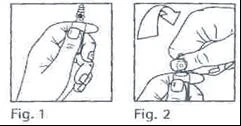
Instructions for opening the vial
The vials are equipped with a safety pre-break system. Open them as follows:
- Position the vial as shown in figure 1;
- Apply pressure with your thumb on the COLOURED DOT as indicated in figure 2.
If you use more BETAMETASONE DOC than you should
If an excessive dose of BETAMETASONE DOC is accidentally ingested, contact your doctor immediately or go to the nearest hospital.
Generally, an overdose of glucocorticoids, including betamethasone, is not life-threatening, except when very high doses are taken or when specific clinical conditions are present, such as:
- diabetes mellitus;
- increased intraocular pressure (glaucoma);
- peptic ulcer of the stomach or duodenum;
- concomitant treatment with medicinal products, e.g. digitalis (a heart medication), anticoagulant medicines (coumarins), or potassium-depleting diuretics.
If you forget to use BETAMETASONE DOC
Do not take a double dose to make up for the missed dose.
If you stop using BETAMETASONE DOC
Treatment with BETAMETASONE DOC must not be stopped without first consulting your doctor.
If you have any questions about the use of this medicine, consult your doctor or pharmacist.
4. Possible side effects
Like all medicines, this medicine can cause side effects, although not everybody will experience them.
Side effects with unknown frequency (frequency cannot be estimated from the available data):
- severe heart failure (congestive heart failure);
- adrenal insufficiency;
- reduction in the size of the adrenal gland (adrenal atrophy);
- disorders of the adrenal glands such as Cushing's syndrome, hyperadrenocorticism;
- diabetes mellitus;
- increased blood sugar levels;
- excessive hair growth or beard growth;
- increased eye pressure (glaucoma);
- opacity of the posterior lens capsule (posterior subcapsular cataract);
- increased ocular tension;
- perforation of a pre-existing stomach or intestinal ulcer prior to starting betamethasone treatment;
- stomach and duodenal ulcers;
- acute inflammation of the pancreas;
- inflammation of the oesophagus;
- nausea;
- incomplete healing;
- severe allergic reaction;
- hives;
- skin inflammation due to allergy;
- reactivation of tuberculosis;
- infections caused by fungi or viruses;
- reduced potassium levels;
- reduced blood nitrogen levels;
- reduced protein levels;
- reduced lymphocyte count (white blood cells) in the blood;
- reduced glucose tolerance;
- weight gain or weight loss;
- loss of bone tissue (osteoporosis);
- death of bone tissue (osteonecrosis);
- swelling due to fluid accumulation (oedema);
- increased appetite;
- growth retardation;
- muscle disorders;
- collagen diseases;
- fracture;
- tendon rupture;
- increased pressure inside the skull;
- swelling of the optic nerve head due to increased intracranial pressure (papilloedema);
- blurred vision;
- dizziness;
- headache;
- psychiatric disorders;
- anxiety;
- irritability;
- menstrual cycle disturbances;
- thinning of the skin;
- acne;
- bruising;
- skin redness;
- skin changes such as delayed wound healing;
- excessive sweating;
- high blood pressure;
- hiccups
Reporting of side effects
If you experience any side effect, including those not listed in this leaflet, talk to your doctor or pharmacist.
You can also report side effects directly via the national reporting system at: www.agenziafarmaco.gov.it/content/come-segnalare-una-sospetta-reazione-avversa. By reporting side effects, you can help provide more information on the safety of this medicine.
5. How to store BETAMETASONE DOC
Keep this medicine out of the sight and reach of children.
Do not use this medicine after the expiry date stated on the pack after “Exp.”.
The expiry date refers to the last day of that month for the product in its original, unopened packaging
and properly stored.
Store in the original packaging to protect the medicine from light.
Do not dispose of any medicine via wastewater or household waste. Ask your pharmacist how to
dispose of medicines you no longer use. This will help protect the environment.
6. Package contents and other information
What BETAMETASONE DOC 1.5 mg/2 ml injectable solution contains
- The active substance is betametasone. Each vial contains betametasone 1.5 mg (as betametasone disodium phosphate 1.975 mg).
- The other components are: phenol, sodium chloride, sodium metabisulfite (E223), sodium edetate, sodium hydroxide (pH adjuster), water for injectable preparations.
What BETAMETASONE DOC 4 mg/2 ml injectable solution contains
- The active substance is betametasone. Each vial contains betametasone 4 mg (as betametasone disodium phosphate 5.263 mg).
- The other components are: phenol, sodium chloride, sodium metabisulfite (E223), sodium edetate, sodium hydroxide (pH adjuster), water for injectable preparations.
Description of the appearance of BETAMETASONE DOC and contents of the pack
BETAMETASONE DOC 1.5 mg/2 ml injectable solution
Pack containing 6 vials.
BETAMETASONE DOC 4 mg/2 ml injectable solution
Pack containing 3 vials.
Marketing Authorization Holder
DOC Generici S.r.l. - Via Turati, 40 - 20121 Milan
Manufacturer responsible for batch release
Esseti Farmaceutici S.r.l., Via Campobello, 15 – 00071 Pomezia (Rome)
Biomedica Foscama Industria Chimico-Farmaceutica S.p.A.
Via Morolense 87 - 03013 Ferentino (FR) - Italy