Besremi
Italy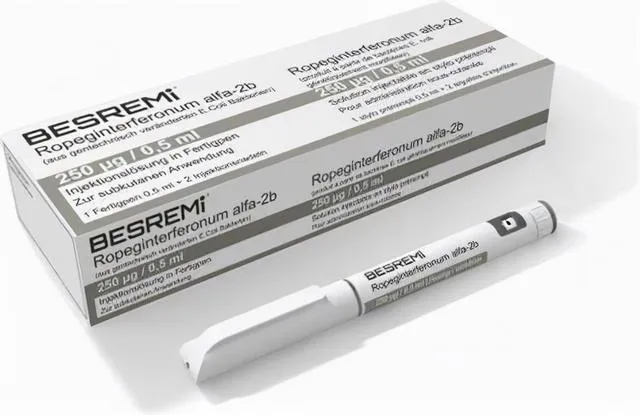
Table of Contents
- Patient Information Leaflet: Information for the User
- Besremi 250 micrograms/0.5 mL solution for injection in a pre-filled pen
- 1. What Besremi is and what it is used for
- 2. What you should know before using Besremi
- 3. How to use Besremi
- 4. Possible side effects
- 5. How to store Besremi
- 6. Package contents and other information
- Instructions for use
- Package leaflet: Information for the user
- Besremi 500 micrograms/0.5 mL solution for injection in pre-filled pen
- 1. What is Besremi and what is it used for
- 2. What you need to know before using Besremi
- 3. How to use Besremi
- 4. Possible side effects
- 5. How to store Besremi
- 6. Package contents and other information
- Instructions for use
Patient Information Leaflet: Information for the User
Besremi 250 micrograms/0.5 mL solution for injection in a pre-filled pen
Ropeginterferon alfa-2b
Please read this leaflet carefully before using this medicine as it contains important information for you.
- Keep this leaflet. You may need to read it again.
- If you have any questions, ask your doctor or pharmacist.
- This medicine has been prescribed for you only. Do not give it to other people, even if their symptoms are the same as yours, as it may be harmful.
- If you experience any side effects, including those not listed in this leaflet, inform your doctor or pharmacist. See section 4.
Contents of this leaflet
- What Besremi is and what it is used for
- What you need to know before using Besremi
- How to use Besremi
- Possible side effects
- How to store Besremi
- Contents of the pack and other information
1. What Besremi is and what it is used for
Besremi contains the active substance ropeginterferon alfa-2b, which belongs to a class of medicines called interferons. Interferons are produced by your immune system to block the growth of tumour cells.
Besremi is used as monotherapy in the treatment of polycythaemia vera in adults. Polycythaemia vera is a type of cancer in which the bone marrow produces too many red blood cells, white blood cells, and platelets (cells that help the blood to clot).
2. What you should know before using Besremi
Do not use Besremi
- if you are allergic to ropeginterferon alfa-2b or to any of the other ingredients of this medicine (listed in section 6).
- if you have a thyroid disorder that is not controlled by medication.
- if you currently have or have previously had severe mental disorders (such as depression, suicidal thoughts, or if you have attempted suicide).
- if you currently have or have recently had serious heart problems (such as heart attack or stroke).
- if you currently have or have previously had an autoimmune disease (such as rheumatoid arthritis, psoriasis, or inflammatory bowel disease).
- if you have had an organ transplant and are taking medicines that suppress the immune system.
- if you are taking telbivudine (a medicine used to treat hepatitis B infection).
- if you have advanced and uncontrolled liver disease.
- if you have severe kidney disease (with kidneys functioning at less than 15% of their normal capacity).
Warnings and precautions
Talk to your doctor before using Besremi:
- if you have a thyroid disorder.
- if you have diabetes or high blood pressure, your doctor may recommend an eye examination.
- if you have liver problems – if you are treated with Besremi long-term, you will have regular blood tests to monitor liver function.
- if you have kidney problems.
- if you have psoriasis or other skin conditions, as these may worsen during treatment with Besremi.
Once you have started treatment with Besremi, contact your doctor:
- if you develop symptoms of depression (such as feelings of sadness, low mood, or suicidal thoughts).
- if you develop signs of a severe allergic reaction (such as difficulty breathing, wheezing, or hives) while using Besremi – seek immediate medical attention.
- if you develop symptoms of a cold or other respiratory infection (such as difficulty breathing, cough, fever, or chest pain).
- if you experience changes in vision; inform your doctor and have an immediate eye examination. Serious eye problems may occur during treatment with Besremi. Your doctor will usually check your vision before starting treatment. If you have medical conditions that may cause eye problems, such as diabetes or hypertension, your doctor should also monitor your vision during treatment. If your vision worsens, your doctor may decide to stop treatment.
Medicines containing interferon may cause dental and gum disorders, possibly leading to tooth loss. In addition, during long-term treatment with Besremi, dry mouth may damage teeth and the lining of the mouth. Brush your teeth carefully twice daily and have regular dental check-ups.
It will take some time to reach your individual optimal dose of Besremi. Your doctor will decide whether you need to be treated with another medicine to rapidly reduce your blood cell count to prevent blood clots and bleeding.
Children and adolescents
Do not give this medicine to children or adolescents, as there is insufficient information on the use of Besremi in this age group.
Other medicines and Besremi
Tell your doctor or pharmacist if you are currently using, have recently used, or might use any other medicines.
Do not use Besremi if you are taking telbivudine (for the treatment of hepatitis B), as the combination of these medicines increases the risk of peripheral neuropathy (numbness, tingling, or burning sensations in the arms and legs). Inform your doctor if you are being treated with telbivudine.
Tell your doctor especially if you are taking any of the following medicines:
- theophylline (a medicine used to treat respiratory diseases such as asthma)
- methadone (a medicine used to treat pain or opioid dependence)
- vortioxetine or risperidone (medicines used to treat mental disorders)
- anticancer medicines, such as those that block or slow the growth of blood-forming cells in the bone marrow (e.g. hydroxycarbamide)
- medicines that act on the central nervous system to relieve pain, help sleep, or produce a calming effect (e.g. morphine, midazolam)
Pregnancy and breastfeeding
If you are pregnant or breastfeeding, think you may be pregnant, or are planning to have a baby, consult your doctor or pharmacist before using this medicine.
Pregnancy
The effect of Besremi during pregnancy is unknown. The use of Besremi is not recommended during pregnancy. If you are a woman of childbearing potential, your doctor will discuss with you whether you should use an effective method of contraception during treatment with Besremi.
Breastfeeding
It is not known whether Besremi is present in breast milk. Your doctor will decide whether you should stop breastfeeding while using this medicine.
Driving and using machines
Do not drive or operate machinery if you experience dizziness, drowsiness, or confusion while using Besremi.
Besremi contains benzyl alcohol
This medicine contains 5 mg of benzyl alcohol per 0.5 mL. Benzyl alcohol may cause allergic reactions.
Ask your doctor or pharmacist:
- if you are pregnant or breastfeeding.
- if you have liver or kidney disease. This is because large amounts of benzyl alcohol may accumulate in the body and cause unwanted effects ("metabolic acidosis").
Besremi contains polysorbate 80
This medicine contains 0.025 mg of polysorbate 80 per 0.5 mL. Polysorbates may cause allergic reactions. Inform your doctor if you have known allergies.
Besremi contains sodium
This medicine contains less than 1 mmol of sodium (23 mg) per mL, therefore essentially "sodium-free".
3. How to use Besremi
Use this medicine exactly as instructed by your doctor or pharmacist. If you have
any doubts, consult your doctor or pharmacist.
Your doctor will determine the dose individually based on your condition. The usual starting dose
of Besremi is 100 micrograms every 2 weeks. Afterwards, your doctor will gradually increase the dose
and may adjust it during treatment.
If you have severe kidney problems, your doctor will reduce the starting dose to 50 micrograms.
This medicine is for subcutaneous use, meaning it is injected into the tissue beneath the skin. It must not
be injected into an area of skin that is irritated, red, bruised, infected, or scarred.
If you self-inject this medicine, you will receive clear instructions on how to prepare and inject it.
To prevent the transmission of infectious diseases, never share the pre-filled pen of Besremi
with anyone else, even if you change the needle.
Details on how to prepare and inject Besremi are provided in the Instructions for Use. Please read them
before starting to use Besremi.
If you use more Besremi than you should
Inform your doctor as soon as possible.
If you forget to use Besremi
Inject the missed dose as soon as you remember. However, if more than 2 days have passed since the missed dose,
skip that dose and inject the next dose as scheduled. Do not inject a double dose to make up for a missed dose.
If you have any doubts, consult your doctor or pharmacist.
If you stop treatment with Besremi
Do not stop using Besremi without first informing your doctor.
If you have any questions about how to use this medicine, consult your doctor or pharmacist.
4. Possible side effects
Like all medicines, this medicine can cause side effects, although not everybody gets them.
Contact your doctor immediately if you experience any of the following serious side effects during
treatment with Besremi:
Common side effects (may affect up to 1 in 10 people):
- changes in heart rhythm (when the heart beats very fast and irregularly)
Uncommon side effects (may affect up to 1 in 100 people):
- suicide attempt, thoughts of killing oneself
- loss of vision which may be caused by bleeding in the retina (the retina is the light-sensitive layer of the eye), or by accumulation of fat inside or under the retina
Rare side effects (may affect up to 1 in 1,000 people):
- loss of vision which may be caused by damage to the retina (such as blockage of blood vessels in the eye) or to the optic nerve
Very rare side effects (may affect up to 1 in 10,000 people):
- blindness
- breathing problems, including shortness of breath, cough and chest pain, which may be caused by lung infiltration, pneumonia (lung infection), pulmonary arterial hypertension (high blood pressure in the blood vessels carrying blood from the heart to the lungs), and pulmonary fibrosis (a lung disease in which scarring forms in lung tissue)
Side effects with unknown frequency (frequency cannot be estimated from the available data):
- retinal detachment (you may experience eye problems, including changes in vision)
Other side effects
Very common side effects (may affect more than 1 in 10 people):
- decrease in the number of a type of white blood cells (called leukocytes) and of cells involved in blood clotting (called platelets)
- joint or muscle pain
- flu-like symptoms, fatigue
- in blood tests: increase in an enzyme called gamma-glutamyltransferase
Common side effects (may affect up to 1 in 10 people):
- respiratory tract infection, runny or stuffy nose, fungal infections, influenza
- decrease in the number or size of red blood cells
- increased or decreased thyroid activity, increase in thyroid-stimulating hormone, inflammation of the thyroid gland
- increase in triglycerides (a type of lipid) in the blood, decreased appetite
- aggressive behaviour, feeling depressed, anxiety, difficulty falling asleep or staying asleep, mood swings, lack of physical energy or motivation
- headache, dizziness, reduced touch or sensory perception, drowsiness, tingling sensation or feeling of pins and needles
- dry eyes
- damage to capillaries (very small blood vessels) in the body
- breathing problems
- diarrhoea, nausea, abdominal pain or stomach ache, constipation, dry mouth
- liver disorders, increase in certain liver enzymes (shown in blood tests)
- itching, hair loss, rash, skin redness, psoriasis, dry and scaly skin, acne, thickening of the outer layer of skin, increased sweating
- a condition called Sjögren's syndrome in which the body's immune system attacks glands that produce fluids (such as tear and salivary glands), arthritis, pain in arms and legs, bone pain, sudden and painful muscle stiffness
- fever, weakness, chills, general health problems, irritation or redness at the injection site, decrease in body weight
- in blood tests: presence of antibodies produced by the body's immune system, increase in an enzyme called lactate dehydrogenase
Uncommon side effects (may affect up to 1 in 100 people):
- herpes infection and reinfection, bacterial infections
- increase in the number of platelets
- autoimmune thyroid disorder, sarcoidosis (areas of inflamed tissue in various parts of the body)
- diabetes
- panic attack, hallucinations (seeing, hearing or sensing things that do not exist), feeling stressed, feeling nervous, lack of interest in any activity, nightmares, irritability, confusion
- nervous system damage, migraine, mental disorders (conditions involving changes in thinking, emotions, or behaviour), vision or sensory disturbances, hand tremor
- eye disorders, eyelid eczema
- hearing loss, ringing in the ears (tinnitus), sensation of spinning (vertigo)
- heart problems such as heart block (a disturbance in the heart's electrical activity), blood clots in blood vessels of the heart, aortic valve insufficiency
- hypertension, reduced blood flow to certain parts of the body, bruising (collection of blood under the skin), redness
- inflammation of lung tissue, cough, nosebleed, sore throat
- stomach inflammation, abdominal wall disorder, intestinal gas, indigestion, painful swallowing, bleeding gums
- liver inflammation, liver damage, enlarged liver
- sensitivity to sunlight, skin peeling, nail disorders
- muscle weakness, neck pain, groin pain
- bladder inflammation, pain during urination, increased need to urinate, inability to urinate
- sexual problems
- pain or itching at the injection site, sensitivity to weather changes
- non-acute porphyria (a liver disease in which substances called porphyrins accumulate in the skin causing local skin damage such as rashes, blisters, sores or discomfort during sun exposure)
- in blood tests: increase in uric acid, presence of antibodies produced by the body's immune system against red blood cells
Rare side effects (may affect up to 1 in 1,000 people):
- bipolar disorders (mood disorders with episodes of depression and mania), mania (extreme excitement or excessive enthusiasm)
Very rare side effects (may affect up to 1 in 10,000 people):
- idiopathic or thrombotic thrombocytopenic purpura (increased bruising, bleeding, decreased platelets, anaemia and extreme weakness)
- myocardial ischaemia (reduced blood flow to the heart muscle)
Side effects with unknown frequency (frequency cannot be estimated from the available data):
- Vogt-Koyanagi-Harada disease (a rare disease that may cause loss of vision, hearing and skin pigmentation), severe allergic reaction
- skin discoloration
- periodontal disease (affecting the gums) and dental disorders, change in tongue colour
Reporting of side effects
If you get any side effects, including ones not listed in this leaflet, talk to your doctor, pharmacist or nurse.
You can also report side effects directly via the national reporting system listed in Annex V. By reporting side effects, you can help provide more information on the safety of this medicine.
5. How to store Besremi
Keep this medicine out of the sight and reach of children.
Do not use this medicine after the expiry date stated on the label and outer packaging following "Exp.". The expiry date refers to the last day of that month.
Store in the refrigerator (between +2 °C and +8 °C).
Do not freeze.
Keep the pre-filled pen in the outer packaging to protect the medicine from light.
After first opening, the pre-filled pen may be stored for up to 30 days in the refrigerator (between +2 °C and +8 °C), provided it is kept with the pen cap on and within the outer packaging to protect the medicine from light.
Do not use this medicine if you notice that the pre-filled pen is damaged, the solution is cloudy, contains particles or flakes in suspension, or if the product has a colour different from colourless to slightly yellow.
Do not dispose of any medicine via wastewater or household waste. Ask your pharmacist how to dispose of medicines you no longer use. This will help protect the environment.
6. Package contents and other information
What Besremi contains
- The active substance is ropeginterferon alfa-2b.
Each 0.5 mL pre-filled pen contains 250 micrograms of ropeginterferon alfa-2b measured on a protein basis, corresponding to 500 micrograms/mL.
- The other ingredients are sodium chloride, polysorbate 80, benzyl alcohol, anhydrous sodium acetate, glacial acetic acid, and water for injections. For benzyl alcohol, polysorbate 80 and sodium, see section 2 “Besremi contains benzyl alcohol”, “Besremi contains polysorbate 80” and “Besremi contains sodium”.
Description of the appearance of Besremi and contents of the pack
Besremi is a solution for injection (injection) supplied in a pre-filled pen. Each pre-filled pen contains 0.5 mL of solution. It is available in packs containing:
- 1 pre-filled pen and 2 injection needles (type: mylife AutoProtect PRO 29G × 8 mm)
- 3 pre-filled pens and 6 injection needles (type: mylife AutoProtect PRO 29G × 8 mm).
Marketing Authorisation Holder and Manufacturer
AOP Orphan Pharmaceuticals GmbH
Leopold-Ungar-Platz 2
1190 Vienna
Austria
For further information about this medicinal product, please contact the local representative of the Marketing Authorisation Holder:
België/Belgique/Belgien
AOP Orphan Pharmaceuticals GmbH (Austria)
Tél/Tel: +43 1 5037244
България
AOP Orphan Pharmaceuticals GmbH (Австрия)
Teл.: + 43 1 5037244
Česká republika
AOP Orphan Pharmaceuticals GmbH (Rakousko)
Tel: + 43 1 5037244
Danmark
AOP Orphan Pharmaceuticals GmbH (Østrig)
Tlf: + 43 1 5037244
Deutschland
AOP Orphan Pharmaceuticals Germany GmbH
Tel: + 49 89 99 740 7600
Eesti
AOP Orphan Pharmaceuticals GmbH (Austria)
Tel: + 43 1 5037244
Ελλάδα
AOP Orphan Pharmaceuticals GmbH (Αυστρία)
Τηλ: + 43 1 5037244
España
AOP Orphan Pharmaceuticals Iberia S.L.U.
Tel: +34 91 449 19 89
France
AOP Orphan Pharmaceuticals GmbH (Autriche)
Tél: + 43 1 5037244
Hrvatska
AOP Orphan Pharmaceuticals GmbH (Austrija)
Tel: + 43 1 5037244
Ireland
AOP Orphan Pharmaceuticals GmbH (Austria)
Tel: + 43 1 5037244
Ísland
AOP Orphan Pharmaceuticals GmbH (Austurríki)
Sími: + 43 1 5037244
Italia
AOP Orphan Pharmaceuticals GmbH (Austria)
Tel: + 43 1 5037244
Κύπρος
AOP Orphan Pharmaceuticals GmbH (Αυστρία)
Τηλ: + 43 1 5037244
Latvija
AOP Orphan Pharmaceuticals GmbH (Austrija)
Tel: + 43 1 5037244
Lietuva
AOP Orphan Pharmaceuticals GmbH (Austrija)
Tel: + 43 1 5037244
Luxembourg/Luxemburg
AOP Orphan Pharmaceuticals GmbH (Austria)
Tél/Tel: + 43 1 5037244
Magyarország
AOP Orphan Pharmaceuticals GmbH (Ausztria)
Tel.: + 43 1 5037244
Malta
AOP Orphan Pharmaceuticals GmbH (L-Awstrija)
Tel: + 43 1 5037244
Nederland
AOP Orphan Pharmaceuticals GmbH (Oostenrijk)
Tel: + 43 1 5037244
Norge
AOP Orphan Pharmaceuticals GmbH (Østerrike)
Tlf: + 43 1 5037244
Österreich
AOP Orphan Pharmaceuticals GmbH
Tel: + 43 1 5037244
Polska
AOP Orphan Pharmaceuticals GmbH (Austria)
Tel.: + 43 1 5037244
Portugal
AOP Orphan Pharmaceuticals Iberia S.L.U.
Tel: + 34 91 449 19 89
România
AOP Orphan Pharmaceuticals GmbH (Austria)
Tel: + 43 1 5037244
Slovenija
AOP Orphan Pharmaceuticals GmbH (Avstrija)
Tel: + 43 1 5037244
Slovenská republika
AOP Orphan Pharmaceuticals GmbH (Rakúsko)
Tel: + 43 1 5037244
Suomi/Finland
AOP Orphan Pharmaceuticals GmbH (Itävalta)
Puh/Tel: + 43 1 5037244
Sverige
AOP Orphan Pharmaceuticals GmbH (Österrike)
Tel: + 43 1 5037244
Other sources of information
More detailed information on this medicinal product is available on the website of the European Medicines Agency: https://www.ema.europa.eu.
Instructions for use
Read this instruction leaflet carefully before using Besremi 250 micrograms pre-filled pen. If you have any doubts, consult your doctor or pharmacist.
Your doctor or pharmacist will explain how to use the pen.
Besremi 250 micrograms pre-filled pen can be used to inject doses ranging from 50 to 250 micrograms. The same pen may be used twice, provided the sum of the two doses does not exceed 250 micrograms. Your doctor will tell you which dose to use. Record the dates of injections and the dose as instructed by your doctor.
If you require a dose higher than 250 micrograms, you will need two pre-filled pens of Besremi 250 micrograms. For each of the two pens, use a different injection site. Your doctor or pharmacist will explain how to use the two pens.
Store the pen in the refrigerator inside the outer packaging.
Remove the pen from the refrigerator 15 minutes before injection to allow it to reach room temperature.
To administer the injection, find a quiet, well-lit area.
The following materials are required for the injection:
- Besremi pre-filled pen
- Needle (type: mylife AutoProtect PRO 29G × 8 mm)
- Alcohol wipe (not supplied)
- Optional: plaster (not supplied)
The Besremi pre-filled pen comes with either two or six needles (depending on the pack size). Always use a new needle for each injection.
Do not use the pen if it appears damaged. If at any time during use you believe the pen has been damaged (for example, if it has been dropped or excessive force has been applied), do not continue using it. Take a new pen and start again.
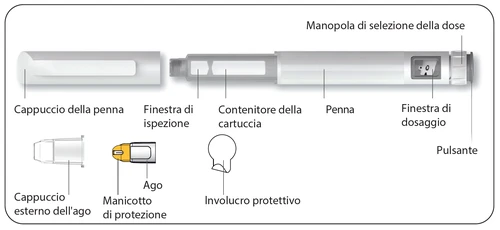
Description of Besremi 250 micrograms pre-filled pen
- Wash your hands before using Besremi
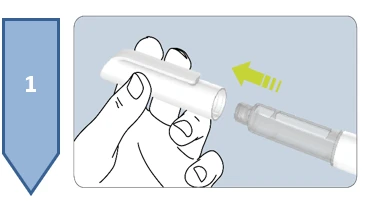
- Check that the medicine has not expired.
- Remove the cap from the pen.
- Check the solution through the inspection windows on the sides of the cartridge holder.
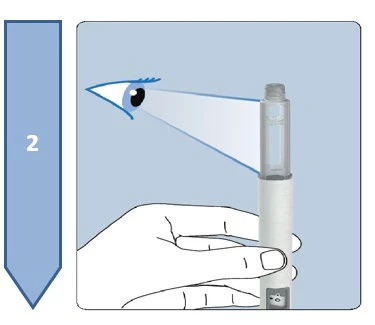
- Do not use the pen if the solution is cloudy, contains particles or flakes in suspension, or if the colour differs from colourless to slightly yellow.
- Take a new needle and remove the protective
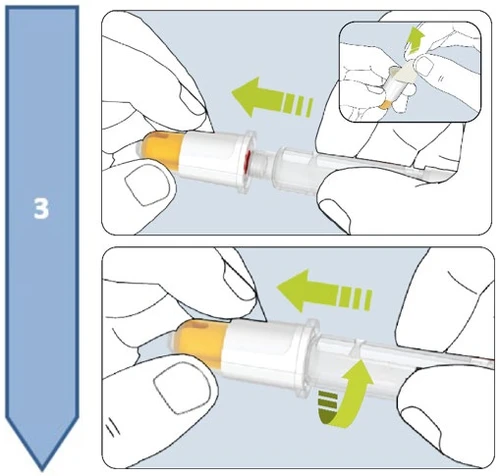
wrapper.
- Position the pen straight and centred over the needle to avoid bending or deforming it.
- Make sure it is securely attached.
- Screw the needle onto the pen by turning the pen clockwise while applying slight pressure until it stops.
- Remove the outer needle cap from the needle.
- Do not replace the outer needle cap on the needle
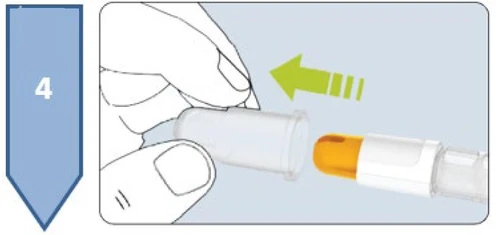
until after you have injected the medicine.
Never touch the tip of the needle.
- If you have already used the Besremi 250 micrograms pre-filled pen once and are now using it a second time, go directly to step 7.
- If you are using this pen for the first time, continue with the pen preparation described in step 5.
- If you are using this pen for the first time,
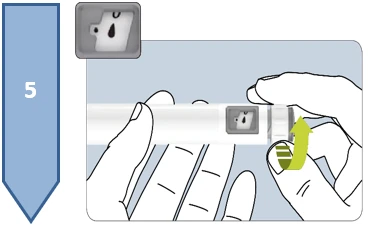
prepare the pen for injection by rotating the dose selector knob until the “drop” icon and the dot in the window are visible. The “drop” icon must be aligned with the dot in the dose window.
- Hold the pen with the needle pointing upwards and ensure the dose window is facing you.
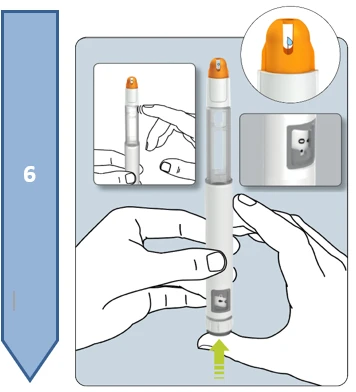
- Do not point towards your face or anyone else’s face.
- Gently tap the pen (cartridge holder) with your fingers to allow air bubbles to rise to the top of the cartridge holder.
- Press the button with your thumb until the “0” mark is aligned with the dot in the dose window.
- You will see the window change from the “drop” icon to the “0” mark and hear a soft click as the button moves.
- Looking through the small slit in the top of the orange needle protective sleeve, you should see a small drop of liquid appear at the tip of the needle.
- If you do not see a drop appear at the needle tip, repeat steps 5 and 6 up to six times until a drop appears.
- If no drop appears after the seventh attempt, consult your doctor or pharmacist.
- Set the dose recommended by your doctor by rotating the dose selector knob until the prescribed dose is visible. The selected dose must be aligned with the dot and the dose window. If necessary, adjust the dose by rotating the dose selector knob clockwise or counterclockwise.
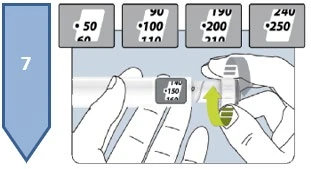
- If you are unable to set the desired dose by rotating the dose selector knob, the pen may no longer contain enough medicine. Do not apply additional force. Instead, take a new pen.
- Before injection, disinfect the injection site with an alcohol-soaked cotton
wool pad.
- Allow the area to dry before injecting the medicine.
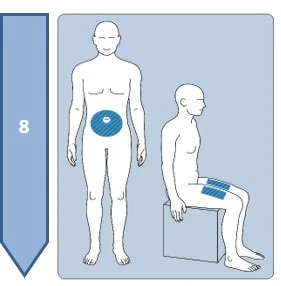
- You must inject the medicine subcutaneously (under the skin). Your doctor will tell you where to inject it.
- Possible injection sites are the abdomen (more than five centimetres away from the navel) or the thigh.
- If you are using two pens, use a different injection site for each pen (e.g. right and left side of the abdomen, or right and left thigh).
- Under no circumstances inject into irritated, reddened, bruised, infected or scarred skin.
- During injection, hold the pen so that the
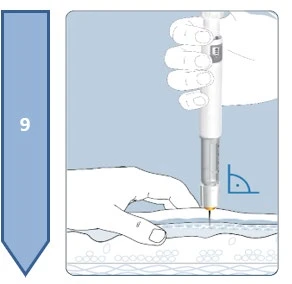
dose window and label are visible.
- Lift a skin fold between your thumb and index finger.
- Insert the needle at a 90-degree angle until the orange protective sleeve on the needle is no longer visible.
- Press the button fully until the “0” mark is aligned with the dot in the
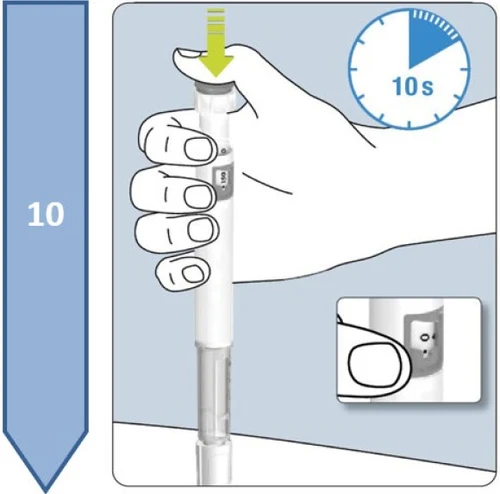
dose window.
- After completion of the injection, the soft clicks are no longer heard.
- Continue pressing the button while keeping the needle in the skin.
- Count slowly to 10. Do not lift or move the pen during injection.
- If the needle is withdrawn too early, you may see the solution leaking from the needle tip. In this case, the full dose may not have been delivered.
- Carefully withdraw the needle from the skin by pulling it
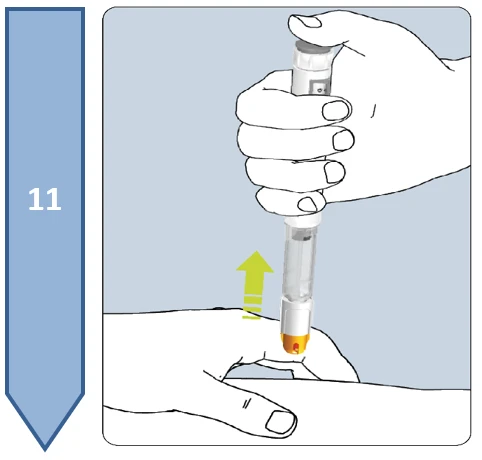
upwards.
- Keep the injection site clean until the small wound caused by the injection has closed. If necessary, apply a plaster.
Note:
- For your protection, the orange protective sleeve locks automatically and the red locking indicator that appears at this time covers the needle. If this does not happen, contact your doctor or pharmacist.
- After removing the needle, a small drop of liquid may remain on the skin. This is normal and does not mean that the dose administered was too low.
- Unscrew the needle by turning the pen counterclockwise and dispose of
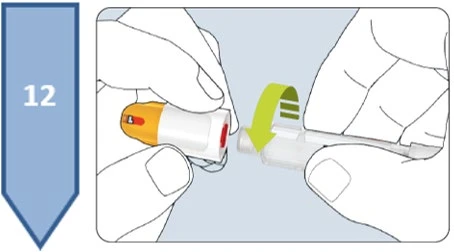
it appropriately.
Note:
- Once the needle is unscrewed, another red locking indicator covers the lower part of the needle for added safety.
Note: Replace the cap on the pen and close it securely.
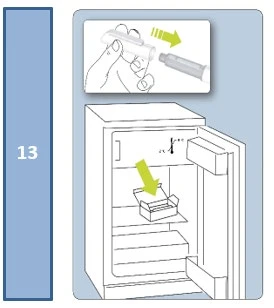
Re-use of the pen:
- Your doctor will tell you whether you can use the pen for a second injection. In this case, store the pen in the outer packaging and keep it refrigerated for future use. Do not use the pen after 30 days.
Disposal of the pen and needle:
- After use, dispose of the pen and needle according to local regulations or as instructed by your doctor or pharmacist.
Package leaflet: Information for the user
Besremi 500 micrograms/0.5 mL solution for injection in pre-filled pen
Ropeginterferon alfa-2b
Please read this leaflet carefully before using this medicine because it contains important information for you.
- Keep this leaflet. You may need to read it again.
- If you have any questions, ask your doctor or pharmacist.
- This medicine has been prescribed for you only. Do not give it to other people, even if their symptoms are the same as yours, as it may be harmful.
- If you experience any side effects, including those not listed in this leaflet, contact your doctor or pharmacist. See section 4.
Contents of this leaflet
- What Besremi is and what it is used for
- What you need to know before using Besremi
- How to use Besremi
- Possible side effects
- How to store Besremi
- Contents of the pack and other information
1. What is Besremi and what is it used for
Besremi contains the active substance ropeginterferon alfa-2b, which belongs to a class of medicines called interferons. Interferons are produced by your immune system to block the growth of tumour cells.
Besremi is used as monotherapy in the treatment of polycythaemia vera in adults. Polycythaemia vera is a type of cancer in which the bone marrow produces too many red blood cells, white blood cells and platelets (cells that help the blood to clot).
2. What you need to know before using Besremi
Do not use Besremi
- if you are allergic to ropeginterferon alfa-2b or to any of the other ingredients of this medicine (listed in section 6).
- if you have a thyroid disease that is not controlled by medication.
- if you have, or have had, severe mental disorders (such as depression or suicidal thoughts, or if you have attempted suicide).
- if you currently have or have recently had serious heart problems (such as heart attack or stroke).
- if you have, or have had, an autoimmune disease (such as rheumatoid arthritis, psoriasis, or inflammatory bowel disease).
- if you have had an organ transplant and are taking medicines that suppress the immune system.
- if you are taking telbivudine (a medicine used to treat hepatitis B infection).
- if you have advanced and uncontrolled liver disease.
- if you have severe kidney disease (with kidneys functioning at less than 15% of their normal capacity).
Warnings and precautions
Talk to your doctor before using Besremi:
- if you have a thyroid disease.
- if you have diabetes or high blood pressure, your doctor may ask you to have an eye examination.
- if you have liver problems – if you are treated with Besremi long-term, you will have regular blood tests to monitor your liver function.
- if you have kidney problems.
- if you have psoriasis or other skin conditions, as these may worsen during treatment with Besremi.
Once you have started treatment with Besremi, contact your doctor:
- if you develop symptoms of depression (such as feelings of sadness, low mood, or suicidal thoughts).
- if you develop signs of a severe allergic reaction (such as difficulty breathing, wheezing, or hives) while using Besremi – in this case, contact your doctor immediately.
- if you develop symptoms of a cold or other respiratory infection (such as difficulty breathing, cough, fever, or chest pain).
- if you experience changes in vision, inform your doctor and have an eye examination immediately. Serious eye problems may occur during treatment with Besremi. Usually, your doctor will check your vision before starting treatment. If you have medical conditions that may cause eye problems, such as diabetes or hypertension, your doctor should also monitor your vision during treatment. If your vision worsens, your doctor may decide to stop treatment.
Medicines containing interferon may cause dental and gum disorders, possibly leading to tooth loss.
In addition, during long-term treatment with Besremi, dry mouth may damage teeth and the lining of the mouth.
Brush your teeth carefully twice a day and have regular dental check-ups.
It will take some time to reach your individual optimal dose of Besremi.
Your doctor will decide whether you need to be treated with another medicine to rapidly reduce your blood cell count to prevent blood clots and bleeding.
Children and adolescents
Do not give this medicine to children or adolescents, as there is insufficient information on the use of
Besremi in this age group.
Other medicines and Besremi
Tell your doctor or pharmacist if you are using, have recently used, or might use any other
medicine.
Do not use Besremi if you are taking telbivudine (for the treatment of hepatitis B), as the
combination of these medicines increases the risk of peripheral neuropathy (numbness, tingling, or burning sensations in the arms and legs). Inform your doctor if you are being treated with telbivudine.
Tell your doctor especially if you are taking any of the following medicines:
- theophylline (a medicine used to treat respiratory diseases such as asthma)
- methadone (a medicine used to treat pain or opioid dependence)
- vortioxetine or risperidone (medicines used to treat mental disorders)
- anticancer medicines, such as those that block or slow down the growth of blood-forming cells in the bone marrow (e.g. hydroxycarbamide)
- medicines that act on the central nervous system to relieve pain, help you sleep, or produce a calming effect (e.g. morphine, midazolam)
Pregnancy and breastfeeding
If you are pregnant or breastfeeding, if you suspect you are pregnant, or if you are planning to have a
baby, consult your doctor or pharmacist before using this medicine.
Pregnancy
The effect of Besremi during pregnancy is unknown. The use of Besremi is not recommended during
pregnancy. If you are a woman of childbearing age, your doctor will discuss with you whether you should use an effective method of contraception during treatment with Besremi.
Breastfeeding
It is not known whether Besremi passes into breast milk. Your doctor will decide whether you should stop
breastfeeding while using this medicine.
Driving and using machines
Do not drive or operate machinery if you experience dizziness, drowsiness, or confusion while using
Besremi.
Besremi contains benzyl alcohol
This medicine contains 5 mg of benzyl alcohol per 0.5 mL. Benzyl alcohol may cause allergic reactions.
Ask your doctor or pharmacist:
- if you are pregnant or breastfeeding.
- if you have liver or kidney disease. This is because large amounts of benzyl alcohol may accumulate in the body and cause unwanted effects ("metabolic acidosis").
Besremi contains polysorbate 80
This medicine contains 0.025 mg of polysorbate 80 per 0.5 mL. Polysorbates may cause allergic reactions. Inform your doctor if you have known allergies.
Besremi contains sodium
This medicine contains less than 1 mmol of sodium (23 mg) per mL, therefore essentially "sodium-free".
3. How to use Besremi
Use this medicine exactly as instructed by your doctor or pharmacist. If you have
any doubts, consult your doctor or pharmacist.
Your doctor will individually determine the dose based on your condition. The usual starting dose
of Besremi is 100 micrograms every 2 weeks. Afterwards, your doctor will gradually increase the dose
and may adjust it during treatment.
If you have severe kidney problems, your doctor will reduce the starting dose to 50 micrograms.
This medicine is for subcutaneous use, meaning it is injected into the tissue beneath the skin. It must
not be injected into an area where the skin is irritated, red, bruised, infected, or scarred.
If you self-inject this medicine, you will receive clear instructions on how to prepare and administer the injection.
To prevent the transmission of infectious diseases, never share the Besremi pre-filled pen
with anyone else, even if you change the needle.
Details on how to prepare and inject Besremi are provided in the Instructions for Use. Please read them
before starting to use Besremi.
If you use more Besremi than you should
Inform your doctor as soon as possible.
If you forget to use Besremi
Inject the missed dose as soon as you remember. However, if more than 2 days have passed since the missed dose,
skip that dose and inject the next dose as scheduled. Do not inject a double dose to make up for a missed dose.
If you have any doubts, consult your doctor or pharmacist.
If you stop using Besremi
Do not stop using Besremi without first informing your doctor.
If you have any questions about the use of this medicine, consult your doctor or pharmacist.
4. Possible side effects
Like all medicines, this medicine can cause side effects, although not everybody gets them.
Contact your doctor immediately if you notice any of the following serious side effects during treatment with Besremi:
Common side effects (may affect up to 1 in 10 people):
- changes in heart rhythm (when the heart beats very fast and irregularly)
Uncommon side effects (may affect up to 1 in 100 people):
- suicide attempt, thoughts of killing oneself
- loss of vision which may be caused by bleeding in the retina (the retina is the light-sensitive layer of the eye), or by accumulation of fat inside or under the retina
Rare side effects (may affect up to 1 in 1,000 people):
- loss of vision which may be caused by damage to the retina (such as blockage of blood vessels in the eye) or to the optic nerve
Very rare side effects (may affect up to 1 in 10,000 people):
- blindness
- breathing problems, including shortness of breath, cough and chest pain, which may be caused by lung infiltration, pneumonia (lung infection), pulmonary arterial hypertension (high blood pressure in the blood vessels carrying blood from the heart to the lungs), and pulmonary fibrosis (a lung disease in which scarring forms in lung tissue)
Side effects with unknown frequency (frequency cannot be estimated from the available data):
- retinal detachment (you may experience eye problems, including changes in vision)
Other side effects
Very common side effects (may affect more than 1 in 10 people):
- reduction in the number of a type of white blood cells (called leukocytes) and of cells involved in blood clotting (called platelets)
- joint or muscle pain
- flu-like symptoms, fatigue
- in blood tests: increase in an enzyme called gamma-glutamyltransferase
Common side effects (may affect up to 1 in 10 people):
- respiratory tract infection, runny or stuffy nose, fungal infections, influenza
- reduction in number or size of red blood cells
- increased or decreased thyroid activity, increase in thyroid-stimulating hormone, inflammation of the thyroid
- increase in triglycerides (a type of lipid) in the blood, decreased appetite
- aggressive behaviour, feeling depressed, anxiety, difficulty falling or staying asleep, mood swings, lack of physical energy or motivation
- headache, dizziness, reduced sense of touch or sensory perception, drowsiness, tingling sensation or feeling of pins and needles
- dry eyes
- damage to capillaries (very small blood vessels) in the body
- breathing problems
- diarrhoea, nausea, abdominal pain or stomach ache, constipation, dry mouth
- liver disorders, increase in certain liver enzymes (detected in blood tests)
- itching, hair loss, skin rash, skin redness, psoriasis, dry and scaly skin, acne, thickening of the outer layer of the skin, increased sweating
- a disorder called Sjögren's syndrome in which the body's immune system attacks glands that produce fluids (such as tear and salivary glands), arthritis, pain in arms and legs, bone pain, sudden and painful muscle stiffness
- fever, weakness, chills, general health problems, irritation or redness at the injection site, decrease in body weight
- in blood tests: presence of antibodies produced by the body's immune system, increase in an enzyme called lactate dehydrogenase
Uncommon side effects (may affect up to 1 in 100 people):
- herpes infection and reinfection, bacterial infections
- increase in the number of platelets
- autoimmune thyroid disorder, sarcoidosis (areas of inflamed tissue in various parts of the body)
- diabetes
- panic attack, hallucinations (seeing, hearing or sensing things that do not exist), feeling stressed, feeling nervous, lack of interest in any activity, nightmares, irritability, confusion
- nervous system disorders, migraine, mental disorders (conditions involving changes in thinking, emotions or behaviour), visual or sensory disturbances, hand tremor
- eye disorders, eyelid eczema
- hearing loss, ringing in the ears (tinnitus), sensation of the environment spinning (vertigo)
- heart disorders such as heart block (a disturbance in the heart's electrical activity), blood clots in blood vessels of the heart, aortic valve insufficiency
- hypertension, reduced blood flow to certain parts of the body, bruising (collection of blood under the skin), redness
- inflammation of lung tissue, cough, nosebleed, sore throat
- stomach inflammation, abdominal wall disorder, intestinal gas, indigestion, painful swallowing, bleeding gums
- liver inflammation, liver damage, enlarged liver
- sensitivity to sunlight, skin peeling, nail disorders
- muscle weakness, neck pain, groin pain
- bladder inflammation, pain when urinating, increased need to urinate, inability to urinate
- sexual problems
- pain or itching at the injection site, sensitivity to weather changes
- non-acute porphyria (a liver disease in which substances called porphyrins accumulate in the skin causing local skin damage such as rashes, blisters, sores or discomfort during sun exposure)
- in blood tests: increase in uric acid, presence of antibodies produced by the body's immune system against red blood cells
Rare side effects (may affect up to 1 in 1,000 people):
- bipolar disorders (mood disorders with episodes of depression and mania), mania (extreme excitement or excessive enthusiasm)
Very rare side effects (may affect up to 1 in 10,000 people):
- idiopathic or thrombotic thrombocytopenic purpura (increased bruising, bleeding, reduced platelets, anaemia and extreme weakness)
- myocardial ischaemia (reduced blood flow to the heart muscle)
Side effects with unknown frequency (frequency cannot be estimated from the available data):
- Vogt-Koyanagi-Harada syndrome (a rare disease that may cause loss of vision, hearing and skin pigmentation), severe allergic reaction
- skin discoloration
- periodontal disease (affecting the gums) and dental disorders, change in tongue colour
Reporting of side effects
If you get any side effects, including those not listed in this leaflet, talk to your doctor, pharmacist or nurse. You can also report side effects directly via the national reporting system detailed in Annex V. By reporting side effects, you can help provide more information on the safety of this medicine.
5. How to store Besremi
Keep this medicine out of the sight and reach of children.
Do not use this medicine after the expiry date which is stated on the label and outer packaging after "Exp.". The expiry date refers to the last day of that month.
Store in a refrigerator (from +2 °C to +8 °C).
Do not freeze.
Keep the pre-filled pen in the outer packaging to protect the medicine from light.
Once opened, the pre-filled pen may be stored for up to 30 days in the refrigerator (from +2 °C to +8 °C), provided it is stored with the pen cap attached and in the outer packaging to protect the medicine from light.
Do not use this medicine if you notice that the pre-filled pen is damaged, or if the solution is cloudy, contains particles or flakes in suspension, or if the product has a colour different from colourless to slightly yellow.
Do not dispose of any medicine via wastewater or household waste. Ask your pharmacist how to dispose of medicines you no longer use. This will help protect the environment.
6. Package contents and other information
What Besremi contains
- The active substance is ropeginterferon alfa-2b. Each 0.5 mL pre-filled pen contains 500 micrograms of ropeginterferon alfa-2b measured on a protein basis, equivalent to 1,000 micrograms/mL.
- The other components are sodium chloride, polysorbate 80, benzyl alcohol, anhydrous sodium acetate, glacial acetic acid, and water for injections. For benzyl alcohol, polysorbate 80 and sodium, see section 2 “Besremi contains benzyl alcohol”, “Besremi contains polysorbate 80” and “Besremi contains sodium”.
Description of the appearance of Besremi and contents of the pack
Besremi is a solution for injection (injection) in a pre-filled pen. Each pre-filled pen contains 0.5 mL of solution. It is available in packs containing:
- 1 pre-filled pen and 2 injection needles (Type: mylife AutoProtect PRO 29G × 8 mm)
Marketing authorisation holder and manufacturer
AOP Orphan Pharmaceuticals GmbH
Leopold-Ungar-Platz 2
1190 Vienna
Austria
For further information on this medicine, contact the local representative of the marketing authorisation holder:
België/Belgique/Belgien Lietuva
AOP Orphan Pharmaceuticals GmbH (Austria) AOP Orphan Pharmaceuticals GmbH (Austrija)
Tél/Tel: +43 1 5037244 Tel: + 43 1 5037244
България Luxembourg/Luxemburg
AOP Orphan Pharmaceuticals GmbH (Австрия) AOP Orphan Pharmaceuticals GmbH (Austria)
Teл.: + 43 1 5037244 Tél/Tel: + 43 1 5037244
Česká republika Magyarország
AOP Orphan Pharmaceuticals GmbH (Rakousko) AOP Orphan Pharmaceuticals GmbH (Ausztria)
Tel: + 43 1 5037244 Tel.: + 43 1 5037244
Danmark Malta
AOP Orphan Pharmaceuticals GmbH (Østrig) AOP Orphan Pharmaceuticals GmbH (L-
Tlf: + 43 1 5037244 Awstrija)
Tel: + 43 1 5037244
Deutschland Nederland
AOP Orphan Pharmaceuticals Germany GmbH AOP Orphan Pharmaceuticals GmbH
Tel: + 49 89 99 740 7600 (Oostenrijk)
Tel: + 43 1 5037244
Eesti Norge
AOP Orphan Pharmaceuticals GmbH (Austria) AOP Orphan Pharmaceuticals GmbH (Østerrike)
Tel: + 43 1 5037244 Tlf: + 43 1 5037244
Ελλάδα Österreich
AOP Orphan Pharmaceuticals GmbH (Αυστρία) AOP Orphan Pharmaceuticals GmbH
Τηλ: + 43 1 5037244 Tel: + 43 1 5037244
España Polska
AOP Orphan Pharmaceuticals Iberia S.L.U. AOP Orphan Pharmaceuticals GmbH (Austria)
Tel: +34 91 449 19 89 Tel.: + 43 1 5037244
France Portugal
AOP Orphan Pharmaceuticals GmbH (Autriche) AOP Orphan Pharmaceuticals Iberia S.L.U.
Tél: + 43 1 5037244 Tel: + 34 91 449 19 89
Hrvatska România
AOP Orphan Pharmaceuticals GmbH (Austrija) AOP Orphan Pharmaceuticals GmbH (Austria)
Tel: + 43 1 5037244 Tel: + 43 1 5037244
Ireland Slovenija
AOP Orphan Pharmaceuticals GmbH (Austria) AOP Orphan Pharmaceuticals GmbH (Avstrija)
Tel: + 43 1 5037244 Tel: + 43 1 5037244
Ísland Slovenská republika
AOP Orphan Pharmaceuticals GmbH AOP Orphan Pharmaceuticals GmbH (Rakúsko)
(Austurríki) Tel: + 43 1 5037244
Sími: + 43 1 5037244
Italia Suomi/Finland
AOP Orphan Pharmaceuticals GmbH (Austria) AOP Orphan Pharmaceuticals GmbH (Itävalta)
Tel: + 43 1 5037244 Puh/Tel: + 43 1 5037244
Κύπρος Sverige
AOP Orphan Pharmaceuticals GmbH (Αυστρία) AOP Orphan Pharmaceuticals GmbH (Österrike)
Τηλ: + 43 1 5037244 Tel: + 43 1 5037244
Latvija
AOP Orphan Pharmaceuticals GmbH (Austrija)
Tel: + 43 1 5037244
Other sources of information
More detailed information on this medicine is available on the website of the European Medicines Agency: https://www.ema.europa.eu .
Instructions for use
Read this instruction leaflet carefully before using Besremi 500 micrograms pre-filled pen. If you have any doubts, consult your doctor or pharmacist.
Your doctor or pharmacist will explain how to use the pen.
Besremi 500 micrograms pre-filled pen can be used to inject doses of 50, 100, 150, 200, 250, 300, 350, 400, 450, and 500 micrograms. The same pen may be used twice, provided the total of the two doses does not exceed 500 micrograms. Your doctor will tell you which dose to use.
Record the dates of your injections and the dose as instructed by your doctor.
Store the pen in the refrigerator inside the outer packaging.
Remove the pen from the refrigerator 15 minutes before injection to allow it to reach room temperature.
To administer the injection, find a quiet, well-lit area.
For the injection, you will need the following materials:
- Pre-filled pen of Besremi
- Needle (type: mylife AutoProtect PRO 29G × 8 mm)
- Alcohol wipe (not supplied)
- Optional: adhesive plaster (not supplied)
The pre-filled pen of Besremi is supplied with two needles. Always use a new needle for each injection.
Do not use the pen if it appears damaged. If at any time during use you believe the pen has been damaged (e.g., if it has been dropped or excessive force has been applied), do not use it further. Take a new pen and start again.
Description of Besremi 500 micrograms pre-filled pen
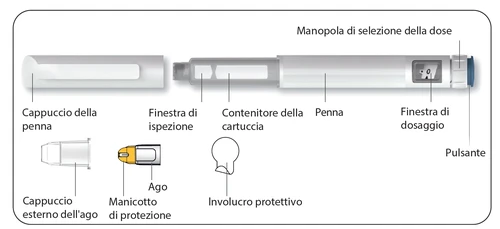
- Wash your hands before using Besremi
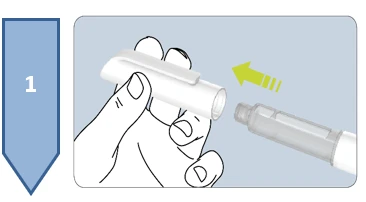
- Check that the medicine has not expired.
- Remove the cap from the pen.
- Check the solution through the inspection windows on the sides of the cartridge holder.
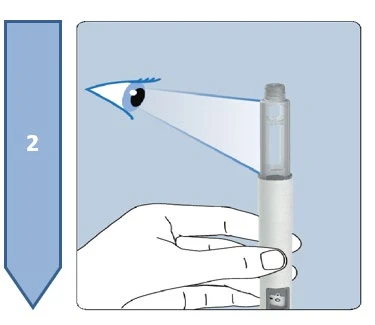
- Do not use the pen if the solution is cloudy, contains particles or flakes in suspension, or if the colour differs from colourless to slightly yellow.
- Take a new needle and remove the protective cover.
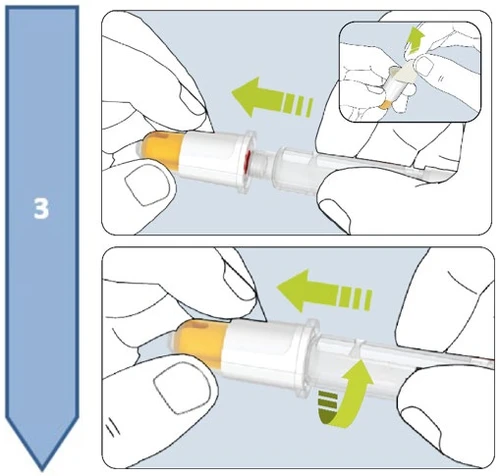
- Hold the pen straight and centered over the needle to avoid bending or deforming it.
- Ensure it is securely attached.
- Screw the needle onto the pen by turning the pen clockwise while applying gentle pressure until it stops.
- Remove the outer needle cap from the needle.
- Do not replace the outer needle cap on the needle until
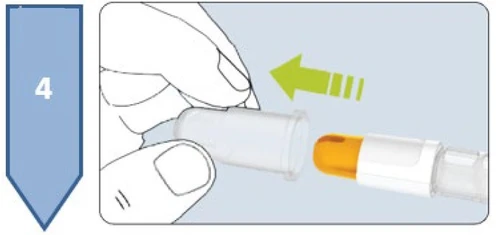
after you have injected the medicine. Never touch the tip of the needle.
- If the Besremi 500 micrograms pre-filled pen has already been used once, go directly to step 7.
- If you are using this pen for the first time, continue with the pen preparation described in step 5.
- If you are using this pen for the first time, prepare
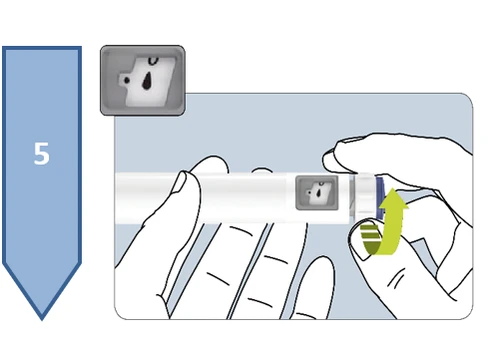
the pen for injection by rotating the dose selector knob until the “drop” icon and the dot in the window are visible. The “drop” icon must be aligned with the dot in the dose window.
- Hold the pen with the needle pointing upwards and ensure the dose window is facing you.
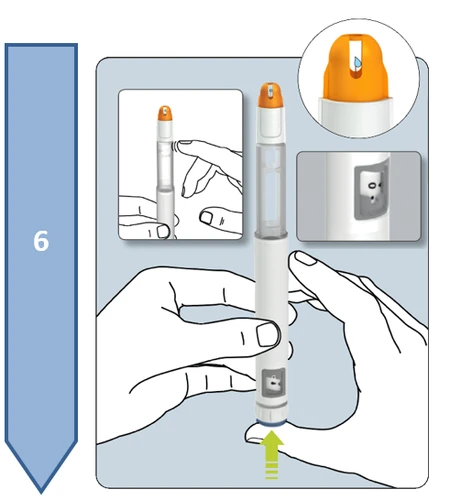
- Do not point the pen towards your face or anyone else’s.
- Gently tap the pen (cartridge holder) with your fingers to allow air bubbles to rise to the top of the cartridge holder.
- Press the button with your thumb until the “0” mark aligns with the dot in the dose window.
- You will see the window change from the “drop” icon to the “0” mark and hear a soft click as the button moves.
- Looking through the small slit at the top of the orange needle protective sleeve, you should see a small drop of liquid appear at the tip of the needle.
- If you do not see a drop at the needle tip, repeat steps 5 and 6 up to six times until a drop appears.
- If no drop appears after the seventh attempt, consult your doctor or pharmacist.
- Set the dose recommended by your doctor by rotating the
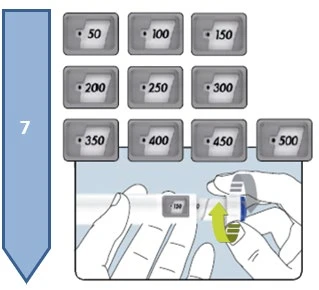
dose selector knob until the prescribed dose is visible. The selected dose must be aligned with the dot and the dose window. If necessary, adjust the dose by rotating the dose selector knob clockwise or counterclockwise.
- If you are unable to set the desired dose by rotating the dose selector knob, the pen may not contain enough medicine. Do not apply additional force. Instead, take a new pen.
- Before injection, disinfect the injection site with a cotton pad soaked in alcohol.
-
Allow the area to dry before injecting the medicine.
-
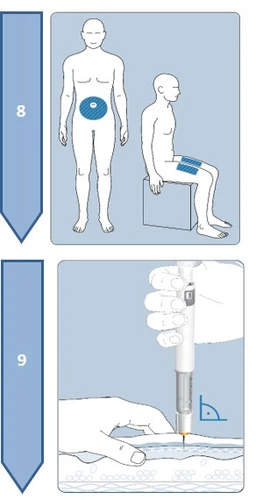
You must inject the medicine subcutaneously (under the skin). Your doctor will tell you where to inject it.
-
Possible injection sites are the abdomen (more than five centimeters away from the navel) or the thigh.
-
If you need to use two pens, use a different injection site for each pen (e.g., right and left side of the abdomen, or right and left thigh).
-
Never inject into irritated, red, bruised, infected, or scarred skin.
-
During injection, hold the pen so that the dose window and label are visible.
-
Pinch a fold of skin between your thumb and index finger.
-
Insert the needle at a 90-degree angle until the orange protective sleeve on the needle is no longer visible.
-
Press the button fully until the “0” mark is
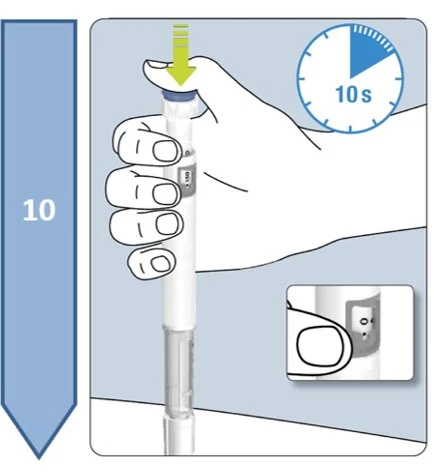
aligned with the dot in the dose window.
- After the injection is complete, no further soft clicks are heard.
- Continue pressing the button and keep the needle in the skin.
- Count slowly to 10. Do not lift or move the pen during the injection.
- If the needle is withdrawn too early, you may see the solution leaking from the needle tip. In this case, the full dose may not have been delivered.
- Carefully withdraw the needle from the skin by pulling it
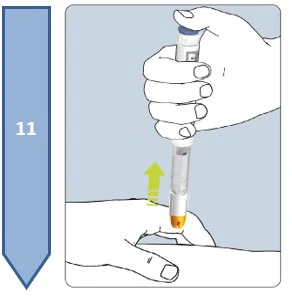
upwards.
- Keep the injection site clean until the small wound caused by the injection has closed. If necessary, apply an adhesive plaster.
Note:
- For your protection, the orange protective sleeve automatically locks and the red locking indicator that appears at this time covers the needle. If this does not happen, consult your doctor or pharmacist.
- After removing the needle, a small drop of liquid may remain on the skin. This is normal and does not mean the dose was too low.
- Unscrew the needle by turning the pen counterclockwise and dispose of the needle appropriately.
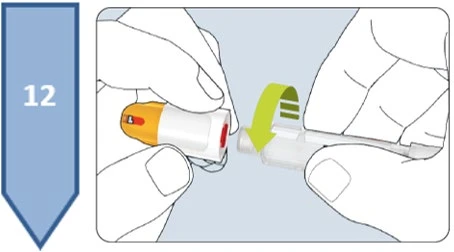
Note: Replace the cap on the pen and close it securely.
Re-use of the pen:
- Your doctor will tell you whether you can use the pen for a second injection. If so, return the pen to the outer packaging and store it in the refrigerator for future use. Do not use the pen after 30 days.
Disposal of the pen and needle:
- After use, dispose of the pen and needle according to local regulations or as instructed by your doctor or pharmacist.