Beovu
Italy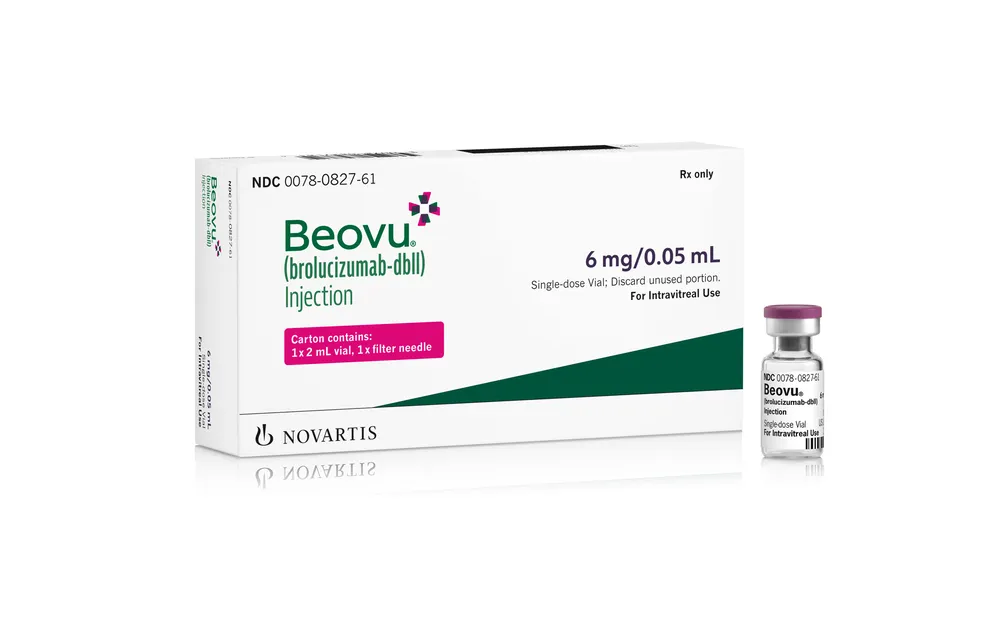
Instructions for Use
Table of Contents
- Beovu 120 mg/ml solution for injection in pre-filled syringe
- 1. What is Beovu and what is it used for
- 2. What you need to know before you are given Beovu
- 3. How Beovu will be administered
- 4. Possible side effects
- 5. How to store Beovu
- 6. Package contents and other information
- Instructions for Use of the Pre-filled Syringe
- Patient information leaflet: information for the patient
- Beovu 120 mg/ml solution for injection
- 1. What Beovu is and what it is used for
- 2. What you should know before Beovu is administered to you
- 3. How Beovu will be administered to you
- 4. Possible side effects
- 5. How to store Beovu
- 6. Package contents and other information
- Instructions for Use of the Vial
Package leaflet: Information for the patient
Beovu 120 mg/ml solution for injection in pre-filled syringe
brolucizumab
Please read all of this leaflet carefully before this medicine is administered to you because it contains important information for you.
- Keep this leaflet. You may need to read it again.
- If you have any questions, ask your doctor.
- If you get any side effects, talk to your doctor. This includes any side effects not listed in this leaflet. See section 4.
Contents of this leaflet
- What Beovu is and what it is used for
- What you need to know before Beovu is administered to you
- How Beovu will be administered to you
- Possible side effects
- How to store Beovu
- Contents of the pack and other information
1. What is Beovu and what is it used for
What is Beovu
Beovu contains the active substance brolucizumab, which belongs to a group of medicines called
anti-angiogenic agents. Beovu is injected into the eye by a doctor to treat eye disorders that may affect vision.
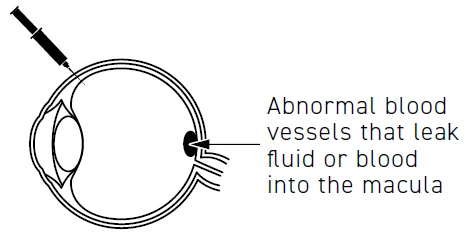
Abnormal blood vessels
leaking fluid or blood into
the macula
What Beovu is used for
Beovu is used in adults to treat eye disorders that occur when abnormal blood vessels form and grow under the macula. The macula, located at the back of the eye, is responsible for sharp, central vision. These abnormal blood vessels may leak fluid or blood into the eye, interfering with macular function and leading to diseases that can cause vision loss, such as:
- neovascular (wet) age-related macular degeneration (AMD)
- diabetic macular edema (DME).
How Beovu works
Beovu can slow down disease progression and thereby help maintain, or even improve, vision.
2. What you need to know before you are given Beovu
Do not receive Beovu:
- if you are allergic to brolucizumab or to any of the other ingredients of this medicine (listed in section 6);
- if you have an active or suspected infection in the eye or surrounding area;
- if you have eye pain or redness (inflammation of the eye). If any of these conditions apply to you, inform your doctor. You must not receive Beovu.
Warnings and precautions
Contact your doctor before you are given Beovu if any of the following conditions apply to you:
- if you have glaucoma (an eye condition generally caused by high pressure in the eye);
- if you have previously experienced flashes of light or floaters (flying spots) or if you suddenly notice an increase in the size and number of floaters;
- if you have had eye surgery within the last 4 weeks or if eye surgery is planned within the next 4 weeks;
- if you have ever had eye diseases or eye treatments;
- if you have experienced sudden vision loss in the past year due to blockage of blood vessels at the back of the eye (retinal vascular occlusion) or inflammation of blood vessels at the back of the eye (retinal vasculitis).
Inform your doctor immediately if:
- you experience eye redness, eye pain, increased discomfort, worsening eye redness, blurred or reduced vision, an increase in the number of small particles in your vision, or increased sensitivity to light;
- you develop sudden vision loss, which may be a sign of retinal vascular occlusion. Any of these symptoms may lead your doctor to discontinue treatment with Beovu.
In addition, it is important to know that:
- the safety and efficacy of Beovu when administered in both eyes simultaneously have not been studied, and using it in this way may increase the risk of experiencing adverse effects;
- Beovu injections may cause an increase in intraocular pressure (eye pressure) in some patients within 30 minutes after injection. Your doctor will monitor you after each injection;
- your doctor will check for other risk factors that may increase the likelihood of tearing or detachment of one of the layers at the back of the eye (retinal tear or detachment, or retinal pigment epithelial tear or detachment), in which case Beovu should be administered with caution.
Systemic use of VEGF inhibitors—substances similar to those contained in Beovu—has potentially been associated with the risk of blood clots blocking blood vessels (arterial thromboembolic events), which may lead to heart attack or stroke. There is a theoretical risk that such events could occur after injection of Beovu into the eye.
Children and adolescents
Beovu is not used in children and adolescents under 18 years of age.
Other medicines and Beovu
Inform your doctor if you are taking, have recently taken, or might take any other medicines.
Pregnancy and breastfeeding
If you are pregnant, suspect you may be pregnant, are planning a pregnancy, or are breastfeeding, consult your doctor before you are given this medicine.
Breastfeeding is not recommended during treatment with Beovu and for at least one month after stopping treatment with the medicine, as it is not known whether Beovu is excreted in human milk.
Women of childbearing potential must use an effective method of contraception during treatment and for at least one month after stopping treatment with Beovu. If you become pregnant or suspect you are pregnant during treatment, inform your doctor immediately. Beovu must not be used during pregnancy unless the potential benefit outweighs the potential risk to the fetus.
Driving and using machines
After treatment with Beovu, you may experience temporary vision problems (for example, blurred vision). Do not drive or operate machinery until this condition has resolved.
Beovu contains sodium
This medicine contains less than 1 mmol (23 mg) of sodium per dose, therefore it is essentially “sodium-free”.
Beovu contains polysorbates
This medicine contains 0.01 mg of polysorbate 80 per dose (0.05 ml). Polysorbates may cause allergic reactions. Inform your doctor if you have known allergies.
3. How Beovu will be administered
How much Beovu is administered and for how long
The recommended dose is 6 mg of brolucizumab.
Wet AMD
Initial treatment (also called loading treatment)
- You will receive one injection every month for the first 3 months.
- Alternatively, you may be treated with an injection every 6 weeks for the first two doses. Your doctor will decide whether a third injection is needed 12 weeks after starting treatment, based on the condition of your eye(s).
Maintenance treatment - Afterwards, you may receive an injection every 3 months. Your doctor will determine the treatment interval based on the condition of your eye; some patients may require treatment every 2 months. Depending on the condition of your eye, your doctor may extend or shorten the treatment interval by no more than 1 month at a time. Data on treatment intervals longer than 5 months are limited. The treatment interval between two doses of Beovu must not be less than 2 months.
INITIAL TREATMENT MAINTENANCE TREATMENT
(ALSO CALLED LOADING TREATMENT)


3 DOSES,
2 DOSES,
ONE EVERY ONE EVERY ONE EVERY
OR

6

WEEKS WEEKS WEEKS

DME
- You will receive an injection every six weeks for the first five injections.
- Afterwards, you may receive an injection every 3 months. Your doctor will determine the treatment interval based on the condition of your eye. Some patients may require treatment every 2 months. Some patients may receive treatment every 4 months. First 5 doses,
Afterwards,
one every
one every

weeks weeks
For the first 5 doses, Afterwards, 1 injection every
1 injection every 12 weeks (3 months) or as
6 weeks recommended by your doctor
Method of administration
Beovu is administered by an ophthalmologist via injection into the eye (intravitreal use).
Before the injection, your doctor will thoroughly clean your eye to prevent infection. Your doctor will also give you eye drops (local anaesthetic) to numb the eye and reduce or prevent injection-related pain.
How long Beovu treatment lasts
Beovu is used to treat chronic eye diseases that require long-term treatment, which may last for months or years. Your doctor will monitor whether the treatment is working during regular scheduled visits. Your doctor may also examine your eyes between injections. If you have any questions about how long your Beovu treatment will last, speak with your doctor.
Before stopping Beovu treatment
Talk to your doctor before stopping treatment. Stopping treatment may increase the risk of vision loss, and your vision may worsen.
If you have any questions about how to use this medicine, speak with your doctor.
4. Possible side effects
Like all medicines, this medicine can cause side effects, although not everybody gets them.
Side effects following Beovu injection are due to both the medicine itself and the injection procedure, and most of them affect the eye.
Some side effects can be serious
Contact a doctor immediately if you experience any of the following conditions, which are signs of
allergic reactions, inflammation or infections:
- sudden decrease or change in vision
- eye pain, increased discomfort, worsening of eye redness
If you experience any side effect, contact your doctor immediately.
Other possible side effects
Other side effects that may occur after treatment with Beovu include those
listed below.
Most side effects are mild or moderate and generally resolve within one
week after each injection.
If these side effects become severe, inform your doctor.
Common: may affect up to 1 in 10 people
- inflammation of the middle layer of the eye wall (uveitis)
- detachment of the gel-like substance inside the eye (vitreous detachment)
- tear in the retina (the light-detecting tissue at the back of the eye) or one of its layers (retinal pigment epithelial tear)
- reduced visual sharpness (reduced visual acuity)
- bleeding in the retina (retinal haemorrhage)
- inflammation of the iris, the coloured part of the eye (iritis)
- inflammation of the iris and adjacent eye tissue (iridocyclitis)
- sudden loss of vision due to blockage of blood vessels at the back of the eye (retinal vascular occlusion)
- bleeding inside the eye (vitreous haemorrhage)
- clouding of the eye's lens (cataract)
- bleeding from small blood vessels in the outer layer of the eye (conjunctival haemorrhage)
- moving spots in the vision (vitreous floaters)
- eye pain
- increased pressure in the eye (increased intraocular pressure)
- redness of the white part of the eye (conjunctivitis)
- blurred or cloudy vision
- scratched cornea, damage to the transparent layer covering the iris (corneal abrasion)
- damage to the transparent layer covering the iris (punctate keratitis)
- allergic reactions (hypersensitivity)
Uncommon: may affect up to 1 in 100 people
- severe inflammation inside the eye (endophthalmitis)
- blindness
- sudden loss of vision due to blockage of an artery in the eye (retinal artery occlusion)
- retinal detachment (retinal detachment)
- eye redness (conjunctival hyperaemia)
- increased tear production (increased lacrimation)
- abnormal sensation in the eye
- detachment of one of the layers of the retina (retinal pigment epithelium detachment)
- inflammation of the gel-like substance inside the eye (vitritis)
- inflammation in the front part of the eye (anterior chamber inflammation or flare)
- swelling of the cornea, the transparent layer of the eyeball (corneal oedema)
- inflammation of blood vessels at the back of the eye (retinal vasculitis)
- inflammation of the white outer coating of the eye (scleritis)
Reporting of side effects
If you experience any side effect, including those not listed in this leaflet, contact your doctor.
You can also report side effects directly via the national reporting system listed in Annex V.
Reporting side effects can help provide more information on the safety of this medicine.
5. How to store Beovu
Keep this medicine out of the sight and reach of children.
Do not use this medicine after the expiry date stated on the carton and label after Exp/EXP. The expiry date refers to the last day of that month.
Store in a refrigerator (2°C - 8°C).
Do not freeze.
Keep the pre-filled syringe in its sealed blister and outer packaging to protect the medicine from light.
Before use, the unopened blister containing the pre-filled syringe may be kept at room temperature (below 25°C) for a maximum of 24 hours.
6. Package contents and other information
What Beovu contains
-
The active substance is brolucizumab. One ml of injectable solution contains 120 mg of brolucizumab. Each pre-filled syringe contains 19.8 mg of brolucizumab in 0.165 ml of solution. This provides a sufficient amount for administration of a single dose of 0.05 ml of solution containing 6 mg of brolucizumab.
-
The other components are: sodium citrate, sucrose, polysorbate 80, sodium hydroxide (for pH adjustment), water for injections (see section 2).
Description of the appearance of Beovu and contents of the pack
Beovu 120 mg/ml solution for injection in pre-filled syringe (injectable preparation) is an aqueous solution ranging from clear to slightly opalescent and from colourless to slightly yellowish-brown.
Pack containing 1 single-use pre-filled syringe only.
Marketing Authorisation Holder
Novartis Europharm Limited
Vista Building
Elm Park, Merrion Road
Dublin 4
Ireland
Manufacturer
Novartis Manufacturing NV
Rijksweg 14
2870 Puurs-Sint-Amands
Belgium
Novartis Pharma GmbH
Roonstraße 25
90429 Nuremberg
Germany
Novartis Pharma GmbH
Sophie-Germain-Strasse 10
90443 Nuremberg
Germany
For further information on this medicinal product, please contact the local representative of the Marketing Authorisation Holder:
België/Belgique/Belgien Lietuva
Novartis Pharma N.V. SIA Novartis Baltics Lietuvos filialas
Tél/Tel: +32 2 246 16 11 Tel: +370 5 269 16 50
България Luxembourg/Luxemburg
Novartis Bulgaria EOOD Novartis Pharma N.V.
Тел.: +359 2 489 98 28 Tél/Tel: +32 2 246 16 11
Česká republika Magyarország
Novartis s.r.o. Novartis Hungária Kft.
Tel: +420 225 775 111 Tel.: +36 1 457 65 00
Danmark Malta
Novartis Healthcare A/S Novartis Pharma Services Inc.
Tlf.: +45 39 16 84 00 Tel: +356 2122 2872
Deutschland Nederland
Novartis Pharma GmbH Novartis Pharma B.V.
Tel: +49 911 273 0 Tel: +31 88 04 52 111
Eesti Norge
SIA Novartis Baltics Eesti filiaal Novartis Norge AS
Tel: +372 66 30 810 Tlf: +47 23 05 20 00
Ελλάδα Österreich
Novartis (Hellas) A.E.B.E. Novartis Pharma GmbH
Τηλ: +30 210 281 17 12 Tel: +43 1 86 6570
España Polska
Novartis Farmacéutica, S.A. Novartis Poland Sp. z o.o.
Tel: +34 93 306 42 00 Tel.: +48 22 375 4888
France Portugal
Novartis Pharma S.A.S. Novartis Farma - Produtos Farmacêuticos, S.A.
Tél: +33 1 55 47 66 00 Tel: +351 21 000 8600
Hrvatska România
Novartis Hrvatska d.o.o. Novartis Pharma Services Romania SRL
Tel. +385 1 6274 220 Tel: +40 21 31299 01
Ireland Slovenija
Novartis Ireland Limited Novartis Pharma Services Inc.
Tel: +353 1 260 12 55 Tel: +386 1 300 75 50
Ísland Slovenská republika
Vistor hf. Novartis Slovakia s.r.o.
Sími: +354 535 7000 Tel: +421 2 5542 5439
Italia Suomi/Finland
Novartis Farma S.p.A. Novartis Finland Oy
Tel: +39 02 96 54 1 Puh/Tel: +358 (0)10 6133 200
Κύπρος Sverige
Novartis Pharma Services Inc. Novartis Sverige AB
Τηλ: +357 22 690 690 Tel: +46 8 732 32 00
Latvija
SIA Novartis Baltics
Tel: +371 67 887 070
Other sources of information
More detailed information on this medicinal product is available on the website of the European Medicines Agency: https://www.ema.europa.eu.
The following information is intended for healthcare professionals only:
Instructions for Use of the Pre-filled Syringe
Storage and Visual Inspection
Store Beovu in the refrigerator (2°C - 8°C). Do not freeze. Keep the pre-filled syringe in its sealed blister and in the outer packaging to protect the medicine from light.
Before use, the unopened blister containing the Beovu pre-filled syringe may be kept at room temperature (below 25°C) for up to 24 hours. Ensure that the packaging contains a pre-filled syringe in its sealed blister. After opening the blister, proceed under aseptic conditions.
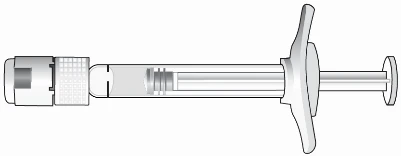
Beovu is an aqueous solution ranging from clear to slightly opalescent, and from colourless to slightly yellowish-brown.
The solution should be visually inspected after removal from the refrigerator and before administration. If particles or cloudiness are visible, the pre-filled syringe must not be used, and an appropriate replacement procedure should be followed.
The pre-filled syringe is sterile and for single use only. Do not use if the packaging or the pre-filled syringe is damaged or expired.
How to Prepare and Administer Beovu
The pre-filled syringe contains more than the recommended dose of 6 mg. The extractable volume from the pre-filled syringe (0.165 ml) should not be used entirely. The excess volume must be discarded before proceeding with the injection. Injecting the entire volume of the pre-filled syringe may result in overdose.
The intravitreal injection procedure must be performed under aseptic conditions, including surgical hand disinfection, use of sterile gloves, a sterile drape, and a sterile eyelid speculum (or equivalent), along with availability of sterile equipment for paracentesis (if required).
Prior to injection, appropriate anaesthesia and a broad-spectrum topical antimicrobial should be administered to disinfect the periocular, ocular, and eyelid surfaces.
For intravitreal injection, a sterile 30G x ½″ injection needle must be used. The injection needle is not included in the Beovu package.
Ensure that the injection is administered immediately after dose preparation (step 5).
Note: The dose must be set to 0.05 ml.
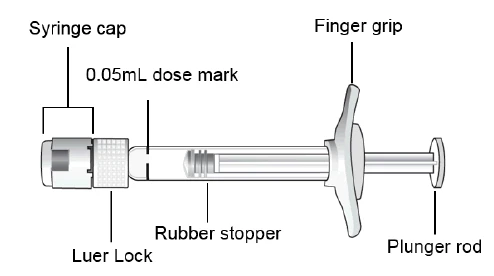
Injection Procedure
| 1. | Lift the syringe blister pack lid and, under aseptic conditions, remove the syringe. |
2.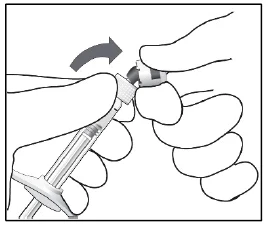 | Remove (do not twist or rotate) the syringe cap. |
| 3. | Under aseptic conditions and with firm pressure, attach the 30G x ½″ injection needle to the syringe. |
4.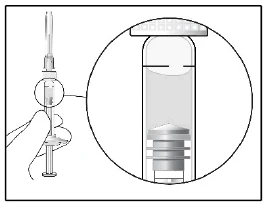 | Check for air bubbles by holding the syringe with the needle pointing upward. If there are air bubbles, gently tap the syringe with your finger until the bubbles rise to the surface. Carefully remove the needle cap by pulling it off. |
5.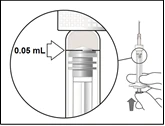 | Hold the syringe at eye level and gently push the plunger until the lower edge of the rubber stopper's dome aligns with the 0.05 mL mark. This will expel air and excess solution, adjusting the dose to 0.05 mL. The syringe is now ready for injection. |
| 6. | Inject slowly until the rubber stopper reaches the bottom of the syringe, delivering the injected volume of 0.05 mL. Ensure the full dose is administered by verifying that the rubber stopper has reached the end of the syringe barrel. |
Note: Unused or waste material must be disposed of in accordance with current local regulations.
Frequently asked questions
Q: What should I do if I cannot remove air bubbles from the liquid?
A: It is important that the liquid is free of air. However, tiny air bubbles attached to the stopper normally do not detach from the stopper during injection and therefore do not affect the dose volume.
Patient information leaflet: information for the patient
Beovu 120 mg/ml solution for injection
brolucizumab
Please read this leaflet carefully before this medicine is administered to you, because
it contains important information for you.
- Keep this leaflet. You may need to read it again.
- If you have any questions, ask your doctor.
- If you experience any side effects, including those not listed in this leaflet, tell your doctor. See section 4.
Contents of this leaflet
- What Beovu is and what it is used for
- What you need to know before Beovu is administered to you
- How Beovu will be administered to you
- Possible side effects
- How to store Beovu
- Contents of the pack and other information
1. What Beovu is and what it is used for
What Beovu is
Beovu contains the active substance brolucizumab, which belongs to a group of medicines called
anti-angiogenic agents. Beovu is injected into the eye by a doctor to treat eye disorders that may affect vision.
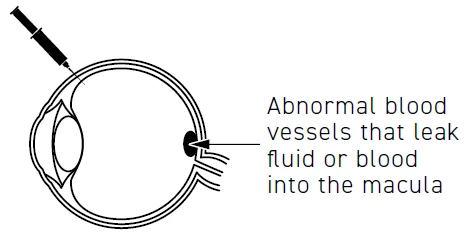
Abnormal blood vessels
leaking fluid or blood into
the macula
What Beovu is used for
Beovu is used in adults to treat eye disorders that occur when abnormal blood vessels form and grow under the macula. The macula, located at the back of the eye, is responsible for clear vision. Abnormal blood vessels may leak fluid or blood into the eye and interfere with macular function, leading to diseases that can cause vision loss, such as:
- neovascular (wet) age-related macular degeneration (AMD)
- diabetic macular edema (DME).
How Beovu works
Beovu can slow down disease progression and thus help maintain, or even improve, vision.
2. What you should know before Beovu is administered to you
Do not receive Beovu:
- if you are allergic to brolucizumab or to any of the other ingredients of this medicine (listed in section 6);
- if you have an active or suspected infection in the eye or surrounding area;
- if you have eye pain or redness (eye inflammation).
If any of these conditions apply to you, inform your doctor. You must not receive Beovu.
Warnings and precautions
Talk to your doctor before Beovu is administered if any of the following conditions apply to you:
- if you have glaucoma (an eye condition generally caused by high pressure within the eye);
- if you have previously experienced flashes of light or floaters (moving dark spots) and if you suddenly notice an increase in the size and number of floaters;
- if you have had eye surgery within the last 4 weeks or if eye surgery is planned within the next 4 weeks;
- if you have ever had eye diseases or eye treatments;
- if you have experienced sudden vision loss in the past year due to blockage of blood vessels at the back of the eye (retinal vascular occlusion) or inflammation of blood vessels at the back of the eye (retinal vasculitis).
Immediately inform your doctor if:
- you experience eye redness, eye pain, increased discomfort, worsening eye redness, blurred or reduced vision, an increase in the number of small particles in your vision, or increased sensitivity to light;
- you develop sudden vision loss, which may be a sign of retinal vascular occlusion.
Any of these symptoms may lead your doctor to discontinue treatment with Beovu.
Additionally, it is important to know that:
- the safety and efficacy of Beovu when administered in both eyes simultaneously have not been studied, and using it in this way may increase the risk of experiencing adverse effects;
- Beovu injections may cause an increase in intraocular pressure (eye pressure) in some patients within 30 minutes after injection. Your doctor will monitor you after each injection;
- your doctor will check for other risk factors that may increase the likelihood of fluid accumulation or detachment in one of the layers at the back of the eye (retinal detachment or tear, or detachment or tear of the retinal pigment epithelium); in such cases, Beovu should be administered with caution.
Systemic use of VEGF inhibitors—substances similar to those contained in Beovu—is potentially associated with the risk of blood clots blocking blood vessels (arterial thromboembolic events), which may lead to heart attack or stroke. There is a theoretical risk that such events could occur after intravitreal injection of Beovu.
Children and adolescents
Beovu is not used in children and adolescents under 18 years of age.
Other medicines and Beovu
Inform your doctor if you are taking, have recently taken, or might take any other medicines.
Pregnancy and breastfeeding
If you are pregnant, suspect you may be pregnant, are planning a pregnancy, or are breastfeeding, consult your doctor before receiving this medicine.
Breastfeeding is not recommended during treatment with Beovu and for at least one month after stopping treatment, as it is unknown whether Beovu is excreted in human milk.
Women of childbearing potential must use an effective method of contraception during treatment and for at least one month after discontinuation of Beovu. If you become pregnant or suspect pregnancy during treatment, inform your doctor immediately. Beovu should not be used during pregnancy unless the potential benefit outweighs the potential risk to the fetus.
Driving and use of machines
After treatment with Beovu, you may experience temporary visual disturbances (e.g., blurred vision). Do not drive or operate machinery until these symptoms have resolved.
Beovu contains sodium
This medicine contains less than 1 mmol (23 mg) of sodium per dose and is therefore essentially “sodium-free”.
Beovu contains polysorbates
This medicine contains 0.01 mg of polysorbate 80 per dose (0.05 ml). Polysorbates may cause allergic reactions. Inform your doctor if you have known allergies.
3. How Beovu will be administered to you
Dosage and duration of Beovu treatment
The recommended dose is 6 mg of brolucizumab.
Wet AMD
Initial treatment (also called loading dose)
- You will receive one injection every month for the first 3 months.
- Alternatively, you may be treated with an injection every 6 weeks for the first two doses. Your doctor will decide whether a third injection is needed 12 weeks after starting treatment, based on the condition of your eye(s). Maintenance treatment
- Afterwards, you may receive an injection every 3 months. Your doctor will determine the treatment interval based on your eye condition; some patients may require treatment every 2 months. Depending on your eye condition, your doctor may extend or shorten the treatment interval by no more than 1 month at a time. Data on treatment intervals longer than 5 months are limited. The treatment interval between two Beovu doses must not be less than 2 months.
INITIAL TREATMENT MAINTENANCE TREATMENT
(ALSO CALLED LOADING DOSE)


3 DOSES,
2 DOSES,
ONE EVERY ONE EVERY ONE EVERY
OR

6
WEEKS WEEKS WEEKS

DME
- You will receive an injection every six weeks for the first five injections.
- Afterwards, you may receive an injection every 3 months. Your doctor will determine the treatment interval based on your eye condition. Some patients may require treatment every 2 months. Some patients may receive treatment every 4 months. First 5 doses,
Afterwards,
one every
one every

weeks weeks
For the first 5 doses, Afterwards, 1 injection every
1 injection every 12 weeks (3 months) or as
6 weeks recommended by your doctor
Method of administration
Beovu is administered by an ophthalmologist via injection into the eye (intravitreal use).
Before the injection, your doctor will thoroughly clean your eye to prevent infection. Your doctor will also give you eye drops (local anaesthetic) to numb the eye and reduce or prevent injection pain.
How long Beovu treatment lasts
Beovu is used to treat chronic eye diseases that require long-term treatment, which may last for months or years. Your doctor will monitor whether the treatment is working during regular scheduled visits. Your doctor may also examine your eyes between injections. If you have any questions about how long your Beovu treatment will last, speak with your doctor.
Before stopping Beovu treatment
Talk to your doctor before stopping treatment. Stopping treatment may increase the risk of vision loss and your vision may worsen.
If you have any doubts about using this medicine, speak with your doctor.
4. Possible side effects
Like all medicines, this medicine can cause side effects, although not everyone gets them.
Side effects following Beovu injection are due to both the medicine itself and the injection procedure, and most of them affect the eye.
Some side effects may be serious
Contact a doctor immediately if any of the following conditions occur, as they may be signs of allergic reactions, inflammation or infections:
- sudden decrease or change in vision
- eye pain, increased discomfort, worsening of eye redness
If you experience any side effect, contact your doctor immediately.
Other possible side effects
Other side effects that may occur after treatment with Beovu include those listed below.
Most of these side effects are mild or moderate and usually resolve within one week after each injection.
If these side effects become severe, inform your doctor.
Common: may affect up to 1 in 10 people
- inflammation of the middle layer of the eye wall (uveitis)
- detachment of the gel-like substance inside the eye (vitreous detachment)
- tear in the retina (the light-sensitive layer at the back of the eye) or one of its layers (retinal pigment epithelial tear)
- reduced sharpness of vision (reduced visual acuity)
- bleeding in the retina (retinal haemorrhage)
- inflammation of the iris, the coloured part of the eye (iritis)
- inflammation of the iris and adjacent eye tissue (iridocyclitis)
- sudden loss of vision due to blockage of blood vessels at the back of the eye (retinal vascular occlusion)
- bleeding inside the eye (vitreous haemorrhage)
- clouding of the eye's lens (cataract)
- bleeding from small blood vessels in the outer layer of the eye (conjunctival haemorrhage)
- moving spots in vision (vitreous floaters)
- eye pain
- increased eye pressure (increased intraocular pressure)
- redness in the white part of the eye (conjunctivitis)
- blurred or unclear vision
- scratched cornea, damage to the transparent layer covering the iris (corneal abrasion)
- damage to the transparent layer covering the iris (punctate keratitis)
- allergic reactions (hypersensitivity)
Uncommon: may affect up to 1 in 100 people
- severe inflammation inside the eye (endophthalmitis)
- blindness
- sudden loss of vision due to blockage of an artery in the eye (retinal artery occlusion)
- detachment of the retina (retinal detachment)
- eye redness (conjunctival hyperaemia)
- increased tear production (increased lacrimation)
- abnormal sensation in the eye
- detachment of one of the layers of the retina (retinal pigment epithelium detachment)
- inflammation of the gel-like substance inside the eye (vitritis)
- inflammation in the front part of the eye (anterior chamber inflammation or flare)
- swelling of the cornea, the transparent layer of the eyeball (corneal oedema)
- inflammation of blood vessels at the back of the eye (retinal vasculitis)
- inflammation of the white outer lining of the eye (scleritis)
Reporting of side effects
If you get any side effect, including those not listed in this leaflet, talk to your doctor. You can also report side effects directly via the national reporting system listed in Annex V. Reporting side effects can help provide more information on the safety of this medicine.
5. How to store Beovu
Keep this medicine out of the sight and reach of children.
Do not use this medicine after the expiry date which is stated on the carton and label after
Exp./EXP. The expiry date refers to the last day of that month.
Store in a refrigerator (2°C - 8°C).
Do not freeze.
Keep the vial in the outer packaging to protect the medicine from light.
Before use, the unopened vial may be stored at room temperature (below 25°C) for a maximum of 24 hours.
6. Package contents and other information
What Beovu contains
- The active substance is brolucizumab. One ml of injectable solution contains 120 mg of brolucizumab. Each vial contains 27.6 mg of brolucizumab in 0.23 ml of solution. This provides sufficient quantity for administration of a single dose of 0.05 ml of solution containing 6 mg of brolucizumab.
- The other components are: sodium citrate, sucrose, polysorbate 80, sodium hydroxide (for pH adjustment), water for injections (see section 2).
Description of the appearance of Beovu and contents of the pack
Beovu 120 mg/ml solution for injection (injectable preparation) is an aqueous solution ranging from clear to slightly opalescent, colourless to slightly yellowish-brown.
Pack containing 1 vial and 1 blunt-tip filter needle (18G x 1½″, 1.2 mm x 40 mm, 5 μm), for single use only.
Marketing Authorisation Holder
Novartis Europharm Limited
Vista Building
Elm Park, Merrion Road
Dublin 4
Ireland
Manufacturer
Novartis Manufacturing NV
Rijksweg 14
2870 Puurs-Sint-Amands
Belgium
Novartis Pharma GmbH
Roonstraße 25
90429 Nuremberg
Germany
Novartis Farmacéutica, S.A.
Gran Via de les Corts Catalanes, 764
08013 Barcelona
Spain
Lek Pharmaceuticals d.d.
Verovškova ulica 57
Ljubljana, 1526
Slovenia
Novartis Pharma GmbH
Sophie-Germain-Strasse 10
90443 Nuremberg
Germany
For further information about this medicinal product, please contact the local representative of the Marketing Authorisation Holder:
België/Belgique/Belgien Lietuva
Novartis Pharma N.V. SIA Novartis Baltics Lietuvos filialas
Tél/Tel: +32 2 246 16 11 Tel: +370 5 269 16 50
България Luxembourg/Luxemburg
Novartis Bulgaria EOOD Novartis Pharma N.V.
Тел.: +359 2 489 98 28 Tél/Tel: +32 2 246 16 11
Česká republika Magyarország
Novartis s.r.o. Novartis Hungária Kft.
Tel: +420 225 775 111 Tel.: +36 1 457 65 00
Danmark Malta
Novartis Healthcare A/S Novartis Pharma Services Inc.
Tlf,: +45 39 16 84 00 Tel: +356 2122 2872
Deutschland Nederland
Novartis Pharma GmbH Novartis Pharma B.V.
Tel: +49 911 273 0 Tel: +31 88 04 52 111
Eesti Norge
SIA Novartis Baltics Eesti filiaal Novartis Norge AS
Tel: +372 66 30 810 Tlf: +47 23 05 20 00
Ελλάδα Österreich
Novartis (Hellas) A.E.B.E. Novartis Pharma GmbH
Τηλ: +30 210 281 17 12 Tel: +43 1 86 6570
España Polska
Novartis Farmacéutica, S.A. Novartis Poland Sp. z o.o.
Tel: +34 93 306 42 00 Tel.: +48 22 375 4888
France Portugal
Novartis Pharma S.A.S. Novartis Farma - Produtos Farmacêuticos, S.A.
Tél: +33 1 55 47 66 00 Tel: +351 21 000 8600
Hrvatska România
Novartis Hrvatska d.o.o. Novartis Pharma Services Romania SRL
Tel. +385 1 6274 220 Tel: +40 21 31299 01
Ireland Slovenija
Novartis Ireland Limited Novartis Pharma Services Inc.
Tel: +353 1 260 12 55 Tel: +386 1 300 75 50
Ísland Slovenská republika
Vistor hf. Novartis Slovakia s.r.o.
Sími: +354 535 7000 Tel: +421 2 5542 5439
Italia Suomi/Finland
Novartis Farma S.p.A. Novartis Finland Oy
Tel: +39 02 96 54 1 Puh/Tel: +358 (0)10 6133 200
Κύπρος Sverige
Novartis Pharma Services Inc. Novartis Sverige AB
Τηλ: +357 22 690 690 Tel: +46 8 732 32 00
Latvija
SIA Novartis Baltics
Tel: +371 67 887 070
Other sources of information
More detailed information on this medicinal product is available on the website of the European Medicines Agency: https://www.ema.europa.eu.
The following information is intended for healthcare professionals only:
Instructions for Use of the Vial
Storage and Visual Inspection
Store Beovu in the refrigerator (2°C - 8°C). Do not freeze. Keep the vial in the outer packaging to protect the medicine from light.
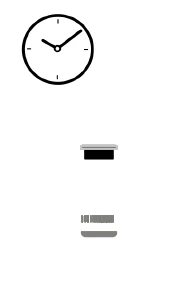
Before use, the closed Beovu vial should be kept at room temperature (below 25°C) for up to 24 hours. After opening the vial, proceed under aseptic conditions.
Beovu is an aqueous solution ranging from clear to slightly opalescent, from colourless to slightly yellowish-brown.
The solution should be visually inspected after removal from the refrigerator and before administration. If particles or cloudiness are visible, the vial must not be used and an appropriate replacement procedure should be followed.
The contents of the vial and the filter needle are sterile and for single use only. Do not use if the packaging, vial, and/or filter needle are damaged or expired.
How to Prepare and Administer Beovu
The vial contains a volume greater than the recommended dose of 6 mg. The extractable volume from the vial (0.23 ml) must not be used completely. The excess volume must be discarded before proceeding with the injection. Injecting the entire vial volume may result in overdose.
The intravitreal injection procedure must be performed under aseptic conditions, including surgical hand disinfection, use of sterile gloves, sterile drape, and sterile eyelid speculum (or equivalent), as well as having equipment available to perform a sterile paracentesis (if necessary).
Prior to injection, adequate anaesthesia and a broad-spectrum topical antimicrobial should be administered to disinfect the periocular, ocular, and eyelid surfaces.
The following single-use medical devices are required for preparation and intravitreal injection:
- a sterile 30G x ½” injection needle
- a sterile 1 ml syringe with a dose marking line at 0.05 ml
- a sterile 5 μm blunt filter needle (18G x 1½”, 1.2 mm x 40 mm)
The injection needle and syringe are not included in the Beovu package.
Ensure that the injection is administered immediately after dose preparation (Step 8).
Note: The dose must be set to 0.05 ml.
Procedure for Injection
1.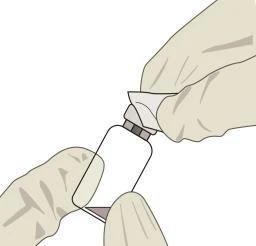 | Remove the vial cap and clean the vial septum (e.g. with a 70% alcohol swab). |
| 2. | Assemble the filter needle onto the 1 ml syringe under aseptic conditions. |
| 3. | Insert the filter needle into the center of the vial septum until it reaches the bottom of the vial. |
4.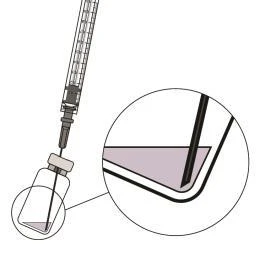 | To withdraw the liquid, hold the vial slightly tilted and slowly withdraw all the liquid from the vial and filter needle. Ensure the syringe plunger is pulled back sufficiently when emptying the vial to completely empty the filter needle. |
| 5. | Detach the filter needle from the syringe aseptically and dispose of it. The filter needle must not be used for intravitreal injection. |
| 6. | Under aseptic conditions and with firm pressure, attach the 30G x ½″ injection needle to the syringe. |
7.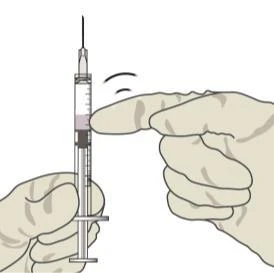 | Check for air bubbles by holding the syringe with the needle pointing upward. If present, gently tap the syringe with your finger until the air bubbles rise to the surface. |
8.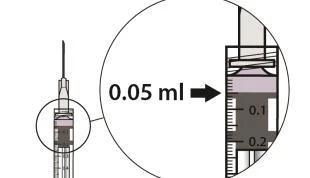 | Hold the syringe at eye level and carefully push the plunger to expel air and excess solution from the syringe, adjusting the dose to 0.05 ml as marked on the syringe. The syringe is now ready for injection. |
| 9. | Inject slowly until the rubber stopper reaches the bottom of the syringe, delivering an injected volume of 0.05 ml. Ensure the full dose is administered by verifying that the rubber stopper has reached the end of the syringe barrel. |
Note: Unused or waste material must be disposed of in accordance with current local regulations.
Frequently asked questions
Q: What should I do if I have difficulty drawing enough liquid from the vial?
A: Do not shake the vial before drawing the liquid, but allow the liquid to settle at the bottom of the vial. Ensure that the vial is held vertically, slightly tilted. Slowly pull back the plunger and wait for the liquid to appear in the barrel of the syringe. Continue to draw slowly until the vial and the filter needle are completely emptied.
Q: What should I do if I cannot remove air bubbles from the liquid?
A: It is important that the liquid is free of air. However, tiny air bubbles adhering to the stopper normally do not detach from the stopper during injection and therefore do not affect the dose volume.
This page has been machine-translated and may contain inaccuracies. The original data is available in the manufacturing country's language.
Last data check: May 11, 2026 · Data source: Agenzia Italiana del Farmaco (AIFA)