Benzac
Italy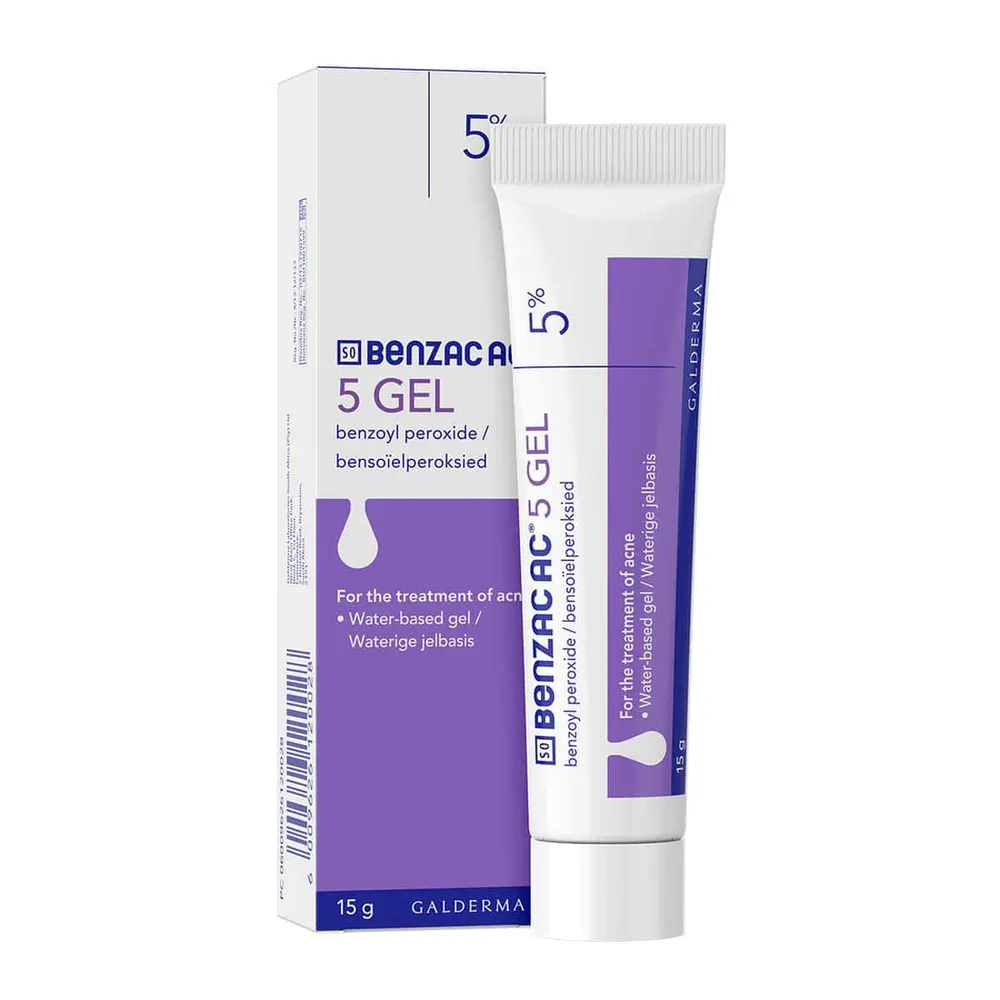
Table of Contents
- Patient Information Leaflet: Information for the User
- Benzac 5% gel, 10% gel
- 1. What Benzac is and what it is used for
- 2. What you should know before using Benzac
- 3. How to use Benzac
- 4. Possible adverse reactions
- 5. How to store Benzac
- 6. Package contents and other information
- Package leaflet: Information for the user
- Benzac 5% gel
- 1. What Benzac is and what it is used for
- 2. What you should know before using Benzac
- 3. How to use Benzac
- 4. Possible side effects
- 5. How to store Benzac
- 6. Package contents and other information
Patient Information Leaflet: Information for the User
Benzac 5% gel, 10% gel
benzoyl peroxide
Please read all of this leaflet carefully before you start using this medicine because it contains important information for you.
Always use this medicine exactly as described in this leaflet or as your doctor or pharmacist has told you to.
- Keep this leaflet. You may need to read it again.
- If you need more advice or information, consult your pharmacist.
- If you experience any side effects, including those not listed in this leaflet, contact your doctor or pharmacist. See section 4.
- Contact your doctor if you do not notice any improvement or if your symptoms worsen.
Contents of this leaflet:
- What Benzac is and what it is used for
- What you need to know before using Benzac
- How to use Benzac
- Possible side effects
- How to store Benzac
- Contents of the pack and other information
1. What Benzac is and what it is used for
Benzac contains the active substance benzoyl peroxide and belongs to a group of medicines used for the topical treatment of acne.
Benzac disinfects the skin; it also works when bacteria causing acne are present.
2. What you should know before using Benzac
Do not use Benzac:
- If you are allergic to benzoyl peroxide or to any of the other ingredients of this medicine (listed in section 6).
Warnings and precautions
Talk to your doctor or pharmacist before using Benzac.
Benzac is for external use only.
- Avoid contact with eyes, mouth, corners of the nose, and other mucous membranes. If the medicine gets into your eye, rinse thoroughly with water.
- Do not apply the product on skin with superficial lesions (abrasions) or on irritated skin.
- Avoid exposure to ultraviolet rays (sunlamps) and sunlight during application of the product.
- In case of severe irritation, consult your doctor, who may advise you to use Benzac less frequently, temporarily interrupt, or discontinue treatment.
- Benzoyl peroxide may cause swelling and blisters on the skin; stop using the medicine and consult your doctor if any of these symptoms occur.
- Use caution when applying the medicine to the neck and other sensitive areas. You may initially experience a mild burning sensation, and within a few days, mild redness and skin peeling may occur. During the first weeks of treatment, increased peeling may suddenly appear in most patients. This is not dangerous and usually resolves within one or two days if treatment is temporarily stopped.
Prolonged use, especially, of topical products may lead to sensitization. If this
occurs, stop treatment immediately and consult your doctor for appropriate
therapy.
The oxidizing action of the gel may bleach dyed hair and colored clothing.
Children and adolescents
There are no data available on efficacy and safety in children under 12 years of age.
Other medicines and Benzac
Inform your doctor or pharmacist if you are taking, have recently taken, or might take
any other medicines.
Avoid simultaneous use of strong detergents, alcohol-containing products, anti-acne skincare preparations, and acne treatments containing substances that may increase peeling effect (i.e., removal of the skin's superficial layer), irritants, or substances causing skin dryness, such as those based on tretinoin, resorcinol, salicylic acid, and sulfides, as well as medicated cosmetics.
Pregnancy and breastfeeding
If you are pregnant, suspect you may be pregnant, planning to become pregnant, or breastfeeding, consult your doctor or pharmacist before using this medicine.
Pregnancy
There are no data on the effects of benzoyl peroxide, the active substance in Benzac, during pregnancy.
During pregnancy and breastfeeding, use the medicine only if clearly needed and under medical supervision.
Breastfeeding
It is not known whether benzoyl peroxide passes into breast milk. For this reason, if you are breastfeeding, use gels containing this active substance with caution and do not apply the product on the breasts to avoid accidental transfer to the infant.
Driving and using machines
Benzac does not affect the ability to drive vehicles or operate machinery.
Benzac 5% gel and Benzac 10% gel contain propylene glycol
Benzac 5% gel and Benzac 10% gel contain 4% propylene glycol, equivalent to 40 mg per gram of gel.
3. How to use Benzac
Use this medicine exactly as stated in this leaflet or as directed by your doctor or pharmacist. If you have any doubts, consult your doctor or pharmacist.
-
Apply Benzac to the skin once or twice daily, as needed.
-
After thoroughly cleansing the affected areas with a mild cleanser and carefully drying them, gently spread a small amount of the product over the areas using the fingertips, massaging lightly until fully absorbed.
If you have sensitive skin, apply Benzac once daily or every other day before going to bed. -
Always use only a small amount of the product each time.
-
Do not exceed the recommended doses without medical advice.
If you use more Benzac than you should
In case of accidental ingestion or overdose, contact your doctor immediately or go to the nearest hospital.
Do not apply excessive amounts of the product in an attempt to achieve faster or better results, as this may cause irritation.
If you have any doubts about how to use this medicine, consult your doctor or pharmacist.
4. Possible adverse reactions
Like all medicines, this medicine can cause adverse reactions, although not everybody experiences them.
All adverse reactions reported in clinical studies were related to skin disorders. These are reversible if the treatment is reduced in frequency or discontinued.
Very common adverse reactions (may affect more than 1 in 10 people):
- Erythema (redness of the skin)
- Desquamation (shedding of dead skin cells)
- Skin burning sensation
- Dry skin
Common adverse reactions (may affect up to 1 in 10 people):
- Skin irritation (irritant contact dermatitis due to product contact)
- Pruritus (itching)
- Skin pain (pain, stinging pain)
Uncommon adverse reactions (may affect up to 1 in 100 people):
- Allergic contact dermatitis (inflammation due to allergic reaction to the product)
Adverse reactions with unknown frequency (frequency cannot be estimated from the available data):
- Swelling (tumefaction) of the face and allergic reactions including hypersensitivity at the application site, and a severe, rapidly occurring allergic reaction (anaphylaxis).
Reporting of adverse reactions
If you experience any adverse reaction, including those not listed in this leaflet, consult your doctor or pharmacist. You may also report adverse reactions directly through the national reporting system at the following address: .
By reporting adverse reactions, you can help provide more information on the safety of this medicine.
5. How to store Benzac
Keep this medicine out of the sight and reach of children.
Do not use this medicine after the expiry date stated on the pack after Exp.
The expiry date refers to the last day of that month.
The expiry date applies to the medicine kept in its original packaging and stored correctly.
Do not store above 25°C.
Do not dispose of any medicine via wastewater or household waste. Ask your pharmacist how to dispose of medicines you no longer use. This will help protect the environment.
6. Package contents and other information
What Benzac contains
-
The active substance is benzoyl peroxide.
Benzac 5% gel: 100 g of gel contain 5 g of benzoyl peroxide.
Benzac 10% gel: 100 g of gel contain 10 g of benzoyl peroxide. -
The other components are: carbomer 940, methacrylic acid copolymer, glycerin, disodium edetate, dioctyl sodium sulfosuccinate, colloidal silicon dioxide, propylene glycol (E1520), poloxamer 182, demineralized water.
Description of the appearance of Benzac and contents of the pack
Benzac is a gel for topical use.
Benzac 5% gel
Polyethylene tube containing 15 g or 40 g of gel.
Benzac 10% gel
Polyethylene tube containing 40 g of gel.
Marketing Authorization Holder
Galderma Italia S.p.A., Via dell'Annunciata, 21 – 20121 Milano, Italy
Manufacturer
Laboratoires Galderma, 74540 Alby sur Chéran, France
Package leaflet: Information for the user
Benzac 5% gel
benzoyl peroxide
Please read this entire leaflet carefully before using this medicine, as it contains important information for you.
Always use this medicine exactly as described in this leaflet or as your doctor or pharmacist has instructed you.
- Keep this leaflet. You may need to read it again.
- If you need more information or advice, consult your pharmacist.
- If you experience any side effects, including those not listed in this leaflet, contact your doctor or pharmacist. See section 4.
- Contact your doctor if you do not notice any improvement or if your symptoms worsen.
Contents of this leaflet:
- What Benzac is and what it is used for
- What you need to know before using Benzac
- How to use Benzac
- Possible side effects
- How to store Benzac
- Contents of the pack and other information
1. What Benzac is and what it is used for
Benzac contains the active ingredient benzoyl peroxide and belongs to a group of medicines used for the topical treatment of acne.
Benzac disinfects the skin; it is also effective in cases where bacteria causing acne are present.
2. What you should know before using Benzac
Do not use Benzac:
- If you are allergic to benzoyl peroxide or to any of the other ingredients of this medicine (listed in section 6).
Warnings and precautions
Talk to your doctor or pharmacist before using Benzac.
Benzac is for external use only.
- Avoid contact with the eyes, mouth, corners of the nose, and other mucous membranes. If the medicine gets into the eye, rinse thoroughly with water.
- Do not apply the product on skin with superficial lesions (abrasions) or on irritated skin.
- Avoid exposure to ultraviolet rays (sunlamps) and sunlight during application of the product.
- In case of severe irritation, consult your doctor, who may advise you to use Benzac less frequently, temporarily interrupt, or discontinue treatment.
- Benzoyl peroxide may cause swelling and blistering of the skin; stop using the medicine and contact your doctor if any of these symptoms occur.
- You should exercise caution when applying the medicine to the neck and other sensitive areas.
You may experience a mild burning sensation upon first application, and within a few days,
slight redness and skin peeling may occur.
During the first weeks of treatment, most patients experience a sudden increase in skin peeling.
This is not dangerous and usually resolves within one or two days if treatment is temporarily discontinued.
The use, especially prolonged, of topical skin products may lead to sensitization. If this occurs,
immediately stop treatment and consult your doctor for appropriate therapy.
The oxidizing action of the gel may bleach dyed hair and colored clothing.
Children and adolescents
There are no data available on efficacy and safety in children under 12 years of age.
Other medicines and Benzac
Inform your doctor or pharmacist if you are taking, have recently taken, or might take any other medicines.
Avoid simultaneous use of strong detergents, alcohol-containing products, anti-acne skin preparations, and acne treatments containing substances that may increase the peeling effect (i.e., removal of the skin's superficial layer), irritate the skin, or cause dryness, such as those containing tretinoin, resorcinol, salicylic acid, and sulfides, as well as medicated cosmetics.
Pregnancy and breastfeeding
If you are pregnant, suspect you may be pregnant, planning to become pregnant, or breastfeeding,
consult your doctor or pharmacist before using this medicine.
Pregnancy
There are no data on the effects of benzoyl peroxide, the active substance in Benzac, during pregnancy.
During pregnancy and breastfeeding, use this medicine only if clearly needed and under medical supervision.
Breastfeeding
It is not known whether benzoyl peroxide passes into breast milk. For this reason, if you are breastfeeding,
use gels containing this active substance with caution and do not apply the product on the breasts to avoid accidental exposure to the infant.
Driving and operating machinery
Benzac does not affect the ability to drive vehicles or operate machinery.
3. How to use Benzac
Use this medicine exactly as described in this leaflet or as instructed by your doctor or pharmacist. If you have any doubts, consult your doctor or pharmacist.
- Apply Benzac once or twice daily to the affected area, then rinse thoroughly with water and dry. The contact time with the skin should be as short as possible (1 to 5 minutes) to minimize the risk of undesirable effects (see section 4). Do not use for prolonged treatments; if there is no noticeable improvement after a short period of treatment, consult your doctor.
- Moisten the area to be treated: take the required amount of Benzac on the tip of your fingers and spread it over the various areas of skin using circular motions, as if washing.
- Always use a small amount of product each time.
- Do not exceed the recommended doses without medical advice.
If you use more Benzac than you should
If you accidentally ingest or take an excessive dose of Benzac, contact your doctor immediately or go to the nearest hospital.
Do not apply too much product in an attempt to achieve faster or better results, as this may cause irritation.
If you have any questions about how to use this medicine, consult your doctor or pharmacist.
4. Possible side effects
Like all medicines, this medicine can cause side effects, although not everybody gets them.
Adverse reactions reported in clinical studies were all related to skin disorders. These are reversible if treatment is reduced in frequency or discontinued.
Very common side effects (may affect more than 1 in 10 people):
- Erythema (redness of the skin)
- Desquamation (shedding of dead skin cells)
- Skin burning sensation
- Dry skin
Common side effects (may affect up to 1 in 10 people):
- Skin irritation (irritant contact dermatitis due to product)
- Itching
- Skin pain (pain, stinging pain)
Uncommon side effects (may affect up to 1 in 100 people):
- Allergic contact dermatitis (skin inflammation due to product)
Side effects with unknown frequency (frequency cannot be estimated from the available data):
- Swelling (tumefaction) of the face and allergic reactions including hypersensitivity at the application site and a severe, rapidly occurring allergic reaction (anaphylaxis).
Reporting of side effects
If you experience any side effect, including those not listed in this leaflet, talk to your doctor or pharmacist. You can also report side effects directly via the national reporting system at the address .
By reporting side effects, you can help provide more information on the safety of this medicine.
5. How to store Benzac
Keep this medicine out of the sight and reach of children.
Do not use this medicine after the expiry date stated on the pack after Exp.
The expiry date refers to the last day of that month.
The expiry date applies to the medicine in its original packaging, stored correctly.
Do not store above 25°C.
Do not dispose of any medicine via wastewater or household waste. Ask your pharmacist how to dispose of medicines you no longer use. This will help protect the environment.
6. Package contents and other information
What Benzac contains
- The active substance is benzoyl peroxide.
100 g of gel contain 5 g of benzoyl peroxide.
- The other components are: acryl copolymer, carbomer 940, sodium C14-C16 olefin sulfonate, glycerol, sodium hydroxide, demineralized water.
Description of the appearance of Benzac and package contents
Benzac is a topical gel.
Polyethylene tube containing 100 g of gel.
Marketing Authorization Holder
Galderma Italia S.p.A., Via dell'Annunciata, 21 – 20121 Milano, Italy
Manufacturer
Laboratoires Galderma, 74540 Alby sur Chéran, France