Benerva
Italy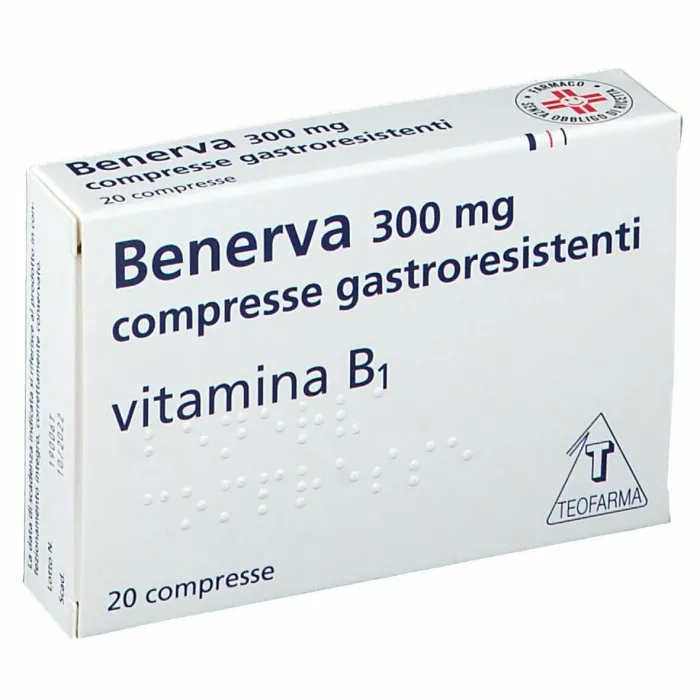
Table of Contents
- Package leaflet: Information for the user
- Benerva 100 mg/1 ml intramuscular injection solution
- 1. What Benerva is and what it is used for
- 2. What you need to know before using Benerva
- 3. How to use Benerva
- 4. Possible side effects
- 5. How to store Benerva
- 6. Package contents and other information
- Package leaflet: information for the user
- Benerva 300 mg gastro-resistant tablets
- 1. What Benerva is and what it is used for
- 2. What you need to know before taking Benerva
- 3. How to take Benerva
- 4. Possible side effects
- 5. How to store Benerva
- 6. Pack contents and other information
Package leaflet: Information for the user
Benerva 100 mg/1 ml intramuscular injection solution
Thiamine hydrochloride (Vitamin B )
Please read all of this leaflet carefully before you use this medicine because it contains important information for you.
- Keep this leaflet. You may need to read it again.
- If you have any questions, ask your doctor or pharmacist.
- This medicine has been prescribed for you only. Do not give it to other people, even if their symptoms are the same as yours, as it may be harmful.
- If you experience any adverse reactions, including those not listed in this leaflet, talk to your doctor or pharmacist. See section 4.
Contents of this leaflet:
- What Benerva is and what it is used for
- What you need to know before using Benerva
- How to use Benerva
- Possible side effects
- How to store Benerva
- Contents of the pack and other information
1. What Benerva is and what it is used for
Benerva contains the active substance thiamine hydrochloride (also known as vitamin B ).
Benerva is indicated:
- for the prevention and treatment of vitamin B deficiency caused by increased demand or reduced absorption
- in cases of inflammation or degeneration of the peripheral nerves due to alcohol abuse, manifesting with movement disorders, sensory disturbances, and altered muscle tone (alcoholic deficiency-related polyneuritis)
- in the treatment of heart diseases caused by alcohol abuse (alcoholic cardiomyopathies)
- at high doses, as supportive therapy in the treatment of nerve inflammations (neuritis and polyneuritis) not caused by vitamin B deficiency.
Consult your doctor if you do not feel better or if you feel worse.
2. What you need to know before using Benerva
Do not use Benerva
- if you are allergic to vitamin B or to any of the other ingredients of this medicine (listed in section 6).
Warnings and precautions
Talk to your doctor or pharmacist before using Benerva.
In particular, inform your doctor if you have previously experienced sensitization reactions or
symptoms due to allergies.
Repeated administration into a muscle increases the risk of allergic reactions; in such cases, your doctor may prefer, where possible, an alternative oral therapy.
Other medicines and Benerva
Inform your doctor or pharmacist if you are taking, have recently taken, or might take any other medicines.
In particular, inform your doctor if you are taking the following medicines, as they may
inhibit the activity of Vitamin B:
- thiocarbamide (a medicine used in tuberculosis)
- 5-fluorouracil (a medicine used in the treatment of certain tumors).
Laboratory tests and Benerva
The use of Benerva may alter the measurement of the following values:
- urinary urobilinogen (a test to assess liver and biliary tract function)
- blood theophylline levels (a medicine used to treat asthma)
Inform the laboratory if you are undergoing blood or urine tests during treatment with this medicine.
Pregnancy, breastfeeding and fertility
If you are pregnant, suspect you may be pregnant, planning a pregnancy, or are breastfeeding,
consult your doctor or pharmacist before taking this medicine.
This medicine is not indicated during pregnancy or breastfeeding.
Driving and using machines
Benerva does not affect the ability to drive vehicles or operate machinery.
However, before driving or operating machinery, make sure you do not experience any adverse reactions to the medicine.
Benerva contains sodium
This medicine contains less than 1 mmol (23 mg) of sodium per dose, i.e. it is practically “sodium-free”.
3. How to use Benerva
Use this medicine exactly as directed by your doctor or pharmacist. If you have any doubts, consult your doctor or pharmacist.
Adults
The recommended dose ranges from 50 mg (half an ampoule) to 200 mg (two ampoules) daily, according to medical prescription, administered by intramuscular injection.
The frequency and duration of treatment will be determined by the doctor.
Parenteral administration is reserved for cases with impaired intestinal absorption, as well as for the initial treatment of acute deficiencies accompanied by polyneuritis, psychiatric and cardiac disorders, particularly in chronic alcoholism.
Instructions for correctly opening the ampoule
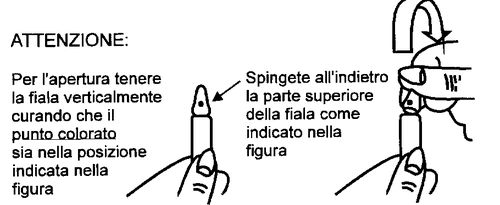
The contents of the ampoule must not be mixed with other products or injection liquids.
Discard the ampoule after opening, even if the contents have not been completely used.
If you use more Benerva than you should
If you accidentally take a large amount of this medicine, contact your doctor or go to the nearest hospital.
If you forget to use Benerva
Do not take a double dose to make up for the forgotten dose.
If you stop using Benerva
If you have any doubts about using this medicine, consult your doctor or pharmacist.
4. Possible side effects
Like all medicines, this medicine can cause side effects, although not everybody gets
them.
If, during treatment with Benerva, you experience any of the following side effects, contact
your doctor immediately, who will DISCONTINUE treatment:
Not known (frequency cannot be determined from the available data):
- Severe allergic reactions (anaphylactic reactions) with symptoms such as: itching, appearance of spots and/or wheals on the skin (urticaria), swelling of hands, feet, ankles, face, lips, tongue and/or throat (angioedema), stomach pain, breathing difficulties, rapid heartbeat (tachycardia), or heightened awareness of heartbeat (palpitations), or shock.
These reactions are often preceded by sneezing or transient itching.
The following side effects have been observed and reported during treatment with Benerva:
Not known (frequency cannot be determined from the available data):
- Pain at the injection site
Reporting of side effects
If you experience any side effect, including those not listed in this leaflet, contact your doctor. You can also report side effects directly via the national reporting system at the website
https://www.aifa.gov.it/content/segnalazioni-reazioni-avverse
By reporting side effects, you can help provide more information on the safety of this medicine.
5. How to store Benerva
Keep this medicine out of the sight and reach of children.
Store below 25°C and keep in the original packaging to protect the medicine from light.
Do not use this medicine after the expiry date stated on the carton after EXP. The expiry date refers to the last day of that month.
Do not dispose of medicines via wastewater or household waste. Ask your pharmacist how to dispose of medicines you no longer use. This will help protect the environment.
6. Package contents and other information
What Benerva contains
- The active substance is thiamine (vitamin B ). 1 ml of solution contains 100 mg of thiamine.
- The other components are: phenol, glycerol, sodium dihydrogen phosphate dihydrate, sodium bicarbonate (see section “Benerva contains sodium”), water for injections.
Description of the appearance of Benerva and contents of the pack
Benerva is a colourless or slightly yellowish solution, packed in a carton containing 6 vials made of colourless glass.
Marketing Authorization Holder
Teofarma S.r.l.
Via F.lli Cervi, 8
27010 Valle Salimbene (PV)
Manufacturer
DOPPEL FARMACEUTICI S.R.L
Via Volturno, 48
20089 Quinto de’ Stampi – Rozzano (Milan)
Package leaflet: information for the user
Benerva 300 mg gastro-resistant tablets
Thiamine hydrochloride (Vitamin B )
Please read this leaflet carefully before taking this medicine because it contains
important information for you.
- Use this medicine exactly as described in this leaflet or as your doctor or pharmacist has instructed you.
- Keep this leaflet. You may need to read it again.
- If you would like further information or advice, consult your pharmacist.
- If you experience any of the side effects, including those not listed in this leaflet, contact your doctor or pharmacist. See section 4.
- Contact your doctor if you do not notice any improvement or if you notice a worsening of symptoms.
Contents of this leaflet:
- What Benerva is and what it is used for
- What you need to know before taking Benerva
- How to take Benerva
- Possible side effects
- How to store Benerva
- Contents of the pack and other information
1. What Benerva is and what it is used for
Benerva contains the active substance thiamine hydrochloride (also known as vitamin B ).
Benerva is indicated:
- for the prevention and treatment of vitamin B deficiency caused by increased demand or reduced absorption
- in cases of inflammation or degeneration of the peripheral nerves caused by alcohol abuse, manifesting with movement disorders, sensory disturbances, and impaired muscle tone (alcoholic deficiency-related polyneuritis)
- in the treatment of heart diseases caused by alcohol abuse (alcoholic cardiomyopathy)
- at high doses, as supportive therapy in the treatment of nerve inflammations (neuritis and polyneuritis) not caused by vitamin B deficiency.
Consult your doctor if you do not feel better or if you feel worse.
2. What you need to know before taking Benerva
Do not take Benerva
- if you are allergic to vitamin B or to any of the other ingredients of this medicine (listed in section 6).
Warnings and precautions
Talk to your doctor or pharmacist before taking Benerva.
In particular, inform your doctor if you have previously experienced sensitization reactions or
symptoms due to allergies.
Other medicines and Benerva
Inform your doctor or pharmacist if you are taking, have recently taken, or might take any other medicines.
In particular, inform your doctor if you are taking the following medicines, as they may
inhibit the activity of Vitamin B:
- thiocarlide (a medicine used in tuberculosis)
- 5-fluorouracil (a medicine used in the treatment of certain tumours).
Laboratory tests and Benerva
The use of Benerva may alter the measurement of the following test values:
- urobilinogen in urine (a test to assess liver and biliary tract function)
- theophylline in blood (a medicine used to treat asthma)
Inform the laboratory if you are undergoing a blood or urine test during treatment with this medicine.
Pregnancy and breastfeeding
If you are pregnant, suspect you may be pregnant, planning a pregnancy, or are breastfeeding,
consult your doctor or pharmacist before taking this medicine.
This medicine is not recommended during pregnancy or breastfeeding.
Driving and using machines
Benerva does not affect the ability to drive or operate machinery.
However, before driving or operating machinery, make sure you do not experience any adverse reactions to the medicine.
3. How to take Benerva
Take this medicine exactly as described in this leaflet or as directed by your doctor or pharmacist. If you have any doubts, consult your doctor or pharmacist.
The recommended dose of vitamin B in mild cases is 100 mg once daily.
The recommended dose of Benerva in severe cases is 600–1200 mg (2–4 tablets) daily for 1–2 weeks, followed by 300 mg (1 tablet) daily for several weeks.
If you take more Benerva than you should
There have been no reported cases of overdose with this medicine.
If you accidentally take a large amount of the medicine, contact your doctor or go to the nearest hospital.
If you forget to take Benerva
Do not take a double dose to make up for the missed tablet.
If you have any questions about the use of this medicine, consult your doctor or pharmacist.
4. Possible side effects
Like all medicines, this medicine can cause side effects, although not everyone experiences them.
If you experience any of the following side effects during treatment with Benerva, consult your doctor immediately, who will DISCONTINUE treatment:
Not known (frequency cannot be estimated from the available data):
- Severe allergic reactions (anaphylactic reactions) with symptoms such as: itching, appearance of spots and/or hives on the skin (urticaria), swelling of hands, feet, ankles, face, lips, tongue and/or throat (angioedema), abdominal pain, breathing difficulties, increased heart rate (tachycardia), or heightened awareness of heartbeat (palpitations), or shock.
The following side effects have been observed and reported during treatment with Benerva:
Not known (frequency cannot be estimated from the available data):
- nausea
- vomiting
- diarrhoea
- abdominal pain
Reporting of side effects
If you experience any side effect, including those not listed in this leaflet, consult your doctor. You may also report side effects directly through the national reporting system at the website www.agenziafarmaco.gov.it/it/responsabili.
By reporting side effects, you can help provide more information on the safety of this medicine.
5. How to store Benerva
Keep this medicine out of the sight and reach of children.
Storage Store in the original packaging.
Do not use this medicine after the expiry date stated on the carton after
Exp.
The expiry date refers to the last day of that month.
Do not dispose of any medicine via wastewater or household waste. Ask your pharmacist
how to dispose of medicines you no longer use. This will help protect the environment.
6. Pack contents and other information
What Benerva contains
- the active substance is thiamine (vitamin B). Each tablet contains 300 mg of thiamine.
- the other ingredients are: talc, povidone K90, magnesium stearate, methacrylic acid - ethyl acrylate copolymer (1:1), macrogol 6000, sodium carmellose.
Description of the appearance of Benerva and pack contents
Benerva 300 mg is presented as gastro-resistant tablets in blisters containing 20 tablets.
Marketing Authorization Holder
Teofarma S.r.l.
Via F.lli Cervi, 8
27010 Valle Salimbene (PV)
Manufacturer
Teofarma S.r.l.
Viale Certosa, 8/A
27100 Pavia
This leaflet describes