Benefix
Italy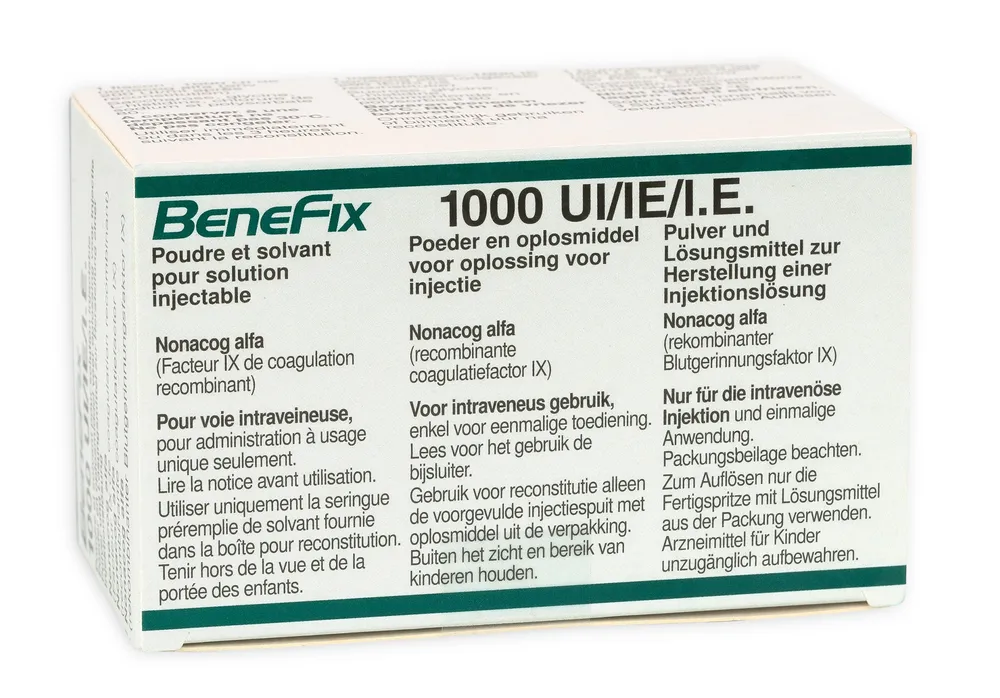
Table of Contents
- Package leaflet: Information for the user
- BeneFIX 250 IU powder and solvent for solution for injection, 500 IU powder and solvent for solution for injection, 1000 IU powder and solvent for solution for injection, 1500 IU powder and solvent for solution for injection, 2000 IU powder and solvent for solution for injection, 3000 IU powder and solvent for solution for injection
- 1. What BeneFIX is and what it is used for
- 2. What you should know before taking BeneFIX
- 3. How to take BeneFIX
- 4. Possible side effects
- 5. How to store BeneFIX
Package leaflet: Information for the user
BeneFIX 250 IU powder and solvent for solution for injection, 500 IU powder and solvent for solution for injection, 1000 IU powder and solvent for solution for injection, 1500 IU powder and solvent for solution for injection, 2000 IU powder and solvent for solution for injection, 3000 IU powder and solvent for solution for injection
nonacog alfa (recombinant coagulation factor IX)
Please read all of this leaflet carefully before you start taking this medicine because it contains
important information for you.
- Keep this leaflet. You may need to read it again.
- If you have any questions, ask your doctor, pharmacist, or nurse.
- This medicine has been prescribed for you only. Do not pass it on to other people, even if their symptoms are the same as yours, as it may be harmful.
- If you experience any side effects, including those not listed in this leaflet, tell your doctor, pharmacist, or nurse. See section 4.
Contents of this leaflet
- What BeneFIX is and what it is used for
- What you need to know before taking BeneFIX
- How to take BeneFIX
- Possible side effects
- How to store BeneFIX
- Contents of the pack and other information
1. What BeneFIX is and what it is used for
BeneFIX is a recombinant DNA-derived injectable product containing coagulation factor IX. The active substance in BeneFIX is nonacog alfa. Patients born with haemophilia B (Christmas disease) lack sufficient coagulation factor IX to control bleeding. BeneFIX works by replacing factor IX in patients with haemophilia B, enabling their blood to clot.
BeneFIX is used for the treatment and prevention of bleeding episodes in patients with haemophilia B (congenital factor IX deficiency) across all age groups.
2. What you should know before taking BeneFIX
Do not take BeneFIX
- if you are allergic to nonacog alfa or to any of the other ingredients of this medicine (listed in section 6);
- if you are allergic to hamster proteins.
Warnings and precautions
-
Talk to your doctor or pharmacist before using BeneFIX.
-
Contact your doctor immediately if bleeding does not stop as expected.
-
Allergic reactions are possible. The product may contain traces of hamster proteins (see "Do not take BeneFIX"). Potentially life-threatening anaphylactic/anaphylactoid reactions (severe allergic reactions) have been reported following administration of factor IX-containing products, including BeneFIX. Warning signs of an allergic reaction include difficulty breathing, shortness of breath, swelling, itching, generalized hives, tightness in the chest, trouble breathing, drop in blood pressure, blurred vision, and anaphylaxis (a severe allergic reaction that may cause difficulty swallowing and/or breathing, redness or swelling of the face and/or hands).
-
If allergic or anaphylactic reactions occur, stop administration of BeneFIX immediately and contact your doctor or go to the nearest Emergency Room immediately. In case of severe allergic reactions, alternative therapy should be considered.
-
Neutralizing antibodies (inhibitors) are an uncommon event in previously treated patients with factor IX-containing medicines. However, as with all factor IX medicines, during treatment with BeneFIX you should be closely monitored for the development of factor IX inhibitors.
-
Research has shown an association between the development of factor IX inhibitors and allergic reactions. Therefore, if you experience allergic reactions such as those described above, you should be tested for the presence of an inhibitor. It should be emphasized that patients with factor IX inhibitors may be at increased risk of anaphylaxis if treated again with BeneFIX.
-
Factor IX production in the body is controlled by the factor IX gene. Patients who have specific mutations in their factor IX gene, such as large deletions, may have a higher probability of developing factor IX inhibitors and/or allergic reactions. Therefore, if you know you have such a mutation, your doctor may monitor you closely for signs of allergic reactions, especially during the first administration of BeneFIX.
-
Due to the risk of allergic reactions with factor IX, the first administrations of BeneFIX should be performed under medical supervision in settings where appropriate medical treatment for allergic reactions is available.
-
Even in the absence of factor IX inhibitors, higher doses of BeneFIX may be required than those needed for other plasma-derived factor IX medicines you may have previously received. For this reason, careful monitoring of plasma factor IX activity (which measures your blood's ability to form clots) should be performed to adjust doses as necessary. If bleeding is not controlled with the prescribed dose, consult your doctor.
-
In patients with liver or heart disease or recent surgery, there is an increased risk of blood clotting complications.
-
A kidney disease (nephrotic syndrome) has been reported following high doses of plasma-derived factor IX in patients with hemophilia B who have factor IX inhibitors and a history of allergic reactions.
-
Adequate data from clinical studies on the treatment of previously untreated patients (patients who have never received a prior infusion of factor IX) with BeneFIX are not yet available.
-
For each administration of BeneFIX, it is recommended to record the product name and batch number. You may use one of the removable labels on the vial to document the batch number in your diary or to report any adverse events.
Other medicines and BeneFIX
Inform your doctor or pharmacist if you are taking, have recently taken, or might take any other medicines.
Pregnancy and breastfeeding
If you are pregnant, suspect you may be pregnant, are planning a pregnancy, or are breastfeeding, you should take BeneFIX only on the specific advice of your doctor. It is not known whether BeneFIX can cause harm to the fetus when administered to a pregnant woman. Your doctor may advise discontinuing treatment with BeneFIX during pregnancy or breastfeeding.
Consult your doctor or pharmacist before taking this medicine.
Driving and using machines:
BeneFIX does not affect the ability to drive or use machinery.
BeneFIX contains sodium
After reconstitution, BeneFIX contains 0.2 mmol (4.6 mg) of sodium per vial, which is considered essentially "sodium-free". However, depending on your body weight and dose of BeneFIX, you may receive more than one vial. This should be taken into account if you are on a low-sodium diet.
3. How to take BeneFIX
Take this medicine exactly as directed by your doctor or pharmacist. If
you have any doubts, consult your doctor or pharmacist.
Your doctor will determine the dose of BeneFIX you should take. This dose and duration will depend on
your individual needs for factor IX replacement therapy and how quickly your body uses factor IX, parameters which will be monitored regularly.
You may notice a difference in the dose received if switching from a plasma-derived factor IX product to BeneFIX.
Your doctor may decide to adjust the dose of BeneFIX during treatment.
Reconstitution and administration
The procedures below are guidelines for the reconstitution and administration of
BeneFIX. Patients must follow the specific injection procedures indicated by their
doctor.
BeneFIX is administered by intravenous (IV) infusion after reconstitution of the lyophilized powder for injectable preparations with the solvent provided in the pack (a solution of sodium chloride (a salt)) using the pre-filled syringe.
Always wash your hands before performing the following procedures. Aseptic technique (i.e., strict adherence to hygiene standards) must be used during the reconstitution procedure.
Reconstitution:
BeneFIX will be administered by intravenous (IV) infusion after reconstitution with sterile solvent for injectable preparations.
- Allow the vial of lyophilized BeneFIX and the pre-filled syringe to reach room temperature.
- Remove the plastic cap from the BeneFIX vial to expose the central portion of the rubber stopper.
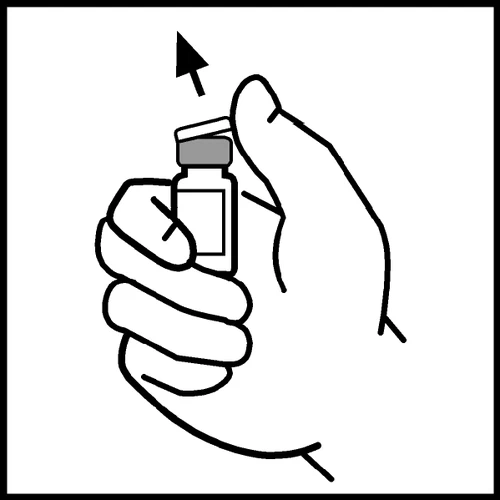
- Wipe the top of the vial with the provided alcohol swab or another antiseptic solution and allow it to dry. After cleaning, do not touch the rubber stopper with your hands or allow it to come into contact with any surface.
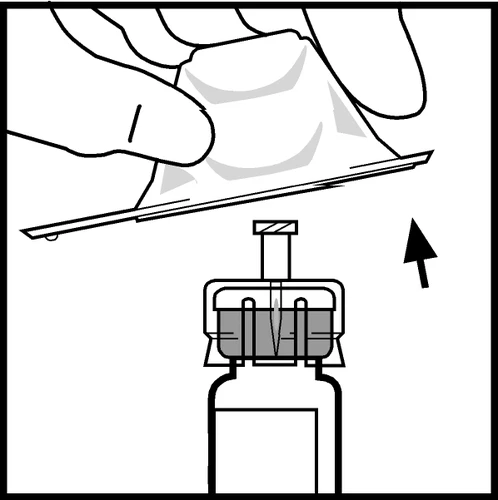
- Remove the lid from the plastic packaging of the adapter. Do not remove the adapter from its packaging.
- Place the vial on a flat surface. While keeping the adapter in its packaging, place the adapter on top of the vial. Press firmly on the packaging until the adapter snaps onto the top of the vial and the tip of the adapter pierces the vial stopper.

- Remove the packaging from the adapter and discard it.
- Attach the plunger to the solvent syringe by pressing and firmly rotating.
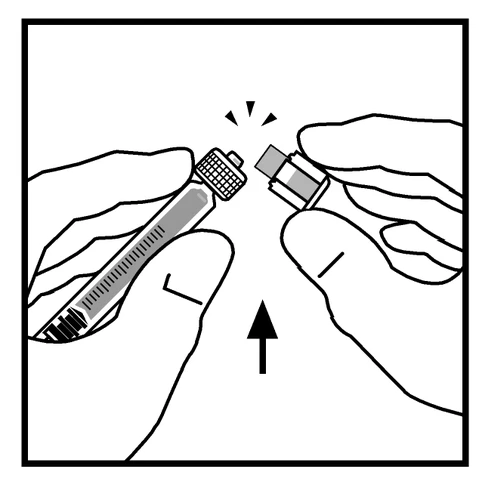
- Remove the plastic safety cap from the end of the diluent syringe by breaking it at the perforation. This can be done by bending it up and down until the perforation breaks. Do not touch the inside of the cap or the end of the syringe. The cap may need to be replaced (if the reconstituted BeneFIX is not administered immediately), so temporarily place it aside with the open side up.
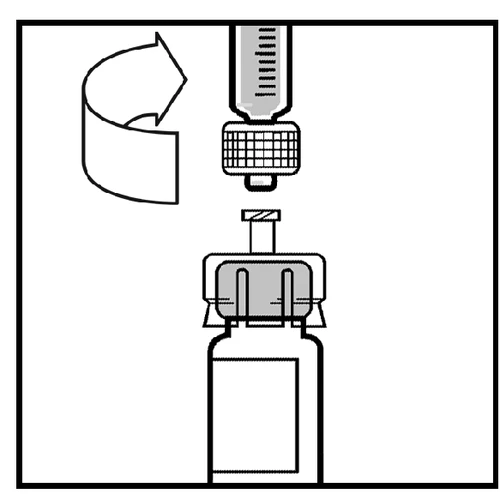
- Place the vial on a flat surface. Connect the diluent syringe to the vial adapter by inserting the end of the syringe into the adapter opening and pressing and rotating the syringe clockwise until it locks.
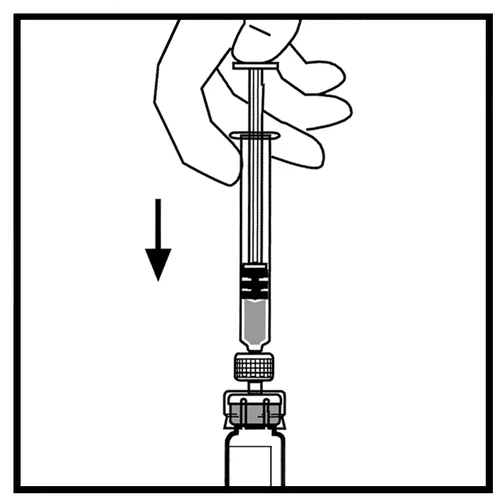
- Slowly push the plunger to inject all the diluent into the BeneFIX vial.
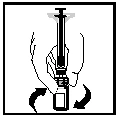
- With the syringe still attached to the adapter, gently rotate the vial until the powder is completely dissolved.
- The final solution should be inspected visually for particulate matter before administration. The solution should appear clear and colourless.
Note: If more than one vial of BeneFIX is used for infusion, each vial must be
reconstituted as described in the above instructions. The diluent syringe should be removed, leaving the vial adapter in place, and a large luer lock syringe (a device connecting the syringe to the vial) may be used to withdraw the reconstituted contents from each vial.
- Ensuring the plunger is still fully inserted, invert the vial. Slowly withdraw all the solution into the syringe.
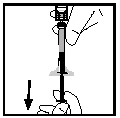
- Detach the syringe from the vial adapter by gently pulling and rotating it counterclockwise. Discard the vial with the adapter.
Note: If the solution is not used immediately, the syringe cap must
be carefully replaced. Do not touch the tip of the syringe or the inside of the
cap.
BeneFIX must be administered immediately or within 3 hours after reconstitution. The reconstituted solution may be stored at room temperature prior to administration.
Administration (Intravenous injection):
BeneFIX should be administered using the pre-filled solvent syringe provided or a single-use sterile plastic luer lock syringe. Additionally, the solution must be drawn from the vial using the vial adapter.
BeneFIX should be administered intravenously over several minutes. Your doctor may adjust the recommended infusion rate to make the infusion more comfortable.
Cases of red blood cell agglutination in the tubing/syringe have been reported during administration of BeneFIX. No adverse events related to these reports have been observed. To reduce the risk of agglutination, it is important to minimize the amount of blood entering the tubing. Blood must not enter the syringe. If red blood cell agglutination occurs in the tubing/syringe, all such materials (tubing, syringe, and BeneFIX solution) must be discarded and administration continued with a new kit.
Since continuous infusion (intravenous drip) of BeneFIX has not been evaluated, BeneFIX must not be mixed with infusion solutions nor administered by intravenous drip.
Dispose of all unused solution, empty vials, used needles, and syringes in a proper container designed for sharps waste—materials that could injure others if not handled appropriately.
If you take more BeneFIX than you should
Contact your doctor immediately if more BeneFIX than recommended has been injected.
If you stop treatment with BeneFIX
Do not stop taking BeneFIX without consulting your doctor.
If you have any questions about the use of this medicine, ask your doctor, pharmacist, or
nurse.
4. Possible side effects
Like all medicines, this medicine can cause side effects, although not everybody gets them.
Hypersensitivity/allergic reactions
Allergic-type hypersensitivity reactions may occur. Such reactions may include facial or throat swelling, burning and stinging at the infusion site, chills, flushing, itching, headache, hives, low blood pressure, lethargy, nausea, restlessness, tachycardia, chest tightness, tingling, vomiting, wheezing. In some cases, these reactions have progressed to severe anaphylaxis.
Allergic reactions may occur together with the development of factor IX inhibitors (see also "Warnings and precautions").
These reactions are potentially life-threatening. If an allergic/anaphylactic reaction occurs, stop administration of BeneFIX immediately and contact your doctor immediately or go to the nearest Emergency Department. The required treatment depends on the nature and severity of the adverse reaction (see also "Warnings and precautions").
Development of inhibitors
Patients with haemophilia B may develop neutralizing antibodies (inhibitors) against factor IX. If such inhibitors develop, a possible symptom is the increased amount of BeneFIX normally required to control bleeding, or prolonged bleeding after treatment. In such cases, it is recommended to contact a specialized haemophilia centre. Your doctor may wish to monitor you for the development of inhibitors (see "Warnings and precautions").
A kidney disorder has been reported following administration of high doses of plasma-derived factor IX used to induce immune tolerance in patients with haemophilia B who have factor IX inhibitors and a history of allergic reactions (see also "Warnings and precautions").
Thrombotic events
BeneFIX may increase the risk of thrombosis (abnormal blood clots) in your body if you have risk factors for developing blood clots, such as a central venous catheter. Cases of serious blood clotting events have been reported, including life-threatening blood clots in critically ill neonates receiving BeneFIX via continuous infusion through a central venous catheter. Cases of peripheral thrombophlebitis (vein pain and redness) and deep vein thrombosis (blood clots in the limbs) have also been reported; in most of these cases, BeneFIX was administered by continuous infusion, which is not an approved route of administration.
Very common side effects (may affect more than 1 in 10 people)
- Headache
- Cough
- Fever
Common side effects (may affect up to 1 in 10 people)
- Hypersensitivity/allergic reactions
- Dizziness, altered taste
- Phlebitis (vein pain and redness), flushing
- Vomiting, nausea
- Rash, hives
- Chest discomfort (including chest pain)
- Infusion site reaction (including itching and redness at the infusion site), pain and discomfort at the infusion site
Uncommon side effects (may affect up to 1 in 100 people)
- Development of neutralizing antibodies (inhibitors)
- Cellulitis at infusion site (skin pain and redness)
- Drowsiness, tremor
- Visual disturbances (including blurred vision, appearance of spots/lights)
- Tachycardia, low blood pressure
- Renal infarction (interruption of blood supply to the kidney)
Side effects with unknown frequency (frequency cannot be estimated from the available data)
- Anaphylactic reaction
- Thrombotic events (abnormal blood clots)
- Lack of response to treatment (inability to stop or prevent bleeding episodes)
Reporting of side effects
If you experience any side effect, including those not listed in this leaflet, talk to your doctor or pharmacist. You can also report side effects directly via the national reporting system listed in Annex V. By reporting side effects, you can help provide more information on the safety of this medicine.
5. How to store BeneFIX
Keep this medicine out of the sight and reach of children.
Do not use this medicine after the expiry date stated on the outer carton and on the label of the vial. The expiry date refers to the last day of that month.
BeneFIX must be stored at a temperature below 30°C and must be used before the expiry date indicated on the packaging.
Do not freeze, to prevent damage to the pre-filled syringe.
Use the reconstituted product immediately or within 3 hours.
Do not use this medicine if you notice that the solution is not clear and colourless.
Use only the pre-filled syringes supplied in the pack for reconstitution. Other sterile disposable syringes may be used for administration.
Do not dispose of medicines via wastewater or household waste. Ask your pharmacist how to dispose of medicines no longer required. This will help protect the environment.
6 Contents of the pack and other information
What BeneFIX contains
- The active substance is nonacog alfa (recombinant coagulation factor IX). Each BeneFIX vial contains nominally 250, 500, 1000, 1500, 2000 or 3000 IU of nonacog alfa.
- The other ingredients are sucrose, glycine, L-histidine, polysorbate 80. The pack also contains a solvent (0.234% sodium chloride solution) for reconstitution.
- After reconstitution with the solvent supplied in the pack (0.234% sodium chloride solution), each vial contains 50, 100, 200, 300, 400 or 600 IU/ml (see Table 1).
Table 1. BeneFIX dosage per ml of prepared solution
| Amount of BeneFIX per vial | Amount of BeneFIX per 1 ml of prepared injectable solution |
| 250 IU | 50 IU |
| 500 IU | 100 IU |
| 1000 IU | 200 IU |
| 1500 IU | 300 IU |
| 2000 IU | 400 IU |
| 3000 IU | 600 IU |
Description of the appearance of BeneFIX and contents of the pack
BeneFIX is supplied as a powder for injectable solution in a glass vial and a solvent provided in a pre-filled syringe.
The pack contains:
- One vial of BeneFIX 250, 500, 1000, 1500, 2000 or 3000 IU powder
- One pre-filled syringe containing 5 ml of 0.234% sodium chloride solution for injection for reconstitution, with a plunger
- One sterile vial adapter device for reconstitution
- One sterile infusion set
- Two alcohol-impregnated swabs
- One plaster
- One gauze swab
Marketing Authorisation Holder
Pfizer Europe MA EEIG
Boulevard de la Plaine 17
1050 Brussels
Belgium
Manufacturer
Wyeth Farma S.A.
Autovia del Norte. A-1, Km. 23. Desvio Algete, Km. 1, 28700 San Sebastian de los Reyes, Madrid
Spain
For further information on this medicinal product, please contact the local representative of the Marketing Authorisation Holder:
België /Belgique / Belgien Lietuva
Pfizer S.A./N.V. Pfizer Luxembourg SARL filialas
Tél/Tel: +32 (0)2 554 62 11 Lietuvoje
Tel. +3705 2514000
България Luxembourg/Luxemburg
Пфайзер Люксембург САРЛ, Клон Pfizer S.A.
България Tél/Tel: +32 (0)2 554 62 11
Тел.: +359 2 970 4333
Česká Republika Magyarország
Pfizer, spol. s r.o. Pfizer Kft.
Tel: +420 283 004 111 Tel.: + 36 1 488 37 00
Danmark Malta
Pfizer ApS Vivian Corporation Ltd.
Tlf: +45 44 20 11 00 Tel : + 35621 344610
Deutschland Nederland
Pfizer Pharma GmbH Pfizer bv
Tel: +49 (0)30 550055 51000 Tel: +31 (0)10 406 43 01
Eesti Norge
Pfizer Luxembourg SARL Eesti Pfizer AS
filiaal Tlf: +47 67 52 6100
Tel: +372 666 7500
Ελλάδα Österreich
PFIZER EΛΛA∑ A.E. Pfizer Corporation Austria Ges.m.b.H.
Τηλ: +30 210 678 5800 Tel: +43 (0)1 521 15-0
España Polska
Pfizer S.L. Pfizer Polska Sp. z o.o.,
Tel: +34 91 490 99 00 Tel.: +48 22 335 61 00
France Portugal
Pfizer Laboratórios Pfizer, Lda.
Tél: +33 (0)1 58 07 34 40 Tel: +351 21 423 5500
Hrvatska România
Pfizer Croatia d.o.o. Pfizer România S.R.L.
Tel: + 385 1 3908 777 Tel: +40 21 207 28 00
Ireland Slovenija
Pfizer Healthcare Ireland Pfizer Luxembourg SARL
Tel: 1800 633 363 (toll free) Pfizer, podružnica za svetovanje s
+44 (0)1304 616161 področja farmacevtske dejavnosti,
Ljubljana
Tel: + 386 (0) 1 52 11 400
Ísland Slovenská republika
Icepharma hf. Pfizer Luxembourg SARL,
Sími: + 354 540 8000 organizačná zložka
Tel: + 421-2-3355 5500
Italia Suomi/Finland
Pfizer S.r.l. Pfizer Oy
Tel: +39 06 33 18 21 Puh/Tel: +358 (0)9 43 00 40
Κύπρος Sverige
PFIZER EΛΛA∑ A.E (CYPRUS Pfizer AB
BRANCH) Tel: + 46 (0)8 550 520 00
Τηλ: +35722817690
Latvija United Kingdom
Pfizer Luxembourg SARL filiāle Pfizer Limited
Latvijā Tel: +44 (0)1304 616161
Tel: +371 670 35 775
More detailed information on this medicinal product is available on the website of the European Medicines Agency, http://www.ema.europa.eu. In addition, links to other websites on rare diseases and their therapeutic treatments are provided.