Beacita
Italy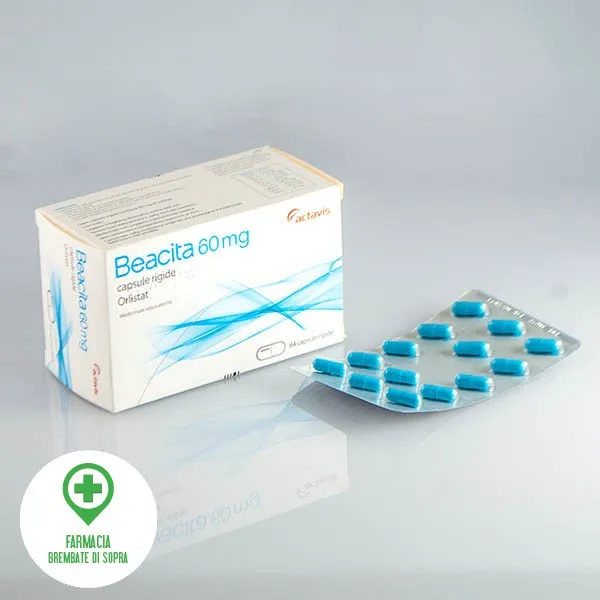
Table of Contents
- Package Leaflet: Information for the User
- BEACITA 60 mg hard capsules
- 1. WHAT BEACITA IS AND WHAT IT IS USED FOR
- 2. What you need to know before taking BEACITA
- 3. How to take BEACITA
- 4. Possible side effects
- 5. How to store BEACITA
- 6. Package contents and other information
- PATIENT INFORMATION LEAFLET: INFORMATION FOR THE USER
- BEACITA 120 mg hard capsules
- 1. WHAT BEACITA IS AND WHAT IT IS USED FOR
- 2. What you need to know before taking BEACITA
- 3. How to take BEACITA
- 4. Possible side effects
- 5. How to store BEACITA
- 6. Package contents and other information
Package Leaflet: Information for the User
BEACITA 60 mg hard capsules
Orlistat
Generic medicine
Please read this leaflet carefully before taking this medicine, as it contains
important information for you.
Always take this medicine exactly as described in this leaflet or as your doctor or
pharmacist has instructed you.
- Keep this leaflet. You may need to read it again.
- If you need more information or advice, consult your pharmacist.
- If you experience any side effects, including those not listed in this leaflet, contact your doctor or pharmacist. See section 4.
- If you have not lost weight after taking BEACITA for 12 weeks, consult your doctor or pharmacist. It may be necessary to discontinue BEACITA.
Contents of this leaflet:
- What BEACITA is and what it is used for
- What you need to know before taking BEACITA
- How to take BEACITA
- Possible side effects
- How to store BEACITA
- Contents of the pack and other information
1. WHAT BEACITA IS AND WHAT IT IS USED FOR
BEACITA is used for weight loss in adults aged 18 years and over who are overweight, with a body mass index (BMI) equal to or greater than 28. BEACITA should be used in combination with a reduced-calorie, low-fat diet.
The BMI is a way to assess whether your weight is appropriate or if you are overweight for your height. The table below will help you determine whether you are overweight and whether BEACITA is suitable for you.
Find your height in the table. If your weight is below the value indicated for your height, do not take BEACITA.
| Height | Weight | Height | Weight | |
| 1.50 m | 63 kg | 4' 10'' | 9st 8lbs | |
| 1.55 m | 67.25 kg | 5' 0'' | 10st 3lbs | |
| 1.60 m | 71.75 kg | 5' 2'' | 10st 13lbs | |
| 1.65 m | 76.25 kg | 5' 4'' | 11st 9lbs | |
| 1.70 m | 81 kg | 5' 6'' | 12st 5lbs | |
| 1.75 m | 85.75 kg | 5' 8'' | 13st 2lbs | |
| 1.80 m | 90.75 kg | 5' 10'' | 13st 13lbs | |
| 1.85 m | 95.75 kg | 6' 0'' | 14st 10lbs | |
| 1.90 m | 101 kg | 6' 2'' | 15st 8lbs |
Risks associated with being overweight
Being overweight increases the risk of developing several serious health problems, such as diabetes and
cardiovascular diseases. These conditions may not cause obvious symptoms; therefore, you should
consult your doctor for a general health check-up.
How BEACITA works
The active substance in BEACITA (orlistat) has been studied to act on fats at the level of the digestive
system. This substance blocks the absorption of approximately one-quarter of the fats contained in meals. These
fats are then eliminated from the body through faeces. You may experience treatment-related effects associated with the diet (see section 4). It is therefore important to commit to following a low-fat diet to manage these effects. In this way, the effect of the capsules will support your efforts, helping you to lose more weight than with diet alone. For every 2 kg lost with diet alone,
BEACITA can help you lose an additional 1 kg.
2. What you need to know before taking BEACITA
Do not take BEACITA
- If you are allergic to orlistat or to any of the other ingredients of this medicine (listed in section 6)
- If you are pregnant or breastfeeding
- If you are taking cyclosporine, a medicine used after organ transplants, for severe forms of rheumatoid arthritis and certain serious skin diseases
- If you are taking warfarin or other medicines used to thin the blood
- If you have cholestasis (a condition in which the flow of bile from the liver is blocked)
- If you have diagnosed food absorption problems (chronic malabsorption syndrome).
Warnings and precautions
Talk to your doctor or pharmacist before taking BEACITA.
- If you have diabetes, inform your doctor, as they may need to adjust the dose of your anti-diabetic medicine.
- If you have kidney disease. Consult your doctor before taking BEACITA if you have kidney problems. The use of orlistat may be associated with the formation of kidney stones in patients with chronic kidney disease.
Children and adolescents
This medicine must not be taken by children and adolescents under 18 years of age.
Other medicines and BEACITA
BEACITA may affect certain medicines you are taking.
Inform your doctor or pharmacist if you are taking, have recently taken or might take any other medicines, including those not requiring a prescription.
Do not take BEACITA with these medicines:
- Cyclosporine: cyclosporine is used after organ transplants, for severe forms of rheumatoid arthritis and certain serious skin diseases.
- Warfarin or other medicines used to thin the blood.
Oral contraceptive pill and BEACITA
The oral contraceptive pill may be less effective in case of severe diarrhoea. Use an additional contraceptive method if you develop severe diarrhoea.
Multivitamin supplements and BEACITA
You should take a multivitamin supplement every day. BEACITA may reduce the levels of certain vitamins absorbed by the body. The multivitamin supplement should contain vitamins A, D, E and K. You should take the multivitamin supplement at bedtime, at a different time from when you take BEACITA, to help vitamin absorption.
Inform your doctor or pharmacist before taking BEACITA if you are taking:
- amiodarone, used for heart rhythm problems;
- the use of BEACITA is not recommended for patients taking acarbose (an antidiabetic medicine used for type 2 diabetes mellitus);
- a thyroid medicine (levotiroxine), as a dose adjustment may be needed and the two medicines should be taken at different times of the day;
- a medicine for epilepsy, as any change in the frequency or intensity of seizures should be discussed with your doctor;
- medicines for HIV. It is important that you consult your doctor before taking BEACITA if you are being treated for HIV;
- medicines for depression, psychiatric disorders or anxiety.
Inform your doctor or pharmacist when taking BEACITA:
- if you are taking a medicine for high blood pressure, as a dose adjustment may be needed;
- if you are taking a medicine for high cholesterol, as a dose adjustment may be needed.
BEACITA with food and drink
BEACITA should be taken in combination with a reduced-calorie and low-fat diet. Try to start the diet before beginning treatment. For information on how to set your calorie and fat intake goals, read the section Other useful information in section 6.
Take BEACITA immediately before, during or within one hour after meals. This generally means one capsule at breakfast, lunch and dinner. If you skip a meal or eat a meal containing no fat, do not take the capsule. BEACITA does not work if the meal does not contain at least some fat.
If you eat a high-fat meal, do not take a higher than recommended dose. Taking the capsule with a meal high in fat may increase the likelihood of experiencing treatment-related effects associated with the diet (see section 4). Make every effort to avoid any high-fat meal while taking BEACITA.
Pregnancy and breastfeeding
Do not take BEACITA if you are pregnant or breastfeeding.
Driving and using machines
It is unlikely that BEACITA will affect your ability to drive or use machines.
3. How to take BEACITA
Prepare yourself to lose weight
Choose a start date
Choose in advance the date when you will begin taking the capsules. Before starting the capsules, begin a reduced-calorie and reduced-fat diet and give your body a few days to get used to the new eating habits. Keep a record of what you eat in a food diary. Such diaries are effective because they make you aware of what and how much you eat, providing a basis for introducing changes.
Decide on your weight loss goal
Think about how many kilograms you would like to lose, and then set a target weight. A realistic goal is to lose between 5% and 10% of your initial body weight. The amount of weight you lose may vary from week to week. Aim to lose weight gradually and steadily, about 0.5 kg per week.
Set your calorie and fat intake goals
To help you reach your weight goal, you need to set two daily targets: one for calories and one for fat. For further advice, please read the section "Other useful information" in section 6.
Taking BEACITA
Adults aged 18 years and over
- Take one capsule three times a day.
- Take BEACITA immediately before, during, or within one hour after meals. This generally means one capsule at breakfast, one at lunch, and one at dinner. Make sure your three main meals are well-balanced and low in calories and fat.
- If you skip a meal or eat a meal that contains no fat, do not take the capsule. BEACITA does not work if the meal does not contain at least some fat.
- Swallow the capsule whole with water.
- Do not take more than 3 capsules per day. Eat low-fat meals to reduce the likelihood of experiencing treatment-related side effects due to diet (see section 4).
Try to increase your physical activity before starting treatment with the capsules.
Physical activity is an important part of a weight-loss programme. If you have never exercised before, remember to consult your doctor first.
Continue exercising while taking BEACITA and also after you stop taking it.
How long you should take BEACITA
- BEACITA should not be taken for longer than six months.
- If you have not lost weight after taking BEACITA for 12 weeks, consult your doctor or pharmacist.
- You may need to stop treatment with BEACITA.
- Effective weight loss is not achieved simply by changing your eating habits temporarily and then returning to old habits. People who lose weight and maintain the weight loss change their lifestyle, including what they eat and their level of physical activity.
If you take more BEACITA than you should
Do not take more than 3 capsules per day.
- If you have taken too many capsules, contact your doctor as soon as possible.
If you forget to take BEACITA
If you have forgotten to take a capsule:
- If less than one hour has passed since your last meal, take the missed capsule.
- If more than one hour has passed since your last meal, do not take the missed capsule. Wait and take the next capsule at the next meal, as usual.
If you have any further questions about the use of this medicine, ask your doctor or pharmacist.
4. Possible side effects
Like all medicines, this medicine can cause side effects, although not everyone experiences them.
Most of the side effects of BEACITA (for example, intestinal gas with or without oily spotting, sudden bowel movements, more frequent bowel movements, and soft stools) are caused by the way it works (see section 1). Eat low-fat meals to help control these diet-related treatment effects.
Serious side effects (frequency unknown for these side effects)
Severe allergic reactions
- Signs of a severe allergic reaction include: severe breathing difficulties, sweating, rash, itching, swelling of the face, rapid heartbeat, collapse. Stop taking the capsules. Seek immediate medical help.
Other serious side effects
- Anal bleeding (rectum)
- Diverticulitis (intestinal inflammation). Symptoms may include abdominal pain, especially on the left side, possibly accompanied by fever and constipation
- Pancreatitis (inflammation of the pancreas). Symptoms may include severe abdominal pain sometimes radiating to the back, possibly accompanied by fever, nausea, and vomiting
- Blisters on the skin (including blisters that burst)
- Severe abdominal pain caused by gallstones
- Hepatitis (liver inflammation). Symptoms may include yellowing of the skin and eyes, itching, dark urine, abdominal pain, and liver tenderness (indicated by pain below the front of the ribcage on the right side), sometimes with loss of appetite
- Oxalate nephropathy (calcium oxalate accumulation that may form kidney stones), which can lead to kidney failure. See section 2 Warnings and precautions.
Stop taking the capsules. If you experience any of these side effects, contact your doctor.
Other side effects
Very common side effects (may affect more than 1 in 10 people)
- Intestinal gas (flatulence), with or without oily spotting
- Sudden bowel movements
- Fatty or oily stools
- Soft stools
- Oily spotting
- Low blood sugar levels (observed in some patients with type 2 diabetes)
- Upper respiratory tract infection
- Influenza
- Headache
Inform your doctor or pharmacist if any of these side effects become severe or bothersome.
Common side effects (may affect up to 1 in 10 people)
- Abdominal pain (stomach)
- Rectal pain/discomfort
- Bloating (observed in some people with type 2 diabetes)
- Dental/gum problems
- Fatigue
- Incontinence (faeces)
- Watery/liquid stools
- More frequent bowel movements
- Anxiety
- Urinary tract infection
- Lower respiratory tract infection
Inform your doctor or pharmacist if any of these side effects become severe or bothersome.
Side effects in blood tests (frequency unknown)
- Increased levels of certain liver enzymes
- Effects on blood clotting in patients taking warfarin or other anticoagulants
Inform your doctor that you are taking BEACITA when undergoing blood tests.
Reporting of side effects
If you experience any side effect, including those not listed in this leaflet, talk to your doctor or pharmacist. You can also report side effects directly via the national reporting system at www.agenziafarmaco.gov.it/it/responsabili.
By reporting side effects, you can help provide more information on the safety of this medicine.
Learning to manage diet-related treatment effects
Most side effects are caused by the mechanism of action of the capsules and result from some fat passing through the body undigested and being eliminated in the faeces. These effects typically occur within the first few weeks of treatment, before you have adapted to limiting dietary fat intake. These diet-related treatment effects may be a sign that you have consumed more fat than recommended.
You can learn to minimize the impact of diet-related treatment effects by following these rules:
- Start following a low-fat diet for a few days, or even a week, before beginning to take the capsules.
- Be more aware of how much fat is in your favourite foods and the portion sizes you eat. Becoming familiar with portion sizes will reduce the likelihood of accidentally exceeding your recommended fat intake.
- Distribute your daily fat allowance evenly across meals throughout the day. Do not save fat and calories to later indulge in a high-fat meal or dessert, as you might do when following other weight-loss programs.
- Most people who have experienced these effects have found them manageable and controllable by adjusting their diet.
- Do not worry if you do not experience any of these problems. This does not mean the capsules are not working.
5. How to store BEACITA
- Keep this medicine out of the sight and reach of children.
- Do not store at temperatures above 25°C. Store in the original packaging to protect the medicine from light and moisture.
- Do not use this medicine after the expiry date stated on the packaging. The expiry date refers to the last day of that month.
- Do not dispose of any medicine via wastewater or household waste. Ask your pharmacist how to dispose of medicines you no longer use. This will help protect the environment.
6. Package contents and other information
What BEACITA contains
- The active substance is orlistat. Each hard capsule contains 60 mg of orlistat.
- The other ingredients are: Capsule contents: microcrystalline cellulose PH112, sodium starch glycolate (type A), anhydrous colloidal silica, sodium lauryl sulfate; Capsule shell: gelatin, titanium dioxide (E171), indigo carmine (E132).
Description of the appearance of BEACITA and package contents
BEACITA capsules have blue cap and body.
Pack sizes
Blister packs: 42, 60, 84, 90 and 120 capsules.
Bottles: 42 and 84 capsules.
Not all pack sizes may be marketed.
Marketing Authorization Holder
Aurobindo Pharma (Italia) – Via San Giuseppe, 102 – 21047 Saronno (VA)
Manufacturer
Pharmaceutical Works POLPHARMA SA - 19 Pelplińska Street - 83-200 Starogard Gdański (Poland)
This medicinal product is authorized in the European Economic Area countries under the following names:
Portugal Orlistato Actavis
Austria Beacita 60 mg Hartkapseln
Bulgaria Beacita
Czech Republic Beacita 60 mg
Denmark Beacita 60 mg
Hungary Beacita
Italy Beacita
Malta Beacita
Sweden Beacita
United Kingdom Orlistat 60 mg Capsules, hard
This patient information leaflet was last approved on .
ADDITIONAL USEFUL INFORMATION
Risks associated with overweight
Being overweight affects health and increases the risk of developing serious health problems such as:
- High blood pressure
- Diabetes
- Heart disease
- Stroke
- Some forms of cancer
- Osteoarthritis
Discuss with your doctor your personal risks of developing these conditions.
The importance of weight loss
Losing weight and maintaining weight loss, for example by improving diet and increasing physical activity, can help reduce the risk of serious health problems and improve overall health.
Useful dietary advice and fat and calorie goals while taking BEACITA
BEACITA should be used in combination with a reduced-calorie and reduced-fat diet. The capsules work by preventing the absorption of part of the dietary fat consumed, but you can still eat foods from all major food groups. Although you need to pay attention to the calories and fats you consume, it is important to maintain a balanced diet. You should aim to choose meals containing a variety of different nutrients and learn to eat properly in the long term.
Understanding the importance of fat and calorie goals
Calories are a measure of the energy your body needs. They are sometimes referred to as kilocalories or kcal. Energy can also be measured in kilojoules, which may also be listed on food labels.
- Your calorie goal is the maximum number of calories you can consume in one day. Please refer to the table provided later in this section.
- Your fat goal is the maximum number of grams of fat you can consume per meal. The fat table is provided after the information below on setting your calorie goal.
- Monitoring your fat intake is essential, given how the capsules work. When taking BEACITA, your body will eliminate more fat, and therefore you may experience difficulties managing it if you continue to eat the same amount of fat as before. Therefore, by adhering to the recommended fat goal, you can achieve optimal weight loss results while minimizing the risk of diet-related side effects.
- You should aim to lose weight gradually and steadily. Ideally, about 0.5 kg per week.
How to set your calorie goal
The table below has been designed to provide you with a daily calorie goal that is approximately 500 calories lower than the amount your body needs to maintain your current weight. This results in a total deficit of 3,500 calories per week, which corresponds to the amount of calories contained in 0.5 kg of body fat.
By consistently meeting this calorie goal, you should achieve gradual and steady weight loss of about 0.5 kg per week, without feeling frustrated or unsatisfied.
It is not recommended to consume fewer than 1,200 calories per day.
To determine your calorie goal, you need to know your activity level. The more active you are, the higher your calorie goal will be.
- A low activity level means engaging in little or no physical activity such as walking, climbing stairs, gardening, or other daily physical activities.
- A moderate activity level means burning approximately 150 calories per day through physical activity, for example walking 3 km, gardening for 30–45 minutes, or running 2 km in 15 minutes. Choose the activity level that best matches your daily routine. If you are unsure of your level, choose a low activity level.
Women
| Low activity level | Less than 68.1 kg | 1200 calories |
| 68.1 kg to 74.7 kg | 1400 calories | |
| 74.8 kg to 83.9 kg | 1600 calories | |
| 84.0 kg and above | 1800 calories | |
| Moderate activity level | Less than 61.2 kg | 1400 calories |
| 61.3 kg to 65.7 kg | 1600 calories | |
| 65.8 kg and above | 1800 calories |
Men
| Low level of activity | Less than 65.7 kg | 1400 calories |
| 65.8 kg to 70.2 kg | 1600 calories | |
| 70.3 kg and above | 1800 calories | |
| Moderate level of | 59.0 kg and above | 1800 calories |
| activity |
Setting Your Fat Goal
The following table shows how to set your fat goal based on your daily allowed calorie intake. You should plan for 3 meals per day. For example, if your daily calorie goal is 1400 calories, the maximum amount of fat allowed per meal will be 15 g. To stay within your daily fat allowance, snacks should contain no more than 3 g of fat.
| Daily allowed calorie intake | Maximum amount of fat allowed per meal | Maximum daily fat intake allowed for snacks |
| 1200 | 12 g | 3 g |
| 1400 | 15 g | 3 g |
| 1600 | 17 g | 3 g |
| 1800 | 19 g | 3 g |
Reminders:
- Set a realistic goal in terms of calories and fat intake, as this is a good way to maintain your achieved weight-loss results in the long term.
- Keep a food diary recording everything you eat, including calorie and fat content.
- Try to increase your level of physical activity before starting to take the capsules. Physical activity is an important part of a weight-loss programme. If you have never exercised before, remember to consult your doctor.
- Continue to stay physically active while taking BEACITA and after stopping treatment.
The BEACITA weight-loss programme combines the capsules with a diet plan and a wide range of resources to help you understand how to follow a low-calorie and low-fat diet, as well as guidelines to become more physically active.
PATIENT INFORMATION LEAFLET: INFORMATION FOR THE USER
BEACITA 120 mg hard capsules
Orlistat
Equivalent medicine
Please read this leaflet carefully before taking this medicine, as it contains
important information for you.
- Keep this leaflet. You may need to read it again.
- If you have any questions, ask your doctor or pharmacist.
- This medicine has been prescribed for you only. Do not give it to others, even if their symptoms are the same as yours, because it could be harmful.
- If you experience any adverse reaction, including those not listed in this leaflet, contact your doctor or pharmacist. See section 4.
Contents of this leaflet:
- What BEACITA is and what it is used for
- What you need to know before taking BEACITA
- How to take BEACITA
- Possible side effects
- How to store BEACITA
- Contents of the pack and other information
1. WHAT BEACITA IS AND WHAT IT IS USED FOR
BEACITA is a medicinal product used for the treatment of obesity. It acts on the digestive system by preventing the digestion of approximately one-third of the fat ingested during a meal.
BEACITA acts on digestive enzymes (lipases) and inhibits their action on some of the fats consumed during a meal. Undigested fats cannot be absorbed and are eliminated from the body.
BEACITA is indicated for the treatment of obesity in conjunction with a low-calorie diet.
2. What you need to know before taking BEACITA
Do not take BEACITA
- if you are allergic to orlistat or to any of the other ingredients of this medicine (listed in section 6),
- if you suffer from chronic malabsorption syndrome (inadequate absorption of nutrients from the digestive tract),
- if you suffer from cholestasis (liver disorder),
- if you are breastfeeding.
Warnings and precautions
Weight loss may also affect the dosage of medicines taken to treat other conditions (e.g. hypercholesterolemia or diabetes). Make sure to inform your doctor about these or any other medicines you may already be taking. Weight loss might require adjustment of the doses of these medicines.
To achieve the best results with BEACITA, you should follow the dietary advice provided by your doctor. As with any weight control program, excessive intake of fat and calories may reduce any weight loss effect.
The medicine may cause changes in your bowel habits, such as oily or fatty stools due to the excretion of undigested fats in your faeces. The likelihood of these events may increase if BEACITA is taken with a high-fat diet. In addition, daily fat intake should be evenly distributed across the three main meals, since taking BEACITA with a meal very high in fat may increase the probability of gastrointestinal effects.
It is recommended to use an additional contraceptive method to prevent possible failure of oral contraceptives that may occur in case of severe diarrhoea.
Orlistat use may be associated with kidney stone formation in patients with chronic kidney disease. Inform your doctor if you have kidney problems.
Children and adolescents
BEACITA is not recommended for the treatment of children and adolescents under 18 years of age.
Other medicines and BEACITA
Inform your doctor or pharmacist if you are taking, have recently taken, or might take any other medicines, including those without a prescription. This is very important because taking multiple medicines at the same time may increase or reduce their effectiveness.
BEACITA may alter the activity of:
- acarbose. BEACITA is not recommended in patients taking acarbose (an antidiabetic drug used to treat type 2 diabetes mellitus).
- anticoagulant medicines (e.g. warfarin). Your doctor may need to monitor your blood clotting.
- cyclosporine (a medicine used to reduce the activity of your immune system). Concomitant administration of BEACITA with cyclosporine is not recommended. However, if such use is unavoidable, your doctor may need to monitor your blood levels of cyclosporine more frequently than usual.
- iodine salts and/or levothyroxine. Cases of hypothyroidism and/or reduced control of hypothyroidism may occur.
- amiodarone (a medicine used to treat irregular heartbeat). Please consult your doctor.
- medicines for HIV treatment; medicines for depression, psychiatric disorders, or anxiety.
BEACITA reduces the absorption of certain fat-soluble nutrients added to the diet, particularly beta-carotene and vitamin E. Therefore, you should follow your doctor's advice by maintaining a well-balanced diet rich in fruits and vegetables. Your doctor may recommend taking a multivitamin supplement.
Orlistat may interfere with anticonvulsant treatment by reducing the absorption of antiepileptic drugs, potentially leading to seizures. Contact your doctor if you notice any change in the frequency and/or severity of seizures while taking BEACITA together with antiepileptic medicines.
Orlistat should be used with caution in patients receiving treatment with antidepressants and antipsychotics (including lithium).
BEACITA with food and drinks
BEACITA can be taken immediately before, during, or up to one hour after a meal.
The capsule should be swallowed with water.
Pregnancy and breastfeeding
The use of BEACITA during pregnancy is not recommended.
Since it is not known whether BEACITA is excreted in human breast milk, you must not breastfeed during treatment with BEACITA.
Driving and using machines
BEACITA has no known effect on the ability to drive or operate machinery.
3. How to take BEACITA
Take this medicine exactly as directed by your doctor. If you have any doubts, consult your doctor or pharmacist.
Dose:
The recommended dose of BEACITA is one 120 mg capsule taken with each of the three main daily meals. The capsule may be taken immediately before, during, or up to one hour after the meal. The capsule must be swallowed with water.
General information:
BEACITA should be taken in combination with a well-balanced, reduced-calorie diet rich in fruit and vegetables, in which approximately 30% of the calories come from fat. Daily intake of fats, carbohydrates, and proteins should be distributed across the three main meals. This means that you will generally need to take one capsule at breakfast, one at lunch, and one at dinner. To achieve optimal results, avoid eating fatty foods between meals, such as biscuits, chocolate, and crisps.
BEACITA works only in the presence of dietary fat. Therefore, if you skip a main meal or consume a meal that contains no fat, there is no need to take BEACITA.
Inform your doctor if, for any reason, you have not taken the medicine exactly as prescribed. Otherwise, your doctor might assume that the medicine is not effective or not well tolerated, and might decide to change your treatment unnecessarily.
Your doctor will discontinue treatment with BEACITA after 12 weeks if you have not lost at least 5% of your body weight recorded at the start of BEACITA therapy.
BEACITA has been studied in long-term clinical trials lasting up to 4 years.
If you take more BEACITA than you should
If you take more capsules than prescribed, or if someone else accidentally takes your medicine, contact a doctor, pharmacist, or go to a hospital, as medical intervention may be necessary.
If you forget to take BEACITA
If you forget to take your medicine, take it as soon as you remember, provided this is within one hour after the most recent meal, and then continue taking it as directed. Do not take a double dose to make up for the missed dose. If you have missed taking the medicine several times, inform your doctor and follow their advice.
Do not change the prescribed dose unless your doctor has instructed you to do so.
If you have any questions about how to use this medicine, ask your doctor or pharmacist.
4. Possible side effects
Like all medicines, this medicine can cause side effects, although not everyone experiences them.
Inform your doctor or pharmacist as soon as possible if you experience any disturbances during treatment with BEACITA.
Most of the side effects associated with the use of BEACITA are the direct consequence of its local action on the gastrointestinal tract. These symptoms are generally mild, occur at the beginning of treatment, and are particularly noticeable after meals high in fat. Normally, these symptoms disappear with continued therapy and if the prescribed diet is followed.
Very common side effects (affect more than 1 in 10 patients)
- Headache
- Inflammation of the upper respiratory tract
- Abdominal discomfort/pain
- Urgent or increased need for defecation
- Flatulence (gas)
- Flatulence (gas) with passage of stool
- Oily evacuation
- Fatty/oily appearance of stool
- Loose stools
- Increased frequency of bowel movements
- Influenza
- Low blood sugar levels (observed in some patients with type 2 diabetes)
Common side effects (affect between 1 and 10 out of 100 patients)
- Inflammation of the lower respiratory tract
- Rectal pain/discomfort
- Soft stools
- Faecal incontinence (inability to control bowel movements)
- Bloating (observed in some patients with type 2 diabetes)
- Dental/gum problems
- Urinary tract infection
- Irregular menstrual cycle
- Fatigue
- Anxiety
The following side effects have also been reported, but their frequency cannot be determined from the available data:
- Allergic reactions. The main symptoms are itching, skin rashes, wheals (small raised areas of skin that are paler or more intense in color than the surrounding skin, accompanied by itching), severe breathing difficulties, nausea, vomiting, and feeling unwell. If you experience any of these symptoms, seek immediate medical attention.
- Rectal bleeding
- Increases in levels of certain liver enzymes may be detected in blood tests
- Diverticulitis (the most common symptom is abdominal pain. Cramps, nausea, vomiting, fever, chills, or changes in bowel habits may also occur)
- Gallstones
- Hepatitis (liver inflammation). Symptoms include yellowing of the skin and eyes, itching, dark urine, stomach pain, and liver tenderness (reported as pain in the right side of the rib cage), sometimes with loss of appetite
- Bullous skin eruptions (including burning rashes)
- Effects on blood coagulation when used in combination with anticoagulants
- Pancreatitis (inflammation of the pancreas)
- Oxalate nephropathy (calcium oxalate deposits that may cause kidney stones). See section 2.
Reporting of side effects
If you experience any side effect, including those not listed in this leaflet, talk to your doctor or pharmacist. You can also report side effects directly via the national reporting system at http://www.agenziafarmaco.gov.it/it/responsabili.
By reporting side effects, you can help provide more information on the safety of this medicine.
5. How to store BEACITA
Keep this medicine out of the sight and reach of children.
Do not use this medicine after the expiry date which is stated on the packaging after "EXP."
The expiry date refers to the last day of that month.
Do not store above 25 °C.
Store in the original packaging to protect the medicine from light and moisture.
Do not dispose of any medicine via wastewater or household waste. Ask your pharmacist how to
dispose of medicines you no longer use. This will help protect the environment.
6. Package contents and other information
What BEACITA contains
- The active substance is orlistat. Each hard capsule contains 120 mg of orlistat.
- The other components are: Capsule contents: microcrystalline cellulose PH112, sodium starch glycolate (type A), anhydrous colloidal silica, sodium lauryl sulfate; Capsule coating: gelatin, titanium dioxide (E171), indigo carmine (E132).
Description of the appearance of BEACITA and the contents of the pack
BEACITA capsules are blue and are available in blisters containing 21, 42, 84 and 90 capsules.
Not all pack sizes may be marketed.
Marketing Authorization Holder
Aurobindo Pharma (Italia) – Via San Giuseppe, 102 – 21047 Saronno (VA)
Manufacturer
Pharmaceutical Works POLPHARMA SA - 19 Pelplińska Street - 83-200 Starogard Gdański (Poland)
This medicinal product is authorized in the European Economic Area countries under the following names:
Portugal Orlistato Actavis
Bulgaria Beacita
Czech Republic Beacita 120 mg
Denmark Beacita 120 mg
Hungary Beacita
Italy Beacita
Sweden Beacita
United Kingdom Orlistat 120 mg Capsules, hard
This leaflet was last approved on.