Bavencio
Italy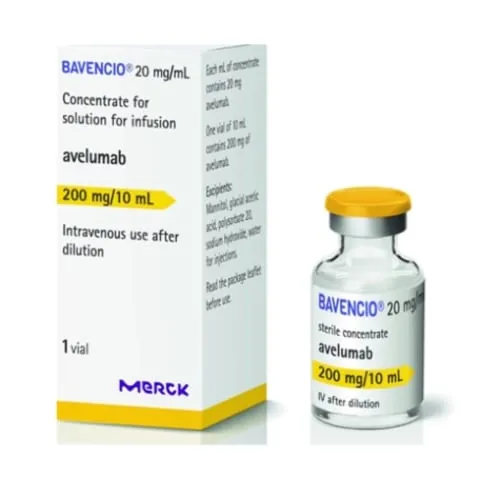
Table of Contents
- Patient Information Leaflet
- Bavencio 20 mg/mL concentrate for solution for infusion
- 1. What Bavencio is and what it is used for
- 2. What you need to know before using Bavencio
- 3. How to use Bavencio
- 4. Possible side effects
- 5. How to store Bavencio
- 6. Package contents and other information
- The following information is intended exclusively for healthcare professionals:
Patient Information Leaflet
Bavencio 20 mg/mL concentrate for solution for infusion
avelumab
Please read this leaflet carefully before using this medicine because it contains important information for you.
- Keep this leaflet. You may need to read it again.
- It is important to keep the Patient Record Card with you during treatment.
- If you have any questions, ask your doctor.
- If you experience any side effects, including those not listed in this leaflet, tell your doctor. See section 4.
Contents of this leaflet
- What Bavencio is and what it is used for
- What you need to know before using Bavencio
- How to use Bavencio
- Possible side effects
- How to store Bavencio
- Contents of the pack and other information
1. What Bavencio is and what it is used for
Bavencio contains the active substance avelumab, a monoclonal antibody (a specific type of protein) that binds to a particular target in the body called programmed death-ligand 1 (PD-L1).
PD-L1 is found on the surface of certain tumour cells and enables them to protect themselves from the immune system (the body's natural defences). Bavencio binds to PD-L1 present on the surface of tumour cells and blocks this protective effect, allowing the immune system to attack the tumour.
Bavencio is used in adults to treat:
- Merkel cell carcinoma (MCC), a rare skin cancer, when it is metastatic (when the cancer has spread to other organs),
- urothelial carcinoma (UC), a cancer originating in the urinary tract, when it is advanced or metastatic (when the cancer has spread outside the urinary bladder or to other parts of the body). Bavencio is used as maintenance treatment if the tumour has not grown after a so-called platinum-based chemotherapy used as first treatment,
- renal cell carcinoma (RCC), a kidney cancer, when it is advanced (when the cancer has spread outside the kidney or to other organs).
For renal cell carcinoma, Bavencio must be used in combination with axitinib.
It is important to also read the package leaflet of the medicine containing axitinib. If you have any doubts about axitinib, consult your doctor.
2. What you need to know before using Bavencio
Do not use Bavencio
if you are allergic to avelumab or to any of the other ingredients of this medicine (listed in
section 6).
Warnings and precautions
Blood tests and weight monitoring
Your doctor will monitor your general health condition before and during treatment with Bavencio.
Blood tests will be performed during treatment, and your doctor will check your weight before and
during treatment.
Contact your doctor before receiving Bavencio
This medicine may cause the following side effects (see section 4). Please note that sometimes
these symptoms may appear with a delay and may occur after the last dose. If you experience any of
these symptoms, contact a doctor immediately:
- infusion-related reactions;
- problems due to inflammation of the lungs (pneumonitis);
- liver inflammation (hepatitis) or other liver problems;
- inflammation of the intestine (colitis), diarrhoea (loose, watery, or soft stools) or an increase in bowel movements compared to usual;
- inflammation of the pancreas (pancreatitis);
- heart inflammation (myocarditis);
- problems affecting glands that produce hormones (thyroid, adrenal glands, and pituitary gland), which may impair their function;
- type 1 diabetes, including a serious, potentially life-threatening condition caused by diabetes-related acids in the blood (diabetic ketoacidosis);
- kidney problems;
- muscle inflammation (myositis and polymyalgia rheumatica);
- problems due to inflammation of the lungs, skin, eyes and/or lymph nodes (sarcoidosis);
- inflammation and scarring of the bile ducts (sclerosing cholangitis);
- joint inflammation (arthritis);
- inflammation of glands that produce secretions for the body (Sjögren's syndrome);
- stomach inflammation (gastritis).
If any of these symptoms occur while you are taking Bavencio, do not attempt to treat them yourself
with other medicines. Your doctor may:
- prescribe additional medicines to prevent complications and reduce symptoms,
- delay the next dose of Bavencio,
- or permanently discontinue treatment with Bavencio.
Consult your doctor or nurse before receiving Bavencio if
- you have an autoimmune disease (a condition in which the body attacks its own cells);
- you have human immunodeficiency virus (HIV) infection or acquired immunodeficiency syndrome (AIDS);
- you have or have had chronic viral liver infection, such as hepatitis B (HBV) or hepatitis C (HCV);
- you are taking medicines that suppress the immune system;
- you have received an organ transplant.
Bavencio acts on the immune system. It may cause inflammation in certain parts of the body. The
risk of experiencing these side effects may be higher if you already have an autoimmune disease (a condition in which the body attacks its own cells). Frequent flare-ups of autoimmune disease may also occur, which in most cases are mild.
Children and adolescents
Bavencio has not been studied in children and adolescents under 18 years of age. Therefore,
Bavencio must not be used in children and adolescents under 18 years of age.
Other medicines and Bavencio
Inform your doctor if you are taking, have recently taken, or might take any other medicines.
Pregnancy
Bavencio may harm the unborn baby. If you are pregnant, suspect you may be pregnant, are planning a pregnancy, or are breastfeeding, consult your doctor before taking this medicine.
You must not use Bavencio during pregnancy unless specifically recommended by your doctor.
If you are a woman of childbearing potential, you must use effective contraception during treatment with Bavencio and for at least 1 month after the last dose.
Breast-feeding
If you are breast-feeding, inform your doctor.
Do not breast-feed during treatment with Bavencio and for at least 1 month after the last dose.
It is not known whether Bavencio passes into breast milk. A risk to breastfed infants cannot be ruled out.
Driving and using machines
If you do not feel well enough, do not drive or operate machinery after receiving Bavencio. Fatigue is a very common side effect of Bavencio, which may impair your ability to drive or operate machinery.
Low sodium content of Bavencio
Bavencio contains less than 1 mmol (23 mg) of sodium per 200 mg dose, i.e., essentially ‘sodium-free’.
Bavencio contains polysorbate
Bavencio contains 5 mg of polysorbate 20 per vial. Polysorbates may cause allergic reactions. Inform your doctor if you have known allergies.
Patient card
The patient card provided by your doctor contains some important information from this leaflet. It is important that you keep this patient card and show it to your partner or caregiver.
3. How to use Bavencio
Bavencio will be administered to you in a hospital or clinic under the supervision of an experienced doctor.
How much Bavencio will be administered to you
The recommended dose of avelumab is 800 mg every 2 weeks. Your doctor will determine the number of
infusions you require.
How Bavencio will be administered to you
Bavencio will be given to you as an intravenous infusion (drip) over a period of 1 hour. Before use, Bavencio will be added to an infusion bag containing a sodium chloride solution.
Before administration of Bavencio
For at least the first 4 infusions, you will be given paracetamol and an antihistamine before treatment with Bavencio to help prevent possible infusion-related side effects. Depending on how your body responds to treatment, your doctor may decide to continue giving you these medicines before each Bavencio infusion.
If you miss a dose of Bavencio
It is very important to attend all your scheduled Bavencio infusion appointments. If you miss an appointment, ask your doctor when to schedule your next dose.
If you stop treatment with Bavencio
Do not stop treatment with Bavencio without discussing it with your doctor. If you stop treatment, the effect of the medicine may cease.
If you have any questions about the use of this medicine, consult your doctor.
4. Possible side effects
Like all medicines, this medicine can cause side effects, although not everyone will experience them. Some side effects may occur weeks or months after the last dose.
Bavencio acts on the immune system and may cause inflammation in certain parts of the body (see section 2). Inflammation can cause serious harm, and some inflammatory conditions may be fatal and require treatment or discontinuation of Bavencio.
Seek immediate medical advice if you experience inflammation in any part of your body or if you develop any of the following signs or symptoms, or if they worsen.
- Signs of infusion-related reactions, which may include shortness of breath or wheezing, chills or shaking, irregular or blistering rash, flushing, low blood pressure (dizziness, fatigue, nausea), fever, back pain, and abdominal pain. These effects are very common.
- Signs of inflammation of hormone-producing glands (which may affect gland function), which may include extreme tiredness, rapid heartbeat, increased sweating, mood or behavioural changes such as irritability or forgetfulness, feeling cold, very low blood pressure (fainting, dizziness, fatigue, nausea), weight changes, or headache. These effects are very common for the thyroid gland, common for the adrenal glands, and uncommon for the pituitary gland.
- Signs of lung inflammation (pneumonitis), such as difficulty breathing or cough. These effects are common.
- Signs of intestinal inflammation (colitis), which may include diarrhoea (loose stools) or increased bowel movements compared to usual, blood in the stool or dark, tarry, sticky stools, or severe abdominal pain or tenderness. These effects are common.
- Signs of liver problems, including liver inflammation (hepatitis), which may include yellowing of the skin (jaundice) or whites of the eyes, severe nausea or vomiting, pain in the right side of the abdomen, drowsiness, dark urine (tea-coloured), increased tendency to bleed or bruise, reduced appetite, fatigue, or abnormal liver function tests. These effects are common.
- Signs of pancreatic inflammation (pancreatitis), which may include abdominal pain, nausea, and vomiting. These effects are uncommon.
- Signs of heart inflammation (myocarditis), which may include difficulty breathing, dizziness or fainting, fever, chest pain, chest tightness, or flu-like symptoms. These effects are uncommon.
- Signs of type 1 diabetes, including diabetic ketoacidosis, which may include increased hunger or thirst, frequent urination, weight loss, feeling tired or difficulty thinking clearly, sweet or fruity breath odour, feeling unwell, nausea, stomach pain, or deep or rapid breathing. These effects are uncommon.
- Signs of kidney inflammation, which may include abnormal kidney function tests, reduced urine output, blood in the urine, or swelling of the ankles. These effects are uncommon.
- Signs of muscle inflammation such as myositis, which may include muscle pain or weakness, and polymyalgia rheumatica, which may include muscle pain or stiffness. The frequency of myositis is uncommon; the frequency of polymyalgia rheumatica is not known.
- Signs of inflammation associated with accumulation of inflammatory cells in various organs and tissues, most commonly in the lungs (sarcoidosis). These effects are uncommon.
- Signs of joint inflammation (arthritis), which may include joint pain, stiffness, and swelling. These effects are rare.
- Signs of inflammation of glands producing secretions for the body, such as tears and saliva, which may include dry eyes and dry mouth (Sjögren's syndrome). These effects are rare.
- Signs of inflammation and scarring of the bile ducts, which may include pain in the upper right part of the stomach, enlargement of the liver or spleen, fatigue, itching, or yellowing of the skin or whites of the eyes (sclerosing cholangitis). Frequency is not known.
- Low neutrophil count, a type of white blood cell that helps fight infections. Frequency is not known.
- Signs of stomach inflammation (gastritis), which may include pain or tenderness in the stomach/abdomen, nausea, or vomiting. Frequency is not known.
Do not try to treat the symptoms on your own with other medicines.
Other side effects
Some side effects may be asymptomatic and detectable only through blood tests.
The following side effects were reported in clinical trials with avelumab as monotherapy:
Very common (may affect more than 1 in 10 people)
- Decreased number of red blood cells
- Nausea, diarrhoea, constipation, vomiting
- Stomach ache, back pain, joint pain
- Cough, shortness of breath
- Feeling tired or weak
- Fever
- Swelling of arms, feet or legs
- Weight loss, reduced appetite
Common (may affect up to 1 in 10 people)
- Decreased number of a type of white blood cells (lymphocytes)
- Decreased number of platelets in the blood
- Increased blood pressure
- Low sodium levels
- Headache, dizziness
- Feeling cold
- Dry mouth
- Increased liver enzymes in the blood
- Increased pancreatic enzymes in the blood
- Rash, itching
- Muscle pain
- Flu-like illness (including feverish feeling, muscle aches)
- Numbness, tingling, weakness, burning sensation in upper or lower limbs
Uncommon (may affect up to 1 in 100 people)
- Skin redness
- Intestinal obstruction
- Red, itchy, scaly patches on the skin, dry skin
- Decreased blood pressure
- Increased muscle enzyme in the blood
- Increased number of a type of white blood cells (eosinophils)
- Joint inflammation (rheumatoid arthritis)
- Myasthenia gravis, myasthenic syndrome, a condition that may cause muscle weakness
Rare (may affect up to 1 in 1,000 people)
- Bladder inflammation. Signs and symptoms may include frequent and/or painful urination, urgency to urinate, blood in the urine, pain or pressure in the lower abdomen.
The following side effects were reported in clinical trials with avelumab in combination with axitinib:
Very common (may affect more than 1 in 10 people)
- Diarrhoea, nausea, constipation, vomiting
- Increased blood pressure
- Feeling tired or weak
- Hoarseness, cough, shortness of breath
- Reduced appetite, weight loss
- Headache, dizziness
- Joint pain, back pain, abdominal pain, muscle pain
- Increased liver enzymes in the blood
- Feeling cold
- Rash, itching
- Fever
Common (may affect up to 1 in 10 people)
- Red, itchy, scaly skin patches, acne-like rash
- Swelling of arms, feet or legs
- Dry mouth
- Increased pancreatic enzymes in the blood
- Reduced kidney function
- Decreased number of red blood cells
- Decreased blood pressure
- Increased blood glucose levels
- Flu-like illness (including feverish feeling, muscle aches)
- Increased muscle enzyme in the blood
- Decreased number of platelets in the blood
- Numbness, tingling, weakness, burning sensation in upper or lower limbs
- Skin redness
Uncommon (may affect up to 1 in 100 people)
- Decreased number of a type of white blood cells (lymphocytes)
- Increased number of a type of white blood cells (eosinophils)
- Intestinal obstruction
- Myasthenia gravis, myasthenic syndrome, a condition that may cause muscle weakness
The following side effects have been reported with similar medicines:
- Absence or reduction of digestive enzymes produced by the pancreas (exocrine pancreatic insufficiency)
- Coeliac disease (characterised by symptoms such as stomach ache, diarrhoea, and abdominal bloating after consuming foods containing gluten)
Reporting of side effects
If you experience any side effect, including those not listed in this leaflet, talk to your doctor. You can also report side effects directly via the national reporting system listed in Annex V. Reporting side effects can help provide more information on the safety of this medicine.
5. How to store Bavencio
Keep this medicine out of the sight and reach of children.
Do not use this medicine after the expiry date stated on the vial label and the carton after EXP/Scad. The expiry date refers to the last day of that month.
Store in a refrigerator (2°C - 8°C).
Do not freeze.
Store in the original packaging to protect from light.
Do not store any unused concentrate or diluted infusion solution for future use.
Any unused medicine and waste material derived from this medicine should be disposed of in accordance with local regulations.
6. Package contents and other information
What Bavencio contains
The active substance is avelumab.
A 10 mL vial contains 200 mg of avelumab. Each mL of concentrate contains 20 mg of
avelumab.
The other components are mannitol (E421), glacial acetic acid, polysorbate 20 (E432) (see
section 2 “Bavencio contains polysorbate”), sodium hydroxide, water for injections
(see section 2 “Bavencio has a low sodium content”).
Description of the appearance of Bavencio and package contents
Bavencio is a sterile, clear concentrate, colourless to pale yellow, for infusion solution.
The pack contains 1 glass vial per carton.
Marketing Authorisation Holder
Merck Europe B.V.
Gustav Mahlerplein 102
1082 MA Amsterdam
The Netherlands
Manufacturer
Merck Serono S.p.A.
Via Delle Magnolie 15 (loc. frazione Zona Industriale)
70026 - Modugno (BA)
Italy
Other sources of information
More detailed information on this medicinal product is available on the website of the European Medicines Agency: https://www.ema.europa.eu/ .
The following information is intended exclusively for healthcare professionals:
Instructions for use
Preparation and administration
Use aseptic technique when preparing the infusion solution.
- Visually inspect the vial for the presence of particles or discoloration. Bavencio is a clear solution, colorless to pale yellow. If the solution is cloudy, discolored, or contains particles, the vial must be discarded.
- Use an appropriate-sized infusion bag (preferably 250 mL) containing either sodium chloride 9 mg/mL (0.9%) infusion solution or sodium chloride 4.5 mg/mL (0.45%) infusion solution. Withdraw the required volume of Bavencio from the vial(s) and transfer it into the infusion bag. Partially used or empty vials must be discarded.
- Gently invert the bag to mix the diluted solution, avoiding foaming or excessive shear forces.
- Inspect the solution to confirm it is clear, colorless, and free of visible particles. The diluted solution should be used immediately after preparation.
- Do not co-administer other medicinal products using the same intravenous line. Administer the infusion using an in-line filter or an additional sterile, pyrogen-free, low-protein-binding filter with a pore size of 0.2 micrometers.
After administration of Bavencio, flush the infusion line with either sodium chloride 9 mg/mL (0.9%) infusion solution or sodium chloride 4.5 mg/mL (0.45%) infusion solution.
Do not freeze or shake the diluted solution. If refrigerated, allow the diluted solution in the intravenous bags to reach room temperature (20°C–25°C) before use.
Any unused medicinal product and waste material derived from this medicinal product must be disposed of in accordance with local regulations.