Bassado
Italy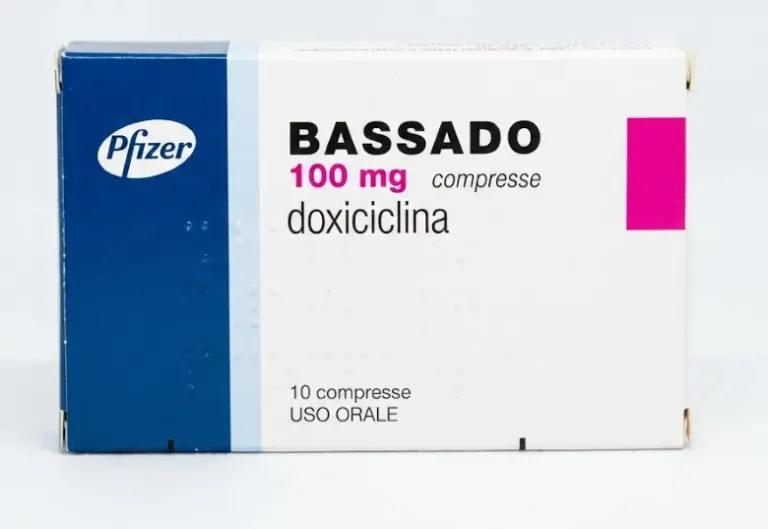
Table of Contents
Package leaflet: Information for the patient
BASSADO 100 mg tablets
Doxycycline
Please read this leaflet carefully before taking this medicine because it contains
important information for you.
- Keep this leaflet. You may need to read it again.
- If you have any questions, ask your doctor or pharmacist.
- This medicine has been prescribed for you or your child only. Do not give it to others, even if they have the same symptoms as you, because it could be harmful.
- If you experience any side effects, including those not listed in this leaflet, talk to your doctor or pharmacist. See section 4.
Contents of this leaflet
- What Bassado is and what it is used for
- What you need to know before taking Bassado
- How to take Bassado
- Possible side effects
- How to store Bassado
- Contents of the pack and other information
1. What Bassado is and what it is used for
Bassado contains the active substance doxycycline. Doxycycline is an antibiotic belonging to the tetracycline class and is part of a group of medicines called "systemic antibacterial agents".
Bassado is used in adults and children for the treatment of infections caused by bacteria sensitive to tetracyclines.
2. What you need to know before using Bassado
Do not use Bassado:
- if you are allergic to doxycycline or to any of the other ingredients of this medicine (listed in section 6);
- if you are allergic to other antibiotics belonging to the tetracycline class;
- if you have difficulty swallowing food and/or drinks;
- if you are pregnant or breastfeeding (see section 2 “Children” and “Pregnancy and breastfeeding”).
Warnings and precautions
Talk to your doctor or pharmacist before using Bassado.
Inform your doctor before using Bassado if:
- you suffer from a condition where food from the stomach flows back into the oesophagus, causing symptoms such as heartburn, acid reflux, and regurgitation (gastro-oesophageal reflux). Bassado may worsen these symptoms, and in such cases your doctor may recommend an alternative treatment;
- you have kidney problems (renal impairment). In this case, your doctor may prescribe a lower dose of Bassado than normally recommended, to avoid worsening kidney problems and to prevent liver complications. Contact your doctor if any of the following conditions appear or worsen during treatment with Bassado (also see section 4 “Possible side effects”):
- diarrhoea, which may be mild but in some cases can be fatal (fatal colitis). Diarrhoea may occur with the use of almost all antibiotics, including Bassado, and is due to disruption of the normal intestinal bacterial flora, allowing excessive growth of a bacterium called Clostridium difficile. If you develop diarrhoea, your doctor will closely monitor you, as Clostridium difficile infection may occur up to two months after stopping treatment with this medicine;
- inflammation of the oesophagus (oesophagitis) and damage to the inner lining of the oesophagus (oesophageal ulcer), which may be severe. When taking Bassado, you must follow the instructions in section 3 “How to use Bassado”. If you suddenly develop difficulty swallowing or pain behind the breastbone (retrosternal pain), stop immediately taking Bassado and contact your doctor;
- skin redness or other skin reactions resembling sunburn (photosensitivity reactions) when exposed to sunlight or ultraviolet light (e.g. in a sunbed). You must avoid direct exposure to sunlight or ultraviolet light (e.g. sunbeds) during treatment with Bassado, especially if you are prone to such reactions. Sometimes, serious skin reactions may occur with this medicine, such as widespread skin peeling (exfoliative dermatitis), almost complete death of skin and mucous membranes (toxic epidermal necrolysis), red patches or circular spots, often with central blisters, mainly on the trunk (Stevens-Johnson syndrome); skin redness, fever, inflammation of various organs, swollen lymph nodes, and increased levels in the blood of a type of white blood cells called “eosinophils” (DRESS syndrome). Mouth, throat, nose, limbs, genital ulcers and conjunctivitis (red, swollen eyes) may also occur. If you experience any skin reactions, stop immediately taking Bassado and contact your doctor;
- increased pressure of the fluid inside the skull (benign intracranial hypertension), possibly leading to vision loss, sometimes permanent. If you experience vision disturbances during treatment, stop immediately taking Bassado and contact your doctor;
- infections caused by microorganisms resistant to doxycycline (superinfection). In this case, treatment with Bassado must be stopped immediately and alternative therapy started;
- liver problems. If liver function problems occur, stop immediately taking Bassado;
- muscle weakness caused by an abnormal immune system reaction (myasthenia gravis).
During treatment with Bassado, your doctor will perform regular check-ups to monitor liver, kidney, and bone marrow function.
If you are being treated with Bassado for a bacterial infection transmitted through sexual contact, this medicine may mask the presence of syphilis. To rule out syphilis, your doctor will perform repeated blood tests for at least 4 months after starting treatment with Bassado.
While taking Bassado, you may experience an increase in vaginal infections (candidiasis).
Children
Bassado must not be given to children under 8 years of age because:
- it may reduce growth in infants born between the 22nd and 37th week of pregnancy (preterm infants), although this effect is reversible if treatment is stopped;
- it may cause permanent yellowing or darkening of children's teeth (yellow-grey-brown discoloration) if taken during tooth development (from the second half of pregnancy up to 8 years of age);
- it may cause increased pressure of the fluid inside the skull in newborns, leading to swelling of the soft spots on the skull known as “fontanelles”. This effect is reversible if treatment is stopped.
There may be circumstances (e.g. severe or potentially life-threatening conditions) in which the doctor may decide that the benefits outweigh these risks, particularly when no alternative therapies are available, and Bassado must be prescribed for children under 8 years of age.
Other medicines and Bassado
Inform your doctor or pharmacist if you are taking, have recently taken, or might take any other medicines.
The following medicines must not be taken together with Bassado:
- retinoids (medicines for certain skin diseases), because co-administration may increase the pressure of the fluid inside the skull (benign intracranial hypertension);
- methoxyflurane (a medicine used in anaesthesia), because co-administration may cause severe kidney problems, which in some cases may be fatal.
Inform your doctor or pharmacist if you are taking any of the following medicines:
- warfarin (a medicine that slows or stops blood clotting). Bassado may enhance the effect of warfarin and increase the risk of bleeding. In this case, a reduction in the warfarin dose may be necessary;
- penicillins (a class of antibiotics), because taking Bassado together with a penicillin reduces the effectiveness of both medicines against infections;
- phenobarbital, primidone, carbamazepine, phenytoin (medicines for seizures). These medicines reduce the effectiveness of Bassado;
- oral contraceptives. Taking Bassado may reduce the effectiveness of oral contraceptives, potentially leading to unintended pregnancies or abnormal vaginal bleeding between periods. In this case, alternative or additional contraceptive measures are recommended;
- cyclosporine (a medicine to prevent organ transplant rejection). Taking Bassado may increase the toxic effects of cyclosporine;
- antacids containing aluminium salts, calcium salts, magnesium salts, or oral medicines or products containing iron, zinc, or bismuth salts. Bassado should be taken at least 2 hours before or 2 hours after taking any of these medicines or preparations, as they reduce the effectiveness of Bassado;
- lithium (a medicine to stabilise mood), methotrexate (a medicine for cancer and autoimmune diseases), digoxin (a medicine for certain heart conditions), ergot-based medicines (used for depression). Bassado may increase the toxic effects of these medicines.
Bassado with food, drinks and alcohol
Bassado must not be taken together with:
- milk, milk-based foods or dairy products. Bassado should be taken at least 2 hours before or 2 hours after consuming these foods, as they reduce the effectiveness of the medicine;
- alcohol. The effectiveness of Bassado may be reduced by simultaneous consumption of alcoholic beverages.
Laboratory tests
Bassado may alter the results of certain laboratory tests. If you or your child are due to undergo laboratory tests (e.g. urine analysis), inform your doctor that you are being treated with Bassado.
Pregnancy and breastfeeding
If you are pregnant, suspect you may be pregnant, plan to become pregnant, or are breastfeeding, consult your doctor or pharmacist before taking this medicine.
Do not take Bassado if you are pregnant (see sections “Do not use Bassado” and “Children”).
Do not take Bassado if you are breastfeeding, as this medicine passes into breast milk.
Driving and using machines
No negative effects of Bassado on the ability to drive or use machines are known.
Bassado contains lactose
Bassado contains lactose, a type of sugar. If your doctor has diagnosed you with an intolerance to certain sugars, contact him before using this medicine.
3. How to use Bassado
Use this medicine exactly as instructed by your doctor or pharmacist. If you have
any doubts, consult your doctor or pharmacist.
Take Bassado during meals with a generous amount of water (a full glass).
You must remain upright after taking this medicine and must not go to bed or lie down for at least 1 hour.
The recommended daily dose is as follows:
Adults and children aged 12 years and above but less than 18 years:
200 mg on the first day (to be taken together), followed by 100 mg daily. The duration of treatment depends on the infection being treated.
Children aged 8 years to less than 12 years:
Doxycycline for the treatment of acute infections in children aged 8 years to less than 12 years should be used only in situations where other drugs are unavailable or are unlikely to be effective. In such cases, the usual doses are:
For children weighing less than or equal to 45 kg:
First day: 4.4 mg per kg of body weight (as a single dose or divided into two separate doses), followed by 2.2 mg per kg of body weight (as a single dose or divided into two separate doses) from the second day onwards. The duration of treatment depends on the infection being treated.
In more severe infections, up to 4.4 mg per kg of body weight may be administered throughout the entire treatment period.
For children weighing more than 45 kg:
The adult dose should be used: 200 mg on the first day (to be taken together), followed by 100 mg daily. The duration of treatment depends on the infection being treated.
Duration of treatment
Your doctor will determine the duration of treatment with Bassado based on the severity and progression of the infection.
If the infection is caused by a bacterium called Streptococcus beta-haemolyticus group A (also known as Streptococcus pyogenes), treatment with Bassado must be continued for at least 10 days.
If you take more Bassado than you should
It is important never to take more medicine than prescribed. However, if an overdose of Bassado has been taken, go immediately to the nearest hospital for gastric lavage.
If you stop treatment with Bassado
If you stop treatment with Bassado prematurely, the outcome of the therapy may be compromised. It is recommended not to discontinue treatment with this medicine before the fever and other signs of infection have disappeared. Consult your doctor before stopping or ending treatment with Bassado.
If you have any doubts about how to use this medicine, consult your doctor or pharmacist.
4. Possible side effects
Like all medicines, this medicine can cause side effects, although not everybody gets them.
STOP using Bassado immediately if you experience any of the following side effects, as they may be serious:
- severe allergic reaction (anaphylactic shock)
- swelling of the face, tongue and throat leading to difficulty swallowing and breathing (angioedema)
- flare-up of a chronic autoimmune inflammatory condition affecting various organs (systemic lupus erythematosus)
- autoimmune allergic reaction affecting small blood vessels, with appearance of reddish spots on the skin (Schönlein-Henoch purpura)
- allergic reaction to the medicine with skin redness, fever, inflammation of various organs, swollen lymph nodes and increased blood levels of a type of white blood cells called eosinophils (DRESS syndrome)
- increased pressure of the fluid inside the skull (benign intracranial hypertension in adults) or bulging of the soft areas of the skull known as "fontanelles" (in newborns) (see section 2 "Warnings and precautions")
- severe inflammation of the final part of the intestine called colon (colitis) caused by excessive growth of a bacterium called Clostridium difficile (pseudomembranous colitis) (see section 2 "Warnings and precautions")
- damage to the inner lining of the oesophagus (oesophageal ulcer) (see section 2 "Warnings and precautions")
- severe acute hypersensitivity with almost complete skin and mucous membrane necrosis (toxic epidermal necrolysis)
- severe acute hypersensitivity of the skin and mucous membranes to substances and medicines (Stevens-Johnson syndrome)
- widespread and severe skin redness with skin peeling (exfoliative dermatitis)
- anaemia due to excessive destruction of red blood cells (haemolytic anaemia).
If you experience any of the side effects listed below, contact your doctor as soon as possible:
Common (may affect up to 1 in 10 people):
- redness or other skin reactions resembling sunburn (photosensitivity reactions) when exposed to sunlight or ultraviolet rays (e.g. in a sunbed)
- allergy (hypersensitivity) to the medicine
- low blood pressure (hypotension)
- inflammation of the pericardium, a thin membrane surrounding the heart (pericarditis)
- difficulty breathing (dyspnoea)
- autoimmune-type allergic reaction with fever, skin redness, joint pain and other symptoms (serum sickness)
- swelling in various parts of the body, especially ankles and/or legs (oedema)
- increased heart rate (tachycardia)
- urticaria
- headache
- nausea
- vomiting
- skin redness or eruptions with small raised spots and reddish patches (maculopapular eruptions)
Uncommon (may affect up to 1 in 100 people):
- stomach pain or discomfort with a feeling of fullness (dyspepsia)
- burning sensation in the stomach or oesophagus (pyrosis)
- inflammation of the stomach (gastritis)
Rare (may affect up to 1 in 1,000 people):
- reduced number of platelets in the blood (thrombocytopenia)
- reduced number of a type of white blood cells called neutrophils (neutropenia)
- increased number of a type of white blood cells called eosinophils (eosinophilia)
- microscopic lesions of the thyroid gland
- loss of appetite
- a disease originating from altered porphyrin metabolism; porphyrins are substances present in blood and other tissues (porphyria)
- abnormal perception of ringing, buzzing, hissing, pulsations or other sounds in the ear in the absence of external noise (tinnitus)
- redness
- inflammation of the oesophagus (oesophagitis)
- inflammation of the entire intestine (small intestine and colon) (enterocolitis)
- inflammation of the skin around the anus and external genitals, with Candida infection (a fungus)
- abdominal pain
- diarrhoea
- difficulty swallowing food and/or drinks (dysphagia)
- inflammation of the tongue (glossitis)
- liver damage (hepatotoxicity)
- inflammation of the liver (hepatitis)
- changes in liver function
- yellowing of the skin and whites of the eyes (jaundice)
- inflammation of the pancreas (pancreatitis)
- inflammation of blood vessels with skin necrosis and hypersensitivity reactions (erythema multiforme)
- complete or partial detachment of one or more nails following exposure to sunlight or ultraviolet rays (e.g. in a sunbed)
- joint pain (arthralgia)
- muscle pain (myalgia)
- worsening of symptoms of myasthenia gravis, characterised by muscle weakness
- increased nitrogen in the blood, a substance normally produced by the liver
- Jarisch-Herxheimer reaction, which causes fever, chills, headache, muscle pain and skin rash; this reaction is usually self-limiting and occurs shortly after starting doxycycline treatment for spirochete infections such as Lyme disease
- darker spots on the skin (skin hyperpigmentation)
Not known: frequency cannot be estimated from available data
- changes in tooth colour and/or failure of teeth to grow.
Reporting of side effects
If you experience any side effect, including those not listed in this leaflet, talk to your doctor or pharmacist. Side effects can also be reported directly via the national reporting system at
https://www.aifa.gov.it/content/segnalazioni-reazioni-avverse .
Reporting side effects helps provide more information on the safety of this medicine.
5. How to store Bassado
Keep this medicine out of the sight and reach of children.
Do not use this medicine after the expiry date stated on the carton and blister after "Exp.". The expiry date refers to the last day of that month.
Do not store above 25°C.
Do not dispose of any medicine via wastewater or household waste. Ask your pharmacist how to dispose of medicines no longer required. This will help protect the environment.
6. Package contents and other information
What Bassado contains
The active substance is doxycycline (as doxycycline hyclate).
Each tablet contains 100 mg of doxycycline (equivalent to 115.4 mg of doxycycline hyclate).
The other ingredients are: starch, sodium lauryl sulfate, lactose, alginic acid, magnesium stearate.
Description of the appearance of Bassado and contents of the pack
Bassado 100 mg tablets are available in aluminum/PVC blisters, pack size: 10 tablets.
Marketing Authorization Holder and Manufacturer
Marketing Authorization Holder
Pfizer Italia S.r.l.
via Isonzo 71
04100 Latina
Manufacturer
Doppel Farmaceutici S.r.l.
Via Volturno 48
Quinto de’ Stampi – Rozzano (MI)