BAQSIMI
Italy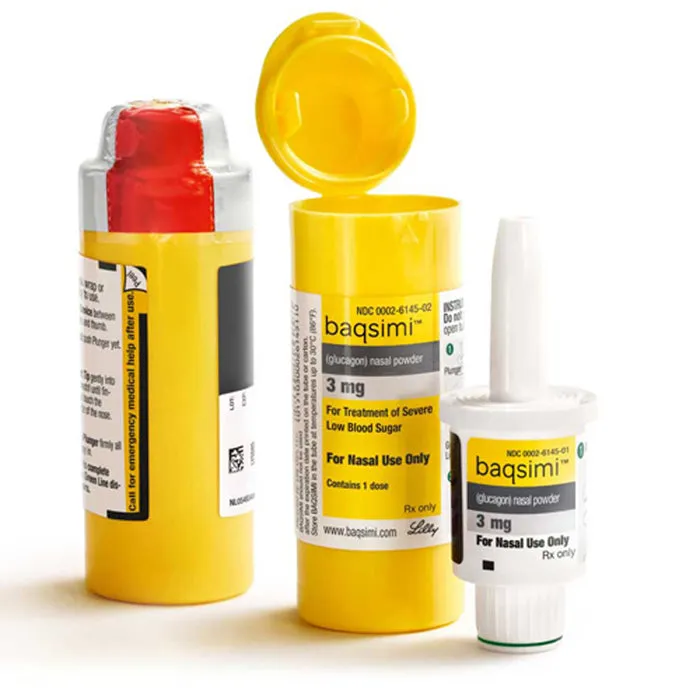
Table of Contents
- Package leaflet: Information for the patient
- Baqsimi 3 mg nasal powder in single-dose container
- 1. What Baqsimi is and what it is used for
- 2. What you need to know before Baqsimi is administered to you
- 3. How Baqsimi is administered
- 4. Possible side effects
- 5. How to store Baqsimi
- 6. Package contents and other information
Package leaflet: Information for the patient
Baqsimi 3 mg nasal powder in single-dose container
glucagon
Please read this leaflet carefully before using this medicine because it contains important information for you.
- Keep this leaflet. You may need to read it again.
- If you have any questions, ask your doctor, pharmacist or nurse.
- This medicine has been prescribed for you only. Do not give it to other people, even if their symptoms are the same as yours, as it may be harmful.
- If you experience any adverse reactions, including those not listed in this leaflet, contact your doctor, pharmacist or nurse. See section 4.
Contents of this leaflet
- What Baqsimi is and what it is used for
- What you need to know before Baqsimi is administered to you
- How Baqsimi is administered
- Possible side effects
- How to store Baqsimi
- Contents of the pack and other information
1. What Baqsimi is and what it is used for
Baqsimi contains the active substance glucagon, which belongs to a group of medicines called glycogenolytic hormones. It is used to treat severe hypoglycaemia (very low blood sugar levels) in people with diabetes. It is intended for use in adults, adolescents, and children aged 1 year and older.
Glucagon is a natural hormone produced by the pancreas. It works in opposition to insulin and increases blood glucose levels. It does this by converting stored sugar in the liver, called glycogen, into glucose (a type of sugar that the body uses to produce energy). The glucose released into the bloodstream counteracts the effects of hypoglycaemia.
You must always carry Baqsimi with you and inform your friends and family that you are carrying it.
2. What you need to know before Baqsimi is administered to you
Important information
If you are at risk of severe hypoglycaemia, you must always have Baqsimi available:
- Show your family members, friends, or coworkers where you keep this medicine and explain when and how to use it. Delay in treatment can be dangerous. It is important that they know how to use Baqsimi before you need it.
Do not use Baqsimi
- if you are allergic to glucagon or to any of the other ingredients of this medicine (listed in section 6).
- if you have a phaeochromocytoma, which is a tumour of the adrenal gland (a gland above the kidneys).
Warnings and precautions
Talk to your doctor, pharmacist, or nurse before using Baqsimi:
- if you have a pancreatic tumour called insulinoma.
- if you have insufficient glycogen stores in the liver. This may occur:
- during fasting states.
- if the adrenal gland does not produce enough cortisol or aldosterone.
- in cases of chronic alcohol abuse.
- if you suffer from chronic hypoglycaemia.
If you are unsure whether any of these situations apply to you, consult your doctor, pharmacist, or nurse before using Baqsimi.
If you have an allergic reaction to glucagon with generalized rash and, in some cases, anaphylactic shock with breathing difficulties and hypotension, call for medical help immediately.
After using Baqsimi, eat as soon as possible to prevent recurrence of hypoglycaemia. Take a fast-acting source of sugar, such as fruit juice or a sugary soft drink.
It is expected that certain conditions such as nasal congestion or inability to clear nasal passages will have limited impact on the glucose response following nasal administration of Baqsimi.
Children
Baqsimi is not recommended for children under 1 year of age, as it has not been studied in this age group.
Other medicines and Baqsimi
Tell your doctor or pharmacist if you are taking, have recently taken, or might take any other medicines.
The following medicines may affect how Baqsimi works:
- insulin, used to treat diabetes. Insulin has an opposite effect to glucagon on blood glucose.
- indomethacin, used to treat joint pain and stiffness. Indomethacin reduces the effect of glucagon or may even cause hypoglycaemia.
The following medicines may be affected by Baqsimi:
- warfarin, used to prevent blood clots. Baqsimi may increase the anticoagulant effect of warfarin.
- beta-blockers, used to treat high blood pressure and irregular heartbeat. Baqsimi may increase blood pressure and heart rate. This effect will last only for a short time.
Pregnancy and breastfeeding
If your blood sugar level becomes very low during pregnancy or breastfeeding, Baqsimi may be used.
Driving and using machines
Before driving or operating tools or machinery after taking Baqsimi, wait until the effects of very low blood sugar have passed.
3. How Baqsimi is administered
Always use this medicine exactly as your doctor, pharmacist, or nurse has told you. If
you have any doubts, speak to your doctor, pharmacist, or nurse.
Explain how to use Baqsimi to your family, friends, co-workers, or caregivers.
They will need to know how to use it before you might need it.
Baqsimi is administered as a single 3 mg dose.
Instructions for administering Baqsimi
- Remove the plastic wrap by pulling the red strip.
- Open the cap and remove the single-dose container from the cylindrical holder. Caution: Do not press the plunger before inserting the device into the nose, otherwise the single dose in the container will be lost.
Administering the dose
- Hold the single-dose container between your fingers and thumb. Do not test it before use, as it contains a single dose of glucagon and cannot be reused.
- Gently insert the end of the device into one of the nostrils until your finger touches the outside of the nose.
- Press the plunger fully with your thumb. The dose administration is complete when the green line on the plunger is no longer visible.
- If the patient with low blood sugar is unconscious, place them on their side to prevent choking.
- After administering the dose, seek immediate medical assistance.
- Encourage the patient with low blood sugar to eat as soon as possible. A high-sugar snack will help prevent another drop in blood sugar levels.
Read the “Instructions for Use” carefully before using Baqsimi.
If you use more Baqsimi than you should
Too much Baqsimi may cause nausea and vomiting. It may also cause increased blood
pressure and heart rate. Usually, no specific treatment is required.
If you have any questions about the use of this medicine, consult your doctor, pharmacist, or
nurse.
4. Possible side effects
Like all medicines, this medicine can cause side effects, although not everybody gets them.
Very common side effects, which may affect more than 1 in 10 people treated with this medicine, are:
- Headache
- Watery eyes
- Discomfort and other disturbances in the nose, including itching, sneezing, runny or blocked nose, and bleeding
- Sore throat and cough
- Change in sense of smell
- Vomiting
- Nausea
Common side effects, which may affect up to 1 in 10 people treated with this medicine, are:
- Change in taste sensation
- Red eyes
- Itchy eyes
- Itchy skin
- Increase in blood pressure
Uncommon side effects, which may affect up to 1 in 100 people treated with this medicine, are:
- Increased heart rate
Reporting of side effects
If you experience any side effect, including those not listed in this leaflet, tell your doctor, pharmacist or nurse.
You can also report side effects directly via the national reporting system referred to in Appendix V.
By reporting side effects, you can help provide more information on the safety of this medicine.
5. How to store Baqsimi
Keep this medicine out of the sight and reach of children.
Do not use this medicine after the expiry date stated on the carton, the cylindrical container, and the single-dose container after "Exp.". The expiry date refers to the last day of that month.
Do not store above 30 °C.
Keep the single-dose container in the cylindrical container closed with the plastic film until ready for use to protect it from moisture.
If the cylindrical container has been opened, the single-dose container may have been exposed to moisture. This could cause the medicine not to work as intended. Periodically check the cylindrical container closed with the plastic film. If the cylindrical container has been opened, replace the medicine.
Do not dispose of any medicine via wastewater or household waste. Ask your pharmacist how to dispose of medicines no longer required. This will help protect the environment.
6. Package contents and other information
What Baqsimi contains
- The active substance is glucagon. Each single-dose container delivers 3 mg of nasal glucagon powder.
- The other ingredients are betadex (E459) and dodecylphosphocholine.
Description of the appearance of Baqsimi and contents of the pack
Baqsimi is a white or almost white powder for nasal use contained in a single-dose container (nasal powder).
Each single-dose container contains one single dose of nasal glucagon powder.
Baqsimi is available in packaging containing either 1 or 2 single-dose containers individually sealed
in a cylindrical plastic container. Not all pack sizes may be marketed
in your country.
Marketing Authorization Holder
Amphastar France Pharmaceuticals
Usine Saint Charles
Eragny Sur Epte
France
Manufacturer
Amphastar France Pharmaceuticals
Usine Saint Charles
Eragny Sur Epte
France
Further information
More detailed information on this medicinal product is available on the website of the European Medicines Agency, http://www.ema.europa.eu
INSTRUCTIONS FOR USE
Baqsimi 3 mg nasal powder in single-dose container
glucagon
Read the instructions for use before using Baqsimi. Also read the entire patient information leaflet before using the medicine.
- Show your family and friends where you keep Baqsimi and explain how to use it by showing them these instructions. They must know how to use it before you need it.
- Baqsimi is used to treat severe low blood sugar levels (hypoglycaemia).
IMPORTANT INFORMATION TO KNOW
- Keep the single-dose container in the cylindrical container closed with the plastic film until ready to use, to protect it from moisture.
- If the cylindrical container has been opened, moisture may have entered the single-dose container and the medicine may not work properly.
- Baqsimi contains only one dose of glucagon, so do not press the plunger before inserting the device into the nose.
- Baqsimi is for nasal use only and is intended for single use only.
PREPARING THE DOSE
- Remove the plastic film by pulling the red tab.
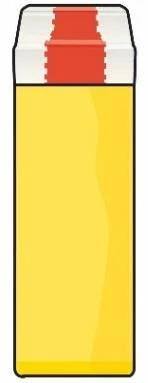
- Open the cap and remove the
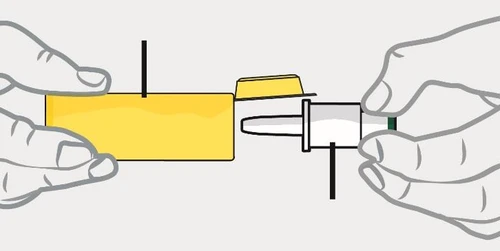
Cylindrical container single-dose container from the
cylindrical container.
Caution: Do not
press the plunger
before inserting the
Single-dose container device into the nose.
Otherwise, the single
dose in the single-dose
container will be lost.
ADMINISTERING THE DOSE
- Hold the single-dose container between your
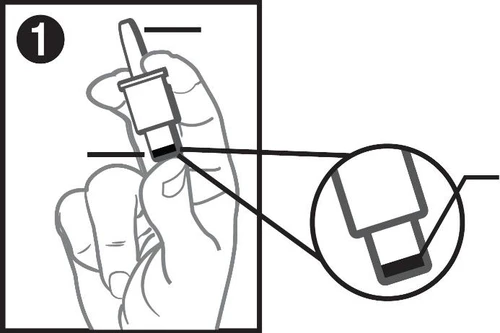
End (B) fingers. Do not press the plunger (A) or
test the single-dose container.
Plunger (A)
Green line
- Gently insert end (B) into one nostril
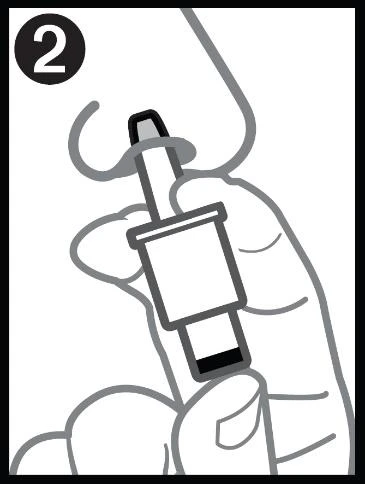
until your finger touches the outside of the nose.
- Press the plunger (A) fully down with your
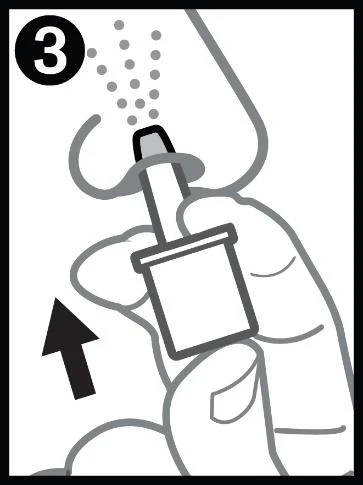
thumb.
- The dose administration is complete when the green line on the plunger is no longer visible.
AFTER ADMINISTERING THE DOSE
- If the patient with low blood sugar is unconscious, place them on their side after administering Baqsimi.
- Remove the device tip from the nose.
- Call for emergency medical help immediately.
- Encourage the patient with low blood sugar to eat or drink a high-sugar snack as soon as possible, such as sweets or fruit juice.
- Dispose of the used single-dose container and the used cylindrical container.
STORAGE AND HANDLING
- Do not remove the plastic film or open the cylindrical container until ready to administer the medicine.
- Store the single-dose container in the closed cylindrical container with the plastic film intact at a temperature not exceeding 30 °C.
- Replace Baqsimi before the expiry date printed on the cylindrical container or the outer carton.
Expiry date
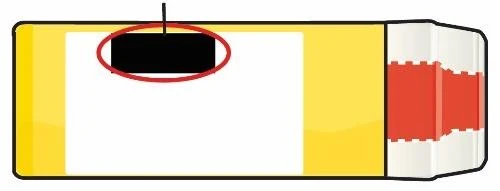
ADDITIONAL INFORMATION
- Caution: Replace used Baqsimi immediately so that a new pack of Baqsimi is available in case of need.
- Keep Baqsimi out of the sight and reach of children.
FOR QUESTIONS OR FURTHER INFORMATION ABOUT BAQSIMI
- Ask your doctor, pharmacist, or nurse.