Bactrim for infusion
Italy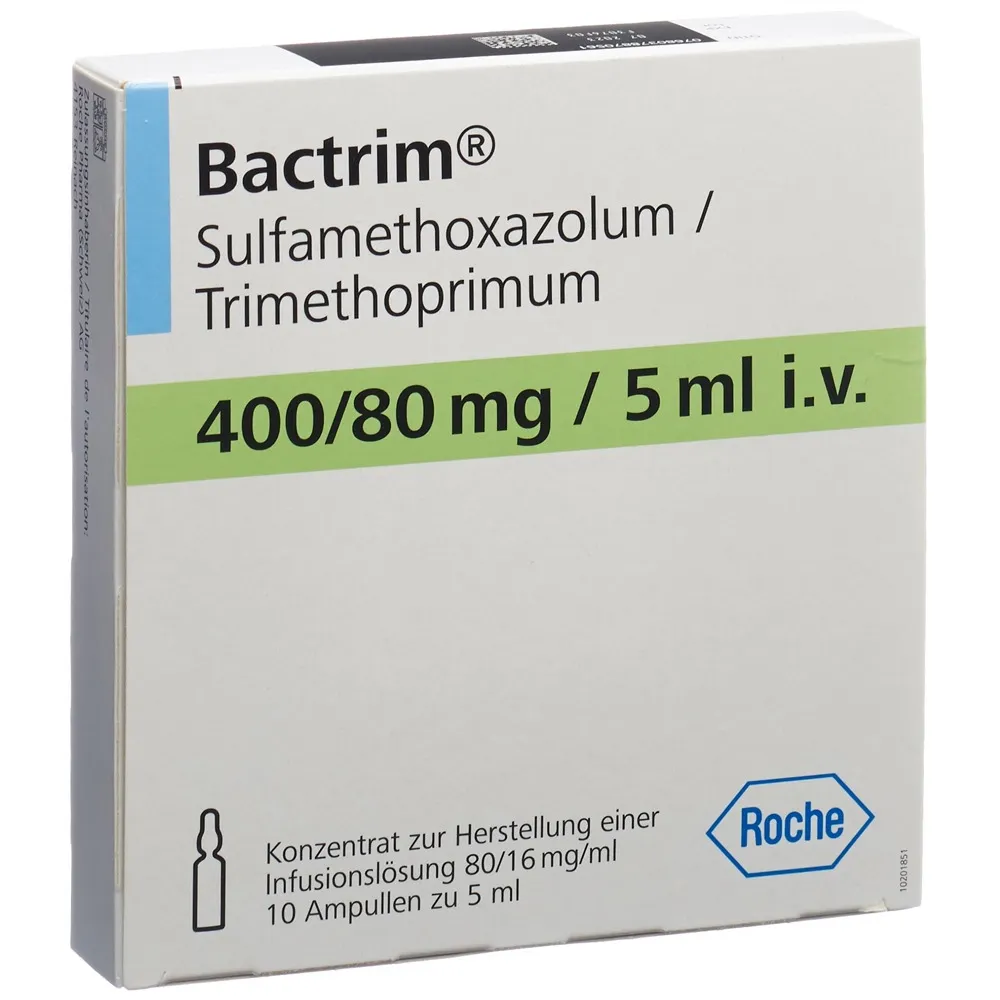
Table of Contents
- Package leaflet: Information for the patient
- Bactrim perfusion 400 mg/5 mL + 80 mg/5 mL concentrate for solution for infusion
- 1. What Bactrim infusion is and what it is used for
- 2. What you need to know before using Bactrim infusion
- 3. How to use Bactrim infusion
- 4. Possible side effects
- 5. How to store Bactrim infusion
- 6. Package contents and other information
Package leaflet: Information for the patient
Bactrim perfusion 400 mg/5 mL + 80 mg/5 mL concentrate for solution for infusion
Sulfamethoxazole + Trimethoprim
Please read all of this leaflet carefully before you start using this medicine because it contains important information for you.
- Keep this leaflet. You may need to read it again.
- If you have any questions, ask your doctor or pharmacist.
- This medicine has been prescribed for you only. Do not pass it on to other people, even if they have the same symptoms as yours, as it may be harmful.
- If you experience any side effects, including those not listed in this leaflet, tell your doctor or pharmacist. See section 4.
Contents of this leaflet:
- What Bactrim perfusion is and what it is used for
- What you need to know before using Bactrim perfusion
- How to use Bactrim perfusion
- Possible side effects
- How to store Bactrim perfusion
- Contents of the pack and other information
1. What Bactrim infusion is and what it is used for
Bactrim infusion is a medicine that belongs to the group of antibiotics and contains the combination of two active substances: sulfamethoxazole and trimethoprim.
Sulfamethoxazole causes the death of bacteria responsible for the infection; trimethoprim enhances the medicine's activity against bacteria.
Bactrim infusion is indicated in adults and in children older than 6 weeks of age for the treatment of:
- a type of lung infection called Pneumocystis jirovecii pneumonia,
- bacterial infections caused by bacteria sensitive to this antibiotic in patients who have disorders of the body's immune system.
2. What you need to know before using Bactrim infusion
Do not use Bactrim infusion
- If you are allergic to sulfamethoxazole, trimethoprim and/or sulfonamide antibiotics, or to any of the other ingredients of this medicine (listed in section 6).
- If you suffer from severe kidney disease (severe renal failure with creatinine clearance < 15 mL/min).
- If you have severe liver damage.
- If you have blood cell disorders (hematologic dyscrasias).
- If the child is less than six weeks old.
- If you have a deficiency of an enzyme called glucose-6-phosphate dehydrogenase.
- If you are taking a medicine called dofetilide (see section “Other medicines and Bactrim infusion”).
Warnings and precautions
Talk to your doctor or pharmacist before using Bactrim infusion:
- If you are elderly.
- If you suffer from kidney disease. In this case, your doctor will determine the most appropriate dose for you (see section 3).
- If you suffer from liver disease.
- If you have vitamin deficiencies (folate deficiency).
- If you currently suffer or have previously suffered from severe allergies or bronchial asthma.
- If cough and shortness of breath worsen.
- If you suffer from blood disorders. Your doctor will carefully evaluate whether to prescribe this medicine.
- If you suffer from a blood disorder called porphyria or your thyroid (a gland in the neck) is not functioning properly.
- If you have a metabolic disorder (referred to as “slow acetylator”) that makes you or the child more susceptible to adverse effects due to prolonged presence of the medicine in the body.
- If you are pregnant or breastfeeding (see section “Pregnancy and breastfeeding”).
- If you are taking methotrexate, a medicine used to treat cancer (see section “Other medicines and Bactrim infusion”).
- If you are taking clozapine, a medicine used to treat mental disorders. Your doctor may prescribe a different antibiotic because this medicine can cause blood-related side effects (severe reduction in a type of white blood cells).
- If you suffer from fluid retention (edema) due to heart strain.
- If you are taking a medicine called paclitaxel (see section “Other medicines and Bactrim infusion”).
- If you are taking a medicine called amiodarone (see section “Other medicines and Bactrim infusion”).
During treatment with Bactrim infusion, especially if prolonged, your doctor will perform periodic checks of liver and kidney function and blood and urine tests for you or the child.
If you develop cough or difficulty breathing during treatment, or if these symptoms worsen, inform your doctor, who will assess whether to discontinue therapy with Bactrim infusion.
Your doctor will perform blood tests (potassium and kidney function) if you or the child have pneumonia, a potassium or kidney metabolism disorder, or if you are taking medicines that increase potassium levels in the blood (see section “Other medicines and Bactrim infusion”).
Your doctor will closely monitor you or the child if you also have kidney disease (e.g., creatinine clearance between 15 and 30 mL/min), or if you experience nausea, vomiting, or elevated blood potassium levels.
Stop treatment and consult your doctor immediately if you develop skin rashes or eruptions, often with blisters or mucosal lesions (see also section “Possible side effects”). These could be signs of severe, potentially life-threatening drug reactions such as Stevens-Johnson syndrome (SJS), toxic epidermal necrolysis (TEN), DRESS (drug rash with eosinophilia and systemic symptoms), or acute generalized exanthematous pustulosis (AGEP).
Hemophagocytic lymphohistiocytosis
Very rarely, excessive immune reactions due to uncontrolled activation of white blood cells causing inflammation (hemophagocytic lymphohistiocytosis) have been reported, which can be life-threatening if not diagnosed and treated early. If you experience more than one symptom such as fever, swollen lymph nodes, weakness, dizziness, shortness of breath, bruising, or skin rash occurring simultaneously or in close succession, contact your doctor immediately.
Children
Use of this medicine is contraindicated in children under 2 months of age.
Other medicines and Bactrim infusion
Inform your doctor or pharmacist if you are taking, have recently taken, or might take any other medicines.
In particular, inform your doctor if you are taking any of the following medicines, as your doctor may need to monitor you or adjust the dose of Bactrim infusion:
- dofetilide, a medicine used to treat irregular heartbeat. Do not use Bactrim infusion if you are taking dofetilide (see section “Do not use Bactrim infusion”);
- amantadine, a medicine used to treat Parkinson’s disease, or memantine, a medicine used to treat Alzheimer’s disease;
- lamivudine, a medicine used to treat hepatitis B virus (see section “Warnings and precautions”);
- tacrolimus, a medicine used to prevent organ transplant rejection (see section “Warnings and precautions”);
- paclitaxel, a medicine used to treat cancer;
- amiodarone, a medicine used to treat irregular heartbeat;
- dapsone, a medicine used to treat leprosy;
- medicines for diabetes including repaglinide, rosiglitazone or pioglitazone, and sulfonylurea derivatives (such as glibenclamide, glipizide, gliclazide, chlorpropamide, and tolbutamide);
- coumarins (warfarin, acenocoumarol, phenprocoumon), medicines used to make blood less likely to clot;
- phenytoin, a medicine used to treat uncontrolled body movements (seizures);
- digoxin, a medicine used to treat heart disorders;
- clozapine, a medicine used to treat mental disorders;
- diuretics (especially thiazides), medicines used to treat high blood pressure;
- methotrexate, a medicine used to treat cancer;
- pyrimethamine, a medicine used to prevent malaria;
- zidovudine, a medicine used to treat AIDS (belonging to a class of medicines called “nucleoside analogues”);
- azathioprine, a medicine used to treat immune system disorders, or mercaptopurine, a medicine used to treat blood cancers;
- medicines that increase potassium levels in the blood, such as angiotensin-converting enzyme inhibitors and angiotensin receptor blockers, potassium-sparing agents, and prednisolone, used to treat high blood pressure;
- cyclosporine, a medicine used to prevent rejection after kidney transplantation;
- indomethacin, a medicine used to treat pain and inflammation.
Laboratory tests
If you are scheduled for blood or urine tests, inform your doctor or nurse that you are taking Bactrim infusion, as this may affect the results of certain tests (such as tests measuring methotrexate or creatinine levels).
Pregnancy and breastfeeding
If you are pregnant, suspect you may be pregnant, planning a pregnancy, or breastfeeding, consult your doctor or pharmacist before taking this medicine.
Pregnancy
Your doctor will prescribe Bactrim infusion during pregnancy only if the benefit outweighs the potential risk to the baby, especially during the first trimester. If you are pregnant or planning a pregnancy and are being treated with Bactrim infusion, your doctor will advise you to also take a daily dose of 5 mg of folic acid. During the final stage of pregnancy, your doctor will not prescribe Bactrim infusion due to possible complications for the newborn (bilirubin deposition in the brain and potential neurological damage).
Breastfeeding
Both trimethoprim and sulfamethoxazole pass into breast milk. Your doctor will evaluate the potential risks for the infant (possible bilirubin deposition in the brain, allergic reaction) against the expected therapeutic benefit for you.
Driving and using machines
No studies have been conducted on the effect of Bactrim infusion on the ability to drive or operate machinery. However, during treatment with Bactrim infusion, dizziness, seizures, and hallucinations may occur (see section 4). Keep this in mind before driving or operating machinery.
Bactrim infusion contains sodium
This medicine contains approximately 34 mg of sodium (the main component of table salt) per vial. This corresponds to 1.7% of the maximum recommended daily dietary intake for an adult.
Talk to your doctor or pharmacist if you require Bactrim infusion or more than 11 vials per day for a prolonged period, especially if you have been advised to follow a low-sodium diet.
Bactrim infusion contains ethanol
This medicine contains 500 mg of alcohol (ethanol) per vial. The amount in 5 mL of this medicine is equivalent to less than 13 mL of beer or 5 mL of wine.
It may be harmful for alcoholics.
The amount of alcohol in this medicine does not appear to have an effect on adults and adolescents, and its effects in children are not clear. Some effects may occur in young children, for example, drowsiness. The alcohol in this medicine may alter the effects of other medicines. Talk to your doctor or pharmacist if you are taking other medicines.
If you are pregnant or breastfeeding, talk to your doctor or pharmacist before taking this medicine.
If you have alcohol dependence, talk to your doctor before taking this medicine.
Bactrim infusion contains propylene glycol
This medicine contains 2050 mg of propylene glycol per vial, equivalent to 0.41 g/mL.
If you are pregnant or breastfeeding, do not take this medicine unless otherwise recommended by your doctor. Your doctor may perform additional monitoring during treatment.
Propylene glycol in this medicine may produce effects similar to those of alcohol and may increase the likelihood of side effects.
Do not use this medicine in children under 5 years of age. Use this medicine only if recommended by your doctor. Your doctor may perform additional monitoring during treatment.
If you suffer from liver or kidney disease, do not take this medicine unless otherwise recommended by your doctor. Your doctor may perform additional monitoring during treatment.
3. How to use Bactrim infusion
This medicine will always be administered exactly as instructed by your doctor. If you have
any doubts, consult your doctor or healthcare professional.
Your doctor will determine the dose based on the type of infection, your body weight and your
health status.
Bactrim infusion must always be diluted in another suitable liquid before administration. The vials must never be injected undiluted, either intravenously or directly into the infusion line.
Use in children over 6 weeks of age and adolescents
The doctor will determine the dose and duration of treatment according to the type of infection, body weight and health status of the child/adolescent.
If you are given more Bactrim infusion than you should
Since administration is carried out by trained medical personnel, it is unlikely that you will receive more Bactrim infusion than required.
However, if this should happen, the doctor will establish an appropriate therapy to treat symptoms of overdose.
4. Possible side effects
Like all medicines, this medicine can cause side effects, although not everybody will get them.
Serious side effects
Call emergency services immediately if you experience multiple symptoms such as fever, very low blood pressure, or increased heart rate after taking this medicine, as these may be signs of collapse.
If you experience any of the following side effects during treatment with Bactrim perfusion, STOP TREATMENT and CONTACT YOUR DOCTOR IMMEDIATELY, who will decide whether to discontinue treatment and prescribe an alternative medicine:
- Allergic reactions, more frequently reported during the first weeks of treatment, which may include:
- potentially life-threatening skin reactions that initially appear as round red spots or circular patches, often on the central part of the trunk, and may be accompanied by blisters; these reactions can progress to widespread blistering, skin peeling, and death of skin cells (Stevens-Johnson syndrome, toxic epidermal necrolysis, drug rash with eosinophilia and systemic symptoms); changes in skin color and appearance associated with irritation (rash) or rapid swelling of the skin (angioedema) or itching (urticaria); mouth, throat, nose, genital ulcers, and conjunctivitis (red, swollen eyes). These skin reactions are often accompanied by flu-like symptoms (e.g. fever).
- Blood disorders: abnormalities in blood cells (haematological disorders), reduced number of blood cells (reduced blood cell count);
- Respiratory symptoms: cough or breathing difficulties due to pulmonary infiltrates.
Below is a list of possible side effects, categorized by frequency:
Common (may affect up to 1 in 10 people)
- nausea
- vomiting
- elevated levels of liver enzymes (transaminases)
- elevated levels of substances eliminated by the kidneys (urea, creatinine)
- various skin reactions, for example following drug intake (fixed drug eruption, exfoliative dermatitis) or appearance of red patches on the skin (erythema, maculopapular rash, morbilliform rash), itching, rash
Uncommon (may affect up to 1 in 100 people)
- diarrhoea
- inflammation of the intestine following antibiotic use (pseudomembranous enterocolitis)
- elevated levels of a substance produced by the liver (bilirubin)
- inflammation of the liver (hepatitis)
- fungal infections (e.g. candidiasis)
- uncontrolled body movements (convulsions)
- reduced kidney function (impaired renal function)
- skin redness (urticaria)
Rare (may affect up to 1 in 1,000 people)
- reduced number of white blood cells and platelets in the blood (leucopenia, granulocytopenia, thrombocytopenia)
- low levels of haemoglobin, the oxygen-carrying protein, in the blood (megaloblastic, haemolytic/autoimmune, aplastic anaemia)
- inflammation of the mucous membrane lining the oral cavity (stomatitis)
- inflammation of the tongue (glossitis)
- pain and inflammation of veins (venous pain and phlebitis)
- bile transport disorder (cholestasis)
- low blood sugar levels (hypoglycaemia)
- nerve disease (neuropathy), including inflammation of peripheral nerves (peripheral neuritis) and numbness (paraesthesiae)
- sensation of seeing or hearing things that are not real (hallucinations)
- presence of crystals in the urine (crystalluria)
Very rare (may affect up to 1 in 10,000 people)
- reduced number of blood cells (agranulocytosis, pancytopenia)
- accumulation of an abnormal amount of haemoglobin in the blood (methaemoglobinaemia)
- increased number of a type of white blood cells (eosinophilia associated with DRESS)
- reduction in a coagulation factor (hypoprothrombinaemia)
- alteration in folate metabolism
- abdominal pain
- inflammation of the heart muscle (allergic myocarditis)
- inflammation of a membrane of the eye (uveitis)
- inflammation of the meninges, the membranes covering the brain (aseptic meningitis) or similar symptoms
- insomnia
- headache (cephalalgia)
- progressive loss of muscle coordination making movement difficult (ataxia)
- ringing or buzzing in the ears (tinnitus)
- dizziness
- destruction of liver cells (hepatic necrosis)
- yellowing of the skin and whites of the eyes (jaundice)
- skin reactions following exposure to light (photosensitivity)
- erythema multiforme, purple skin spots due to abnormal blood accumulation (purpura), including allergic forms (Henoch-Schoenlein purpura)
- breakdown of muscle tissue (rhabdomyolysis)
- kidney inflammation (interstitial nephritis), increased urine production
- severe adverse drug reaction often characterized by skin rash, swollen lymph nodes, fever, and systemic symptoms affecting multiple organs (drug reaction with eosinophilia and systemic symptoms)
- lung abnormalities (pulmonary infiltrates)
- lung inflammation (interstitial pneumonia)
- skin reactions: red spots (erythema multiforme), widespread blistering with skin peeling and death of skin cells (Stevens-Johnson syndrome, toxic epidermal necrolysis)
- increased sensitivity to light (photosensitivity)
- drug-induced skin reactions (drug rash with eosinophilia and systemic symptoms)
- rupture of skin capillaries (purpura)
- blood vessel and skin disease (Henoch-Schoenlein purpura)
- weakness (asthenia)
- allergic/hypersensitivity reactions, which may present as fever, rapid swelling of the skin (angioedema), skin rash with increased white blood cells and systemic symptoms (serum sickness), severe allergic reaction with systemic symptoms (anaphylactoid reaction), angioneurotic oedema
- depression
Not known (frequency cannot be estimated from the available data)
- inflammation of blood vessels in the eye (retinal vasculitis)
- acute inflammation of the pancreas (acute pancreatitis)
- reduction or damage to bile ducts (vanishing bile duct syndrome)
- high potassium levels in the blood (hyperkalaemia)
- low sodium levels in the blood (hyponatraemia)
- joint pain (arthralgia)
- muscle pain (myalgia)
- inflammation of blood vessels in the brain (cerebral vasculitis)
- inflammation of blood vessels in the lungs (pulmonary vasculitis)
- inflammation of blood vessels (vasculitis), which may lead to tissue death (necrotizing vasculitis, polyarteritis nodosa) or may present with symptoms affecting the ear, nose, and throat (granulomatosis with polyangiitis)
- spontaneous abortion
- appearance of painful, raised, purplish lesions on the limbs and sometimes on the face and neck, associated with fever (Sweet’s syndrome)
- kidney stones (urolithiasis)
HIV-positive patients (human immunodeficiency virus)
If you are HIV-positive, you may experience side effects similar to those in the general population. However, some side effects may occur more frequently and with a different clinical presentation.
The following are the differences:
Very common (may affect more than 1 in 10 people)
- reduced number of white blood cells and platelets in the blood (leucopenia, granulocytopenia, thrombocytopenia)
- high potassium levels in the blood (hyperkalaemia)
- loss of appetite (anorexia)
- nausea
- vomiting
- diarrhoea
- appearance of red skin patches (maculopapular rash)
- itching
- fever, usually accompanied by skin rashes
- elevated levels of liver enzymes (transaminases)
Uncommon (may affect up to 1 in 100 people)
- low sodium levels in the blood (hyponatraemia)
- low blood sugar levels (hypoglycaemia)
Reporting of side effects
If you experience any side effect, including those not listed in this leaflet, consult your doctor. You can also report side effects directly via the national reporting system at https://www.aifa.gov.it/content/segnalazioni-reazioni-avverse.
By reporting side effects, you can help provide more information on the safety of this medicine.
5. How to store Bactrim infusion
This medicinal product does not require any special storage conditions.
Keep this medicine out of the sight and reach of children.
Do not use this medicinal product after the expiry date stated on the packaging after Exp. The
expiry date refers to the last day of that month.
Do not dispose of any medicinal product down the drain or with household waste. Ask your pharmacist how
to dispose of medicines you no longer use. This will help protect the environment.
6. Package contents and other information
What Bactrim perfusion contains
One 5 mL vial of concentrate for infusion solution contains:
- The active substances are sulfamethoxazole 400 mg and trimethoprim 80 mg.
- The other components are ethanolamine, ethanol, propylene glycol, sodium hydroxide (see section 2, "Bactrim perfusion contains"), water for injections.
Description of the appearance of Bactrim perfusion and contents of the pack
Bactrim perfusion is a concentrate for infusion solution contained in a 5 mL glass vial.
The vials, placed in a special holder, are packaged in a cardboard carton.
Available pack: 5 vials.
Not all pack sizes may be marketed.
Marketing Authorization Holder
Eumedica Pharmaceuticals GmbH
Basler Straße 126
79540 Lörrach
Germany
Manufacturer
Eumedica Pharmaceuticals GmbH
Basler Straße 126
79540 Lörrach
Germany
The following information is intended exclusively for physicians or healthcare professionals:
Dosage, method and duration of administration
Parenteral administration of Bactrim perfusion is indicated when oral administration is not possible, particularly in pre- and post-operative infections caused by susceptible organisms.
Important: Bactrim perfusion must be administered intravenously only after dilution with one of the following infusion solutions:
- Glucose 5%
- Glucose 10%
- Ringer's solution
- Isotonic sodium chloride solution 0.9%
- Sodium chloride 0.45% + 2.5% glucose
The following minimum dilution schedule must be observed, using 1 mL of Bactrim perfusion solution per 25–30 mL of infusion fluid:
- 1 vial of Bactrim perfusion (= 5 mL) per 125 mL of infusion fluid.
- 2 vials of Bactrim perfusion (= 10 mL) per 250 mL of infusion fluid.
- 3–4 vials of Bactrim perfusion (= 15–20 mL) per 500 mL of infusion fluid.
The mixture must be prepared immediately before use. After adding Bactrim perfusion to the infusion fluid, ensure thorough mixing by shaking vigorously.
If the solution becomes cloudy or crystals form before or during infusion, administration must be stopped (or not started), and the solution must be replaced with a freshly prepared mixture.
The solution containing Bactrim perfusion must be administered within 6 hours of preparation.
To achieve effective plasma drug concentrations, the infusion duration—determined based on the volume of fluid to be infused—must not exceed one and a half hours.
Vials must never be injected undiluted, either intravenously or directly into the infusion line.

(The symbol will be included if OPC vials are used)
Dosage
As a general rule, Bactrim perfusion should only be administered for the period during which oral treatment is not feasible.
The standard dosage should not be administered for more than 5 consecutive days, and the high dosage for more than 3 consecutive days.
Adults and adolescents aged 12 years and older
20 mg/kg/day of trimethoprim + 100 mg/kg/day of sulfamethoxazole, administered by intravenous infusion, divided into 4 daily doses, corresponding to 3–4 vials every 6 hours. The total duration of a complete treatment course (including the oral therapy phase) is 2 weeks.
In cases of tolerability issues, to complete an effective treatment course even in cases requiring therapy beyond the normally indicated 2 weeks (a frequent occurrence in patients with AIDS), dosage adjustments may be made by reducing doses to 50–80 mg/kg/day of sulfamethoxazole and 10–15 mg/kg/day of trimethoprim (while maintaining serum levels never below 4 µg/mL for trimethoprim and 80 µg/mL for sulfamethoxazole), and possibly dividing the total daily dose into 3 administrations.
Standard dosage in children up to 12 years of age
The average dosage is approximately 2 mL per 5 kg of body weight per day, divided into two equal doses in the morning and evening.
The pediatric dosage corresponds to approximately 6 mg trimethoprim + 30 mg sulfamethoxazole per kg of body weight per day.
Pneumocystis jirovecii pneumonia
The recommended dosage for patients with Pneumocystis jirovecii pneumonia is up to 20 mg of trimethoprim per kg and up to 100 mg of sulfamethoxazole per kg per 24 hours, administered in equal divided doses every 6 hours for 14 days.
Nocardiosis
There is no consensus on the optimal dosage for nocardiosis. In adults, a daily dose of 480–640 mg of trimethoprim and 2400–3200 mg of sulfamethoxazole has been used for at least 3 months. This dosage requires adjustment based on factors such as age, weight, renal function, and immune status of the patient, as well as the site and severity of the disease. A treatment duration of up to 18 months has been reported.
Special populations
Patients with renal impairment
Creatinine clearance | Recommended dosage
--- | ---
Greater than 30 mL/min | Standard dosage
15–30 mL/min | Half the standard dosage
Less than 15 mL/min | Use of Bactrim perfusion is contraindicated
Dialysis patients
In patients undergoing hemodialysis, after a normal loading dose, a dose equal to half the standard dose should be administered after each hemodialysis session.
Peritoneal dialysis results in minimal clearance of trimethoprim and sulfamethoxazole; therefore, the use of trimethoprim-sulfamethoxazole is not recommended in patients undergoing peritoneal dialysis.
Elderly patients
Elderly patients with normal renal function should receive the same dosage as adult patients, unless otherwise specified.
Overdose
Symptoms
Symptoms of acute overdose may include nausea, vomiting, diarrhea, headache, dizziness, vertigo, and mental and visual disturbances. In particularly severe cases, crystalluria, hematuria, oliguria, or anuria may occur. In cases of chronic overdose, bone marrow suppression may occur, leading to thrombocytopenia or leucopenia and other hematological abnormalities due to folate deficiency.
Treatment
In case of intoxication, depending on symptoms, the following measures should be considered:
- Gastric lavage, emesis (in case of recent ingestion of an oral formulation) to prevent further drug absorption;
- Adequate fluid intake to enhance renal elimination (urine alkalinization increases sulfamethoxazole excretion);
- Hemodialysis (peritoneal dialysis is ineffective);
- Monitoring of blood counts and electrolytes; specific therapeutic measures should be taken in case of significant hematological abnormalities or jaundice.
Administration of 6–12 mg of calcium folinate may counteract the effects of trimethoprim on hematopoiesis.