Baby Rinolo C.M.
ItalyTable of Contents
- Package leaflet: Information for the patient
- BABY RINOLO C.M. 2.4 g/100 ml + 0.015 g/100 ml syrup
- 1. What BABY RINOLO C.M. is and what it is used for
- 2. What you should know before using BABY RINOLO C.M.
- 3. How to use BABY RINOLO C.M.
- 4. Possible side effects
- 5. How to store BABY RINOLO C.M.
- 6. Package contents and other information
Package leaflet: Information for the patient
BABY RINOLO C.M. 2.4 g/100 ml + 0.015 g/100 ml syrup
Paracetamol, Chlorpheniramine maleate
Please read this leaflet carefully before using this medicine because it contains
important information for you.
Keep this leaflet. You may need to read it again.
If you have any questions, consult your doctor or pharmacist.
This medicine has been prescribed for you only. Do not give it to others, even if their
symptoms are the same as yours, because it could be harmful.
If you experience any adverse reactions, including those not listed in this leaflet,
consult your doctor or pharmacist. See section 4.
Contents of this leaflet:
- What BABY RINOLO C.M. is and what it is used for
- What you need to know before using BABY RINOLO C.M.
- How to use BABY RINOLO C.M.
- Possible side effects
- How to store BABY RINOLO C.M.
- Contents of the pack and other information
1. What BABY RINOLO C.M. is and what it is used for
BABY RINOLO C.M. is a medicine containing two active substances: paracetamol, which is an analgesic and antipyretic (reduces fever), and chlorphenamine maleate, which is an antihistamine.
BABY RINOLO C.M. is used in combination with other medicines (as an adjunctive treatment) in the following cases:
- fever associated with nasal or throat problems (upper respiratory tract conditions);
- inflammation of the nasal sinuses (acute and subacute sinusitis).
2. What you should know before using BABY RINOLO C.M.
Do not use BABY RINOLO C.M. if:
- you are allergic to paracetamol and chlorpheniramine or to any of the other ingredients of this medicine (listed in section 6);
- your child is under three years of age;
- you have experienced symptoms due to a condition known as favism or "fava bean disease," which causes a reduction in red blood cells (glucose-6-phosphate dehydrogenase deficiency);
- you suffer from haemolytic anaemia, a disease that destroys red blood cells;
- you have severe liver problems (hepato-biliary insufficiency);
- you have severe heart problems;
- you have obstruction of the stomach or intestine (pyloro-duodenal obstruction);
- you suffer from bronchial asthma.
Warnings and precautions
Talk to your doctor before using BABY RINOLO C.M. if:
- you have overactive thyroid (hyperthyroidism);
- you have diabetes;
- you have heart problems;
- you have kidney problems (renal insufficiency);
- you pass little urine (urinary retention);
- you have liver problems (hepatic insufficiency);
- you suffer from epilepsy;
- you have been following a poor diet for a long time (malnutrition);
- you drink alcohol chronically or excessively (3 or more alcoholic drinks per day);
- you have a serious infection (sepsis);
- in case of glucose-6-phosphate dehydrogenase (G6PD) deficiency (which may lead to haemolytic anaemia).
During treatment with paracetamol, before taking any other medicine, check that it does not contain the same active ingredient, as serious adverse effects may occur if paracetamol is taken in high doses.
During treatment with BABY RINOLO C.M., inform your doctor immediately if you suffer from serious conditions, including severe kidney impairment or sepsis (when bacteria and their toxins circulate in the blood causing organ damage), malnutrition, chronic alcoholism, or if you are also taking flucloxacillin (an antibiotic). In patients with these conditions, a serious condition called metabolic acidosis (an abnormality in blood and body fluids) has been reported when paracetamol is used regularly for prolonged periods or when paracetamol is taken together with flucloxacillin. Symptoms of metabolic acidosis may include: severe breathing difficulties with deep rapid breathing, drowsiness, nausea, and vomiting.
During treatment with paracetamol, your doctor will monitor your respiratory function.
Other medicines and BABY RINOLO C.M.
Tell your doctor or pharmacist if you are taking, have recently taken, or might take any other medicines.
Do not use BABY RINOLO C.M. with other medicines containing paracetamol or those that reduce fever and pain.
This is particularly important if you are taking:
- Antidepressants (medicines used for depression) such as tricyclics and monoamine oxidase inhibitors (MAOIs);
- sedatives such as barbiturates;
- neuroleptics (medicines used for psychosis);
- anti-inflammatory medicines such as indomethacin (used to treat rheumatic diseases);
- antivirals (medicines used to treat diseases caused by viruses) such as zidovudine;
- anxiolytics (medicines used for anxiety);
- hypnotics and sedatives (medicines that induce sleep);
- opioids and NSAIDs (medicines used for pain relief);
- colestyramine (used to lower blood cholesterol);
- metoclopramide (used to treat nausea and vomiting);
- anticoagulants (medicines that delay blood clotting) such as warfarin or other coumarins;
- antiepileptics (medicines used to treat epilepsy) such as glutethimide, phenobarbital, carbamazepine;
- rifampicin and isoniazid (antibiotics used to treat tuberculosis (lung disease));
- cimetidine, a medicine used to treat peptic ulcer (a stomach lesion);
- probenecid (a medicine used for gout);
- flucloxacillin (an antibiotic), due to a serious risk of blood and fluid disturbances (called high anion gap metabolic acidosis) that requires urgent treatment (see section 2).
Pregnancy, breastfeeding and fertility
If you are pregnant, think you may be pregnant, planning to become pregnant, or breastfeeding, consult your doctor or pharmacist before taking this medicine.
If necessary, BABY RINOLO C.M. may be used during pregnancy. It is advisable to use the lowest possible dose that relieves pain and/or fever, and to take it for the shortest possible time.
Contact your doctor if pain and/or fever do not improve or if you need to take the medicine more frequently.
Driving and using machines
BABY RINOLO C.M. may moderately affect the ability to drive vehicles and use machinery.
BABY RINOLO C.M. contains:
- Sucrose. If your doctor has diagnosed you with an intolerance to certain sugars, contact him/her before taking this medicine;
- Sorbitol. May cause gastrointestinal disturbances and has a mild laxative effect;
- Sodium metabisulphite. Rarely may cause severe hypersensitivity reactions and bronchospasm;
- Methyl-parahydroxybenzoate and propyl-parahydroxybenzoate. May cause allergic reactions (including delayed reactions);
- Ethanol. This medicine contains 175 mg of ethanol per 2.5 ml dose, equivalent to approximately 29 mg/kg in a 6 kg child. The amount of ethanol present in 2.5 ml of BABY RINOLO C.M. is equivalent to less than 5 ml of beer or 2 ml of wine. The amount of alcohol in this medicine does not appear to have an effect in adults and adolescents, and its effects in children are not evident. Some effects may occur in young children, for example drowsiness. The alcohol in this medicine may alter the effects of other medicines. Talk to your doctor or pharmacist if you are taking other medicines. If you are pregnant or breastfeeding, talk to your doctor or pharmacist before taking this medicine.
- If you are alcohol-dependent, talk to your doctor before taking this medicine.
- Sodium. This medicine contains less than 1 mmol (23 mg) of sodium per dose, i.e., essentially 'sodium-free';
- Propylene glycol. If the child is under 5 years of age, talk to your doctor or pharmacist before administering this medicine, especially if the child is taking other medicines containing propylene glycol or alcohol.
3. How to use BABY RINOLO C.M.
Use this medicine exactly as directed by your doctor. If you have any doubts, consult your doctor or pharmacist.
Children over 3 years of age and weighing more than 6 kg
The recommended dose is calculated based on the child's weight:
- from 6 to 10 kg: 2.5 ml every 4 hours;
- from 10 to 20 kg: 5 ml every 6 hours;
- over 20 kg: 5 ml every 4 hours.
Do not administer to children under three years of age.
Do not administer for longer than five days.
Method of administration
BABY RINOLO C.M. is for oral use (by mouth). To avoid stomach upset, take this medicine after meals.
To take the correct dose:
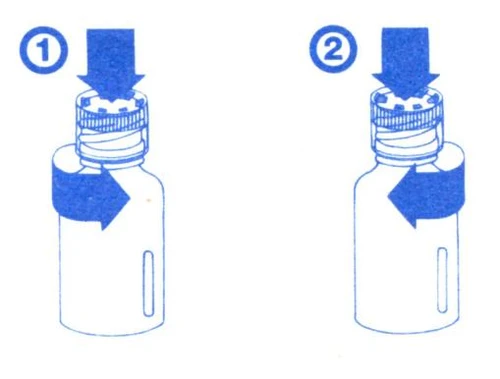
- Open the bottle by pressing and turning the cap at the same time (Fig. 1).
- Use the dosing cup with graduated markings at 2.5 ml, 5 ml and 7.5 ml or the dosing syringe with graduated markings at 2.5 ml and 5 ml provided in the package to measure the correct dose.
- After taking the dose, close the bottle by pressing down firmly and screwing the cap back on (Fig. 2), and thoroughly wash the dosing cup or dosing syringe with water.
If you use more BABY RINOLO C.M. than you should, you may experience: nausea, vomiting, abdominal pain, deep sleep (lethargy), sweating, severe liver, kidney or blood damage, heart disturbances, and inflammation of the pancreas (pancreatitis). Overdose may also lead to coagulation disorders (clotting and bleeding).
If you use more BABY RINOLO C.M. than you should, immediately inform your doctor or go to the nearest hospital, as appropriate measures may be necessary.
If you forget to use BABY RINOLO C.M.
Do not take a double dose to make up for the forgotten dose.
If you stop using BABY RINOLO C.M.
If you have any questions about the use of this medicine, consult your doctor or pharmacist.
4. Possible side effects
Like all medicines, this medicine can cause side effects, although not everybody gets them.
Stop taking BABY RINOLO C.M. and contact your doctor immediately
if you experience any of the following conditions:
- severe allergic reactions (hypersensitivity), including swelling of the throat (laryngeal edema), face, eyes, lips, mouth, tongue or throat, which may cause breathing difficulties (angioedema), or sudden drop in blood pressure (anaphylactic shock);
- severe skin reactions, manifesting as redness, blistering or pus formation, and skin peeling (e.g., erythema multiforme, acute generalized exanthematous pustulosis, Stevens-Johnson syndrome, and toxic epidermal necrolysis).
Inform your doctor if you experience any of the following side effects:
Rare side effects (may affect up to 1 in 1,000 people)
- sudden appearance of skin lesions, such as discolored spots or widespread discoloration (skin reactions), redness (maculopapular rash, erythema), hives (urticaria), itching (pruritus);
- dry mouth, stomach or intestinal disturbances (gastrointestinal reactions), such as vomiting, difficulty passing stools (constipation), nausea;
- dizziness, headache (cephalalgia), sedation, drowsiness, confusion, convulsions, agitation, anxiety, nervousness, irritability, insomnia, psychotic disorder;
- abnormal facial movements (dyskinesia);
- dry nose, reduced bronchial secretions, thicker bronchial secretions;
- reduced red blood cells (anemia), reduced number of white blood cells (leucopenia), reduced platelet count (thrombocytopenia), reduced granulocyte count (agranulocytosis);
- difficulty breathing or chest tightness;
- double vision (diplopia), difficulty focusing images (accommodation disorders);
- liver function abnormalities, inflammation of the liver (hepatitis);
- increased blood pressure (hypertension), increased heart rate (tachycardia), sensation of pounding heartbeat (palpitations);
- presence of blood in urine (haematuria), inability to pass urine (anuria, urinary retention), or difficulty urinating (dysuria), kidney inflammation (interstitial nephritis), or impaired kidney function (acute renal failure).
Very rare side effects (may affect less than 1 in 10,000 people): - Severe skin reactions.
Side effects with frequency not known (cannot be estimated from the available data): - severe condition that may make the blood more acidic (called metabolic acidosis), in patients with serious illness taking paracetamol (see section 2).
Reporting of side effects
If you experience any side effect, including those not listed in this leaflet, please inform your doctor or pharmacist. You may also report side effects directly via the national reporting system at:
“http://www.aifa.gov.it/content/segnalazioni-reazioni-avverse”.
By reporting side effects, you can help provide more information on the safety of this medicine.
5. How to store BABY RINOLO C.M.
Keep this medicine out of the sight and reach of children.
After first opening the bottle, use the medicine within 6 months.
Do not use this medicine after the expiry date stated on the packaging. The expiry date refers to the last day of that month.
Do not dispose of medicines via wastewater or household waste. Ask your pharmacist how to dispose of medicines you no longer use. This will help protect the environment.
6. Package contents and other information
What BABY RINOLO C.M. contains
The active substances are: paracetamol and chlorpheniramine maleate.
100 ml of syrup contain: 2.4 g of paracetamol and 0.015 g of chlorpheniramine maleate.
The other components are: sucrose, saccharin, sodium metabisulfite, liquid sorbitol, methyl
p-hydroxybenzoate, propyl p-hydroxybenzoate, monobasic sodium phosphate monohydrate, dibasic sodium
phosphate dodecahydrate, erythrosine (E 127), propylene glycol, ethanol, orange flavour,
diethanolamine, purified water.
Description of the appearance of BABY RINOLO C.M. and package contents
BABY RINOLO C.M. is a syrup available in a 120 ml bottle, supplied with a measuring cup with
graduations at 2.5 ml, 5 ml and 7.5 ml, and an oral dosing syringe with graduations at 2.5 ml and 5 ml.
Marketing Authorization Holder
Bruno Farmaceutici S.p.A.
Via delle Ande, 15
00144 Rome, Italy
Manufacturer
VAMFARMA S.R.L.
Via Kennedy, 5
26833 Comazzo (LO), Italy