Azitrox
Italy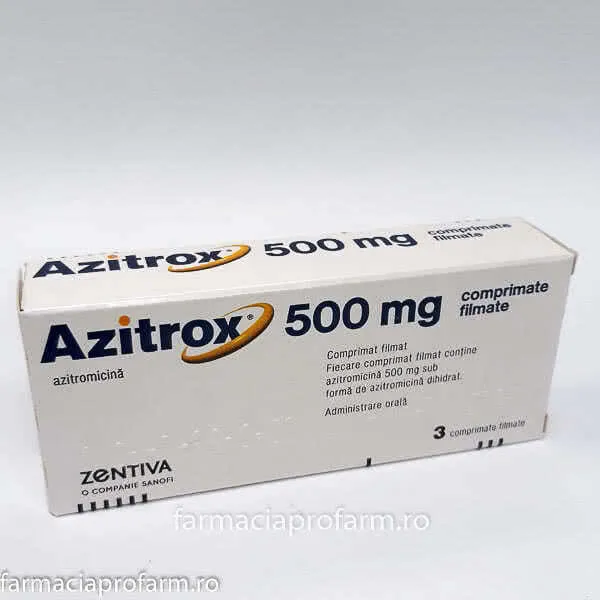
Table of Contents
Package leaflet: Information for the patient
AZITROX 500 mg film-coated tablets
azithromycin dihydrate
Equivalent medicine
Please read all of this leaflet carefully before taking this medicine, as it contains
important information for you.
- Keep this leaflet. You may need to read it again.
- If you have any questions, ask your doctor or pharmacist.
- This medicine has been prescribed for you only. Do not give it to others, even if their symptoms are the same as yours, as it may be harmful.
- If you experience any side effect, including those not listed in this leaflet, tell your doctor or pharmacist. See section 4.
Contents of this leaflet:
- What AZITROX is and what it is used for
- What you need to know before taking AZITROX
- How to take AZITROX
- Possible side effects
- How to store AZITROX
- Contents of the pack and other information
1. What AZITROX is and what it is used for
AZITROX contains the active substance azithromycin, which belongs to a group of antibiotics called "macrolides". Azithromycin inhibits the growth of susceptible bacteria.
AZITROX is used to treat infections caused by germs sensitive to azithromycin.
These infections include:
- upper respiratory tract infections, including sinus inflammation (sinusitis), tonsil inflammation (tonsillitis), and throat inflammation (pharyngitis);
- lower respiratory tract infections (including bronchitis and pneumonia);
- ear infections (acute otitis media);
- mouth and oesophagus infections (odontostomatological infections);
- skin and soft tissue infections;
- non-gonococcal urethritis (caused by the bacterium Chlamydia trachomatis);
- chancroid (caused by the bacterium Haemophilus ducreyi).
Official guidelines on the appropriate use of antibacterial agents should be taken into consideration.
Consult your doctor if you do not feel better or if you feel worse.
2. What you should know before taking AZITROX
Do not take AZITROX
- if you are allergic to azithromycin, erythromycin, or any of the other ingredients of this medicine (listed in section 6).
- if you are allergic to antibiotics known as macrolides or ketolides.
Warnings and precautions
Talk to your doctor or pharmacist before taking AZITROX:
- if you have or have ever had liver problems, or if you are taking or have recently taken other medicines that may cause liver problems (see section “Other medicines and AZITROX”). In these cases, caution is required before starting treatment with Azitrox;
- if you are being treated with ergotamine or its derivatives (see section “Other medicines and Azitrox”);
- if you have kidney problems (renal insufficiency);
- if you suffer from heart rhythm disorders. Azitrox may also cause mild disturbances in heart rhythm, which in some cases may be fatal (see section 4 “Possible side effects”).
Therefore, this medicine should be used with caution:
- in patients with congenital heart rhythm disorders, very slow heart rate (bradycardia), heart rhythm disorders (arrhythmias), or severe heart problems (severe heart failure);
- in patients being treated with other medicines that may affect heart rhythm, such as quinidine, procainamide, dofetilide, amiodarone, sotalol (medicines for heart rhythm disorders), cisapride (medicine for gastroesophageal reflux), terfenadine (antihistamine), pimozide (medicine for mental disorders), citalopram (antidepressant), moxifloxacin, levofloxacin, chloroquine (antibiotics);
- in patients with low levels of potassium and magnesium in the blood;
- in elderly patients and women.
Stop taking AZITROX and go immediately to the doctor if you notice any of the following
serious side effects while taking this medicine:
- severe allergic reactions, including severe skin reactions that may also affect other organs and cause fever. In case of an allergic reaction, stop treatment with Azitrox immediately and consult your doctor;
- symptoms of liver problems such as sudden onset of weakness, yellowing of the skin or mucous membranes (jaundice), dark-colored urine, easy bleeding, or brain-related symptoms (e.g., mental confusion, altered level of consciousness, or coma). Stop treatment with Azitrox immediately and consult your doctor, who will perform medical tests to assess your liver function;
- symptoms of new infections or persistence of symptoms from the current infection. This situation could be caused by bacteria not sensitive to Azitrox (resistant bacteria) or by microorganisms other than bacteria (fungal infection);
- onset of diarrhea, which may be mild but in some cases can be fatal (fatal colitis). Diarrhea may occur with the use of almost all antibiotics, including Azitrox, and is due to disruption of the normal intestinal bacterial flora, allowing excessive growth of a bacterium called Clostridium difficile. If diarrhea occurs, your doctor will monitor you closely, as Clostridium difficile infection may occur up to two months after the end of treatment with this medicine;
- onset or worsening of muscle weakness and easy fatigability, i.e., symptoms of myasthenia gravis.
Other medicines and AZITROX
Inform your doctor or pharmacist if you are taking, have recently taken, or might take any other medicine.
Inform your doctor or pharmacist if you are taking any of the following medicines, as caution is required:
- antacids (medicines for stomach acidity). If you are being treated with both antacids and Azitrox, do not take these two medicines at the same time;
- digoxin (used to treat heart failure). If taken together with Azitrox, the digoxin dose must be carefully monitored;
- colchicine (used for gout and familial Mediterranean fever);
- zidovudine (medicine for HIV virus infections);
- ergotamine (medicine for migraine). Concomitant use with Azitrox is not recommended, as it may cause disturbances in blood circulation, especially in the fingers of hands and feet (ergotism crisis);
- statins (medicines to lower blood fat levels). Concomitant use with Azitrox may cause breakdown of muscle cells (rhabdomyolysis);
- cyclosporine (medicine to prevent organ transplant rejection). If taken together with Azitrox, the cyclosporine dose must be carefully monitored;
- oral anticoagulants of the coumarin type (e.g., warfarin). Concomitant use with Azitrox may increase the anticoagulant effect of these medicines;
- cisapride, used to treat stomach problems, must not be taken together with AZITROX as this may cause serious heart problems (detected by electrocardiogram or ECG);
- rifabutin, used to treat tuberculosis (TB);
- quinidine, used to treat heart rhythm problems;
- hydroxychloroquine (cardiac arrhythmia may occur).
Azitrox must not be taken together with other medicines that may affect heart rhythm (see section “Warnings and precautions”).
Also, inform your doctor or pharmacist if you are taking any of the following medicines, as AZITROX may enhance the effects of these medicines, and your doctor may need to adjust the dose:
- triazolam, midazolam, sedatives;
- alfentanil, a painkiller used, for example, during surgery;
- theophylline, used for respiratory problems such as asthma and chronic obstructive pulmonary disease (COPD);
- digoxin, used to treat heart failure;
- colchicine (used for gout and familial Mediterranean fever);
- astemizole, used to treat hay fever;
- pimozide, used to treat mental disorders.
AZITROX with food and drinks
Azitrox can be taken with or without food. It is preferable to take this medicine with food.
Pregnancy and breastfeeding
If you are pregnant, suspect you may be pregnant, planning to become pregnant, or breastfeeding, consult your doctor or pharmacist before taking this medicine.
Pregnancy
Your doctor will decide whether you can take this medicine during pregnancy, after ensuring that the benefits outweigh the potential risks.
Breastfeeding
Azitrox passes into breast milk. Therefore, if you are breastfeeding, your doctor will prescribe this medicine only if strictly necessary.
Driving and using machines
It is not known whether this medicine affects the ability to drive or use machinery.
AZITROX contains lactose
If your doctor has diagnosed you with an intolerance to certain sugars, contact him before taking this medicine.
AZITROX contains sodium
This medicine contains less than 1 mmol (23 mg) of sodium per dose, i.e., essentially 'sodium-free'.
3. How to take AZITROX
Take this medicine exactly as instructed by your doctor. If you have any doubts, consult your doctor or pharmacist.
Method of administration
- Swallow the tablets whole with a glass of water.
- Do not crush or chew the tablets.
- The tablet may be divided into two equal halves to facilitate swallowing.
Dosage
Adults and adolescents with body weight equal to or greater than 45 kg
The usual total dose is 1500 mg, taken over 3 days: one 500 mg tablet daily.
The dosage differs for the treatment of sexually transmitted diseases caused by susceptible strains of Chlamydia trachomatis or Haemophilus ducreyi: your doctor may instruct you to take a single 1000 mg dose.
Children and adolescents below 45 kg body weight
The tablets are not recommended. If you are a young person weighing less than 45 kg, you should use other formulations of this medicine, such as azithromycin suspension.
Special patient groups
If you are elderly or have mild to moderate liver or kidney problems, your doctor may prescribe the same dosages indicated above.
If you take more AZITROX than you should
If you take an excessive dose of this medicine, the possible side effects will be the same as those you might experience after taking a correct dose. If you have taken more than the prescribed amount, inform your doctor immediately.
If you have any doubts about how to use this medicine, consult your doctor or pharmacist.
If you forget to take AZITROX
If you forget a dose, take it as soon as you remember.
However, if it is almost time for your next dose, skip the missed dose.
Continue your treatment according to the dosage prescribed by your doctor. This means your course of therapy will end one day later than originally planned.
Do not take a double dose to make up for the missed dose.
If you stop taking AZITROX
Do not stop treatment with azithromycin without discussing it with your doctor.
If you have any doubts about how to use this medicine, consult your doctor or pharmacist.
4. Possible side effects
Like all medicines, this medicine can cause side effects, although not everyone will experience them.
Stop taking AZITROX immediately and go to the doctor straight away if you notice any of the following serious side effects, as you may need urgent medical treatment:
- severe allergic reaction (anaphylactic shock)
- swelling of the face, tongue or throat, causing difficulty breathing or swallowing (angioedema), increased sensitivity of the skin and mucous membranes
- severe inflammation of the last part of the intestine called the colon, caused by excessive growth of a bacterium called Clostridium difficile (pseudomembranous colitis)
- severe skin reactions:
- severe skin rash associated with an increase in a type of white blood cells called eosinophils, symptoms affecting one or more organs and fever (DRESS) (rare frequency)
- red, scaly skin rash with formation of pustules and blisters (exanthematous pustulosis) (rare frequency)
- severe acute hypersensitivity reactions involving the skin and mucous membranes (Stevens-Johnson syndrome, toxic epidermal necrolysis, erythema multiforme) (frequency not known)
- severe liver problems (severe hepatic failure), which may sometimes lead to death
- sudden and massive death of liver cells (fulminant hepatitis)
- toxic liver reaction with cell death
- anaemia due to destruction of red blood cells
- sudden loss of consciousness (syncope)
- inflammation of the pancreas (pancreatitis)
Other side effects, possibly or probably related to azithromycin based on clinical trial experience and post-marketing surveillance, include:
Very common (may affect more than 1 in 10 people):
- diarrhoea
Common (may affect up to 1 in 10 people):
- headache
- vomiting
- abdominal pain
- nausea
- decrease in the amount of bicarbonate in the blood
- decrease in the number of a type of white blood cells called lymphocytes
- increase in the number of a type of white blood cells called eosinophils
- increase in the number of a type of white blood cells called basophils
- increase in the number of a type of white blood cells called monocytes
- increase in the number of a type of white blood cells called neutrophils
Uncommon (may affect up to 1 in 100 people):
- vaginal and/or oral infection caused by Candida (a fungus)
- infection caused by microorganisms called "fungi"
- infection caused by microorganisms called "bacteria"
- respiratory disorders
- pneumonia
- pharyngitis
- gastroenteritis
- rhinitis
- decrease in the number of white blood cells in the blood (leucopenia)
- decrease in the number of a type of white blood cells called neutrophils (neutropenia)
- decrease in the number of a type of white blood cells called eosinophils (eosinophilia)
- angioedema
- hypersensitivity
- decreased or absent appetite
- nervousness
- insomnia
- dizziness
- somnolence
- altered sensation in various parts of the body
- distortion or decreased ability to taste
- visual disturbances
- ear disorders
- vertigo
- heightened perception of heartbeat
- hot flushes
- difficulty breathing (dyspnoea)
- nosebleeds (epistaxis)
- constipation
- gas production in the intestine
- stomach disorders
- gastritis
- difficulty or pain when swallowing
- abdominal swelling
- dry mouth
- belching
- mouth ulcers
- increased saliva production
- skin rashes
- itching
- urticaria
- dermatitis
- dry skin
- excessive sweating
- arthralgia
- muscle pain
- back pain
- neck pain
- pain when urinating
- kidney pain
- abnormal, heavy and prolonged vaginal bleeding
- testicular disorders
- swelling
- weakness
- malaise
- fatigue
- facial swelling
- chest pain
- fever
- pain
- swelling of the legs and feet
- abnormal laboratory tests assessing liver function
- increased amount of bilirubin in the blood (a substance produced by the liver)
- increased amount of urea in the blood (a substance produced by the liver)
- increased amount of creatinine in the blood (a substance produced by the muscles)
- changes in the amount of potassium and sodium in the blood (mineral salts)
- increased amount of alkaline phosphatase in the blood (a substance produced in various body tissues)
- increased amount of chloride in the blood (a mineral salt)
- increased amount of glucose (a sugar) in the blood
- increased number of platelets in the blood
- decreased number of red blood cells in the blood
- increased amount of bicarbonate in the blood
- complications following medical or surgical procedures
Rare (may affect up to 1 in 1,000 people):
- restlessness
- altered liver function
- yellowish discoloration of the skin and mucous membranes (jaundice)
- increased sensitivity of the skin to sunlight (photosensitivity)
- skin allergic reactions, particularly sensitivity to sunlight
- drug rash with eosinophilia and systemic symptoms (DRESS)
- red, scaly skin rash with formation of pustules and blisters (exanthematous pustulosis)
Frequency not known (frequency cannot be estimated from the available data):
- Pseudomembranous colitis
- prolonged bleeding, reduced number of red blood cells due to destruction (haemolytic anaemia)
- decreased number of platelets in the blood
- anaphylactic reaction
- feeling of anger, aggression and anxiety
- delirium and hallucinations
- fainting (syncope)
- involuntary and uncontrolled muscle movements (convulsions)
- reduced sense of touch (hypoesthesia)
- psychomotor hyperactivity
- alteration of the sense of smell (anosmia, parosmia)
- alteration of the sense of taste (ageusia)
- worsening of muscle weakness (myasthenia gravis)
- hearing disorders
- deafness
- ringing in the ears
- increased heart rate caused by a specific heart rhythm abnormality (arrhythmia) called "torsades de pointes"
- disturbances in the normal heart rhythm called arrhythmias (e.g. ventricular tachycardia, QT interval prolongation), which can be detected by an examination called "electrocardiogram"
- decrease in blood pressure (hypotension)
- inflammation of the pancreas (pancreatitis)
- change in tongue colour
- liver problems, even severe and life-threatening
- skin allergic reactions of varying nature and severity (Stevens-Johnson syndrome, toxic epidermal necrolysis, erythema multiforme)
- joint pain (arthralgia)
- severe kidney problems (acute renal failure, interstitial nephritis)
Side effects related to the treatment of Mycobacterium Avium Complex inflammation
Very common (affects more than 1 in 10 users):
- diarrhoea
- abdominal pain
- feeling unwell (nausea)
- gas in the stomach (flatulence)
- soft stools
Common (affects 1 to 10 in 100 users):
- anorexia
- sensation of dizziness
- headache
- tingling or numbness sensation (paraesthesia)
- disturbances in taste sensation (dysgeusia)
- visual impairment
- deafness
- skin rash and itching
- joint pain (arthralgia)
- fatigue
Uncommon (affects 1 to 10 in 1,000 users):
- reduced sense of touch (hypoesthesia)
- worsening or loss of hearing or ringing in the ears
- palpitations
- liver problems
- skin allergic reactions of varying nature and severity (Stevens-Johnson syndrome, photosensitivity)
- weakness (asthenia)
- malaise
Reporting of side effects
If you experience any side effect, including those not listed in this leaflet, talk to your doctor, pharmacist or nurse. You can also report side effects directly via the national reporting system at www.aifa.gov.it/content/segnalazioni-reazioni-avverse.
By reporting side effects, you can help provide more information on the safety of this medicine.
5. How to store AZITROX
Keep this medicine out of the sight and reach of children.
Do not use this medicine after the expiry date stated on the carton after "Exp". The expiry date refers to the last day of that month.
This medicine does not require any special storage conditions.
Do not dispose of medicines via wastewater or household waste. Ask your pharmacist how to dispose of medicines you no longer use. This will help protect the environment.
6. Package contents and other information
What AZITROX contains
- The active substance is azithromycin, as azithromycin dihydrate. AZITROX 500 mg film-coated tablets contain 500 mg of azithromycin.
- The other components are: Tablet core: anhydrous calcium hydrogen phosphate, hypromellose (E464), sodium croscarmellose, magnesium stearate (E470b), pregelatinized corn starch, sodium lauryl sulfate.
Film coating:
hypromellose (E464), lactose monohydrate, titanium dioxide (E171), triacetin.
Description of the appearance of AZITROX and pack contents
AZITROX 500 mg film-coated tablets are white to almost white, capsule-shaped, film-coated tablets with a score line on one side and smooth on the other side.
The tablet may be divided into two equal parts to facilitate swallowing.
Film-coated tablets are available in blister packs containing 3 tablets.
Marketing Authorization Holder and Manufacturer
Marketing Authorization Holder
KONPHARMA S.r.l.
Via Pietro della Valle, 1
00193 Rome
Italy
Manufacturer
Lachifarma srl, Laboratorio Chimico Farmaceutico Salentino
SS16, 73010
Zona Industriale Zollino (LE)
Italy