Azithromycin Aurobindo
Italy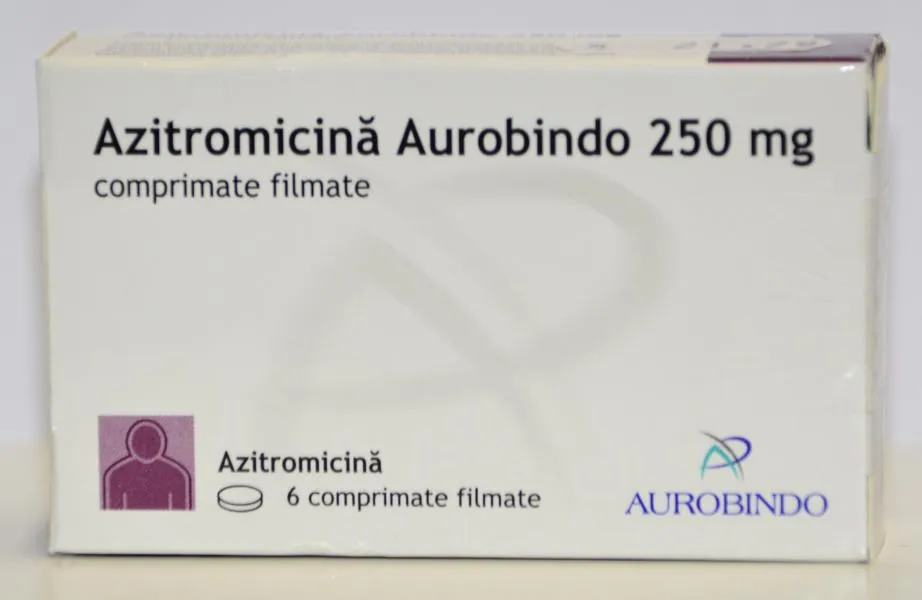
Table of Contents
- Package leaflet: Information for the patient
- Azithromycin Aurobindo 500 mg film-coated tablets
- 1. What Azitromicina Aurobindo is and what it is used for
- 2. What you need to know before taking Azithromycin Aurobindo
- 3. How to take Azithromycin Aurobindo
- 4. Possible side effects
- 5. How to store Azithromycin Aurobindo
- 6. Package contents and other information
Package leaflet: Information for the patient
Azithromycin Aurobindo 500 mg film-coated tablets
Generic medicine
Please read all of this leaflet carefully before taking this medicine because it contains
important information for you.
- Keep this leaflet. You may need to read it again.
- If you have any questions, ask your doctor or pharmacist.
- This medicine has been prescribed for you only. Do not give it to other people, even if their symptoms are the same as yours, because it may be harmful.
- If you experience any adverse reaction, including those not listed in this leaflet, contact your doctor or pharmacist. See section 4.
Contents of this leaflet:
- What Azithromycin Aurobindo is and what it is used for
- What you need to know before taking Azithromycin Aurobindo
- How to take Azithromycin Aurobindo
- Possible side effects
- How to store Azithromycin Aurobindo
- Contents of the pack and other information
1. What Azitromicina Aurobindo is and what it is used for
Azitromicina Aurobindo is an antibiotic belonging to the macrolide class. Antibiotics are used to treat infections caused by microorganisms such as bacteria.
Azitromicina Aurobindo is used to treat certain bacterial infections caused by bacteria sensitive to it, such as:
- chest, throat, and nasal infections (such as bronchitis, pneumonia, tonsillitis, sore throat (pharyngitis), and sinusitis);
- ear infections;
- skin and soft tissue infections, except infected burn wounds;
- infection of the urinary tract (urethra) or cervix caused by a bacterium called Chlamydia trachomatis.
2. What you need to know before taking Azithromycin Aurobindo
Do not take Azithromycin Aurobindo
- if you are allergic to azithromycin dihydrate, erythromycin, or any macrolide or ketolide antibiotic;
- if you are allergic to any of the other ingredients of this medicine (listed in section 6).
Warnings and precautions
Talk to your doctor or pharmacist before taking Azithromycin Aurobindo:
- if you have ever had a severe allergic reaction with swelling of the face and throat, possible breathing difficulties, rash, fever, swollen glands, or increased eosinophils (a specific type of white blood cells);
- if you develop severe and persistent diarrhoea during or after treatment;
- if you have severe liver or kidney problems;
- if you have severe heart problems or heart rhythm disorders such as prolonged QT interval syndrome (detected on electrocardiogram or ECG);
- if your blood levels of potassium or magnesium are too low;
- if you develop signs of a new infection;
- if you are taking any ergot derivatives such as ergotamine (used to treat migraine), as these medicines must not be taken together with Azithromycin Aurobindo (see section “Other medicines and Azithromycin Aurobindo”);
- if you suffer from a certain type of muscle weakness called myasthenia gravis;
- if you have neurological or psychiatric conditions.
Other medicines and Azithromycin Aurobindo
Tell your doctor or pharmacist if you are taking, have recently taken, or might take any of the following medicines:
- antacids, used for heartburn and indigestion. Azithromycin Aurobindo should be taken at least 1 hour before or 2 hours after antacids;
- ergotamine and dihydroergotamine, used for migraine, must not be taken at the same time as they may cause serious side effects (ergotism, i.e. itching of limbs, muscle cramps, and gangrene of hands and feet due to poor blood circulation);
- cholesterol-lowering medicines (statins);
- warfarin or similar medicines, used to thin the blood. Concomitant use may increase the risk of bleeding;
- cisapride (used to treat stomach problems) or terfenadine (used to treat hay fever), must not be taken together as they may cause serious heart problems (shown on electrocardiogram or ECG);
- zidovudine or nelfinavir, used to treat HIV infections. Taking nelfinavir with Azithromycin Aurobindo may lead to more side effects than those listed in this leaflet;
- rifabutin, used to treat tuberculosis (TB);
- quinidine, used to treat heart rhythm disorders;
- cyclosporine, used to suppress the immune system to prevent and treat organ or bone marrow transplant rejection. Your doctor will regularly monitor cyclosporine blood levels and may adjust the dose.
Inform your doctor or pharmacist if you are taking any of the following medicines. Azithromycin Aurobindo may enhance the effects of these medicines. Your doctor may adjust their dose:
- alfentanil, a painkiller used e.g. during surgery;
- theophylline, used for respiratory problems such as asthma and chronic obstructive pulmonary disease (COPD);
- digoxin, used to treat heart problems;
- colchicine, used for gout and familial Mediterranean fever;
- astemizole, used to treat hay fever;
- pimozide, used to treat mental health disorders.
Azithromycin Aurobindo with food and drink
This medicine can be taken with or without food.
Pregnancy, breastfeeding and fertility
If you are pregnant, think you may be pregnant, planning to become pregnant, or are breastfeeding, consult your doctor or pharmacist before taking this medicine.
Information on the use of Azithromycin Aurobindo during pregnancy is insufficient.
Therefore, you must not use Azithromycin Aurobindo during pregnancy unless specifically advised by your doctor.
Azithromycin Aurobindo passes partially into breast milk.
It is not known whether azithromycin may have adverse effects on the breastfed infant.
Therefore, breastfeeding should be discontinued during treatment with Azithromycin Aurobindo. It is recommended to discard breast milk during treatment and for up to 2 days after stopping the treatment. Breastfeeding may then be resumed.
Driving and using machines
There are no data available on the influence of Azithromycin Aurobindo on the ability to drive vehicles or operate machinery. However, Azithromycin Aurobindo may cause dizziness and convulsions; therefore, ensure that you are not affected in such ways before driving or operating machinery.
Azithromycin Aurobindo contains lactose monohydrate
If your doctor has told you that you have an intolerance to certain sugars, consult your doctor before taking this medicine.
Sodium
Azithromycin Aurobindo contains less than 1 mmol (23 mg) of sodium per tablet, i.e. it is essentially “sodium-free”.
3. How to take Azithromycin Aurobindo
Take this medicine exactly as directed by your doctor or pharmacist.
If you have any doubts, consult your doctor or pharmacist.
The recommended dose is:
For adults and children with body weight equal to or greater than 45 kg
Azithromycin Aurobindo is taken for a 3-day or 5-day treatment:
- 3-day treatment: 500 mg once daily.
- 5-day treatment:
- Take 500 mg on day 1.
- Take 250 mg on days 2, 3, 4 and 5.
For cervical and urethral infections caused by Chlamydia trachomatis
A single 1000 mg dose, taken once only.
Children and adolescents with body weight below 45 kg
The tablets are not recommended. Children with body weight below 45 kg should use other formulations of this medicine.
Patients with kidney or liver problems
You must inform your doctor if you have kidney or liver problems, as the doctor may need to adjust the usual dose.
Dosage for elderly patients
For elderly patients, the same dosage as for adults applies.
The tablet may be divided into equal parts.
Method of administration
The tablets should be swallowed with half a glass of water.
The tablets may be taken with or without food.
If you take more Azithromycin Aurobindo than you should
If you have taken too much Azithromycin Aurobindo, contact your doctor, pharmacist or go immediately to the nearest hospital.
Symptoms of overdose include hearing loss, nausea, vomiting and diarrhoea. Hospitalisation may be necessary in case of overdose.
If you forget to take Azithromycin Aurobindo
If you forget to take Azithromycin Aurobindo, take it as soon as possible. If it is almost time for the next dose, skip the missed dose and take the next dose at the scheduled time. If you have any doubts, contact your doctor or pharmacist. If you have missed a dose, continue taking all tablets as prescribed. This means you will complete your course one day later.
Do not take a double dose to make up for a forgotten dose.
If you stop taking Azithromycin Aurobindo
Do not decide to stop treatment with Azithromycin Aurobindo on your own, but discuss it first with your doctor. If the prescribed treatment is not fully completed, the infection may return.
If you have any questions about the use of this medicine, consult your doctor or pharmacist.
4. Possible side effects
Like all medicines, this medicine can cause side effects, although not everybody gets them.
If you experience any of the following symptoms of a severe allergic reaction, stop taking this medicine immediately and contact your doctor or go to the nearest hospital emergency department straight away.
The frequency of these reactions is not known (frequency cannot be estimated from the available data):
- Sudden difficulty breathing, speaking or swallowing.
- Swelling of the lips, tongue, face and neck.
- Extreme dizziness or collapse.
- Severe rash or itching, particularly if accompanied by blisters and pain in the eyes, mouth or genitals.
- Severe skin reactions:
- skin blisters, affecting the mouth, eyes and genitals (Stevens-Johnson syndrome);
- skin blistering, severe skin reaction (toxic epidermal necrolysis);
- skin rash accompanied by other symptoms such as fever, swollen glands and increased eosinophils (a type of white blood cells). The rash appears as small itchy red spots (drug reaction with eosinophilia and systemic symptoms, DRESS).
If you experience any of the following side effects, contact your doctor as soon as possible:
Rare (may affect up to 1 in 1,000 people):
- Increased or reduced urine production, or blood in the urine.
- Skin rash characterised by the rapid appearance of red areas covered with small pustules (small blisters filled with white/yellow fluid).
Not known (frequency cannot be estimated from the available data):
- Severe diarrhoea, lasting a long time and containing blood, with stomach pain or fever. These may be signs of a serious intestinal inflammation. This may rarely occur after taking antibiotics.
- Yellowing of the skin or whites of the eyes (jaundice) due to liver problems.
- Inflammation of the pancreas (pancreatitis), causing severe abdominal and back pain.
- Increased or decreased urine production, or blood in the urine.
- Skin rash caused by sensitivity to sunlight.
- Unusual bruising or bleeding.
- Irregular heartbeat.
These are all serious side effects. You may need urgent medical attention.
Other side effects include:
Very common (may affect more than 1 in 10 people)
- Diarrhoea
- Abdominal pain
- Feeling unwell (nausea)
- Flatulence
Common (may affect up to 1 in 10 people)
- Loss of appetite (anorexia)
- Headache
- Dizziness
- Tingling or numbness sensation (paraesthesia)
- Altered taste
- Visual disturbances
- Deafness
- Feeling sick (vomiting), stomach ache or cramps, loss of appetite, indigestion
- Skin rashes and itching
- Joint pain (arthralgia)
- Fatigue
- Changes in white blood cell count and blood bicarbonate concentration
Uncommon (may affect up to 1 in 100 people)
- Oral thrush (candidiasis), a fungal infection
- Bacterial infection
- Inflammation of the throat (pharyngitis)
- Shortness of breath, chest pain, breathlessness and cough (respiratory disorders)
- Inflammation of the mucous lining inside the nose (rhinitis)
- Stomach flu (gastroenteritis)
- Inflammation inside the vagina (vaginitis)
- Pneumonia
- Decreased white blood cell count
- Angioedema
- Hypersensitivity
- Nervousness
- Reduced sense of touch (hypoesthesia)
- Drowsiness
- Difficulty sleeping (insomnia)
- Ear disorders
- Dizziness
- Spinning sensation (vertigo)
- Palpitations
- Hot flushes
- Shortness of breath
- Nosebleeds
- Inflammation of the stomach lining (gastritis)
- Constipation
- Difficulty swallowing
- Bloating
- Dry mouth
- Belching
- Severe skin redness
- Liver problems, such as hepatitis
- Skin allergic reactions such as sensitivity to sunlight, red, peeling and swollen skin
- Skin rash
- Itching
- Skin inflammation (dermatitis)
- Dry skin
- Increased sweating
- Pain, swelling and reduced mobility in joints (osteoarthritis)
- Muscle pain
- Back pain
- Neck pain
- Increased blood urea levels
- Painful urination
- Pain in the upper back (renal pain)
- Bleeding
- Testicular disorders
- Hives (urticaria)
- Chest pain
- Facial swelling
- Fever
- Pain
- Swelling of extremities (peripheral oedema)
- Swelling (oedema)
- General feeling of malaise
- Weakness (asthenia)
- Changes in liver enzyme and blood test levels
- Post-procedural complications
- Skin more sensitive to sunlight than normal
- Abnormal laboratory test results (e.g. blood or liver tests)
Rare (may affect up to 1 in 1,000 people)
- Feeling restless, feeling detached from oneself and one's emotions
- Abnormal liver function
- Skin allergic reactions
- Skin rash characterised by the rapid appearance of red areas covered with small pustules (small blisters filled with white/yellow fluid)
- Swelling of the hands, feet, lips, genitals or throat (angioneurotic oedema)
- Kidney problems
Not known (frequency cannot be estimated from the available data)
- Colon infection (pseudomembranous colitis)
- Reduced number of red blood cells due to destruction (haemolytic anaemia); reduced number of platelets (thrombocytopenia)
- Anaphylactic reaction
- Feeling of anger, aggression
- Anxiety
- Confusion
- Hallucinations
- Fainting (syncope)
- Seizures
- Reduced sense of touch (hypoesthesia)
- Feeling hyperactive
- Altered sense of smell (anosmia, parosmia)
- Altered sense of taste (ageusia)
- Worsening or exacerbation of muscle weakness (myasthenia gravis)
- Blurred vision
- Hearing problems including hearing loss or ringing in the ears
- Rapid heartbeat (ventricular tachycardia) or irregular heartbeat, sometimes life-threatening, changes in heart rhythm seen on electrocardiogram (prolonged QT interval and torsades de pointes)
- Low blood pressure
- Inflammation of the pancreas (pancreatitis)
- Change in tongue colour
- Liver failure
- Severe skin allergic reactions
- Inflammation inside the kidneys
The following side effects have been reported during prophylactic treatment against Mycobacterium Avium complex (MAC):
Very common (may affect more than 1 in 10 people)
- Diarrhoea
- Abdominal pain
- Feeling unwell (with nausea)
- Gas (flatulence)
- Abdominal discomfort
- Soft stools
Common (may affect up to 1 in 10 people)
- Loss of appetite (anorexia)
- Dizziness
- Headache
- Tingling or numbness sensation (paraesthesia)
- Altered sense of taste
- Visual disturbances
- Deafness
- Feeling unwell (vomiting), stomach ache or cramps, loss of appetite, difficulty digesting food
- Skin rashes and itching
- Joint pain (arthralgia)
- Fatigue
Uncommon (may affect up to 1 in 100 people)
- Reduced sense of touch (hypoesthesia)
- Hearing loss or ringing in the ears
- Palpitations
- Liver problems such as hepatitis
- Severe skin redness
- Skin allergic reactions such as sensitivity to sunlight, red, peeling and swollen skin
- General feeling of malaise
- Weakness (asthenia)
Reporting of side effects
If you experience any side effect, including those not listed in this leaflet, talk to your doctor or pharmacist. You can also report side effects directly via the national reporting system at
https://www.aifa.gov.it/content/segnalazioni-reazioni-avverse. By reporting side effects, you can help provide more information on the safety of this medicine.
5. How to store Azithromycin Aurobindo
Keep this medicine out of the sight and reach of children.
Do not use this medicine after the expiry date stated on the packaging after EXP. The expiry date refers to the last day of that month.
This medicine does not require any special storage conditions.
Do not dispose of any medicine via wastewater or household waste. Ask your pharmacist how to dispose of medicines you no longer use. This will help protect the environment.
6. Package contents and other information
What Azitromicina Aurobindo contains
- The active substance is azithromycin dihydrate. Each film-coated tablet contains 500 mg of azithromycin (as dihydrate).
- Other components are: Tablet core: anhydrous calcium hydrogen phosphate, pregelatinized starch (corn starch), croscarmellose sodium, sodium lauryl sulfate, magnesium stearate. Coating: monohydrate lactose, hypromellose, titanium dioxide (E171), triacetin.
Description of the appearance of Azitromicina Aurobindo and pack contents
Film-coated tablet.
Azitromicina Aurobindo 500 mg film-coated tablets:
White to almost white, film-coated, biconvex tablets, marked on one side with “6” and “7” on either side of the break line and “D” on the other side.
Each tablet measures 17.1 mm x 8.5 mm.
Azitromicina Aurobindo film-coated tablets are available in PVC/Aluminum blister packs containing 3 film-coated tablets.
Not all pack sizes may be marketed.
Marketing Authorization Holder and Manufacturer
Marketing Authorization Holder
Aurobindo Pharma (Italia) S.r.l. – via San Giuseppe, 102 – 21047 Saronno (VA), Italy
Manufacturer
APL Swift Services (Malta) Limited HF26, Hal Far Industrial Estate, Hal Far, Birzebbugia, BBG 3000, Malta
Milpharm Limited Ares Block, Odyssey Business Park, West End Road, Ruislip HA4 6QD – United Kingdom
This medicinal product is authorized in the European Economic Area countries under the following names:
Italy: Azitromicina Aurobindo
Poland: Azypronal
Portugal: Azitromicina Aurobindo
Spain: AZITROMICINA AUROBINDO 500 mg comprimidos recubiertos con película EFG