Azathioprine Aspen
Italy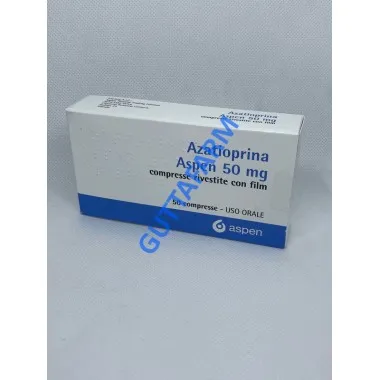
Table of Contents
- Package leaflet: Information for the patient
- AZATIOPRINA ASPEN 50 mg film-coated tablets
- 1. What AZATIOPRINA ASPEN is and what it is used for
- 2. What you should know before taking AZATIOPRINA ASPEN
- 3. How to take AZATIOPRINE ASPEN
- 4. Possible side effects
- 5. How to store AZATIOPRINE ASPEN
- 6. Package contents and other information
- The following information is intended for healthcare professionals only:
Package leaflet: Information for the patient
AZATIOPRINA ASPEN 50 mg film-coated tablets
azathioprine
Please read this leaflet carefully before taking this medicine because it contains important information for you.
- Keep this leaflet. You may need to read it again.
- If you have any questions, ask your doctor, pharmacist or nurse.
- This medicine has been prescribed for you only. Do not give it to other people, even if their symptoms are the same as yours, as it may be harmful.
- If you experience any adverse reaction, including those not listed in this leaflet, contact your doctor, pharmacist or nurse. See section 4.
Contents of this leaflet:
- What AZATIOPRINA ASPEN is and what it is used for
- What you need to know before taking AZATIOPRINA ASPEN
- How to take AZATIOPRINA ASPEN
- Possible side effects
- How to store AZATIOPRINA ASPEN
- Contents of the pack and other information
1. What AZATIOPRINA ASPEN is and what it is used for
AZATIOPRINA ASPEN contains the active substance azathioprine, which belongs to a group of medicines called immunosuppressants. This means that it reduces the strength of the immune system.
AZATIOPRINA ASPEN is used to help the body accept a transplanted organ, such as a new kidney, heart or liver, or to treat certain diseases in which the immune system reacts against the body itself (autoimmune diseases).
Autoimmune diseases may include:
- severe rheumatoid arthritis (a disease in which the immune system attacks the cells lining the joints, causing joint swelling, pain and stiffness);
- systemic lupus erythematosus (a disease in which the immune system attacks many organs and tissues, including skin, joints, kidneys, brain and other organs, causing severe fatigue, fever, joint stiffness and pain);
- dermatomyositis and polymyositis (a group of diseases causing muscle inflammation, muscle weakness and skin rash);
- autoimmune chronic active hepatitis (a disease in which the immune system attacks liver cells, causing liver inflammation, fatigue, muscle aches, yellowing of the skin and fever);
- pemphigus vulgaris (a disease in which the immune system attacks skin cells, causing severe blistering of the skin, mouth, nose, throat and genitals);
- polyarteritis nodosa (a rare disease causing inflammation of blood vessels);
- autoimmune haemolytic anaemia (a serious blood disorder in which the body destroys red blood cells faster than it can produce them, causing symptoms such as weakness and shortness of breath);
- chronic refractory idiopathic thrombocytopenic purpura (a condition in which platelet count is low and may lead to easy or excessive bruising and bleeding).
AZATIOPRINA ASPEN may also be used to treat inflammatory bowel diseases (Crohn's disease and ulcerative colitis).
Your doctor has chosen this medicine because it is suitable for you and your condition.
AZATIOPRINA ASPEN may be used alone, but often in combination with other medicines.
2. What you should know before taking AZATIOPRINA ASPEN
Do not take AZATIOPRINA ASPEN
- If you are allergic to azathioprine or to any of the other ingredients of this medicine (listed in section 6).
- If you are allergic to mercaptopurine (a medicine similar to azathioprine, the active substance contained in AZATIOPRINA ASPEN).
Warnings and precautions
Talk to your doctor or pharmacist before taking AZATIOPRINA ASPEN:
- If you have recently been vaccinated or are about to be vaccinated. You must not receive live vaccines (e.g. influenza vaccine, measles vaccine, BCG vaccine, etc.) while taking AZATIOPRINA ASPEN, unless your doctor tells you it is safe to do so. This is because some vaccines may transmit the infection to you if administered during treatment with AZATIOPRINA ASPEN.
- If you have a genetic condition known as Lesch-Nyhan syndrome. This is a rare inherited disorder occurring in families, caused by the lack of a substance called HPRT (hypoxanthine-guanine phosphoribosyltransferase).
- If you have liver or kidney problems
- If you have a genetic condition called TPMT deficiency (in which your body produces too little of an enzyme called thiopurine methyltransferase)
- If you have or have had chickenpox or herpes zoster
- If you have had hepatitis B (a liver disease caused by a virus)
- If you are scheduled to undergo surgery (because medicines such as tubocurarine or succinylcholine, used as muscle relaxants during surgery, may interact with AZATIOPRINA ASPEN). You must inform the anaesthetist that you are being treated with AZATIOPRINA ASPEN before the procedure.
NUDT15 gene mutation
If you have an inherited mutation of the NUDT15 gene (a gene involved in the metabolism of AZATIOPRINA ASPEN in the body), you have an increased risk of infections and hair loss, and in this case your doctor may prescribe a lower dose.
If you are unsure whether any of these conditions apply to you, consult your doctor, pharmacist, or nurse before taking AZATIOPRINA ASPEN.
Your doctor will regularly take blood samples during treatment with AZATIOPRINA ASPEN to monitor for any changes (see section 3 “ How to take AZATIOPRINA ASPEN”). The frequency of these checks will decrease as treatment continues.
Your doctor may decide to perform genetic testing (to check for variations in the TPMT and/or NUDT15 genes) before or during treatment. This is to determine whether your response to this medicine is influenced by genetic variations.
If you are receiving immunosuppressive therapy, taking AZATIOPRINA ASPEN may increase your risk of:
- Tumours, including skin cancer. Therefore, while taking AZATIOPRINA ASPEN, avoid excessive exposure to sunlight, wear protective clothing, and use sunscreen with a high protection factor;
- Lymphoproliferative disorders. Treatment with AZATIOPRINA ASPEN increases the risk of developing a type of tumour called lymphoproliferative disorder. When combined with regimens containing multiple immunosuppressants (including thiopurines), this may lead to death. The combination of several immunosuppressants taken simultaneously increases the risk of lymphatic system disorders due to viral infections (Epstein-Barr virus [EBV] associated with severe lymphoproliferative disorders);
- Developing a serious condition called macrophage activation syndrome (excessive activation of white blood cells associated with inflammation), which usually occurs in people with certain types of arthritis.
- Severe chickenpox or herpes zoster infection. Therefore, while taking AZATIOPRINA ASPEN, avoid contact with people who have chickenpox or herpes zoster.
- Reactivation of a previous hepatitis B infection.
- Other infections such as PML (progressive multifocal leukoencephalopathy), which is an opportunistic infection. If you experience any signs of infection, contact your doctor (see section 4 “Possible side effects”).
Infections
During treatment with AZATIOPRINA ASPEN, the risk of viral, fungal, and bacterial infections is increased, and infections may be more severe. See section 4.
Before starting treatment, tell your doctor if you have had chickenpox, shingles, or hepatitis B (a liver disease caused by a virus).
Pellagra
Inform your doctor immediately if you experience diarrhoea, pigmented skin rash (dermatitis), memory loss, impaired reasoning, or other cognitive functions (dementia), as these symptoms may indicate vitamin B3 deficiency (nicotinic acid deficiency/pellagra).
Other medicines and AZATIOPRINA ASPEN
Tell your doctor if you are taking, have recently taken, or might take any other medicines.
This is because AZATIOPRINA ASPEN may affect how other medicines work. Also, other medicines may affect how AZATIOPRINA ASPEN works. In particular, inform your doctor if you have taken or plan to take:
- Ribavirin (used to treat viral infections)
- Methotrexate (used mainly to treat cancers)
- Allopurinol, oxipurinol, thiopurinol, or other xanthine oxidase inhibitors such as febuxostat (used mainly to treat gout)
- Penicillamine (used mainly to treat rheumatoid arthritis)
- ACE inhibitors (used mainly to treat high blood pressure - hypertension)
- Anticoagulants such as warfarin or acenocoumarol (used to prevent blood clots)
- Cimetidine (used to treat stomach ulcers and indigestion)
- Indomethacin (used as a painkiller and anti-inflammatory)
- Cytostatic medicines (used to treat various types of cancer)
- Aminosalicylates such as olsalazine, mesalazine, or sulfasalazine (used mainly to treat ulcerative colitis and Crohn's disease)
- Co-trimoxazole (an antibiotic used to treat bacterial infections)
- Infliximab (used mainly to treat ulcerative colitis and Crohn's disease)
- Muscle relaxants such as tubocurarine or succinylcholine (used during surgery), as they may interact with azathioprine. Before any surgical procedure, inform the anaesthetist that you are being treated with AZATIOPRINA ASPEN, as muscle relaxants used during anaesthesia may interact with azathioprine.
If you are unsure whether any of these conditions apply to you, consult your doctor or pharmacist before taking AZATIOPRINA ASPEN.
Vaccinations during treatment with AZATIOPRINA ASPEN
If you are due to be vaccinated, inform your doctor or nurse beforehand.
You must not receive live vaccines (e.g. influenza vaccine, measles vaccine, BCG vaccine, etc.) while taking AZATIOPRINA ASPEN, unless your doctor tells you it is safe to do so. This is because some vaccines may transmit the infection to you if administered during treatment with AZATIOPRINA ASPEN.
AZATIOPRINA ASPEN with food and drinks
AZATIOPRINA ASPEN should be taken at least 1 hour before or 2 hours after consuming milk or dairy products.
Pregnancy, breastfeeding, and fertility
If you are pregnant, think you may be pregnant, are planning to become pregnant, or are breastfeeding, consult your doctor or pharmacist before taking this medicine.
Pregnancy
Reliable contraceptive measures must be used to avoid pregnancy while you or your partner are taking AZATIOPRINA ASPEN.
If you are pregnant, your doctor will carefully consider whether to prescribe this medicine based on the risks and benefits of treatment.
Inform your doctor immediately if you experience intense itching without skin rash during pregnancy. You may also experience nausea and loss of appetite along with itching, which may indicate a condition called intrahepatic cholestasis of pregnancy (a liver condition occurring during pregnancy).
Breastfeeding
Small amounts of AZATIOPRINA ASPEN may pass into breast milk. Women taking AZATIOPRINA ASPEN should avoid breastfeeding unless the benefits outweigh the potential risks to the infant. Consult your doctor before breastfeeding.
Fertility
The effects of AZATIOPRINA ASPEN on fertility are unknown.
Driving and using machines
It is not known whether AZATIOPRINA ASPEN affects the ability to drive or use machines. If you experience any side effects from this medicine, you may not be able to drive or use machinery.
AZATIOPRINA ASPEN contains lactose
If your doctor has diagnosed you with an intolerance to certain sugars, contact him/her before taking this medicine.
3. How to take AZATIOPRINE ASPEN
Take this medicine exactly as directed by your doctor or pharmacist. If you have
any doubts, consult your doctor or pharmacist.
The amount of AZATIOPRINE ASPEN to take may vary from patient to patient and will be prescribed by
your doctor. The dose depends on the type of condition being treated.
You may take AZATIOPRINE ASPEN with or without food, but you should maintain the same method
every day. Some patients experience nausea (feeling unwell) when first taking
AZATIOPRINE ASPEN. This sensation may be relieved by taking the tablets
after a meal.
- While taking AZATIOPRINE ASPEN, your doctor will carry out regular blood tests. These are to monitor the number and types of blood cells and to ensure that your liver is functioning properly.
- Your doctor may also request additional blood and urine tests to monitor kidney function and measure uric acid levels. Uric acid is a natural substance produced by your body, and levels may increase while taking AZATIOPRINE ASPEN. High levels of uric acid can damage the kidneys.
Your doctor may occasionally adjust the dose of AZATIOPRINE ASPEN based on
the results of these tests.
Swallow the tablets whole. Do not chew the tablets. The tablets must not be broken or crushed.
It is important that caregivers are aware of the need to handle the medicine with caution.
If you or someone caring for you must handle broken tablets, wash hands immediately. Consult
your doctor or pharmacist for advice.
The recommended dose is:
Adults who have received a transplant: on the first day of treatment, the usual dose is up to 5 mg per
kilogram of body weight.
Subsequently, the daily dose ranges from 1 to 4 mg per kilogram of body weight.
During treatment, your doctor will adjust the dose according to your response to the medicine.
Adults with other conditions: the usual initial dose is between 1 and 3 mg per kilogram of body
weight, and the subsequent daily dose ranges from less than 1 to 3 mg per kilogram of body weight.
During treatment, your doctor will adjust the dose according to your response to the medicine.
Elderly patients may require a reduced dose.
Patients with kidney or liver problems may require a reduced dose.
Use in children
Children who have received a transplant: the dose for children who have received a transplant is the same
as for adults.
Children with other conditions: the dose for children with other conditions is the same as for adults.
Children who are considered overweight may require a higher dose.
Patients with NUDT15 variant
If you have an inherited mutation in the NUDT15 gene, you may be at increased risk of severe
thiopurine toxicity, such as leukopenia and early-onset alopecia, when receiving conventional
doses of thiopurine therapy, and a substantial dose reduction is generally required. Patients of
Asian ethnicity are particularly at risk due to the higher frequency of this mutation in this
population. The optimal initial dose for patients with this mutation has not been established.
Genotypic and phenotypic tests for NUDT15 variants are available and, at the physician’s discretion, should
be performed before starting thiopurine therapy in all patients (including pediatric patients)
to reduce the risk of severe thiopurine-related leukopenia and alopecia, especially in Asian
populations (see section “Warnings and precautions”).
If you take more AZATIOPRINE ASPEN than you should
If you take too many tablets, contact your doctor or pharmacist immediately.
If you forget to take AZATIOPRINE ASPEN
Do not take a double dose to make up for the forgotten dose. Inform your doctor if you miss a dose. If it is almost time for your next dose, skip the missed dose and take the next dose at the scheduled time, or as soon as you remember, then return to your regular dosing schedule.
If you stop taking AZATIOPRINE ASPEN
Before stopping treatment with AZATIOPRINE ASPEN, consult your doctor or pharmacist. Do not
discontinue treatment with AZATIOPRINE ASPEN unless your doctor tells you it is safe
to do so.
If you have any questions about how to use AZATIOPRINE ASPEN, ask your doctor or pharmacist.
4. Possible side effects
Like all medicines, this medicine can cause side effects, although not everyone will experience them.
The following side effects may occur with this medicine:
Stop taking AZATIOPRINA ASPEN and contact a doctor immediately if you notice any of the following serious side effects, as you may require emergency medical treatment:
- Allergic reactions (these are uncommon side effects that may occur in up to 1 in 100 people). Signs may include:
o generalised fatigue, dizziness, feeling unwell (nausea), vomiting, diarrhoea and abdominal pain
o swelling of the eyelids, face or lips
o skin redness, skin nodules or rash (including blisters, itching and peeling skin)
o muscle and joint pain
o sudden dizziness, cough or difficulty breathing.
In severe cases, these reactions can be life-threatening (these may be rare side effects occurring in up to 1 in 10,000 people).
- Skin rashes or redness that may progress to life-threatening skin reactions, including widespread rash with blisters and peeling skin, particularly around the mouth, nose, eyes and genitals (Stevens-Johnson syndrome), extensive skin peeling (toxic epidermal necrolysis) (these may be very rare side effects occurring in up to 1 in 10,000 people)
- Reversible pneumonia (lung inflammation causing shortness of breath, cough and fever) (these may be very rare side effects occurring in up to 1 in 10,000 people)
- Problems with blood and bone marrow. Signs include weakness, fatigue, paleness, bruising, unusual bleeding or infections (these may be very common side effects occurring in more than 1 in 10 people)
- When AZATIOPRINA ASPEN is used in combination with other immunosuppressive medicines, you may develop a virus that can cause brain damage. This may cause headache, changes in behaviour, difficulty speaking, worsening of certain functions such as memory, attention and decision-making ability (cognitive decline) and can be fatal (a condition known as progressive multifocal leukoencephalopathy (PML) associated with JC virus) (these may be very rare side effects occurring in up to 1 in 10,000 people).
If you notice any of these serious side effects, inform your doctor or specialist immediately, as you may need emergency medical treatment:
- High temperature (fever) or other signs of infection such as sore throat, mouth pain, problems urinating or chest infection causing shortness of breath and cough (these may be very common side effects occurring in more than 1 in 10 people)
- Liver problems; signs include yellowing of the skin or whites of the eyes (jaundice) (these may be uncommon side effects occurring in up to 1 in 100 people)
- Various types of tumours, including blood, lymph node and skin cancers (see section 2. Warnings and precautions) (these may be rare side effects occurring in up to 1 in 1,000 people)
- You may develop a skin rash (appearance of red, pink or purple painful nodules), particularly on arms, hands, fingers, face and neck, which may also be accompanied by fever (Sweet’s syndrome, also known as acute febrile neutrophilic dermatosis). The frequency of these side effects is unknown (cannot be estimated from the available data).
- A certain type of lymphoma (hepatosplenic T-cell lymphoma). Symptoms may include nosebleeds, fatigue, marked night sweats, weight loss and unexplained fever (high temperature) (the frequency of these side effects is unknown – frequency cannot be determined from the available data).
If you notice any of these side effects, stop treatment with AZATIOPRINA ASPEN and contact your doctor immediately.
Any signs of fever or infection (inflamed throat/mouth or urinary problems).
Other side effects include:
Very common (may affect more than 1 in 10 people):
- Low levels of white blood cells in the blood, which may lead to infections
Common (may affect up to 1 in 10 people):
- Nausea
Uncommon (may affect up to 1 in 100 people):
- Anaemia (low levels of red blood cells in the blood)
- Intrahepatic cholestasis of pregnancy, which may cause intense itching, especially in the hands and feet
- Pancreatitis (inflammation of the pancreas), which may cause severe pain in the upper abdomen
Rare (may affect up to 1 in 1,000 people):
- You may notice hair loss while taking AZATIOPRINA ASPEN. Hair often regrows even if you continue taking AZATIOPRINA ASPEN. If you are concerned, consult your doctor.
Very rare (may affect up to 1 in 10,000 people):
- Intestinal problems leading to diarrhoea, abdominal pain, constipation, feeling unwell or malaise (intestinal perforation)
Frequency not known (cannot be estimated from the available data):
- Photosensitivity (sensitivity to light or sunlight)
- Pellagra (deficiency of vitamin B3 (niacin)) associated with pigmented erythema, diarrhoea or memory loss.
Reporting of side effects
If you experience any side effects, including those not listed in this leaflet, talk to your doctor, pharmacist or nurse. You can also report side effects directly via
https://www.aifa.gov.it/content/segnalazioni-reazioni-avverse .
By reporting side effects, you can help provide more information on the safety of this medicine.
5. How to store AZATIOPRINE ASPEN
Keep this medicine out of the sight and reach of children.
Do not use this medicine after the expiry date stated on the packaging after EXP.
The expiry date refers to the last day of that month.
The stated expiry date applies to the product stored in its original, undamaged packaging and correctly stored.
Do not store above 25°C.
Store in the original packaging.
Do not dispose of any medicine via wastewater or household waste. Ask your pharmacist how to dispose of
medicines no longer in use. This will help protect the environment.
6. Package contents and other information
What AZATIOPRINA ASPEN contains
- The active substance is azathioprine.
- The other ingredients are: monohydrate lactose, maize starch, pregelatinized maize starch, magnesium stearate, stearic acid. Tablet coating: hypromellose, macrogol 400.
Description of the appearance of AZATIOPRINA ASPEN and package contents
Film-coated tablets. Blister pack of 50 tablets of 50 mg.
Marketing Authorization Holder and Manufacturer
Marketing Authorization Holder
Aspen Pharma Trading Limited
3016 Lake Drive
Citywest Business Campus
Dublin 24
Ireland
+39 0687502429
Manufacturer
Excella GmbH & Co. KG - Nürnberger Strasse 12 - Feucht (Germany)
Aspen Bad Oldesloe GmbH, Industriestrasse 32-36, 23843 Bad Oldesloe, Germany
The following information is intended for healthcare professionals only:
Instructions for use, handling, and disposal
Healthcare professionals handling intact tablets of AZATIOPRINA ASPEN must follow the recommendations relating to cytotoxic medicinal products in accordance with local regulations.
As long as the outer coating of the tablet is intact, there is no risk in handling the film-coated tablets of AZATIOPRINA ASPEN. The film-coated tablets of AZATIOPRINA ASPEN must not be divided; provided the coating remains intact, no additional precautions are required for their handling.
Any unused product or waste materials must be disposed of in accordance with local regulations.