Azarga
Italy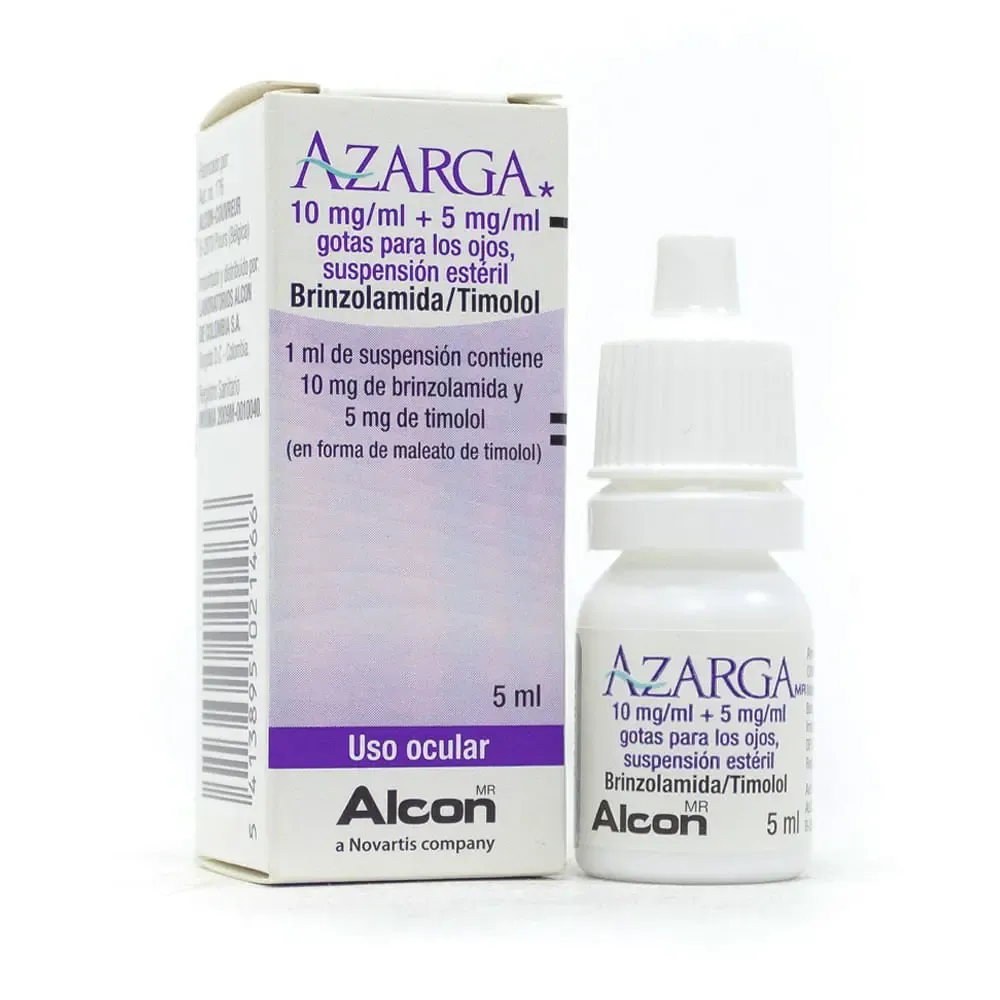
Table of Contents
Package leaflet: Information for the user
AZARGA 10 mg/ml + 5 mg/ml eye drops, suspension
brinzolamide/timolol
Please read all of this leaflet carefully before you start using this medicine because it contains important information for you.
- Keep this leaflet. You may need to read it again.
- If you have any questions, ask your doctor or pharmacist.
- This medicine has been prescribed for you only. Do not pass it on to other people, even if their symptoms are the same as yours, as it may be harmful.
- If you experience any side effects, including those not listed in this leaflet, tell your doctor or pharmacist. See section 4.
Contents of this leaflet
- What AZARGA is and what it is used for
- What you need to know before using AZARGA
- How to use AZARGA
- Possible side effects
- How to store AZARGA
- Contents of the pack and other information
1. What AZARGA is and what it is used for
AZARGA contains two active substances, brinzolamide and timolol, which work together to reduce pressure inside the eye.
AZARGA is used to treat elevated eye pressure, also called glaucoma or ocular hypertension, in patients over 18 years of age in whom high eye pressure cannot be effectively controlled by a single medicine.
2. What you need to know before using AZARGA
Do not use AZARGA
- If you are allergic to brinzolamide, to medicines called sulfonamides (for example, medicines used to treat diabetes, infections, or diuretics (tablets to increase urine production)), to timolol, beta-blockers (medicines used to lower blood pressure or treat heart conditions), or to any of the other ingredients of this medicine (listed in section 6).
- If you have or have previously had respiratory problems such as asthma, severe chronic obstructive bronchitis (a serious lung disease that may cause wheezing, difficulty breathing, and/or long-lasting cough), or other types of breathing problems.
- In case of severe hay fever
- If you have slow heart rate, heart failure, or heart rhythm disorders (irregular heartbeat).
- If you have too much acid in your blood (a condition called hyperchloremic acidosis).
- If you have severe kidney problems.
Warnings and precautions
Apply AZARGA drops only into the eyes.
If you experience signs of severe reactions or hypersensitivity, stop using this medicine and
inform your doctor.
Talk to your doctor or pharmacist before using AZARGA if you have or have previously had:
- Coronary heart disease (symptoms may include chest pain or tightness, shortness of breath, or suffocation), heart failure, low blood pressure.
- Changes in heart rate such as slow heartbeat.
- Breathing problems, asthma, or chronic obstructive pulmonary disease.
- Circulatory problems (such as Raynaud's disease or Raynaud's syndrome).
- Diabetes, as timolol may mask the signs and symptoms of low blood sugar.
- Overactive thyroid gland, as timolol may mask signs and symptoms of thyroid disease.
- Muscle weakness (myasthenia gravis).
- Before surgery, inform your doctor that you are using AZARGA, as timolol may alter the effects of certain medicines used during anesthesia.
- If you have a history of atopy (a tendency to develop allergic reactions) or severe allergic reactions, you may be more likely to develop an allergic reaction when using AZARGA, and adrenaline treatment may not be sufficiently effective in treating such a reaction. If you are undergoing any other treatment, inform your doctor or nurse that you are taking AZARGA.
- If you have liver problems.
- If you have dry eyes or corneal problems.
- If you have kidney problems.
- If you have ever developed a severe skin rash, skin peeling, blisters, and/or mouth ulcers after using AZARGA or other related medicines.
Use special caution with AZARGA:
Severe skin reactions, including Stevens-Johnson syndrome and toxic epidermal necrolysis, have been reported with brinzolamide treatment. If you notice any symptoms related to these severe skin reactions described in section 4, stop treatment with AZARGA and contact your doctor immediately.
Children and adolescents
AZARGA is not recommended for children and adolescents under 18 years of age.
Other medicines and AZARGA
Inform your doctor or pharmacist if you are taking, have recently taken, or might take any other medicines.
AZARGA may interact with other medicines you are taking, including other eye drops for glaucoma treatment. Inform your doctor if you are taking or plan to take medicines to lower blood pressure, such as parasympathomimetics and guanethidine, or other heart medicines including quinidine (used to treat heart problems and some types of malaria), amiodarone, or other medicines for heart rhythm disorders, and glycosides for heart failure.
Also inform your doctor if you are taking or plan to take medicines for diabetes, stomach ulcers, antifungals, antiviral medicines, antibiotics, or antidepressants such as fluoxetine and paroxetine.
If you are taking another carbonic anhydrase inhibitor (acetazolamide or dorzolamide), inform your doctor.
Occasionally, an increase in pupil size has been reported during concomitant use of Azarga and adrenaline (epinephrine).
Pregnancy and breastfeeding
You must not use AZARGA during pregnancy or if you may become pregnant unless your doctor considers it necessary. Consult your doctor before using AZARGA.
Do not use AZARGA while breastfeeding, as timolol may be excreted in breast milk.
Ask your doctor for advice before taking any medicine during breastfeeding.
Driving and using machines
Do not drive or operate machinery until your vision is clear. Your vision may be blurred for a certain period of time immediately after using AZARGA.
One of the active substances may reduce your ability to perform tasks requiring mental alertness and/or physical coordination. If you experience such symptoms, exercise caution when driving or using machinery.
AZARGA contains benzalkonium chloride
This medicine contains 3.34 µg of benzalkonium chloride per drop (= 1 dose), equivalent to 0.01% or 0.1 mg/ml.
AZARGA contains a preservative (benzalkonium chloride) that can be absorbed by soft contact lenses and may cause a change in their color. Remove your contact lenses before using this medicine and wait 15 minutes before reinserting them. Benzalkonium chloride may also cause eye irritation, especially if you have dry eyes or corneal disorders (the eye's outermost transparent layer). If you experience an unusual sensation in the eye, burning, or pain after using this medicine, speak with your doctor.
3. How to use AZARGA
Use this medicine exactly as instructed by your doctor or pharmacist. If you have
any doubts, consult your doctor or pharmacist.
If you are switching from another eye drop previously used to treat glaucoma to AZARGA,
you should stop using the other medicine and start using AZARGA the following day. If you have
any doubts, consult your doctor or pharmacist.
To prevent contamination of the dropper and the suspension, take care not to touch
your eyelids, the surrounding area, or other surfaces with the dropper tip. Keep the bottle tightly closed when
not in use.
The following procedure helps reduce the amount of medicine absorbed into the bloodstream after
applying the eye drops:
- Keep the eyelid closed and, at the same time, apply gentle pressure with one finger on the inner corner of the eye near the nose for at least 2 minutes.
Recommended dose
One drop in the affected eye(s), twice daily.
Use AZARGA in both eyes only if instructed by your doctor. Use the medicine for the
length of time recommended by your doctor.
How to use it
1 2 3
- Take the AZARGA bottle and a mirror.
- Wash your hands.
- Shake well before use.
- Unscrew the cap. After removing the cap, if the safety ring has loosened, remove it before using the product.
- Hold the bottle upside down between your thumb and index finger.
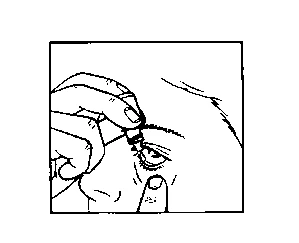
- Tilt your head back. Gently pull down the lower eyelid with a clean finger to form a "pocket" between the eyelid and the eye. The drop should be placed here (Figure 1).
- Hold the dropper tip close to the eye. Use a mirror if it helps.
- Do not touch the eye, eyelid, surrounding areas, or other surfaces with the dropper tip. This could contaminate the eye drop solution.
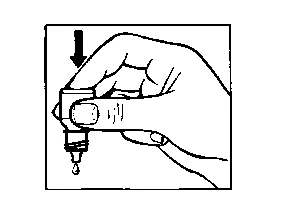
- Gently press the base of the bottle to release one drop of AZARGA at a time.
- Do not squeeze the bottle forcefully: it is designed to work with light pressure on the bottom (Figure 2).
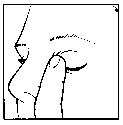
- After using AZARGA, press with one finger on the corner of the eye near the nose for 2 minutes (Figure 3). This helps prevent AZARGA from spreading into the rest of the body.
- If you need to instill the eye drops in both eyes, repeat the steps for the other eye.
- Immediately recap the bottle tightly after use.
- Use the entire contents of the bottle before opening the next one.
If a drop misses the eye, try again.
If you are using other eye drops or eye ointments, wait at least 5 minutes between applying
each medicine. Ophthalmic ointments should be administered last.
If you use more AZARGA than you should, immediately rinse the eye with lukewarm water. Do not use the eye drops again until the time of your next scheduled dose.
You may experience decreased heart rate, low blood pressure, heart failure, difficulty breathing, and effects on your nervous system.
If you forget to use AZARGA, continue treatment with the next dose as scheduled.
Do not use a double dose to make up for a forgotten dose. Do not use more than one drop
in the affected eye(s), twice daily.
If you stop treatment with AZARGA without discussing it with your doctor, intraocular pressure will not be controlled, which may result in loss of vision.
If you have any doubts about how to use this medicine, consult your doctor or pharmacist.
4. Possible side effects
Like all medicines, this medicine can cause side effects, although not everybody will experience them.
Stop treatment with AZARGA and contact your doctor immediately if you notice any of the following symptoms:
- Severe redness and itching of the eye, flat reddish patches on the trunk with a target-like or circular appearance, often with central blisters, skin peeling, mouth, throat, nose, genital and eye ulcers. These severe skin reactions may be preceded by fever and flu-like symptoms (Stevens-Johnson syndrome, toxic epidermal necrolysis).
You may generally continue using the eye drops unless the side effects are severe. If you are concerned, speak to your doctor or pharmacist. Do not stop using AZARGA without first discussing it with your doctor.
Common (may affect up to 1 in 10 users)
- Eye effects: inflammation of the eye surface, blurred vision, signs and symptoms of eye irritation (e.g. burning, stinging, itching sensation, tearing, redness), eye pain.
- General side effects: decreased heart rate, altered taste
Uncommon (may affect up to 1 in 100 users)
- Eye effects: corneal erosion (damage to the front surface of the eyeball), inflammation of the eye surface with surface damage, intraocular inflammation, corneal staining, abnormal eye sensitivity, eye discharge, dry eyes, itchy eyes, red eyes, eyelid redness.
- General side effects: reduced number of white blood cells, reduced blood pressure, cough, blood in urine, generalized fatigue.
Rare (may affect up to 1 in 1,000 users)
- Eye effects: corneal disorders, light sensitivity, increased tearing, crust formation on the eyelid
- General side effects: difficulty sleeping (insomnia), sore throat, runny nose
Not known (frequency cannot be estimated from the available data)
- Eye effects: eye allergy, visual disturbance, optic nerve damage, increased intraocular pressure, deposits on the ocular surface, reduced corneal sensitivity, inflammation or infection of the conjunctiva (white of the eye), abnormal, double or reduced vision, increased ocular pigmentation, new growth on the eye surface, eye swelling, light sensitivity, reduced eyelash growth or number, drooping of the upper eyelids (eye half-closed), inflammation of the eyelids and eyelid glands, corneal inflammation, and detachment of the layer beneath the retina containing blood vessels following filtering surgery, which may cause visual disturbances, reduced corneal sensitivity.
- General side effects: flat reddish patches on the trunk with a target-like or circular appearance, often with central blisters, skin peeling, ulcers of the mouth, throat, nose, genitals and eyes, which may be preceded by fever and flu-like symptoms. These severe skin reactions may potentially be life-threatening (Stevens-Johnson syndrome, toxic epidermal necrolysis).
- Heart and circulation: changes in heart rhythm or rate, slowed heart rate, palpitations, a type of heart rhythm disorder, abnormally increased heart rate, chest pain, reduced cardiac function, heart attack, increased blood pressure, reduced blood supply to the brain, stroke, edema (fluid accumulation), congestive heart failure (heart disease with shortness of breath and swelling of feet and legs due to fluid accumulation), swelling of extremities, low blood pressure, change in color of fingers and toes and occasionally other body areas (Raynaud's phenomenon), cold hands and feet.
- Respiratory: narrowing of the airways in the lungs (mainly in patients with pre-existing lung disease), shortness of breath or breathing difficulty, cold-like symptoms, chest congestion, nasal cavity infection, sneezing, nasal congestion, dry nose, nosebleeds, asthma, throat irritation.
- Nervous system and systemic disorders: hallucinations, depression, nightmares, memory loss, headache, nervousness, irritability, fatigue, tremor, abnormal sensation, fainting, dizziness, drowsiness, generalized or severe weakness, unusual sensations such as pins and needles.
- Gastrointestinal: nausea, vomiting, diarrhea, intestinal gas or abdominal discomfort, sore throat, dry or abnormal mouth sensation, indigestion, stomach ache.
- Blood: blood tests showing abnormal liver function values, increased blood chloride levels, decreased red blood cell count.
- Allergy: worsening of allergy symptoms, generalized allergic reactions including swelling under the skin which may occur in areas such as the face and limbs and which may block the airways causing difficulty swallowing or breathing, urticaria, localized and generalized skin rash, itching, severe sudden life-threatening allergic reactions.
- Ear: ringing in the ears, sensation of dizziness or vertigo.
- Skin: skin rash, redness or inflammation of the skin, reduced or abnormal skin sensitivity, hair loss, silvery-white appearing skin rash (psoriasiform eruption) or worsening of psoriasis.
- Musculoskeletal: generalized back, joint or muscle pain not caused by exercise, muscle spasms, extremity pain, muscle weakness/asthenia, increased signs and symptoms of myasthenia gravis (a muscle disorder).
- Kidney: kidney pain resembling lower back pain, frequent urination.
- Reproductive: sexual dysfunction, decreased libido, male sexual difficulties.
- Metabolism: low blood sugar levels.
Reporting of side effects
If you experience any side effect, including those not listed in this leaflet, please inform your doctor or pharmacist. You can also report side effects directly via the national reporting system listed in Annex V. Reporting side effects can help provide more information on the safety of this medicine.
5. How to store AZARGA
Keep this medicine out of the sight and reach of children.
Do not use this medicine after the expiry date which is stated on the bottle and carton after
Exp. The expiry date refers to the last day of that month.
This medicine requires no special storage conditions.
To prevent infection, discard the bottle 4 weeks after first opening and use a new bottle.
Write the date of opening in the space provided on the label of the bottle and carton.
Do not dispose of any medicine via wastewater or household waste. Ask your pharmacist how to
dispose of medicines no longer required. This will help protect the environment.
6. Pack contents and other information
What AZARGA contains
- The active substances are brinzolamide and timolol. One ml of suspension contains 10 mg of brinzolamide and 5 mg of timolol (as maleate).
- The other components are benzalkonium chloride (see section 2 “AZARGA contains benzalkonium chloride”), carbopol 974P, disodium edetate, mannitol (E421), purified water, sodium chloride, tyloxapol, hydrochloric acid and/or sodium hydroxide. Small amounts of hydrochloric acid and/or sodium hydroxide are added to maintain normal acidity levels (pH levels).
Description of the appearance of AZARGA and pack contents
AZARGA is a liquid (uniform suspension, white to off-white) supplied in a pack containing one 5 ml plastic bottle with screw cap, or in a pack containing three 5 ml bottles. Not all pack sizes may be marketed.
Marketing Authorisation Holder
Novartis Europharm Limited
Vista Building
Elm Park, Merrion Road
Dublin 4
Ireland
Manufacturer
Novartis Pharma GmbH
Roonstraße 25
D-90429 Nuremberg
Germany
Novartis Manufacturing NV
Rijksweg 14
2870 Puurs-Sint-Amands
Belgium
| Novartis Farmacéutica, S.A. | |||
| Gran Via de les Corts Catalanes, 764 | |||
| 08013 Barcelona | |||
| Spain | |||
Siegfried El Masnou, S.A.
Camil Fabra 58
El Masnou
08320 Barcelona
Spain
| Novartis Pharma GmbH | |||
| Sophie-Germain-Strasse 10 | |||
| 90443 Nuremberg | |||
| Germany | |||
For further information about this medicine, please contact the local representative of the marketing authorisation holder.
België/Belgique/Belgien Lietuva
Novartis Pharma N.V. SIA Novartis Baltics Lietuvos filialas
Tél/Tel: +32 2 246 16 11 Tel: +370 5 269 16 50
България Luxembourg/Luxemburg
Novartis Bulgaria EOOD Novartis Pharma N.V.
Тел.: +359 2 489 98 28 Tél/Tel: +32 2 246 16 11
Česká republika Magyarország
Novartis s.r.o. Novartis Hungária Kft.
Tel: +420 225 775 111 Tel.: +36 1 457 65 00
Danmark Malta
Novartis Healthcare A/S Novartis Pharma Services Inc.
Tlf: +45 39 16 84 00 Tel: +356 2122 2872
Deutschland Nederland
Cranach Pharma GmbH Novartis Pharma B.V.
Tel: +49 40 3803837-10 Tel: +31 88 04 52 111
Eesti Norge
SIA Novartis Baltics Eesti filiaal Novartis Norge AS
Tel: +372 66 30 810 Tlf: +47 23 05 20 00
Ελλάδα Österreich
Novartis (Hellas) A.E.B.E. Novartis Pharma GmbH
Τηλ: +30 210 281 17 12 Tel: +43 1 86 6570
España Polska
Novartis Farmacéutica, S.A. Novartis Poland Sp. z o.o.
Tel: +34 93 306 42 00 Tel.: +48 22 375 4888
France Portugal
Novartis Pharma S.A.S. Novartis Farma - Produtos Farmacêuticos, S.A.
Tél: +33 1 55 47 66 00 Tel: +351 21 000 8600
Hrvatska România
Novartis Hrvatska d.o.o. Novartis Pharma Services Romania SRL
Tel. +385 1 6274 220 Tel: +40 21 31299 01
Ireland Slovenija
Novartis Ireland Limited Novartis Pharma Services Inc.
Tel: +353 1 260 12 55 Tel: +386 1 300 75 50
Ísland Slovenská republika
Vistor hf. Novartis Slovakia s.r.o.
Sími: +354 535 7000 Tel: + 421 2 5542 5439
Italia Suomi/Finland
Novartis Farma S.p.A. Novartis Finland Oy
Tel: +39 02 96 54 1 Puh/Tel: +358 (0)10 6133 200
Κύπρος Sverige
Novartis Pharma Services Inc. Novartis Sverige AB
Τηλ: +357 22 690 690 Tel: +46 8 732 32 00
Latvija
SIA Novartis Baltics
Tel: +371 67 887 070
Other sources of information
More detailed information on this medicine is available on the website of the European Medicines Agency: http://www.ema.europa.eu