Ayrinal
Italy
Table of Contents
- PACKAGE LEAFLET: INFORMATION FOR THE USER
- AYRINAL 20 MG TABLETS
- 3. How to take AYRINAL
- Patient Information Leaflet
- AYRINAL 10 mg orodispersible tablets
- 1. What AYRINAL is and what it is used for
- 4. Possible side effects
- 5. How to store AYRINAL
- 6. Package contents and other information
- Patient Information Leaflet
- AYRINAL 2.5 mg/ml oral solution
- 2. What AYRINAL is and what it is used for
- 3. What you need to know before taking AYRINAL
- 4. How to take AYRINAL
- 4. Possible side effects
- 5. How to store AYRINAL
- 6. Package contents and other information
- PACKAGE LEAFLET
- Package leaflet: Information for the patient
- Ayrinal 20 mg orodispersible tablets
- 5. What Ayrinal is and what it is used for
- Patient Information Leaflet
- Ayrinal 6 mg/ml eye drops, solution
- 1. What Ayrinal is and what it is used for
- 2. What you need to know before using Ayrinal
- 3. How to use Ayrinal
- 4. Possible side effects
- 5. How to store Ayrinal
- 6. Package contents and other information
PACKAGE LEAFLET: INFORMATION FOR THE USER
AYRINAL 20 MG TABLETS
Contents of this leaflet:
1. What AYRINAL is and what it is used for
2. What you need to know before taking AYRINAL
Do not take AYRINAL:
Warnings and precautions
Other medicines and AYRINAL
AYRINAL with food, drinks and alcohol
Pregnancy, breastfeeding and fertility
Driving and using machines
3. How to take AYRINAL
If you take more AYRINAL than you should
If you forget to take AYRINAL
4. Possible side effects
5. How to store AYRINAL
6. Package contents and other information
What AYRINAL contains:
Description of the appearance of AYRINAL and contents of the pack
Marketing Authorisation Holder and Manufacturer
This medicine is authorised in the Member States of the European Economic Area
with the following names:
Patient Information Leaflet
AYRINAL 10 mg orodispersible tablets
For children aged between 2 and 11 years with a body weight of at least 15 kg.
Bilastine
Please read this leaflet carefully before your child takes this medicine because it contains important information for you.
- Keep this leaflet. You may need to read it again.
- If you have any questions, consult your doctor or pharmacist.
- This medicine has been prescribed for your child. Do not give it to others, even if their symptoms appear to be the same, as it could be harmful.
- If your child experiences any side effects, including those not listed in this leaflet, consult your doctor or pharmacist. See section 4.
Contents of this leaflet
- What AYRINAL is and what it is used for
- What you need to know before taking AYRINAL
- How to take AYRINAL
- Possible side effects
- How to store AYRINAL
- Package contents and other information
1. What AYRINAL is and what it is used for
AYRINAL contains the active substance bilastin, which is an antihistamine.
AYRINAL is used to relieve symptoms of hay fever (sneezing, itching, runny nose, nasal congestion, and eye redness and watering) and other forms of allergic rhinitis. It may also be used to treat itchy skin rashes (such as urticaria).
AYRINAL 10 mg orodispersible tablets are indicated for children from 2 to 11 years of age with a body weight of at least 15 kg.
- What you need to know before taking AYRINAL
Do not take AYRINAL
- if your child is allergic to bilastin or to any of the other ingredients of this medicine (listed in section 6).
Warnings and precautions
Talk to your doctor or pharmacist before taking AYRINAL if your child has moderate or severe kidney or liver impairment, low levels of potassium, magnesium, or calcium in the blood, if your child has or has had heart rhythm problems, if your child’s heart rate is very low, if your child is taking medicines that may affect heart rhythm, if your child has or has had a specific heart rhythm disorder (known as QTc prolongation on electrocardiogram), which may occur in certain heart conditions, or if your child is taking other medicines (see “Other medicines and AYRINAL”).
Children
Do not give this medicine to children under 2 years of age or with a body weight below 15 kg, as sufficient data are not available.
Other medicines and AYRINAL
Tell your doctor or pharmacist if your child is taking, has recently taken, or might take any other medicines, including those without a prescription. Some medicines should not be taken together, while others may require dose adjustments when taken together.
Inform your doctor or pharmacist if your child has recently taken or might take any of the following medicines in addition to AYRINAL:
- Ketoconazole (an antifungal medicine)
- Erythromycin (an antibiotic)
- Diltiazem (for the treatment of angina pectoris – chest pain or tightness)
- Cyclosporine (to reduce the activity of the immune system to prevent transplant rejection or to reduce the activity in autoimmune and allergic diseases such as psoriasis, atopic dermatitis, or rheumatoid arthritis)
- Ritonavir (for the treatment of HIV)
- Rifampicin (an antibiotic)
AYRINAL with food, drinks, and alcohol
These orodispersible tablets must not be taken with food or grapefruit juice or other fruit juices, as this reduces the effect of bilastin. To avoid this, you may:
- administer the orodispersible tablet to your child and wait one hour before your child consumes food or fruit juice, or
- if your child has consumed food or fruit juice, wait two hours before administering the orodispersible tablet.
Bilastin, at the recommended adult dose (20 mg), does not increase alcohol-induced drowsiness.
Pregnancy, breastfeeding, and fertility
This medicine is indicated for use in children from 2 to 11 years of age with a body weight of at least 15 kg. However, the following information regarding the safe use of this medicine should be considered. Data on the use of bilastin in pregnant women, during breastfeeding, and its effects on fertility are lacking or limited.
If you are pregnant, think you may be pregnant, planning to become pregnant, or are breastfeeding, consult your doctor or pharmacist before taking this medicine.
Ask your doctor or pharmacist for advice before taking this medicine.
Driving and using machines
It has been shown that 20 mg doses of bilastin do not affect driving ability in adults. However, individual patient response to the medicine may vary.
Therefore, you should assess the effect of the medicine on your child before allowing them to ride a bicycle, drive vehicles, or operate machinery.
AYRINAL contains ethanol and sodium
This medicine contains 0.0015 mg of alcohol (ethanol) in each orodispersible tablet, equivalent to 1 mg/100 g (0.001% w/w). The amount in one orodispersible tablet is equivalent to less than 0.00004 ml of beer or 0.00002 ml of wine. The small amount of alcohol in this medicine will not produce any relevant effects.
This medicine contains less than 1 mmol of sodium (23 mg) per orodispersible tablet, i.e., essentially ‘sodium-free’.
- How to take AYRINAL
Take this medicine exactly as your doctor or pharmacist has told you. If you are unsure, consult your doctor or pharmacist.
Use in children
The recommended dose in children from 2 to 11 years of age with a body weight of at least 15 kg is 10 mg of bilastin (1 orodispersible tablet) once daily for relief of symptoms of allergic rhinoconjunctivitis and urticaria.
Do not administer this medicine to children under 2 years of age or with a body weight below 15 kg, as sufficient data are not available.
For adults, including the elderly and adolescents from 12 years of age, the recommended dose is 20 mg of bilastin once daily. For this patient population, a more appropriate dosage form in tablet form is available; please consult your doctor or pharmacist.
- The orodispersible tablet is for oral use.
- Place the orodispersible tablet in your child’s mouth. It will dissolve rapidly with saliva and can be easily swallowed.
- Alternatively, you may dissolve the orodispersible tablet in a teaspoon of water before administering it to your child. This is highly recommended for children under 6 years of age, as they may be prone to inhaling foreign substances with tablets. Ensure no residue remains in the spoon.
- Water must be used exclusively for dispersion; do not use grapefruit juice or other fruit juices.
- Administer the orodispersible tablet to your child one hour before or two hours after your child has consumed food or fruit juice.
The duration of treatment depends on the type of illness your child has; your doctor will decide how long your child should take AYRINAL.
If you take more AYRINAL than you should
If your child or someone else has taken an excessive amount of this medicine, contact your doctor immediately or go to the nearest hospital emergency department. Remember to bring the medicine’s packaging or leaflet with you.
If you forget to take AYRINAL
If you forget to give your child the daily dose on time, give it as soon as you remember, on the same day. Then give the next dose the following day at the usual time as prescribed by the doctor.
In any case, do not give a double dose to make up for a missed tablet.
If you stop taking AYRINAL
Generally, no withdrawal effects occur when stopping treatment with AYRINAL.
If you have any doubts about using this medicine, consult your doctor or pharmacist.
4. Possible side effects
Like all medicines, this medicine can cause side effects, although not everyone gets them.
If your child experiences symptoms of allergic reactions, which may include difficulty breathing, dizziness, collapse or loss of consciousness, swelling of the face, lips, tongue or throat and/or skin swelling and redness, stop administering the medicine and contact your doctor immediately.
Other side effects that may occur in children are:
Common: may affect up to 1 in 10 people
- allergic conjunctivitis (eye irritation)
- headache
Uncommon: may affect up to 1 in 100 people
- eye irritation
- dizziness
- loss of consciousness
- diarrhoea
- nausea (feeling of sickness)
- swelling of the lips
- eczema
- urticaria
- fatigue
- rhinitis (nasal irritation)
- stomach ache (abdominal pain/upper abdominal pain)
Side effects that may occur in adults and adolescents are:
Common: may affect up to 1 in 10 people
- headache
- somnolence
Uncommon: may affect up to 1 in 100 people
- abnormal electrocardiogram (ECG)
- blood tests indicating changes in liver function
- dizziness
- stomach pain
- tiredness
- increased appetite
- irregular heartbeat
- weight gain
- nausea (feeling of sickness)
- anxiety
- sensation of dryness or discomfort in the nose
- stomach ache
- diarrhoea
- gastritis (inflammation of the stomach wall)
- vertigo (sensation of dizziness)
- feeling of weakness
- thirst
- dyspnoea (difficulty breathing)
- dry mouth
- indigestion
- itching
- cold sore (oral herpes)
- fever
- tinnitus (ringing in the ears)
- difficulty falling asleep
- blood tests indicating changes in kidney function
- increase in blood fats
Frequency not known: cannot be estimated based on available data
- palpitations (awareness of heart beat)
- tachycardia (increased heart rate)
- Vomiting
Reporting of side effects
If your child experiences any side effect, including those not listed in this leaflet, consult your doctor or pharmacist. You may also report side effects directly via the national reporting system at https://www.aifa.gov.it/content/segnalazioni-reazioni-avverse. By reporting side effects, you can help provide more information on the safety of this medicine.
5. How to store AYRINAL
Keep this medicine out of the sight and reach of children.
Do not use this medicine after the expiry date stated on the carton and blister after "EXP". The expiry date refers to the last day of that month.
This medicine does not require any special storage conditions.
Do not dispose of medicines via wastewater or household waste. Ask your pharmacist how to dispose of medicines you no longer use. This will help protect the environment.
6. Package contents and other information
What AYRINAL contains
- The active substance is bilastine. Each orodispersible tablet contains 10 mg of bilastine.
- The other excipients are mannitol (E421), croscarmellose sodium, sodium stearyl fumarate, sucralose (E955), red grape flavour (main components: arabic gum, ethyl butyrate, triacetin, methyl anthranilate, ethanol, d-limonene, linalool).
Description of the appearance of AYRINAL and contents of the pack
AYRINAL orodispersible tablets are round, slightly biconvex, white in colour and 8 mm in diameter.
The orodispersible tablets are supplied in blisters containing 10, 20, 30 or 50 tablets.
Not all pack sizes may be marketed.
Marketing Authorisation Holder and Manufacturer
Marketing Authorisation Holder
Menarini International Operations Luxembourg S.A.
1, Avenue de la Gare, L-1611 - Luxembourg
Concessionaire for sale
Malesci Istituto Farmacobiologico S.p.A.
Via Lungo l’Ema, 7 – Loc. Ponte a Ema, Bagno a Ripoli – Florence, Italy
Manufacturer
Faes Farma, S.A.
Máximo Aguirre, 14; 48940 Leioa (Vizcaya), Spain
Or
A.Menarini Manufacturing Logistics and Services S.r.l.
Campo di Pile, L’Aquila, Italy
Or
Faes Farma, S.A.
Parque Científico y Tecnológico de Bizkaia, Ibaizabal Bidea, Edificio 901, 48160 Derio (Bizkaia), Spain
This medicinal product is authorised in the Member States of the European Economic Area and in the United Kingdom (Northern Ireland) under the following names:
Germany: Bitosen 10 mg Schmelztabletten
Italy: Ayrinal 10 mg orodispersible tablets
Patient Information Leaflet
AYRINAL 2.5 mg/ml oral solution
For children aged between 2 and 11 years with a body weight of at least 15 kg.
Bilastine
Please read this leaflet carefully before taking this medicine because it contains important information for you.
- Keep this leaflet. You may need to read it again.
- If you have any questions, ask your doctor or pharmacist.
- This medicine has been prescribed for your child. Do not give it to other people, even if their symptoms are the same as your child’s, as it may be harmful.
- If your child experiences any side effects, including those not listed in this leaflet, speak to your doctor or pharmacist. See section 4.
Contents of this leaflet
- What AYRINAL is and what it is used for
- What you need to know before taking AYRINAL
- How to take AYRINAL
- Possible side effects
- How to store AYRINAL
- Contents of the pack and other information
2. What AYRINAL is and what it is used for
AYRINAL contains the active substance bilastine, which is an antihistamine.
AYRINAL is used to relieve symptoms of hay fever (sneezing, itching, runny nose, nasal congestion, and eye redness and watering) and other forms of allergic rhinitis. It can also be used to treat itchy skin rashes (such as urticaria).
AYRINAL 2.5 mg/ml oral solution is indicated for children from 2 to 11 years of age with a body weight of at least 15 kg.
3. What you need to know before taking AYRINAL
Do not use AYRINAL
- if your child is allergic to bilastine or to any of the other ingredients of this medicine (listed in section 6).
Warnings and precautions
Talk to your doctor or pharmacist before giving AYRINAL to your child if your child has moderate or severe kidney or liver impairment, has low levels of potassium, magnesium, or calcium in the blood, has or has had heart rhythm problems, has a very slow heart rate, is taking medicines that may affect heart rhythm, has or has had a specific heart rhythm disorder (known as QTc prolongation on electrocardiogram), which may occur in certain types of heart disease, or is taking other medicines (see "Other medicines and AYRINAL").
Children
Do not give this medicine to children under 2 years of age or weighing less than 15 kg, as sufficient data are not available.
Other medicines and AYRINAL
Inform your doctor or pharmacist if your child is taking, has recently taken, or might take any other medicines, including those without a prescription. Some medicines must not be taken together, and others may require dose adjustment when taken together.
Inform your doctor or pharmacist if your child has recently taken or might take any of the following medicines in addition to AYRINAL:
- Ketoconazole (an antifungal medicine)
- Erythromycin (an antibiotic)
- Diltiazem (used to treat angina pectoris – chest pain or tightness)
- Cyclosporine (used to reduce the activity of the immune system to prevent transplant rejection or to reduce the activity in autoimmune and allergic diseases such as psoriasis, atopic dermatitis, or rheumatoid arthritis)
- Ritonavir (used to treat HIV)
- Rifampicin (an antibiotic)
AYRINAL with food, drinks and alcohol
The oral solution must not be taken with food or grapefruit juice or other fruit juices, as this reduces the effect of bilastine. To avoid this, you may:
- administer the oral solution to your child and wait one hour before your child consumes food or fruit juice, or
- if your child has consumed food or fruit juice, wait two hours before administering the oral solution.
Bilastine, at the recommended adult dose (20 mg), does not increase alcohol-induced drowsiness.
Pregnancy, breastfeeding and fertility
This medicine is indicated for use in children aged 2 to 11 years weighing at least 15 kg. However, the following information regarding the safe use of this medicine should be considered. Data on the use of bilastine in pregnant women, during breastfeeding, and its effects on fertility are lacking or limited.
If you are pregnant, suspect you may be pregnant, planning to become pregnant, or breastfeeding, consult your doctor or pharmacist before giving this medicine to your child.
Ask your doctor or pharmacist for advice before taking this medicine.
Driving and using machines
Doses of 20 mg of bilastine have been shown not to affect driving ability in adults. However, individual patient responses to the medicine may vary. Therefore, you should assess the effect of the medicine on your child before allowing him or her to ride a bicycle, drive vehicles, or operate machinery.
AYRINAL contains methyl 4-hydroxybenzoate (E218) and propyl 4-hydroxybenzoate (E216), which may cause allergic reactions (possibly delayed).
AYRINAL contains ethanol and sodium
This medicine contains 0.44 mg of alcohol (ethanol) per dose (4 mL), equivalent to 11 mg/100 mL (0.011% w/v). The amount in 4 mL of this medicine is equivalent to less than 0.02 mL of beer or 0.005 mL of wine. The small amount of alcohol in this medicine will not produce significant effects.
This medicine contains less than 1 mmol of sodium (23 mg) per 4 mL, i.e., essentially 'sodium-free'.
4. How to take AYRINAL
Take this medicine exactly as directed by your doctor or pharmacist. If you have any doubts, consult your doctor or pharmacist.
Use in children
The recommended dose for children aged 2 to 11 years weighing at least 15 kg is 10 mg of bilastine (4 ml of oral solution) once daily to relieve symptoms of allergic rhinoconjunctivitis and urticaria.
Do not administer this medicine to children under 2 years of age or weighing less than 15 kg, as sufficient data are not available.
For adults, including the elderly and adolescents aged 12 years and older, the recommended dose is 20 mg of bilastine once daily. For this patient population, a more appropriate dosage form in the form of tablets is available; please consult your doctor or pharmacist.
- The oral solution is for oral use only.
- The oral solution bottle is equipped with a child-resistant cap and must be opened as follows: press down on the plastic cap while simultaneously turning it counterclockwise.
- The oral solution is supplied with a dosing cup marked with a line indicating 4 ml (=10 mg of bilastine per dose), which will help you accurately measure the correct dose.
- Fill the dosing cup to the 4 ml mark.
- Administer directly from the dosing cup.
- Wash the dosing cup after use.
- You must administer the oral solution to your child one hour before or two hours after the child has consumed food or fruit juice.
The duration of treatment depends on the type of illness affecting your child; your doctor will decide how long your child should take AYRINAL.
If you take more AYRINAL than you should
If your child or someone else has taken an excessive amount of this medicine, contact your doctor immediately or go to the nearest hospital emergency department. Remember to bring the medicine package or leaflet with you.
If you forget to take AYRINAL
If you forget to give your child the daily dose on time, give it as soon as you remember, on the same day. Then give the next dose the following day at the usual time, as prescribed by the doctor.
In no case should you give a double dose to make up for a missed dose.
If you stop taking AYRINAL
Generally, no withdrawal effects occur when stopping treatment with AYRINAL.
If you have any further questions about using this medicine, consult your doctor or pharmacist.
4. Possible side effects
Like all medicines, this medicine can cause side effects, although not everybody gets them.
If your child shows symptoms of allergic reactions, which may include difficulty breathing, dizziness, collapse or loss of consciousness, swelling of the face, lips, tongue or throat and/or skin swelling and redness, stop administering the medicine and contact your doctor immediately.
Other side effects that may occur in children are:
Common: may affect up to 1 in 10 people
- allergic conjunctivitis (eye irritation)
- headache
Uncommon: may affect up to 1 in 100 people
- eye irritation
- dizziness
- loss of consciousness
- diarrhoea
- nausea (feeling of sickness)
- swelling of the lips
- eczema
- urticaria (hives)
- fatigue
- rhinitis (nasal irritation)
- stomach pain (abdominal pain / upper abdominal pain)
Side effects that may occur in adults and adolescents are:
Common: may affect up to 1 in 10 people
- headache
- drowsiness
Uncommon: may affect up to 1 in 100 people
- abnormal electrocardiogram (ECG)
- blood tests indicating changes in liver function
- dizziness
- stomach pain
- tiredness
- increased appetite
- irregular heartbeat
- weight gain
- nausea (feeling of sickness)
- anxiety
- sensation of dryness or discomfort in the nose
- stomach ache
- diarrhoea
- gastritis (inflammation of the stomach lining)
- vertigo (a sensation of dizziness)
- feeling of weakness
- thirst
- dyspnoea (difficulty breathing)
- dry mouth
- indigestion
- itching
- cold sores (oral herpes)
- fever
- tinnitus (ringing in the ears)
- difficulty falling asleep
- blood tests indicating changes in kidney function
- increase in blood fats
Frequency not known: cannot be estimated based on available data
- palpitations (awareness of heartbeat)
- tachycardia (fast heartbeat)
- vomiting
Reporting of side effects
If your child experiences any side effect, including those not listed in this leaflet, talk to your doctor or pharmacist. You can also report side effects directly via the national reporting system at https://www.aifa.gov.it/content/segnalazioni-reazioni-avverse. By reporting side effects, you can help provide more information on the safety of this medicine.
5. How to store AYRINAL
Keep this medicine out of the sight and reach of children.
Do not use this medicine after the expiry date stated on the carton and on the bottle after EXP. The expiry date refers to the last day of that month.
Do not store above 30°C.
The shelf life after first opening is 6 months.
Do not use this medicine if you notice any visible signs of particles.
Do not dispose of medicines via wastewater or household waste. Ask your pharmacist how to dispose of medicines you no longer use. This will help protect the environment.
6. Package contents and other information
What AYRINAL contains
- The active substance is bilastine. One millilitre of oral solution contains 2.5 mg of bilastine.
- The other excipients are Betadex (E459), hydroxyethylcellulose, methyl parahydroxybenzoate (E218), propyl parahydroxybenzoate (E216), sucralose (E955), raspberry flavour (main components: ethanol, triacetin, water, ethyl butyrate, linalyl acetate, hydrochloric acid 37% or 10% (for pH adjustment), sodium hydroxide (for pH adjustment), purified water.
Description of the appearance of AYRINAL and package contents
AYRINAL oral solution is a clear, colourless, slightly viscous aqueous solution, with pH 3.0–4.0, without precipitate.
AYRINAL 2.5 mg/ml oral solution is supplied in an amber glass bottle, sealed with an aluminium screw cap or a cap made of polypropylene, with a child-resistant closure, including a 15 ml or 25 ml dosing cup with a marking line for 4 ml. Each bottle contains 120 ml of oral solution.
Marketing Authorisation Holder and Manufacturer
Marketing Authorisation Holder
Menarini International Operations Luxembourg S.A.
1, Avenue de la Gare, L-1611 - Luxembourg
Concessionaire for sale
Malesci Istituto Farmacobiologico S.p.A.
Via Lungo l’Ema, 7 – Loc. Ponte a Ema, Bagno a Ripoli - Florence, Italy
Manufacturer
Faes Farma, S.A.
Parque Científico y Tecnológico de Bizkaia, Ibaizabal Bidea, Edificio 901, 48160 Derio (Bizkaia), Spain
Or
Berlin-Chemie AG
Glienicker Weg 125; D-12489 Berlin, Germany
This medicinal product is authorised in the European Economic Area and in the United Kingdom (Northern Ireland) under the following names:
Germany: Bitosen 2.5 mg/ml Lösung zum Einnehmen
Italy: Ayrinal 2.5 mg/ml oral solution
PACKAGE LEAFLET
Package leaflet: Information for the patient
Ayrinal 20 mg orodispersible tablets
Bilastine
Please read this leaflet carefully before taking this medicine because it contains
important information for you.
- Keep this leaflet. You may need to read it again.
- If you have any questions, consult your doctor or pharmacist.
- This medicine has been prescribed for you only. Do not give it to others, even if they have the same symptoms as you, because it could be harmful.
- If you experience any side effects, contact your doctor or pharmacist. This includes any possible side effects not listed in this leaflet. See section 4.
Contents of this leaflet
- What Ayrinal is and what it is used for
- What you need to know before taking Ayrinal
- How to take Ayrinal
- Possible side effects
- How to store Ayrinal
- Contents of the pack and other information
5. What Ayrinal is and what it is used for
Ayrinal contains the active substance bilastine, which is an antihistamine.
Ayrinal is used to relieve symptoms of hay fever (sneezing, itching, runny nose, nasal congestion, eye redness and tearing) and other forms of allergic rhinitis in adults and adolescents aged 12 years and older. It can also be used to treat itchy skin rashes (such as urticaria).
- What you need to know before taking Ayrinal
Do not take Ayrinal:
if you are allergic to bilastine or to any of the other ingredients of this medicine (listed in section 6).
Warnings and precautions
Talk to your doctor or pharmacist before taking Ayrinal if you have moderate or severe kidney impairment, if you have low levels of potassium, magnesium or calcium in your blood, if you suffer or have suffered from heart rhythm problems, if your heart rate is very low, if you are taking medicines that may affect heart rhythm, if you have or have had a specific heart rhythm disorder (known as QTc prolongation on electrocardiogram), which may occur in certain heart conditions, and if you are also taking other medicines (see "Other medicines and Ayrinal").
Children
Do not give Ayrinal 20 mg orodispersible tablets to children under 12 years of age. For alternative dosage forms of bilastine suitable for use in children under 12 years of age, see section 3 "Use in children".
Do not exceed the recommended dose. If symptoms persist, consult your doctor.
Other medicines and Ayrinal
Tell your doctor or pharmacist if you are taking, have recently taken or might take any other medicines, including those without a prescription.
In particular, inform your doctor if you are taking any of the following medicines:
- Ketoconazole tablets (used to treat Cushing's syndrome when the body produces excess cortisol)
- Erythromycin (an antibiotic)
- Diltiazem (to treat angina pectoris – chest pain or tightness)
- Cyclosporine (to reduce immune system activity, thereby preventing transplant rejection or reducing disease activity in autoimmune and allergic disorders such as psoriasis, atopic dermatitis or rheumatoid arthritis)
- Ritonavir (to treat HIV)
- Rifampicin (an antibiotic)
Ayrinal with food, beverages and alcohol
These orodispersible tablets must not be taken with food, grapefruit juice
or other fruit juices, as this reduces the effect of bilastine. To avoid this, you may:
- take the orodispersible tablet and wait one hour before taking food or fruit juice, or
- if you have consumed food or fruit juice, wait two hours before taking the orodispersible tablet.
Bilastine, at the recommended dose (20 mg), does not increase drowsiness caused by alcohol.
Pregnancy, breastfeeding and fertility
Data on the use of bilastine in pregnant women and during breastfeeding, and on its effects on fertility, are limited or not available.
If you are pregnant, suspect you may be pregnant, planning to become pregnant, or are breastfeeding, consult your doctor or pharmacist before taking this medicine.
Consult your doctor or pharmacist before taking any medicine.
Driving and using machines
It has been shown that bilastine 20 mg does not affect driving ability in adults.
However, individual responses to the medicine may vary. Therefore, you should assess how this medicine affects you before driving or operating machinery.
Ayrinal contains sodium and ethanol
This medicine contains less than 1 mmol of sodium (23 mg) per orodispersible tablet, i.e. essentially "sodium-free".
This medicine contains 0.0030 mg of alcohol (ethanol) per orodispersible tablet, equivalent to 1.6 mg/100 g (0.0016% w/w). The amount in one 185 mg orodispersible tablet corresponds to less than 1 ml of beer or 1 ml of wine.
The small amount of alcohol contained in this medicine has no clinically significant effects.
- How to take Ayrinal
Always take this medicine exactly as your doctor or pharmacist has told you. If you are unsure, contact your doctor or pharmacist.
The recommended dose in adults, including the elderly, and adolescents aged 12 years and older, is 1 orodispersible tablet (bilastine 20 mg) once daily.
- The orodispersible tablet is for oral use.
- Place the orodispersible tablet in your mouth. It will dissolve rapidly in saliva and can then be easily swallowed.
- Alternatively, you may dissolve the orodispersible tablet in water before taking it.
- For dispersion, use water only, not grapefruit juice or other fruit juices.
- You should take the orodispersible tablet one hour before or two hours after consuming any food or fruit juice (see section 2, "Ayrinal with food, beverages and alcohol").
Duration of treatment
Regarding the duration of treatment, your doctor will determine the type of illness you have and decide how long you should take Ayrinal.
Use in children
Other pharmaceutical forms of this medicine – bilastine 10 mg orodispersible tablets or bilastine 2.5 mg/ml oral solution – may be more suitable for children aged 2 to 11 years with a body weight of at least 15 kg – consult your doctor or pharmacist.
Do not administer bilastine to children under 2 years of age or with body weight
below 15 kg, as sufficient data are not available.
If you take more Ayrinal than you should
If you or anyone else has taken too many Ayrinal orodispersible tablets, contact immediately your doctor, pharmacist or go to the nearest hospital emergency department.
Remember to bring the medicine pack or leaflet with you.
If you forget to take Ayrinal
Do not take a double dose to make up for the missed dose.
If you forget to take a dose, take it as soon as possible and then return to your regular dosing schedule.
If you have any doubts about using this medicine, consult your doctor or pharmacist.
If you stop using Ayrinal
Generally, there are no effects due to stopping treatment with Ayrinal.
If you have any doubts about using this medicine, consult your doctor or pharmacist.
- Possible side effects
Like all medicines, this medicine can cause side effects, although not everybody gets them.
Stop taking the medicine and go immediately to the emergency department if you experience symptoms of an allergic reaction, which may include difficulty breathing, dizziness, collapse or loss of consciousness, swelling of the face, lips, tongue or throat and/or skin swelling and redness.
Other side effects that may occur in adults and adolescents are:
Common: may affect up to 1 in 10 people
- Headache
- Drowsiness
Uncommon: may affect up to 1 in 100 people - Abnormal electrocardiogram trace
- Blood tests indicating changes in liver function
- Dizziness
- Stomach pain
- Fatigue
- Increased appetite
- Irregular heartbeat
- Weight gain
- Nausea (feeling unwell)
- Anxiety
- Sensation of dryness or discomfort in the nose
- Abdominal pain
- Diarrhoea
- Gastritis (inflammation of the stomach lining)
- Vertigo (sensation of dizziness)
- Feeling of weakness
- Thirst
- Dyspnoea (difficulty breathing)
- Dry mouth
- Indigestion
- Itching
- Cold sores (oral herpes)
- Fever
- Tinnitus (ringing in the ears)
- Difficulty falling asleep
- Blood tests indicating changes in kidney function
- Increase in blood fats
Frequency not known: cannot be estimated from available data
- Palpitations (awareness of your own heartbeat)
- Tachycardia (fast heartbeat)
- Vomiting
Side effects that may occur in children are:
Common: may affect up to 1 in 10 people
- Allergic conjunctivitis (eye inflammation caused by an allergic reaction)
- Headache
Uncommon: may affect up to 1 in 100 people
- Eye irritation
- Dizziness
- Loss of consciousness
- Diarrhoea
- Nausea (feeling unwell)
- Swelling of the lips
- Eczema
- Urticaria (hives)
- Fatigue
- Rhinitis (nasal irritation)
- Stomach ache (abdominal pain/upper abdominal pain)
Reporting of side effects
If you experience any side effect, including those not listed in this leaflet, talk to your doctor or pharmacist. You can also report side effects directly via the national reporting system at www.aifa.gov.it/content/segnalazioni-reazioni-avverse. By reporting side effects, you can help provide more information on the safety of this medicine.
- How to store Ayrinal
Keep this medicine out of the sight and reach of children.
Do not use this medicine after the expiry date which is stated on the carton and blister after “EXP”. The expiry date refers to the last day of that month.
This medicine does not require any special storage conditions.
Do not dispose of medicines via wastewater or household waste. Ask your pharmacist how to dispose of medicines you no longer use. This will help protect the environment.
- Contents of the pack and other information
What Ayrinal contains
- The active substance is bilastine. Each orodispersible tablet contains 20 mg of bilastine.
- The excipients are mannitol (E421), sodium croscarmellose, sodium stearyl fumarate, sucralose (E955), red grape flavour (main components: gum arabic, ethyl butyrate, triacetin, methyl anthranilate, ethanol, d-limonene, linalool). See section 2 “Ayrinal contains sodium and ethanol”.
Description of the appearance of Ayrinal and contents of the pack
Ayrinal orodispersible tablets are round, flat, white tablets with "20" engraved on one side and a diameter of 8 mm.
Ayrinal is available in unit-dose divisible blisters containing 10, 20, 30, 40 or 50 orodispersible tablets.
Not all pack sizes may be marketed.
Marketing Authorisation Holder
Menarini International Operations Luxembourg S.A.
1 Avenue de la Gare
L-1611
Luxembourg
Sales Concessionaire:
Malesci Istituto Farmacobiologico S.p.A.
Via Lungo l’Ema 7
Loc. Ponte a Ema, Bagno a Ripoli
Florence
Manufacturer
Faes Farma, S.A.
Máximo Aguirre, 14; 48940 Leioa (Vizcaya), Spain
Or
Faes Farma, S.A.
Parque Científico y Tecnológico de Bizkaia, Ibaizabal Bidea, Edificio 901, 48160 Derio (Bizkaia), Spain
This medicine is authorised in European Economic Area countries with the following names:
Germany: Bitosen 20 mg Schmelztabletten
Italy: Ayrinal 20 mg orodispersible tablets
Patient Information Leaflet
Ayrinal 6 mg/ml eye drops, solution
bilastine
Please read this entire leaflet carefully before using this medicine, as it contains important information for you.
- Keep this leaflet. You may need to read it again.
- If you have any questions, consult your doctor or pharmacist.
- This medicine has been prescribed for you only. Do not give it to others, even if their symptoms are the same as yours, as it could be harmful.
- If you experience any adverse reaction, including those not listed in this leaflet, consult your doctor or pharmacist. See section 4.
Contents of this leaflet
- What Ayrinal is and what it is used for
- What you need to know before using Ayrinal
- How to use Ayrinal
- Possible side effects
- How to store Ayrinal
- Contents of the pack and other information
1. What Ayrinal is and what it is used for
This medicinal product contains bilastine, which belongs to a group of medicines called
antihistamines. Antihistamines work by preventing the effects of a substance called
histamine, which the body produces during an allergic reaction.
This medicine is used to treat the signs and symptoms of eye disorders characterized by
seasonal allergic conjunctivitis in adults and children aged 2 years and older.
This medicine is also used to treat the signs and symptoms of eye disorders caused by
allergies to substances such as house dust mites or animal fur (perennial allergic
conjunctivitis) in adults and children aged 2 years and older.
2. What you need to know before using Ayrinal
Do not use Ayrinal
- if you are allergic to bilastine or to any of the other ingredients of this medicine (listed in section 6).
Warnings and precautions
Consult your doctor or pharmacist before using Ayrinal if you experience any adverse events during treatment, such as eye irritation, pain, redness, or changes in vision, or if your condition worsens. It may be necessary to discontinue treatment.
After instilling Ayrinal anti-allergic eye drops into the conjunctival sac of the eye, visual acuity may decrease for a few minutes due to the formation of streaks.
In case of inflammation, including allergic conjunctivitis, ask your ophthalmologist whether you can wear contact lenses despite symptoms.
Children and adolescents
Ayrinal is indicated in adults and children aged 2 years and older.
Do not administer this medicine to children under 2 years of age, as efficacy and safety have not been studied in these populations.
Other medicines and Ayrinal
Inform your doctor or pharmacist if you are taking, have recently taken, or might take any other medicines.
If you are using other ophthalmic medicines, wait at least 5 minutes between each product. Ophthalmic ointments should be administered last.
Pregnancy, breast-feeding and fertility
Ayrinal may be used during pregnancy and breast-feeding. If you are pregnant, suspect you may be pregnant, planning a pregnancy, or are breast-feeding, consult your doctor or pharmacist before taking this medicine.
Driving and using machines
After instillation of this medicine, temporary blurred vision or other visual disturbances may occur that could affect your ability to drive or operate machinery. Please wait until your vision clears before driving or operating machinery.
Contact lenses
This medicine does not alter the properties of contact lenses. You may continue wearing contact lenses during treatment with this medicine.
Remove contact lenses before use and reinsert them no sooner than 15 minutes after administration of the eye drops.
3. How to use Ayrinal
Use this medicine exactly as your doctor or pharmacist has told you.
If you have any doubts, consult your doctor or pharmacist.
The recommended dose for adults and children aged 2 years and older is one drop
in each affected eye once daily.
This medicine may be used for up to 8 weeks. Your doctor will decide and advise you on how long you should use it based on your condition.
For ocular use only.
Method of administration
- Always wash your hands and dry them with a clean towel before administering this medicine.
- Gently clean the eyelids if they are crusted with discharge by wiping from the inner corner to the outer corner of the closed eye, using a cotton pad moistened with lukewarm water.
- Open the bottle and avoid touching the eye or any other surface with the dropper tip: keep the eye drops and dropper clean.
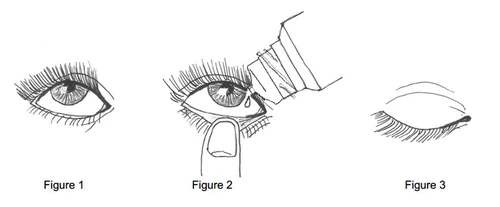
- Tilt your head backwards or lie down and look upwards (Figure 1). Gently pull down the lower eyelid with a finger (Figure 2).
- Look upwards and instill one drop of eye drops into the eye.
- Release the lower eyelid and keep the eye closed for a moment to allow the drop to spread over the eye surface (Figure 3).
- Repeat the above steps for the other eye, if necessary.
To avoid contamination during use of this medicine, do not touch any surface (eyelids, areas around the eye or other surfaces) with the dropper tip. After use, wipe the dropper tip with a clean cloth to remove any residual liquid.
If you use more Ayrinal than you should
You may rinse the eye with lukewarm water.
If you forget to use Ayrinal
Do not use a double dose to make up for the forgotten dose.
If you forget to apply the drop on time, apply the missed drop as soon as possible, then continue with your regular dosing schedule.
If you stop using Ayrinal
Treatment with this medicine should be continued regularly, if possible, until symptoms are relieved. If you stop using Ayrinal while still exposed to the allergen (or allergens), you should expect the typical allergic symptoms to return.
If you have any questions about the use of this medicine, consult your doctor or pharmacist.
4. Possible side effects
Like all medicines, this medicine can cause side effects, although not everybody gets them.
The following adverse reactions have been reported.
Uncommon side effects (may affect up to 1 in 100 people):
Altered taste sensation (dysgeusia), headache.
Dry eye, eye discharge, eye irritation, increased lacrimation, eye discomfort.
If you experience any of the side effects listed above, stop using this medicine and consult your doctor immediately. The side effects mentioned are usually mild and disappear quickly in all cases. Therefore, no specific measures are required.
Reporting of side effects
If you experience any side effect, including those not listed in this leaflet, talk to your doctor or pharmacist. You may also report side effects directly through the national reporting system at the website
https://www.aifa.gov.it/content/segnalazioni-reazioni-avverse. By reporting side effects, you can help provide more information on the safety of this medicine.
5. How to store Ayrinal
Keep this medicine out of the sight and reach of children.
Do not use this medicine after the expiry date stated on the label or packaging
following "Exp". The expiry date refers to the last day of that month.
This medicine does not require any special storage conditions.
After first opening the bottle: do not use this medicine if the bottle has been open for
more than 2 months.
Do not dispose of medicines via wastewater or household waste. Ask your pharmacist how to
dispose of medicines you no longer use. This will help protect the environment.
6. Package contents and other information
What Ayrinal contains
- The active substance is bilastine 6 mg/ml. One drop contains 0.2 mg of bilastine.
- The other components are hydroxypropyl β-cyclodextrin, methylcellulose, sodium hyaluronate, glycerol (E 422), sodium hydroxide 1 N (for pH adjustment), water for injections.
Description of the appearance of Ayrinal and contents of the pack
Ayrinal eye drop solution is a clear, colourless solution contained in a white low-density polyethylene multidose bottle with a white high-density polyethylene dropper and a tamper-evident cap, containing 5 ml of preservative-free solution.
Pack sizes: 1 bottle of 5 ml.
Marketing Authorisation Holder and Manufacturer
Marketing Authorisation Holder
Menarini International Operations Luxembourg S.A.
1, Avenue de la Gare, L-1611 - Luxembourg
Concessionaire for sale
Malesci Istituto Farmacobiologico S.p.A.
Via Lungo l’Ema, 7 – Loc. Ponte a Ema, Bagno a Ripoli - Florence
Manufacturer
FAMAR Health Care Services Madrid S.A.U.
Avenida de Leganés 62, 28923
Alcorcón,
Spain
This medicinal product is authorised in the Member States of the European Economic Area under the following names:
Germany: Bitosen 6 mg/ml Augentropfen, Lösung
Italy: Ayrinal 6 mg/ml eye drops, solution
This Patient Information Leaflet was last reviewed in October 2025